
Design Mind
Seeds of Transformation: A Zine About My Philosophy
art direction
print making
graphic design
Course: Carnegie Mellon MA in Design, Design Minds Seminar
Role: Solo Designer
Team: Lorin Anderberg
Tools: InDesign, Illustrator
Duration: 4 weeks
Design Challenge:
Create a zine that expresses your design philosophy in an accessible and compelling way for non-designers.
How might I define and share the inner workings of my design mind in a format anyone can understand?
Design:
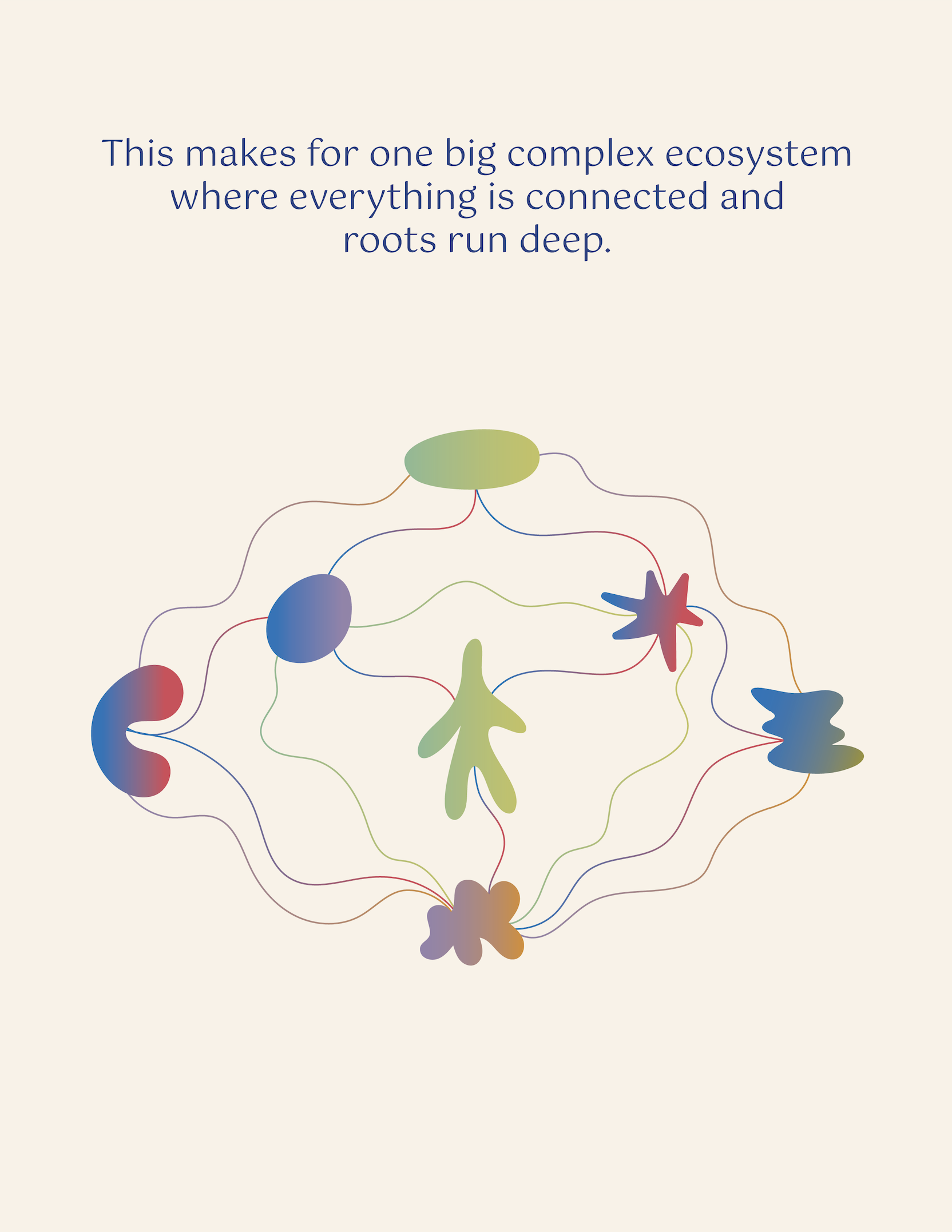
This isn’t just a zine. It’s a vessel for growth—a curated collection of ideas and influences that have shaped me. A seed bank of transformation.
Front: a narrative that unfolds through a simple accordion structure
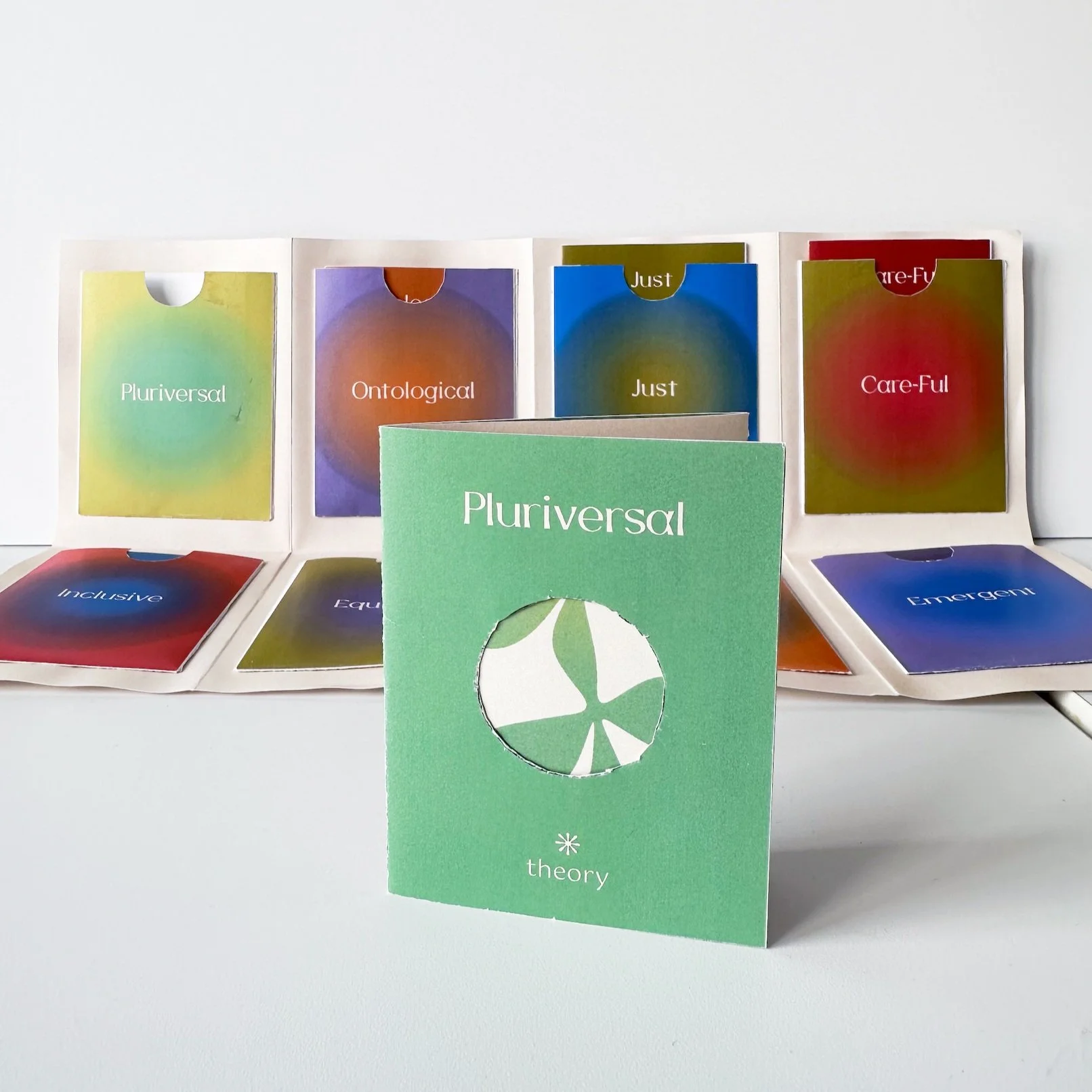
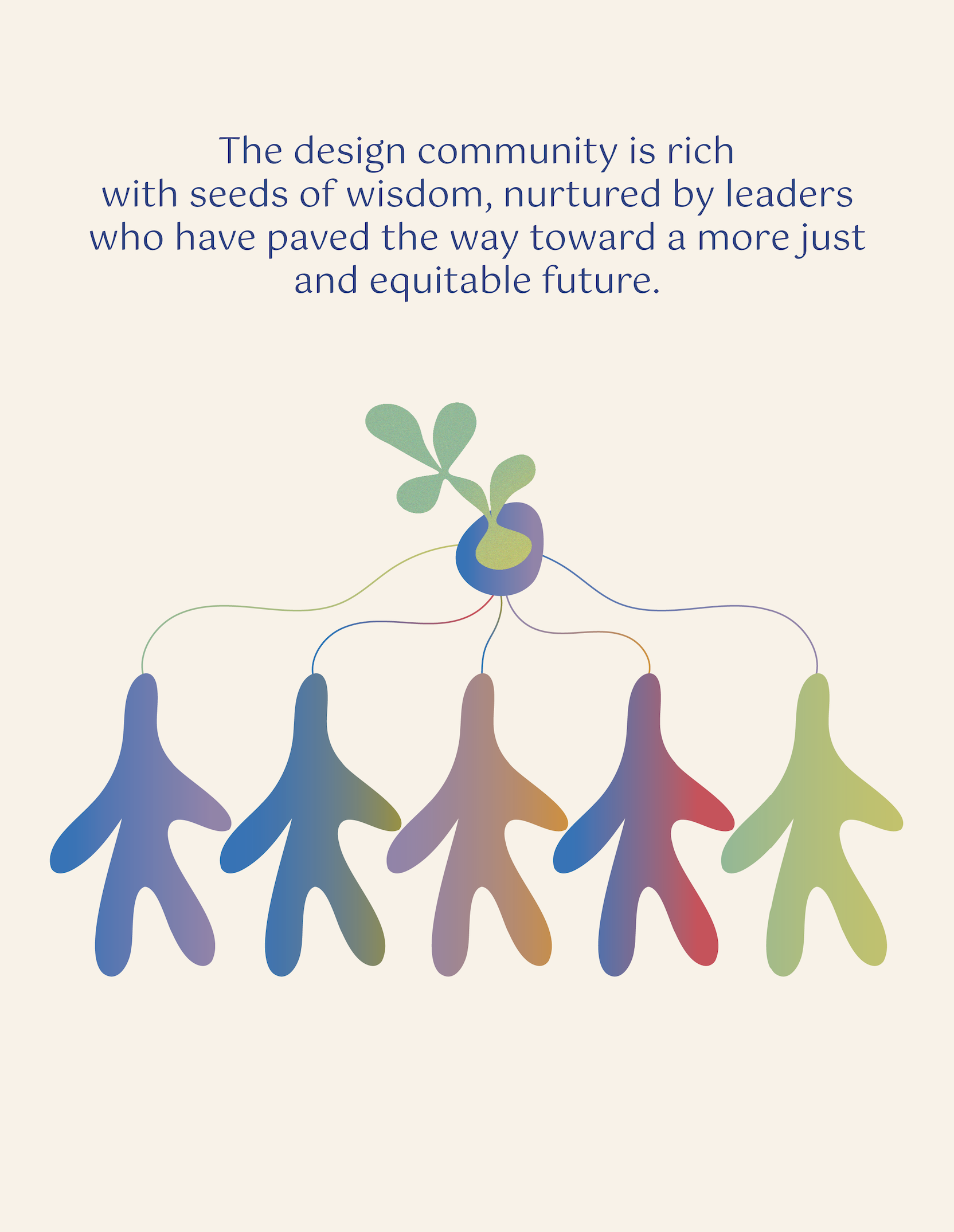
Back: a metaphorical seed bank, filled with design values, quotes, principles, and community wisdom
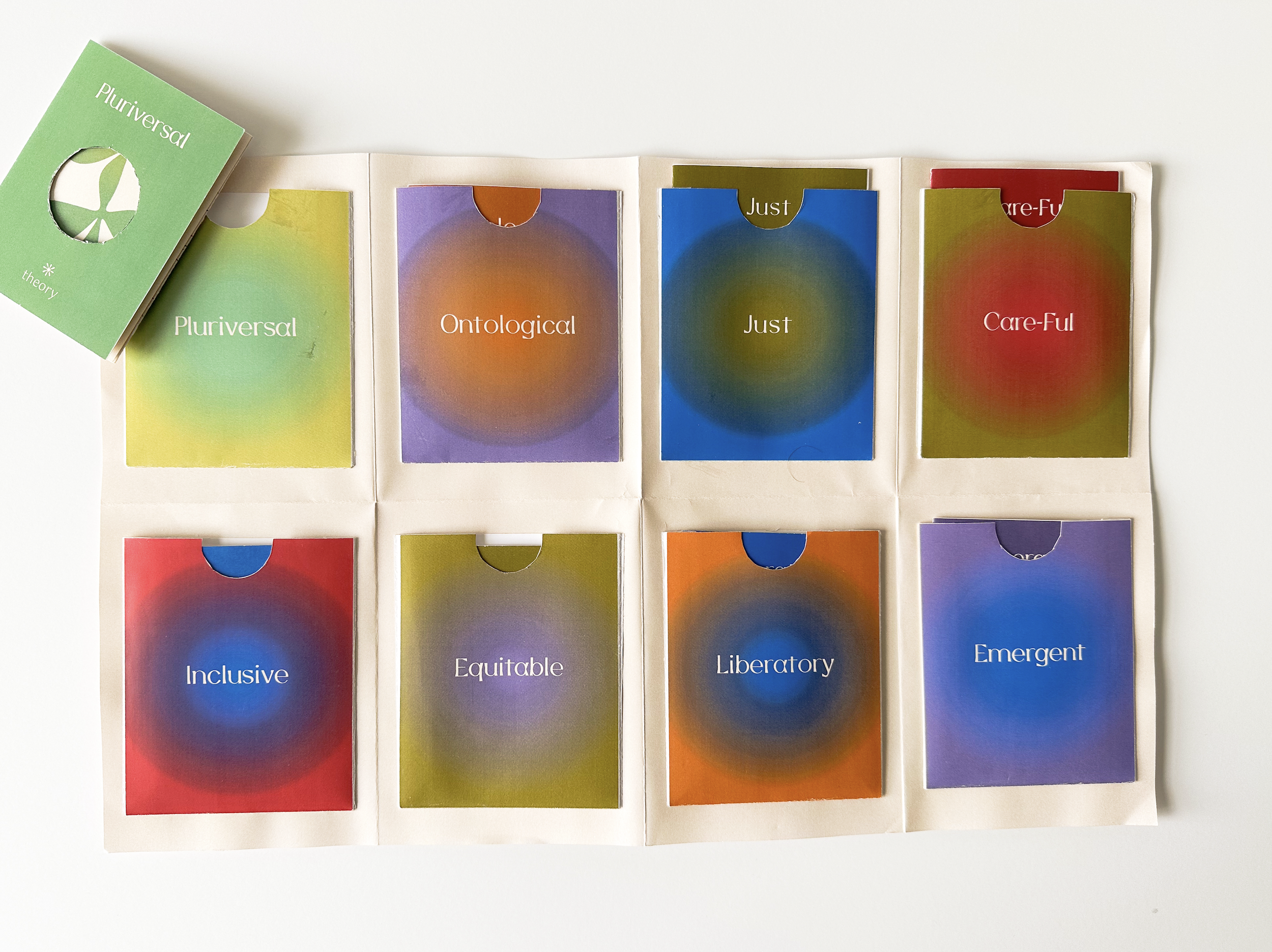
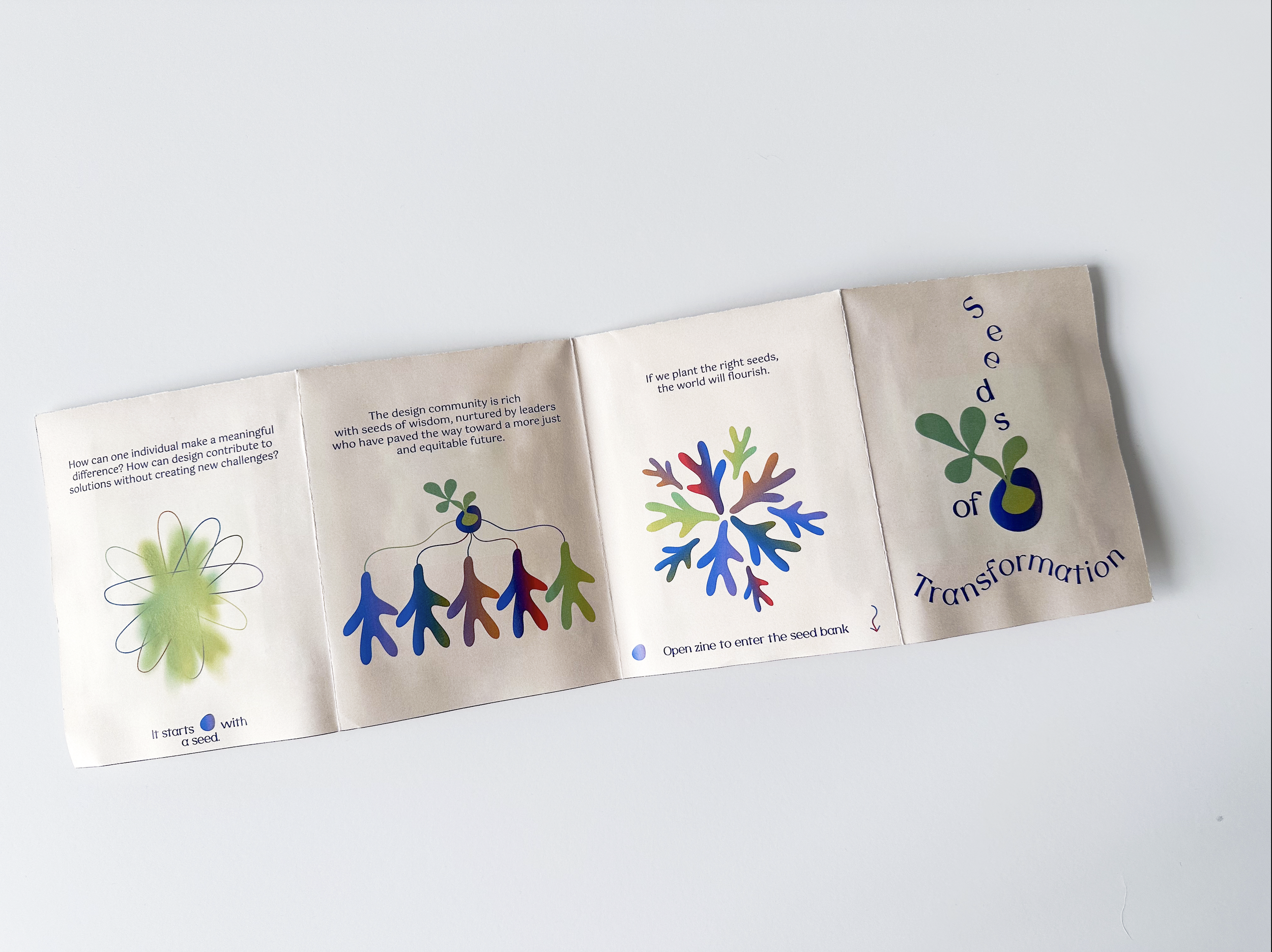
My Design Mind: Seeds of Transformation
The reader would flip through this accordion zine to read the story before opening up the paper and flipping it over to see the “seed bank,” a collection of wisdom from the co-design and transformative justice community.
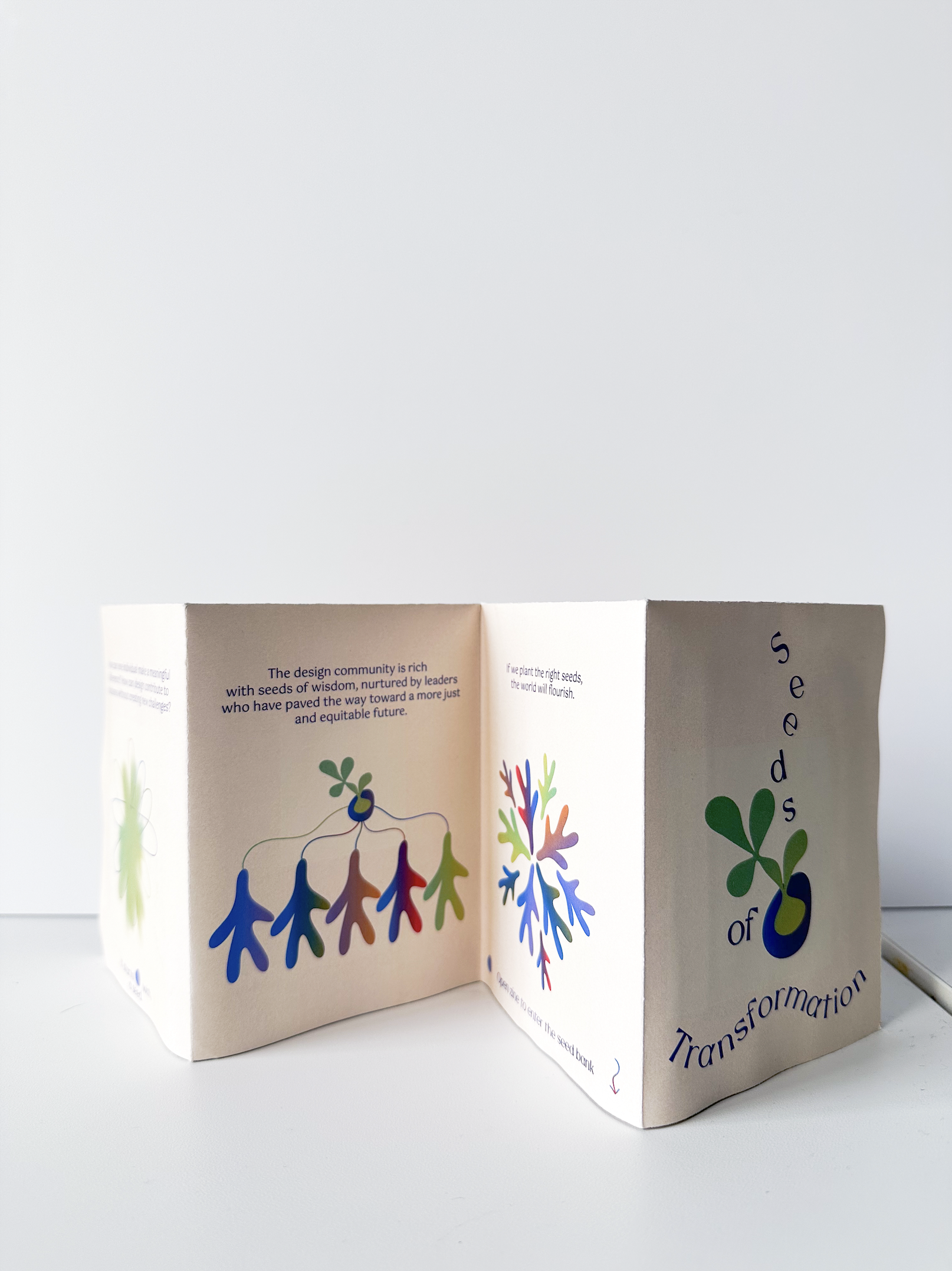
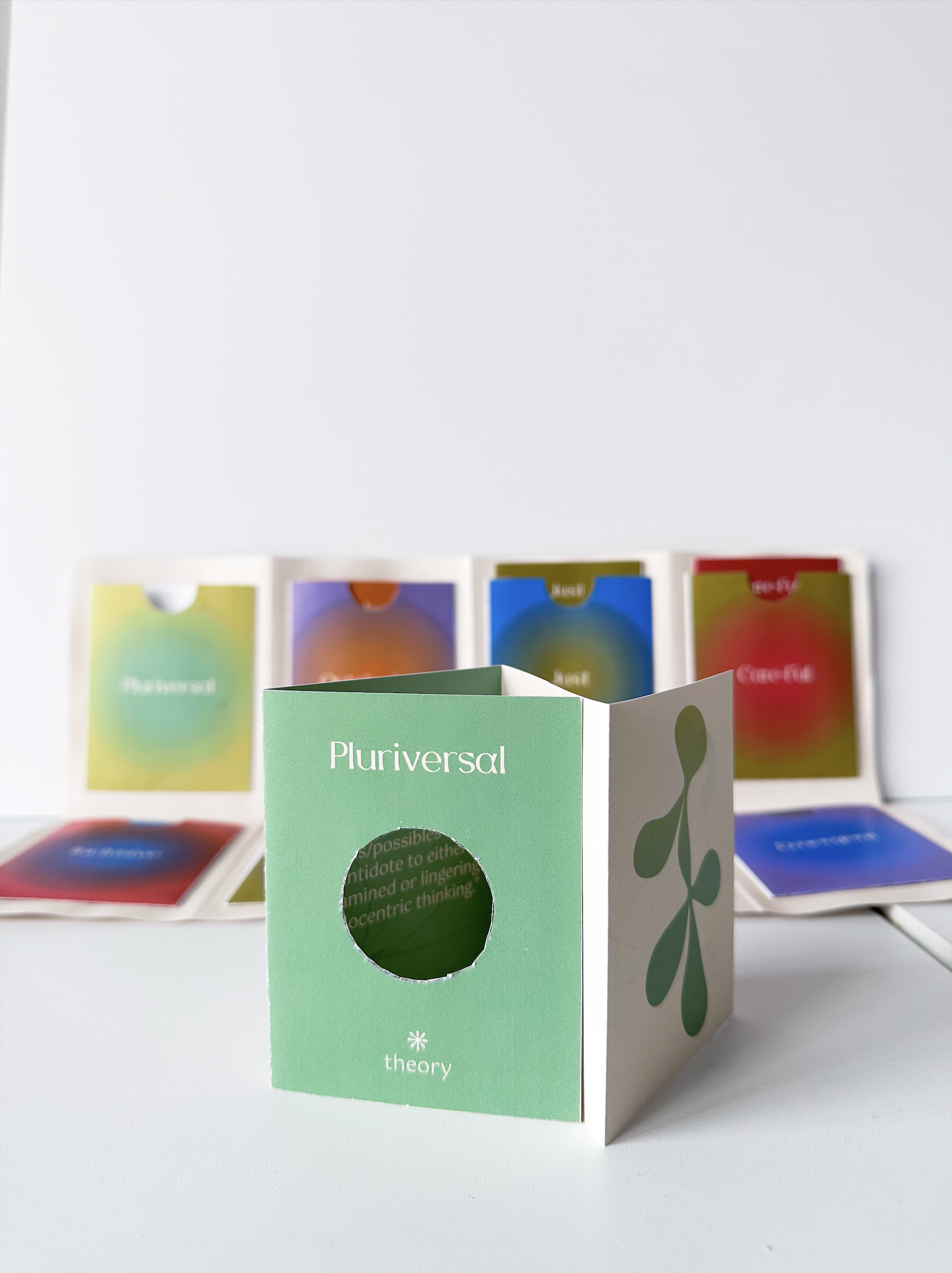
Final Zine
The result: Seeds of Transformation. A foldable, flippable zine that invites readers into my design worldview.
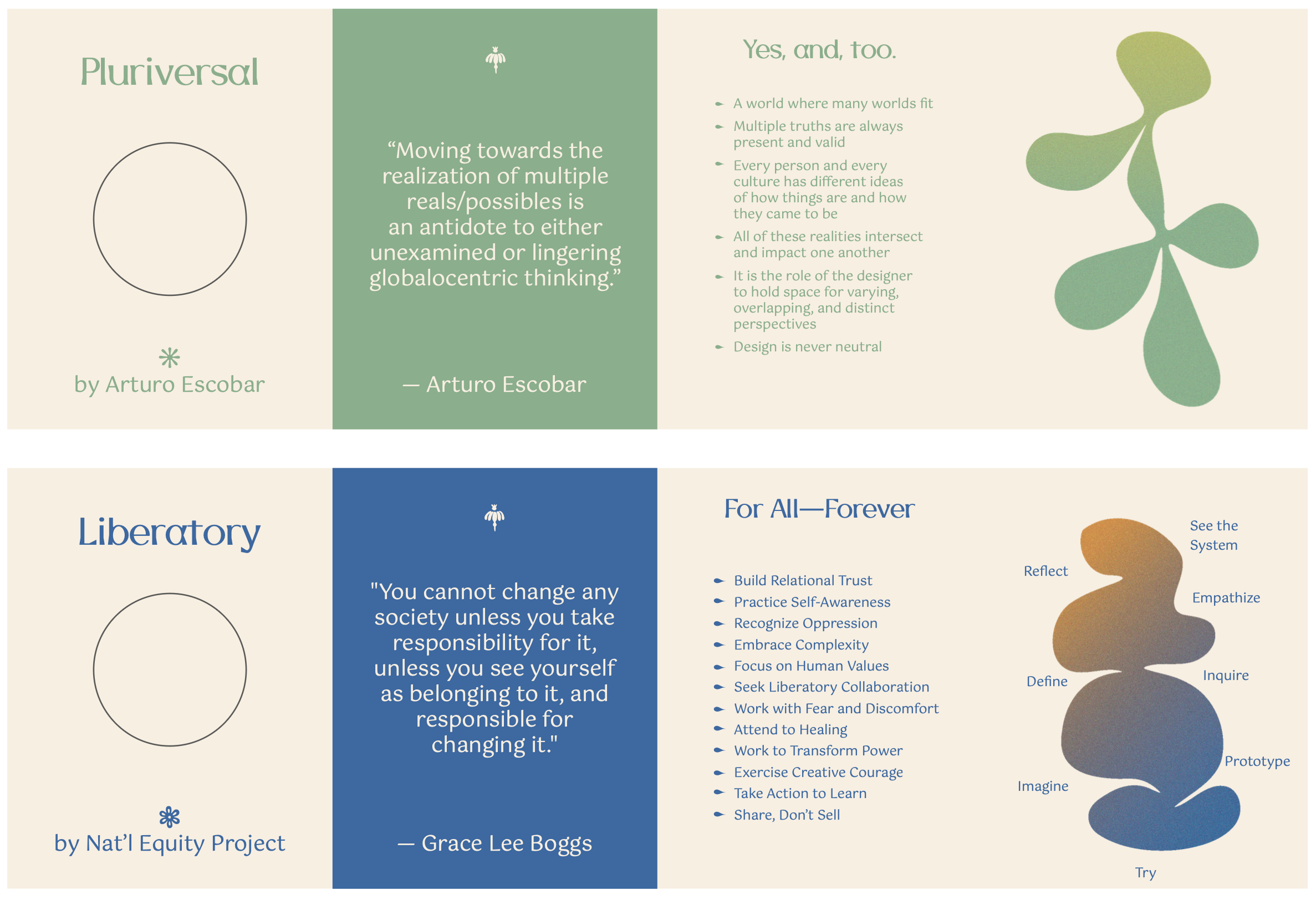
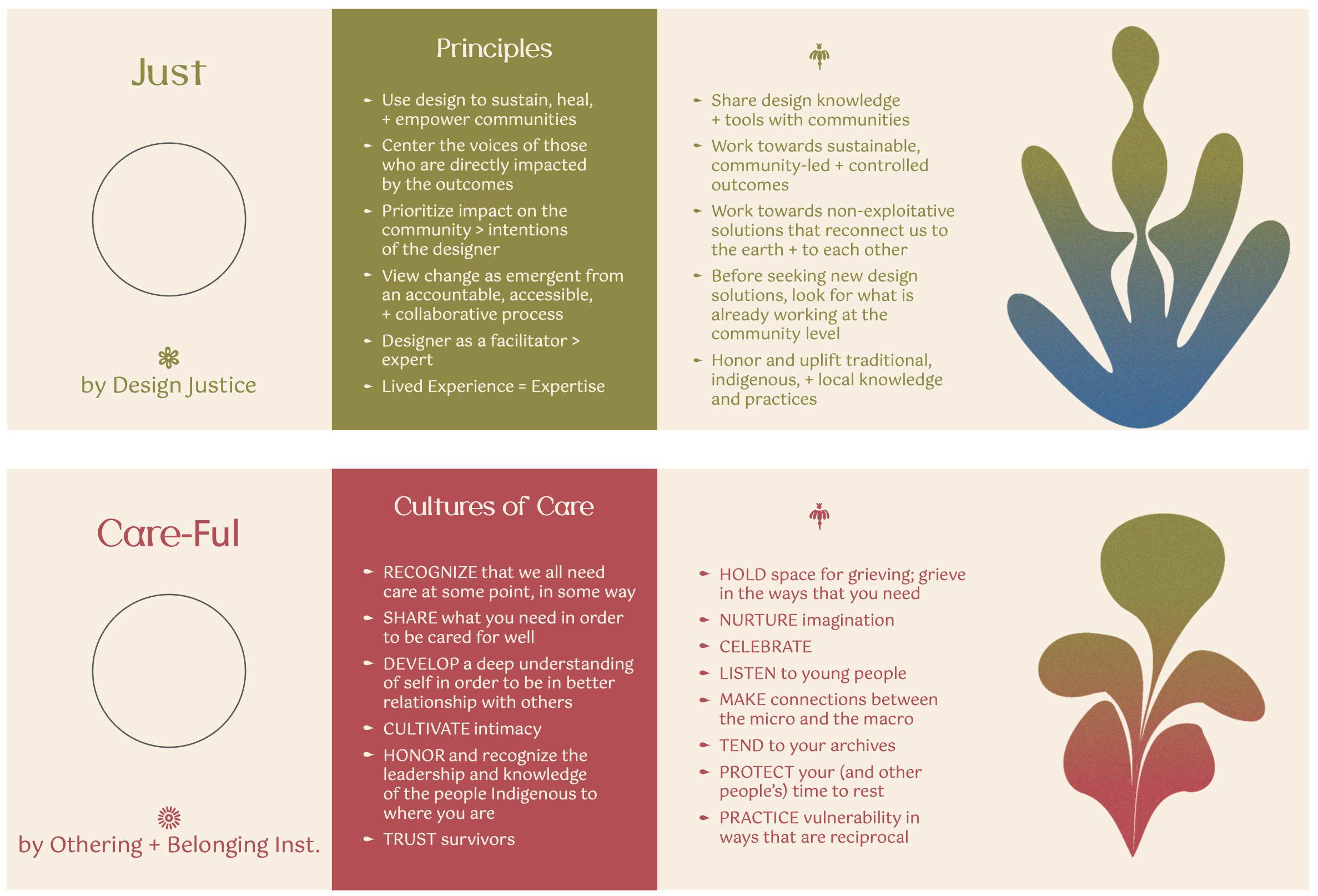
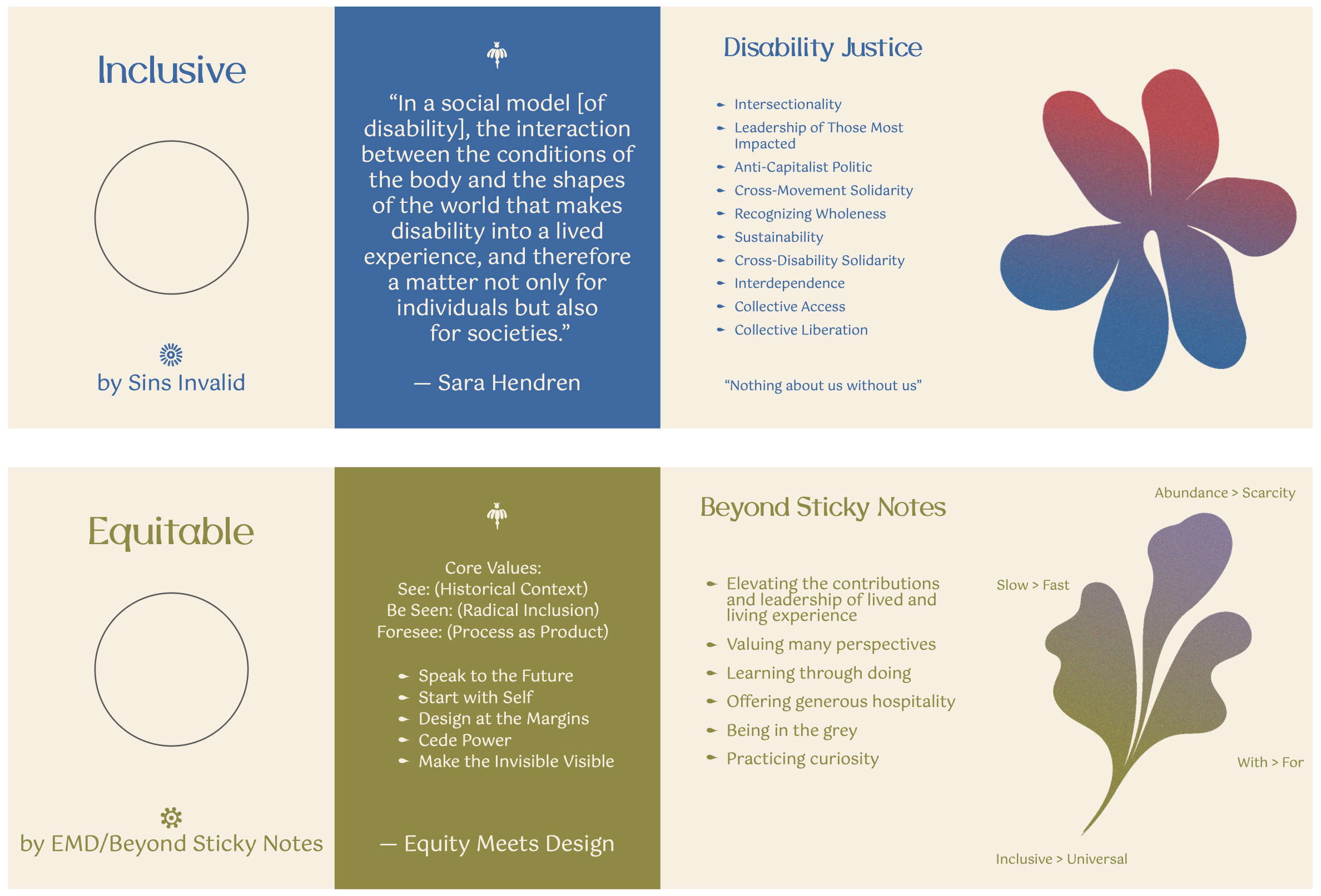
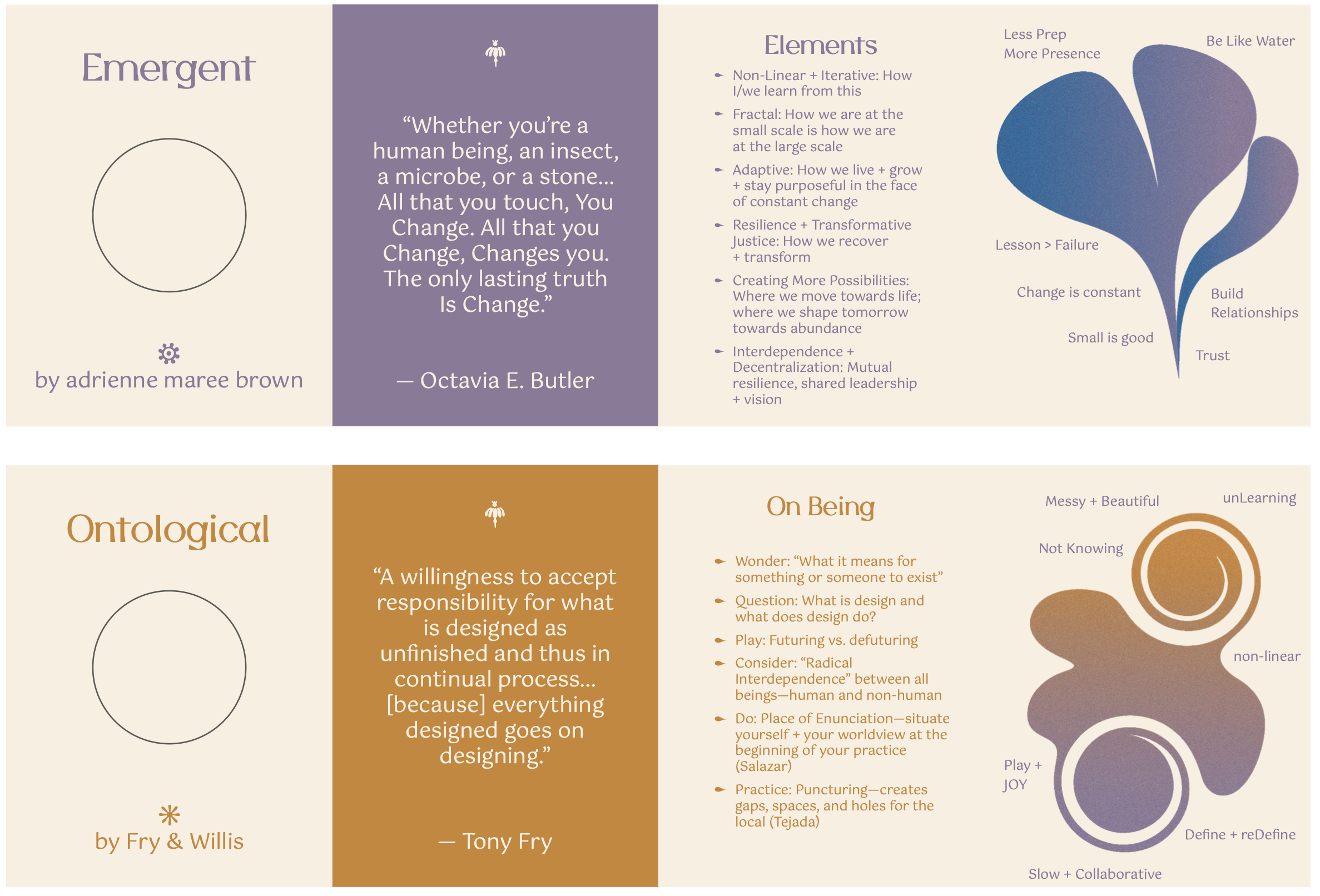
Inside the seed bank, each mini-zine explores one of my core values and its roots:
A guiding quote
A design principle
A hand-drawn seed illustration
Each element serves as a gesture of gratitude to the thinkers, practitioners, and communities who guide my work.
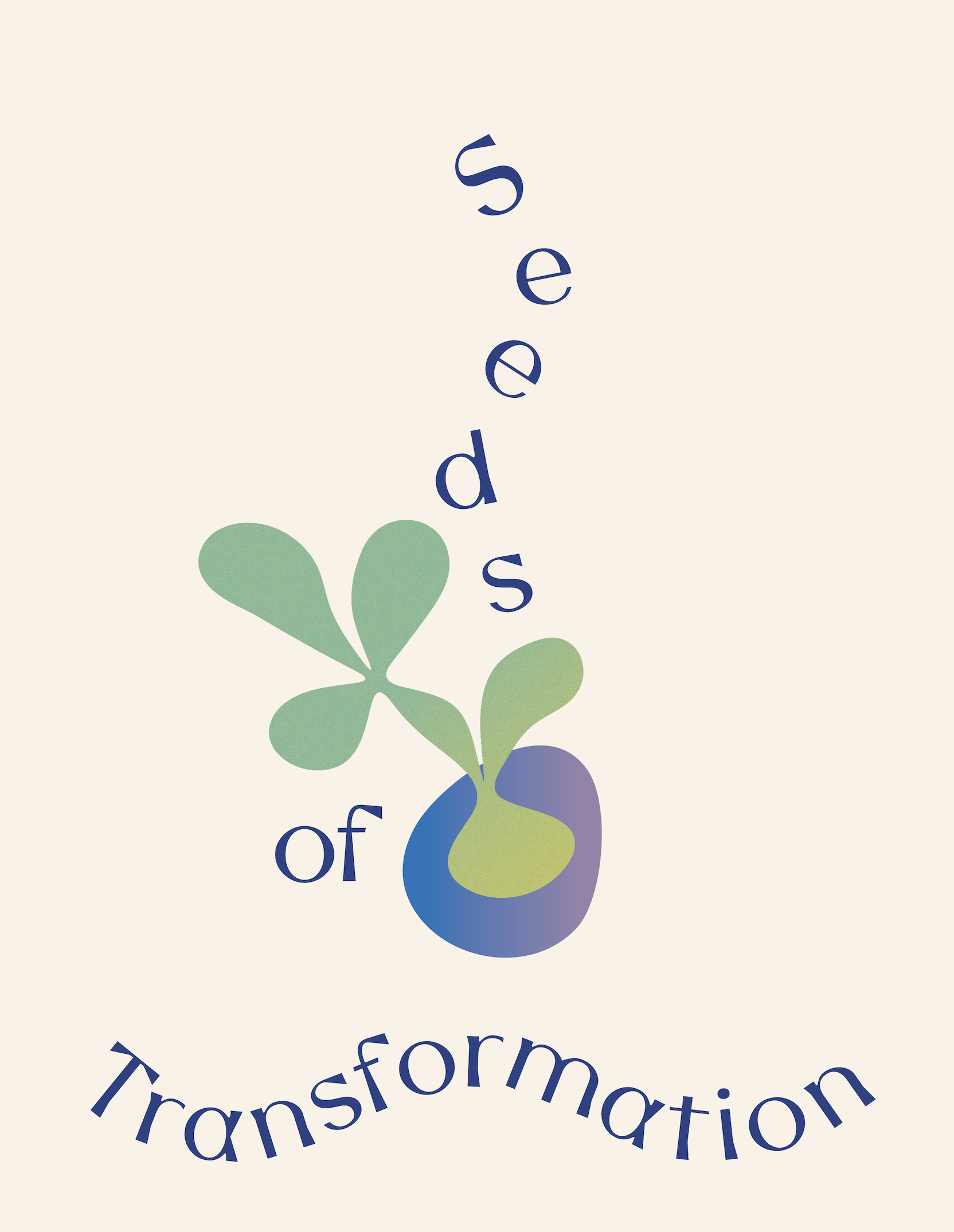
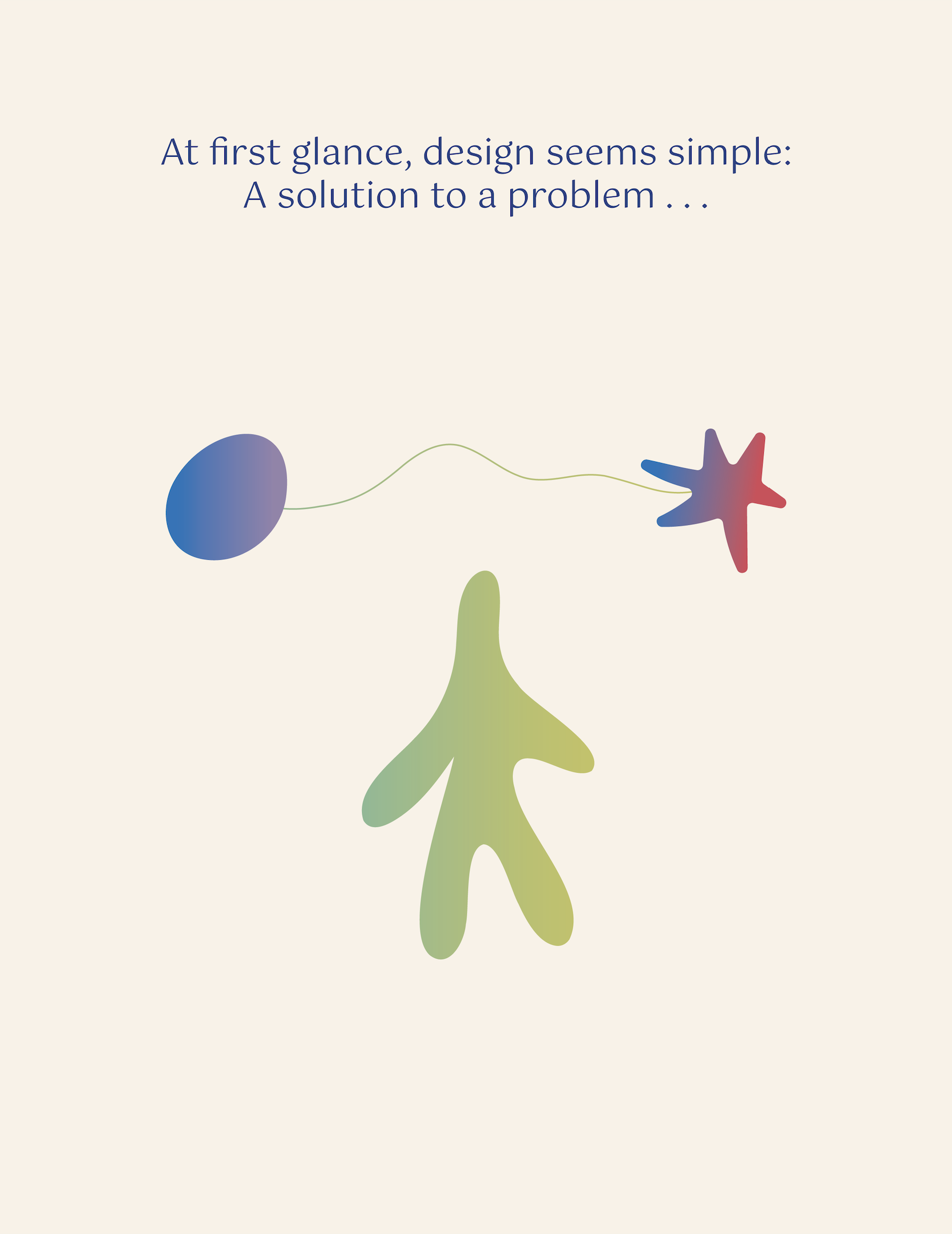

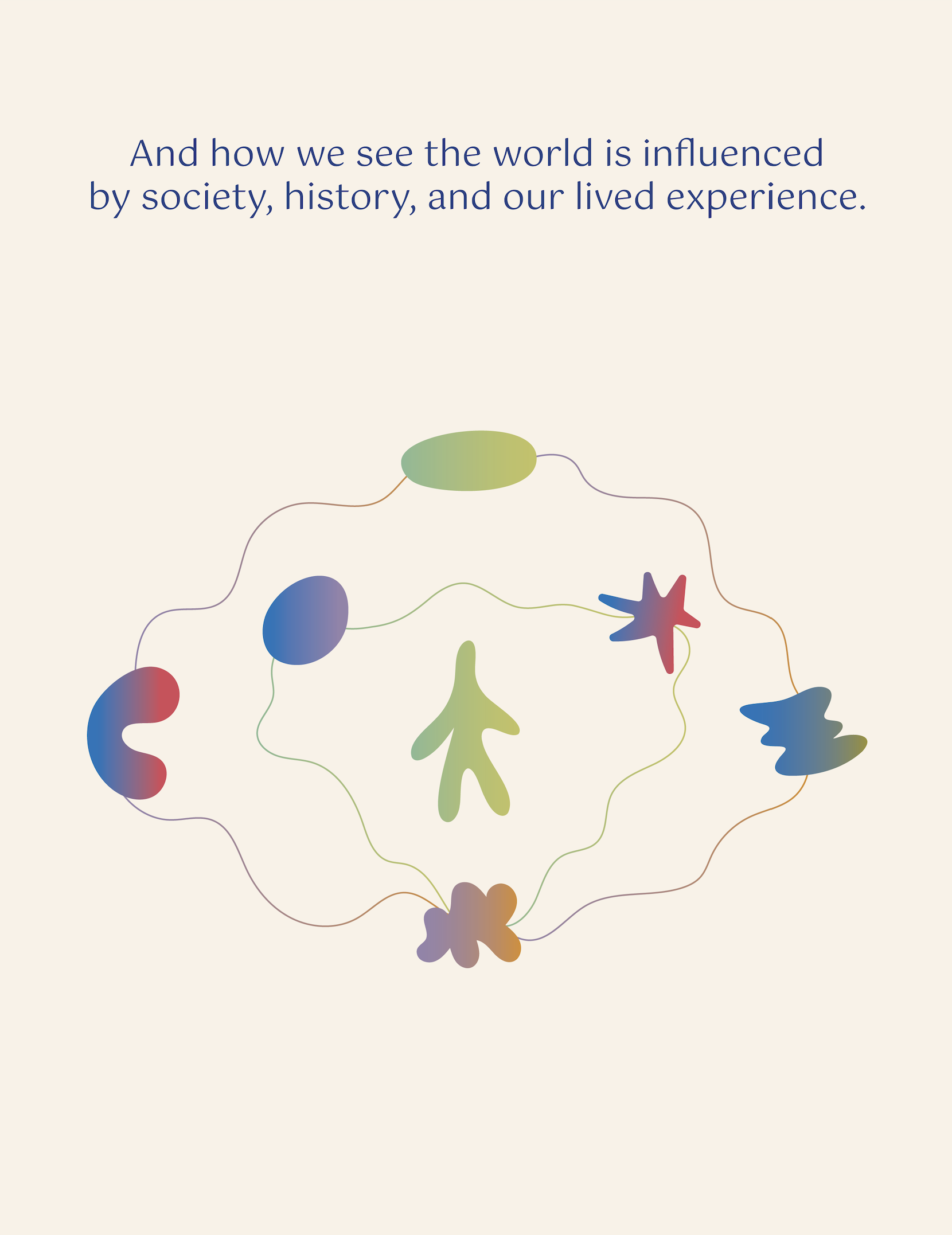
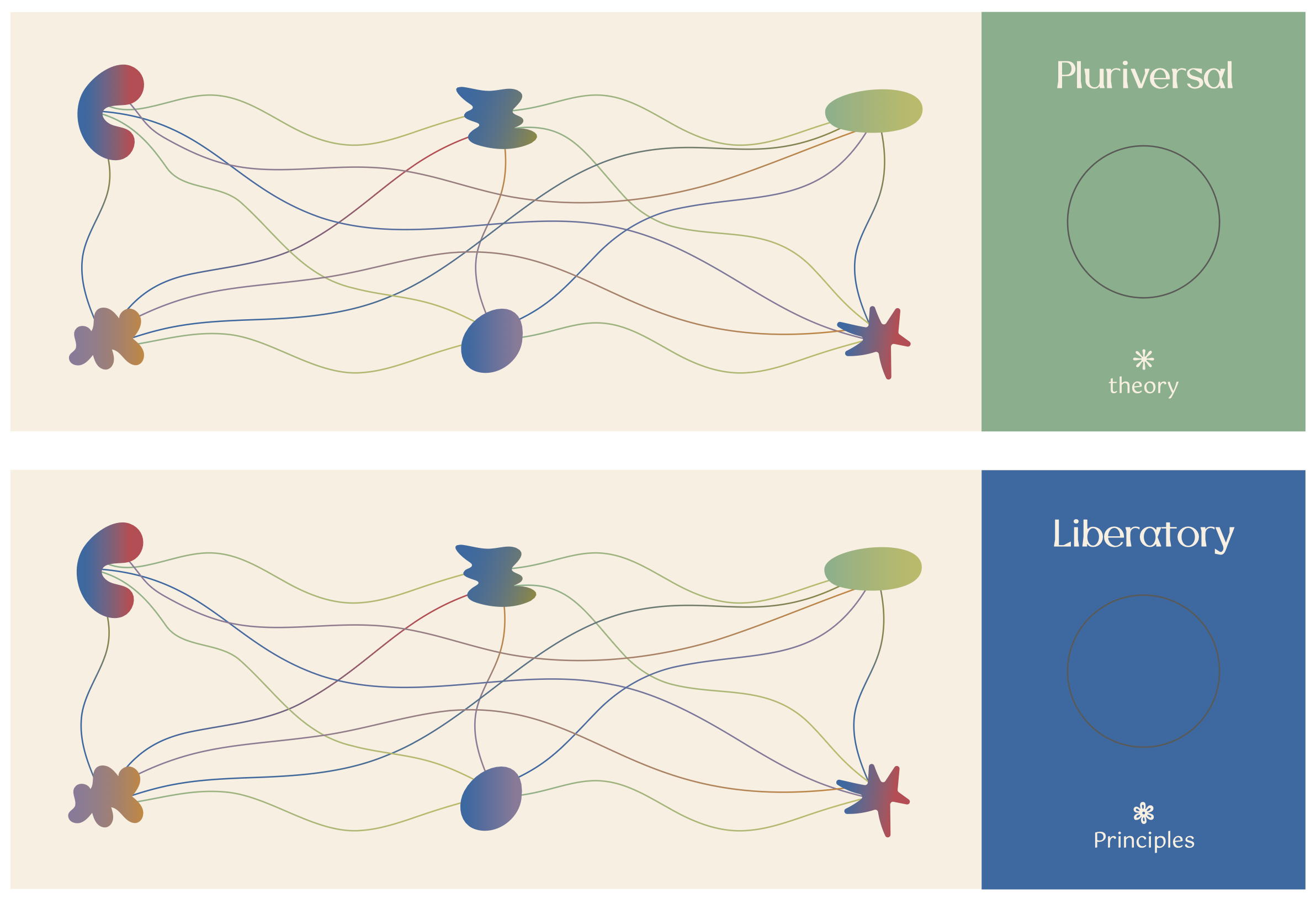
Below are the digital files for the mini-zines of my design values within the seed bank featuring:
Value + Source
Quotes
Principles
Seed Illustration
Approach:
I began with big questions and an open mind, gradually anchoring my vision around the metaphor of form as meaning. I knew I wanted the final piece to be tactile, vibrant, and interactive—something that invited exploration.
Professor Jonathan Chapman’s seminar exposed me to transformative frameworks like pluriversal design, decolonizing design, and social design. These challenged my assumptions and fueled deeper inquiry into how I could design ethically and intentionally.
I educated myself thoughtfully on existing frameworks for justice and equity within the industry while assessing my own worldview and privileges. This process led me to co-design—the core of my design philosophy.
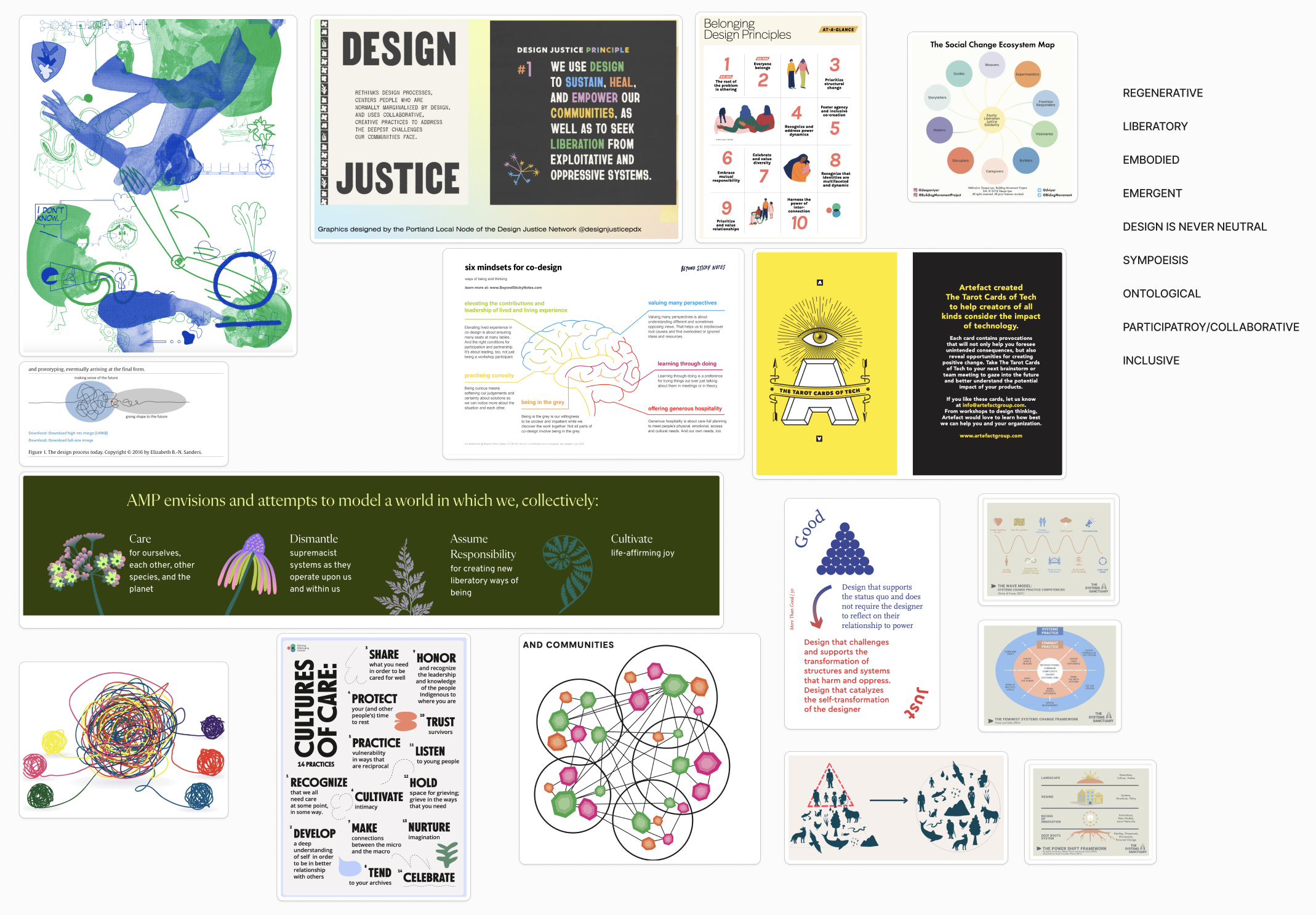
I dove into independent research, exploring restorative justice pedagogies and equity-oriented design practices. I was deeply inspired and influenced by archival resources such as:
Ultimately, I decided that the most meaningful contribution I could make was to gather and amplify the voices already leading this work. Inspired by the metaphor of a seed bank or a community seed stand, I created Seeds of Transformation—curated zine of collective wisdom and inspiration that I hope can grow alongside me as I step into my career.
(See bibliography at the end)
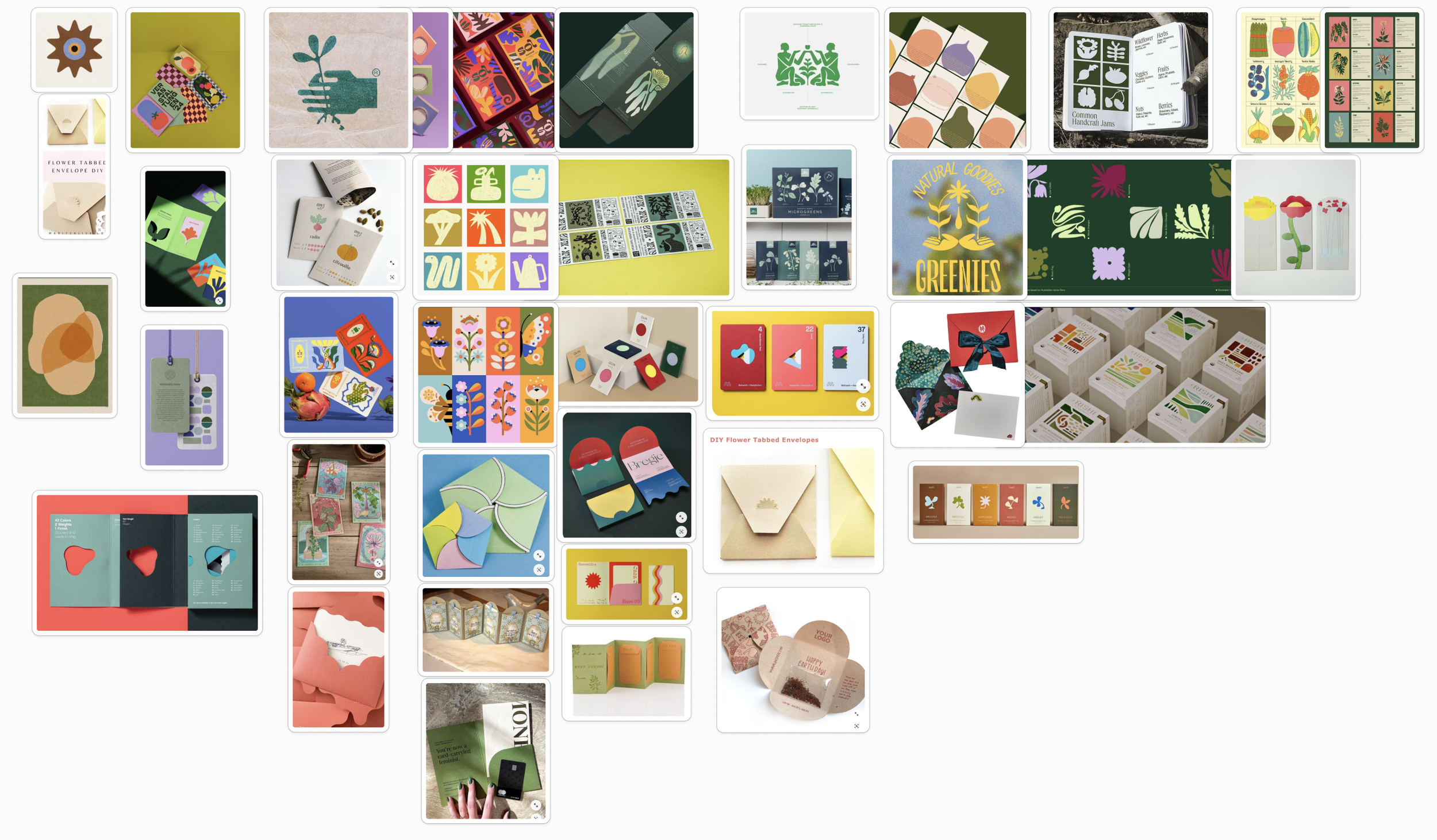
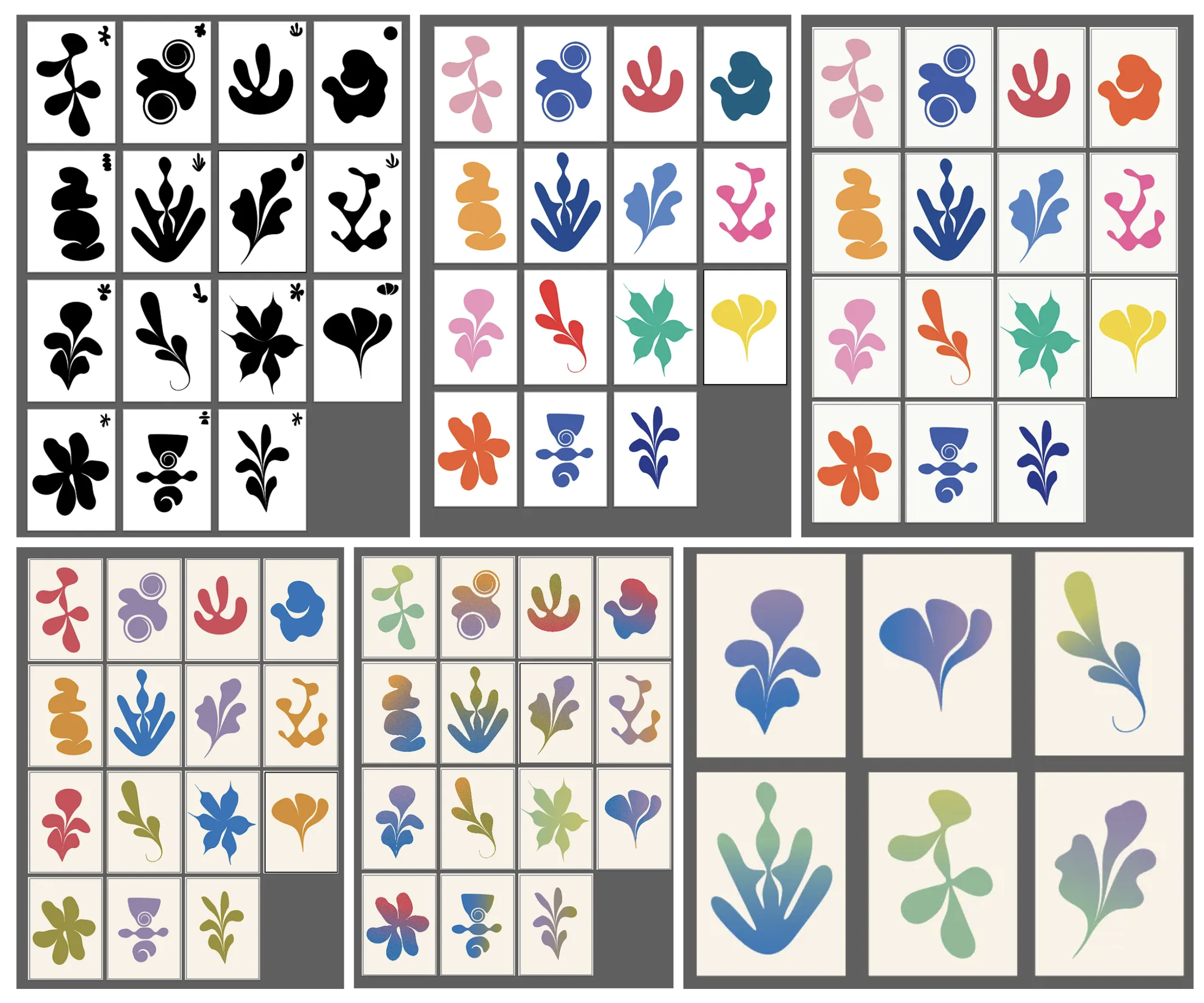
Visual Language:
Organic, hand-drawn shapes
Vibrant, earthy colors
A balance of clarity and play
Structure used as metaphor
Multiple print tests helped refine the final product. In future iterations, I’d opt for thicker paper stock to minimize wrinkling and enhance durability.
Works Cited:
Reflection
Seeds of Transformation is a love letter to the values that sustain me and the communities that shape me. It’s also a prototype—one I hope to return to and replant as I grow in this field.
Inspiration and philosophy lineage:
Allied Media Projects. (n.d.). About. https://alliedmedia.org/about
Bay Area Transformative Justice Collective. (n.d.). Home. https://batjc.org/
Beyond Sticky Notes. (n.d.). Home. https://www.beyondstickynotes.com/
Civic Laboratory for Environmental Action Research. (2016, September 28). Guidelines for research with indigenous peoples. https://civiclaboratory.nl/2016/09/28/guidelines-for-research-with-indigenous-peoples/
Corita Art Center. (n.d.). Ten rules. https://www.corita.org/tenrules
CRx Lab. (n.d.). Our approach. https://crxlab.org/our-approach
Design for Belonging. (n.d.). Toolkit. https://www.designforbelonging.com/toolkit
Design Justice Network. (2018, Summer). Read the principles. https://designjustice.org/read-the-principles
Dietkus, R. (n.d.). Home. https://www.rachaeldietkus.com/
Dietkus, R. (2022, March 8). Trauma-responsive design research: A new model for change. Service Design Network. https://www.service-design-network.org/chapters/new-york/headlines/trauma-responsive-design-research-a-new-model-for-change
Environmental Science and Innovation Institute. (n.d.). About. https://esii.org/about/
Equity Meets Design. (n.d.). Courses. https://courses.equitymeetsdesign.com/
Escobar, A. (2007). Worlds and knowledges otherwise: The Latin American modernity/coloniality research program [PDF]. Monoskop. https://monoskop.org/images/4/48/Escobar_Arturo_2007_Worlds_and_Knowledges_Otherwise_The_Latin_American_Modernity_Coloniality_Research_Program.pdf
Escobar, A. (2018). Designs for the pluriverse: Radical interdependence, autonomy, and the making of worlds. Duke University Press. https://www.dukeupress.edu/designs-for-the-pluriverse
Futuress. (n.d.). A designerly inventory. https://futuress.org/stories/a-designerly-inventory/
Futuress. (n.d.). Disrupting design with capital D. https://futuress.org/stories/disrupting-design-with-capital-d/
Generative Somatics. (n.d.). Our strategy. https://generativesomatics.org/our-strategy/
Kelley, R. D. G., & Lee, B. (2011). The next American revolution: Sustainable activism for the twenty-first century. University of California Press. https://www.ucpress.edu/books/the-next-american-revolution/paper
Le Masson, P., Weil, B., & Hatchuel, A. (2010). The highways and byways to radical innovation: Design perspectives (241 pages). ResearchGate. https://www.researchgate.net/publication/271849203_The_Highways_and_Byways_to_Radical_Innovation_-_Design_Perspectives_241_pages
MIT Press. (n.d.). Introduction and overview: Collective wisdom executive summary & biographies. https://wip.mitpress.mit.edu/pub/collective-wisdom-exec-sum-biographies/release/3
National Education Association. (n.d.). Racial justice journey. https://www.nea.org/racialjusticejourney
National Equity Project. (n.d.). Liberatory design frameworks. https://www.nationalequityproject.org/frameworks/liberatory-design
National Performance Network. (n.d.). Mixed Metaphor: A Liberatory Infrastructure Learning Deck. Leveraging a Network for Equity (LANE). https://npnweb.org/field/resources/lane/mixedmetaphor/learning-deck/
Othering & Belonging Institute. (n.d.). Cultures of care. https://belonging.berkeley.edu/cultures-of-care
Polymode Studio. (n.d.). Poetic research. https://www.polymode.studio/poetic-research/
SDN New York Chapter. (2022, March 8). Talk & Discussion: Radical Participatory Design with Victor Udoewa [Video]. YouTube. https://www.youtube.com/watch?v=QPTjojjLqeA
Sins Invalid. (n.d.). 10 principles of disability justice. https://sinsinvalid.org/10-principles-of-disability-justice/
Sleeswijk Visser, F., Stappers, P. J., van der Lugt, R., & Sanders, E. B.-N. (2005). Contextmapping: Experiences from practice. Academia.edu. https://www.academia.edu/32246367/Contextmapping_experiences_from_practice
SpeculativeEdu. (n.d.). Beyond speculative design: Past, present, future. https://speculativeedu.eu/beyond-speculative-design-past-present-future/
Tejada, R. (n.d.). The Decolonizing, or puncturing, Design Reader. Are.na. Retrieved May 5, 2025, from https://www.are.na/ramon-tejada-ox4e5gvrosu/the-decolonizing-or-puncturing-design-reader
Toptal. (n.d.). Inclusive design infographic. https://www.toptal.com/designers/ui/inclusive-design-infographic
Valiz. (2021). Design struggles [PDF]. https://valiz.nl/images/DesignStruggles-DEF_978-94-92095-88-6single-4March21-VALIZ-def.pdf