Groundswell (2)
Making Space to Restore, Together: A Design Ecology for a Staff Well-Being QI Study
Client: UPMC Magee-Womens Hospital, Cancer Services Department
Co-Production | Healthcare | Co-Design
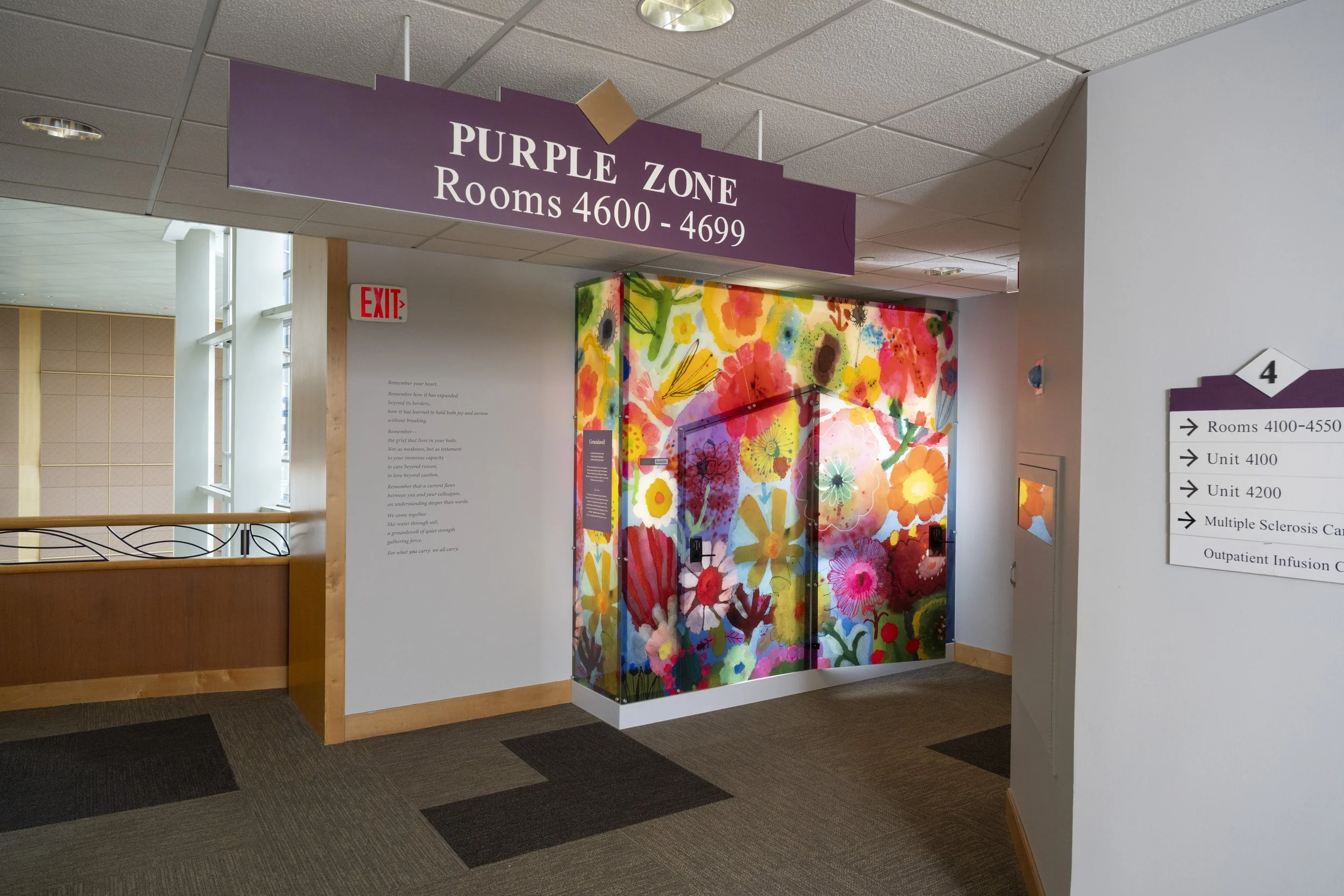
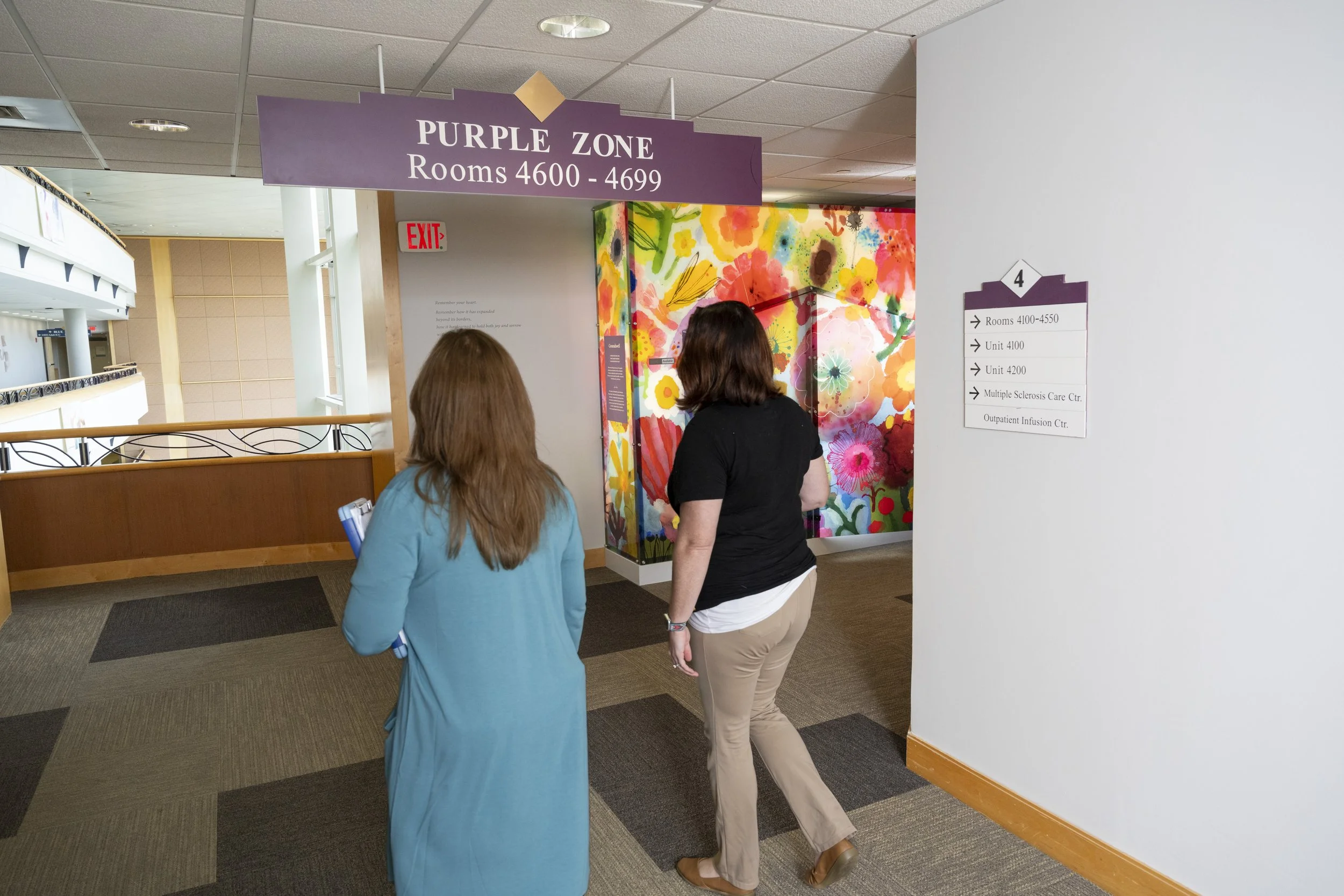
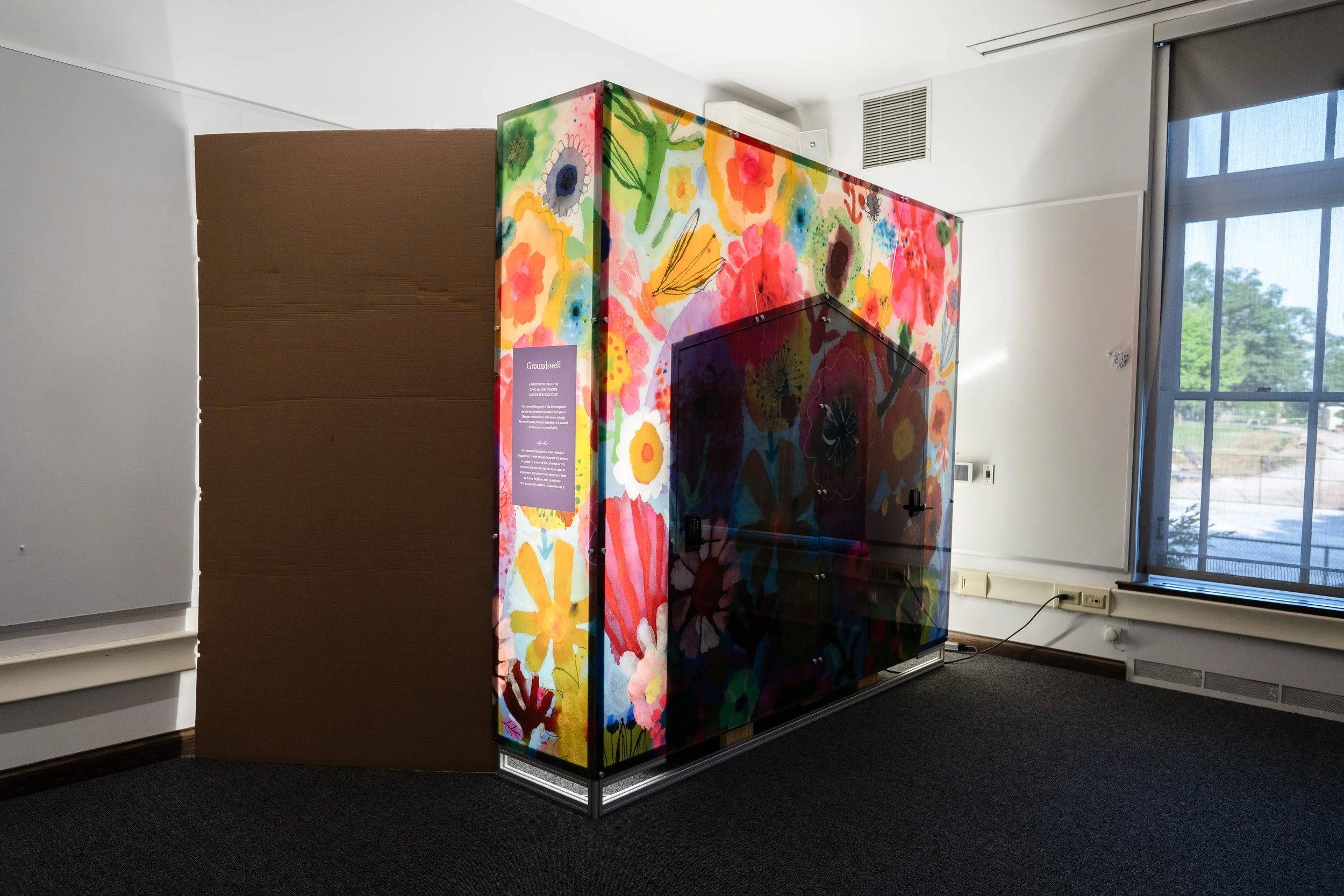
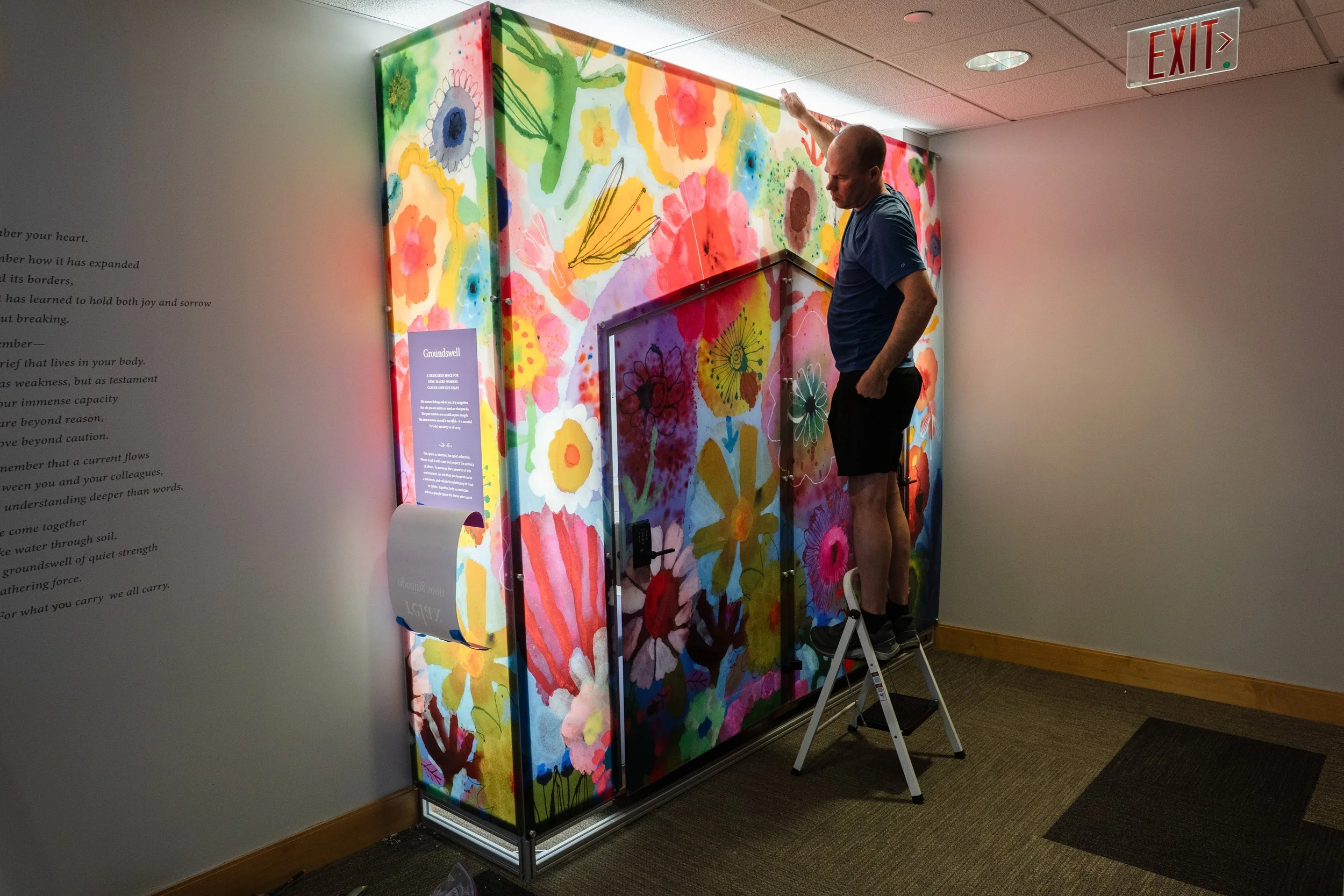
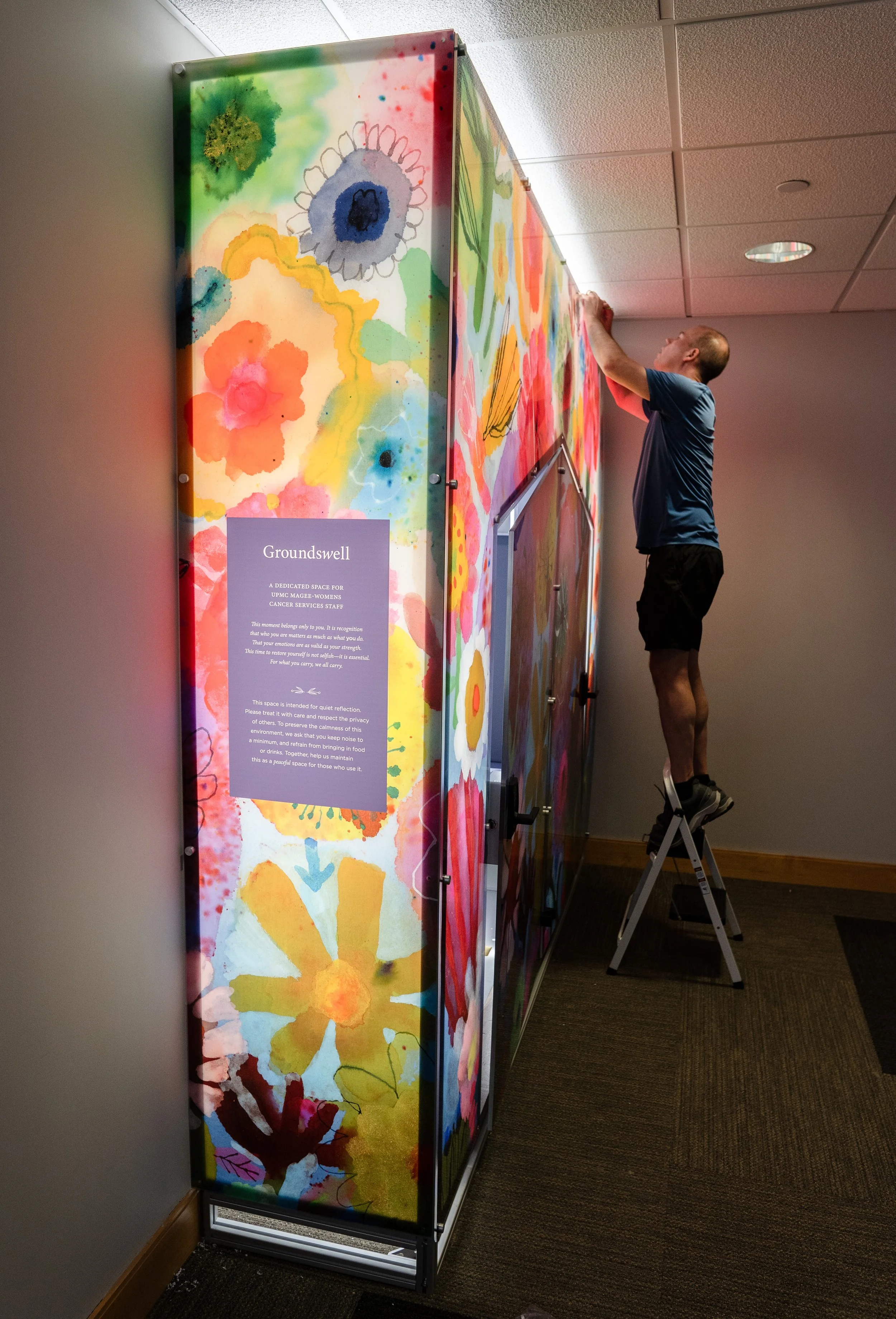
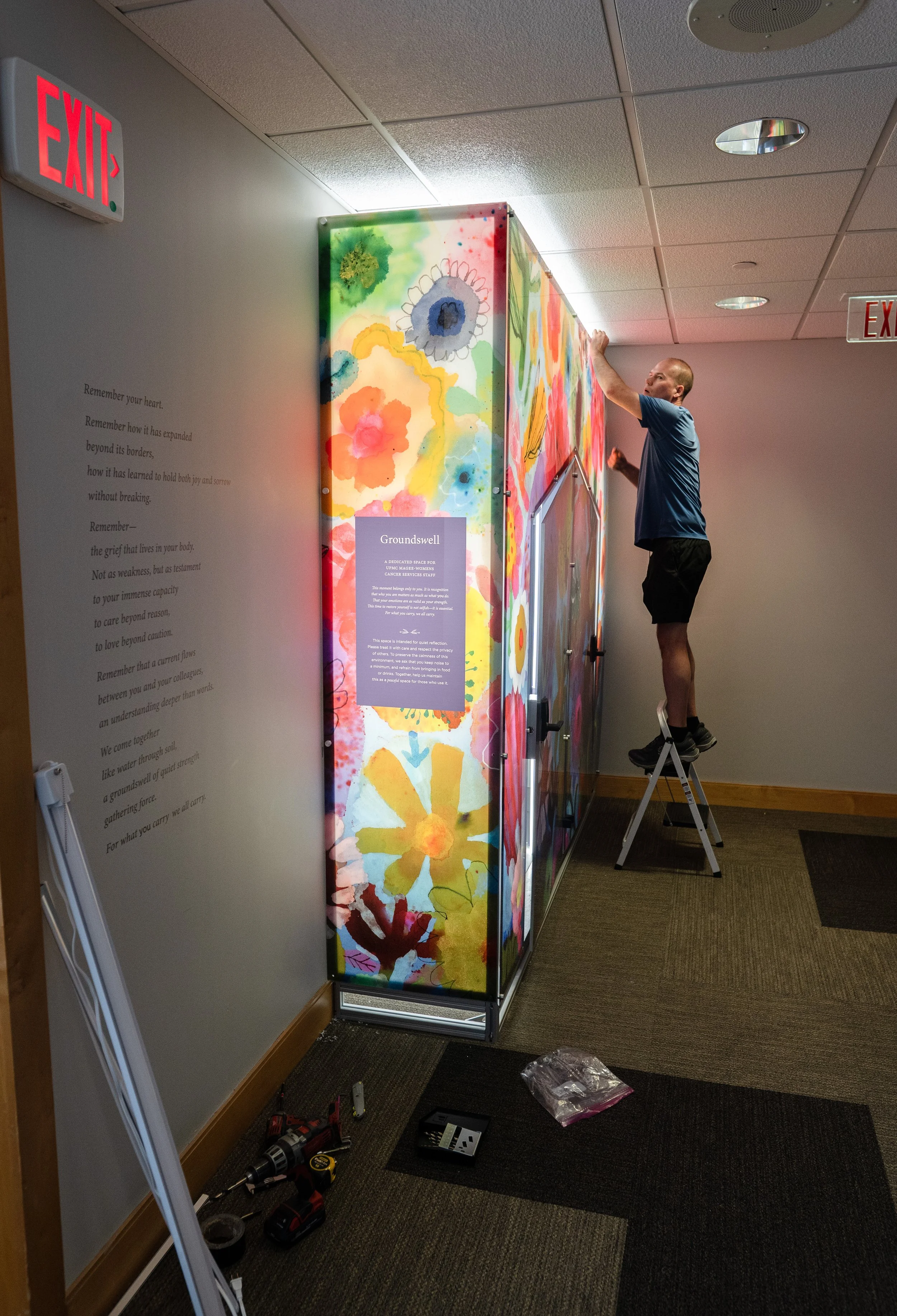
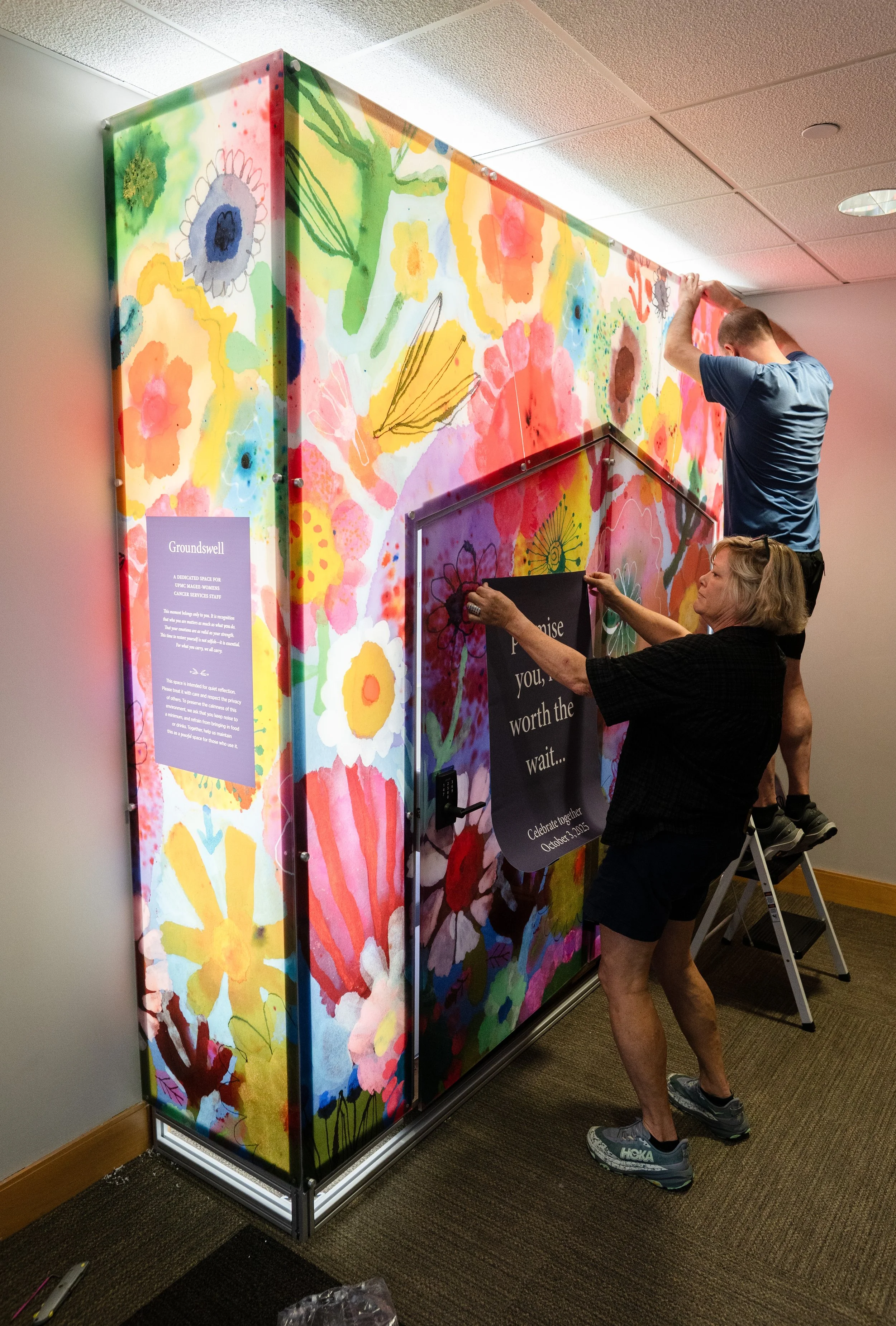
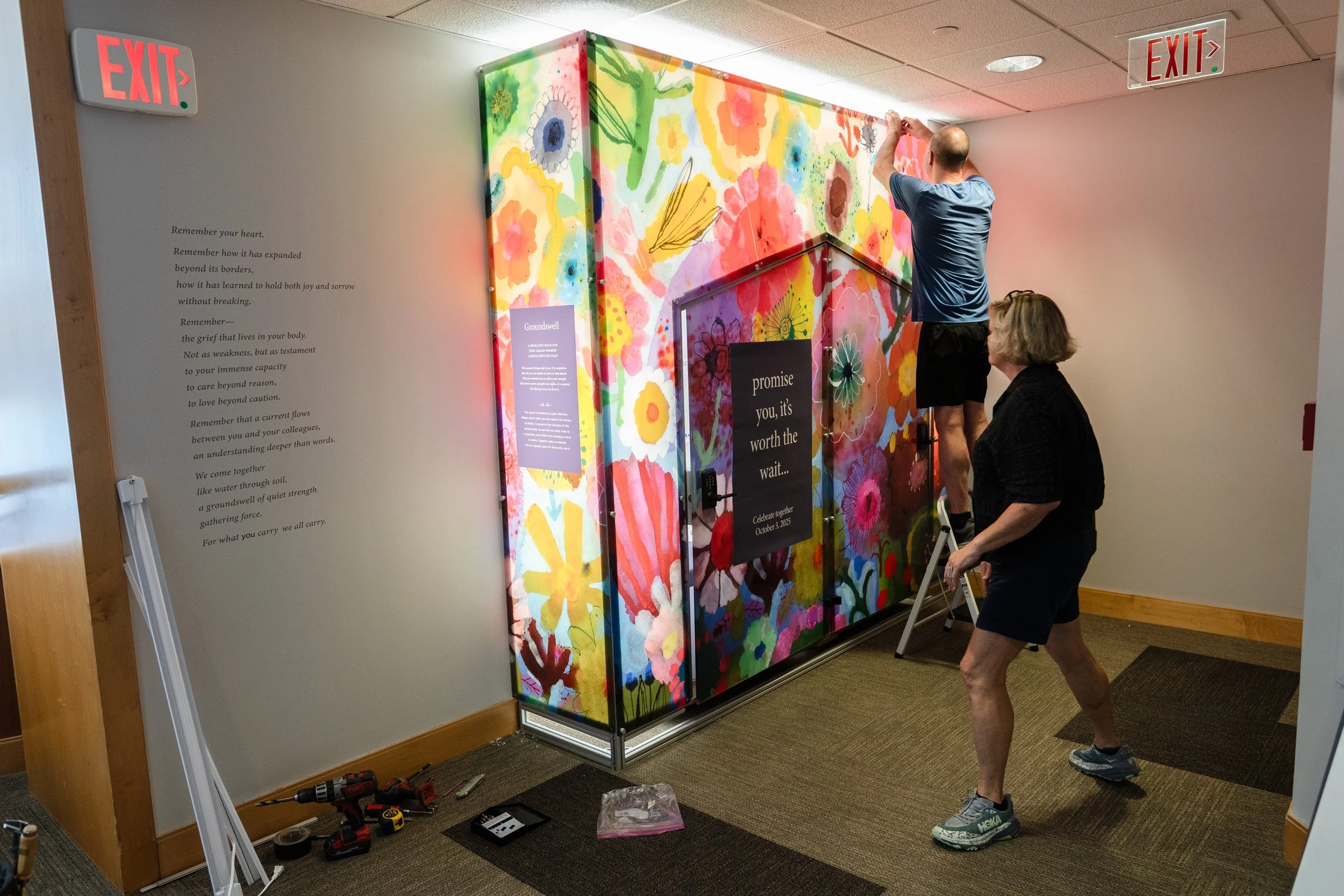
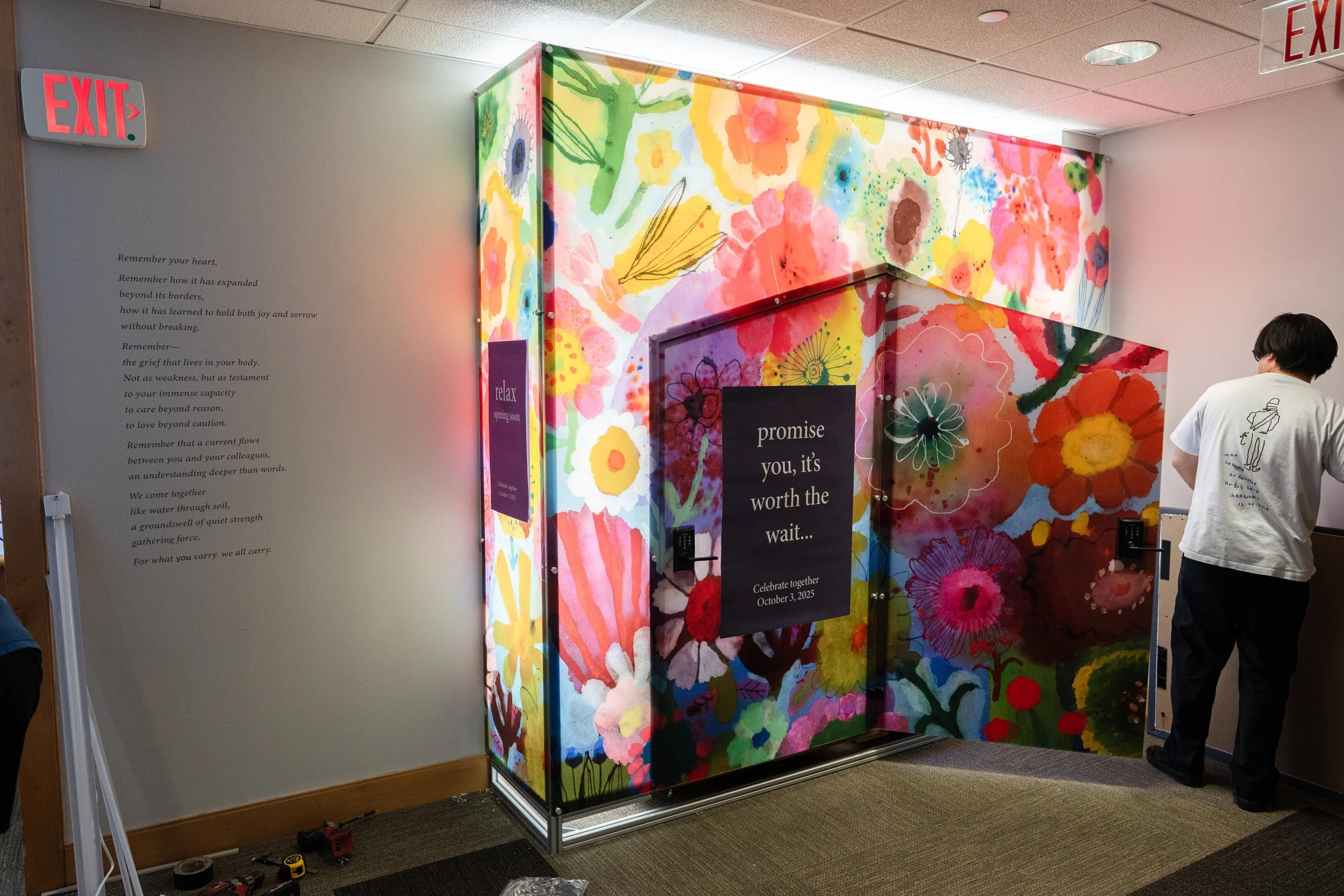
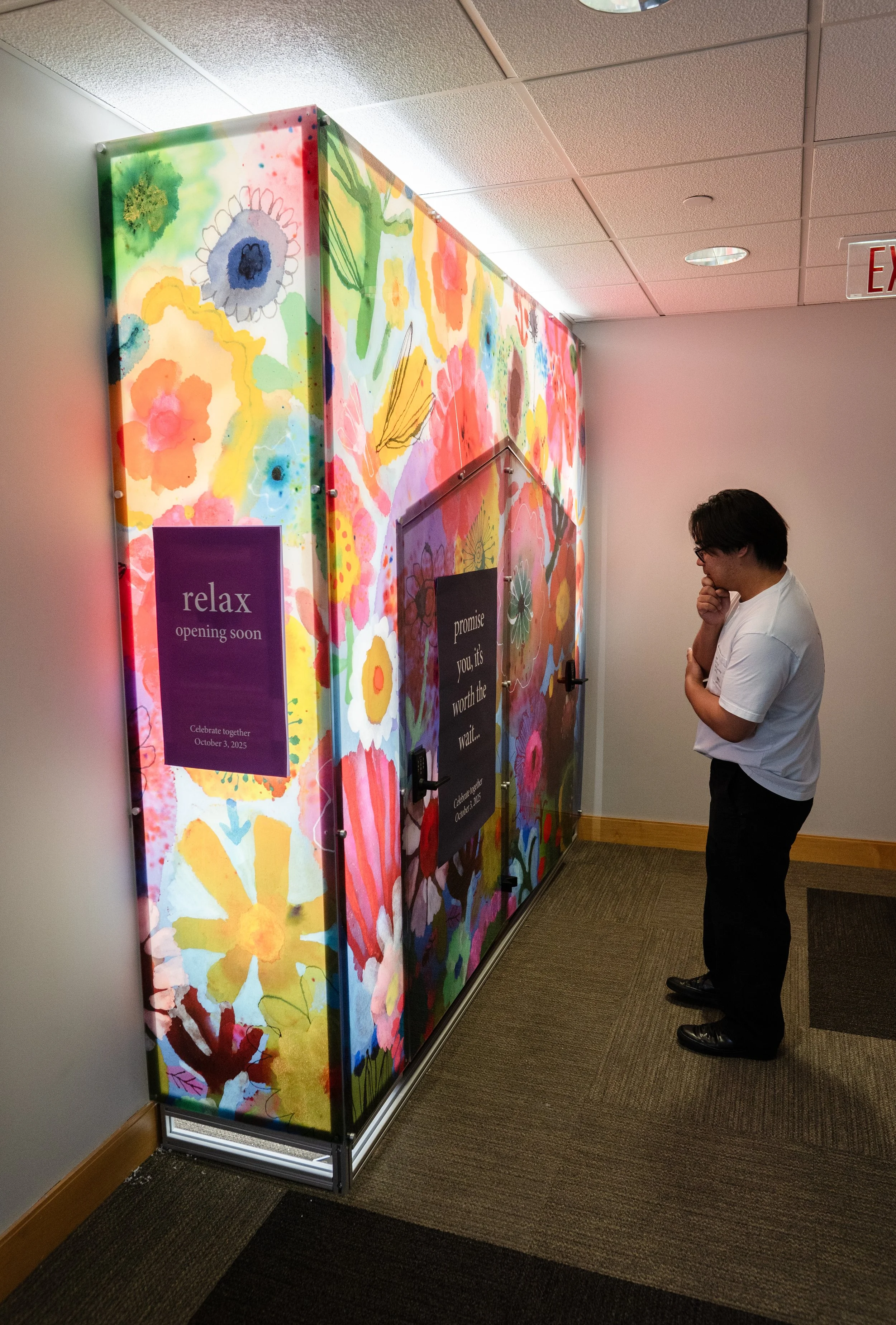
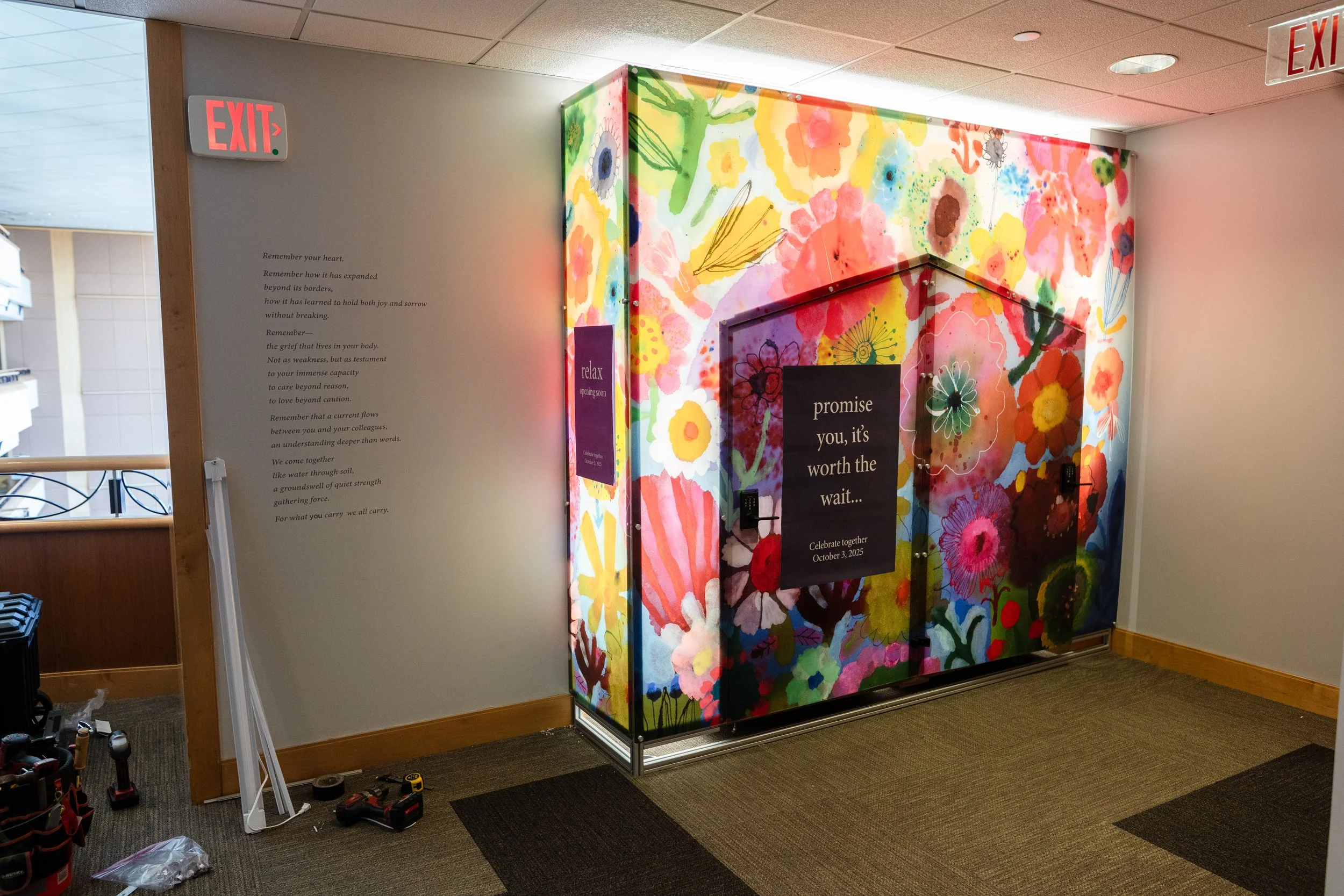
Groundswell is a grant-funded ecosystem of emotional support for healthcare workers, developed in collaboration with the Gynecologic Oncology staff at UPMC Magee-Womens Hospital. This prototype represents the culmination of the design process and will be evaluated in a 12-month quality improvement study.
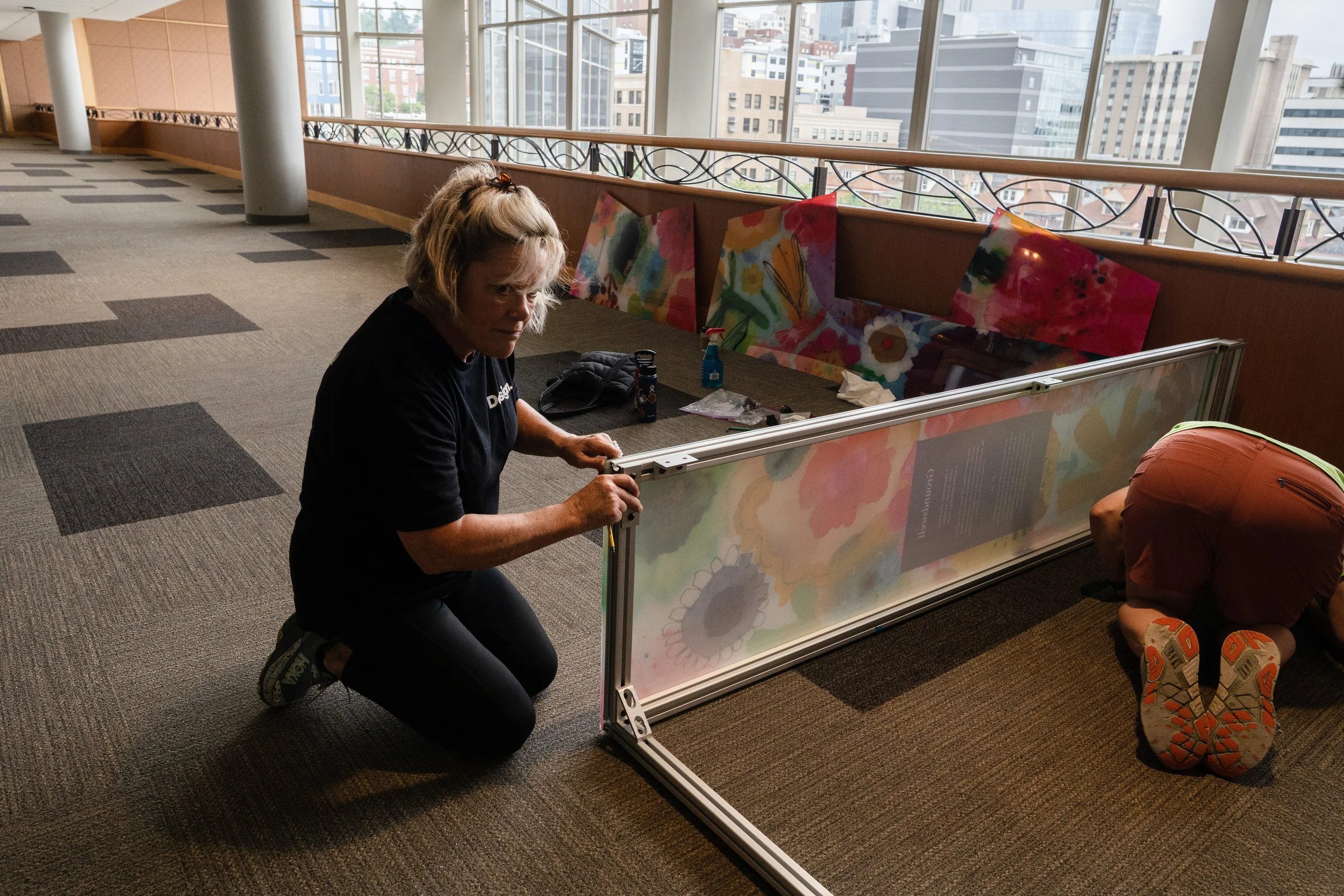
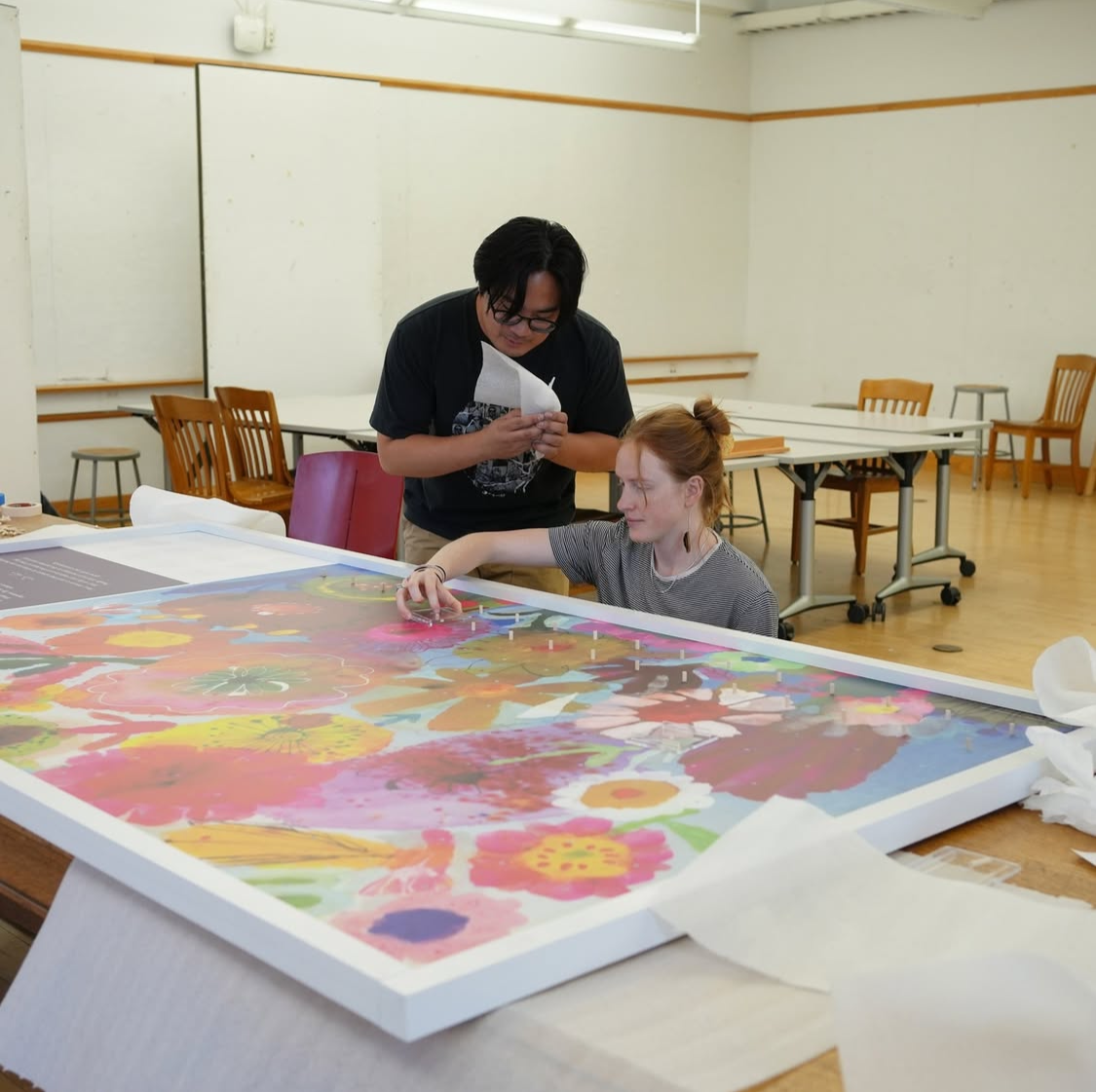
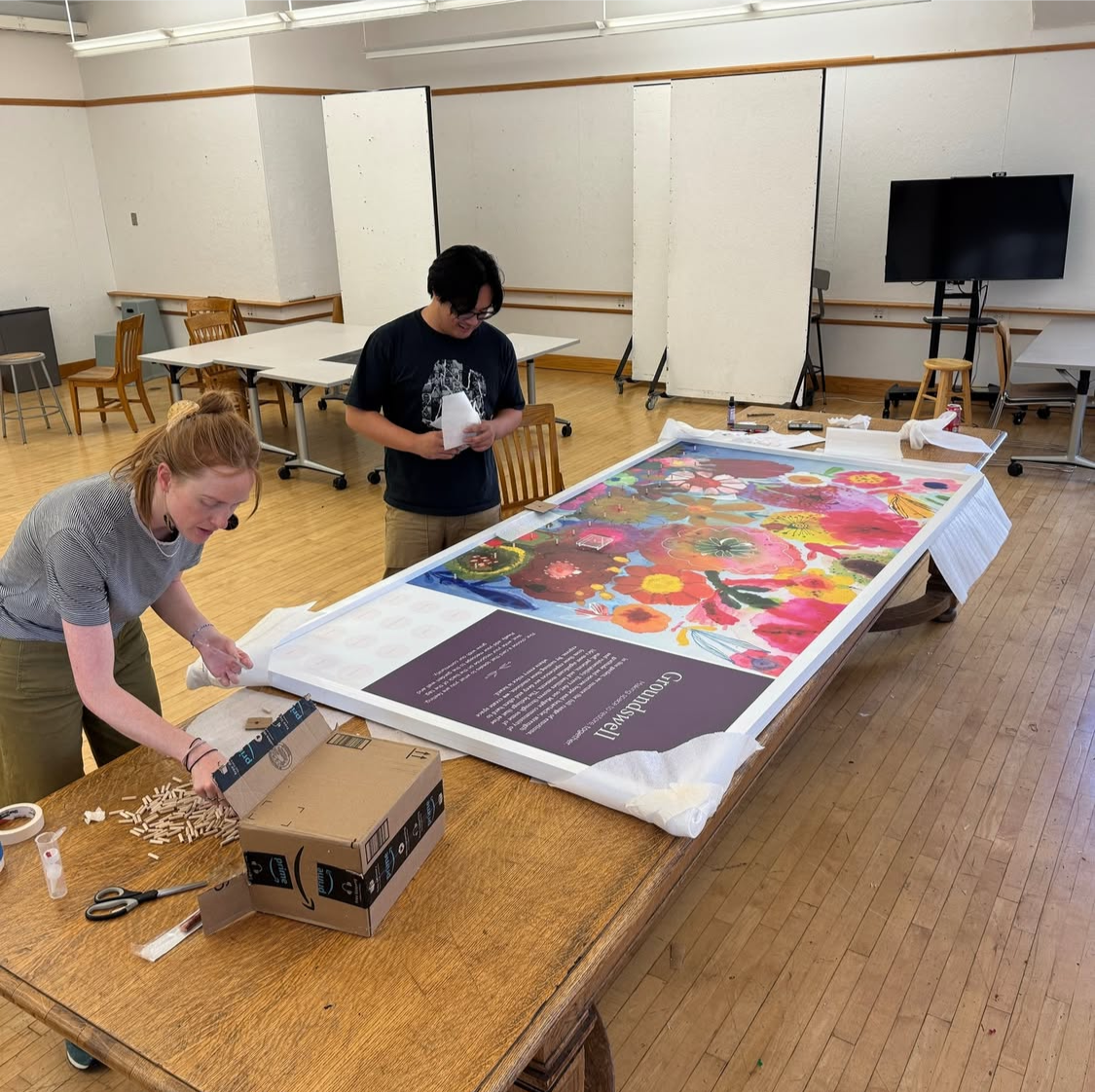
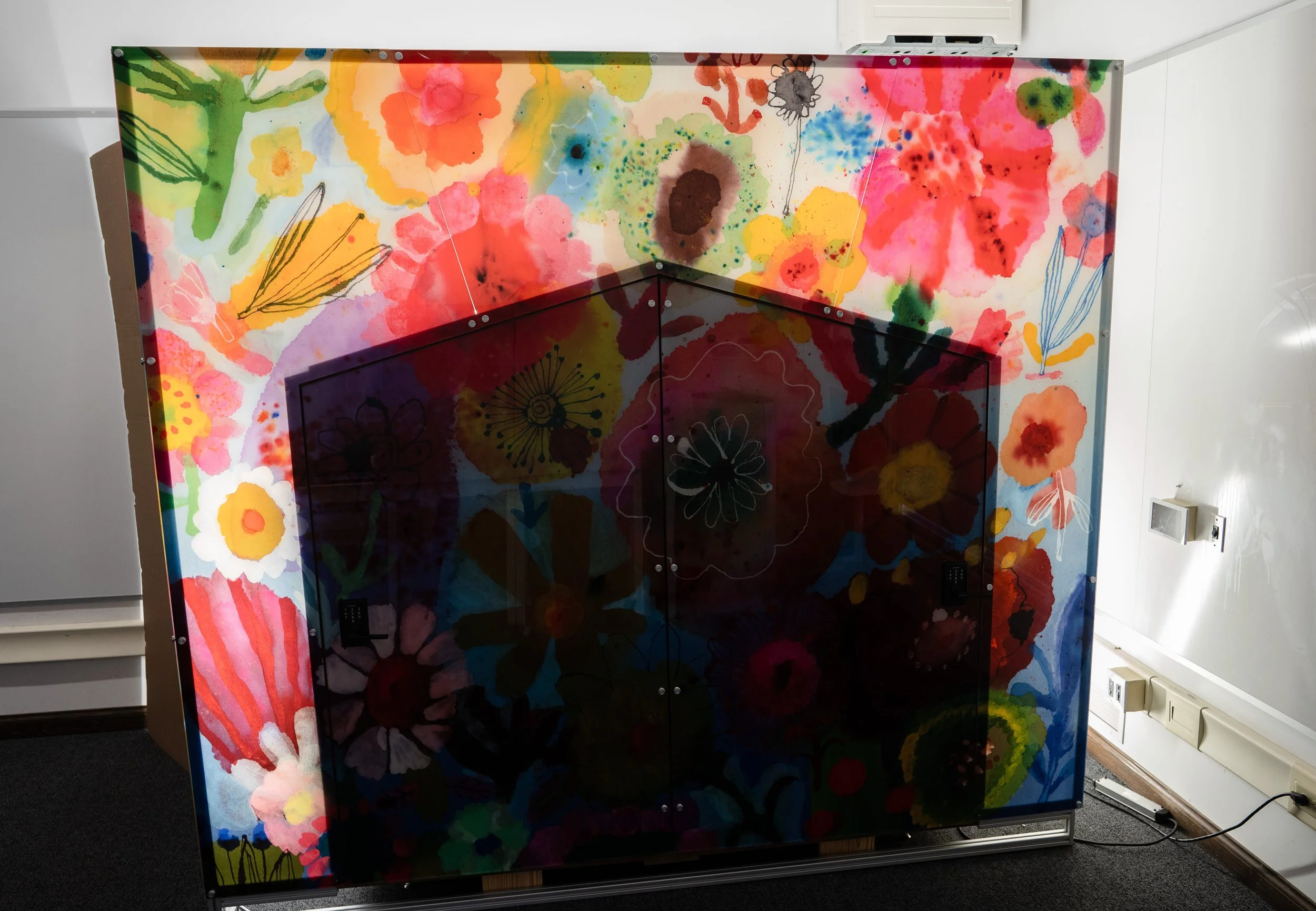
During this production phase, we refined the brand and program to best fit the needs of the staff, to work with administrative and budgetary constraints. Thanks to generous material donations, we were able to create a beautiful prototype that will serve as a resource and study material for future iterations.
Client: UPMC Magee-Womens Hospital Cancer Services
Funding: College of Fine Arts at CMU; the UPMC Magee-Womens Hospital Medical Staff Fund; and the Paul D. Schurgot Foundation
Team: Professor Kristin Hughes, Lorin Anderberg, Elijah Benzon, Greg Baltus
Credits: Dr. Sarah Taylor, Dr. Grace Campbell, Dr. Heidi Donavan, Carolyn Gavin Art, UPMC Staff, Kevin Lorenzi Photography, FoxTower Woodworking, + more below
Duration: 10 weeks—Ongoing
Press: CMU Article, CMU Article 2
Design Challenge
Turn a complex high-fidelity concept into a functional prototype for a quality improvement research study introducing emotional support resources to oncology staff.
How might we translate the findings of our 15-week research project and concept proposal into a beautiful and functional installation for a pilot program with a limited budget? How might we work with institutional red tape, hospital stakeholders, and multidisciplinary professionals to achieve a big ask in a short period of time?
Upon receiving generous donations such as the NookPod in addition to grant funding from UPMC and CMU College of Fine Arts we embarked on a rapid journey where we faced new limitations and constraints. Through partnership and iteration we were able to produce a beautiful outcome and will continue to manage the study for the next 12 months.
Core Components
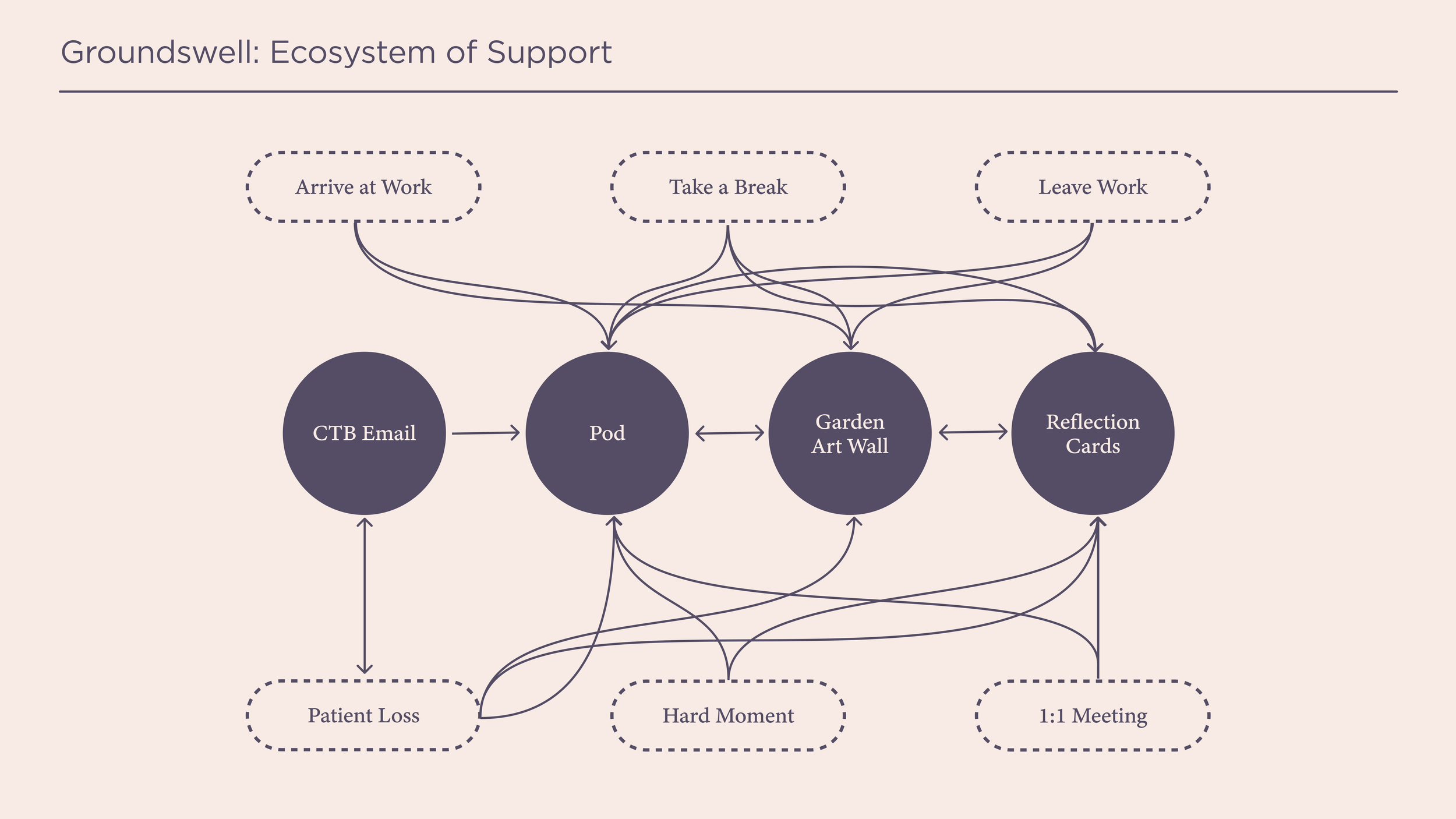
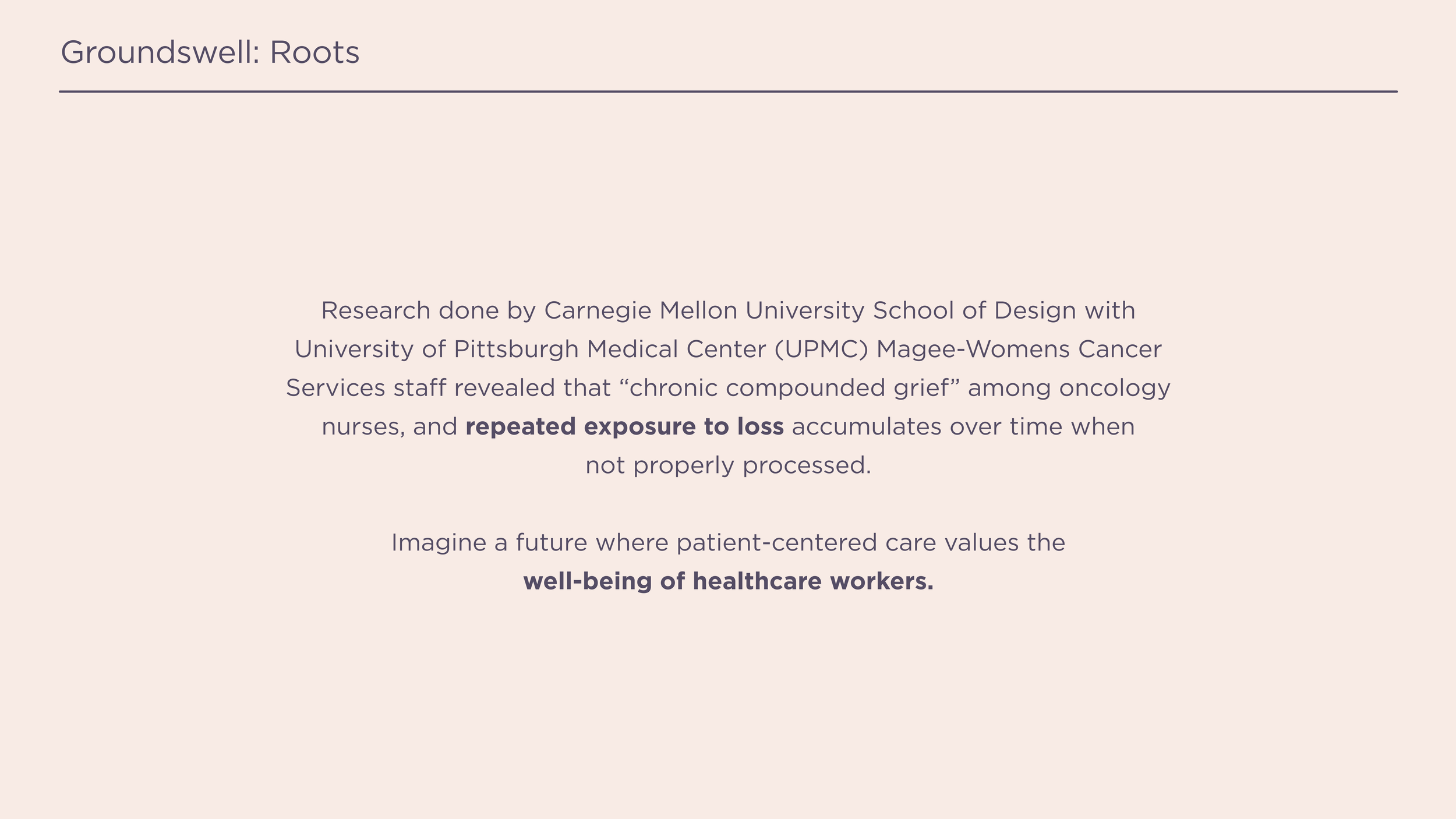
Designing sustainable interventions within complex systems demands rigorous research, meaningful relationships, and genuine reciprocity. In an era where AI-driven solutions dominate healthcare innovation, Groundswell stands apart as a deeply relational, multi-dimensional design ecosystem that confronts a profound truth: healthcare worker well-being is essential to truly patient-centered care, yet has been systematically neglected. By addressing caregiver well-being through interconnected, meaningful touch points, Groundswell asks us to shift our perspective on caregiving from individual transactions to a holistic culture of care that requires nurturing community and belonging to be truly sustainable.
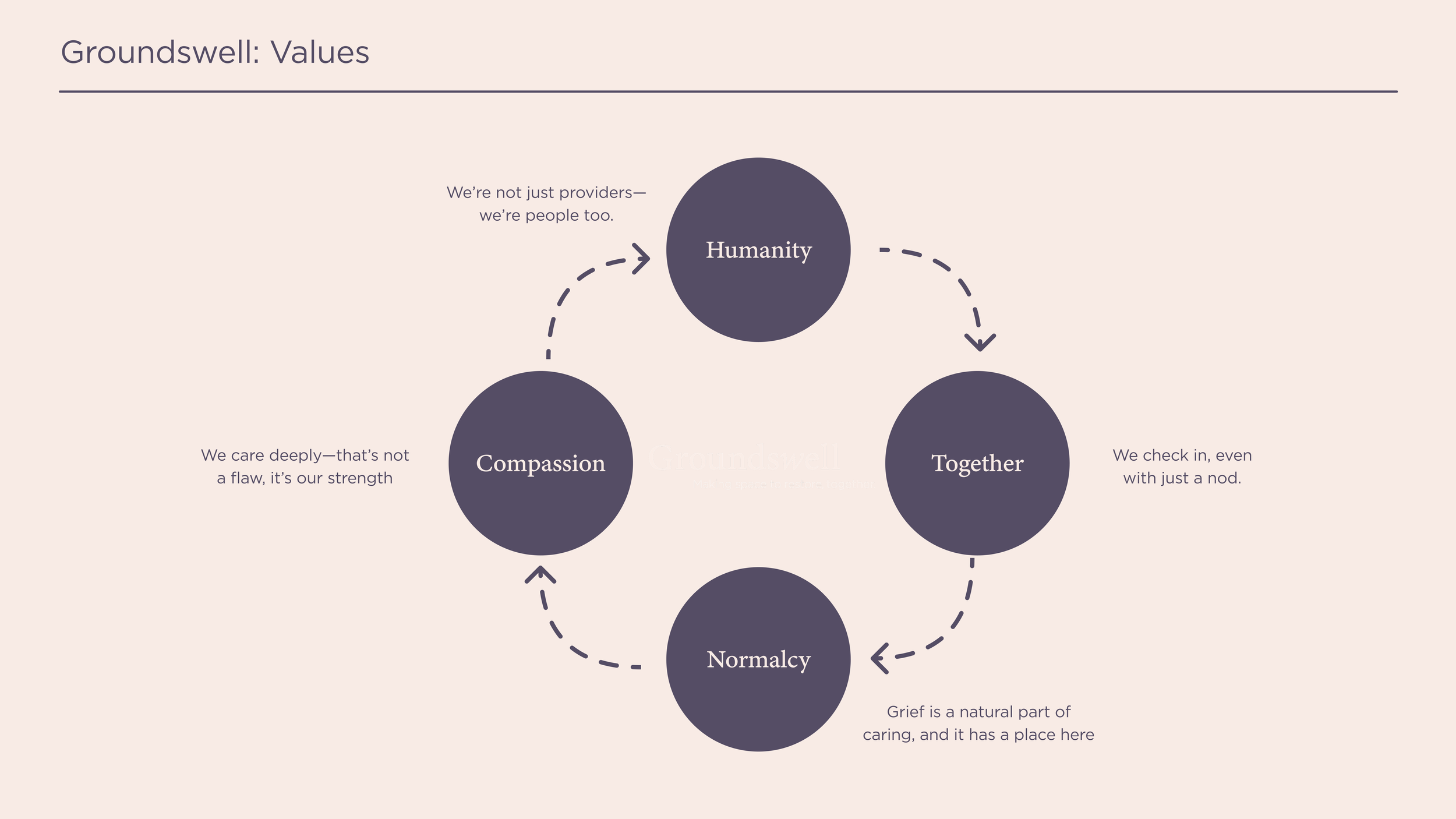
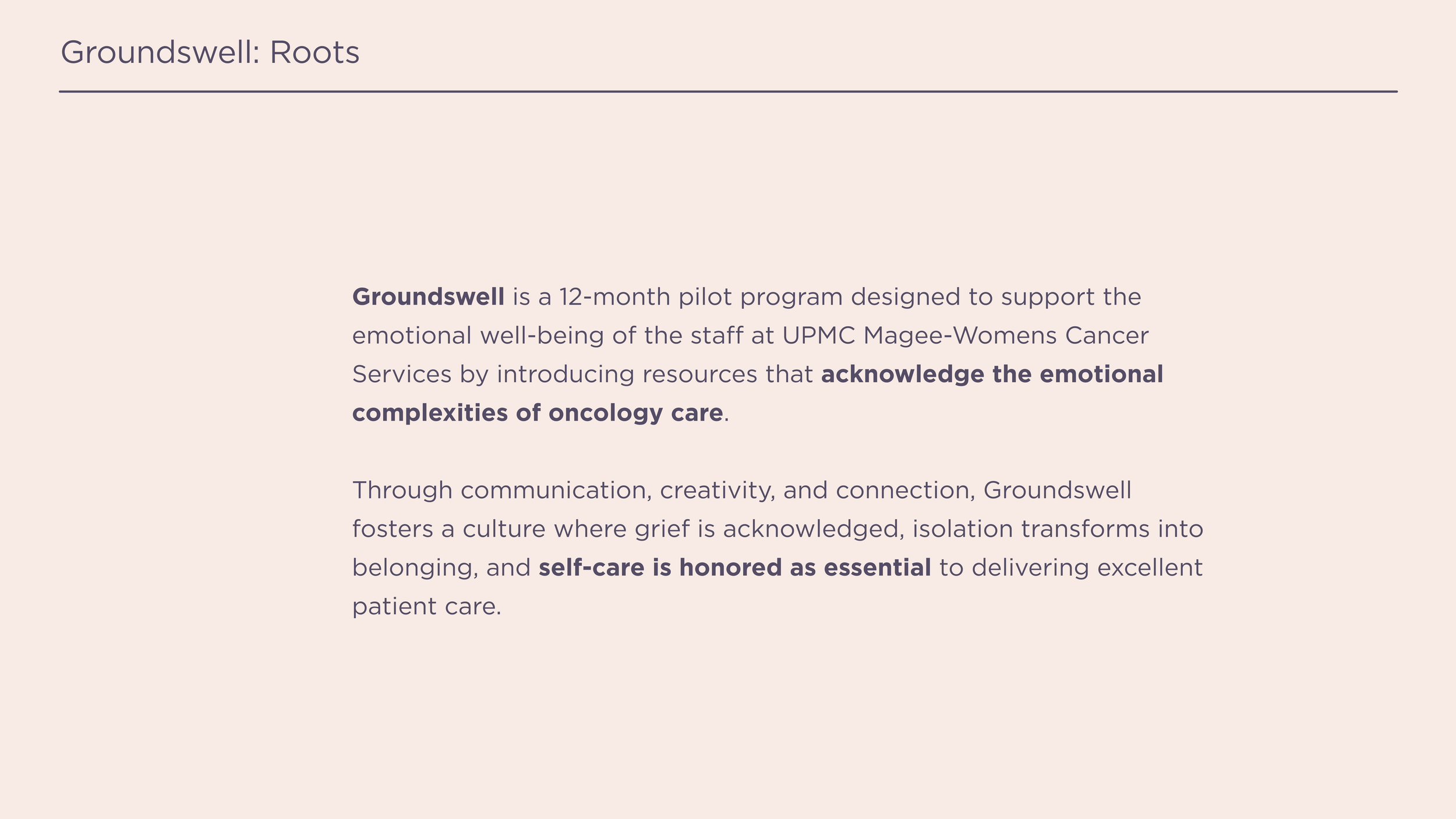
Named for water that rises naturally from deep within the earth, Groundswell emerges directly from the efforts and voices of healthcare workers themselves while introducing approachable resources that acknowledge the emotional complexities of oncology care. This comprehensive initiative recognizes that the most meaningful support emerges from within the care community itself, addressing the need for structured emotional processing interventions in high-mortality settings. Through communication, creativity, and connection, Groundswell reframes burnout from an individual failure to an institutional flaw, fostering a culture where grief is acknowledged, isolation transforms into belonging, and self-care is honored as essential to delivering excellent patient care.
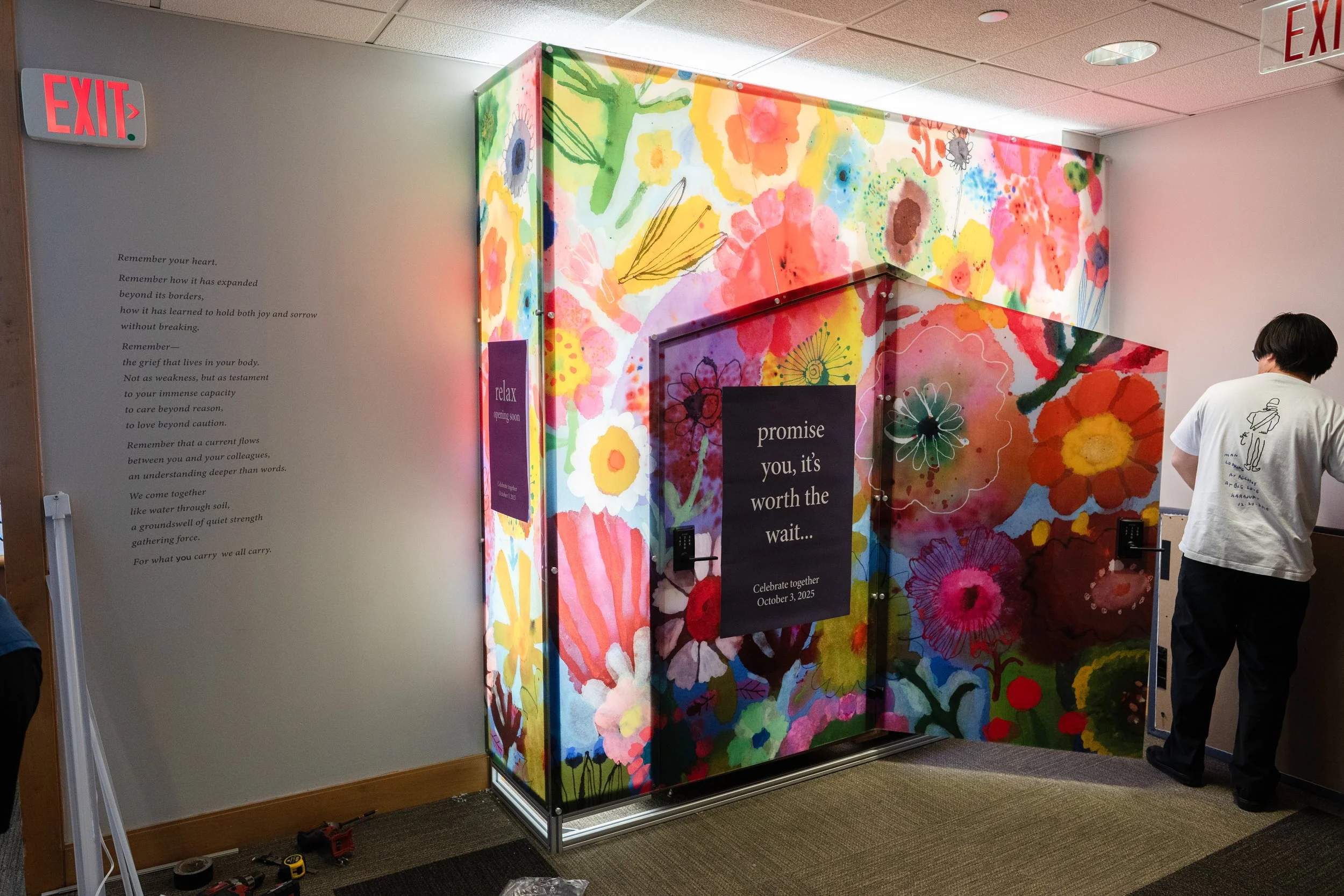
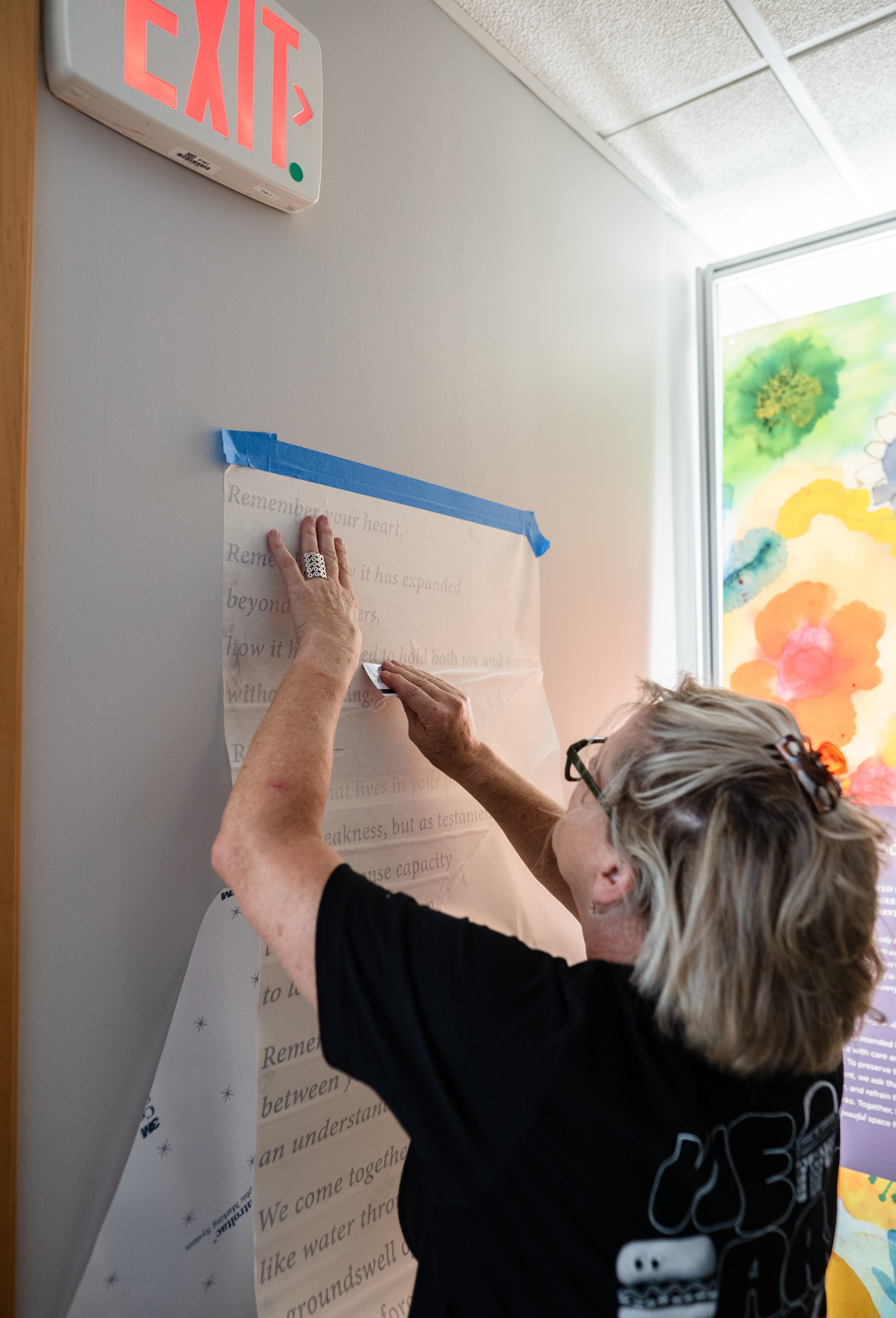
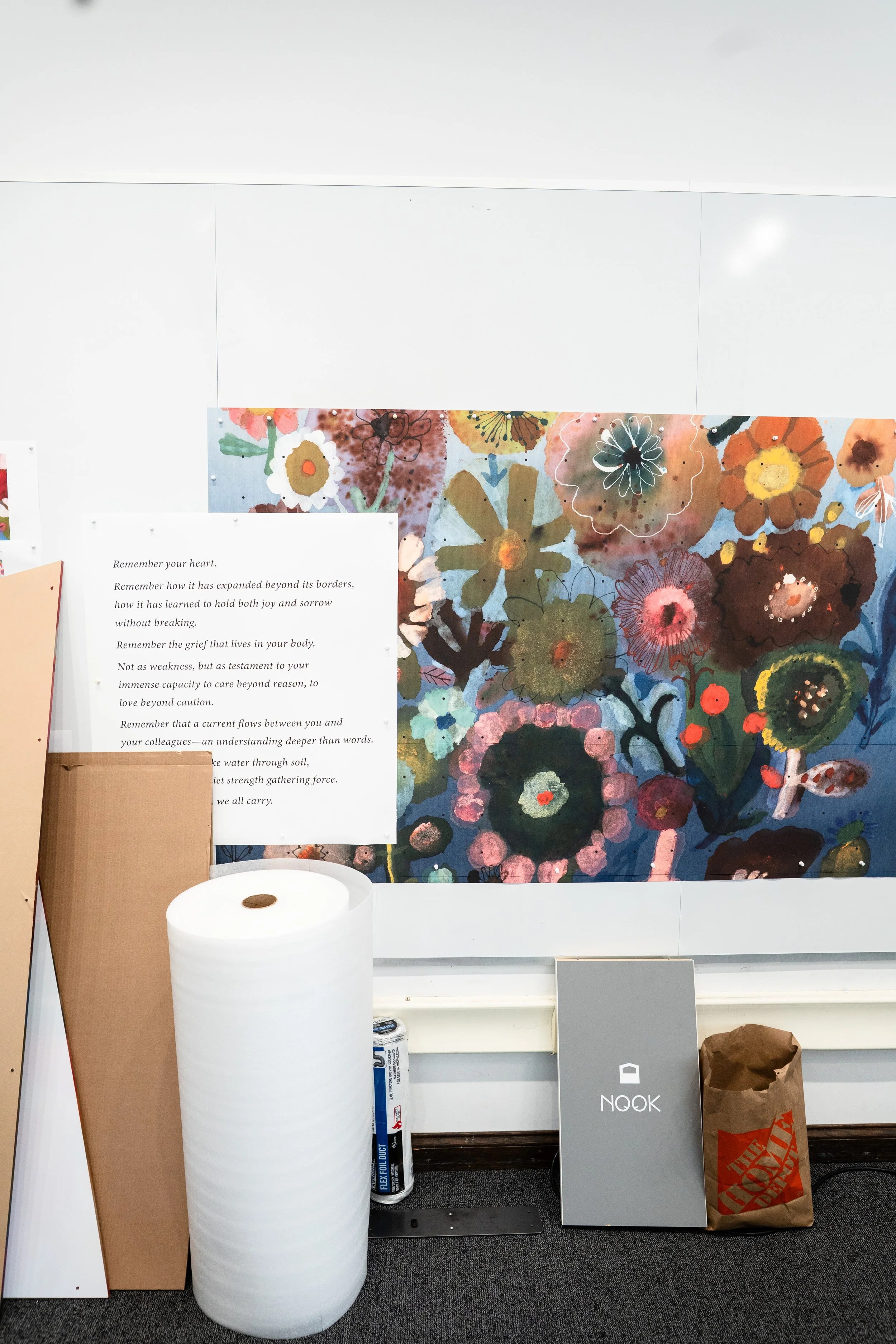
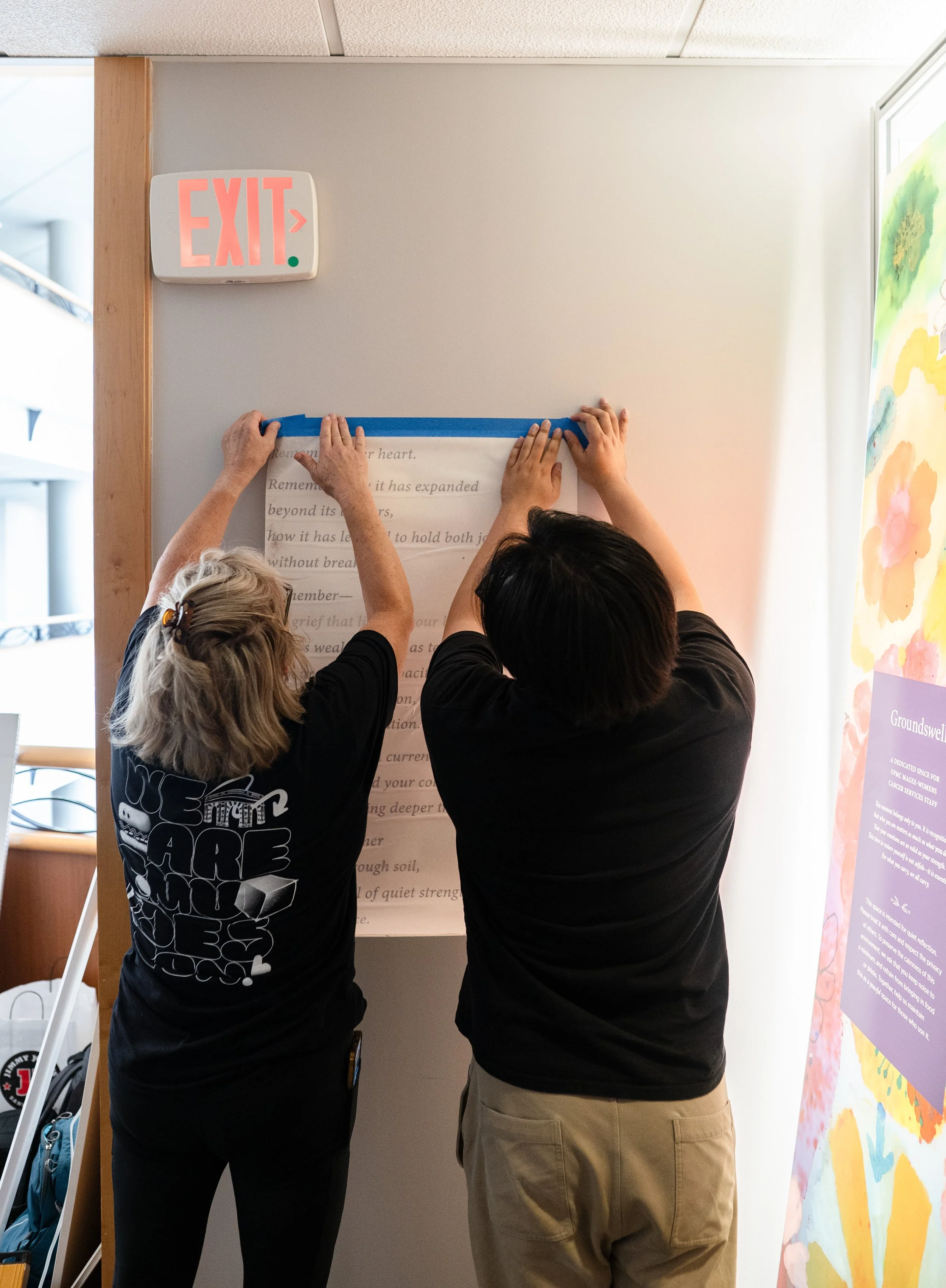
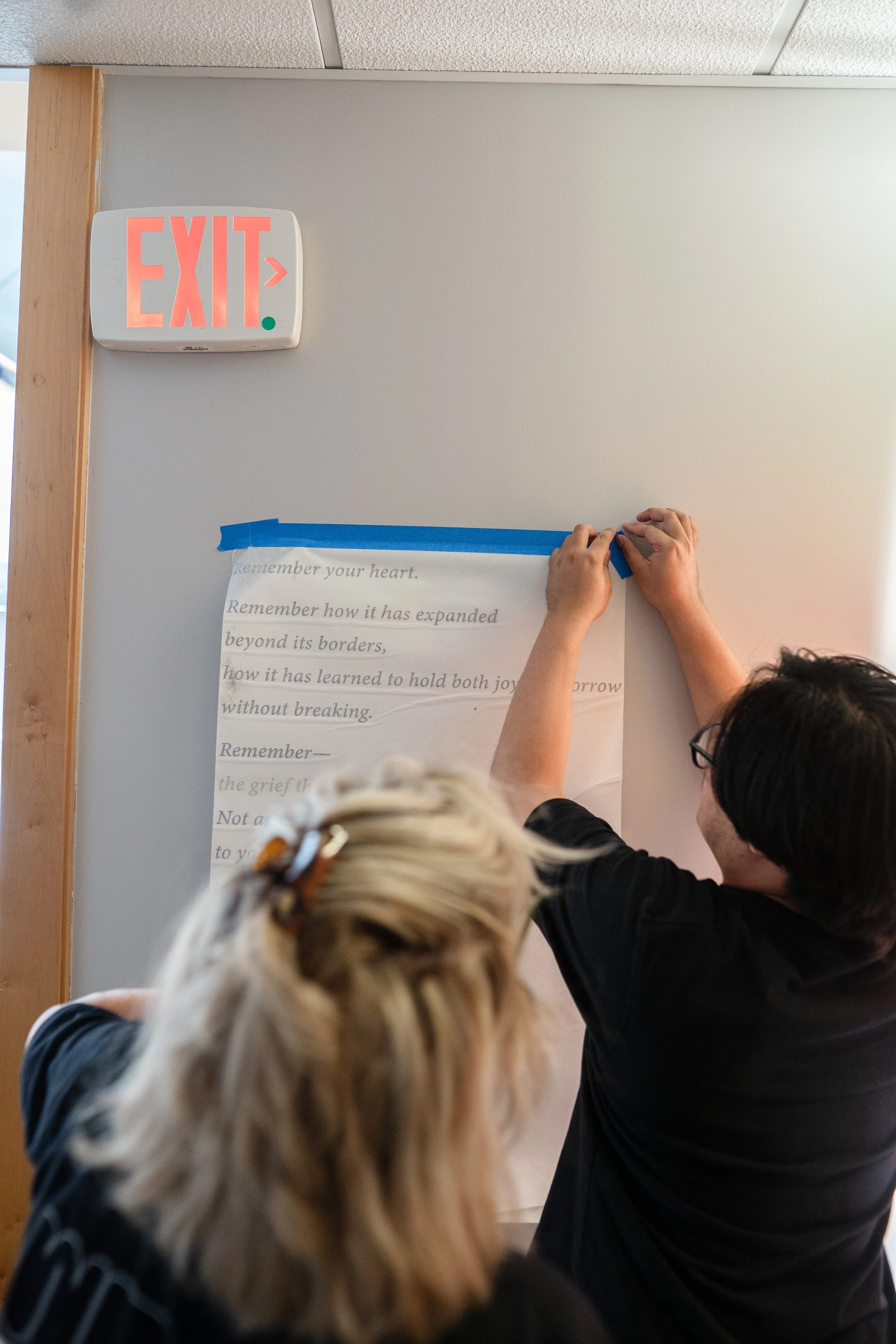
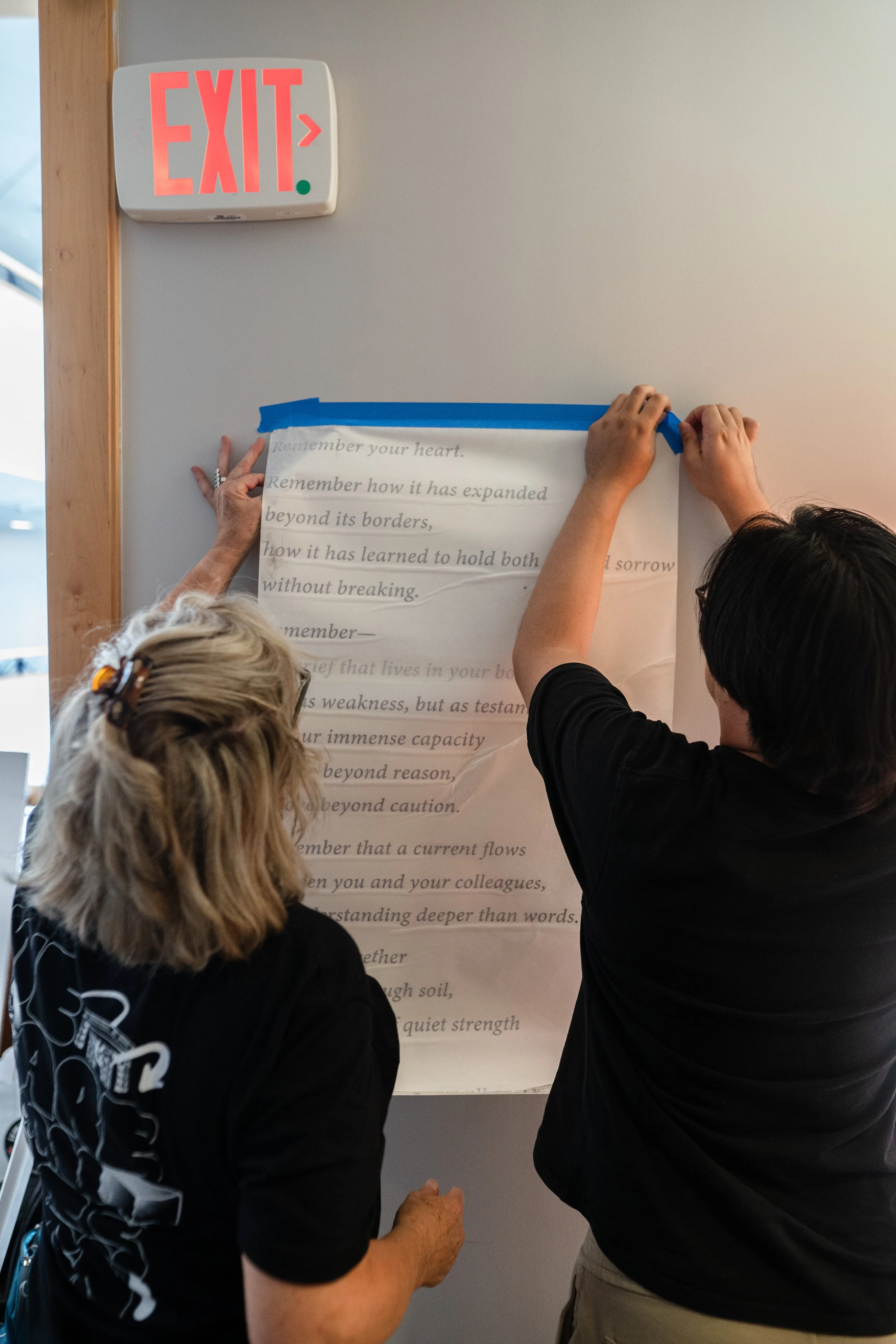
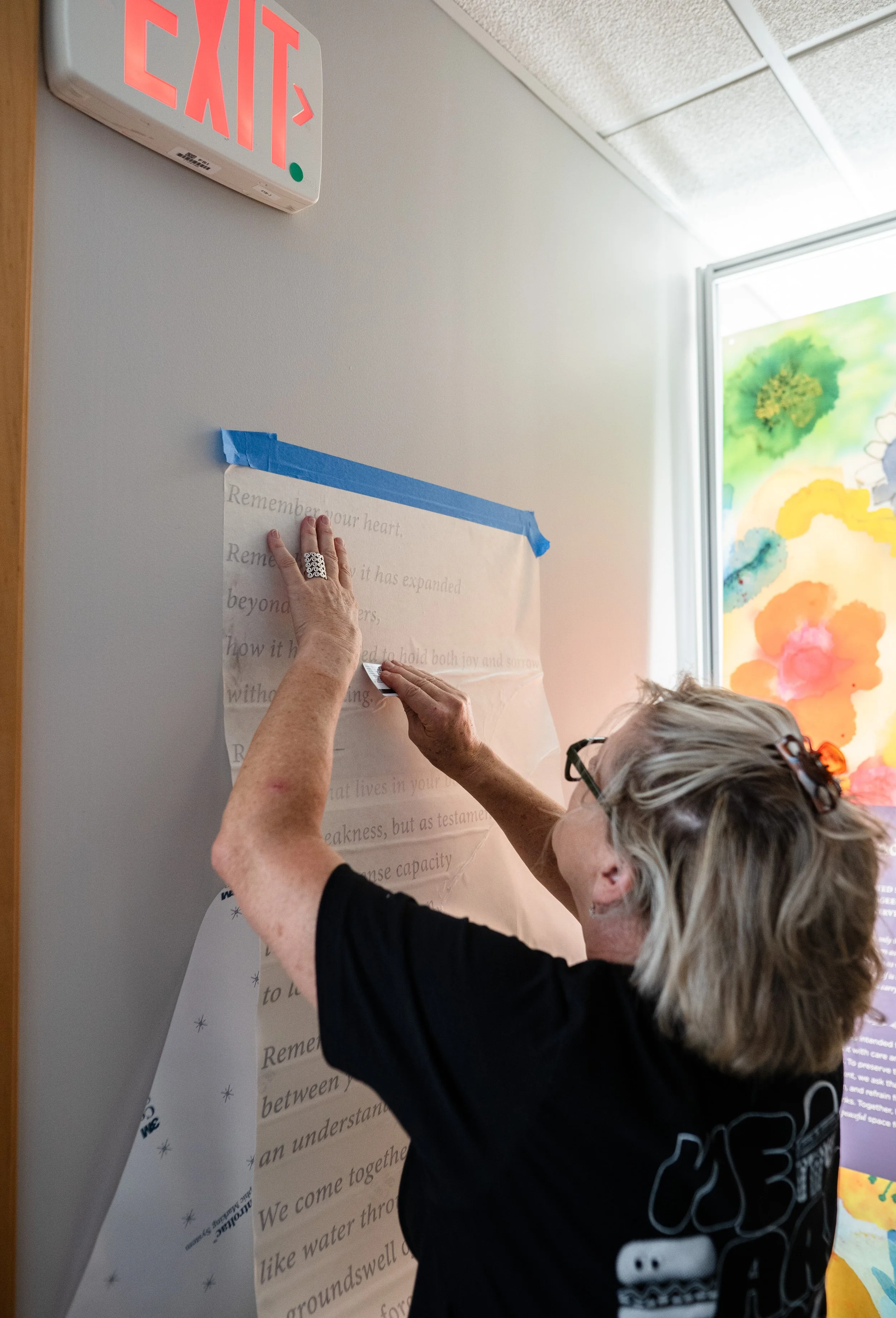
Listen to the Groundswell Poem “Remember Your Heart” (inspired by Joy Harjo’s poem “Remember”)
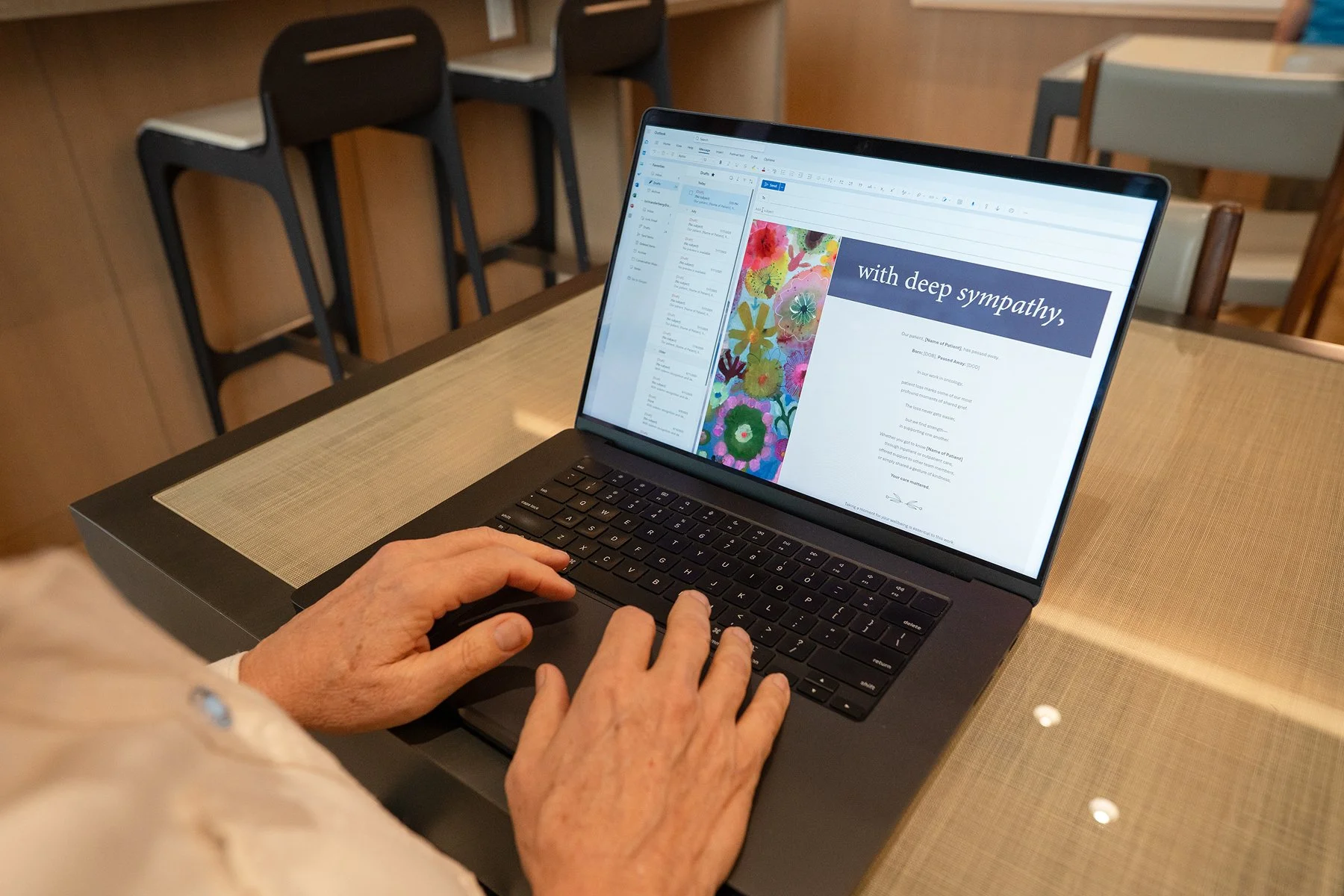
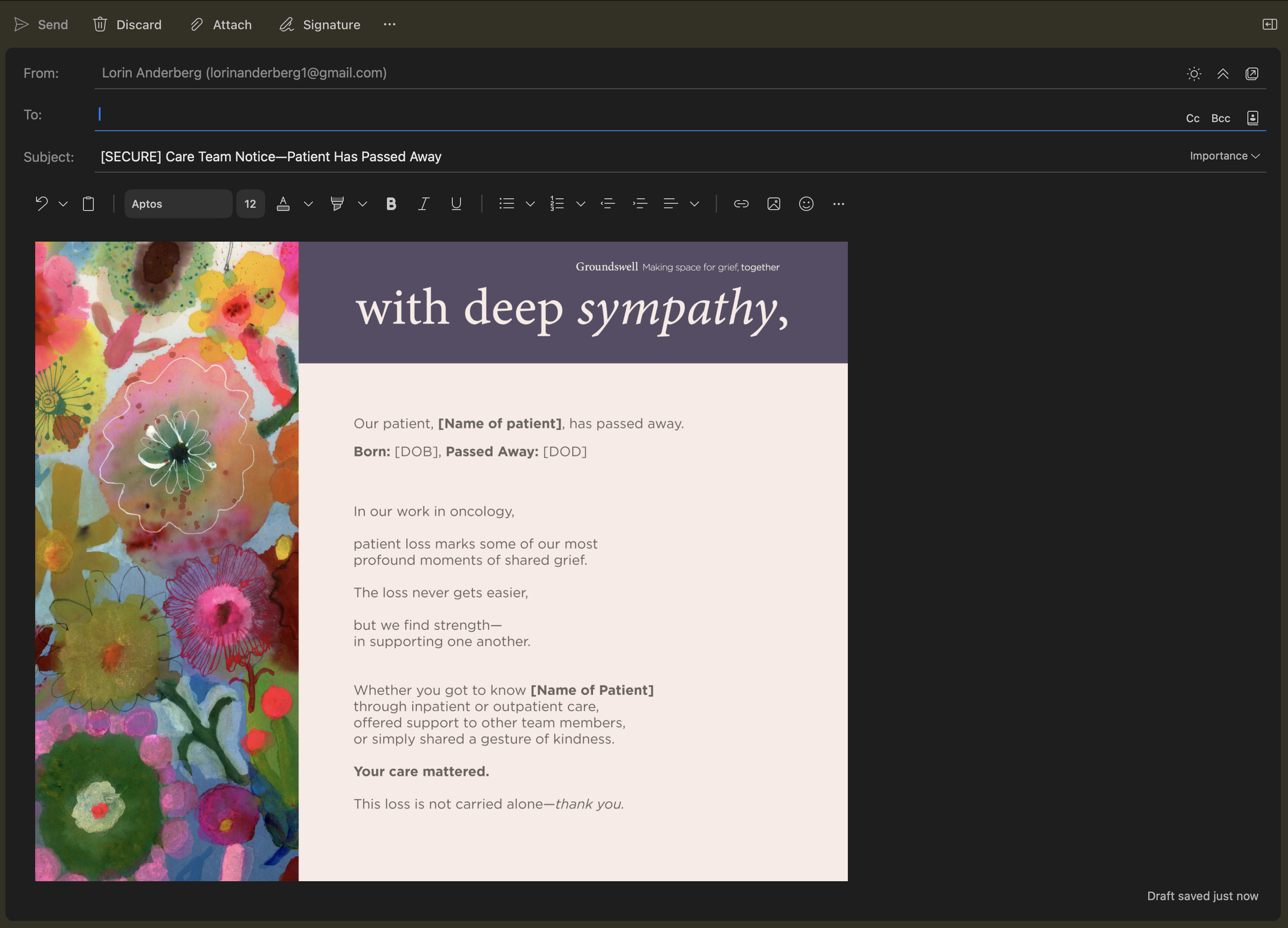
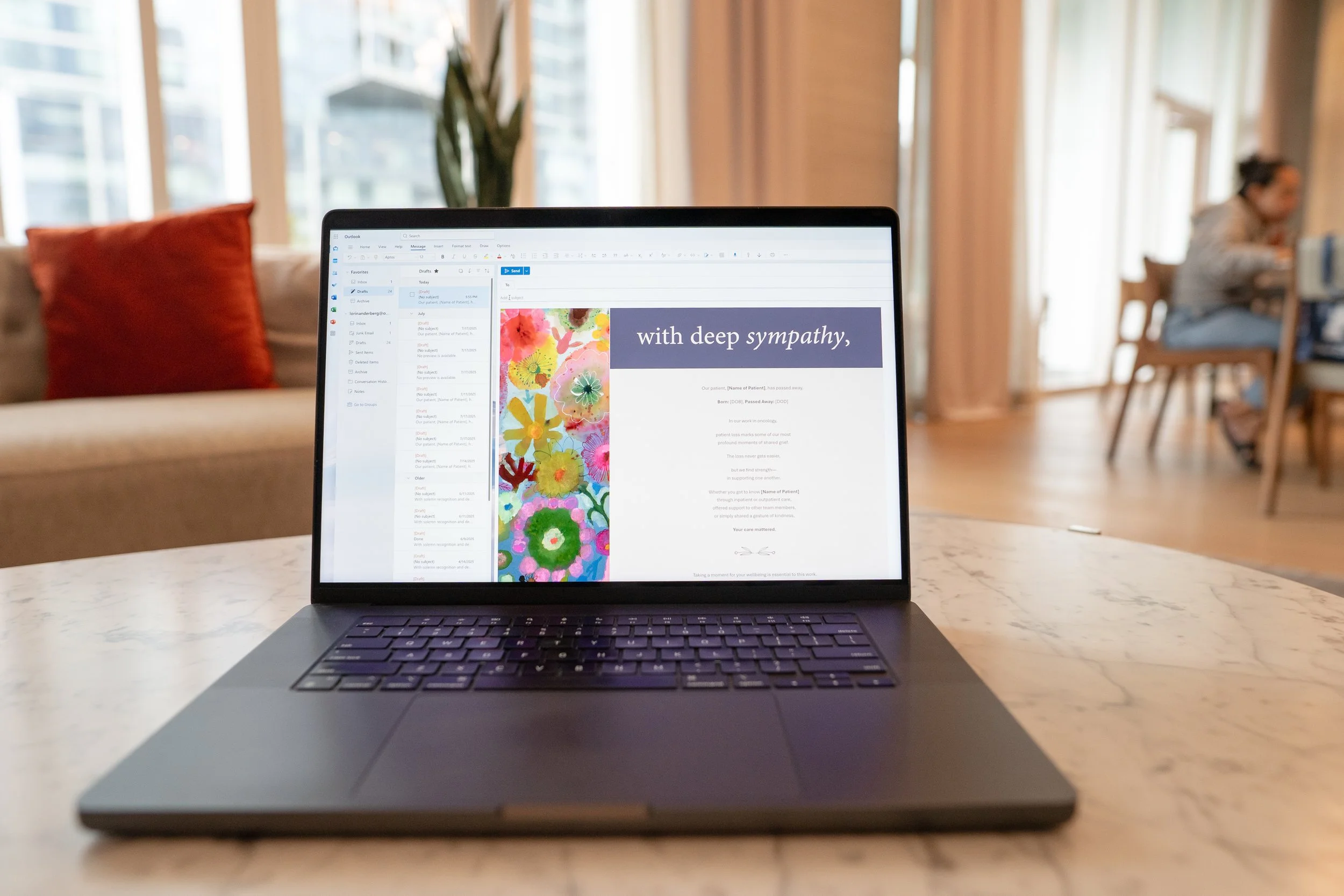
Ceased to Breathe Email Redesign
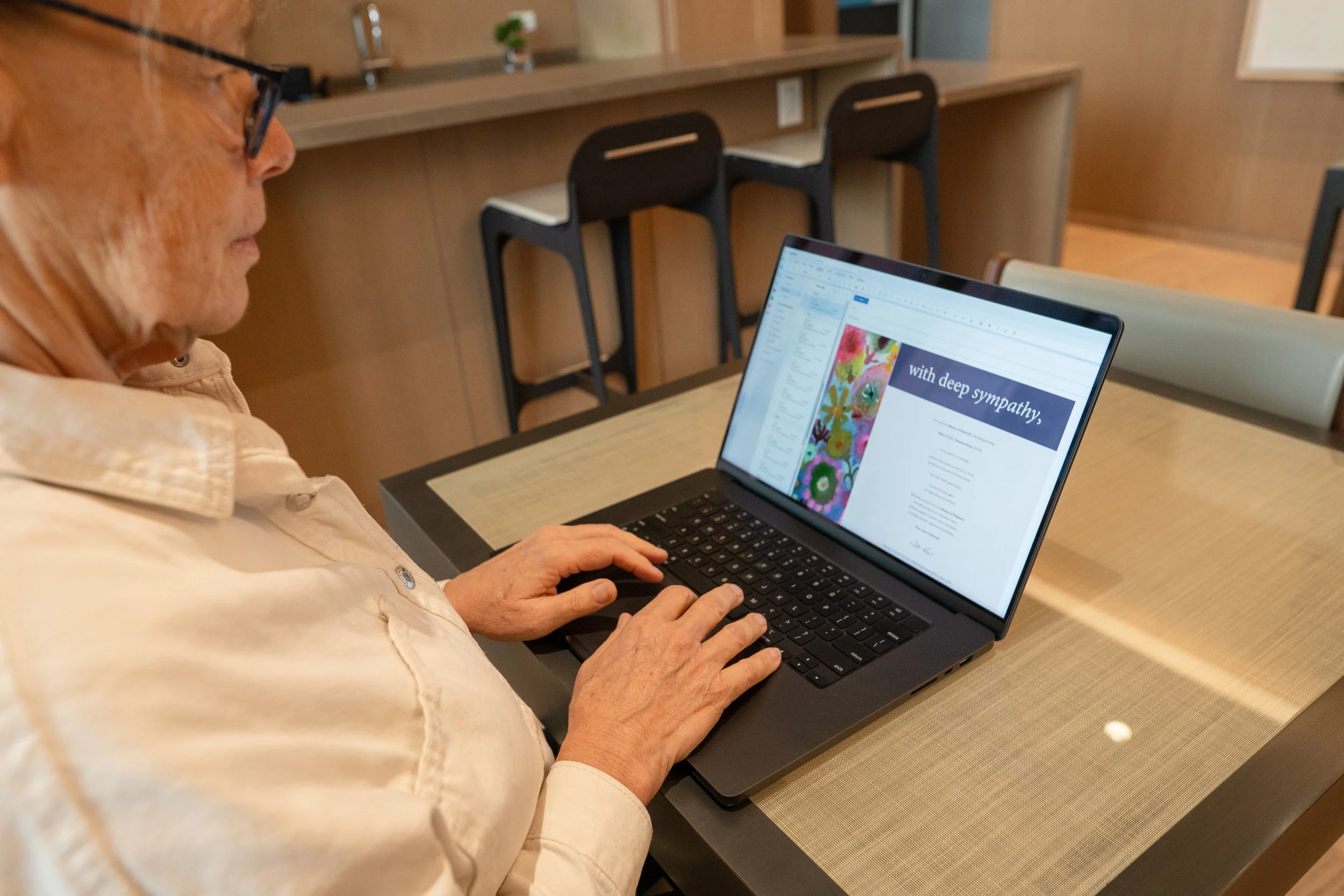
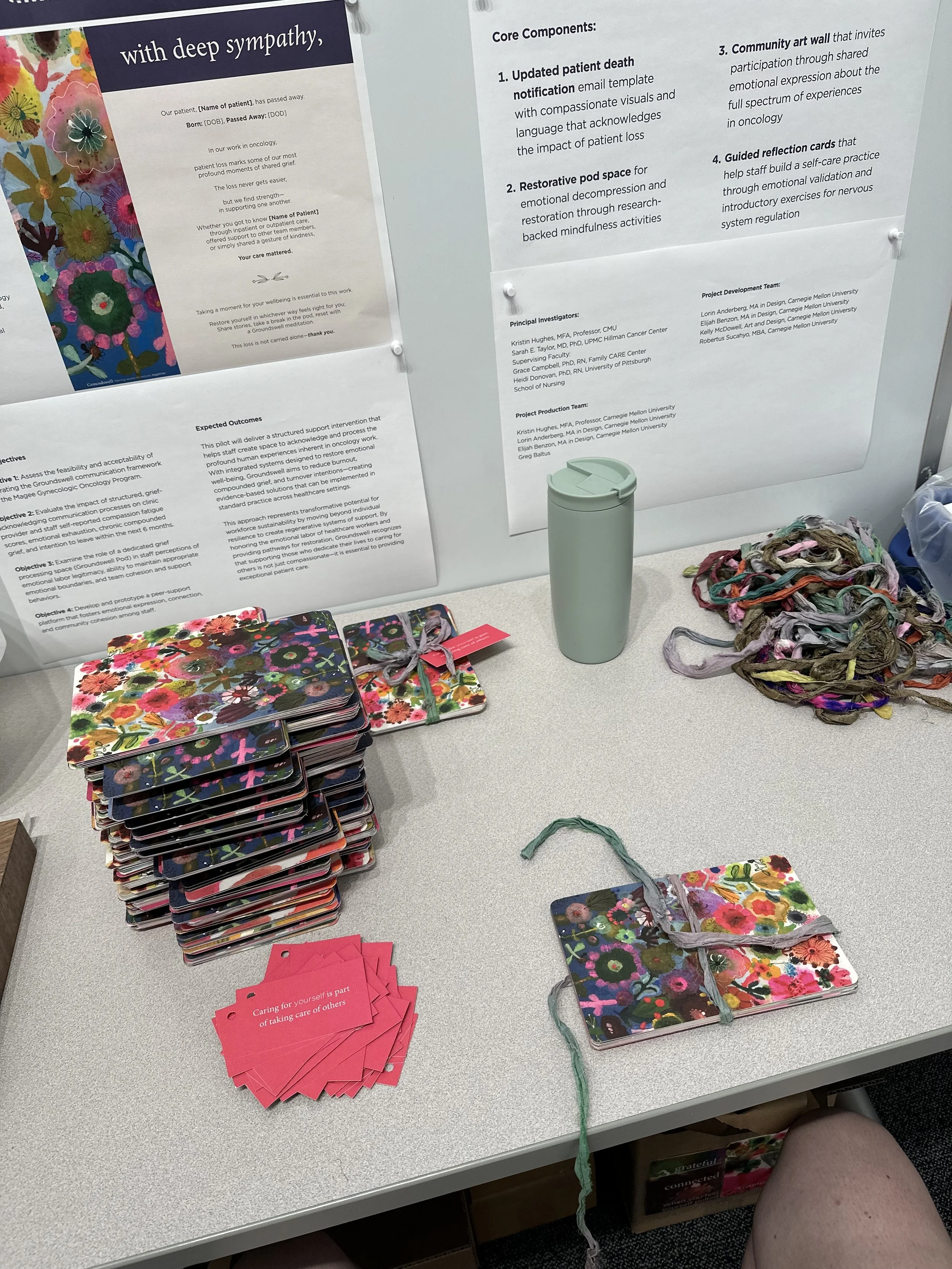
Updated patient death notification email template with compassionate visuals and language that acknowledges the impact of patient loss. This small yet significant intervention creates opportunities for connection and mutual support while establishing the compassionate tone that unifies all program components and addresses one of oncology's most challenging recurring realities.
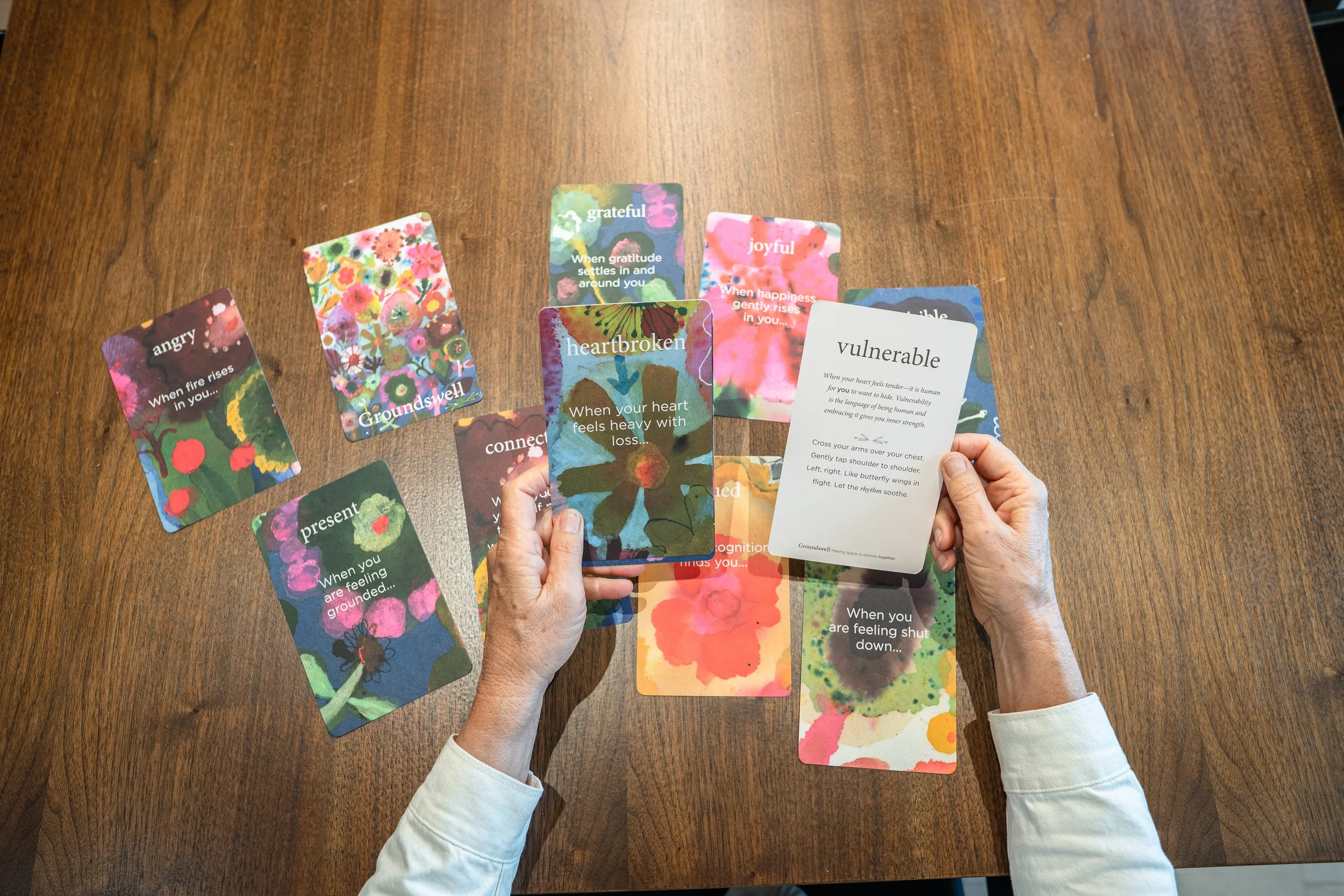
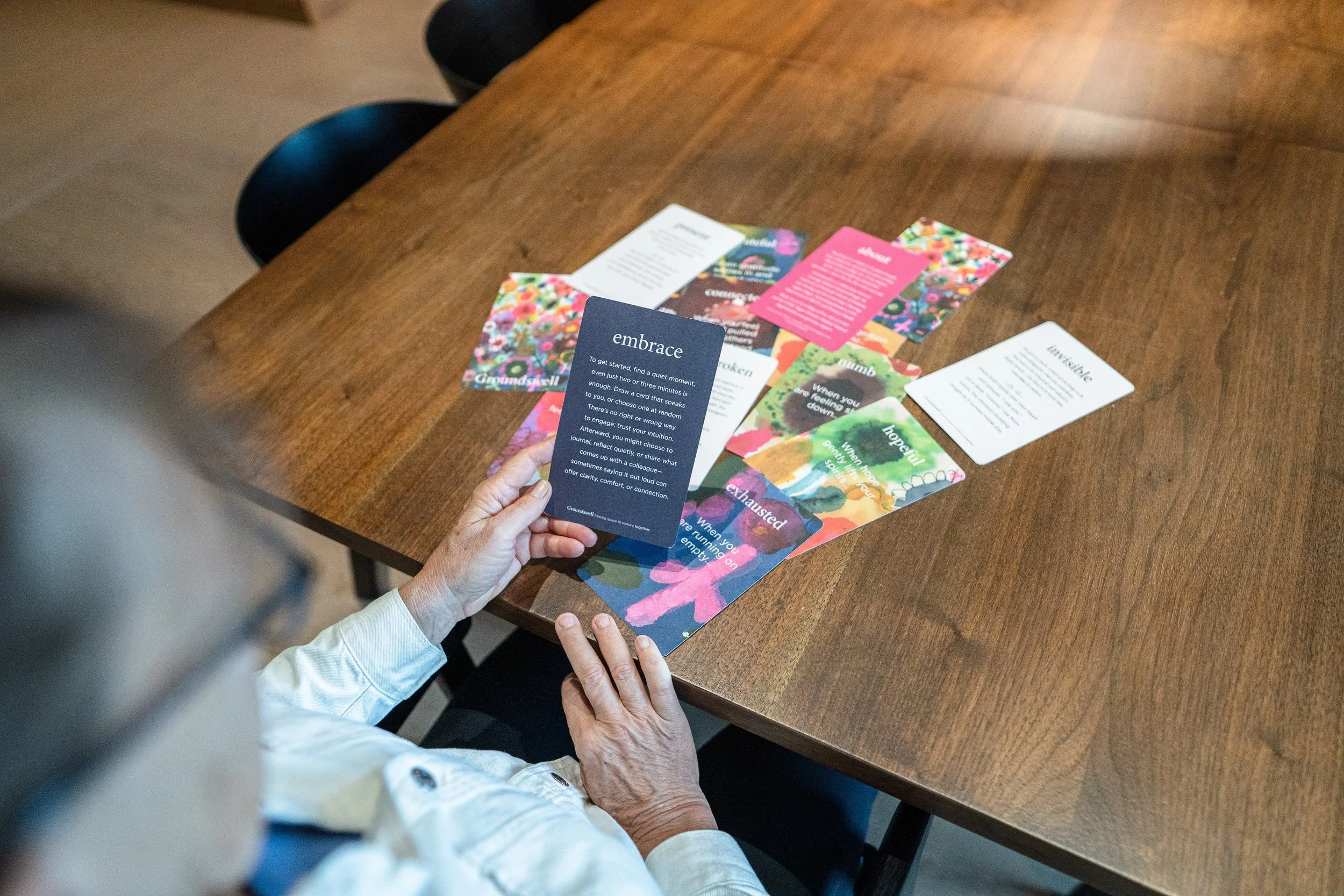
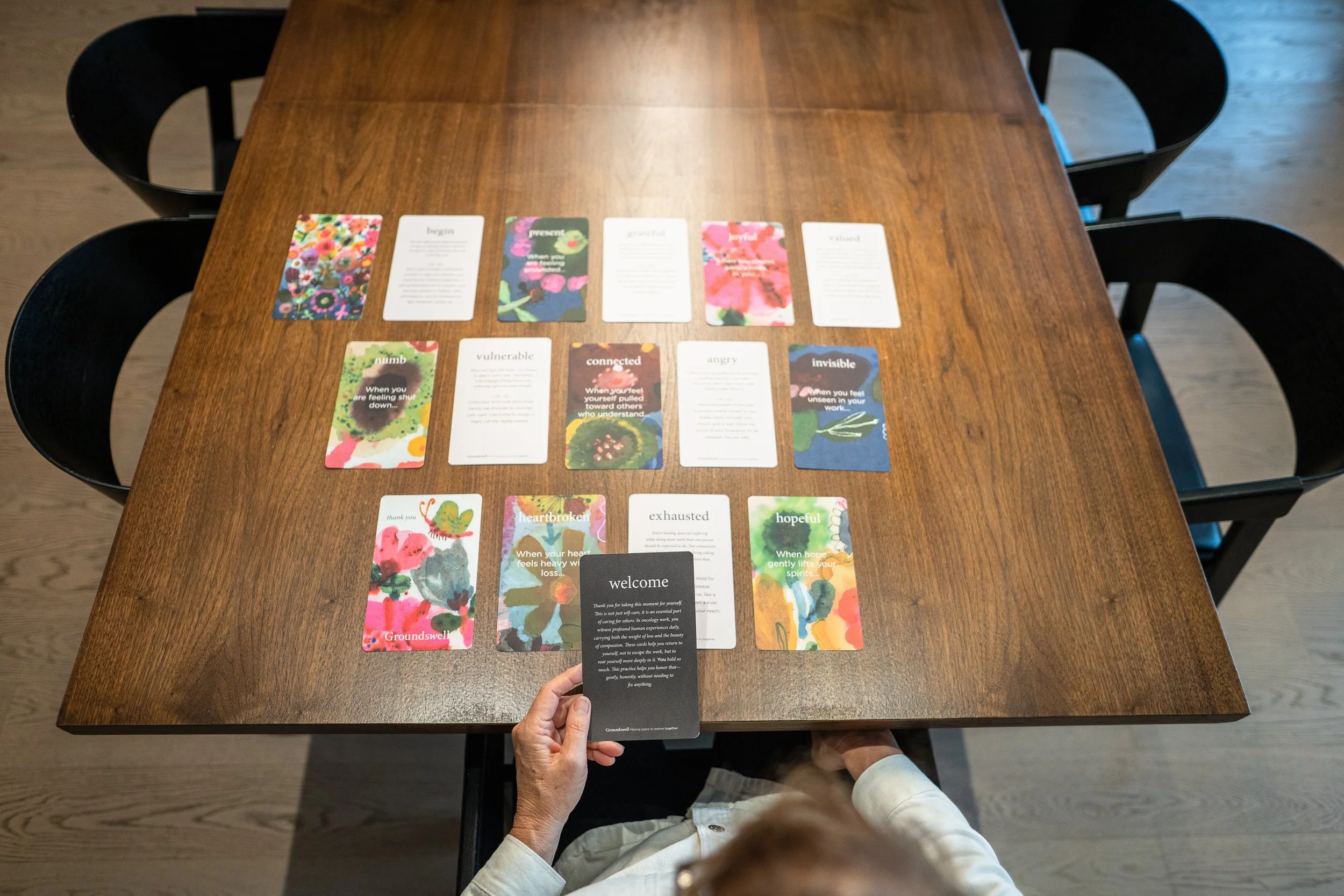
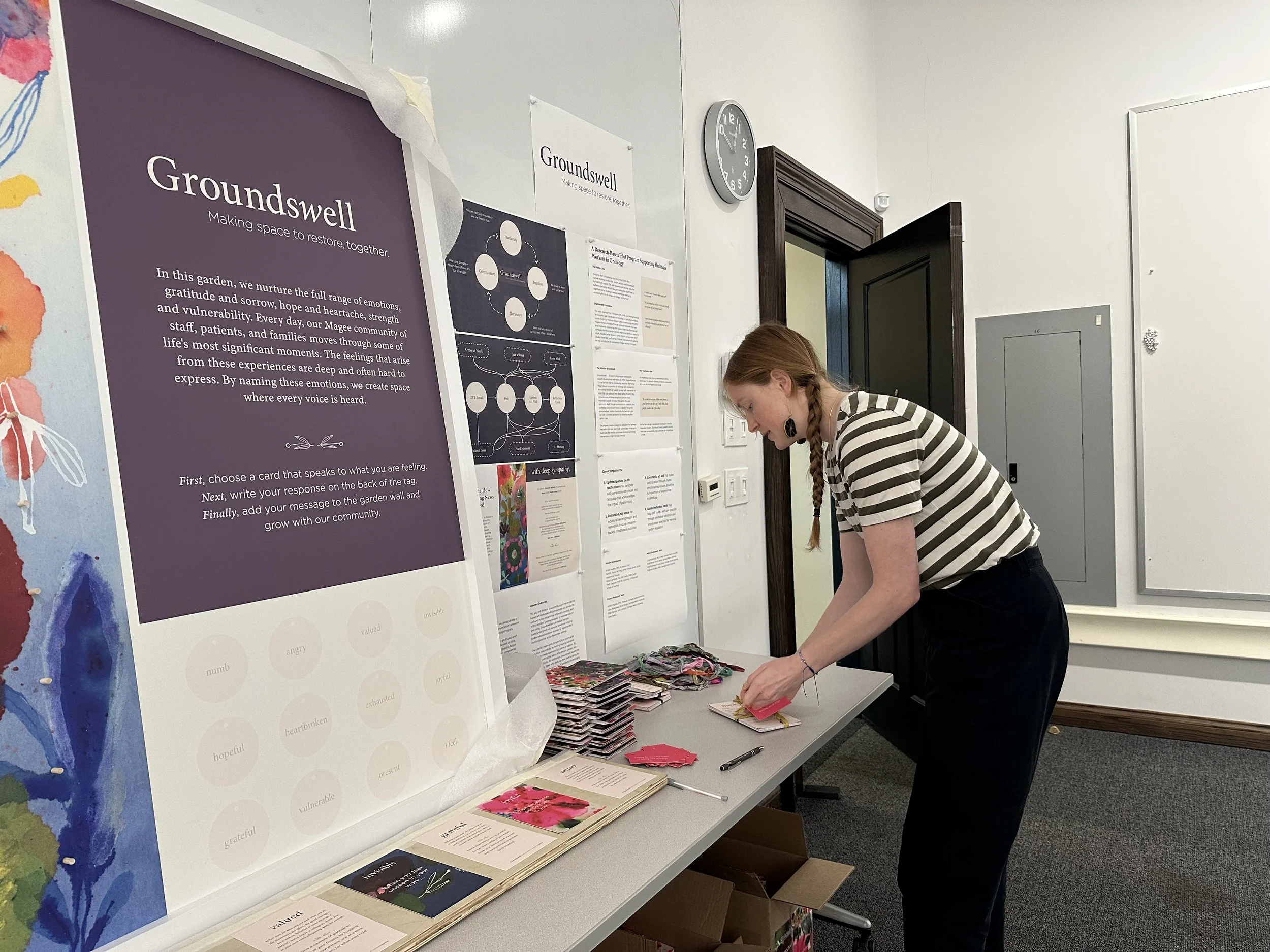
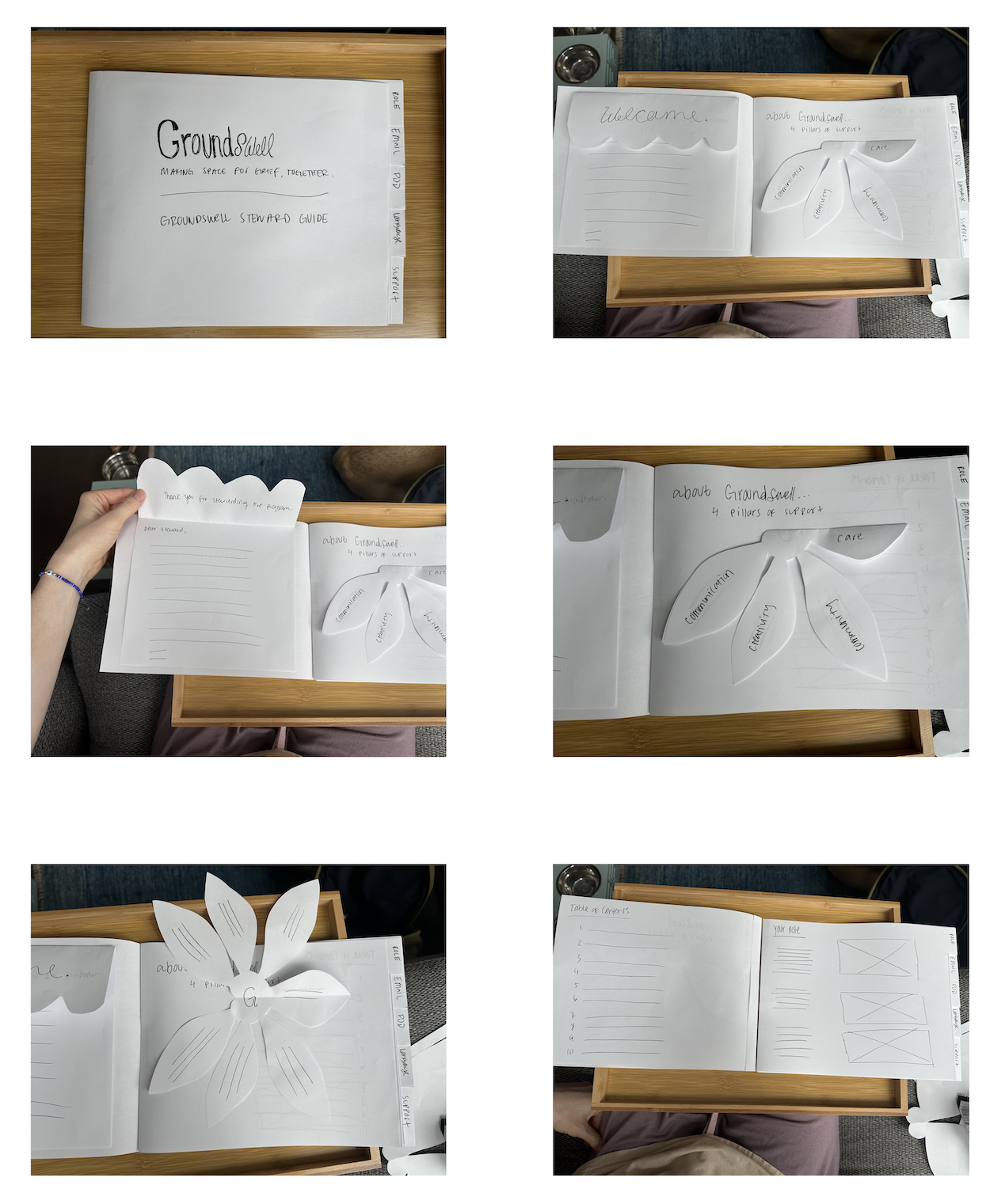
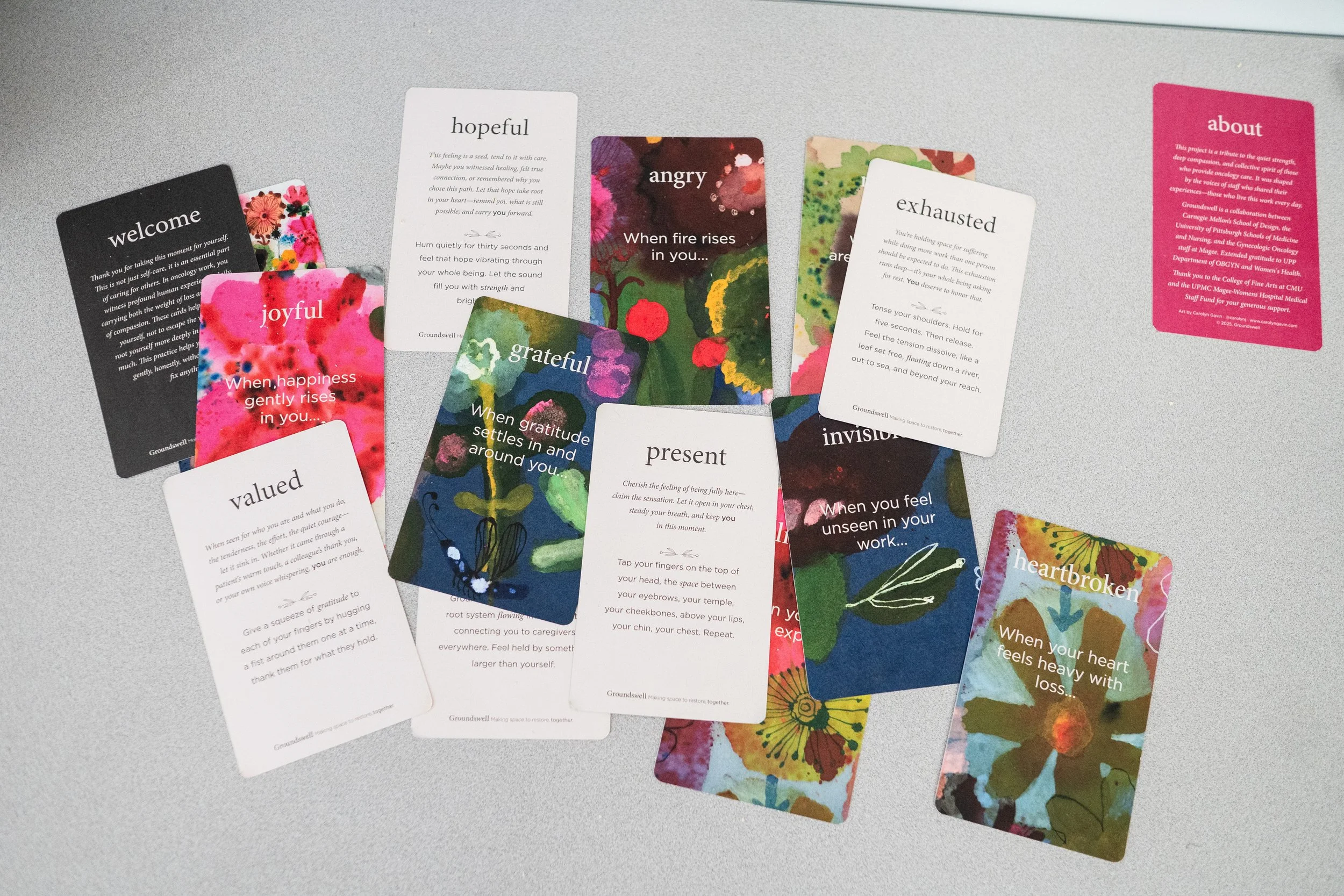
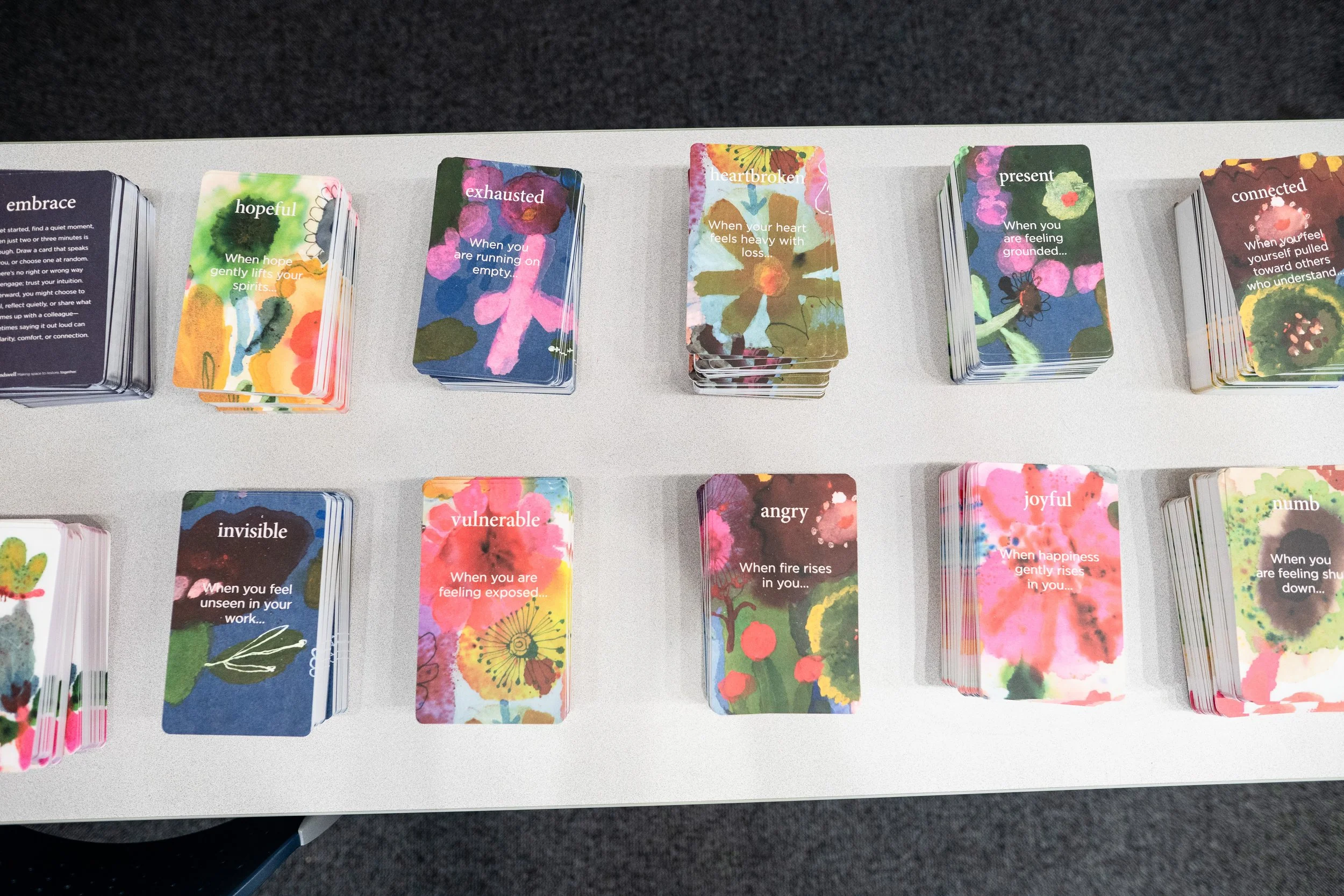
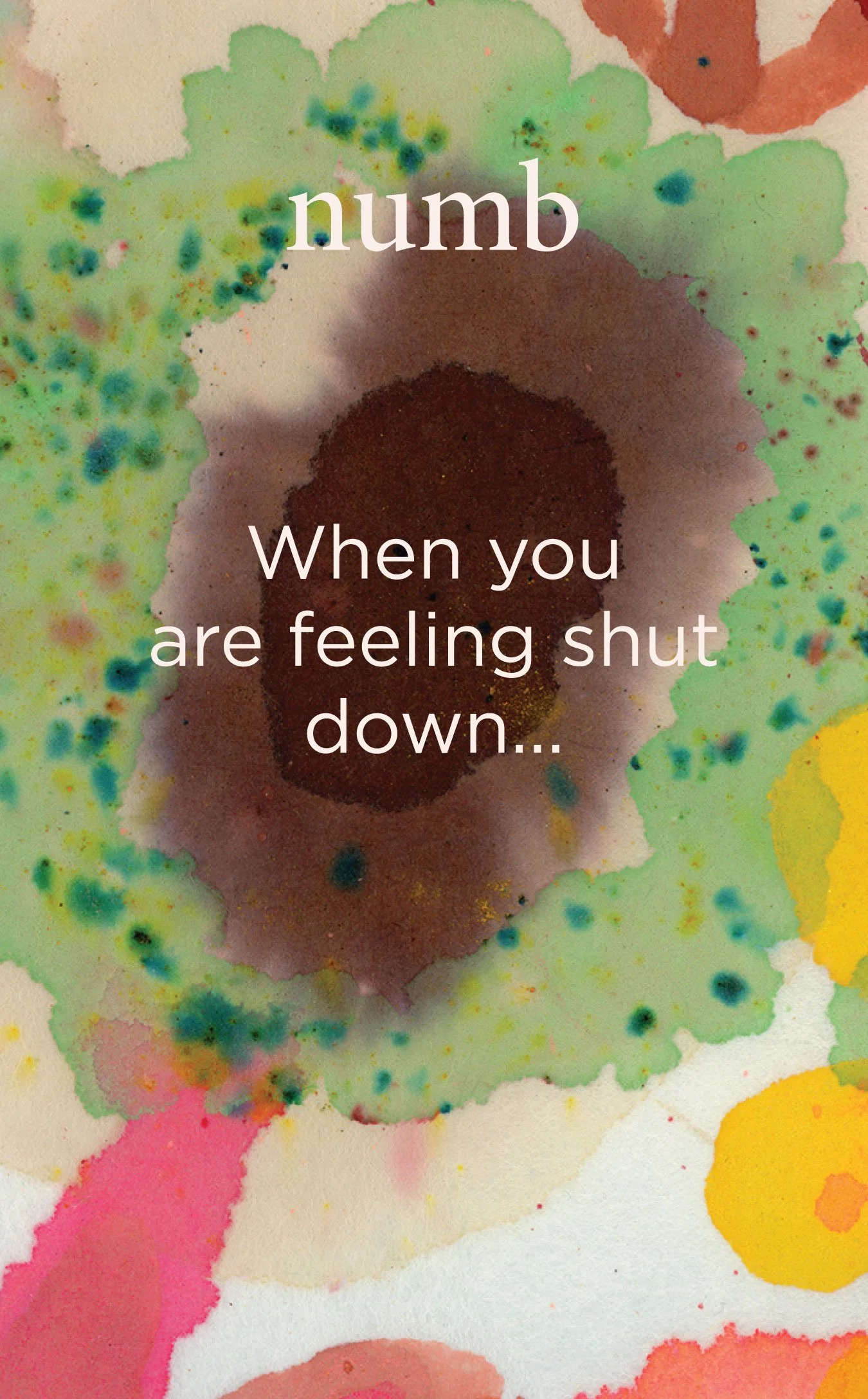
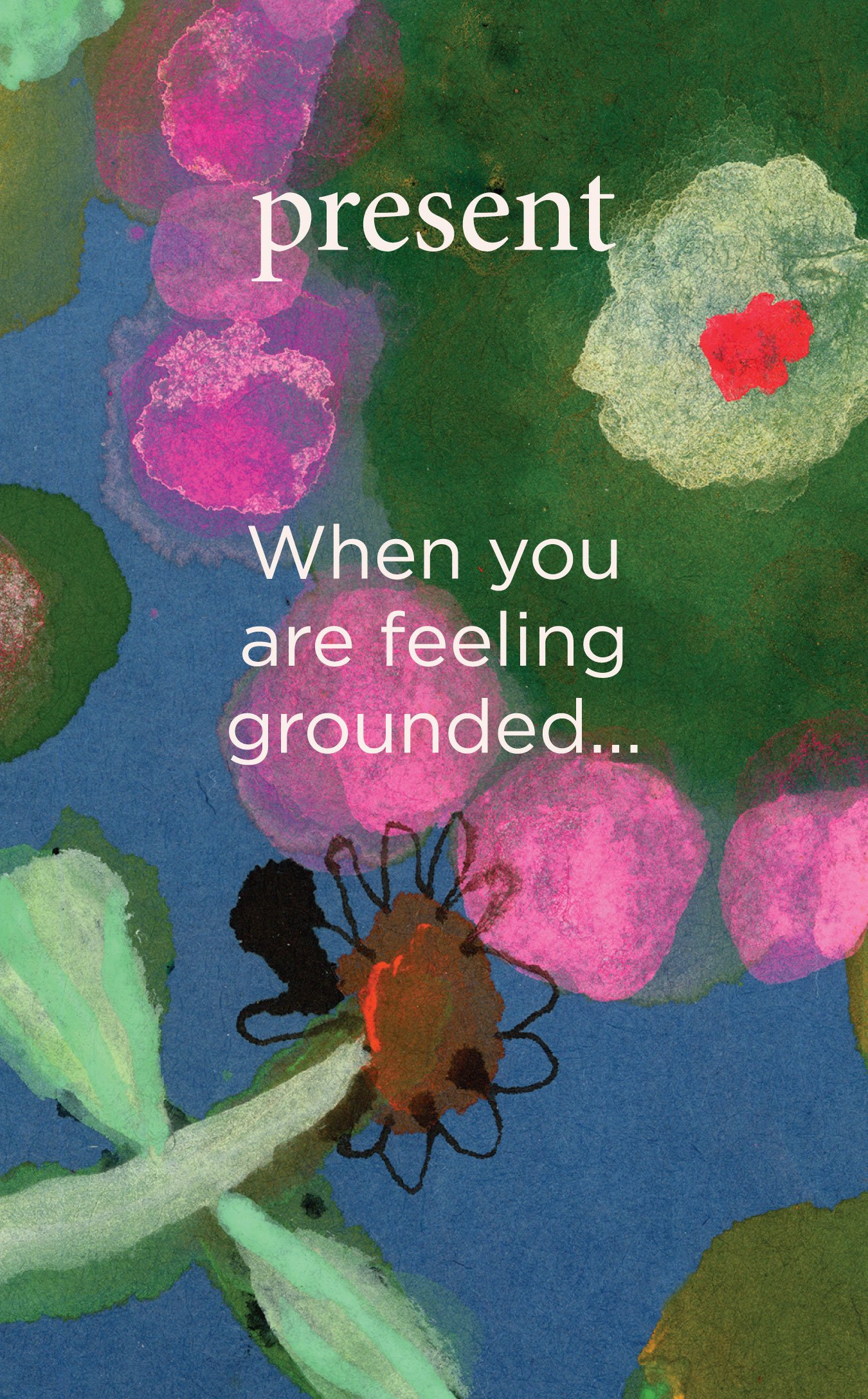
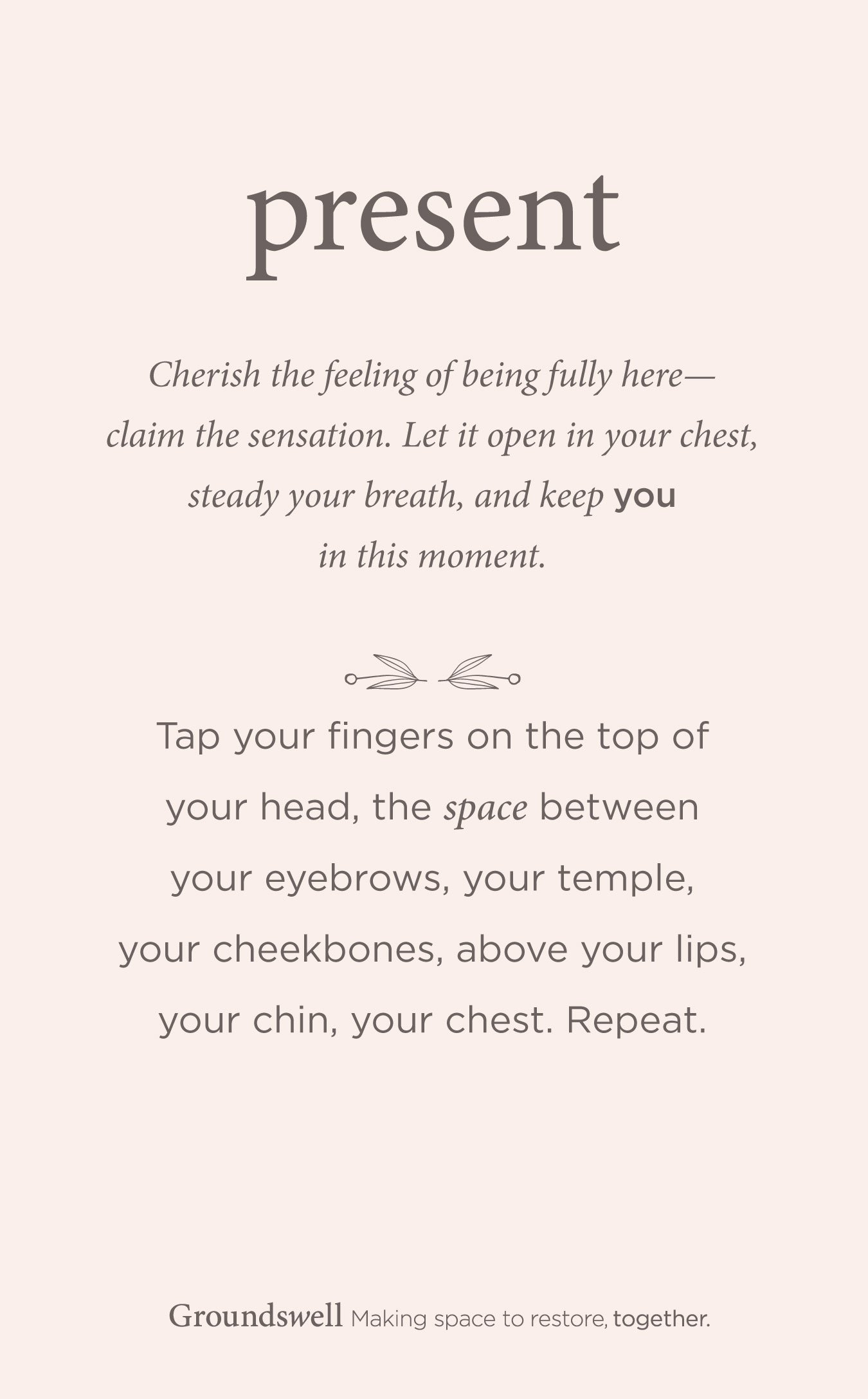
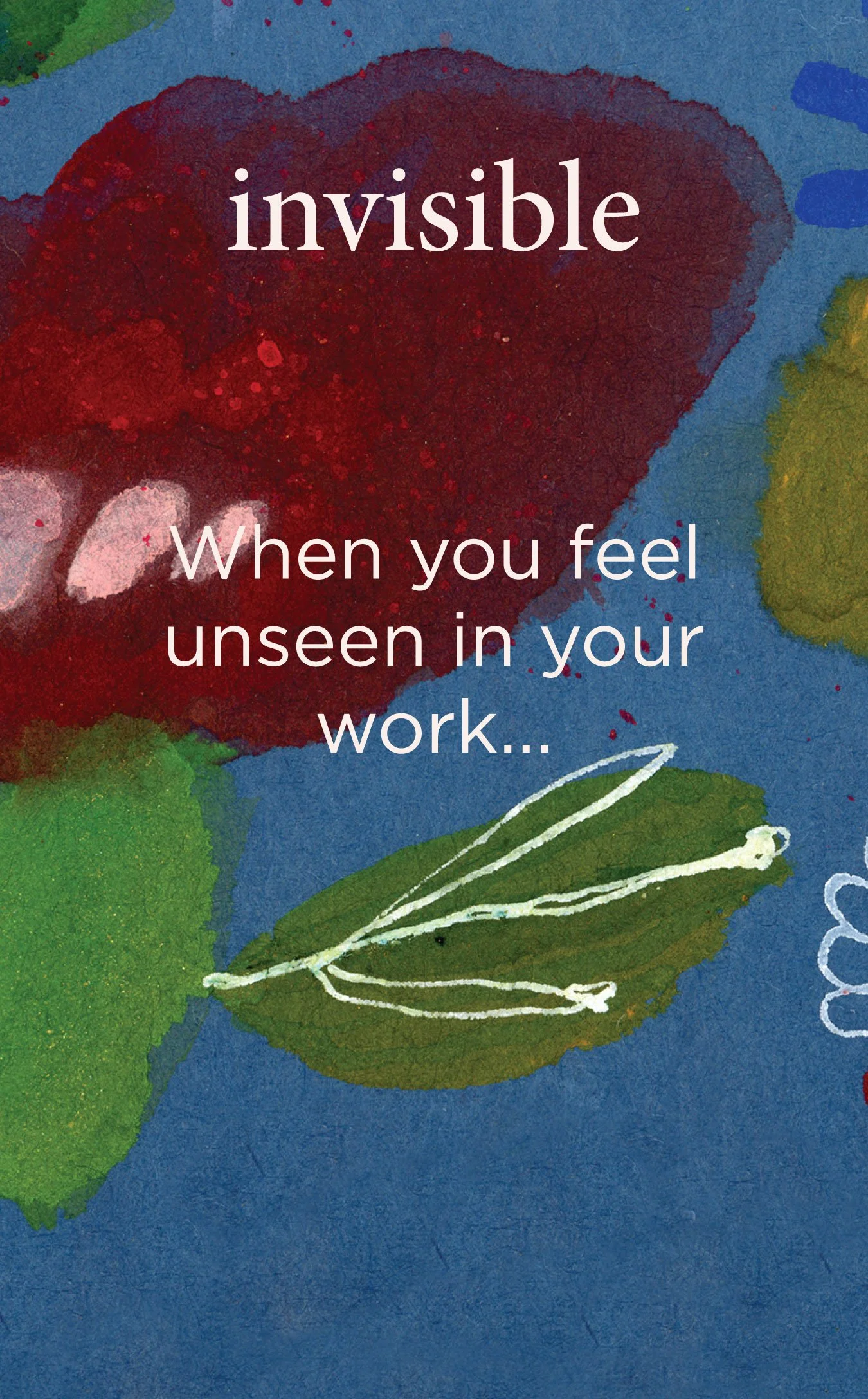
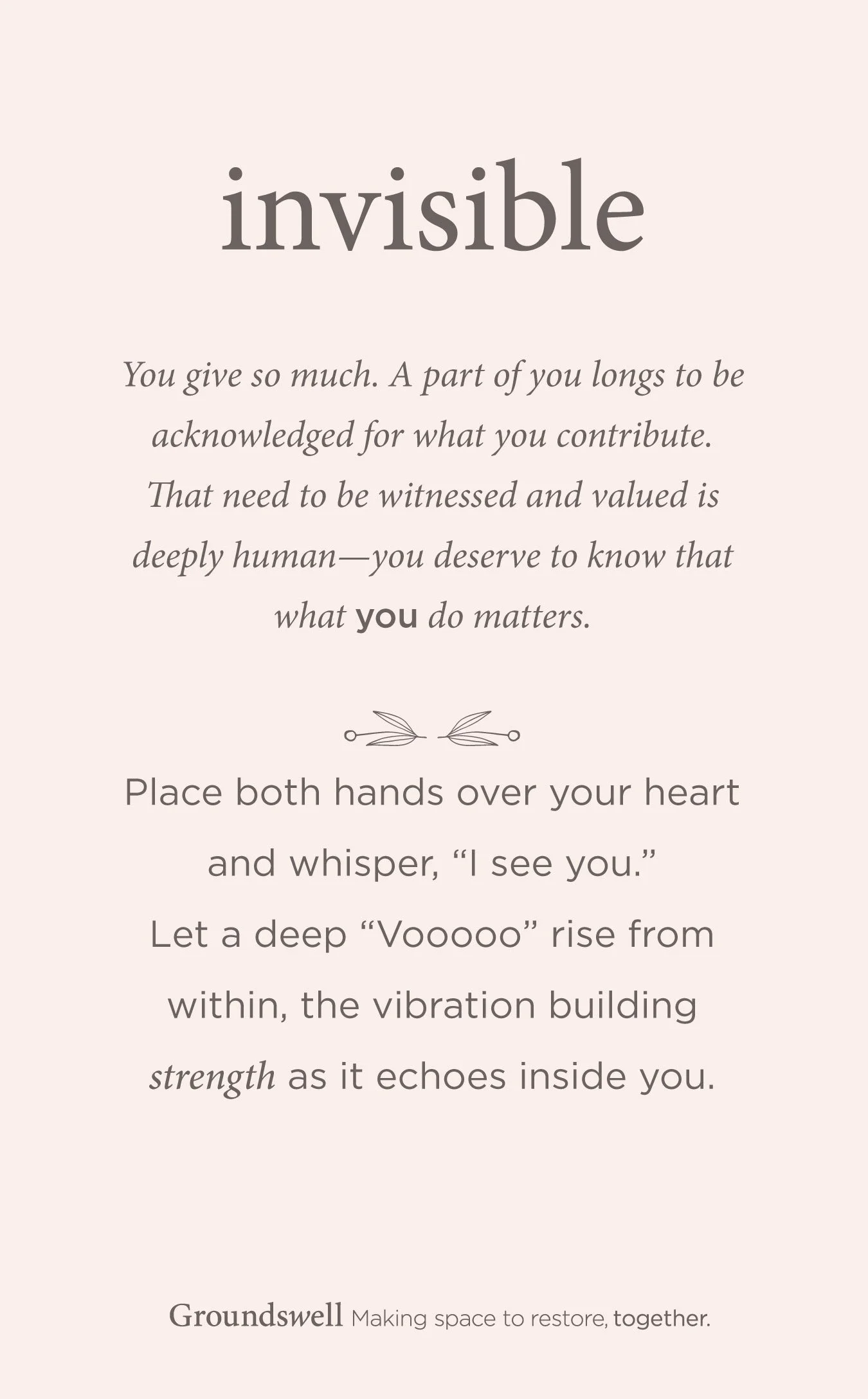
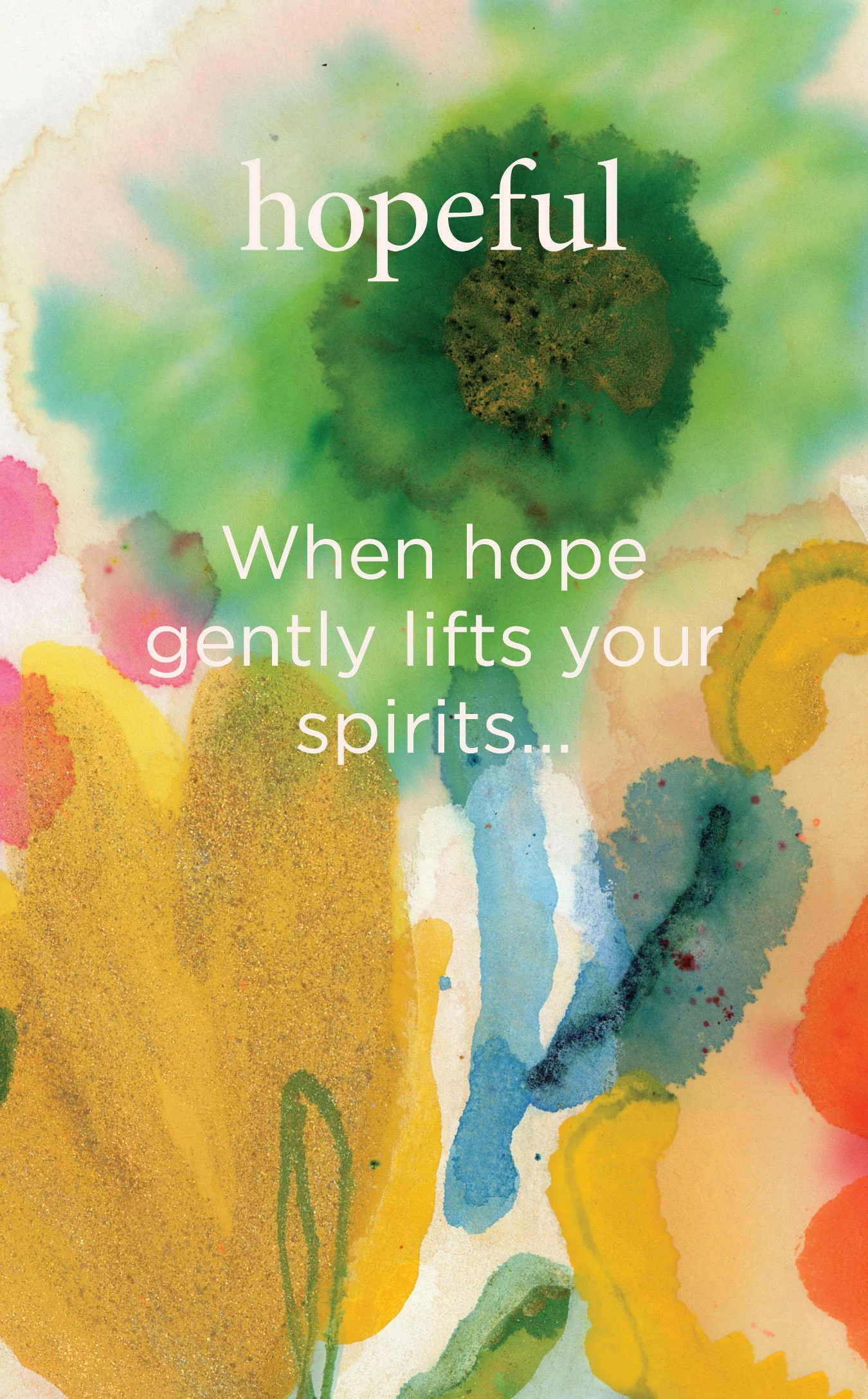
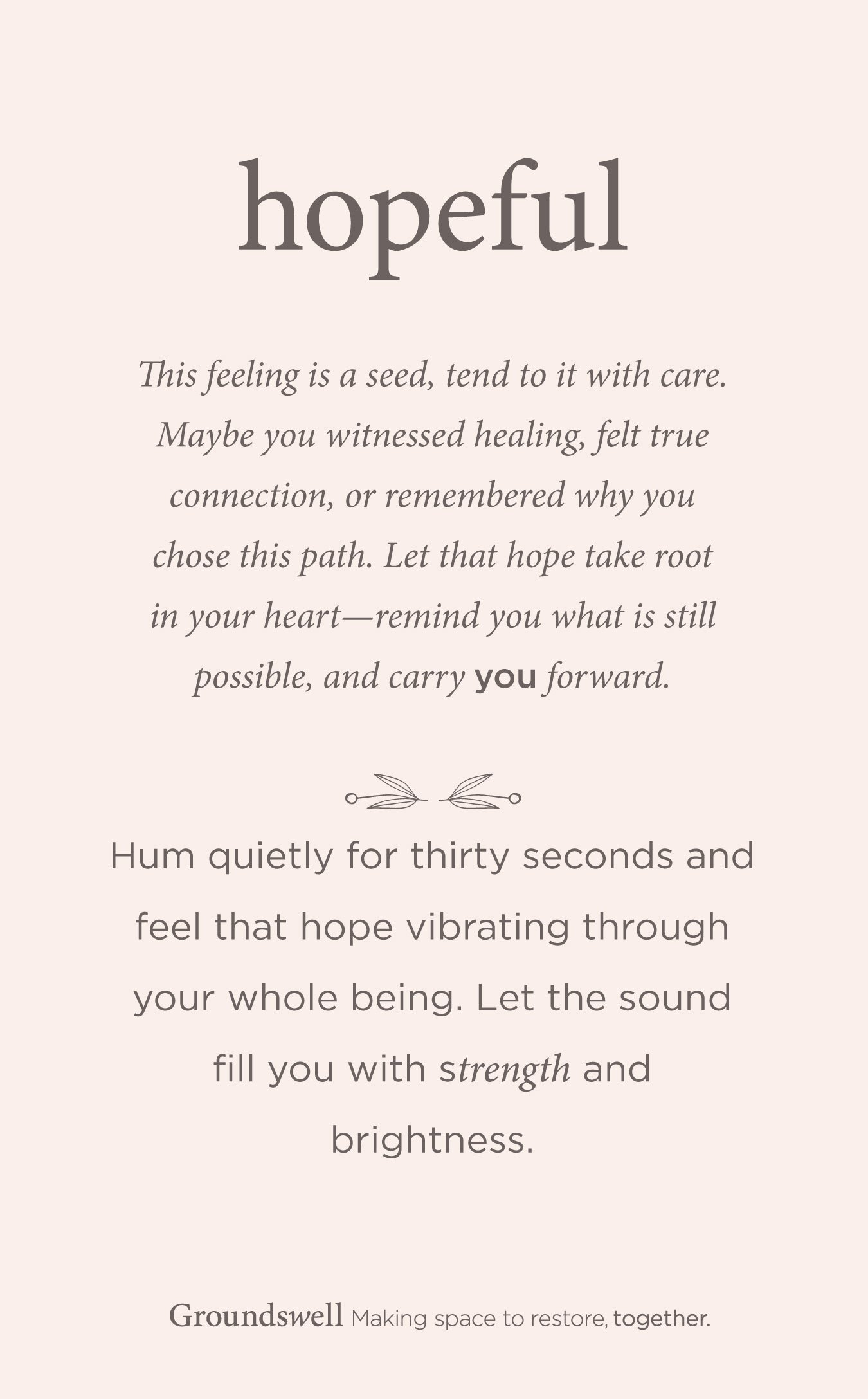
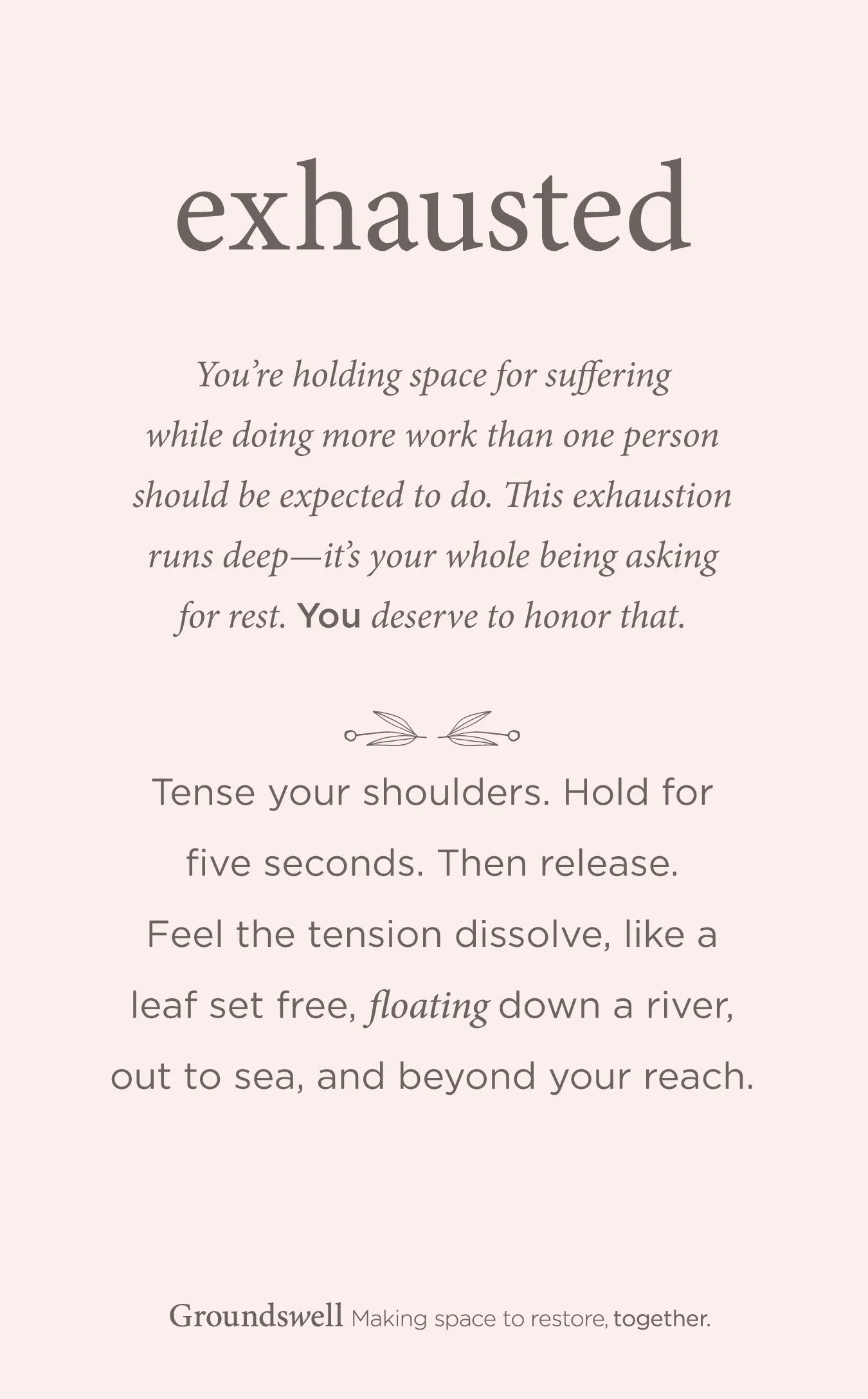
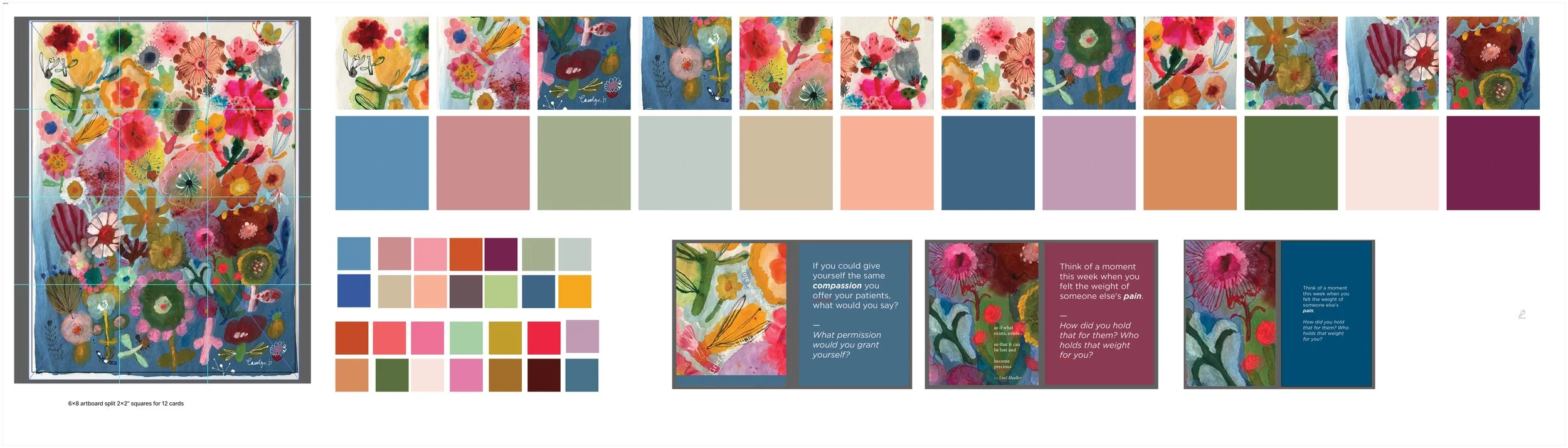
Groundswell Reflection Cards
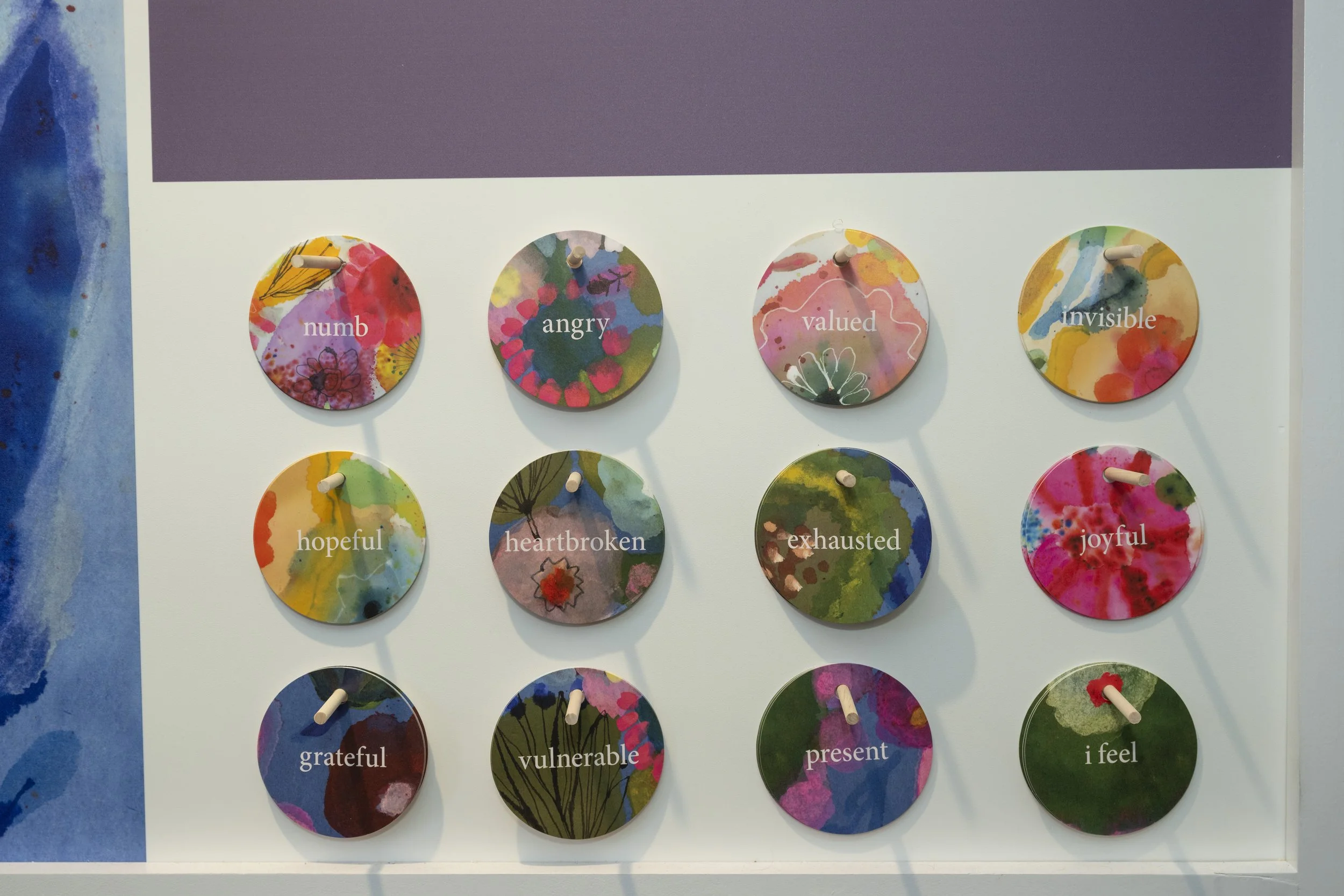
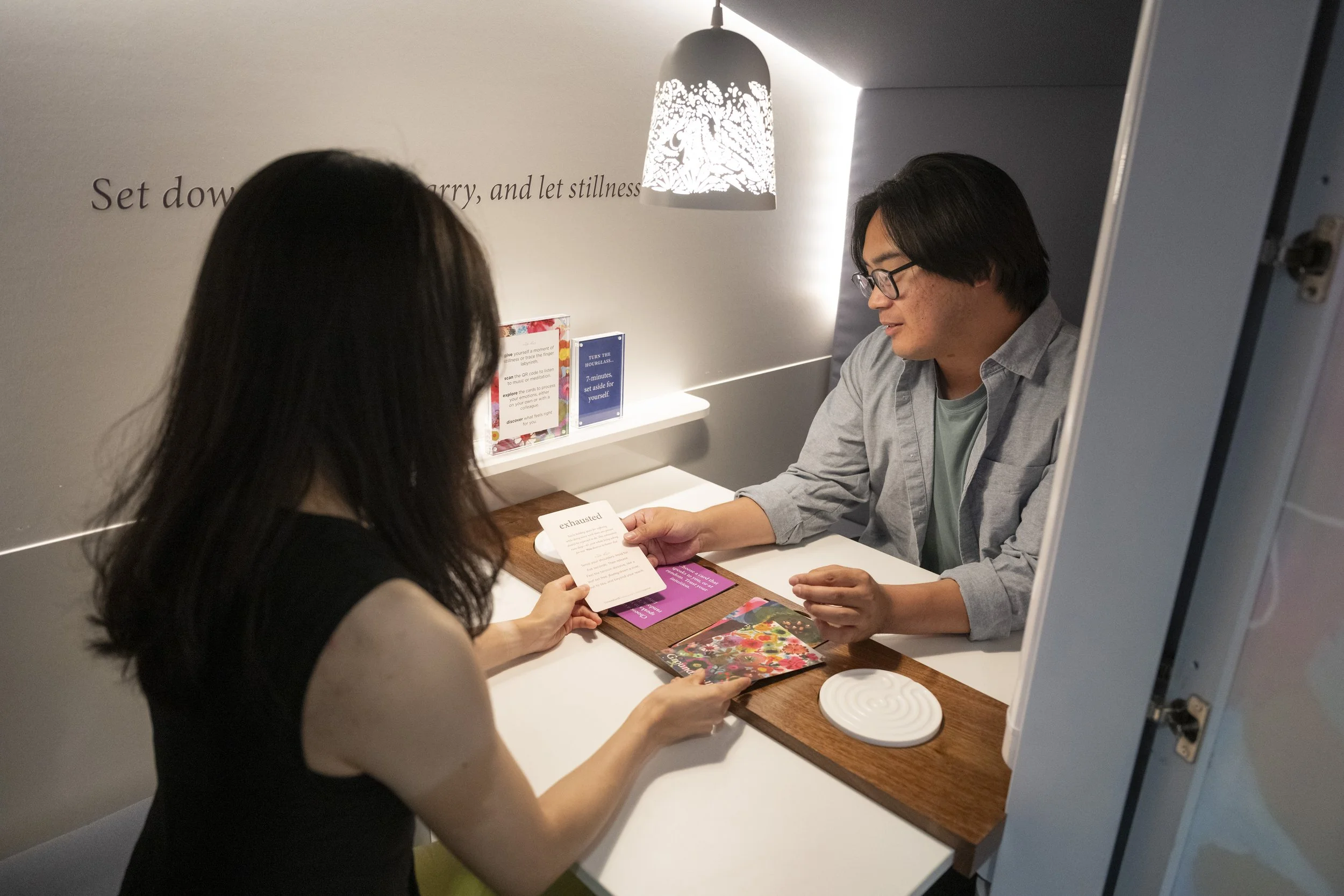
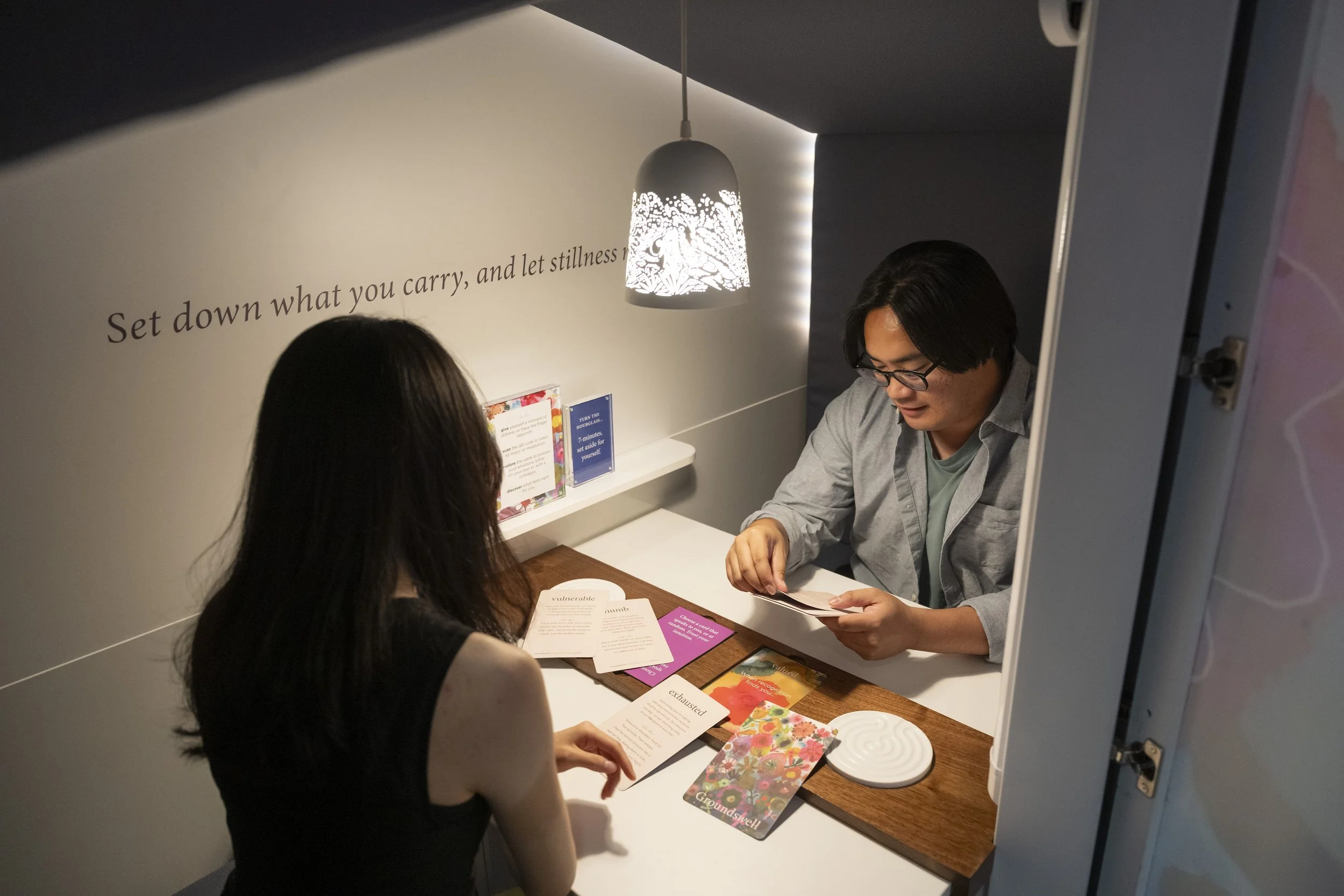
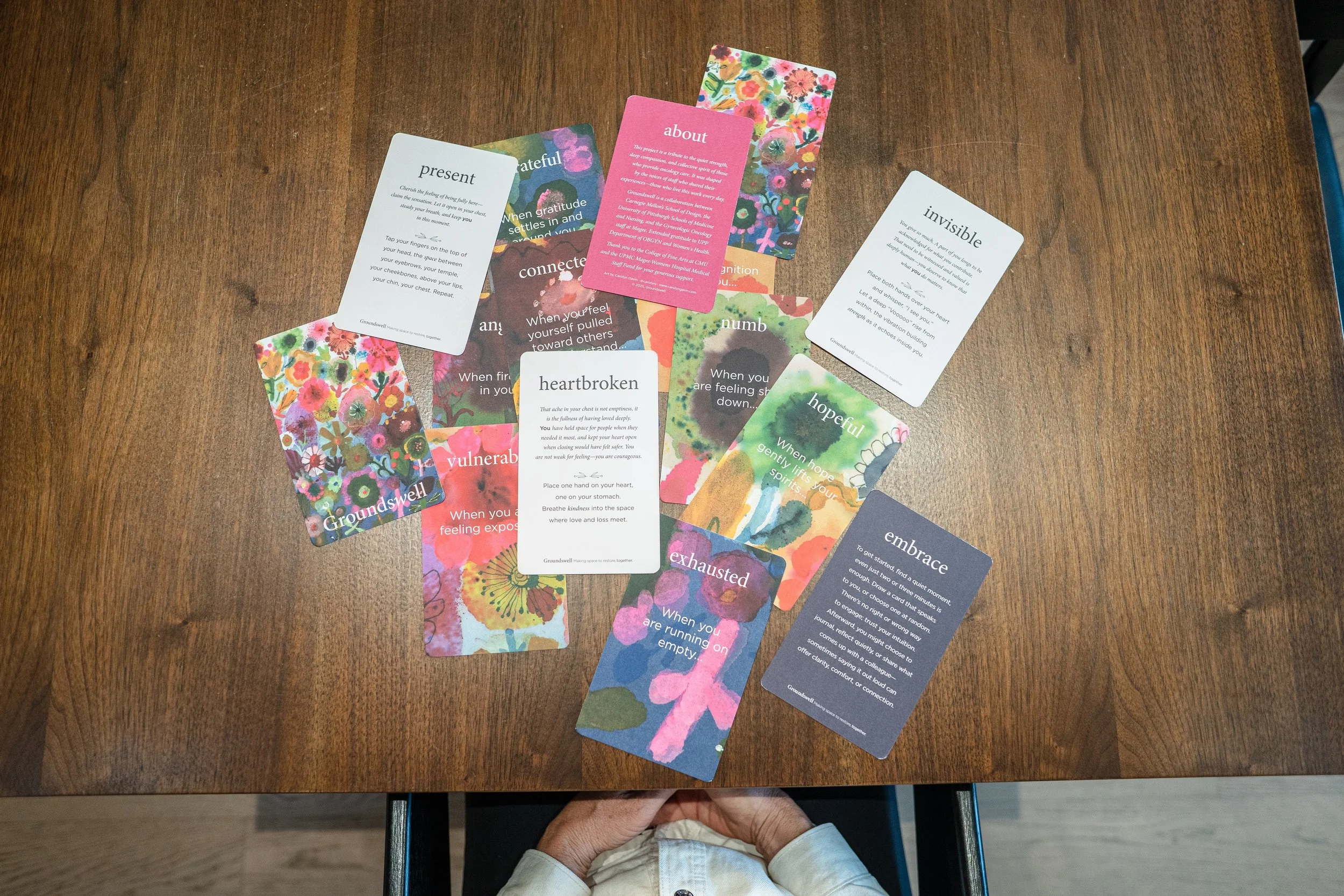
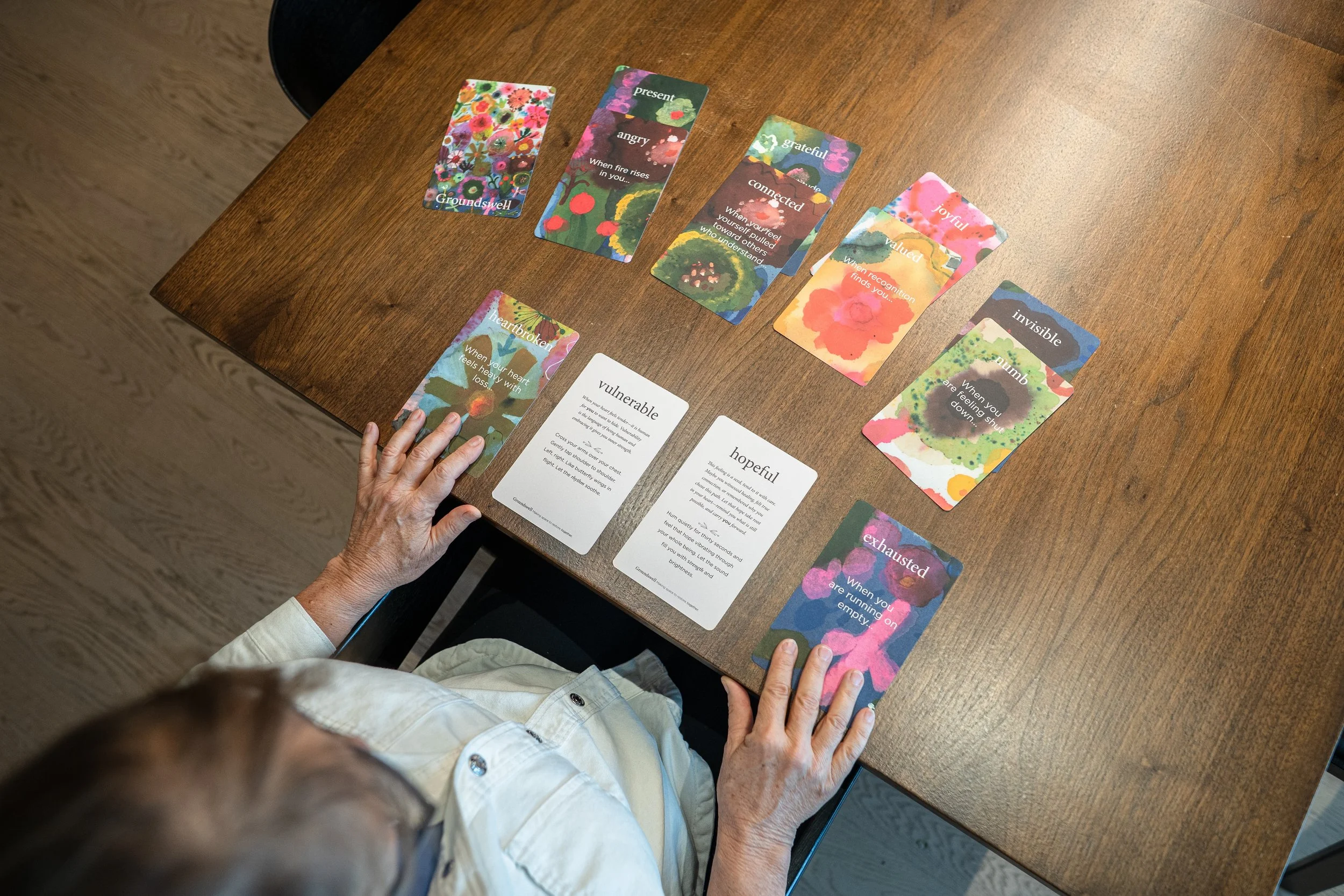
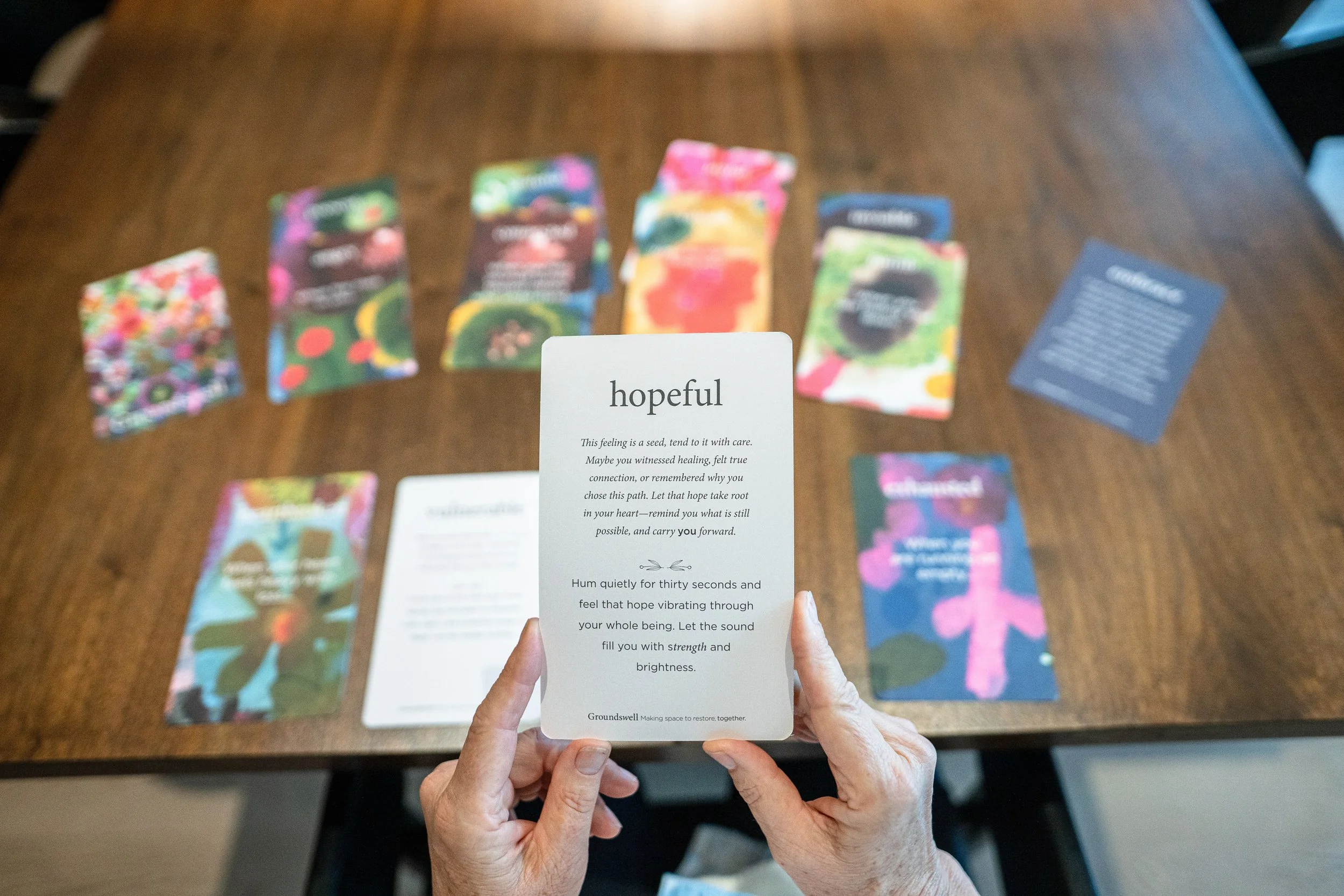
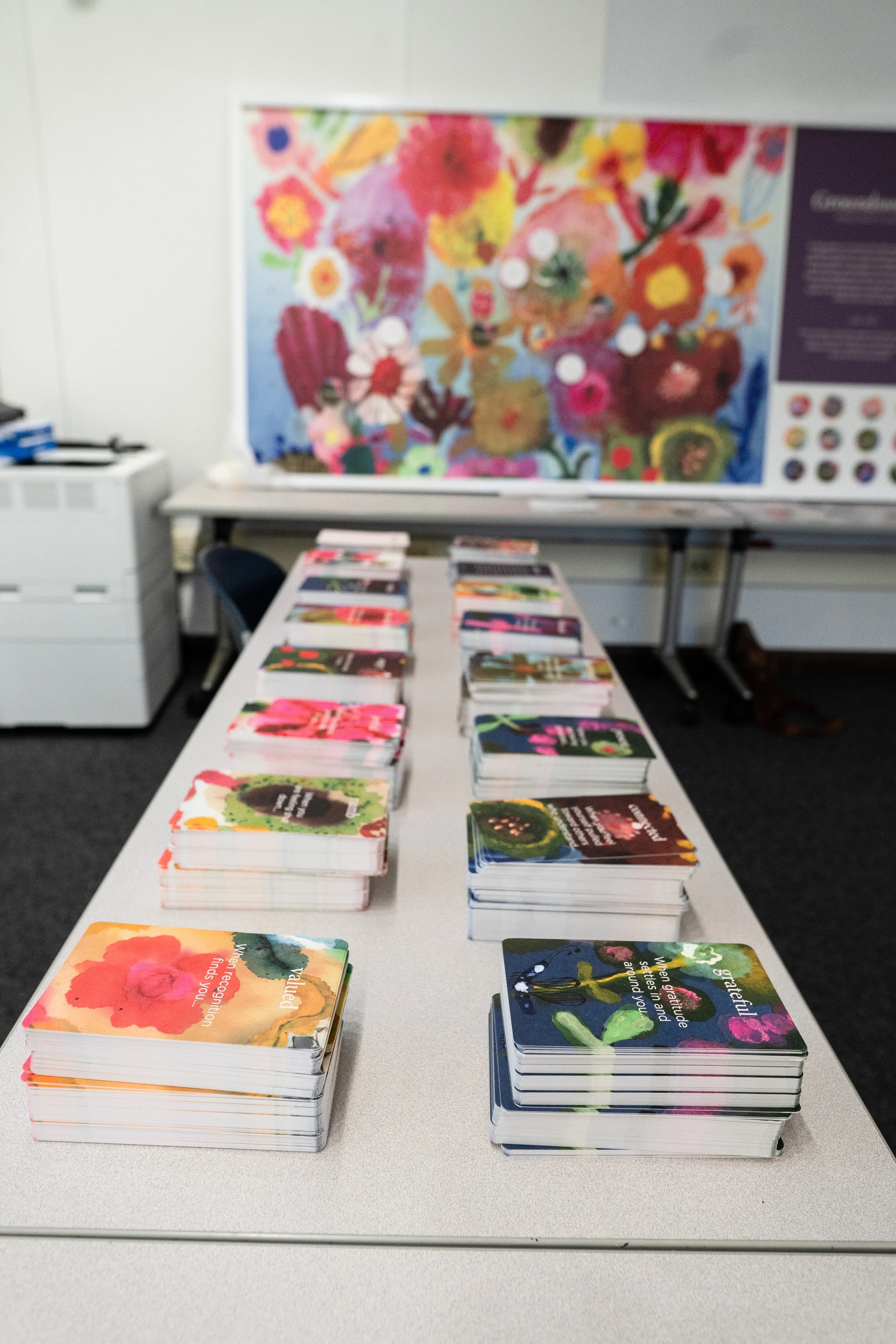
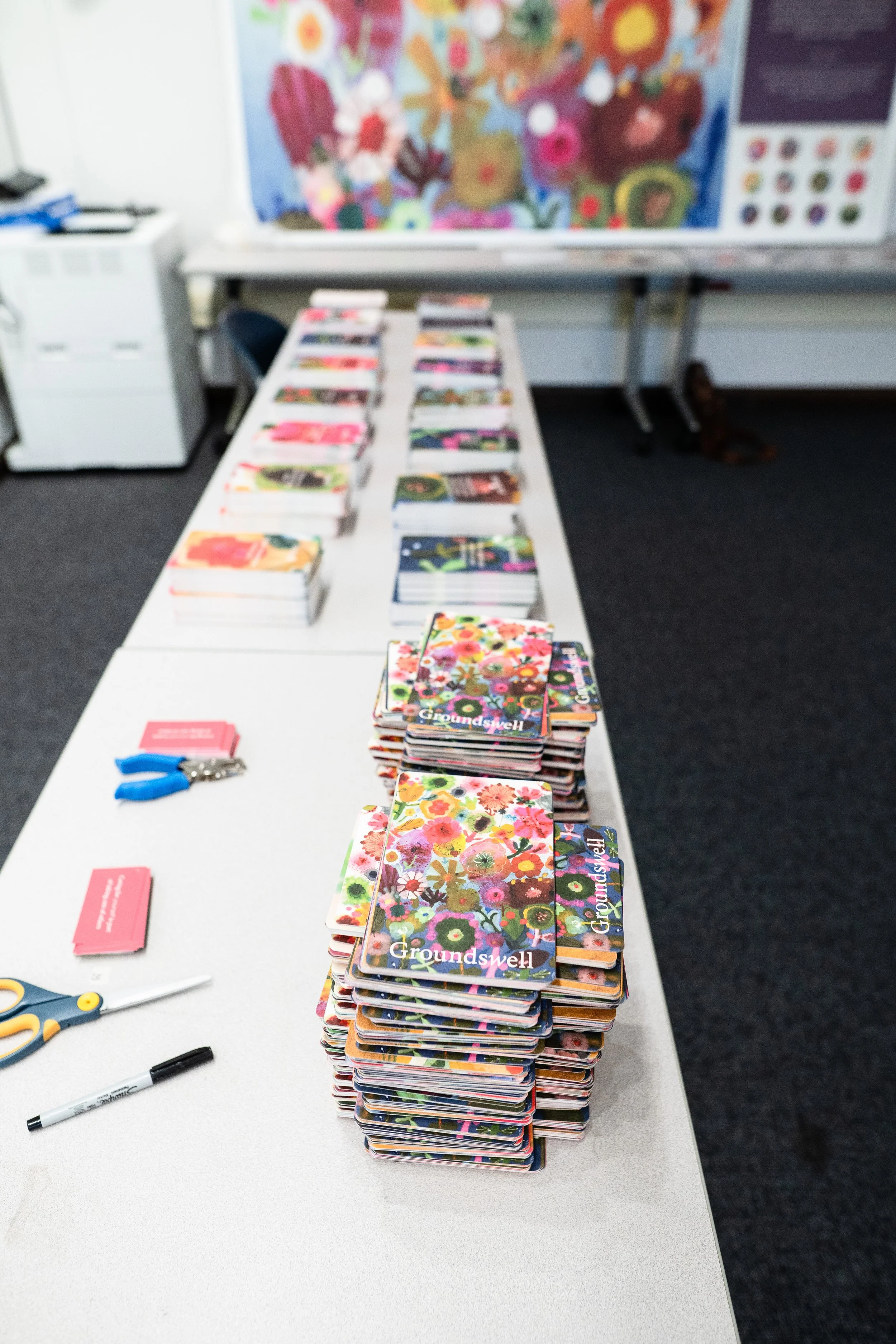
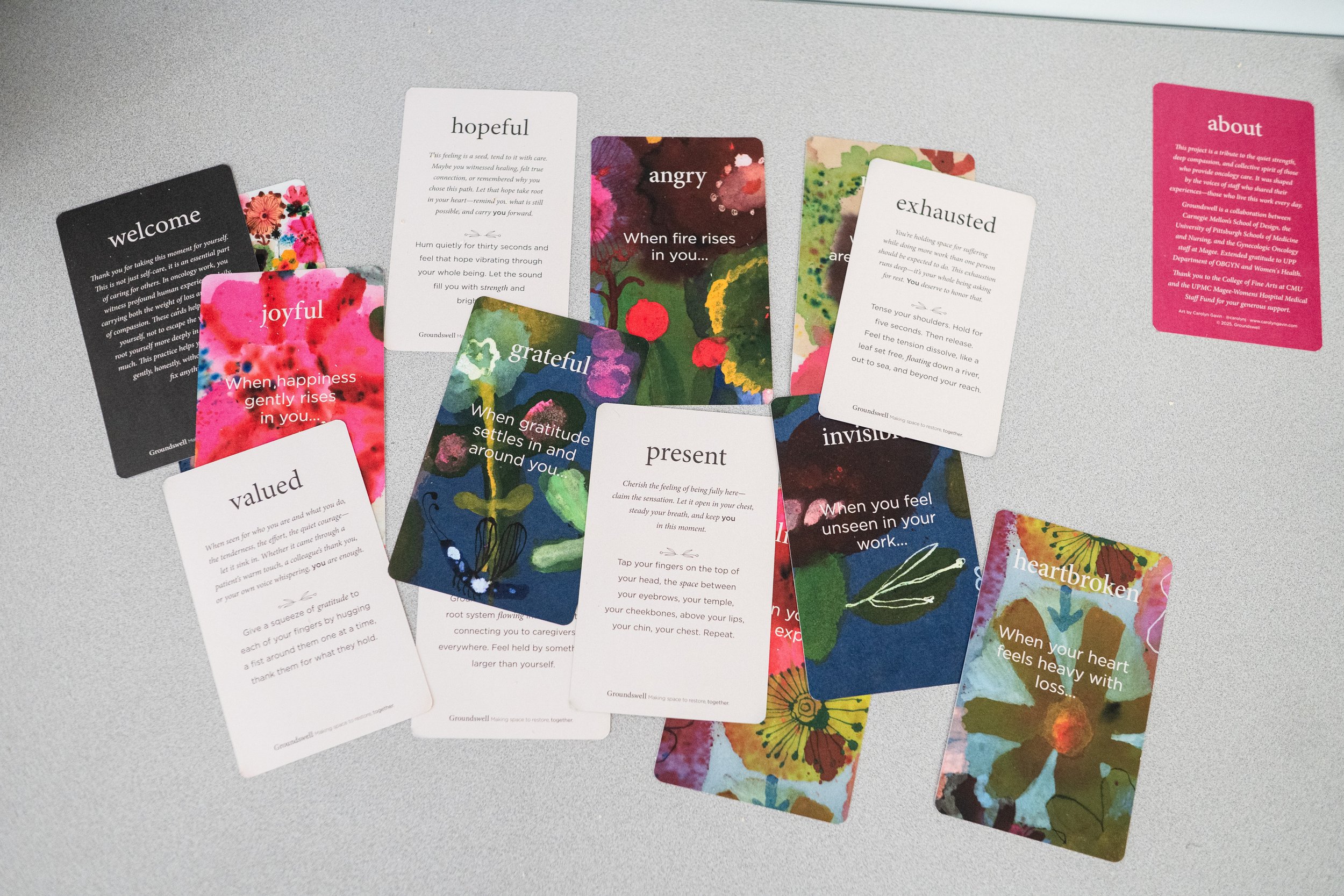
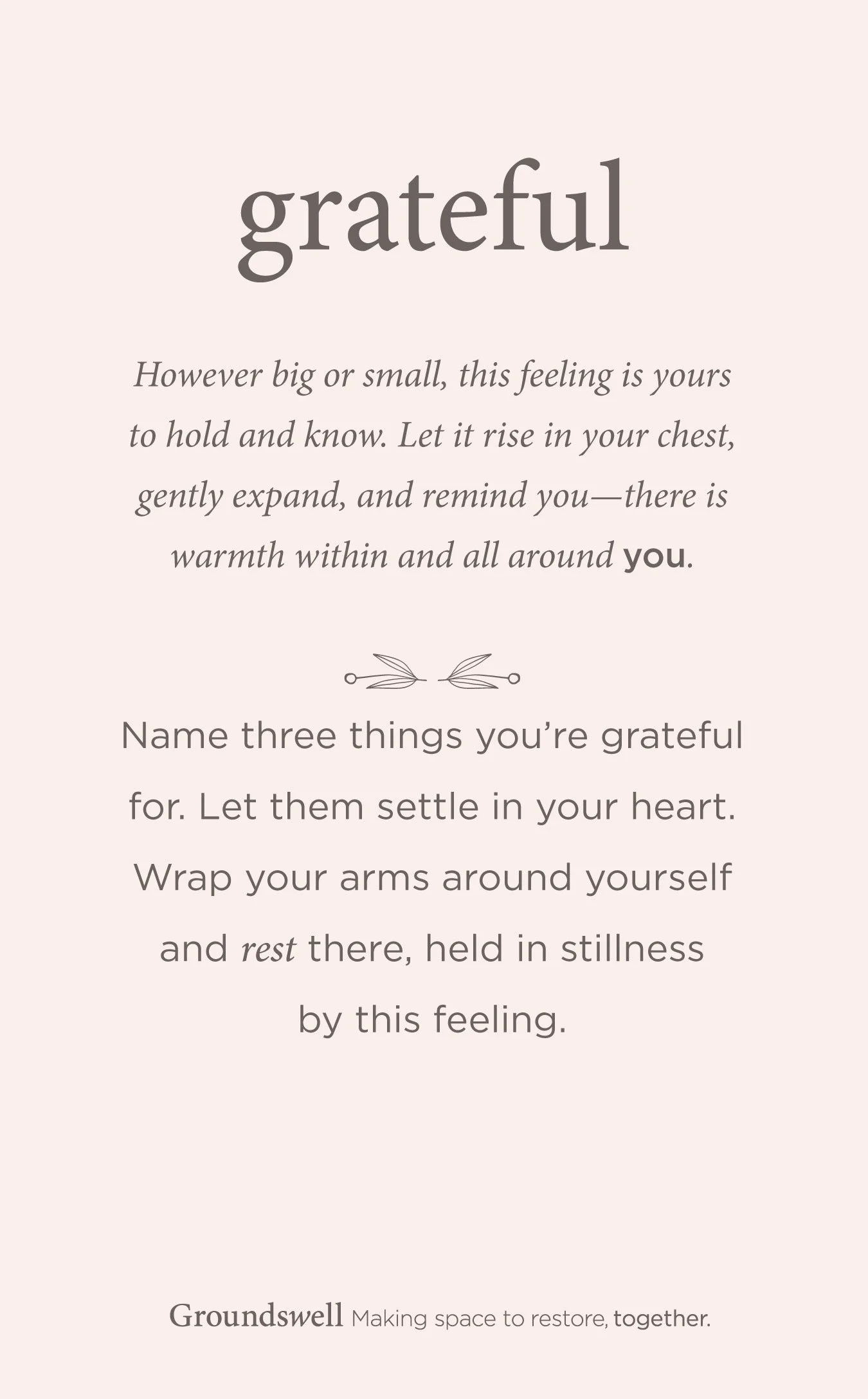
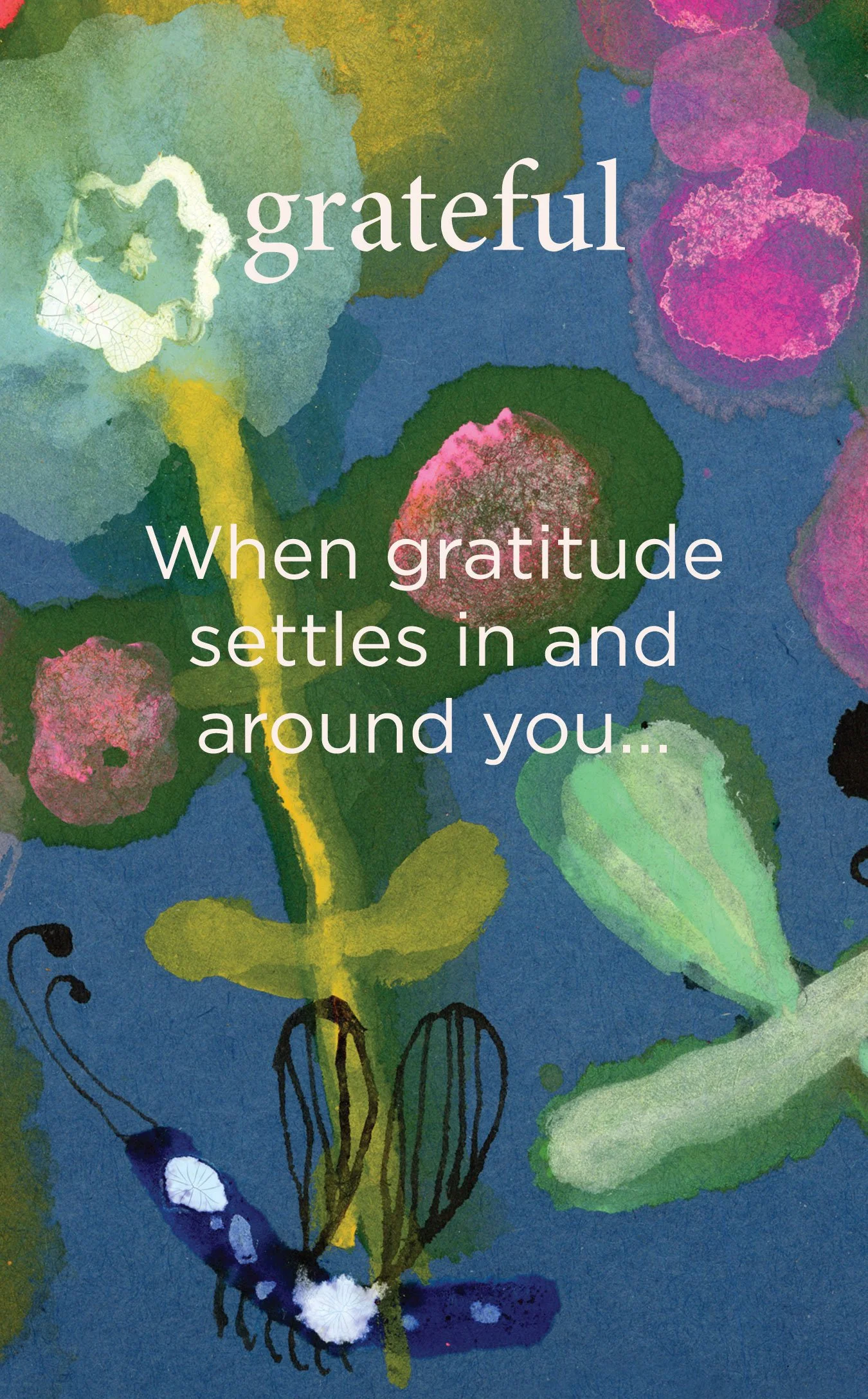
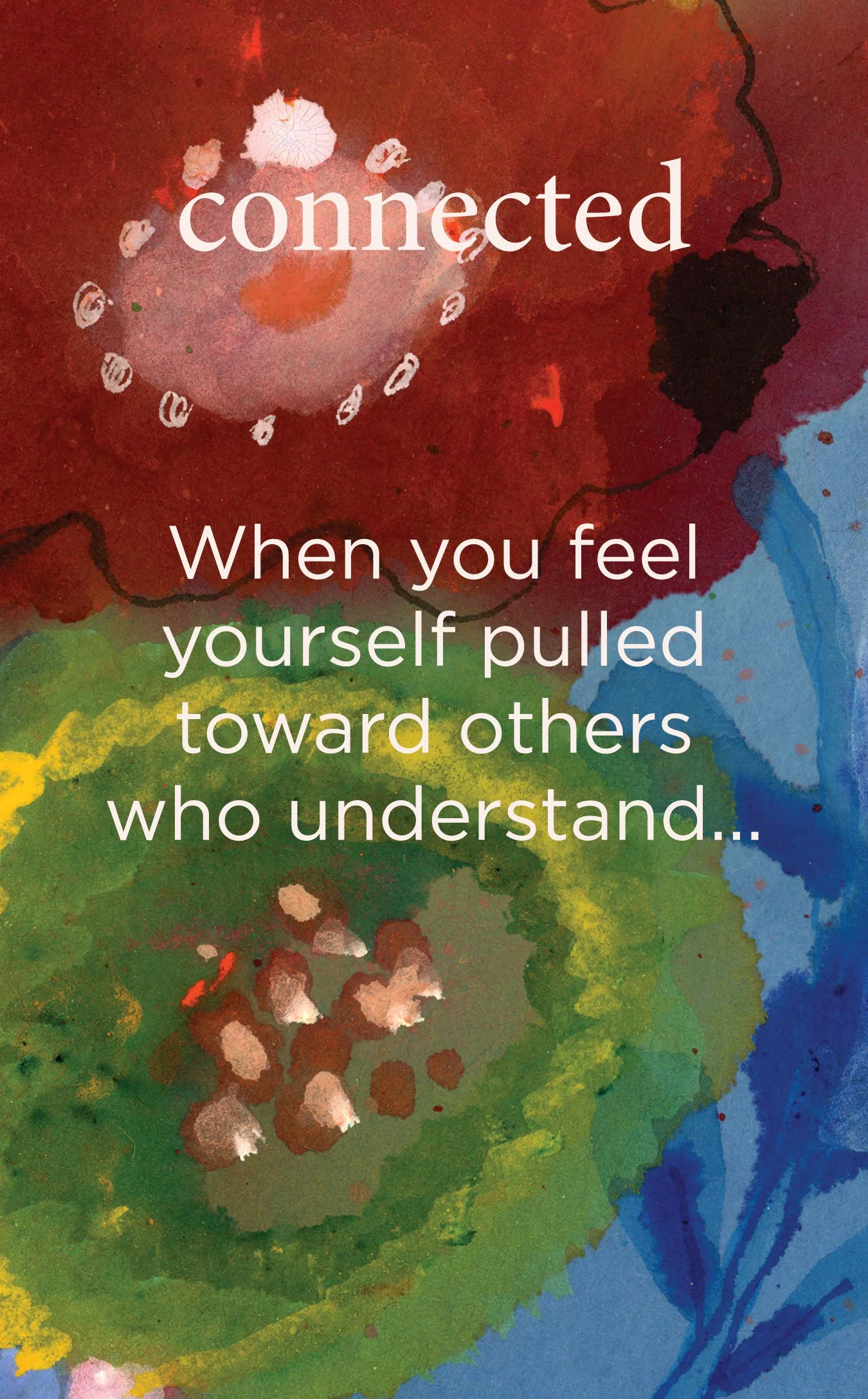
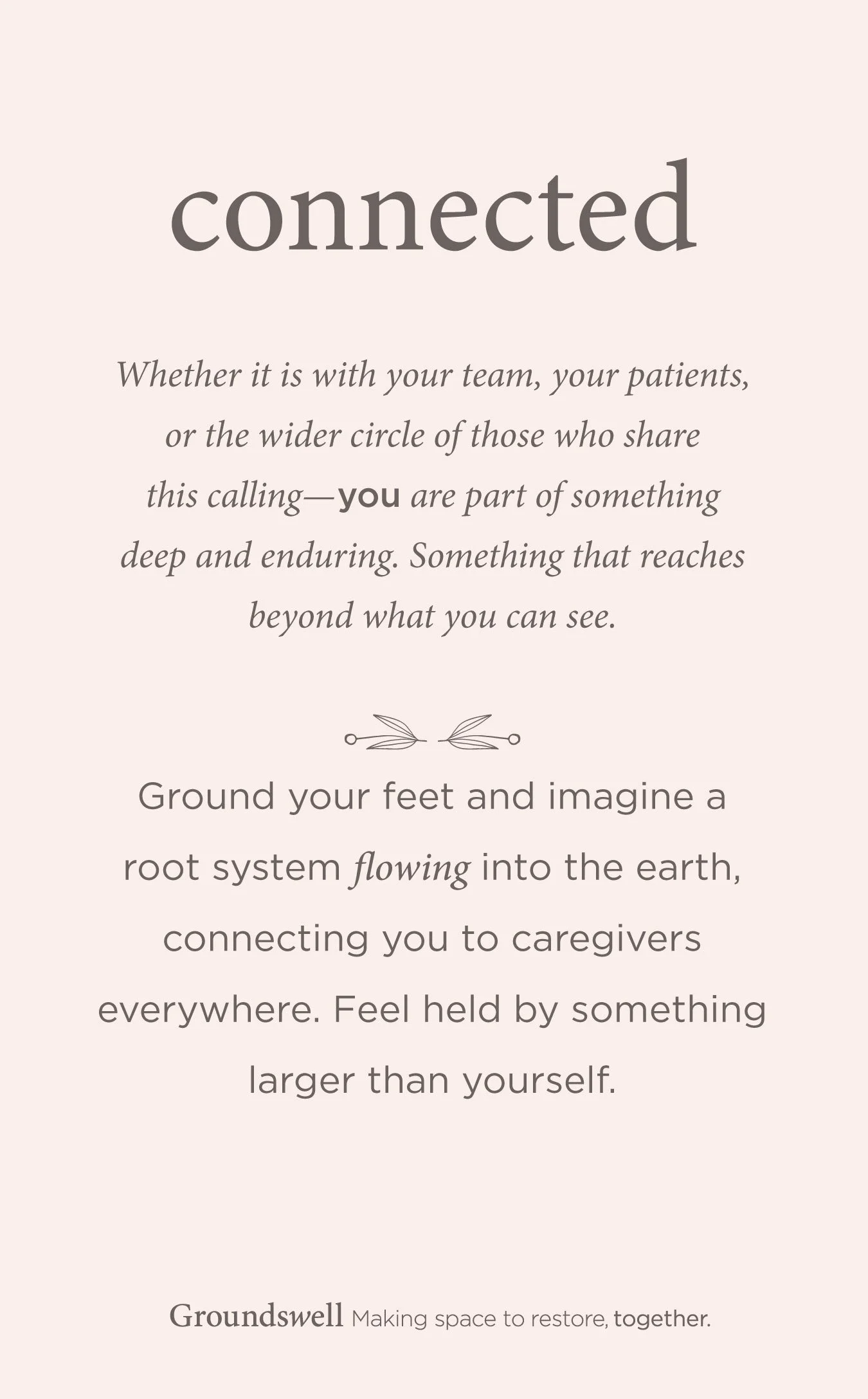
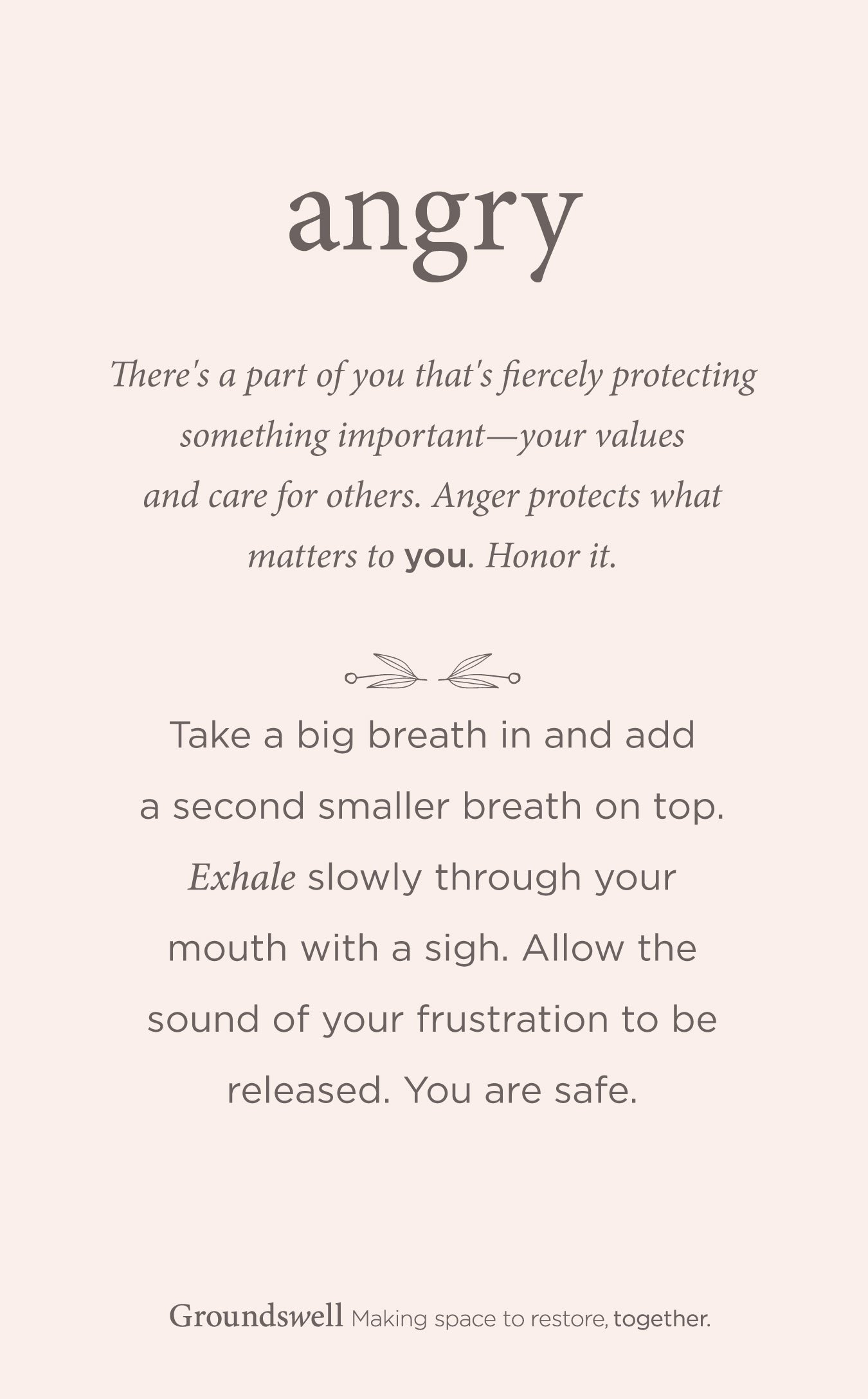
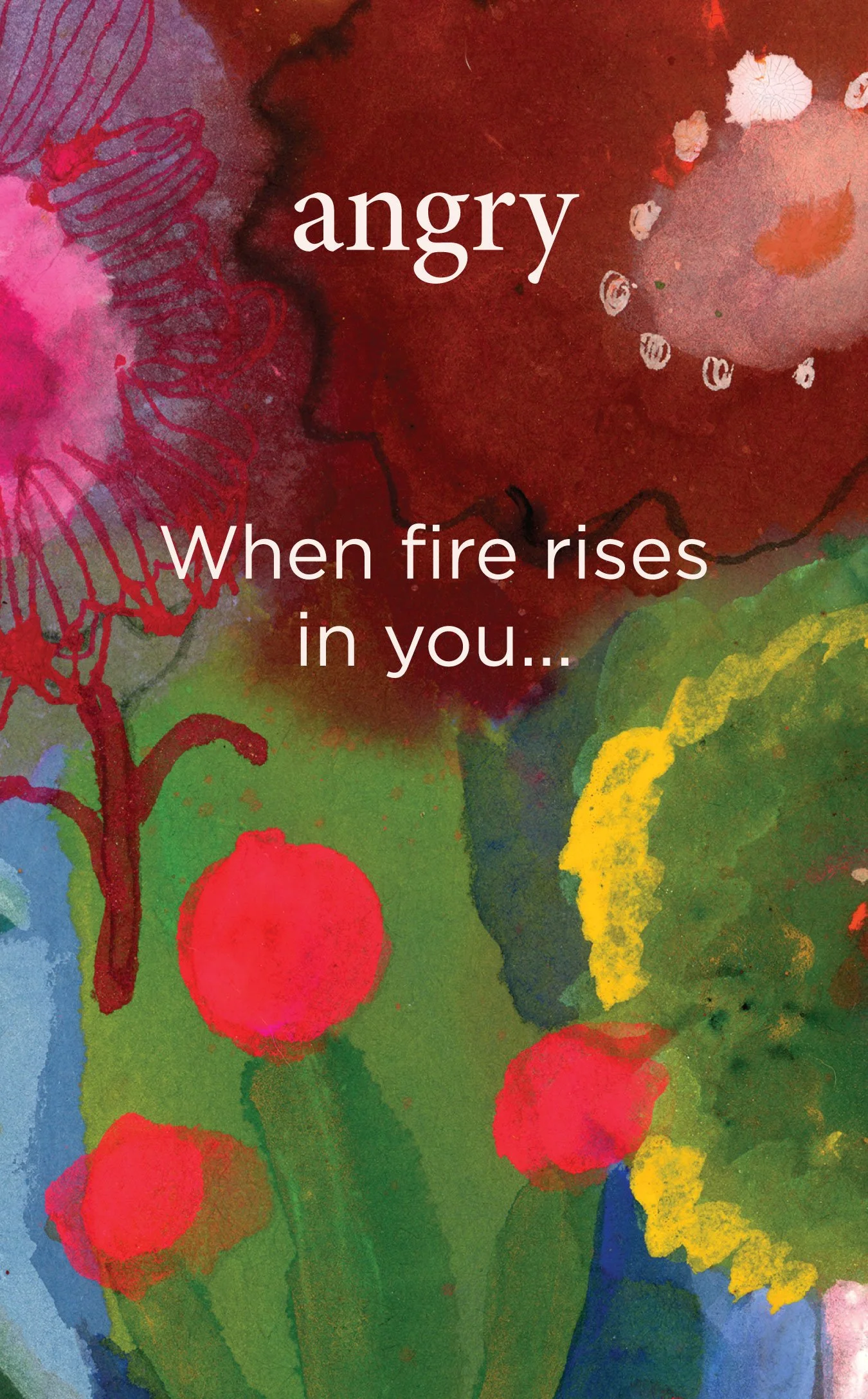
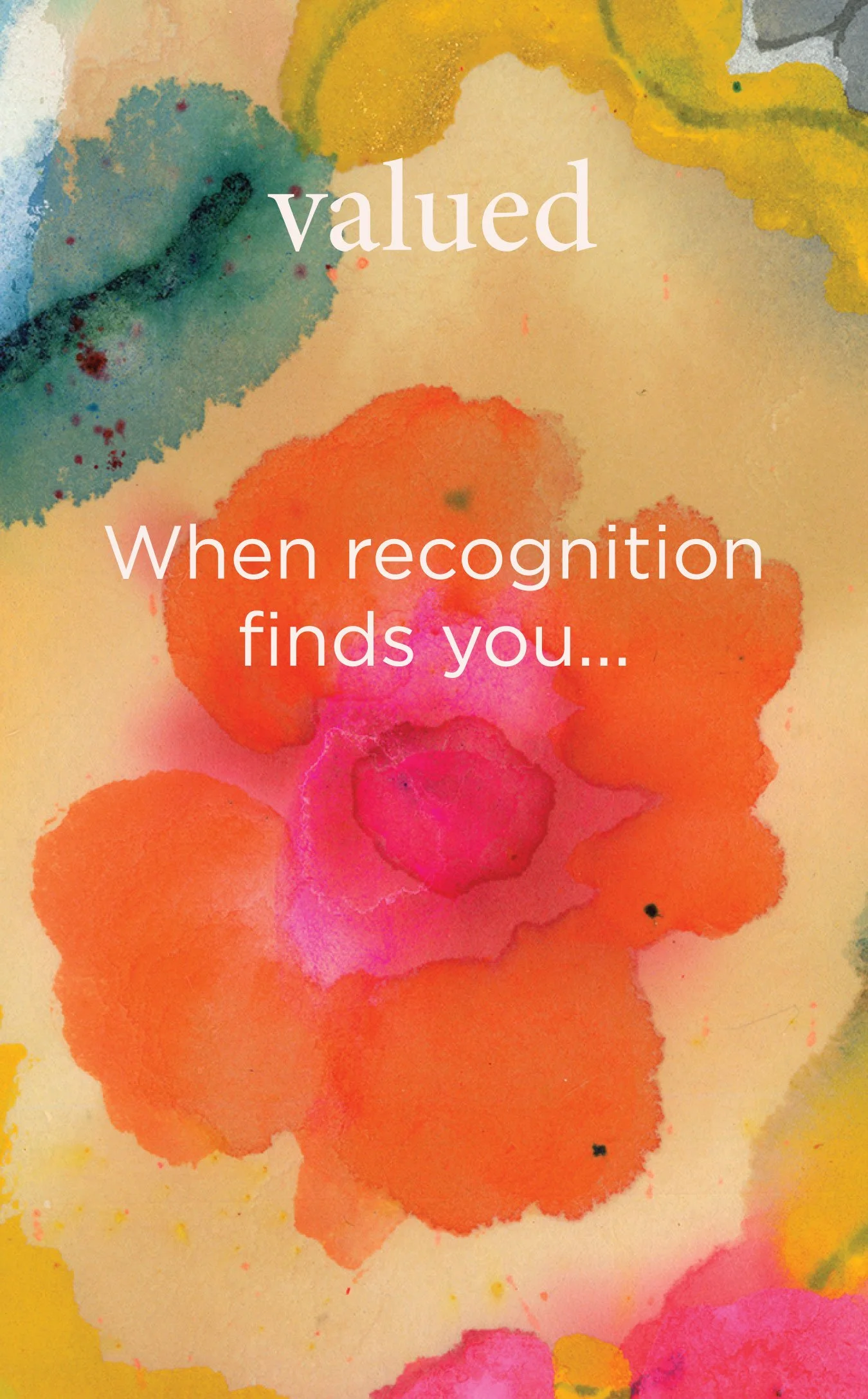
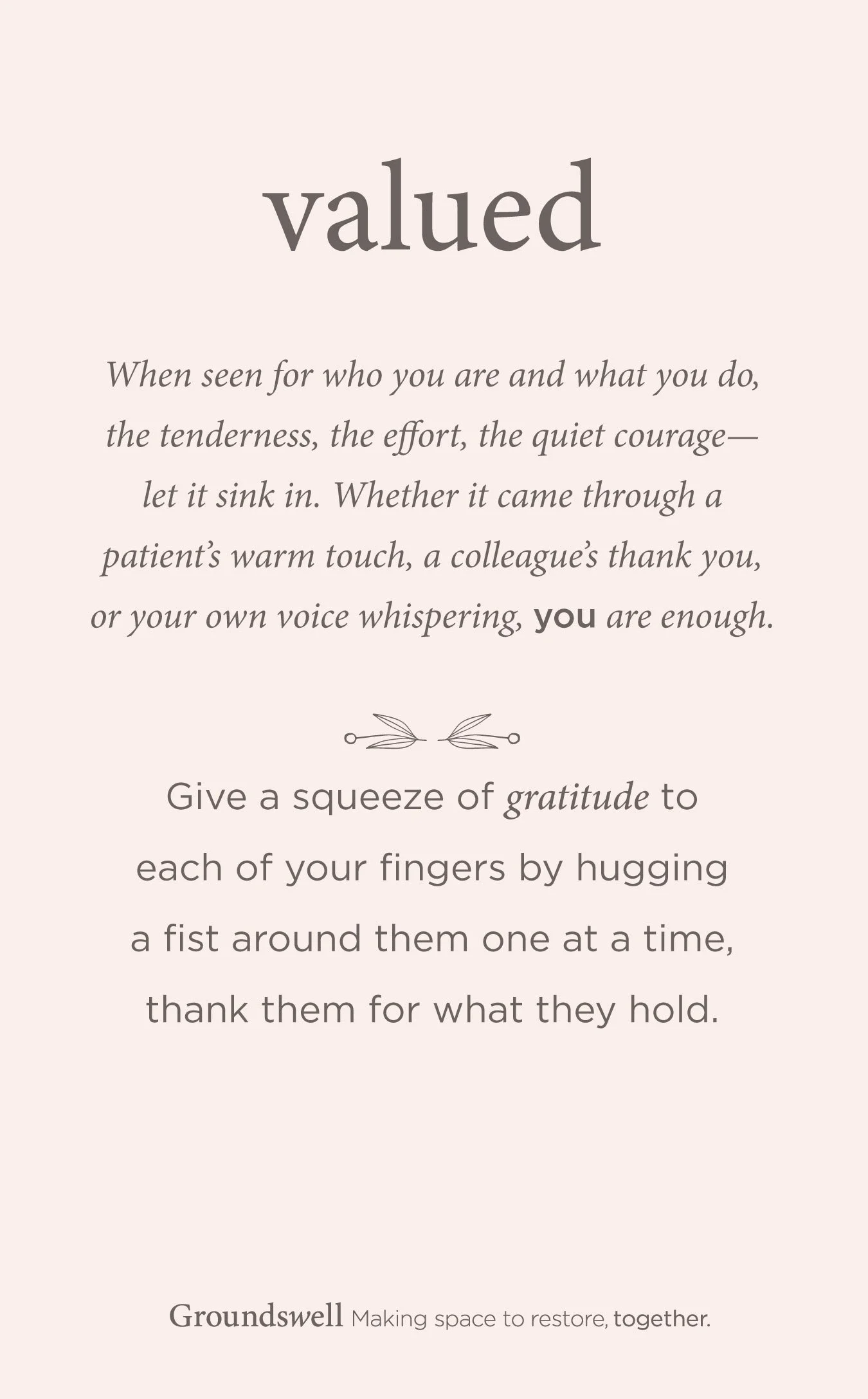
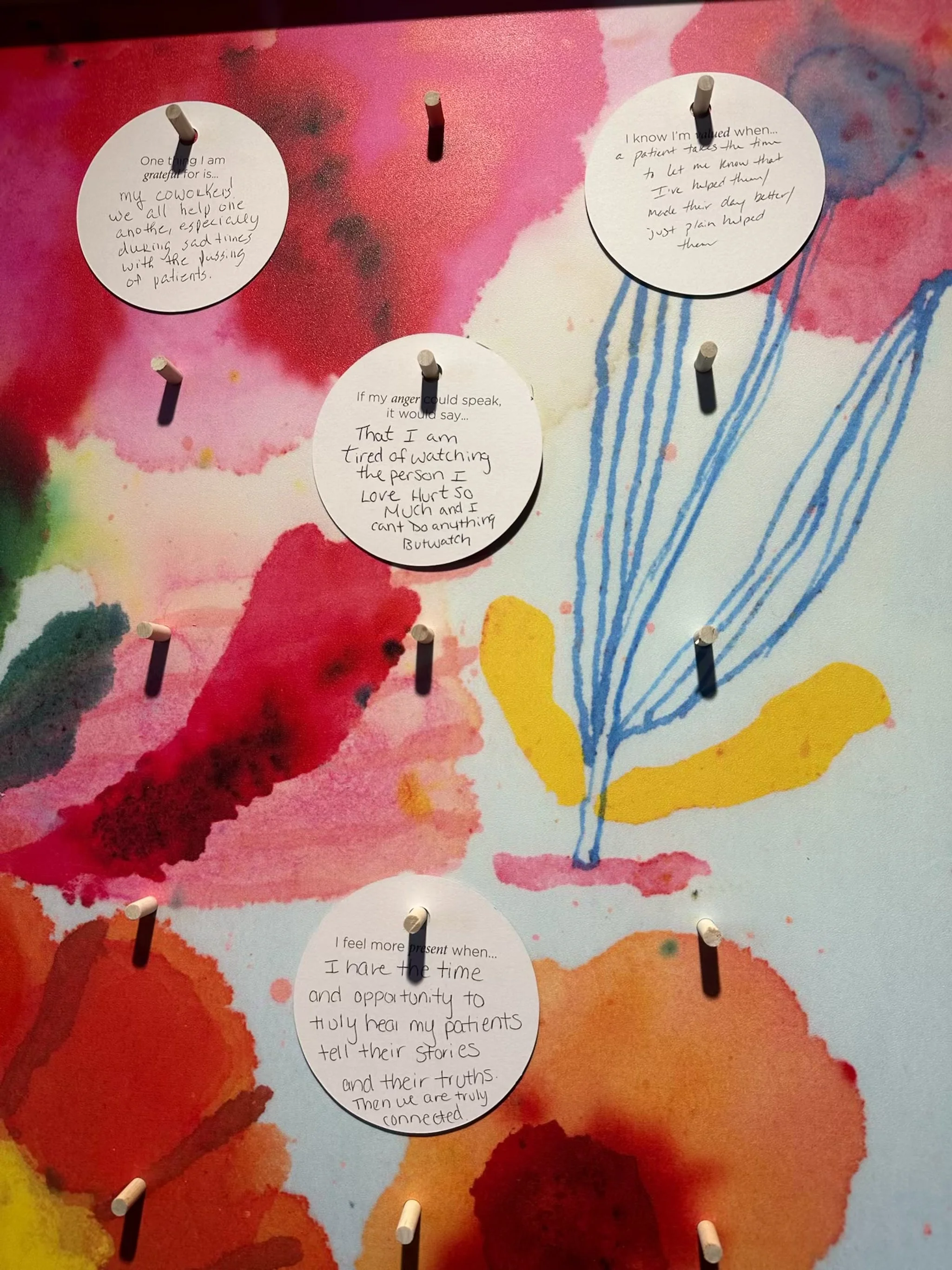
Guided reflection cards that help staff build a self-care practice through emotional validation and introductory exercises for emotional regulation. These cards integrate mind-body approaches to processing the complex, contradictory emotions inherent in oncology work, helping staff cultivate the capacity that is essential for sustained compassionate care.
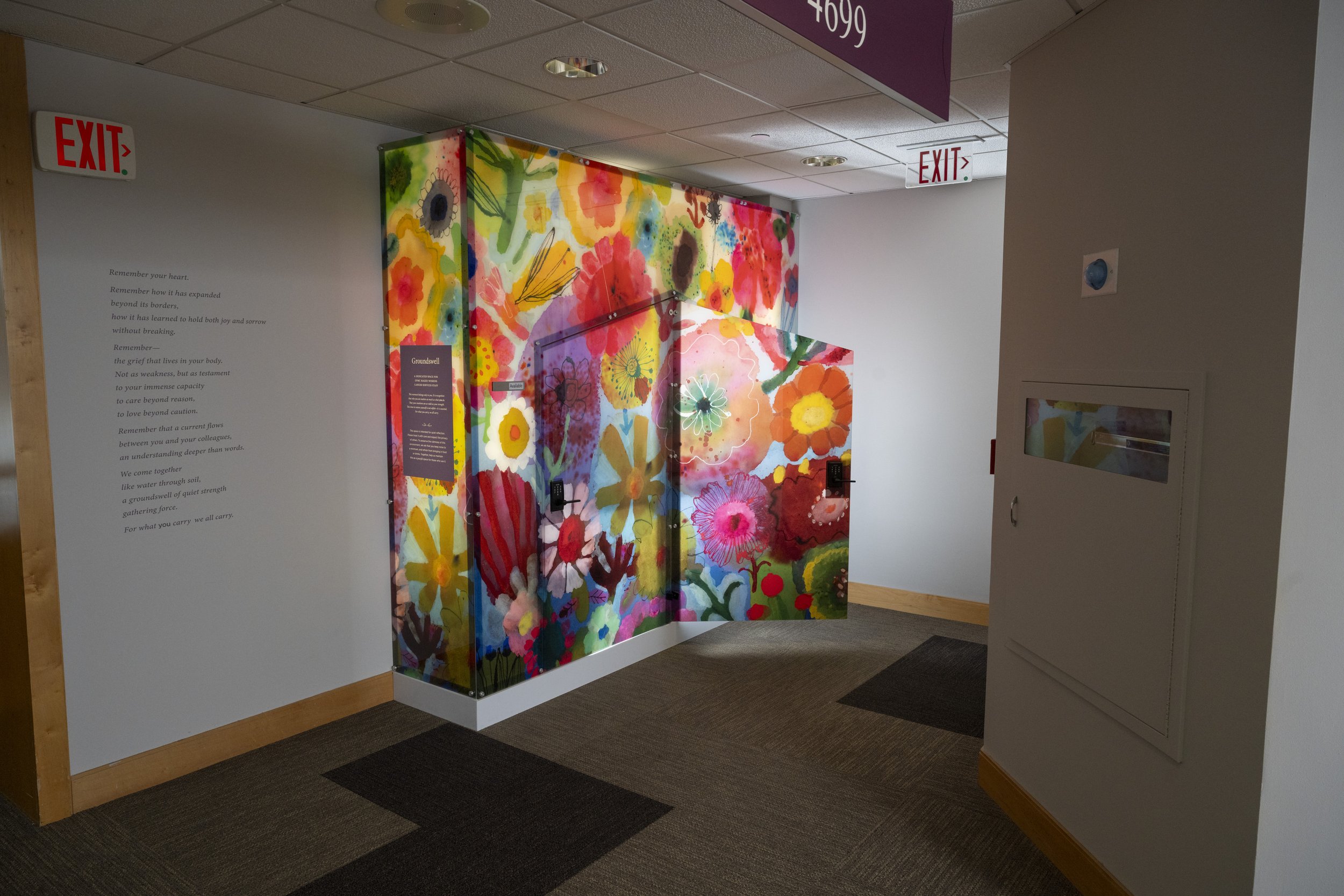
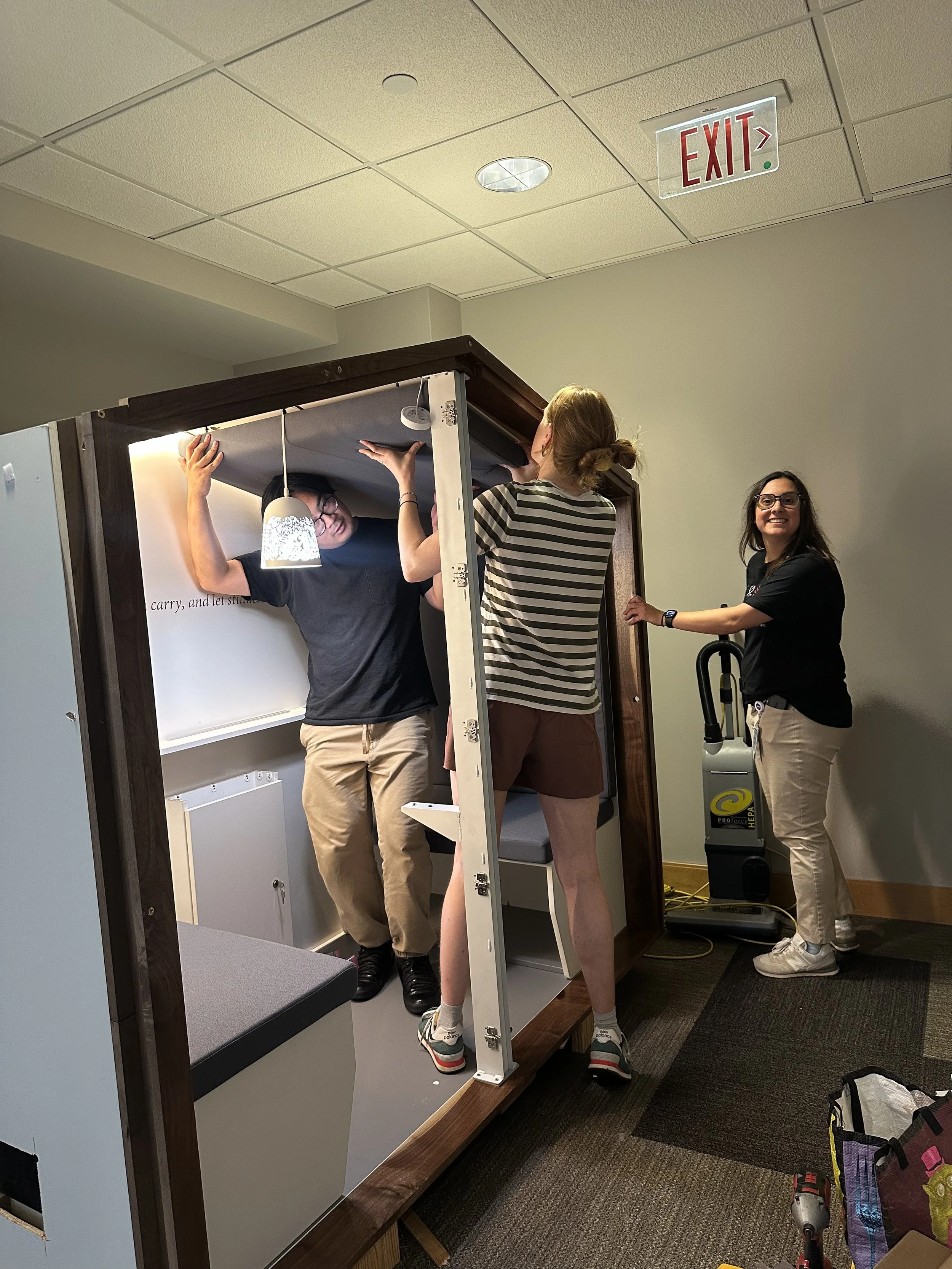
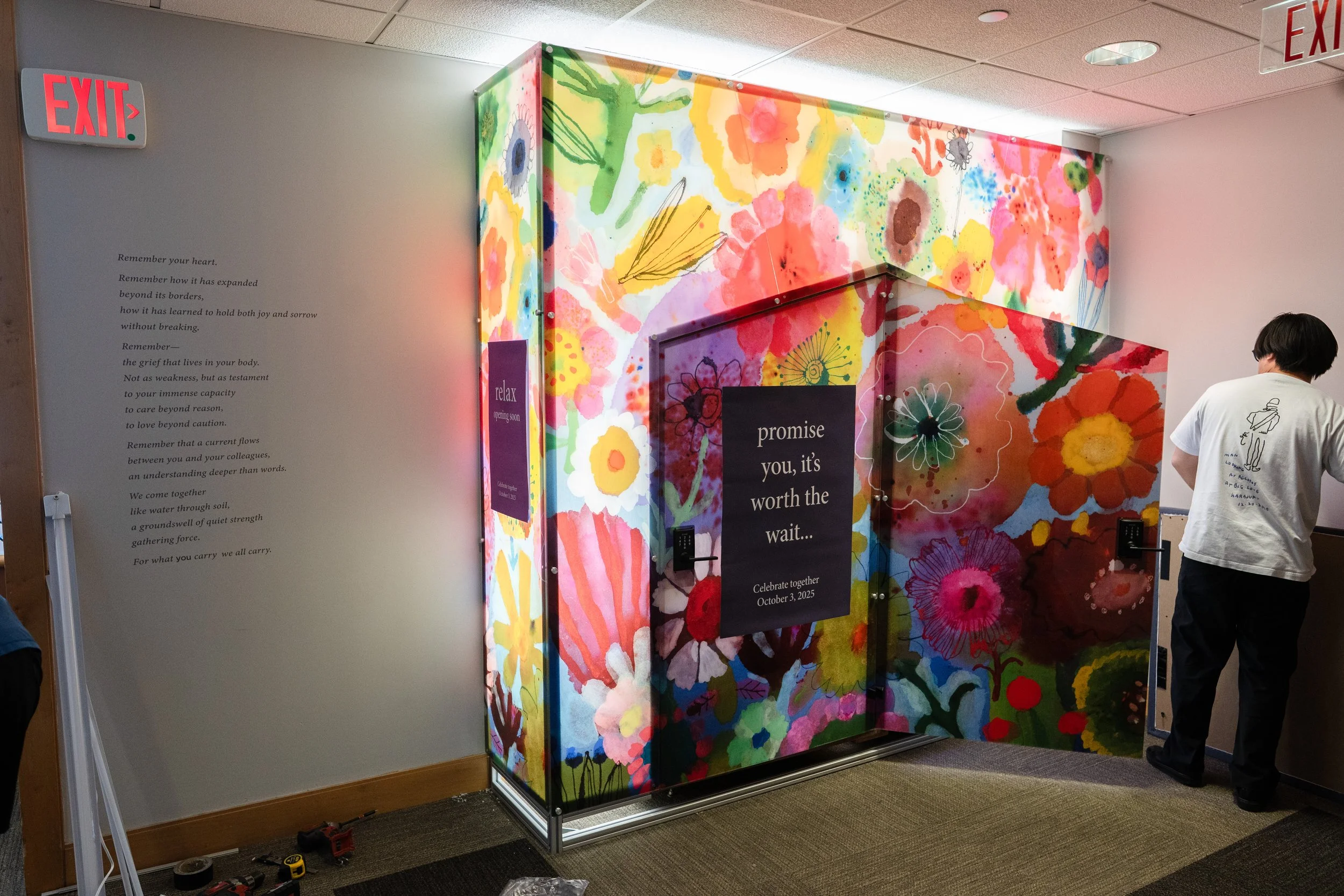
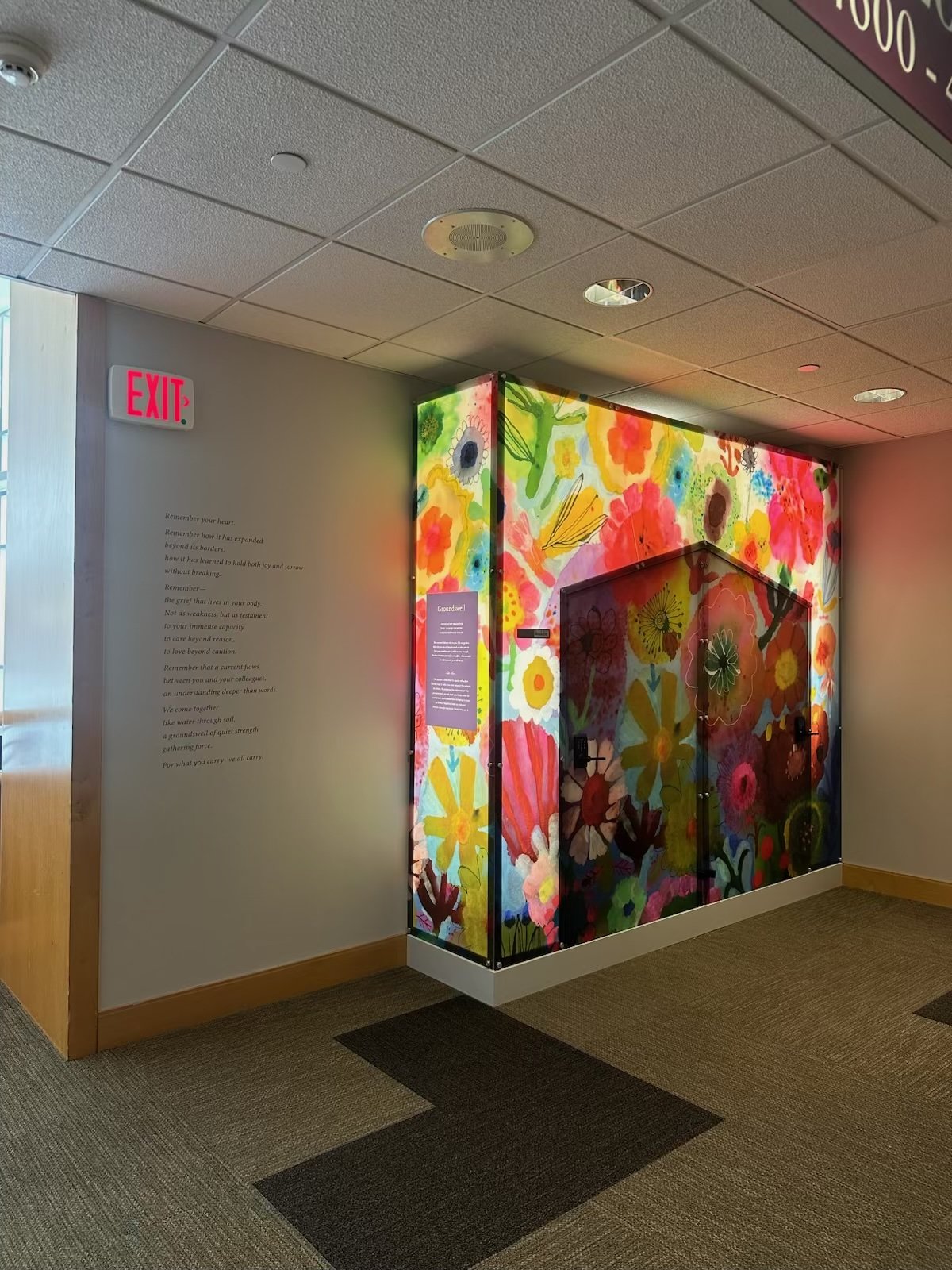
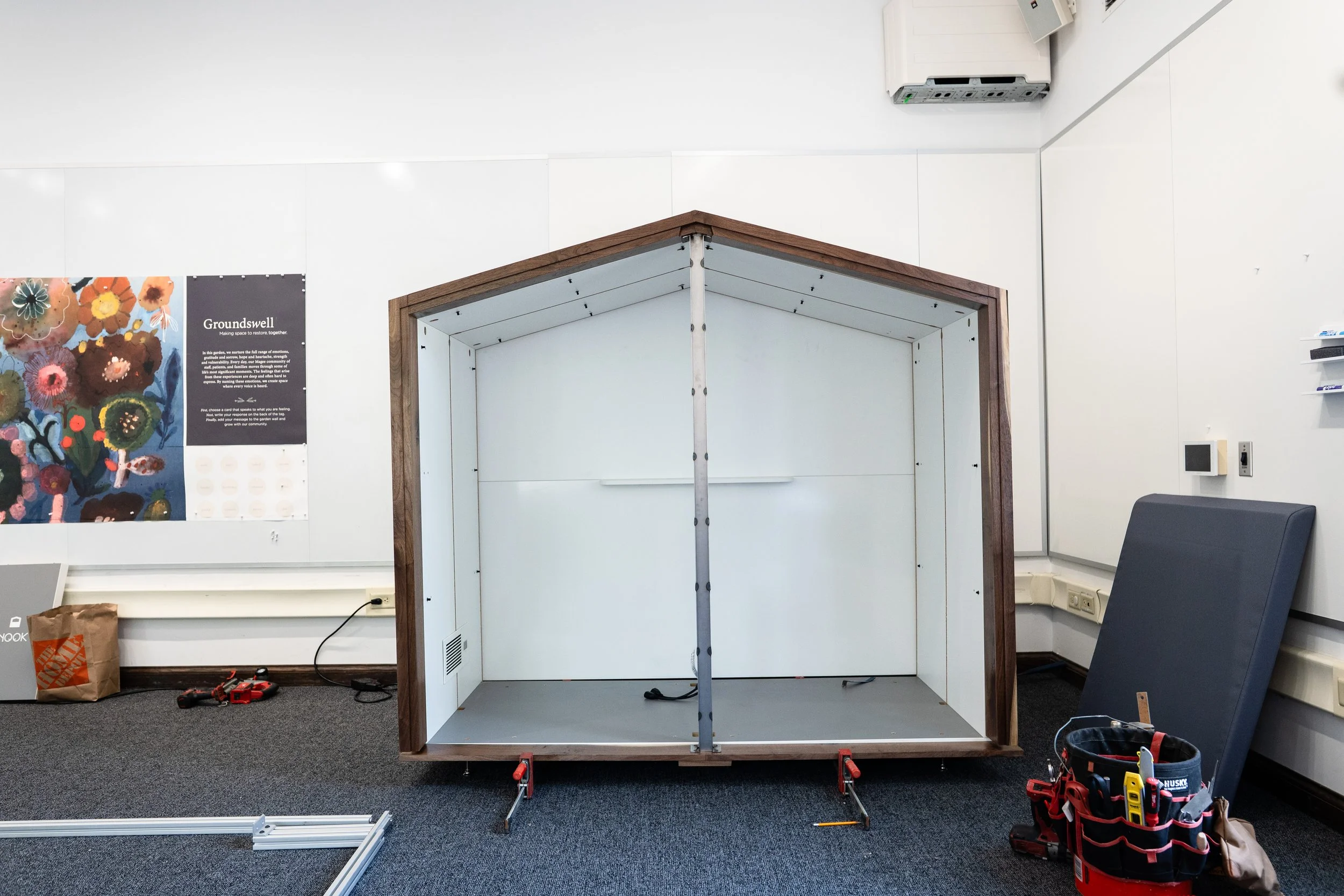
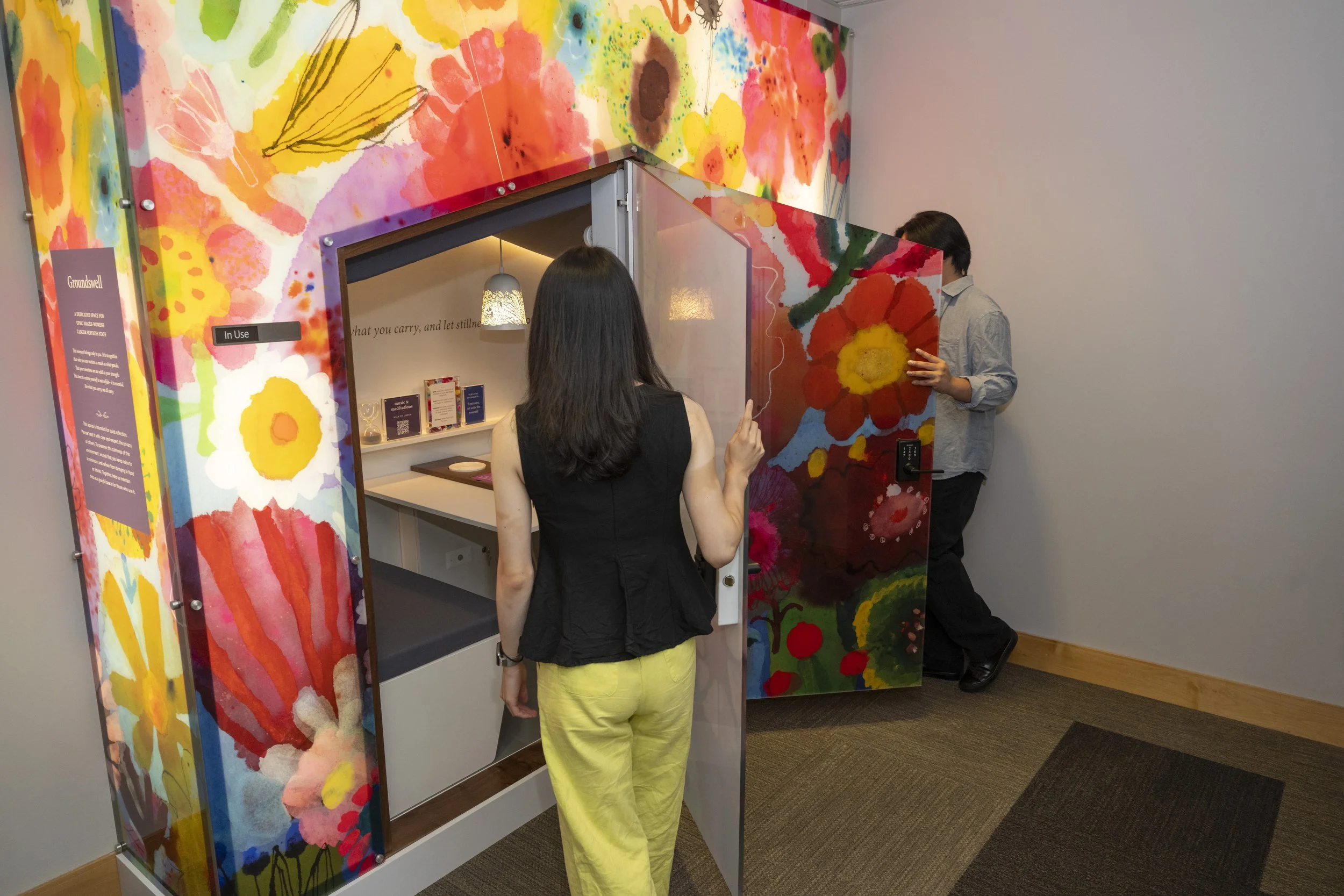
Groundswell Restorative Pod
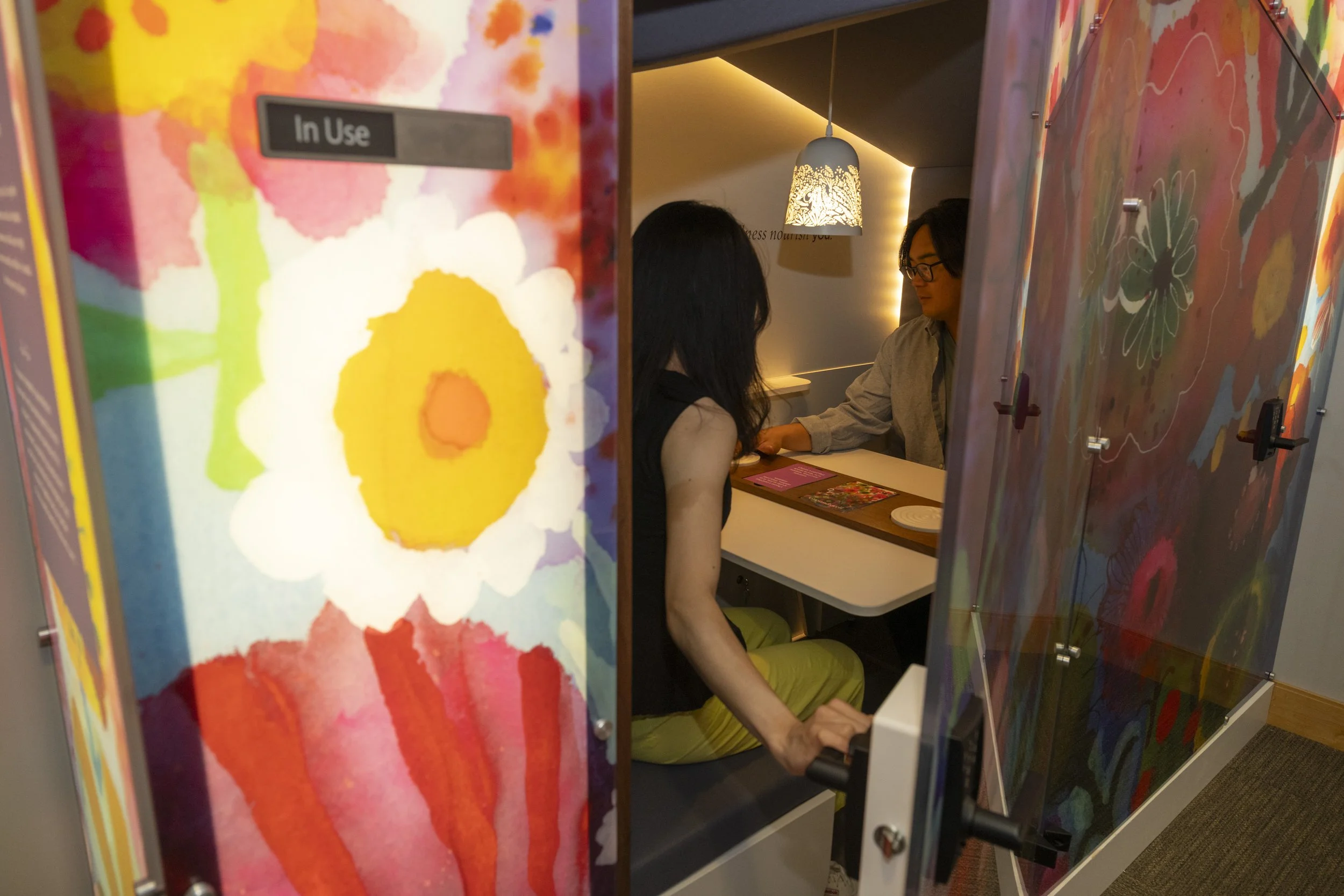
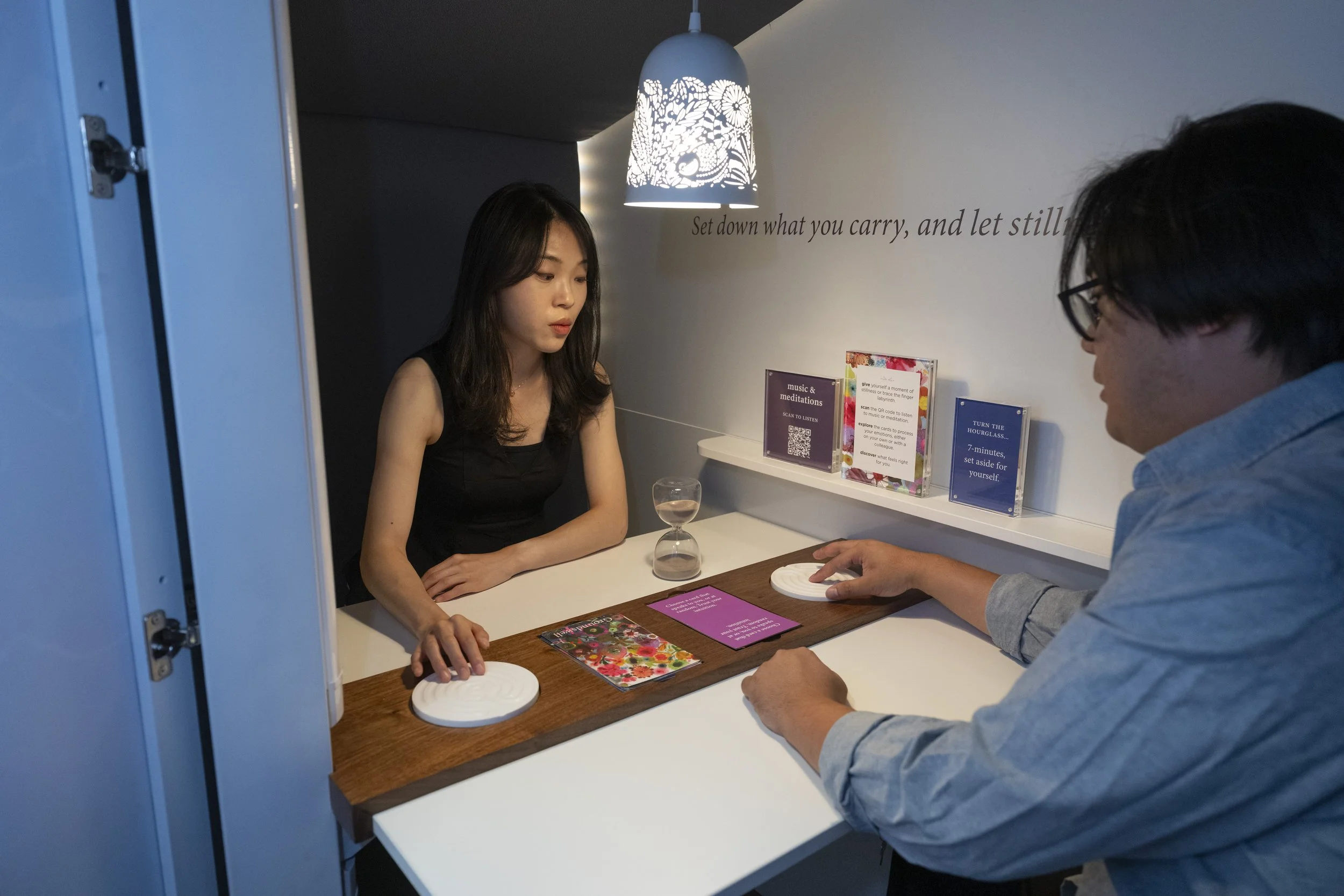
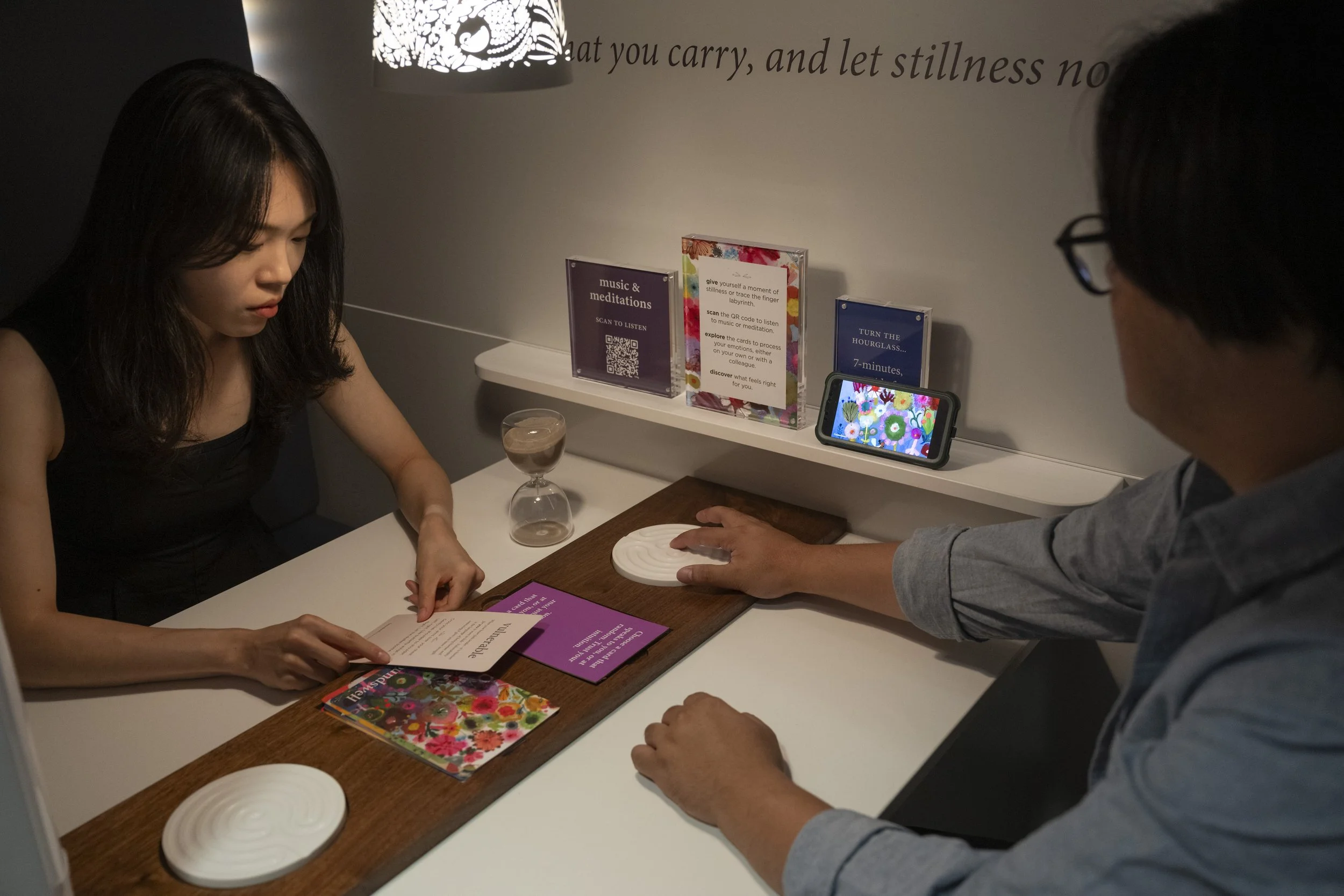
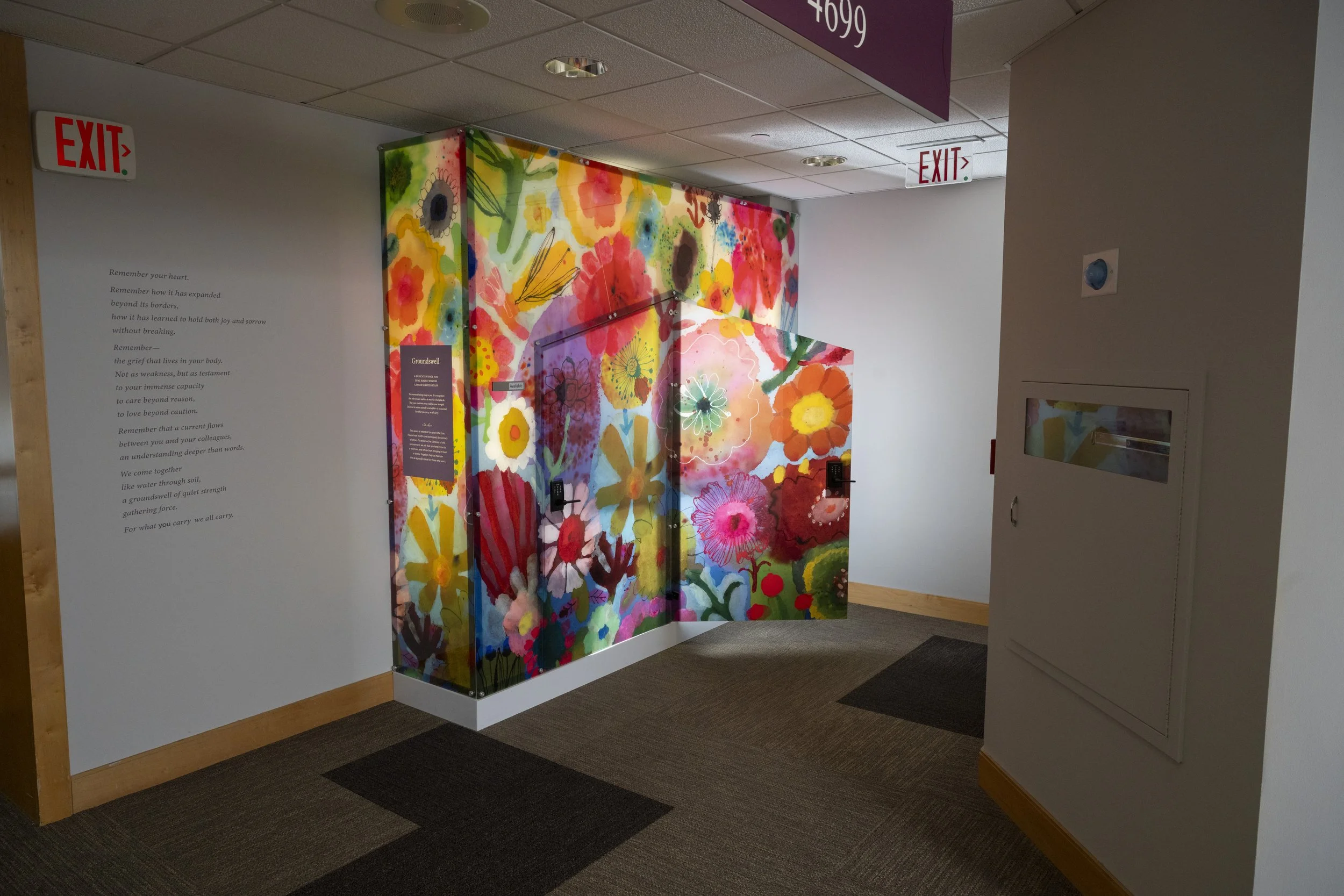
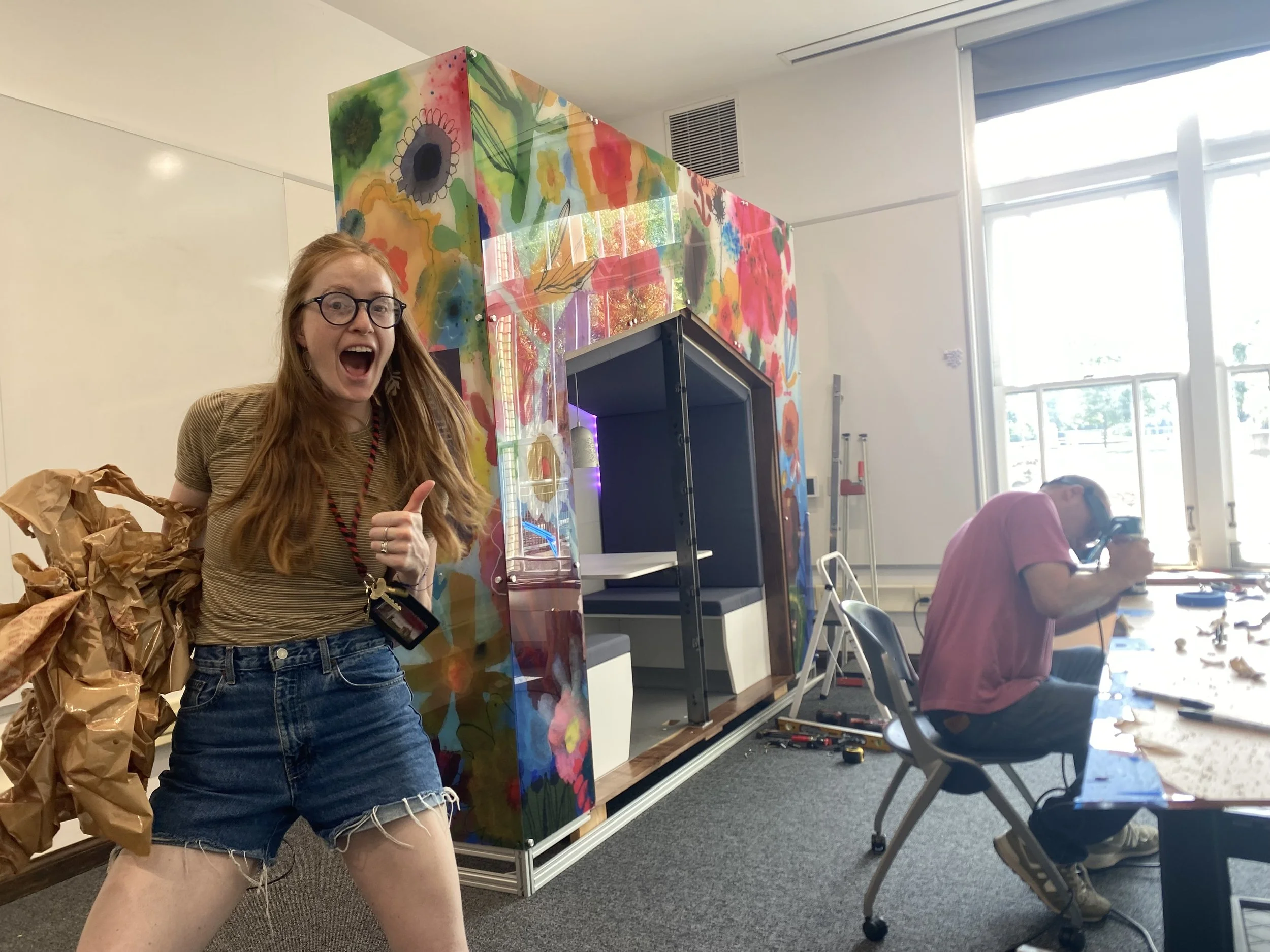
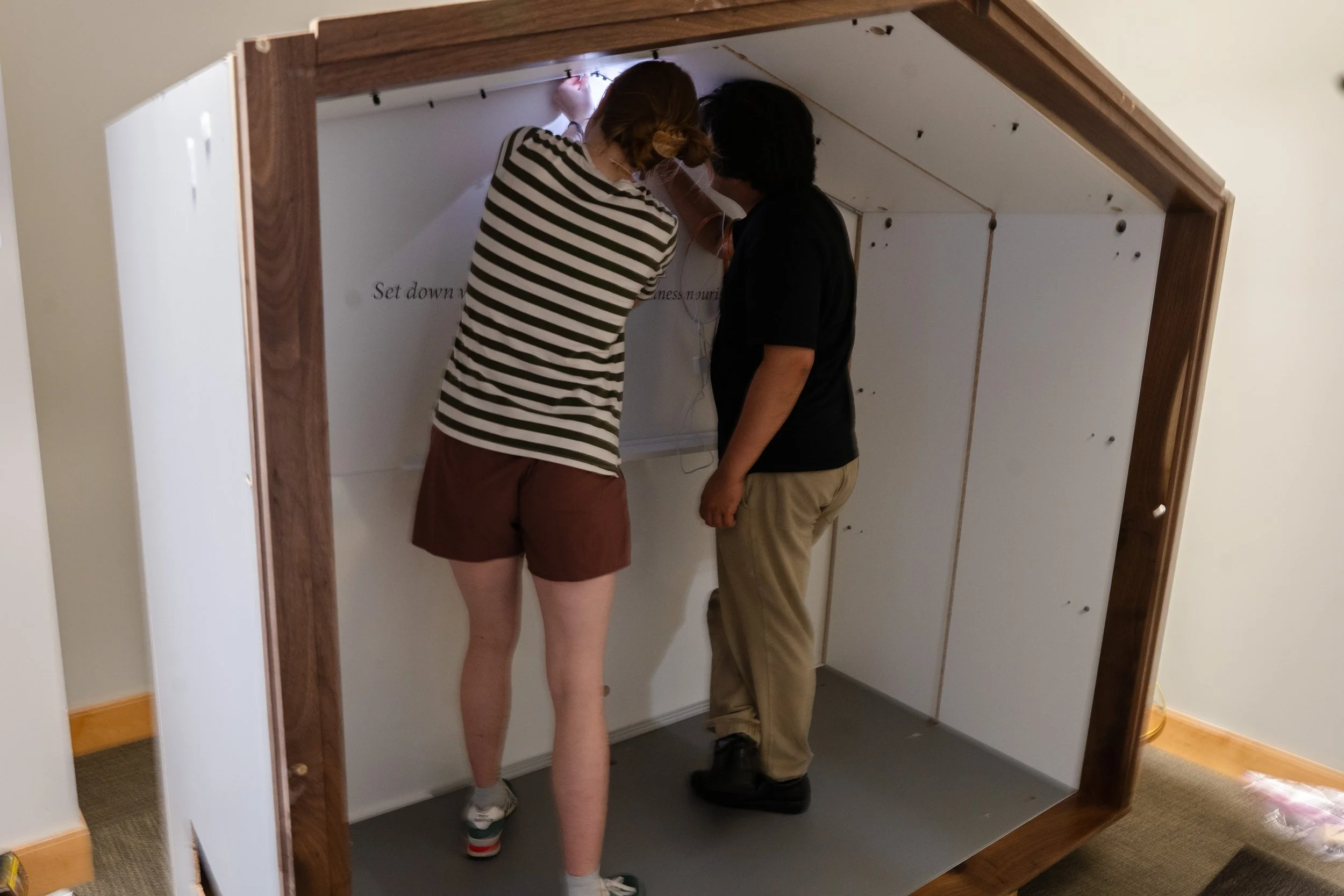
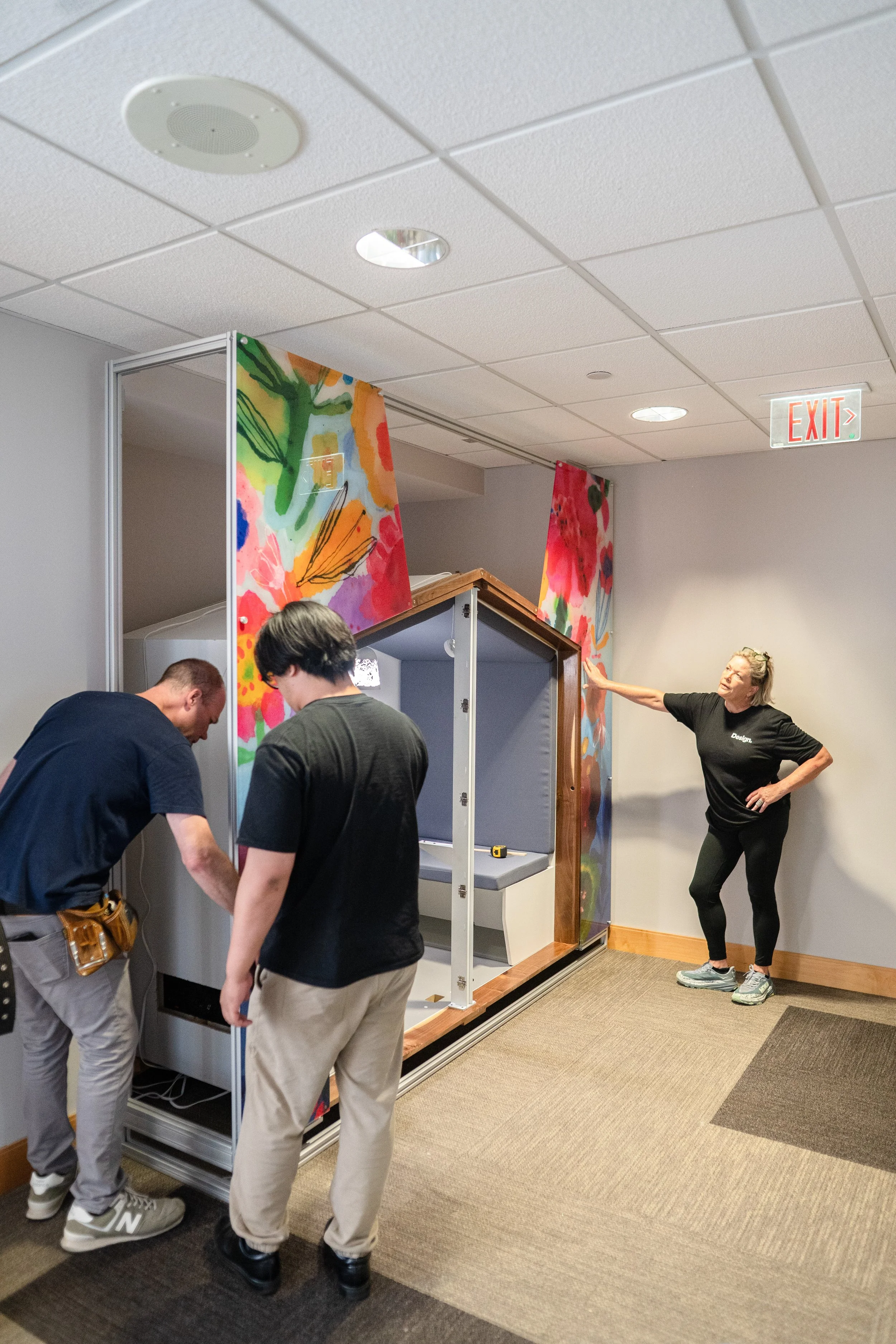
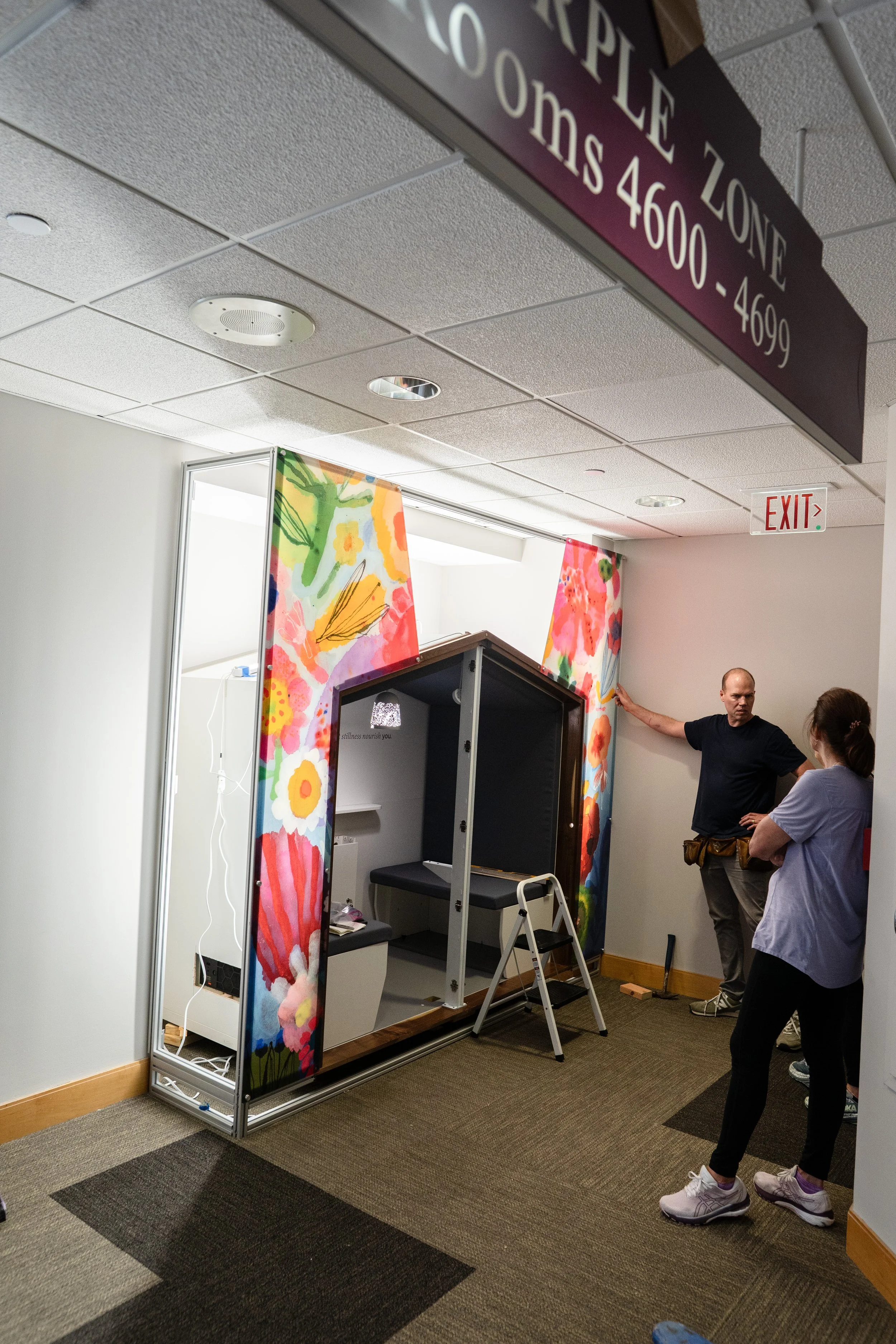
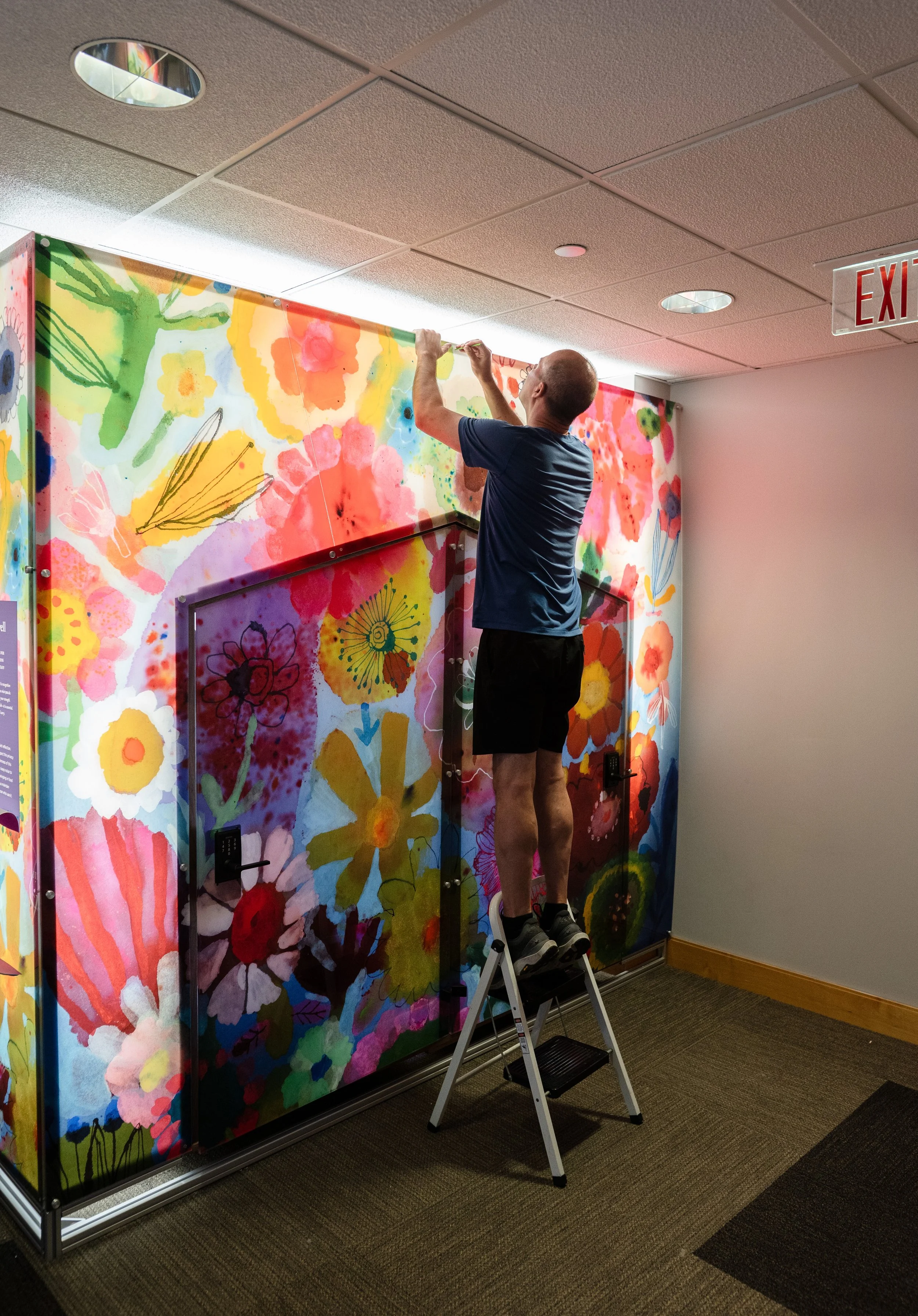
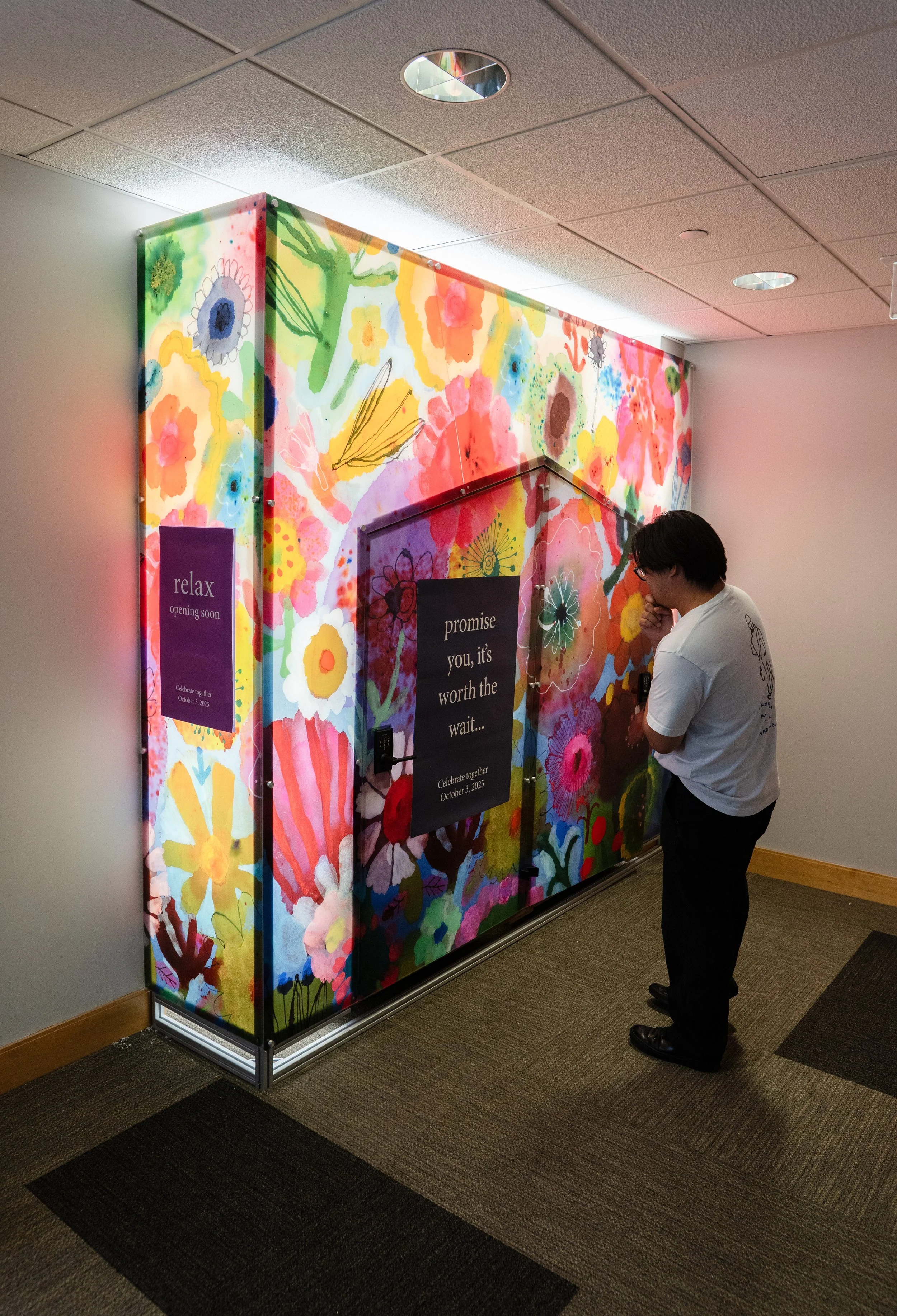
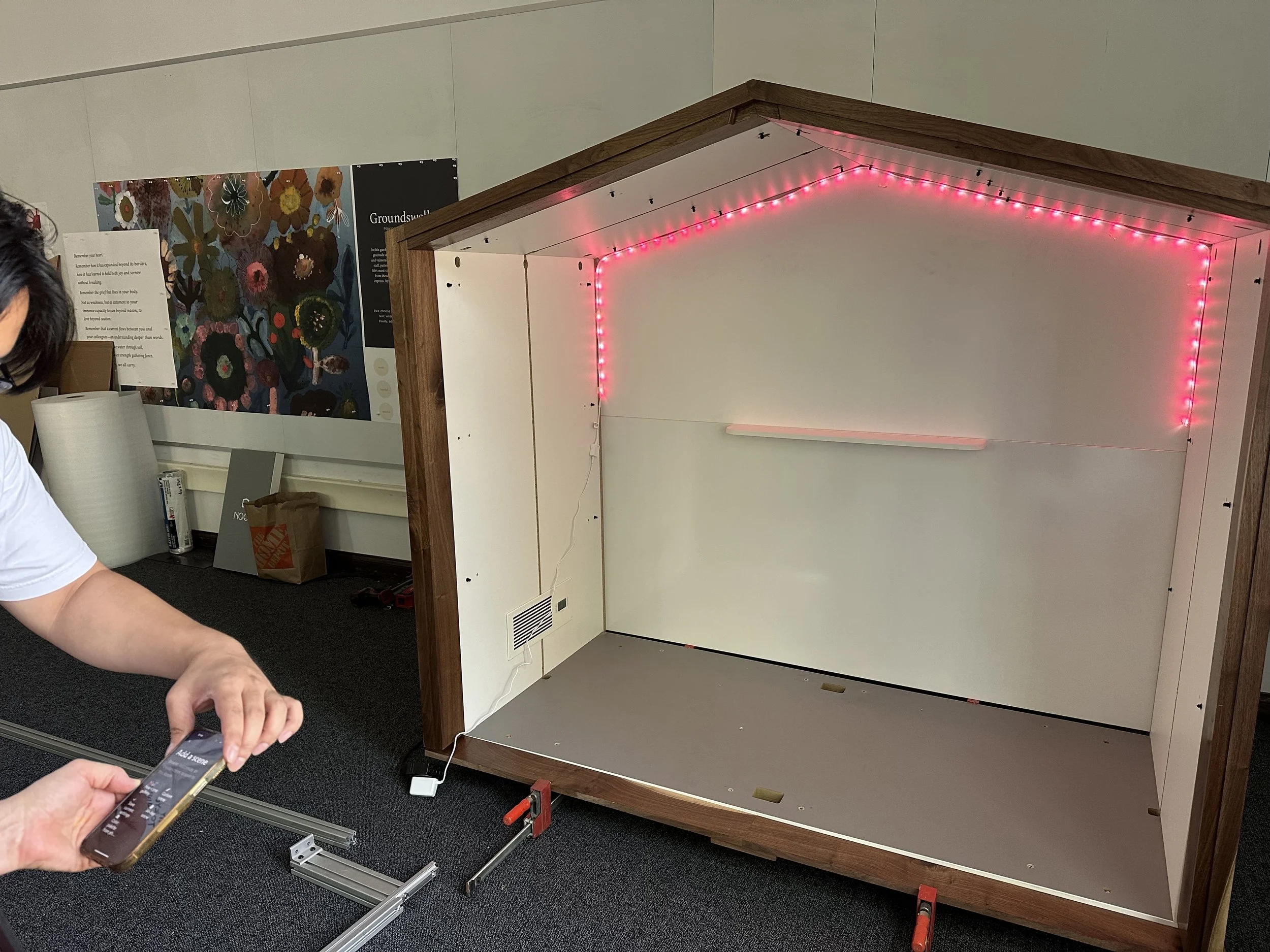
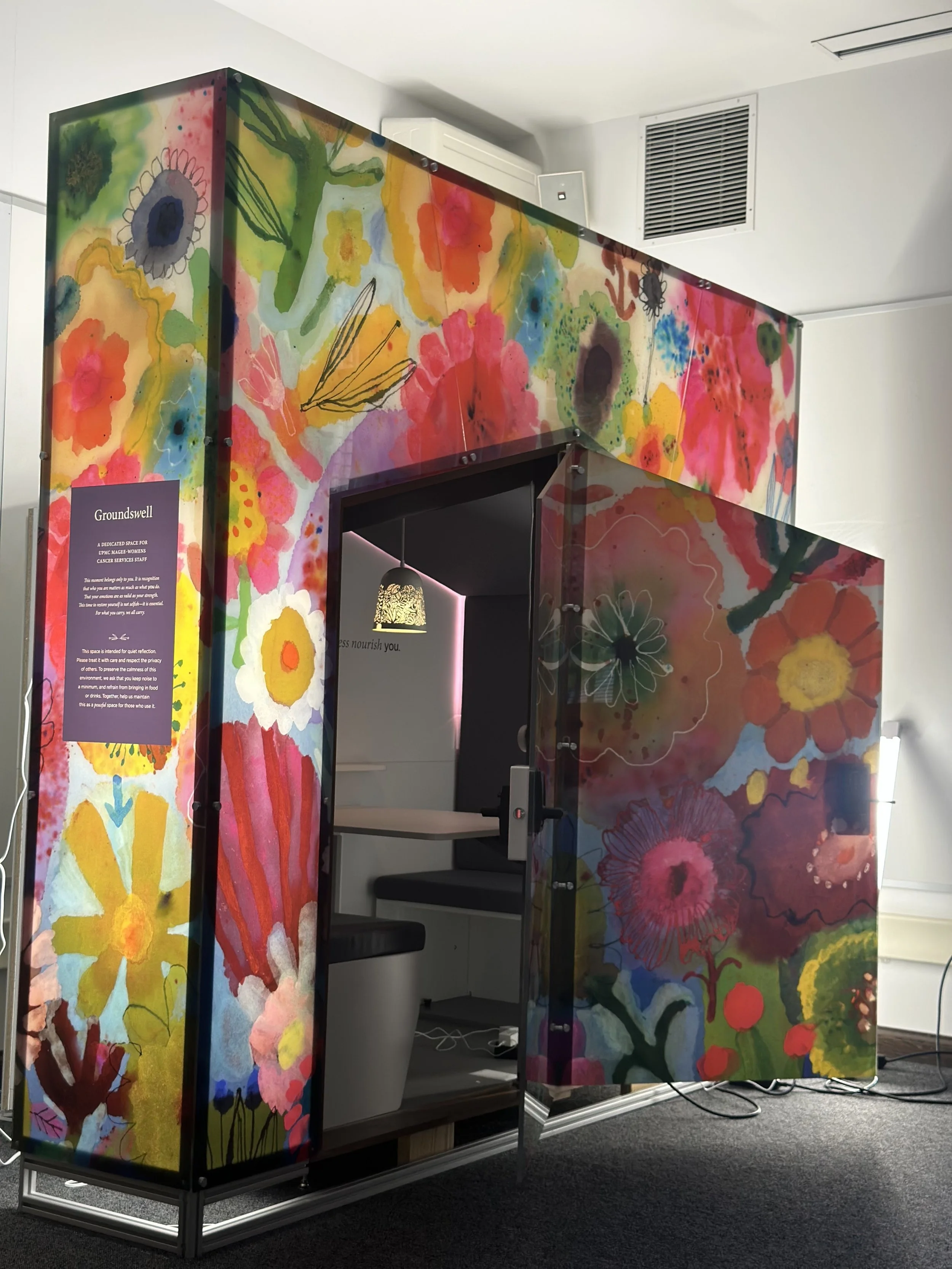
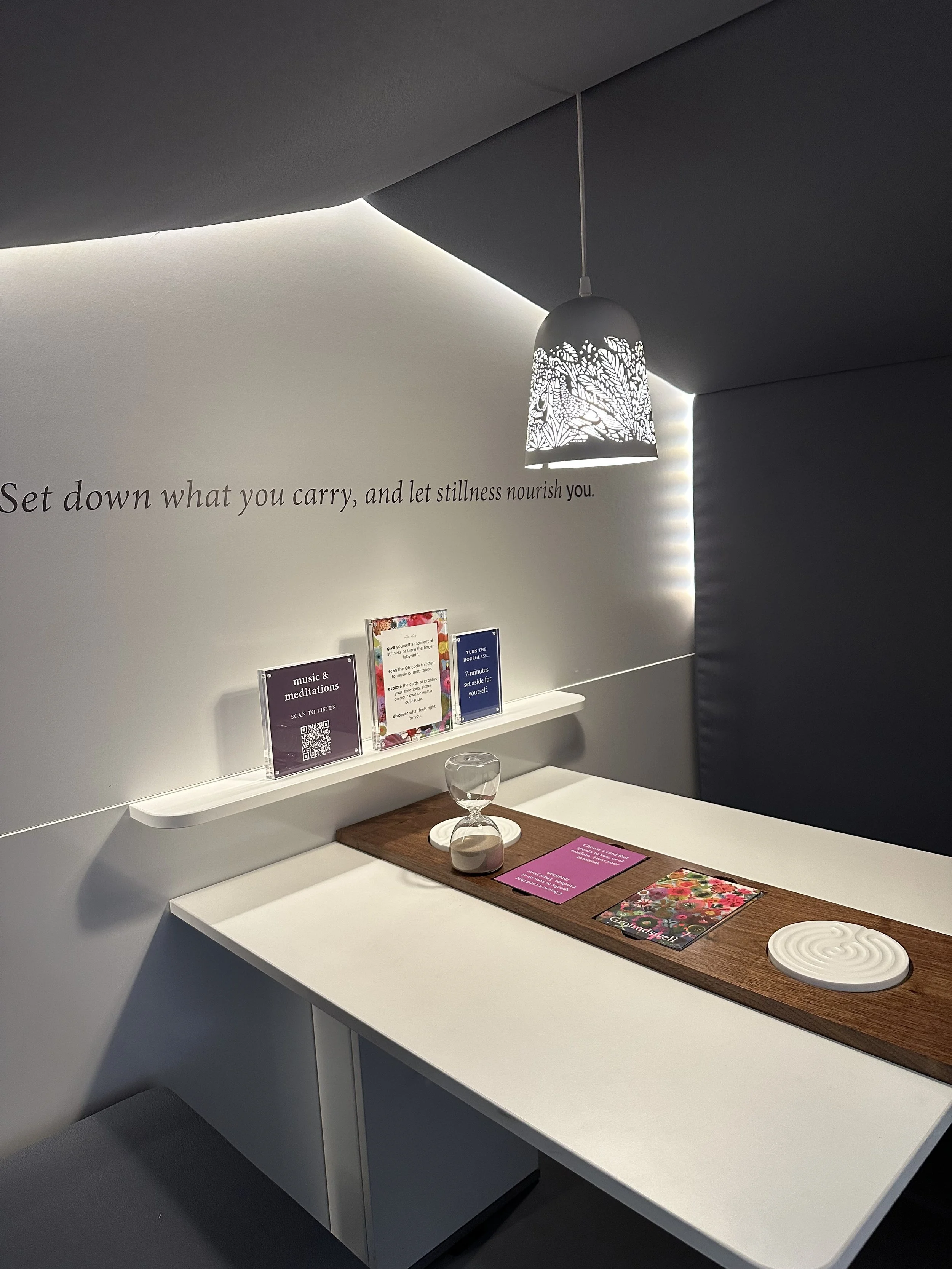
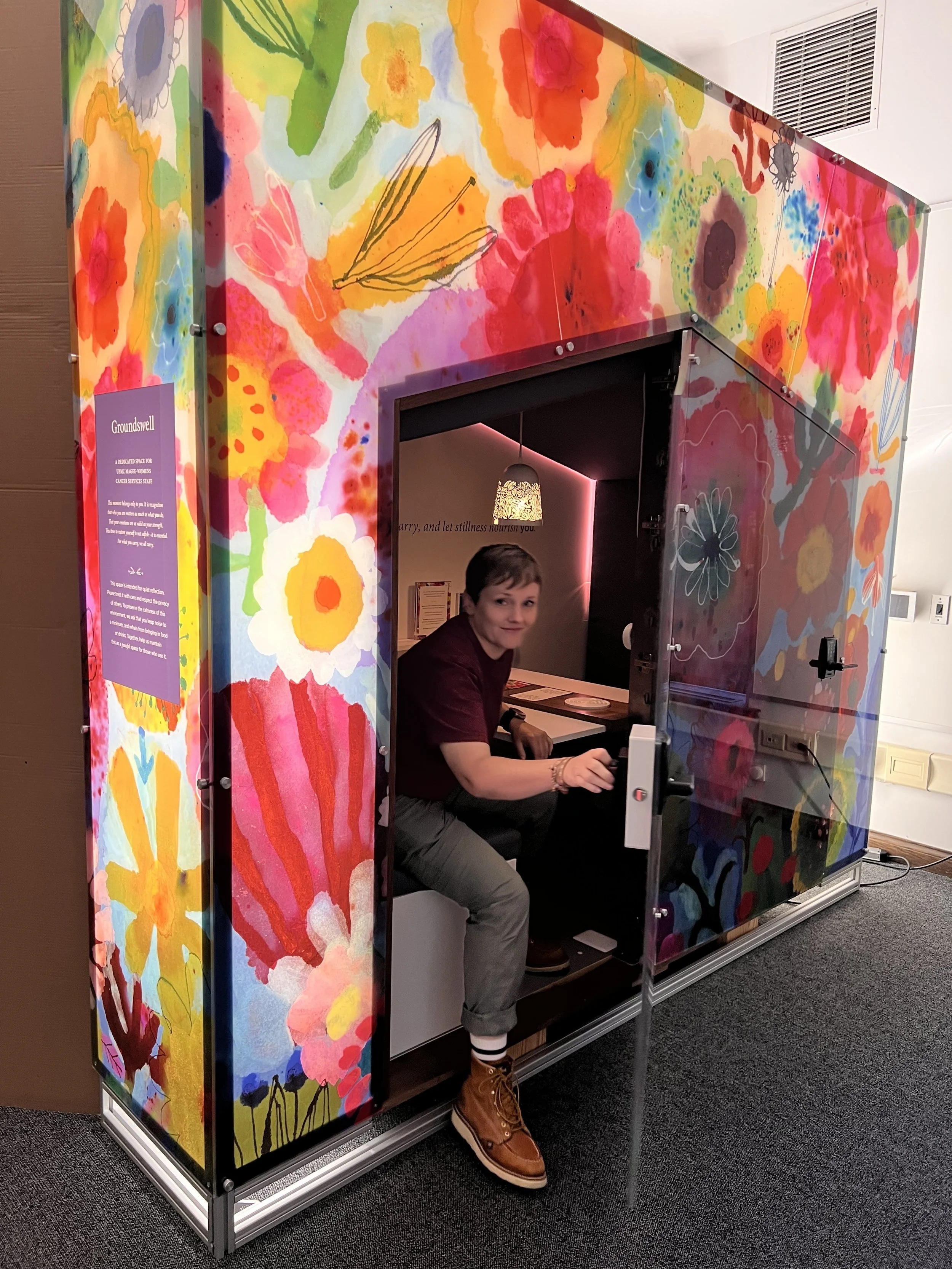
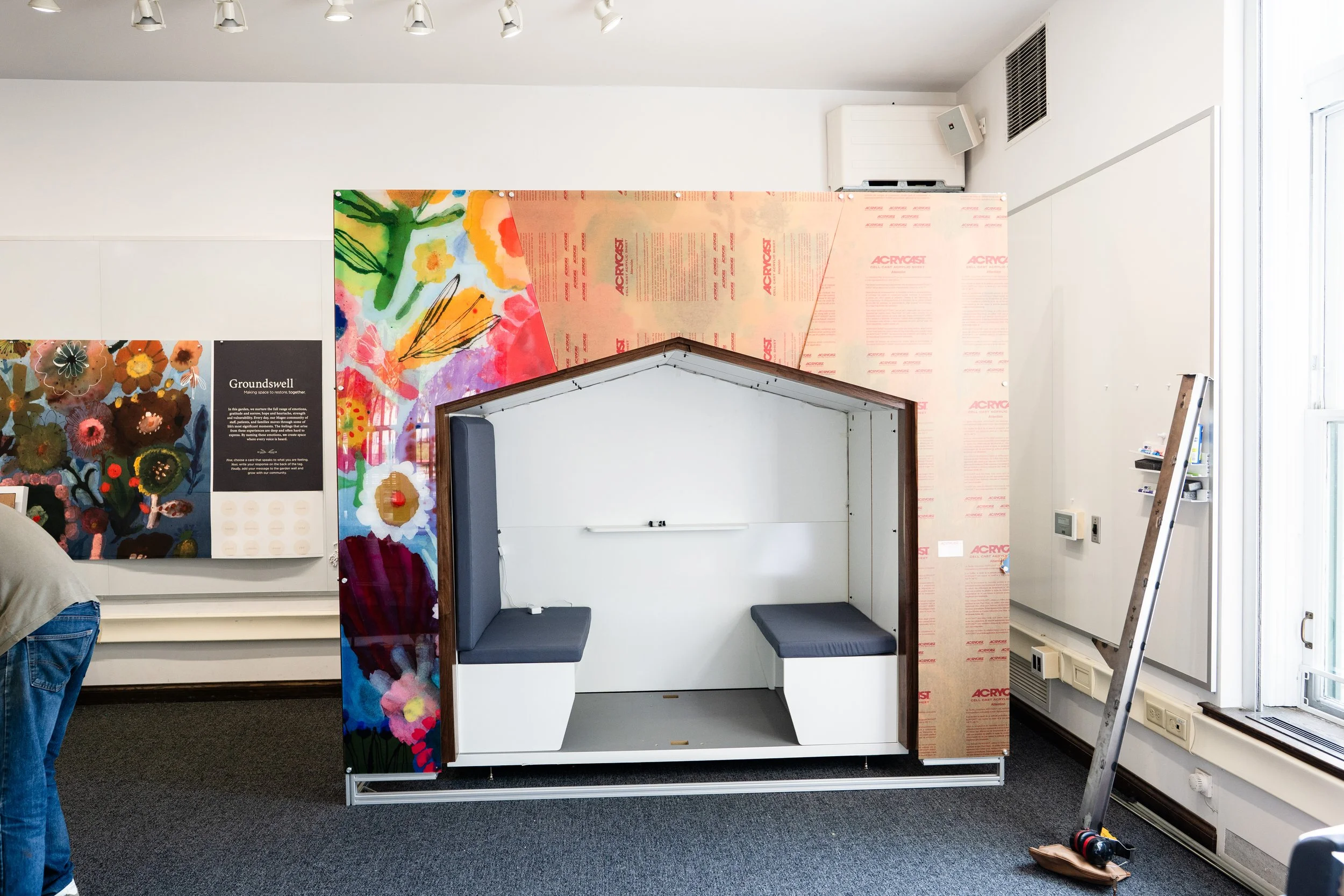
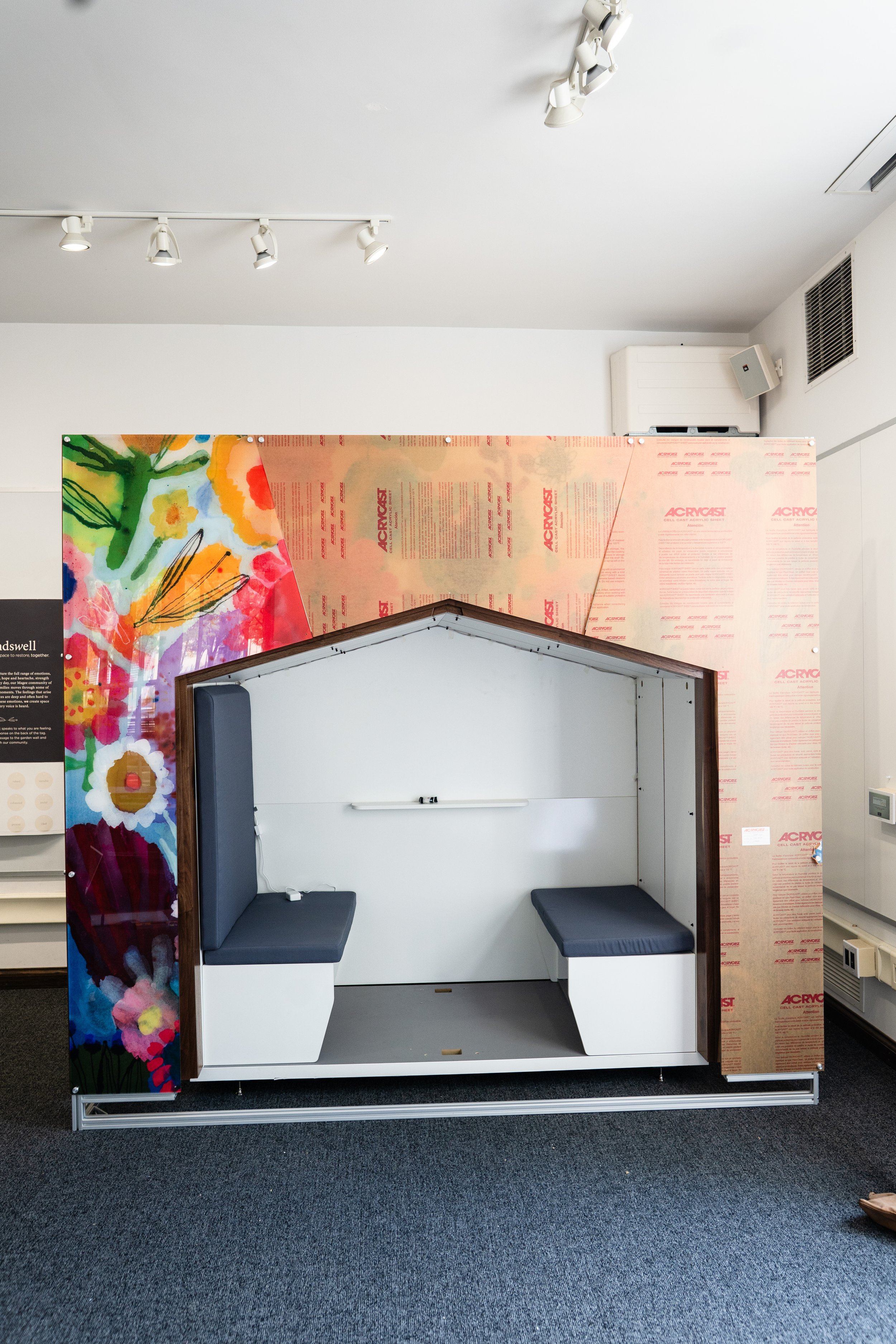
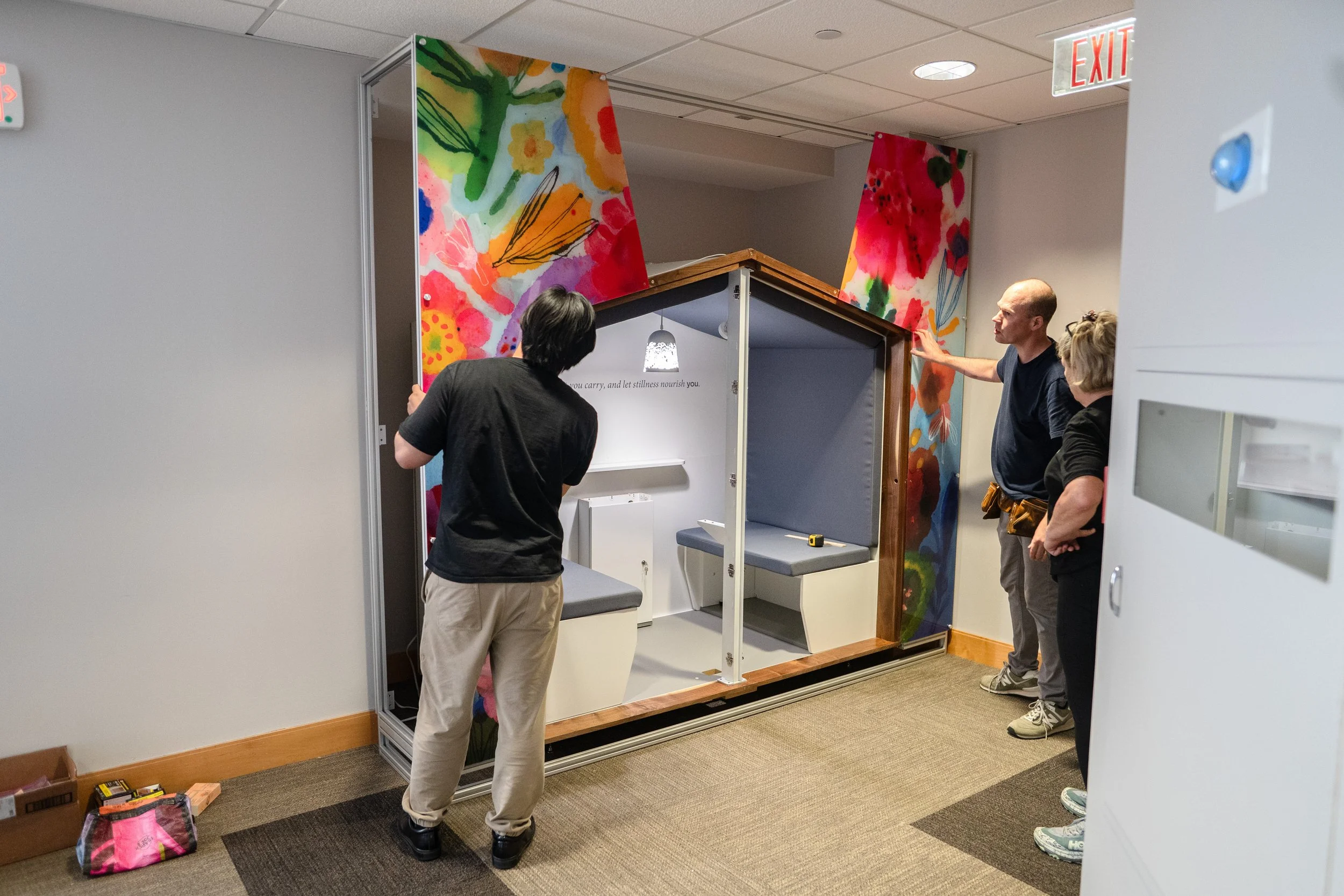
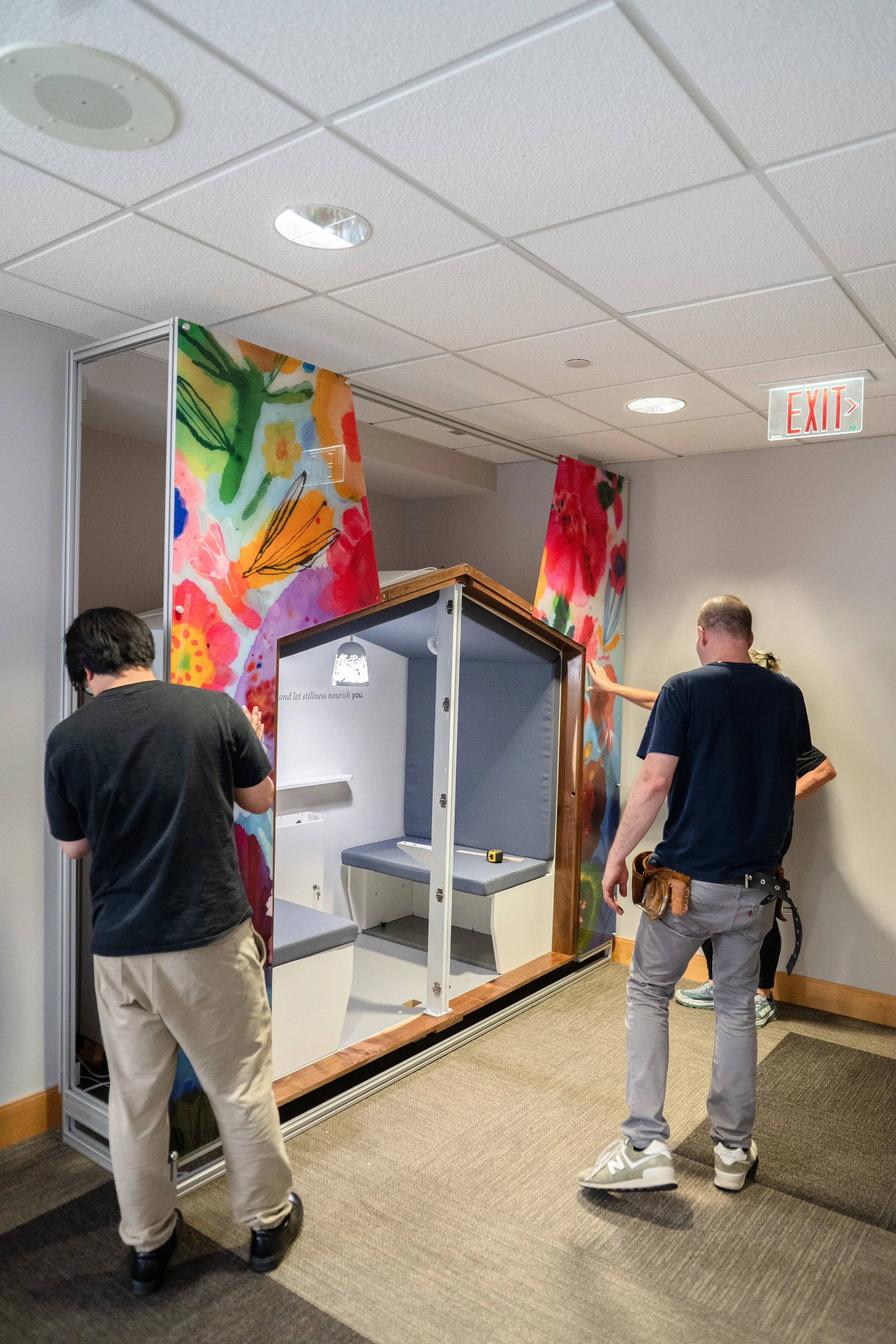
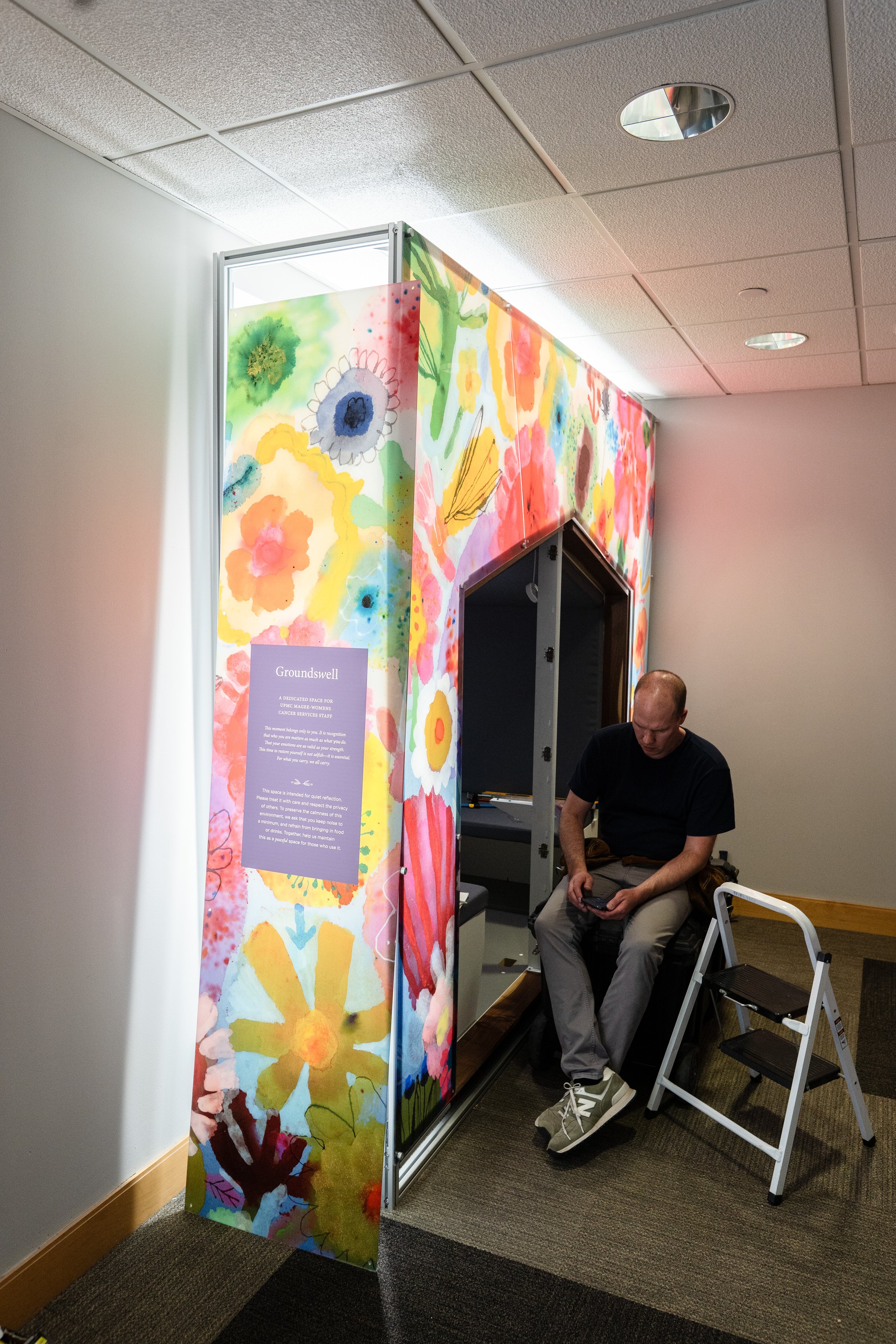
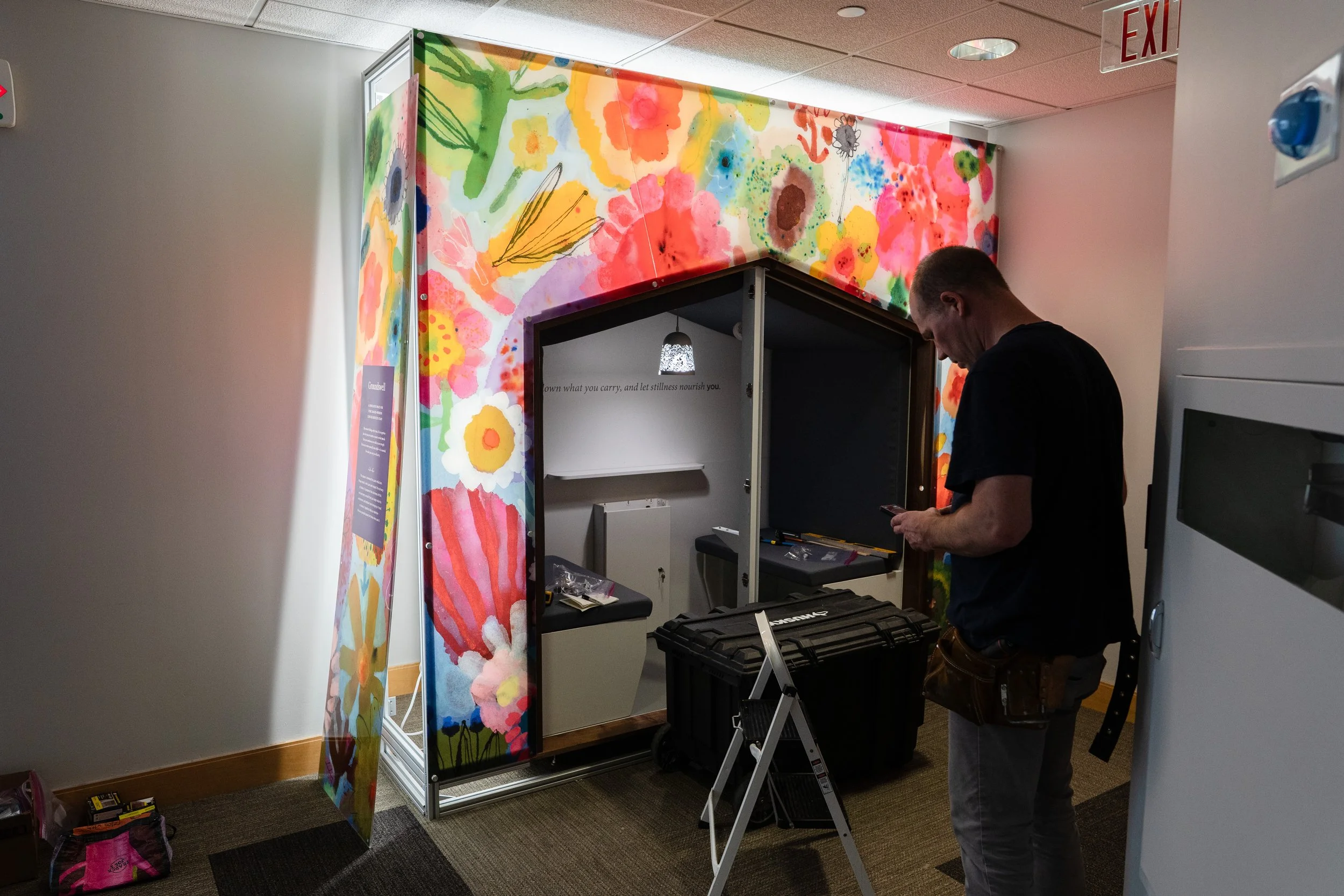
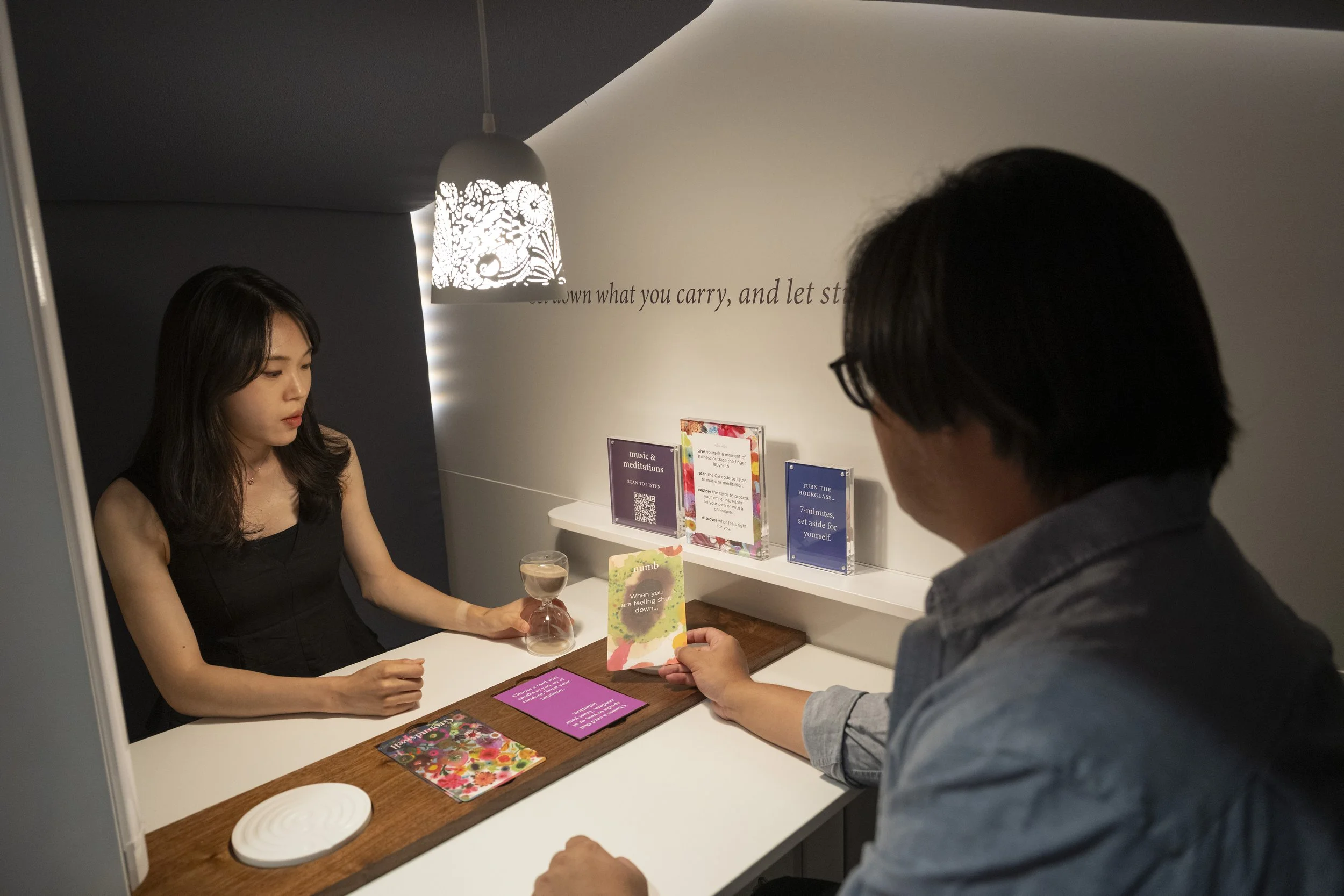
Restorative pod space for emotional decompression through mindfulness activities like guided meditation. Research revealed the critical need for private spaces within clinical environments characterized by harsh fluorescent lighting and crowded desks. Open workplace designs facilitate collaboration but leave workers perpetually accessible without training on setting boundaries, making dedicated space for emotional processing essential.
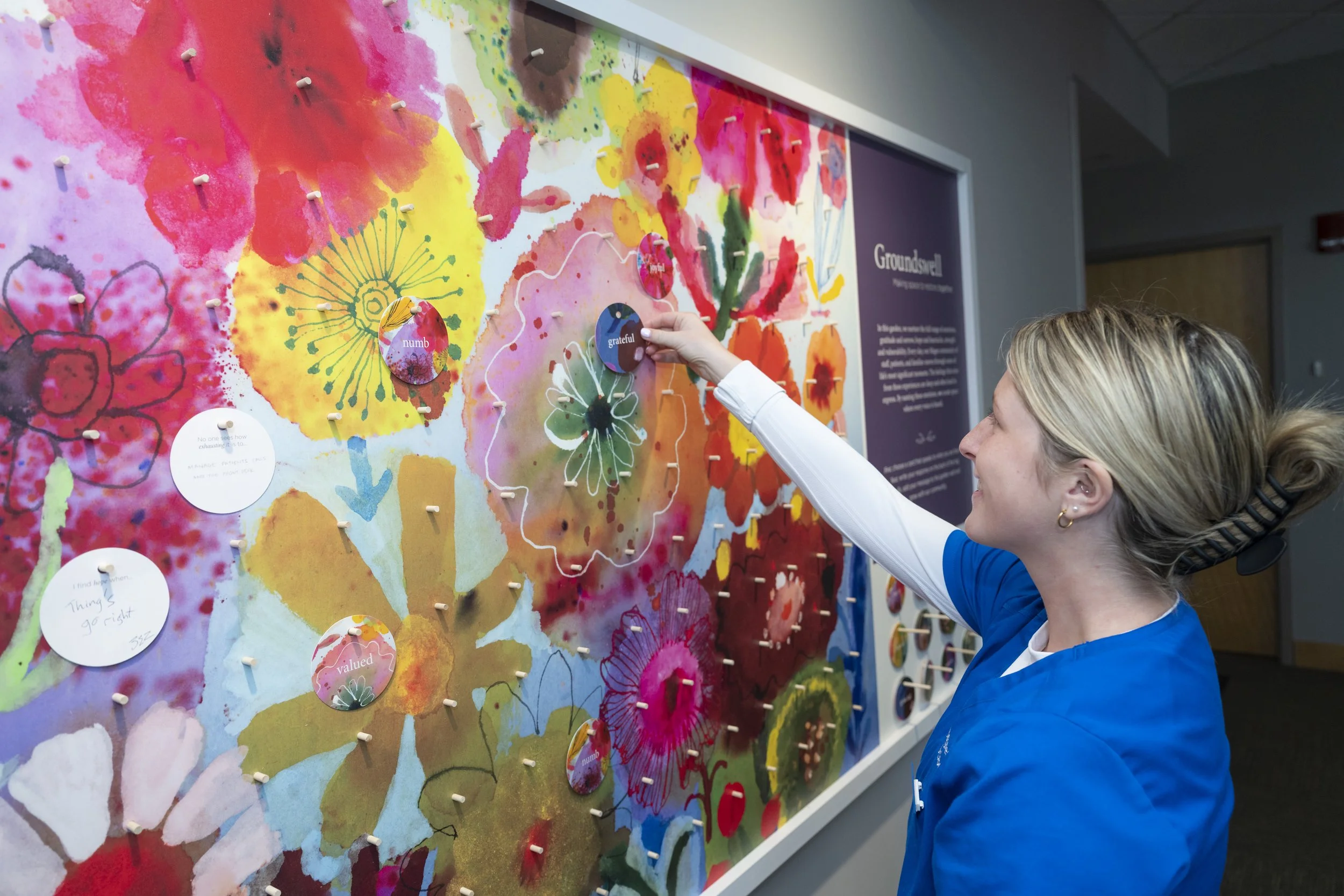
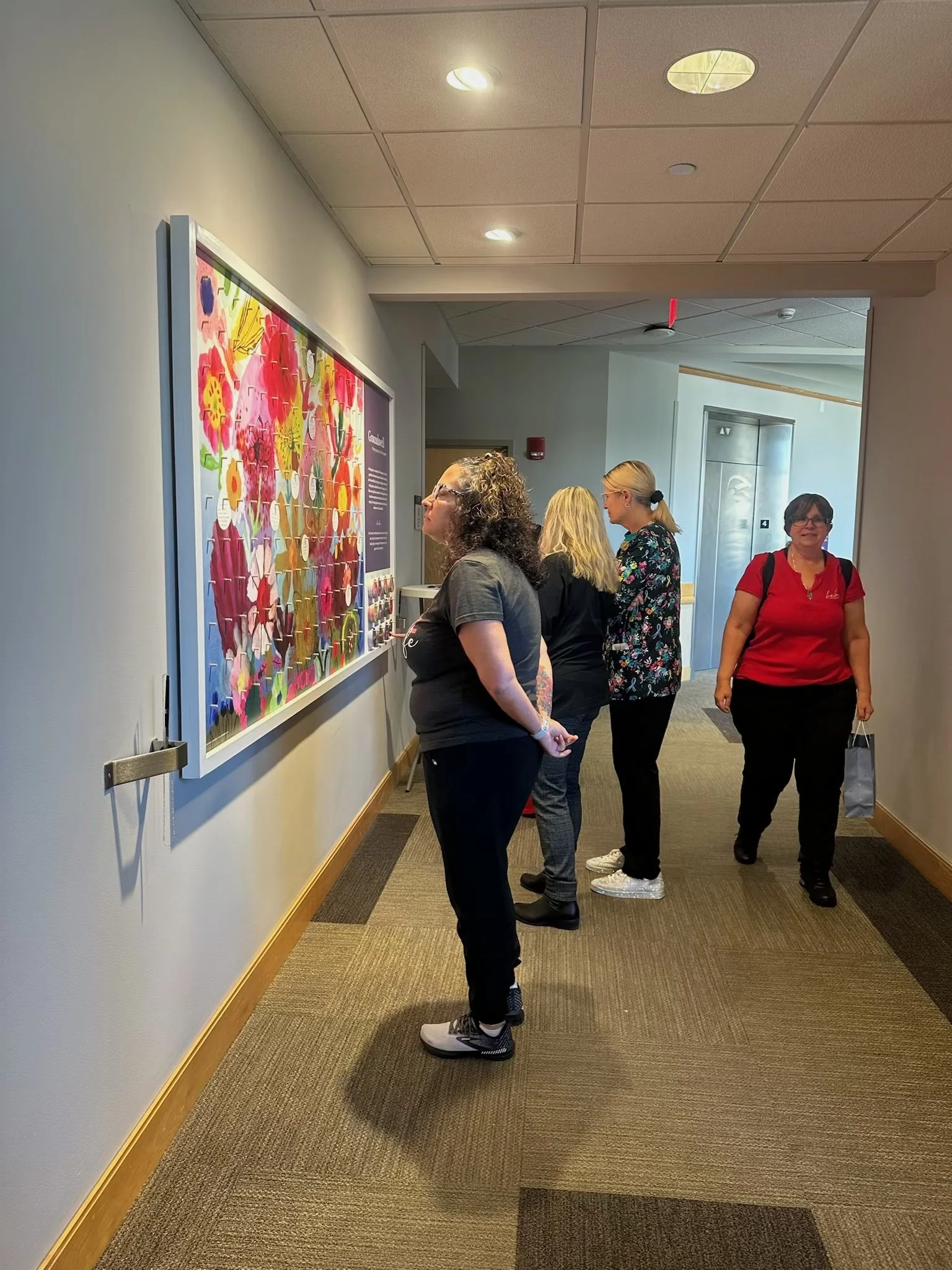
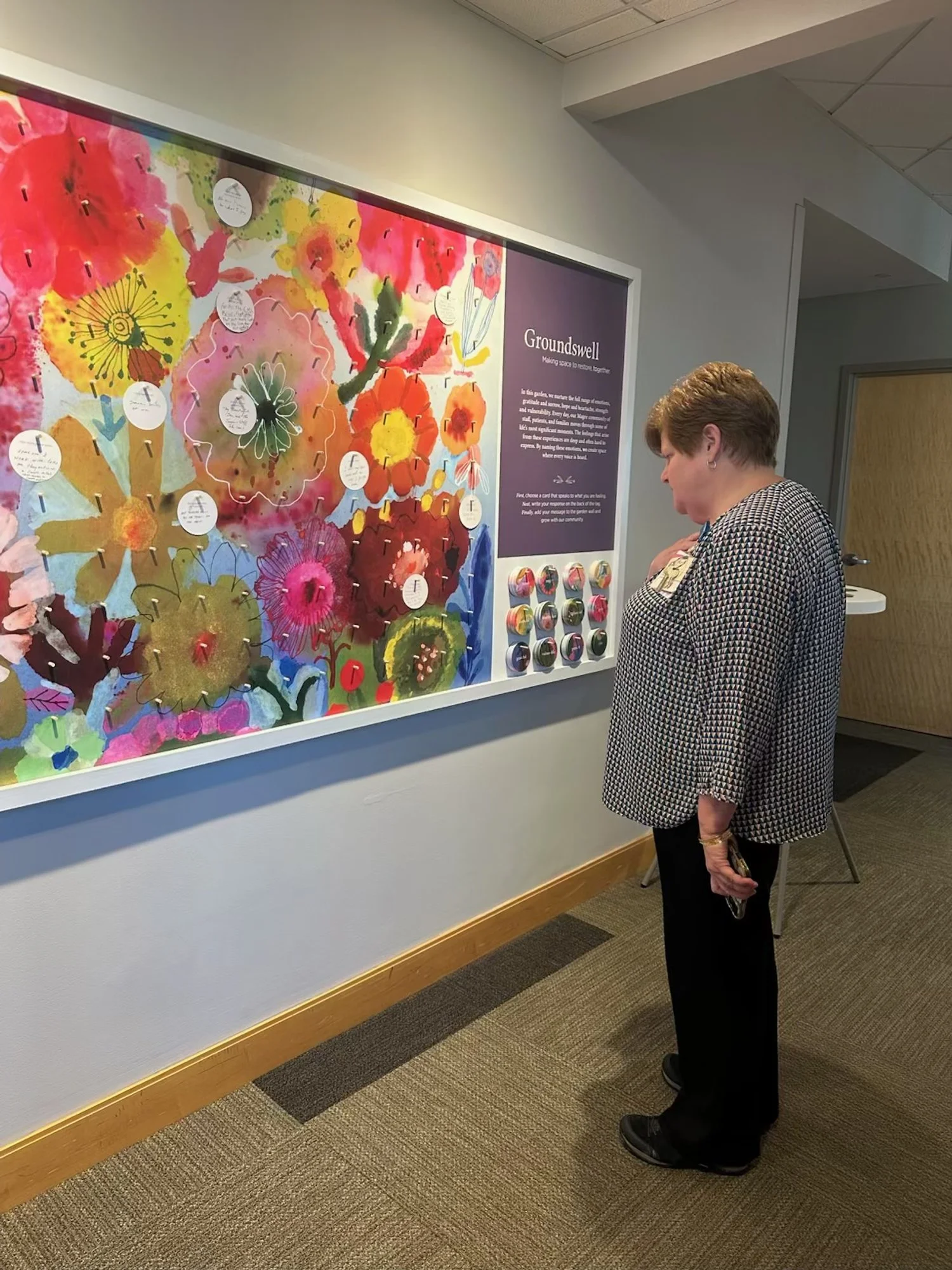
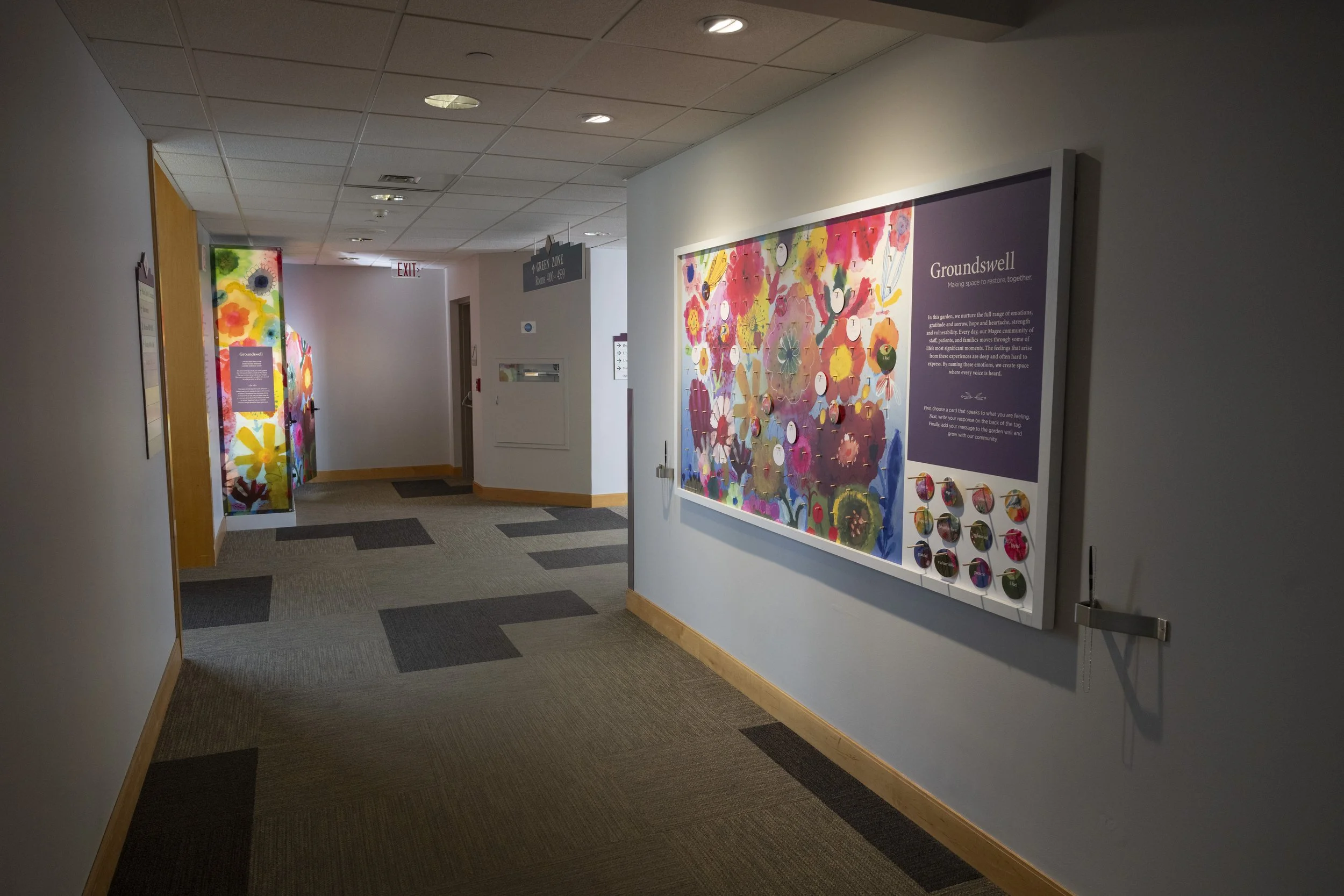
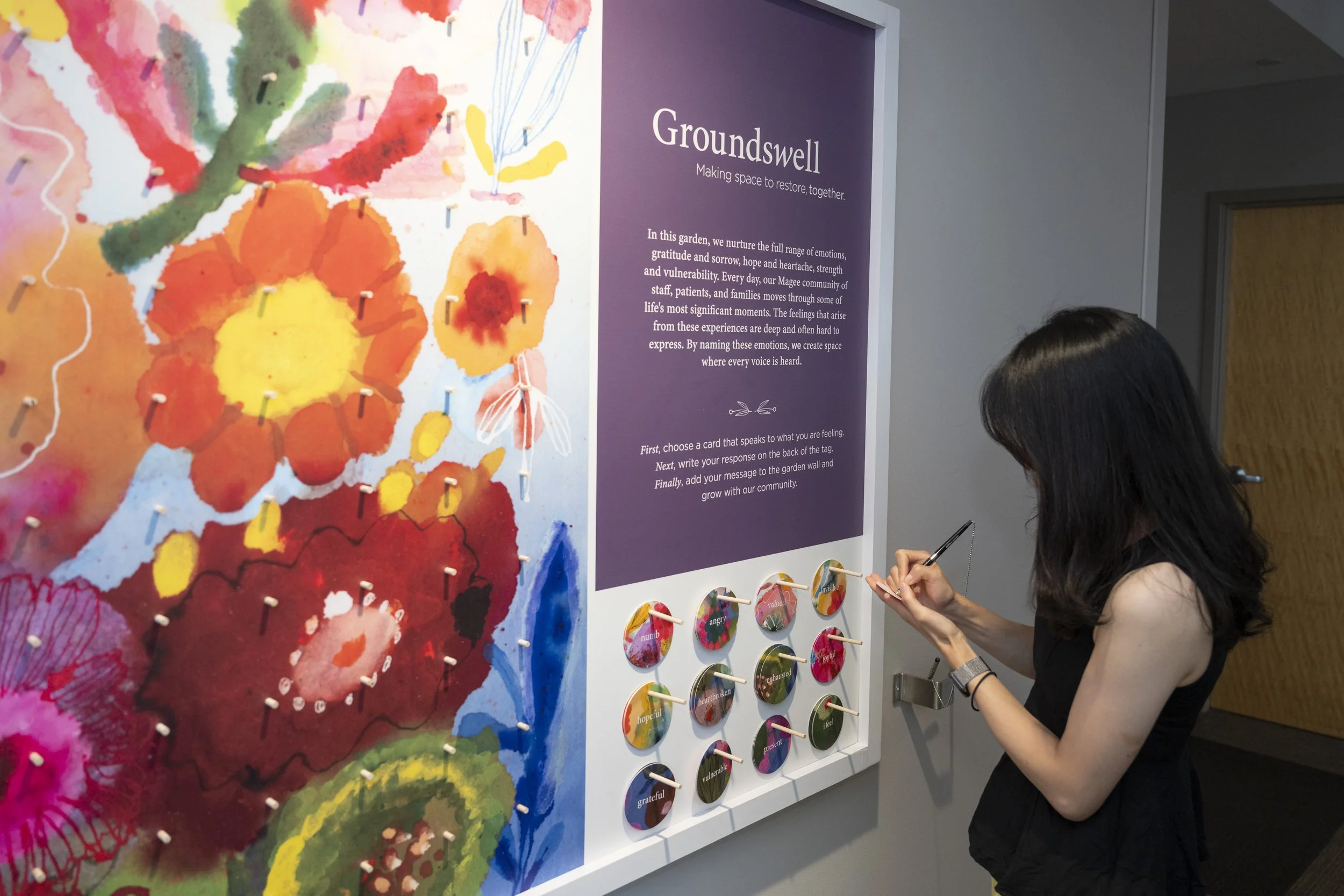
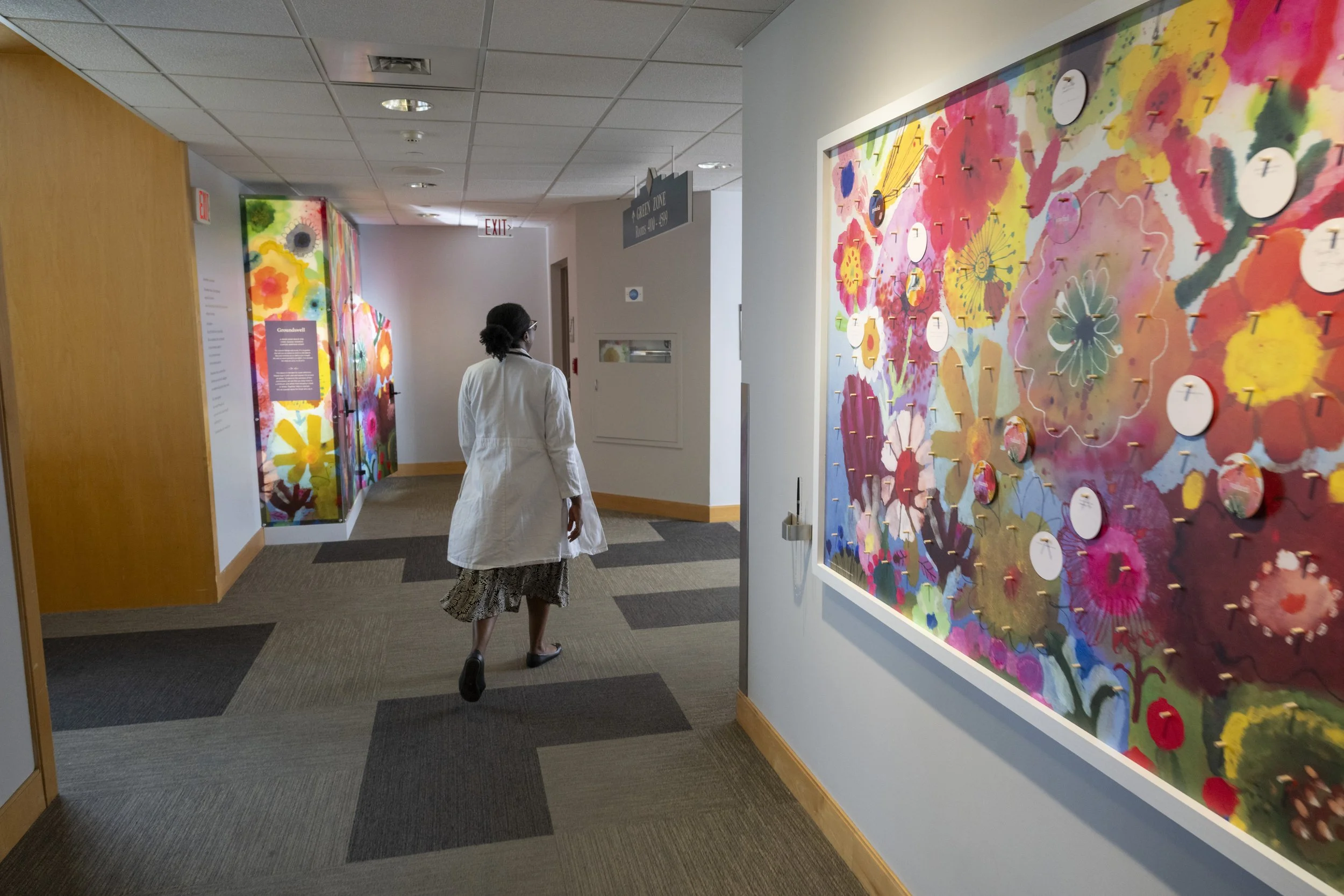
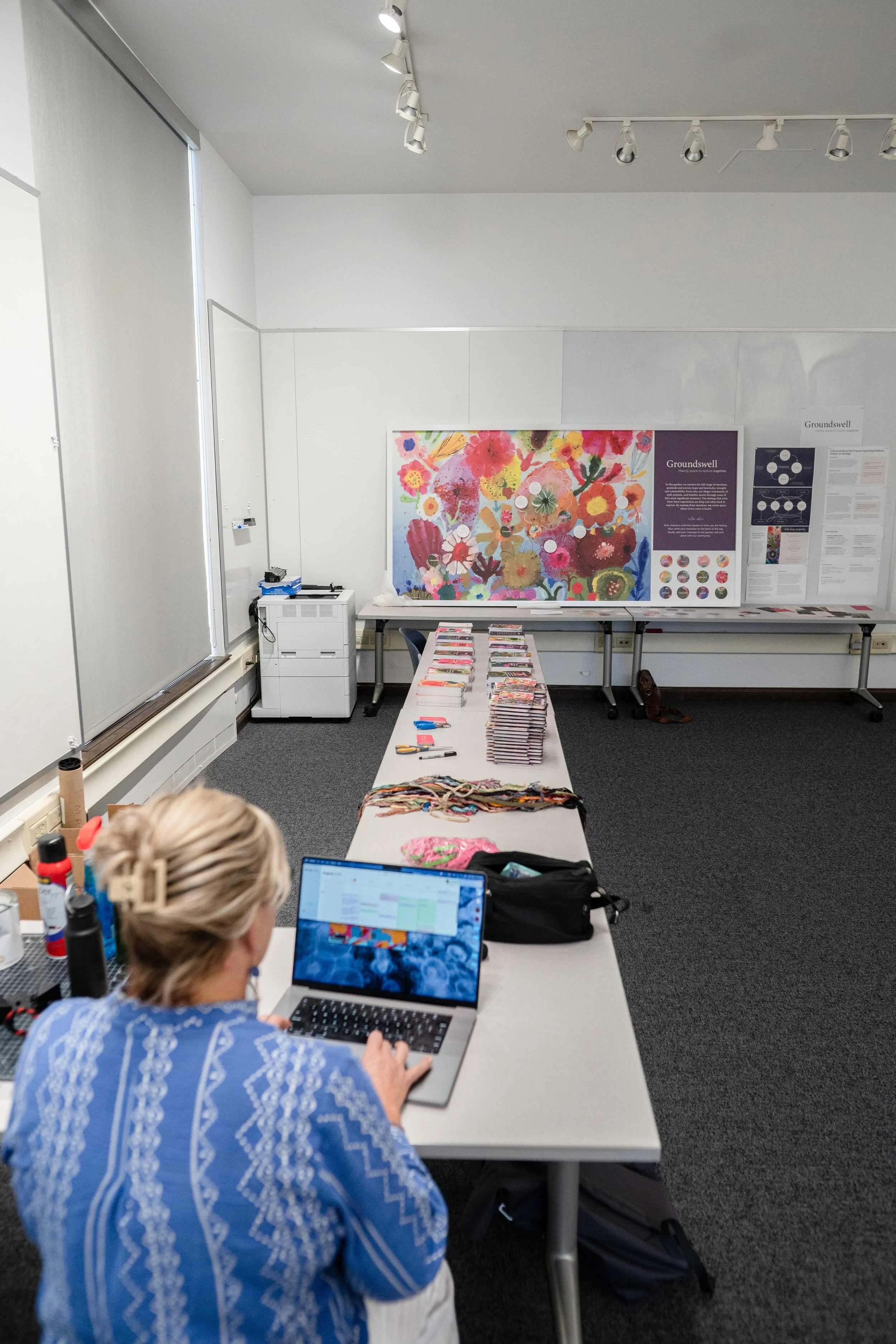
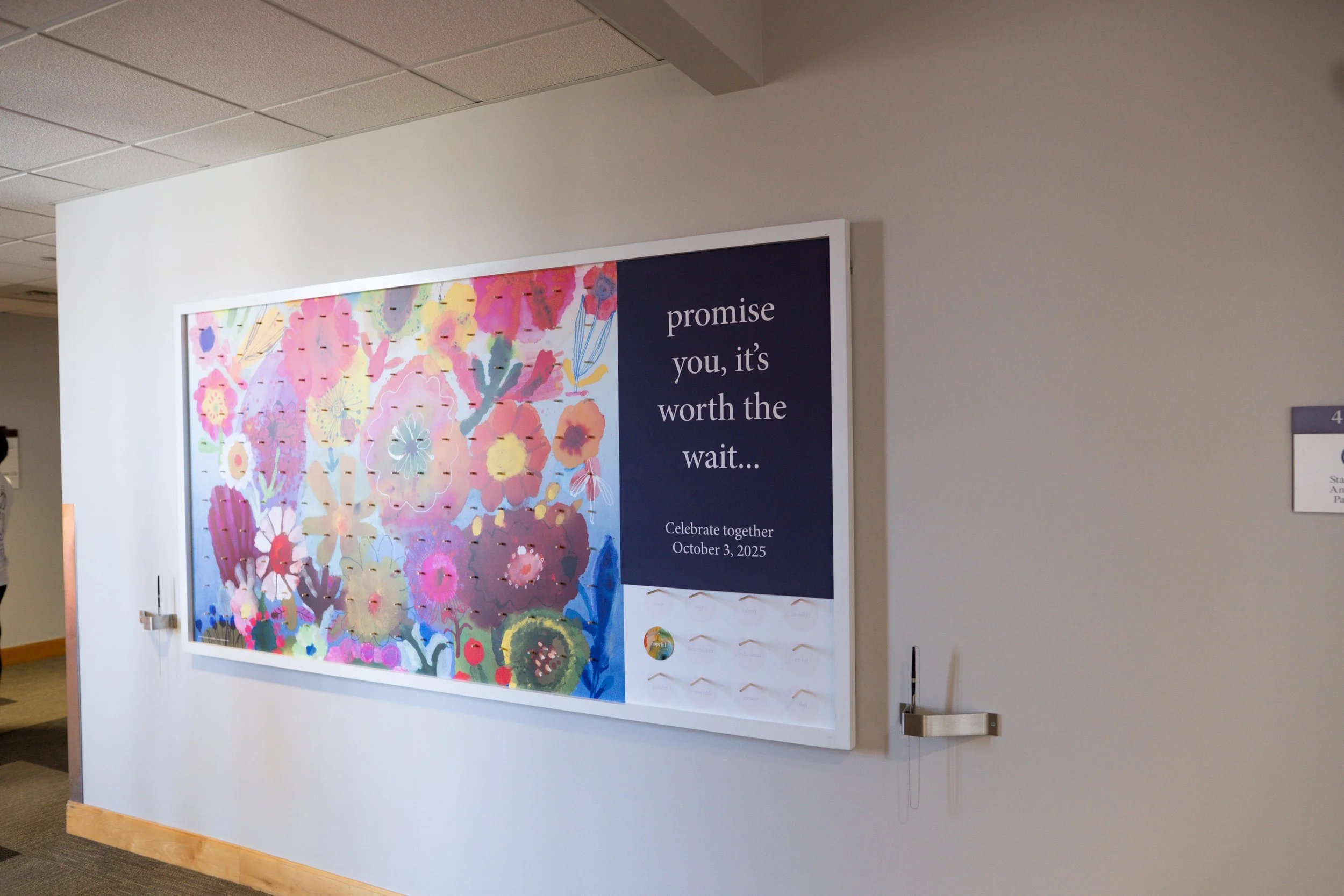
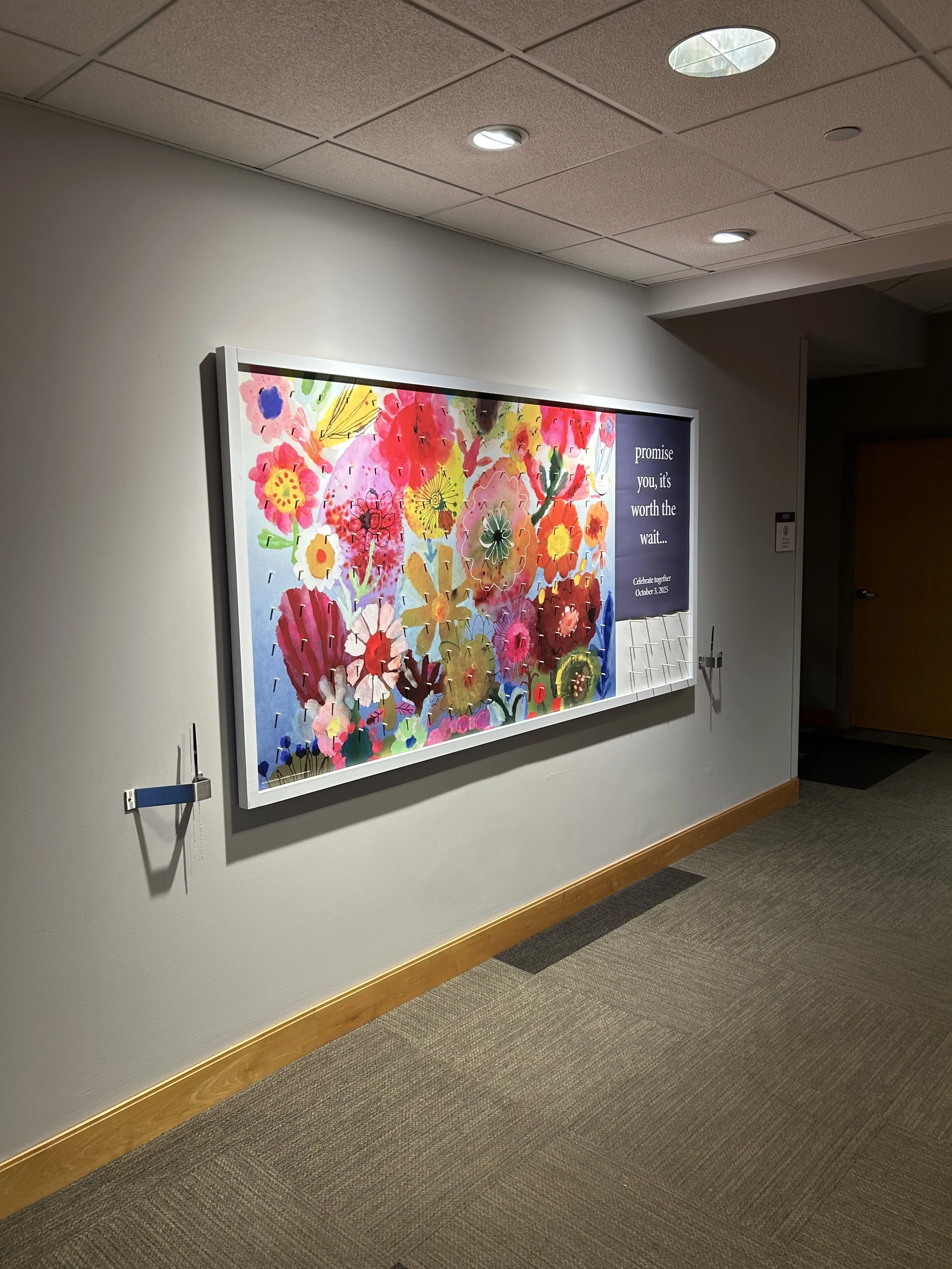
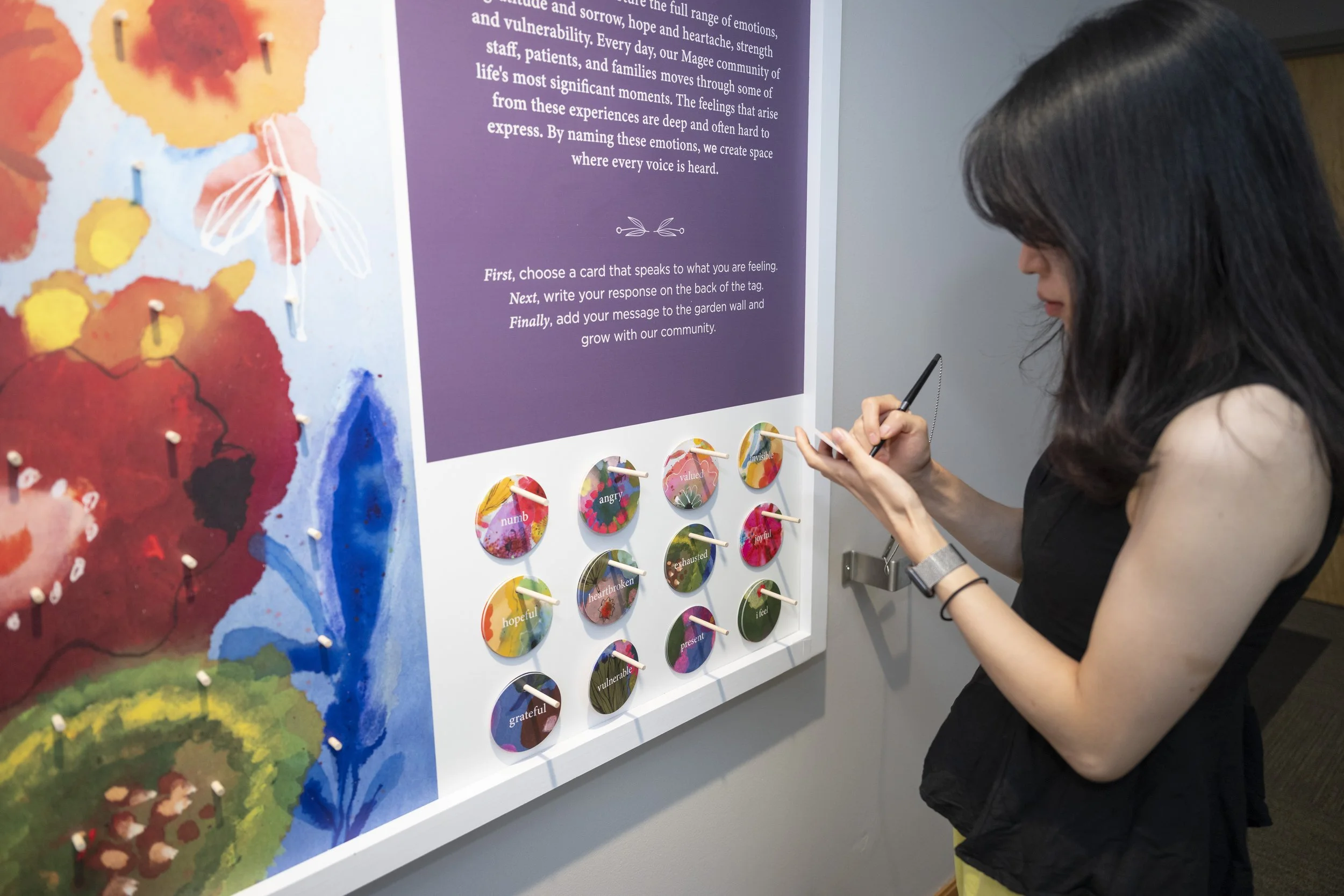
Groundswell Garden Community Art Wall
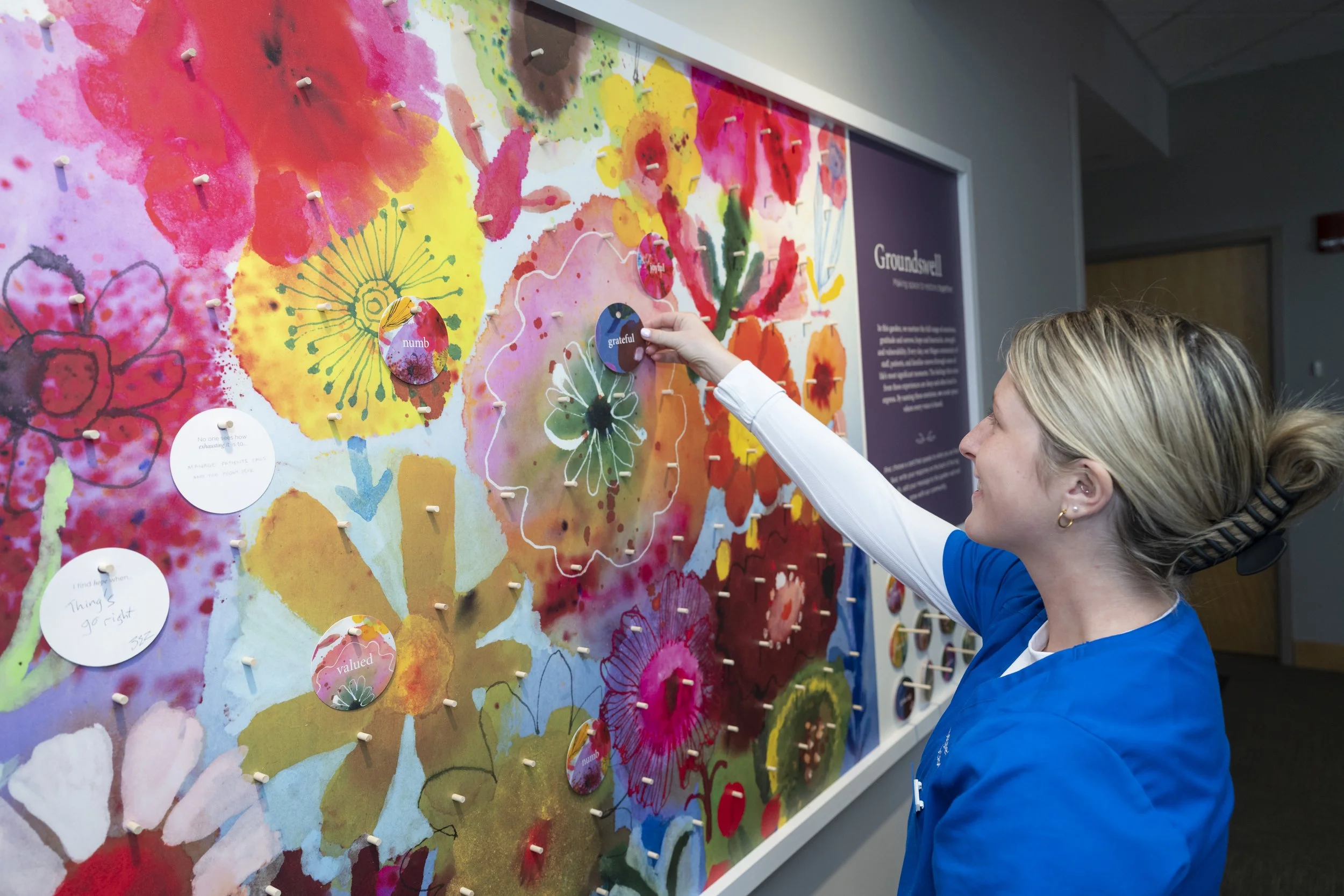
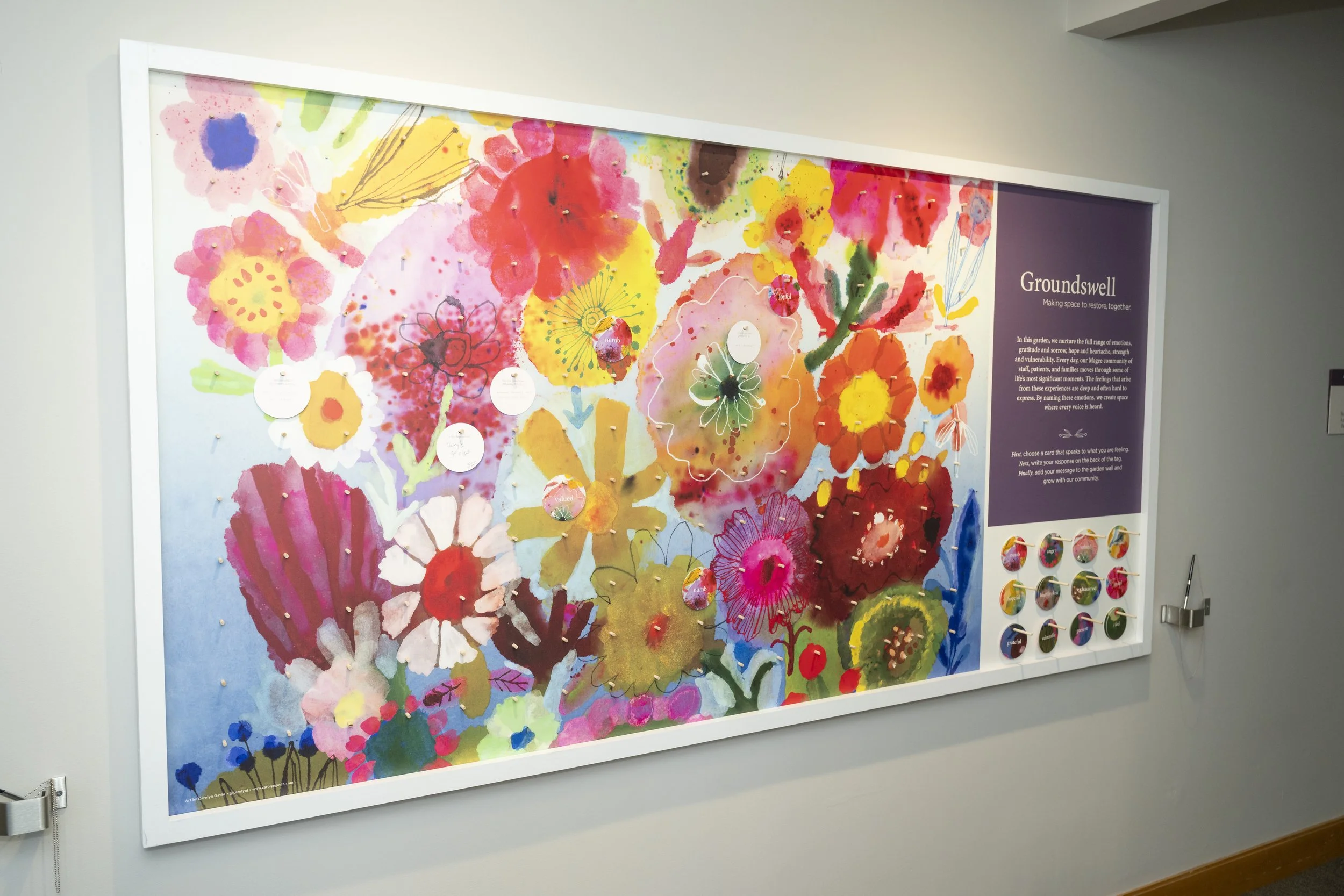
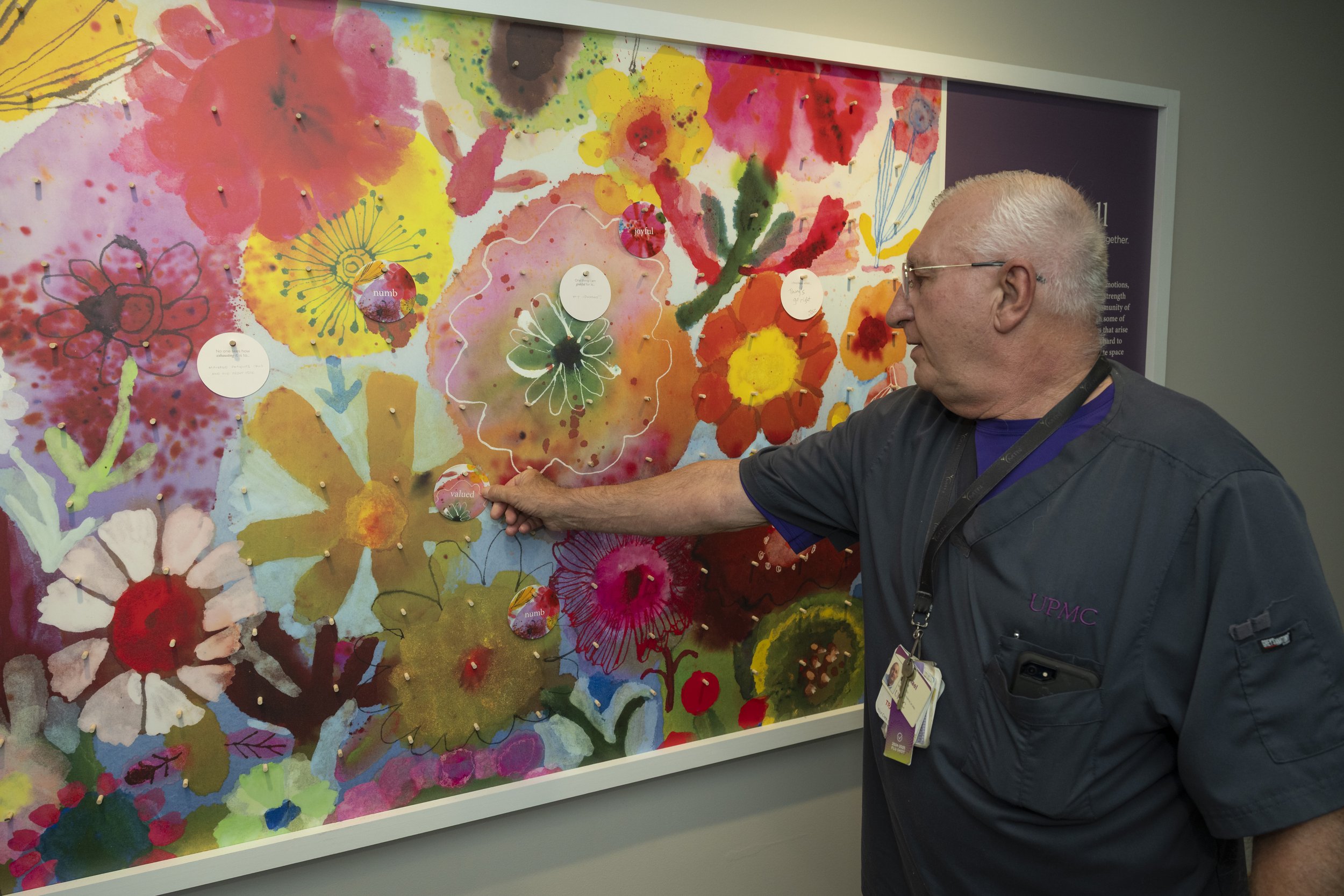
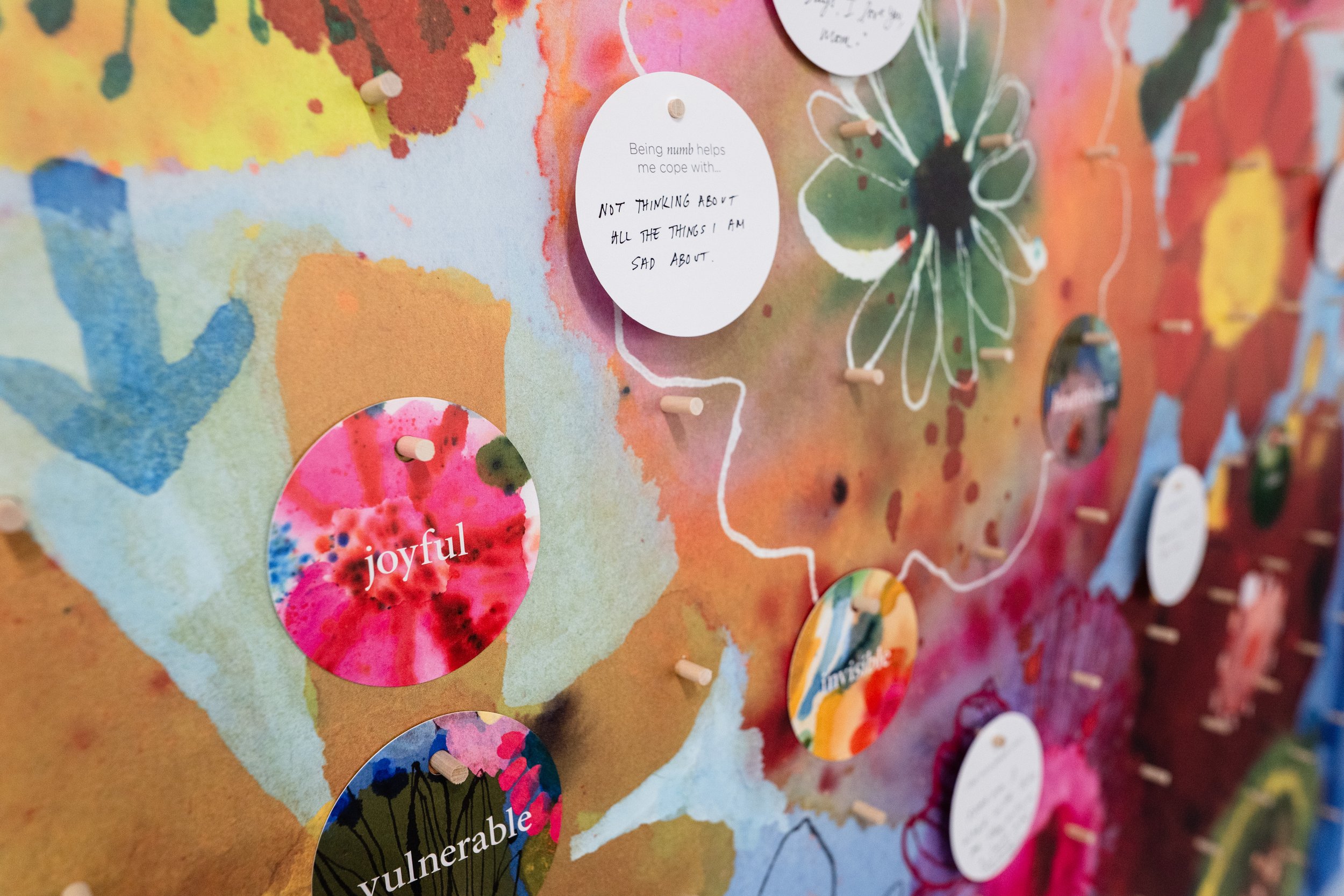
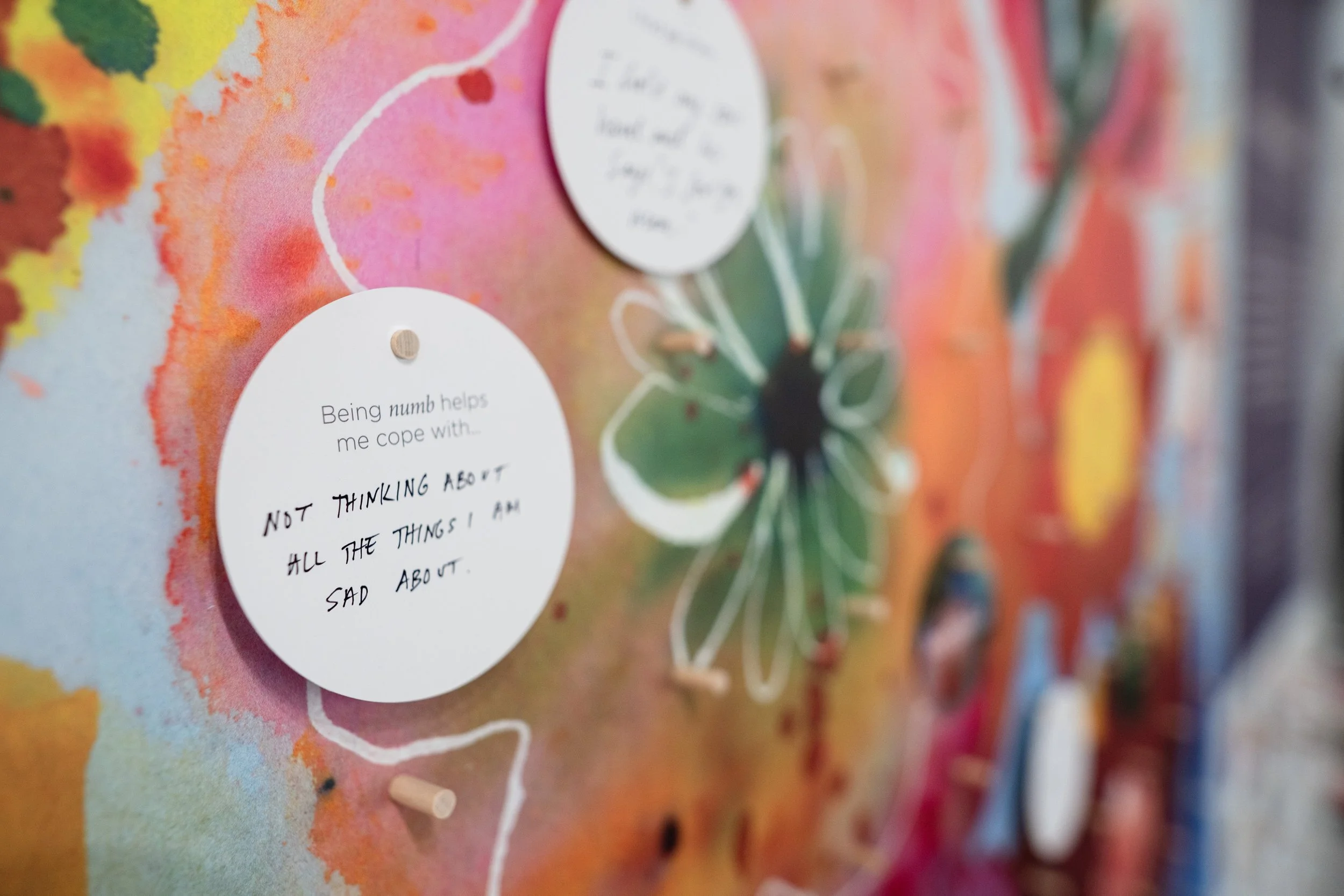
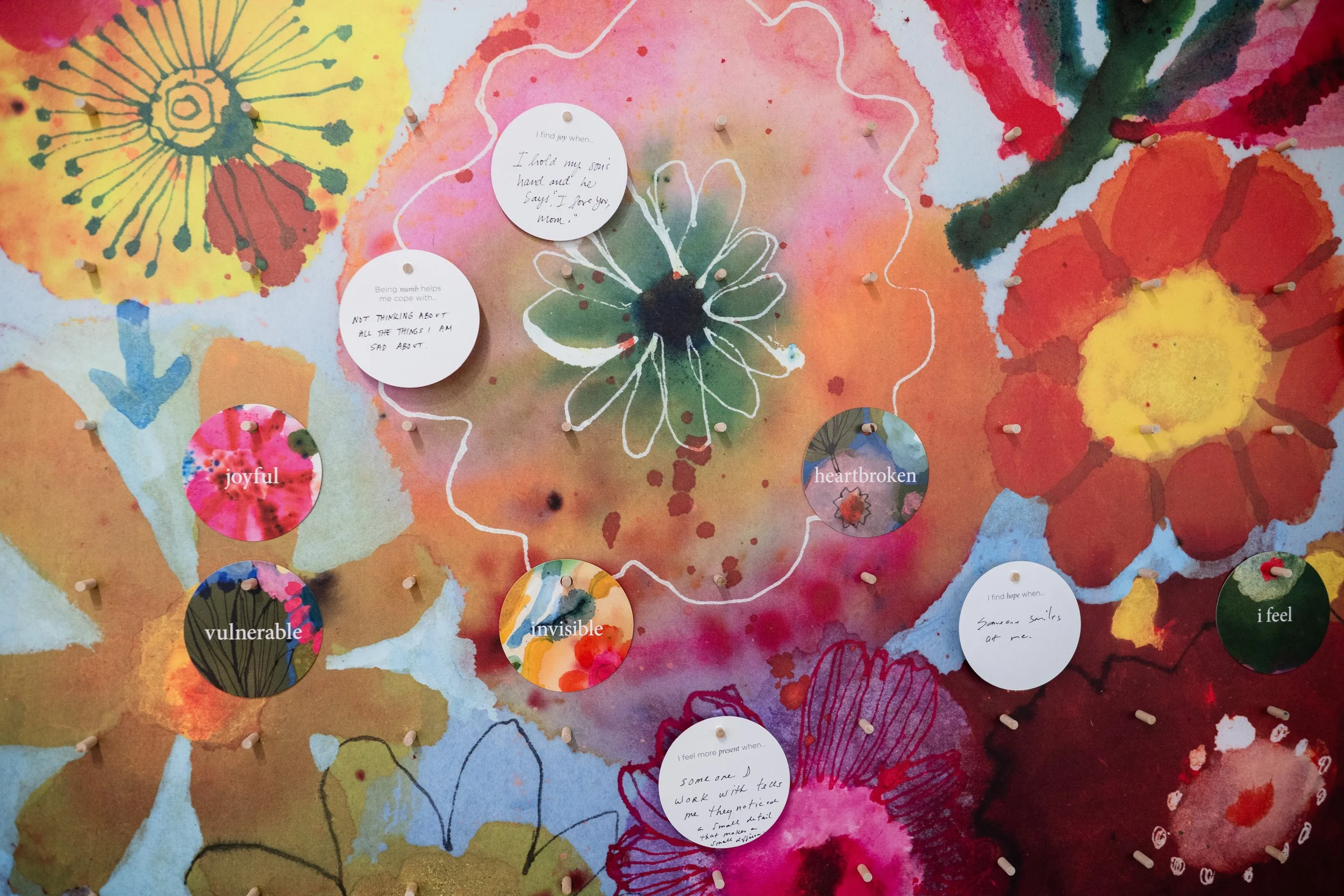
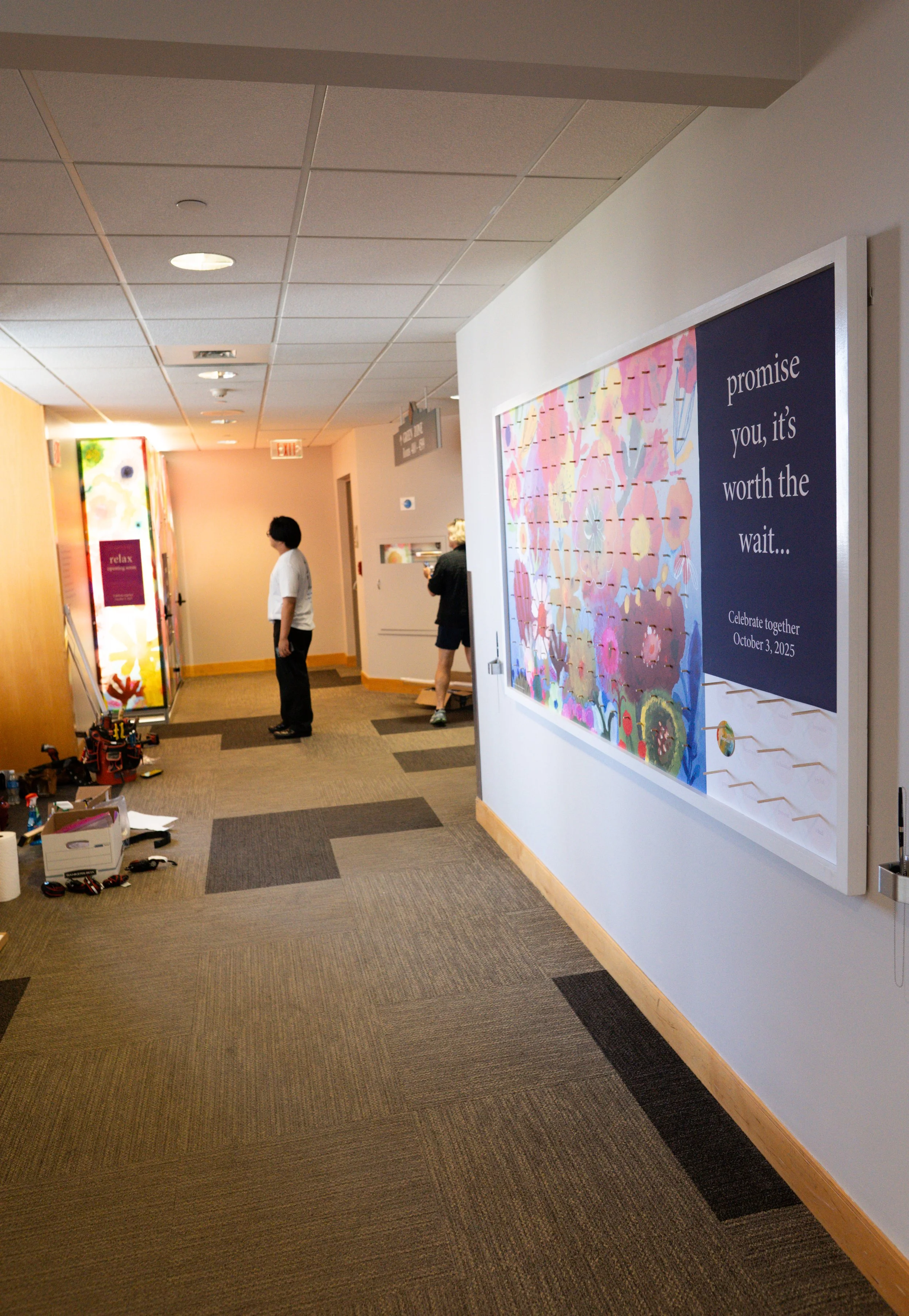
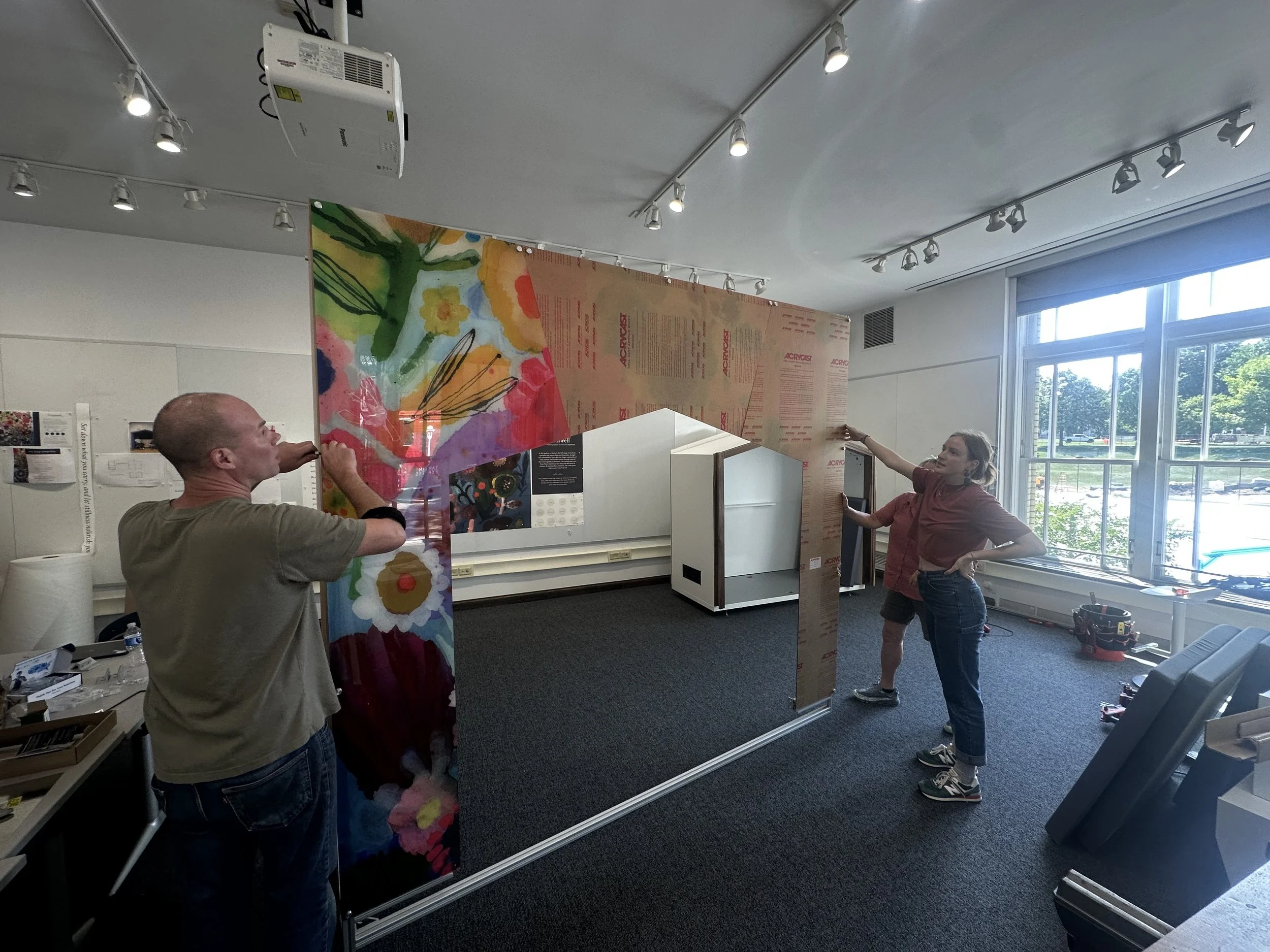
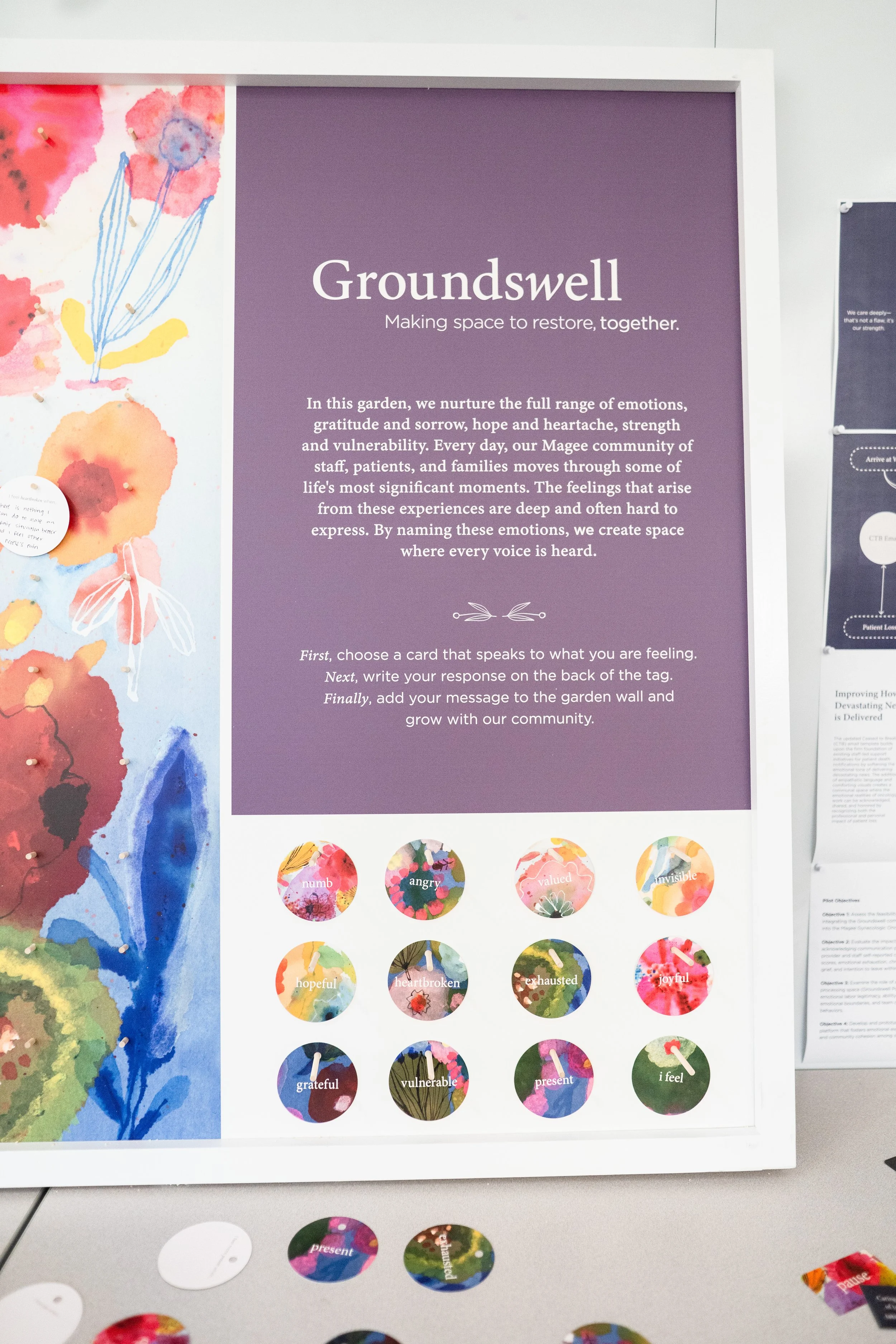
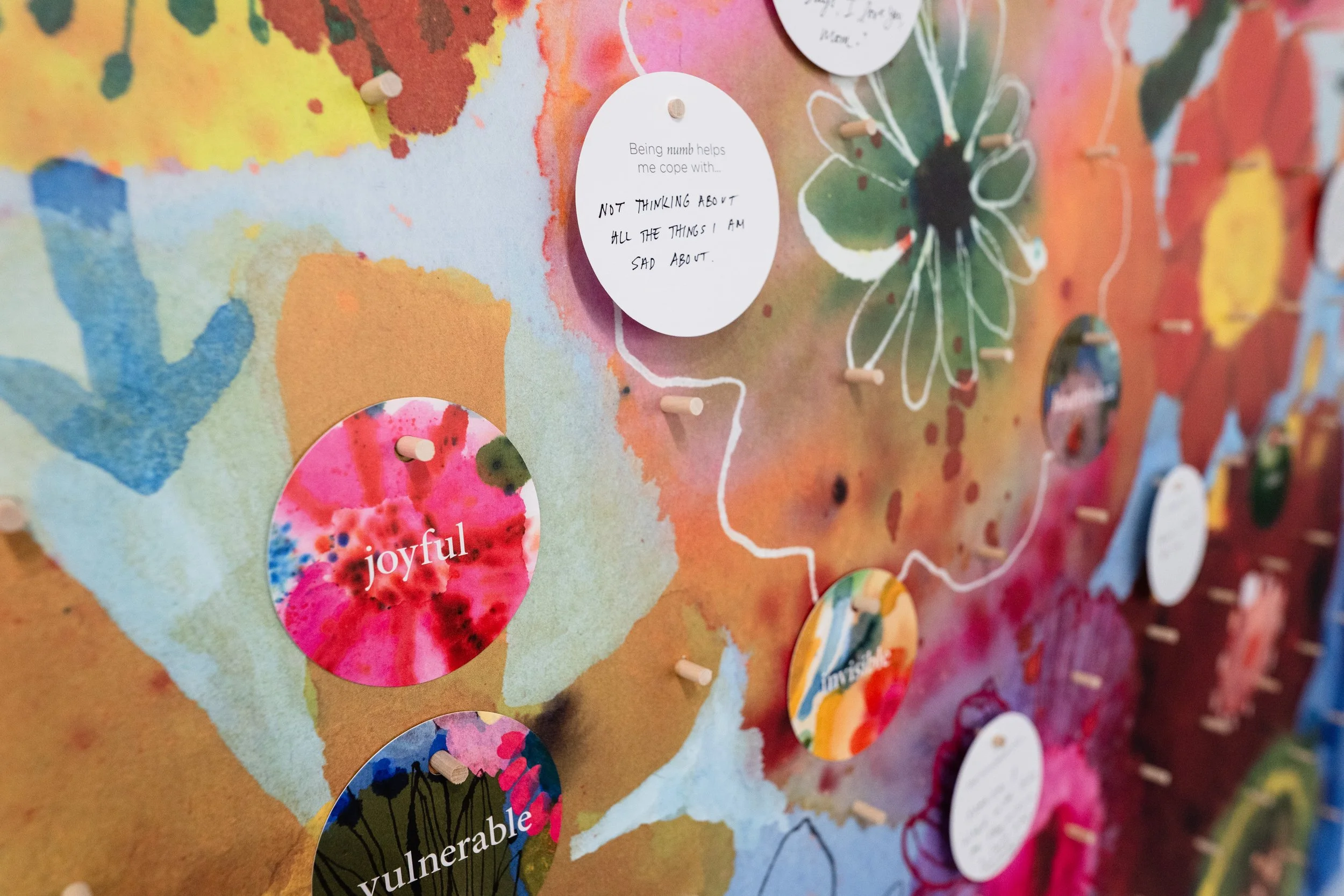
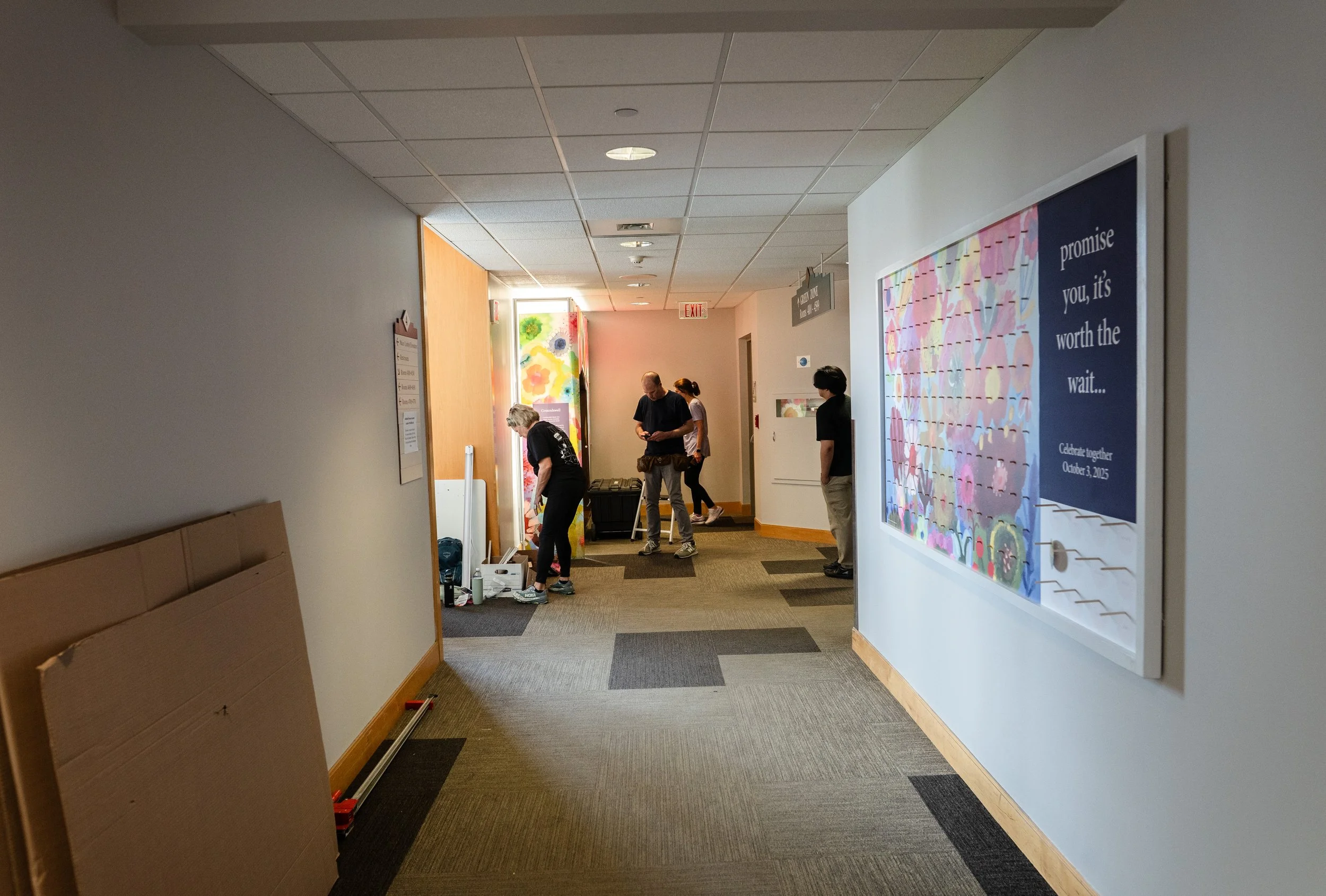
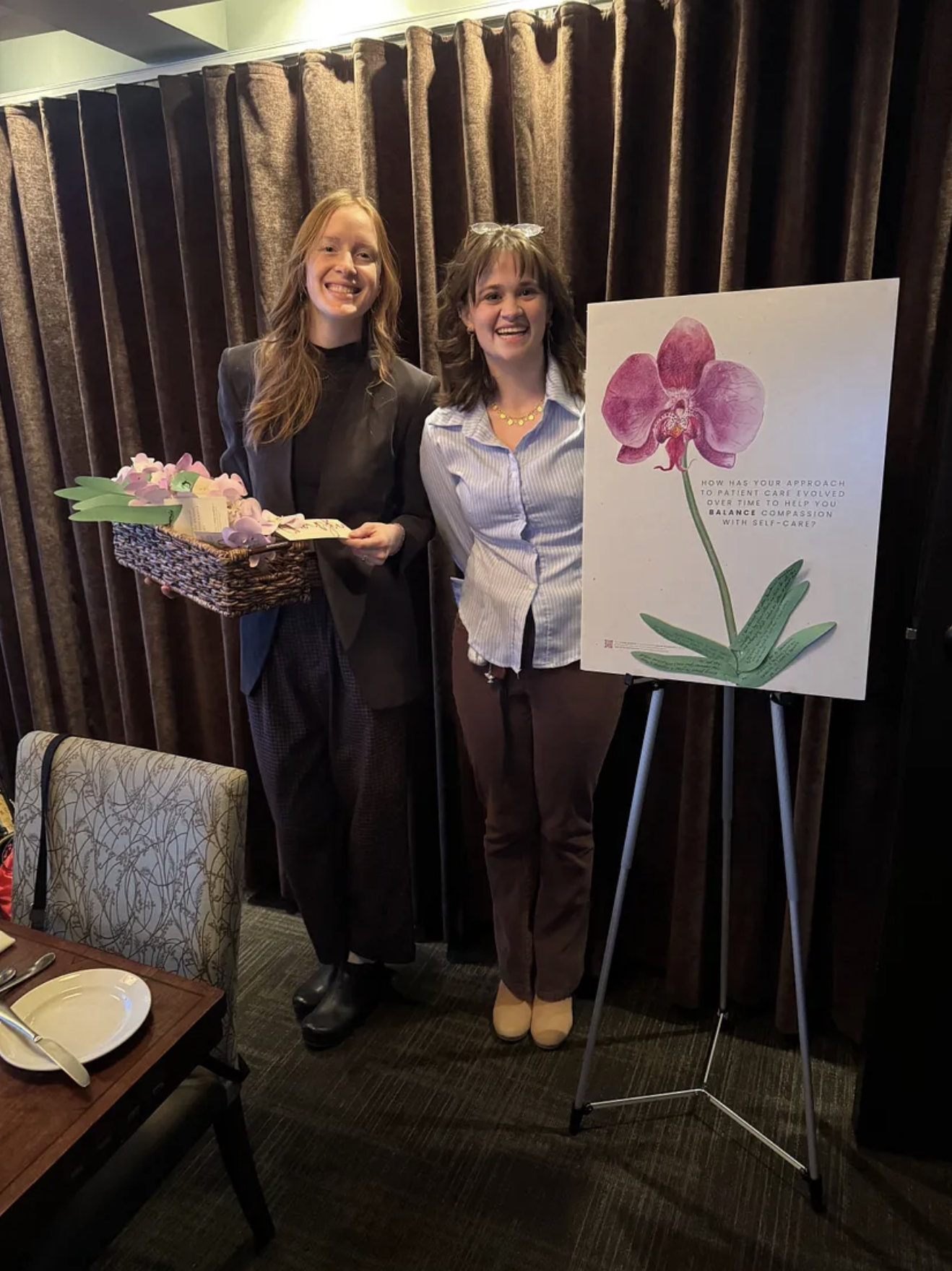
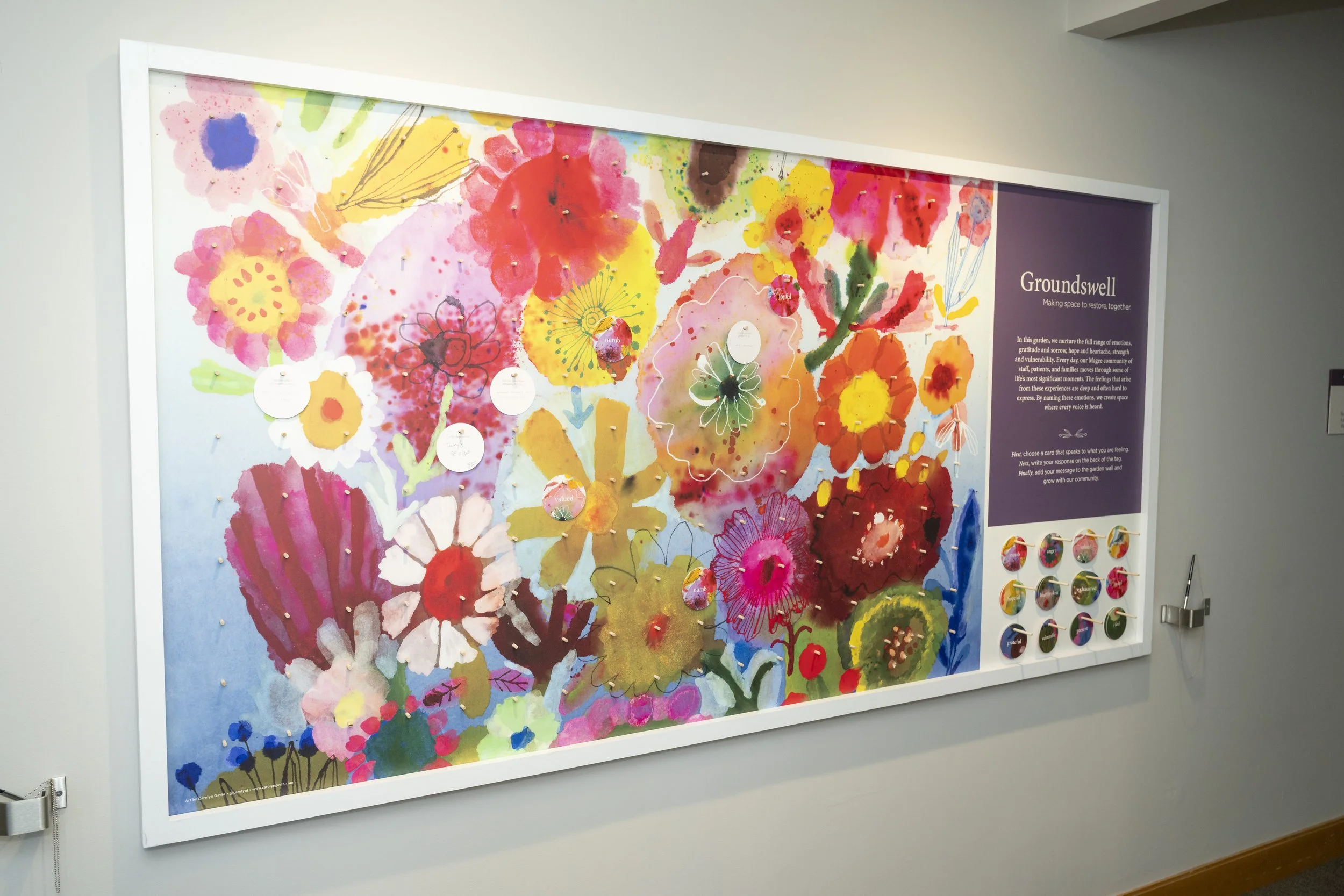
Community art wall that invites participation through anonymous shared emotional expression across the full spectrum of oncology experiences. By recognizing patient care as an interconnected ecosystem rather than isolated individual transactions, the wall acknowledges shared emotional labor among all team members—from clinical staff to administrative personnel to family caregivers.
Cultivating Culture Change
Rather than relying on exceptional individuals to shoulder impossible burdens, Groundswell creates systemic solutions that make compassionate care sustainable for all healthcare workers. In a healthcare system facing unprecedented staffing challenges, this research addresses workforce sustainability at its core. As one Magee nurse shared:
"A special person can do this work forever, a good person can do it for a little while, most people couldn't do it for a day."
The components of this design ecosystem serve as a multi-dimensional approach to cultivating the conditions for culture change to emerge from within the care community. This movement starts with introducing the language of grief and support, creates physical and emotional space to process, and invites participation and collaboration. Through voluntary Groundswell Steward program managers in each department, we hope that this gesture will scaffold into more co-created support systems.
Groundswell Mindfulness Resource Library
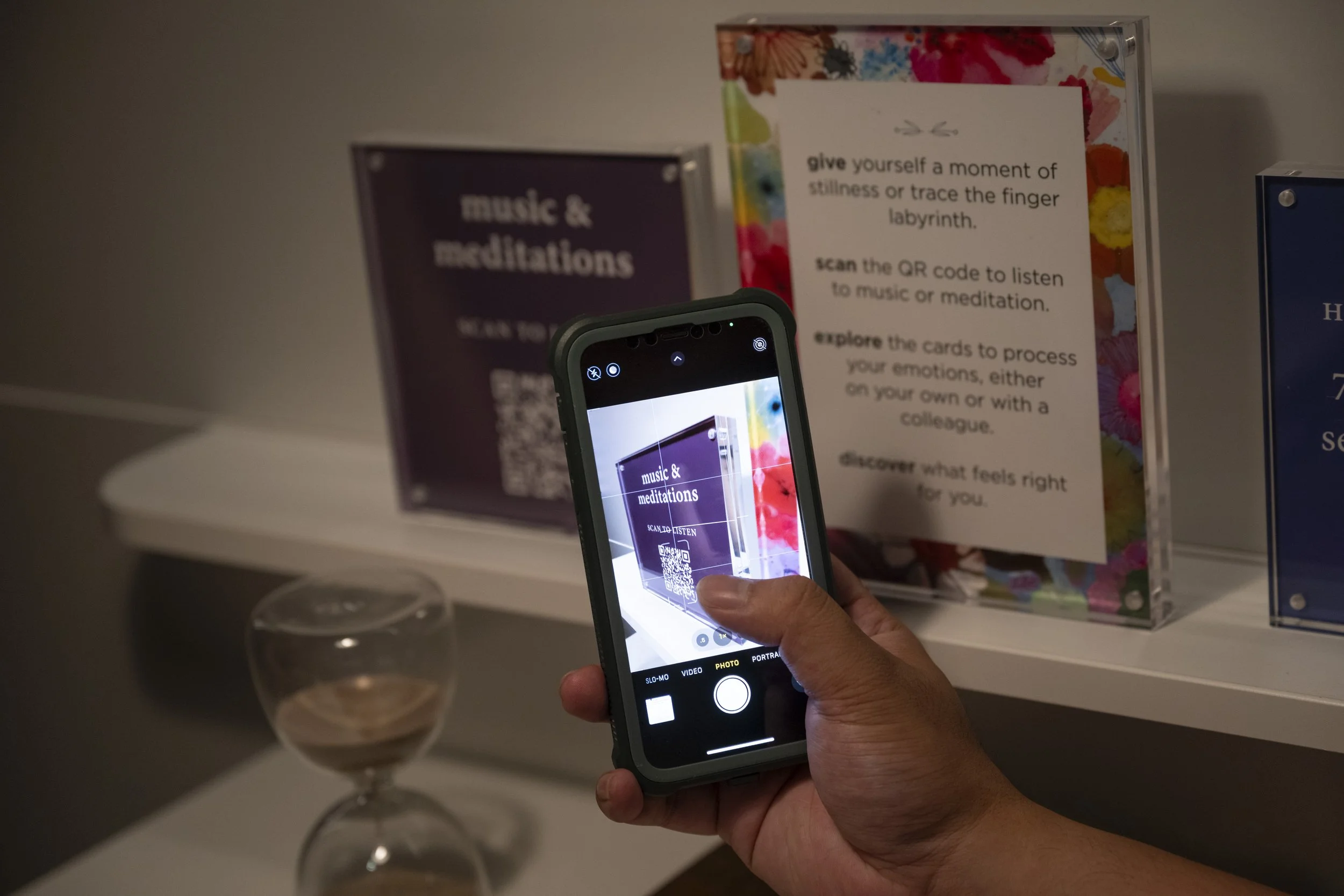
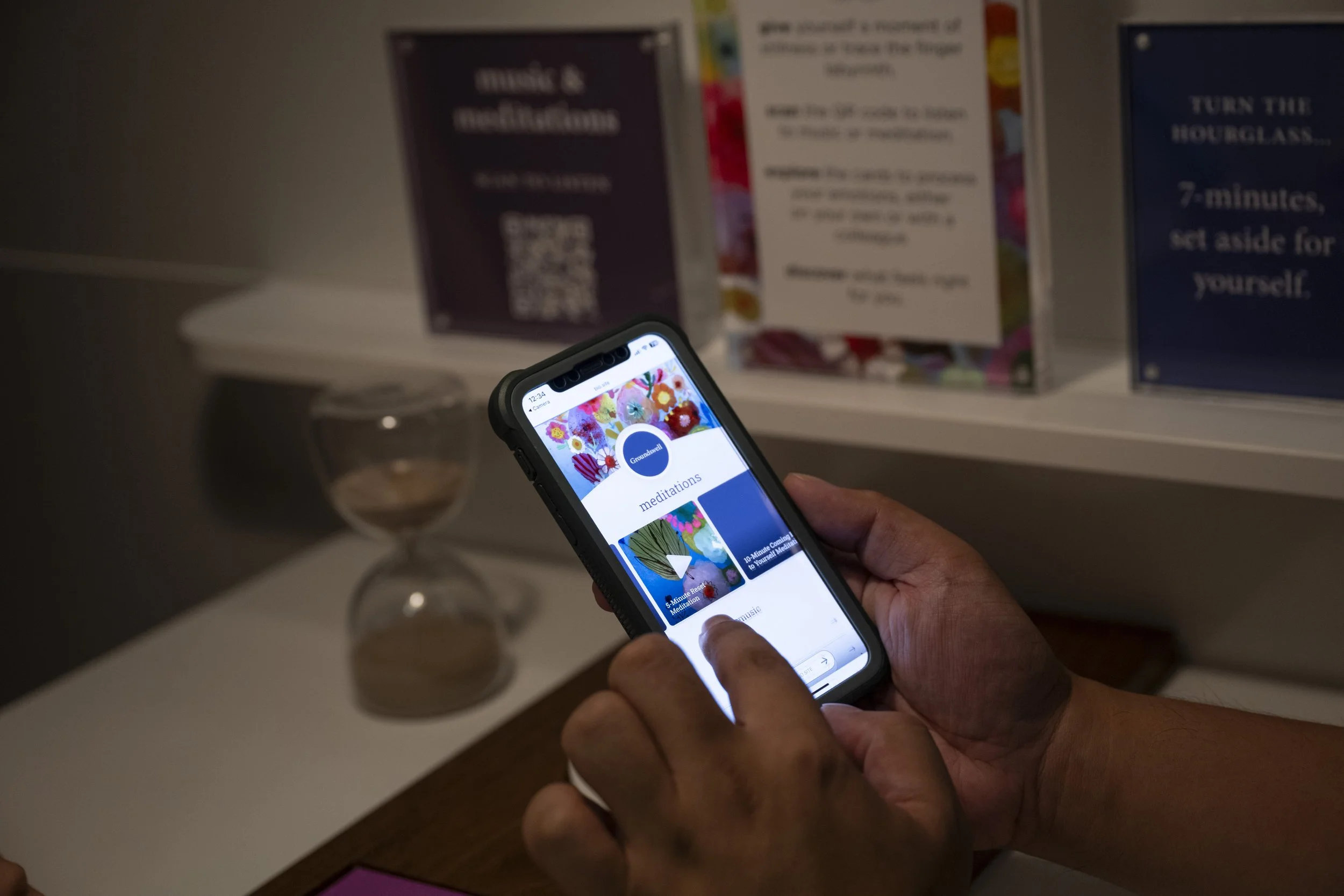
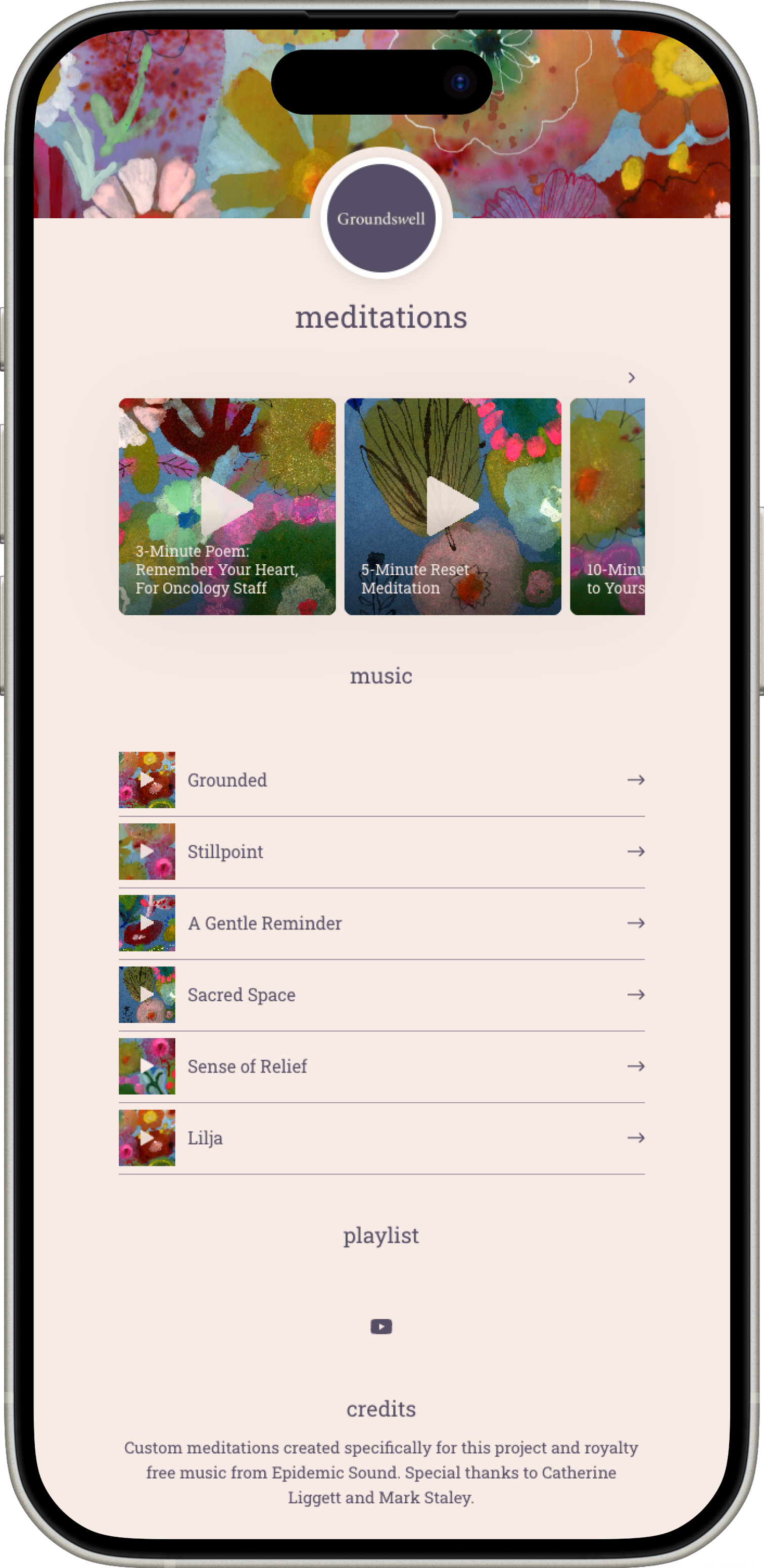
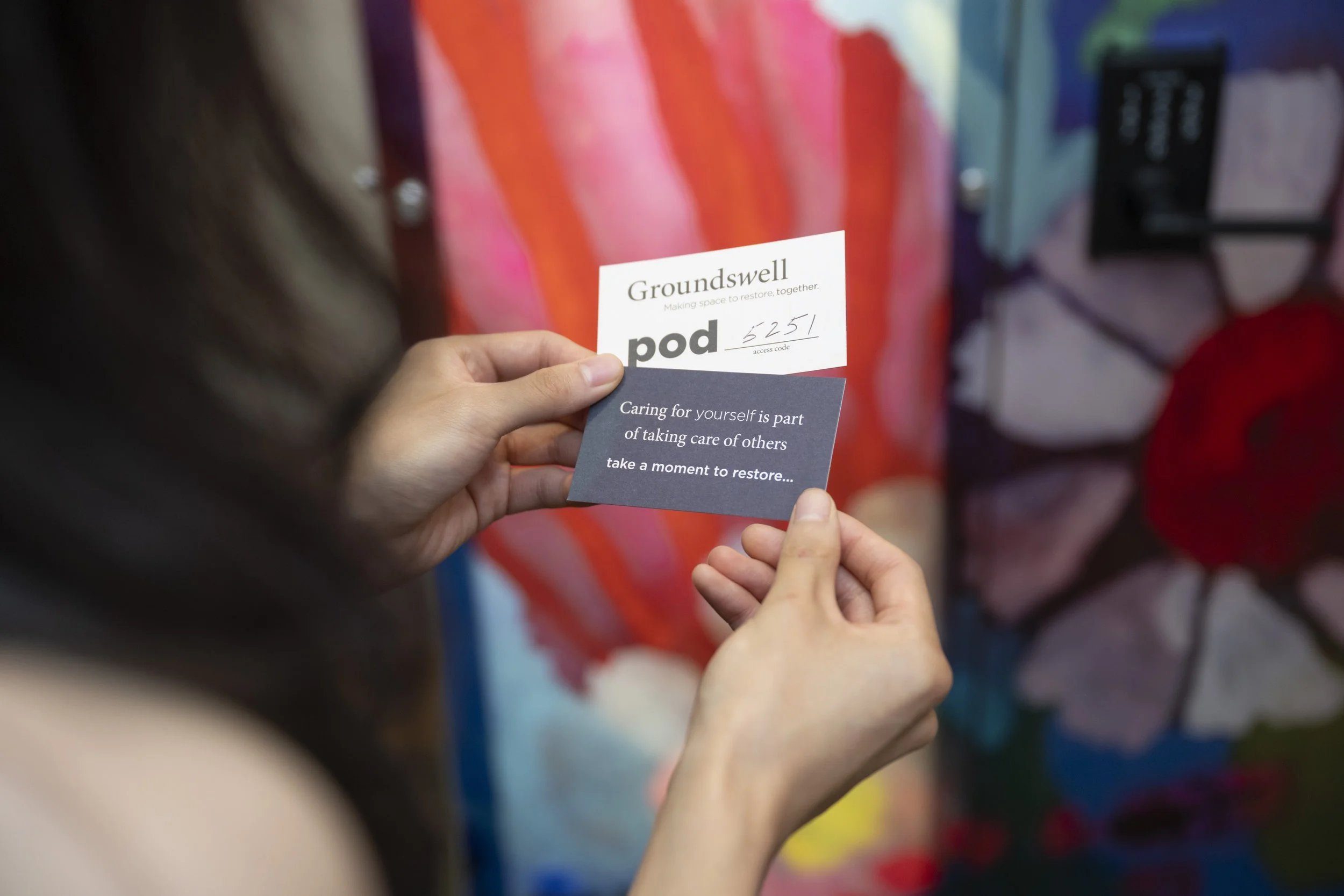
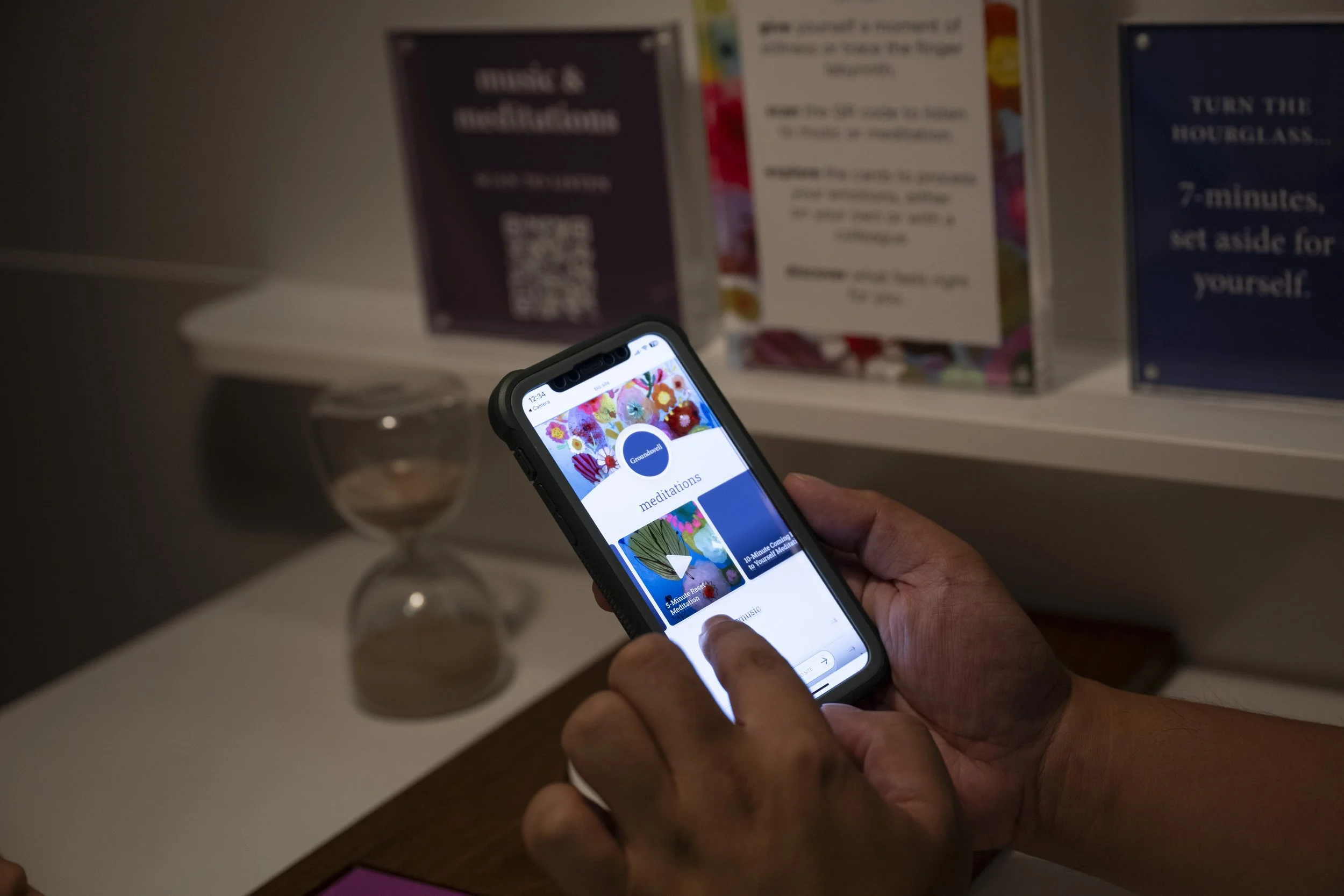
Mindfulness Resources are introduced to staff via a QR code. A library of custom meditations and calming instrumental music are available both inside and outside of the pod via QR code. The poem below and the guided meditations were custom written and recorded for this project in collaboration with Catherine Liggett and Mark Staley. Music was sourced royalty-free from Epidemic Sound. (content available upon request)
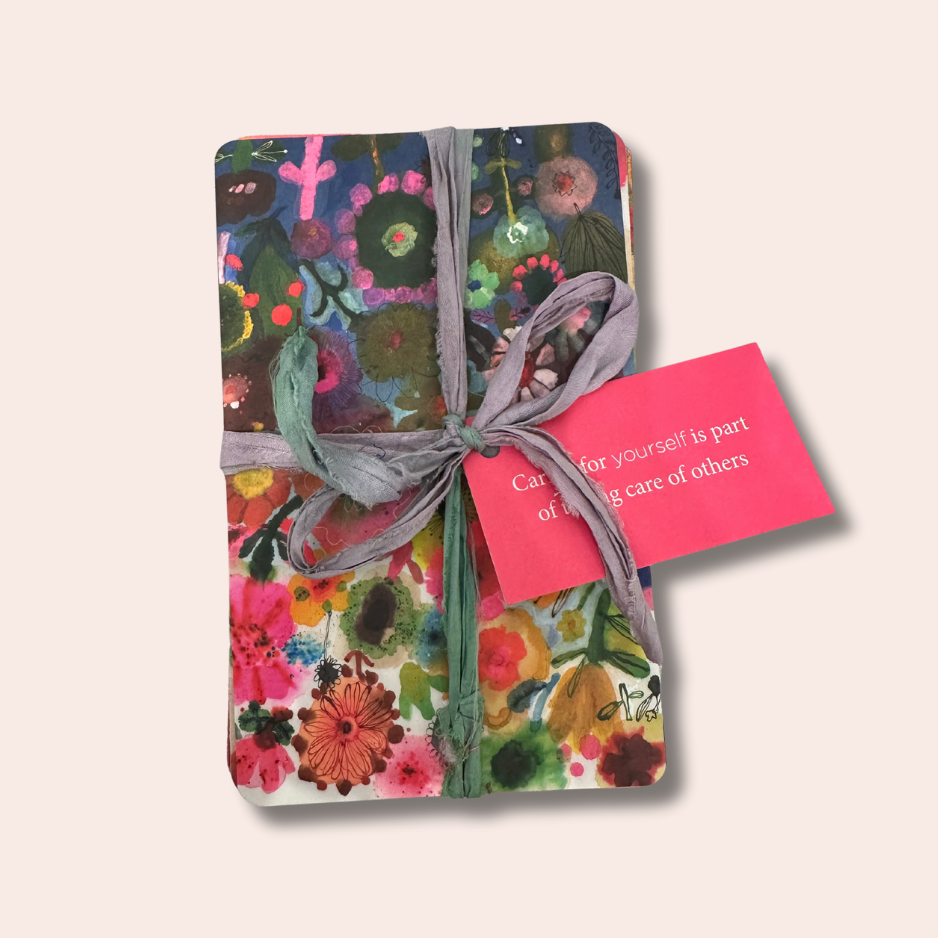
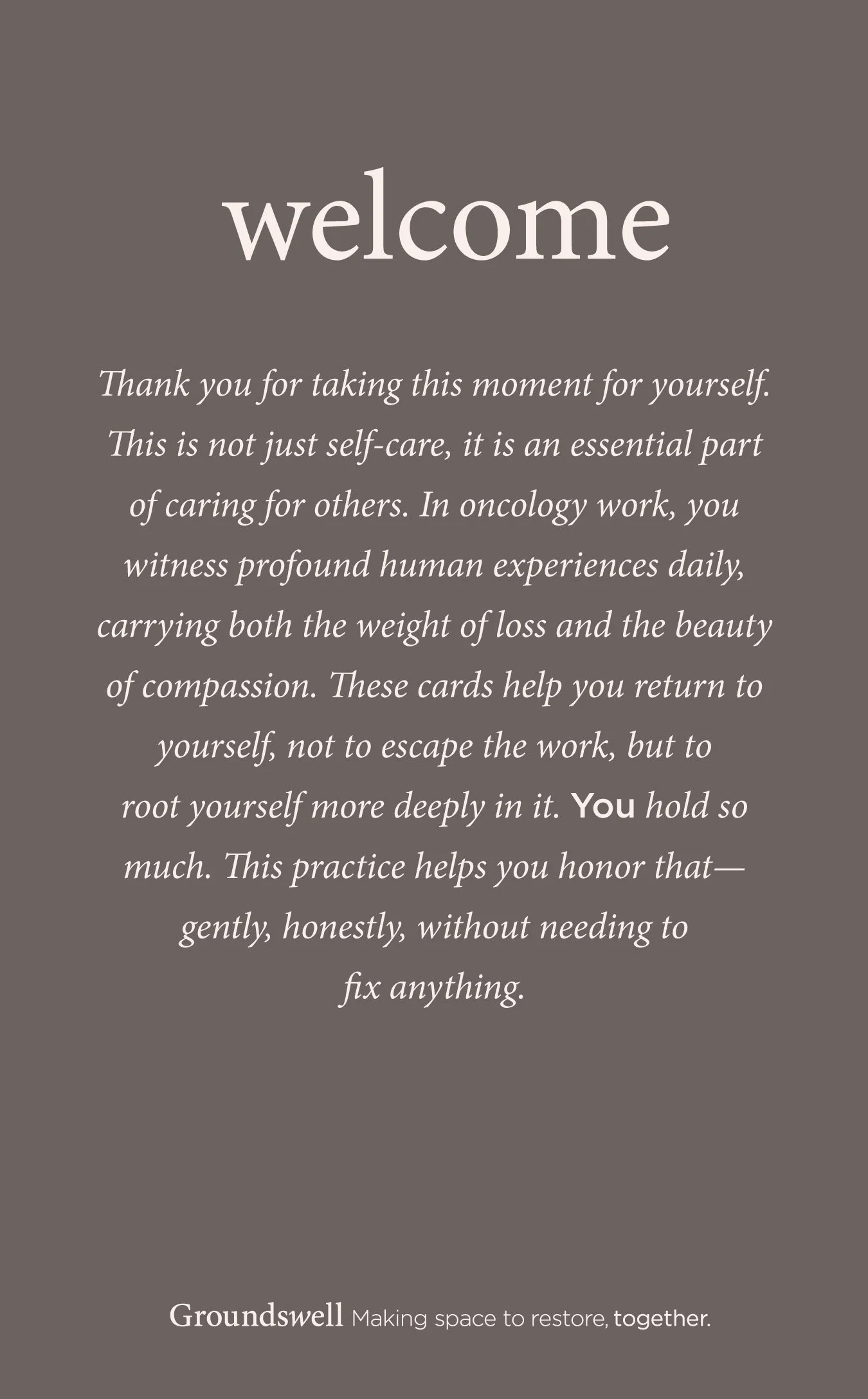
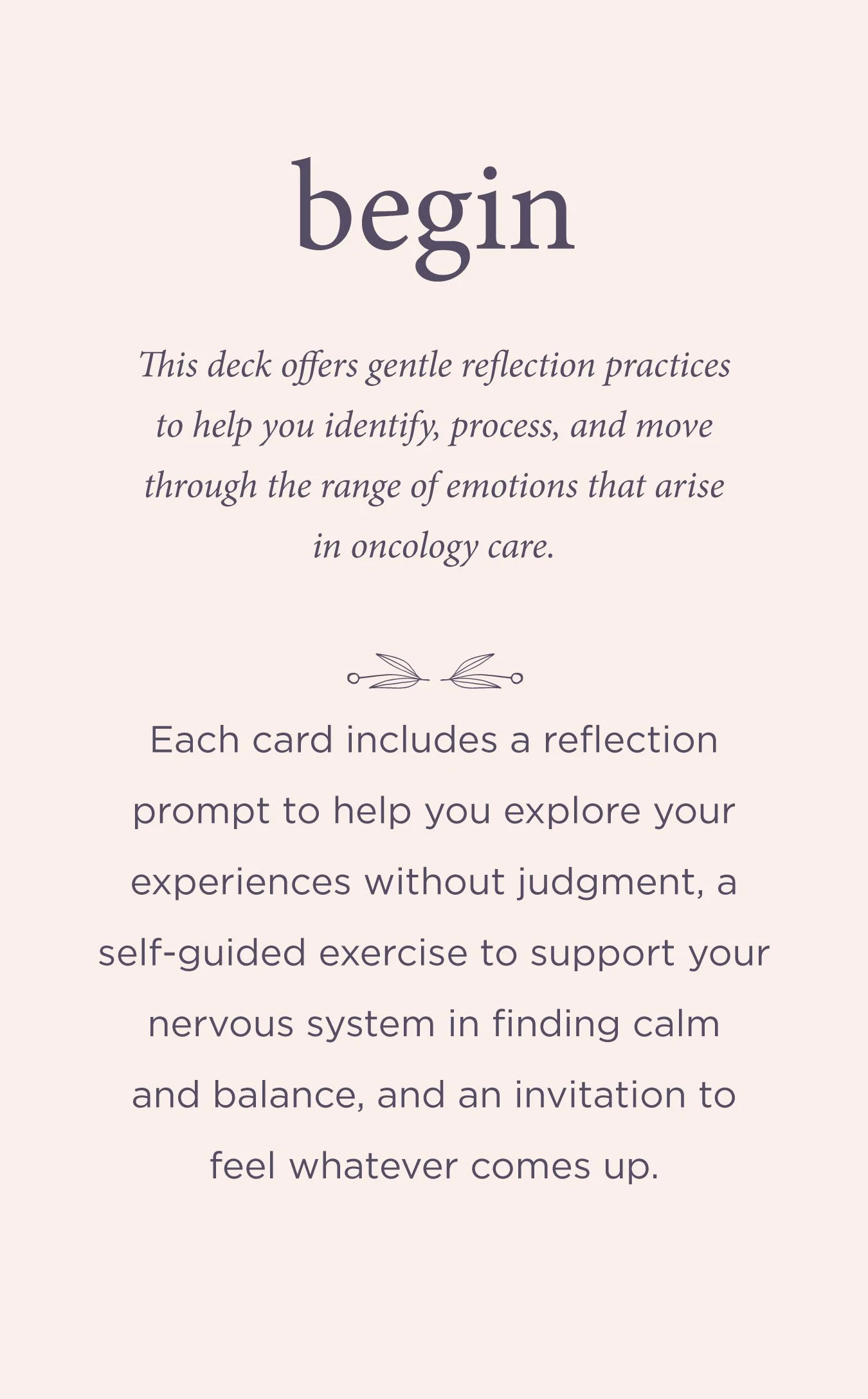
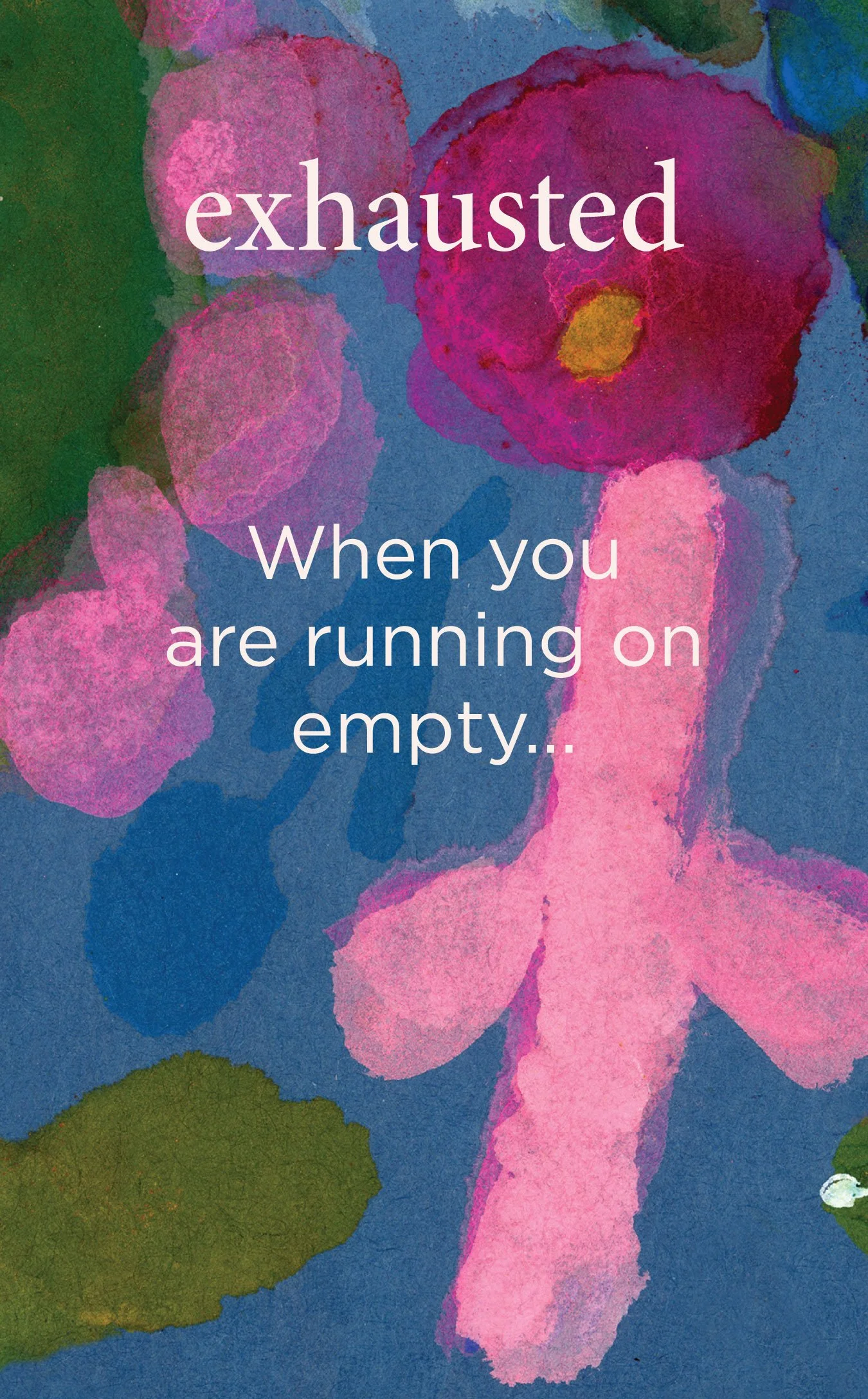
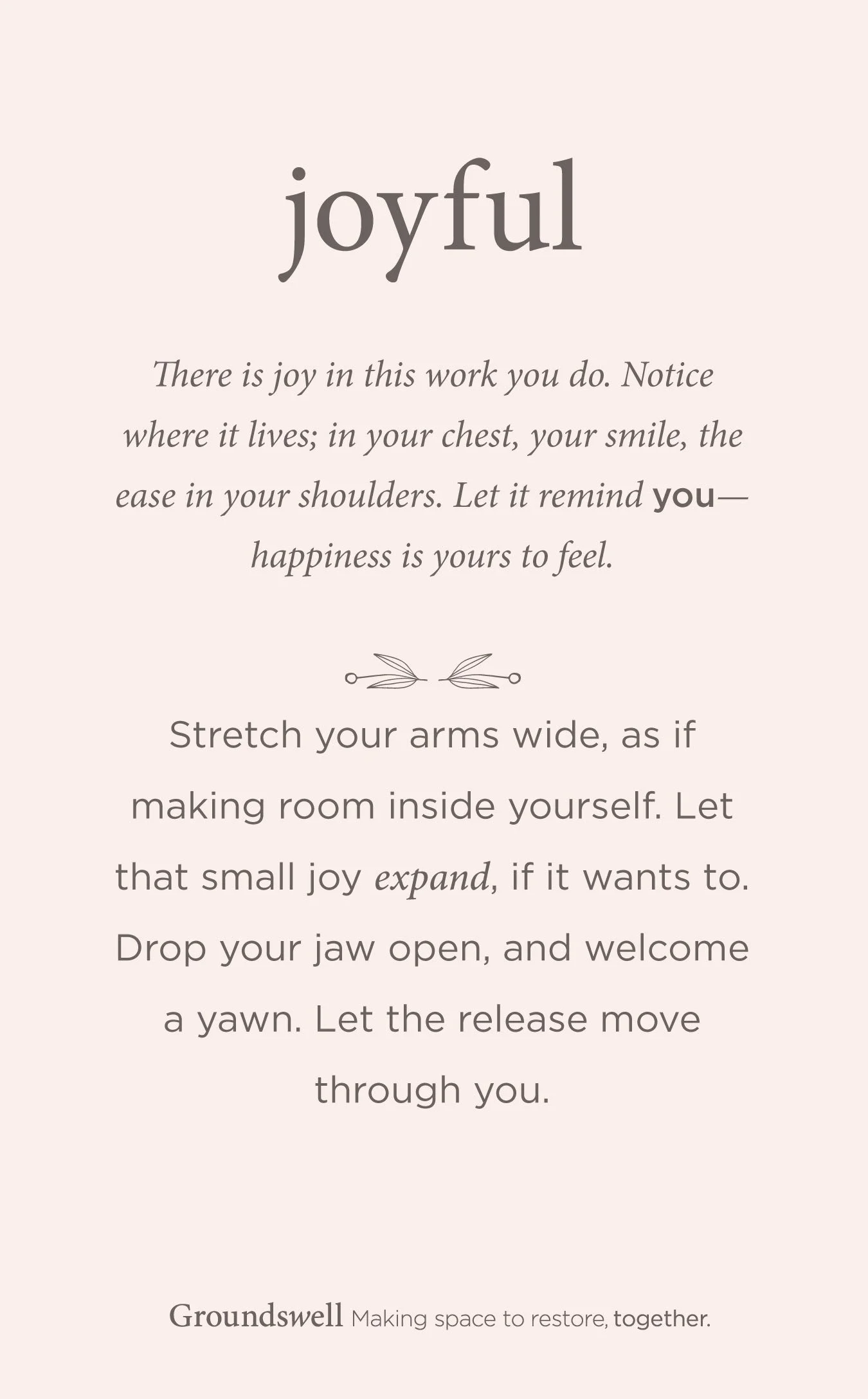
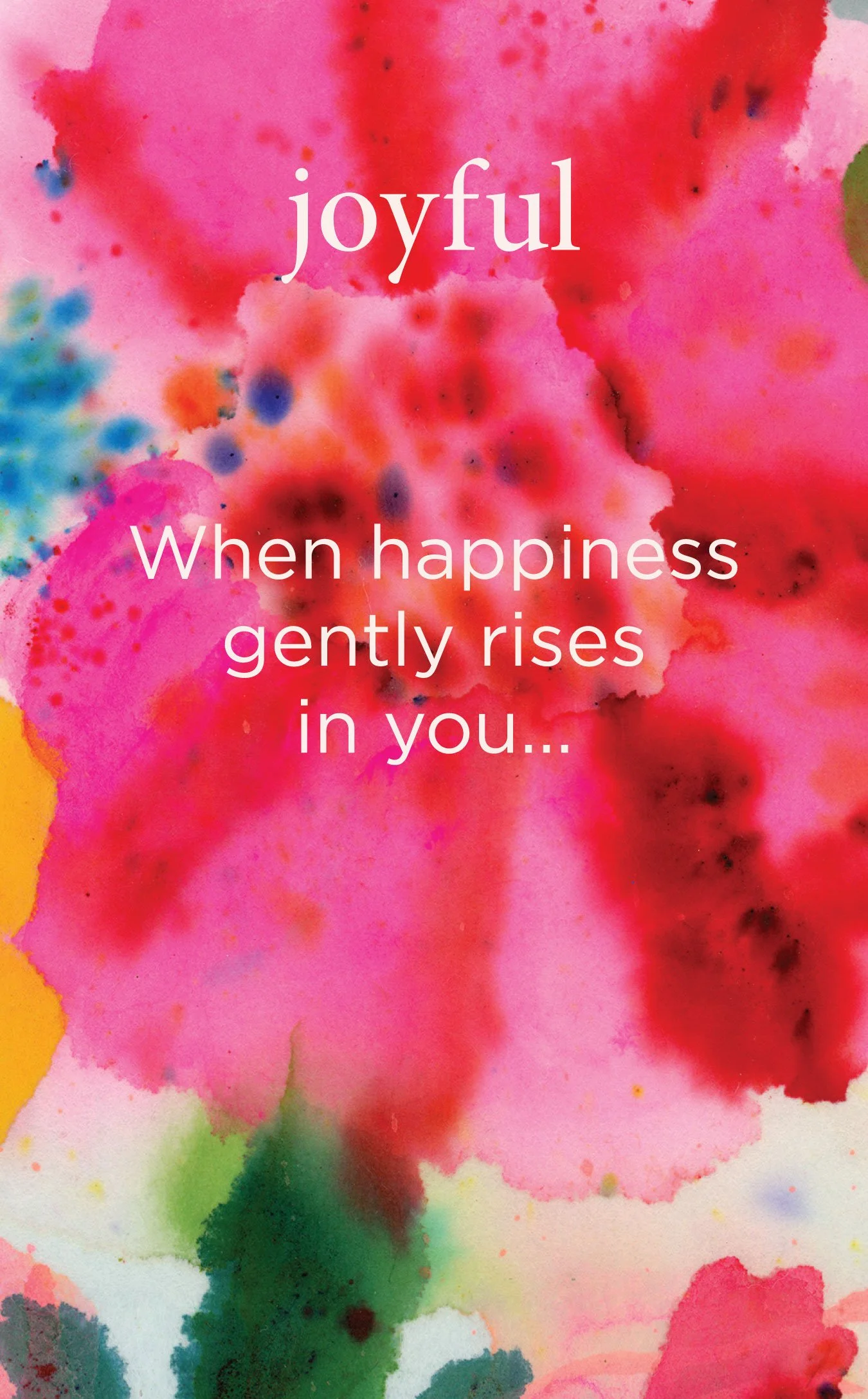
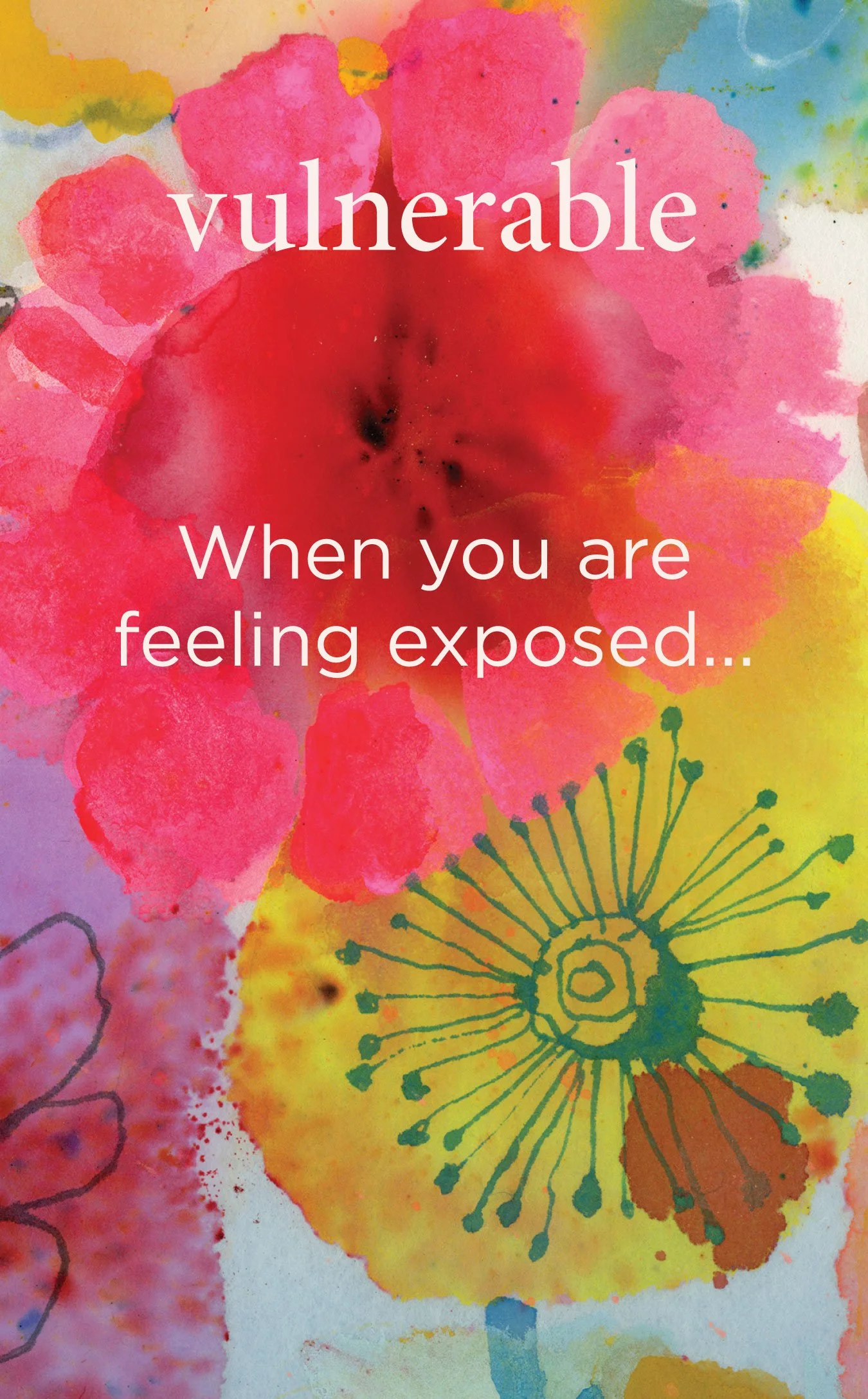
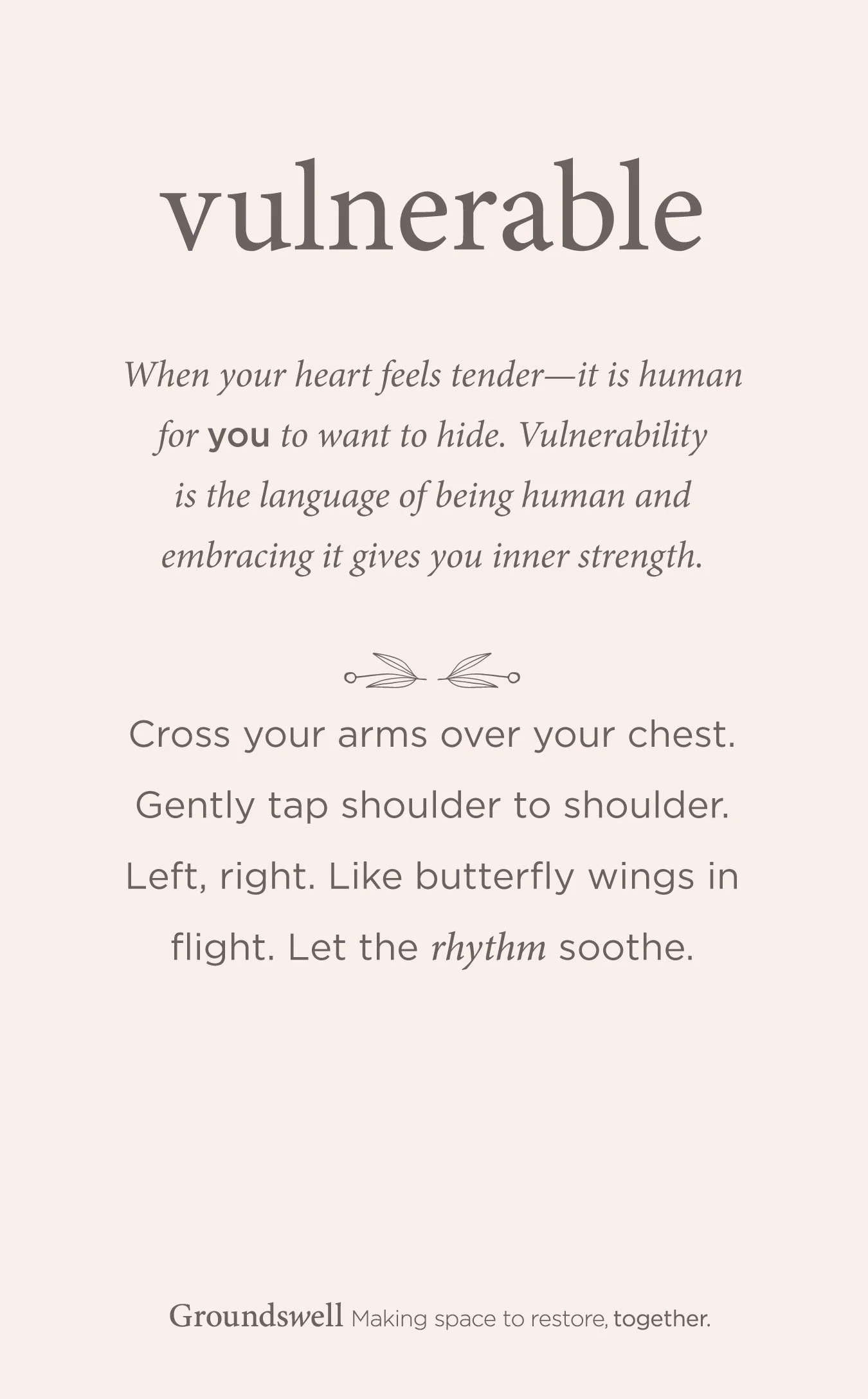
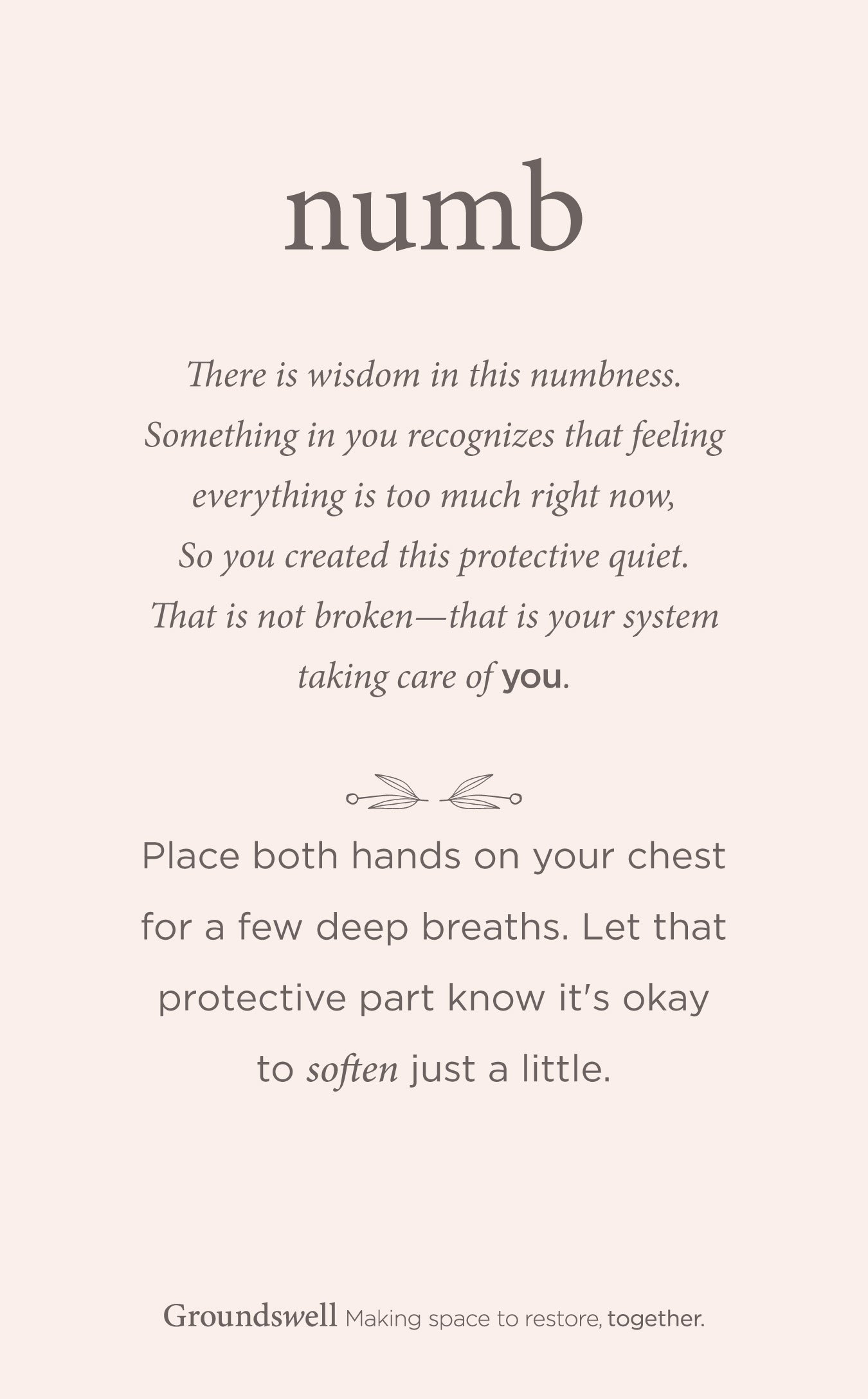
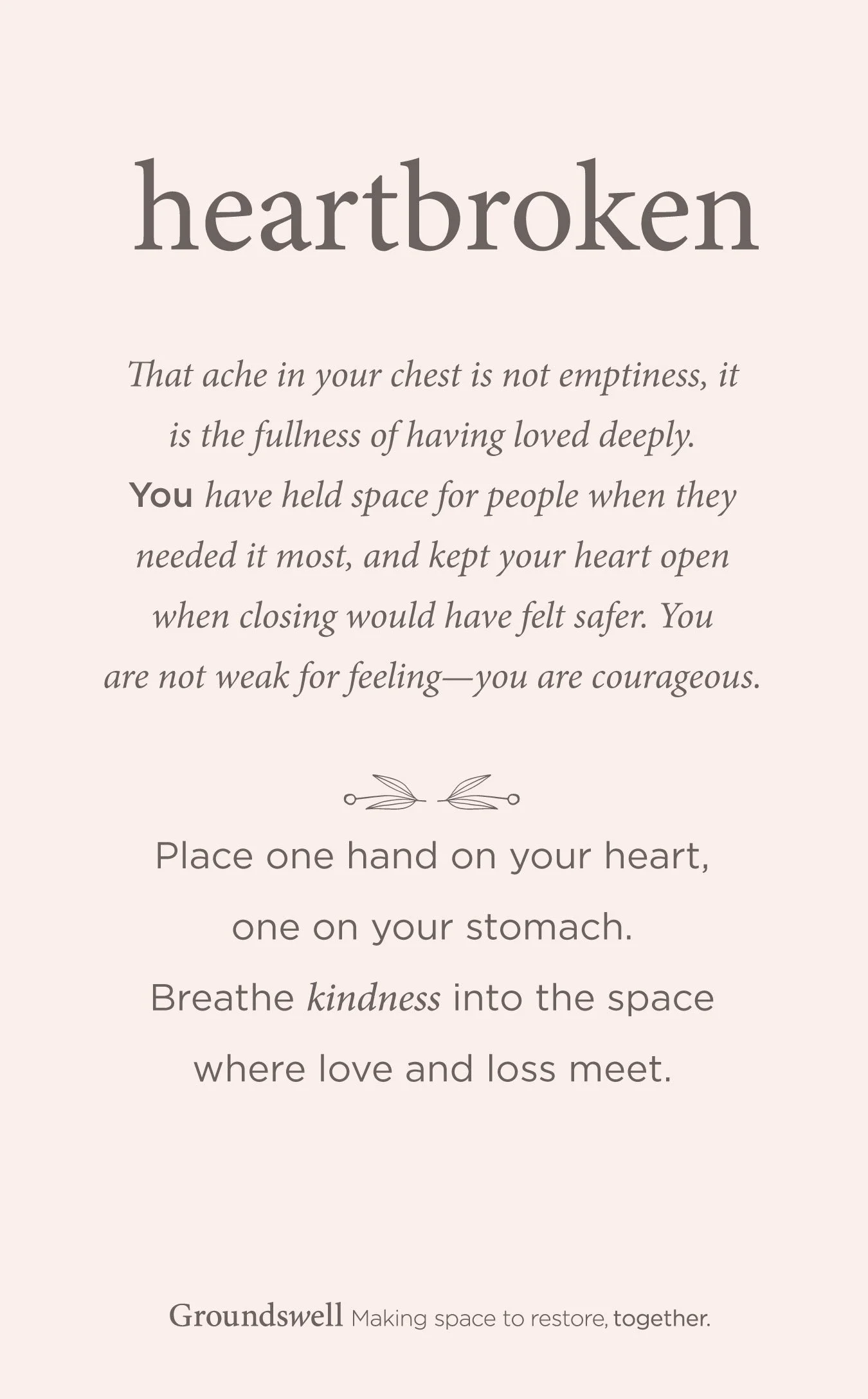
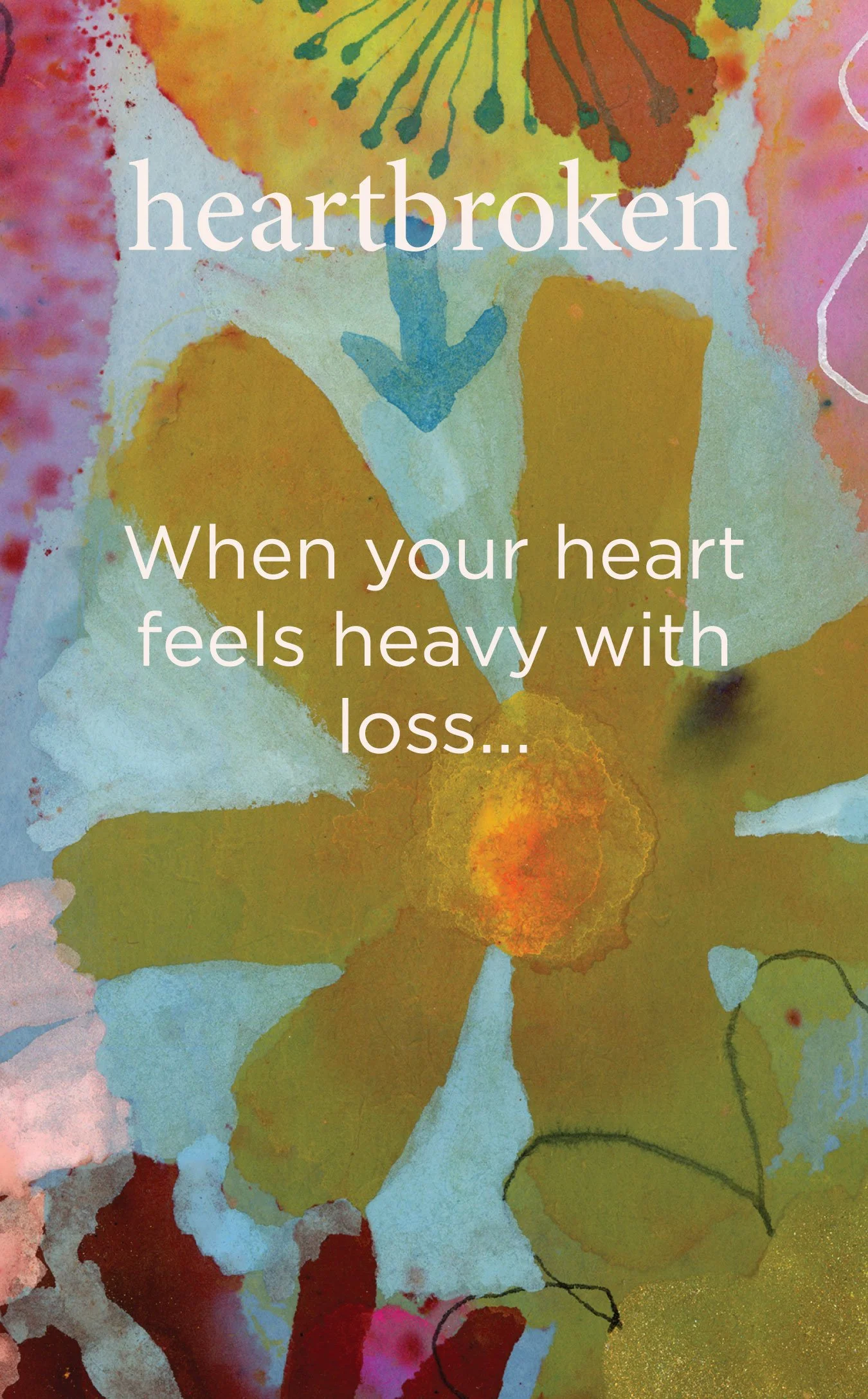
Groundswell Reflection Cards
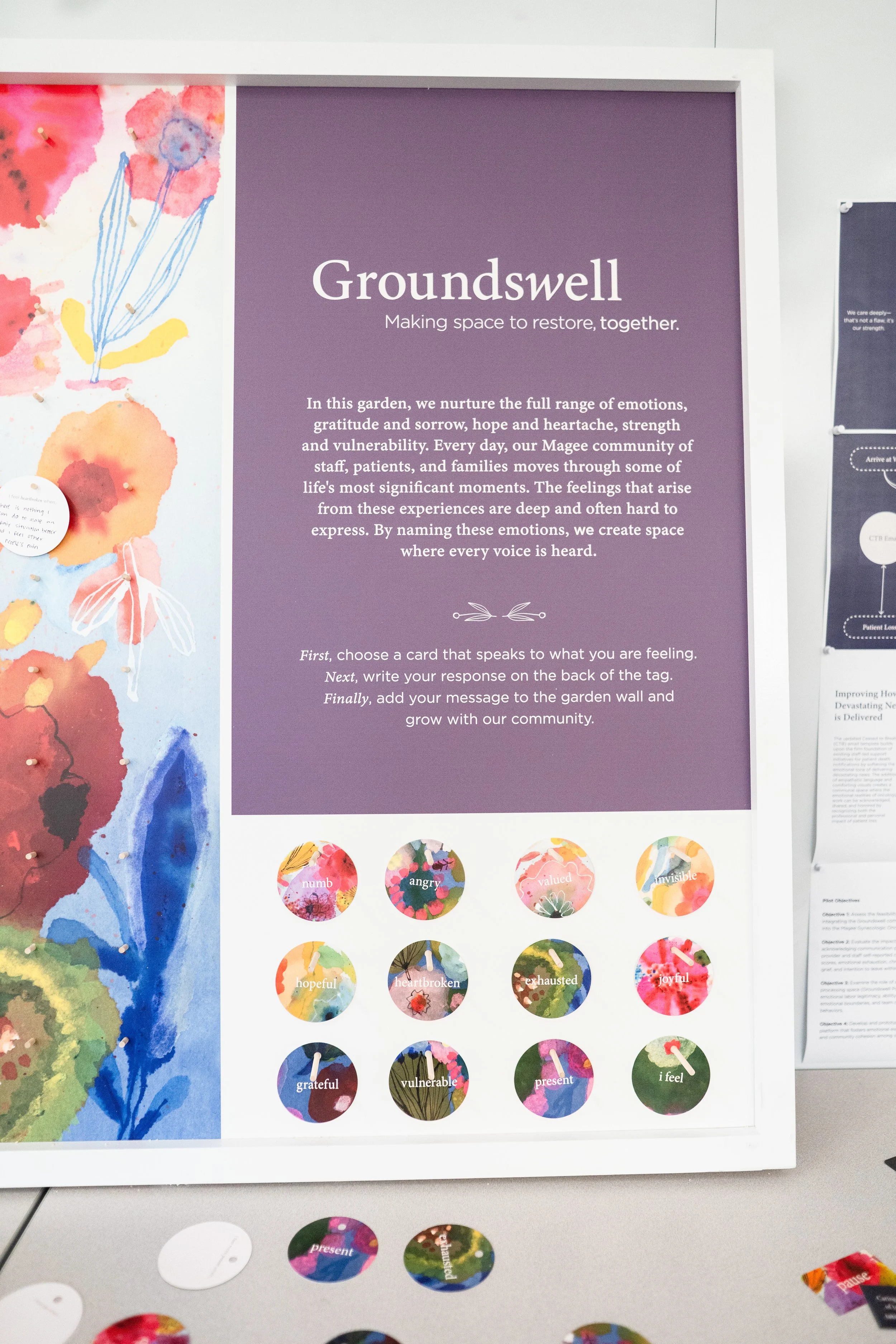
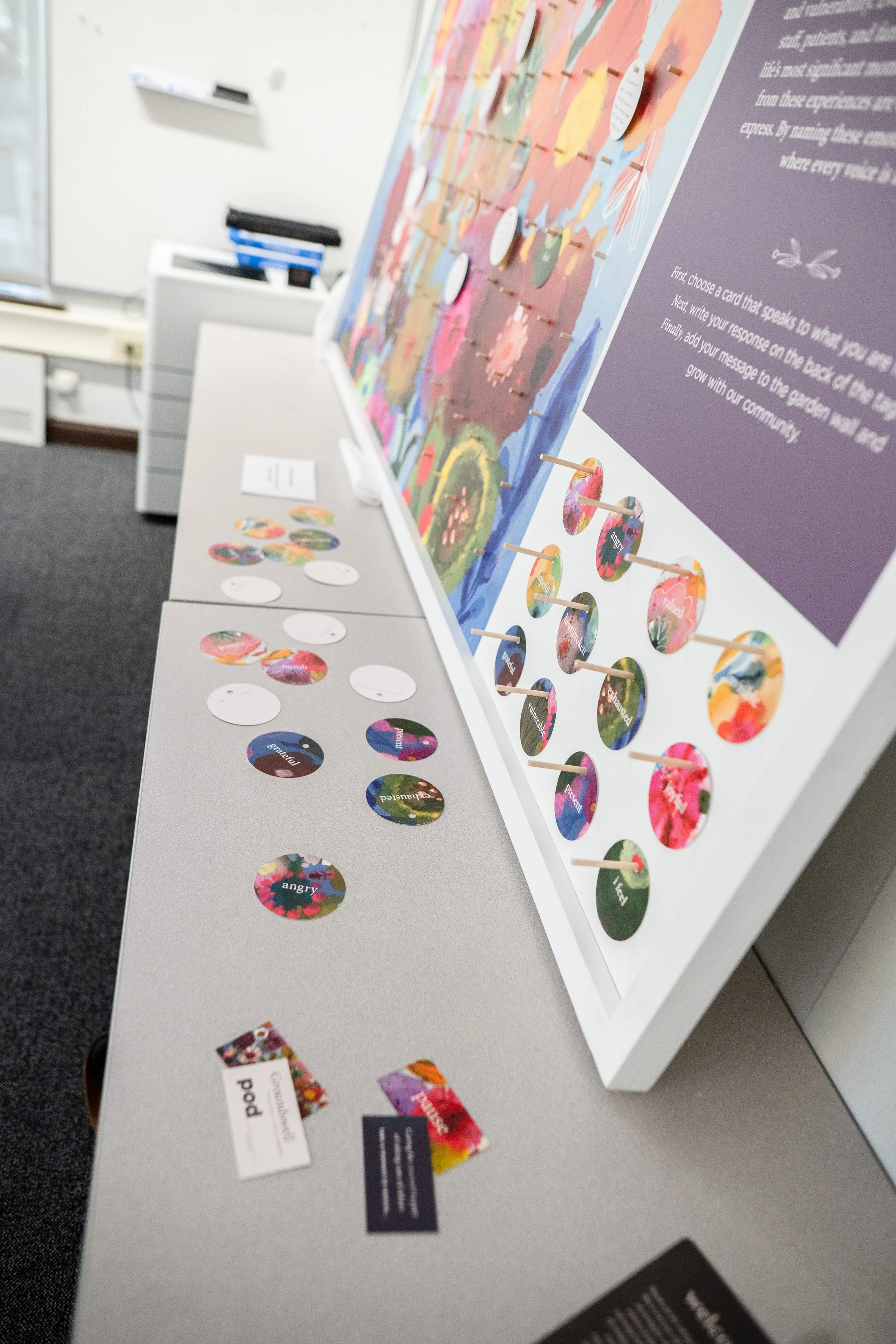
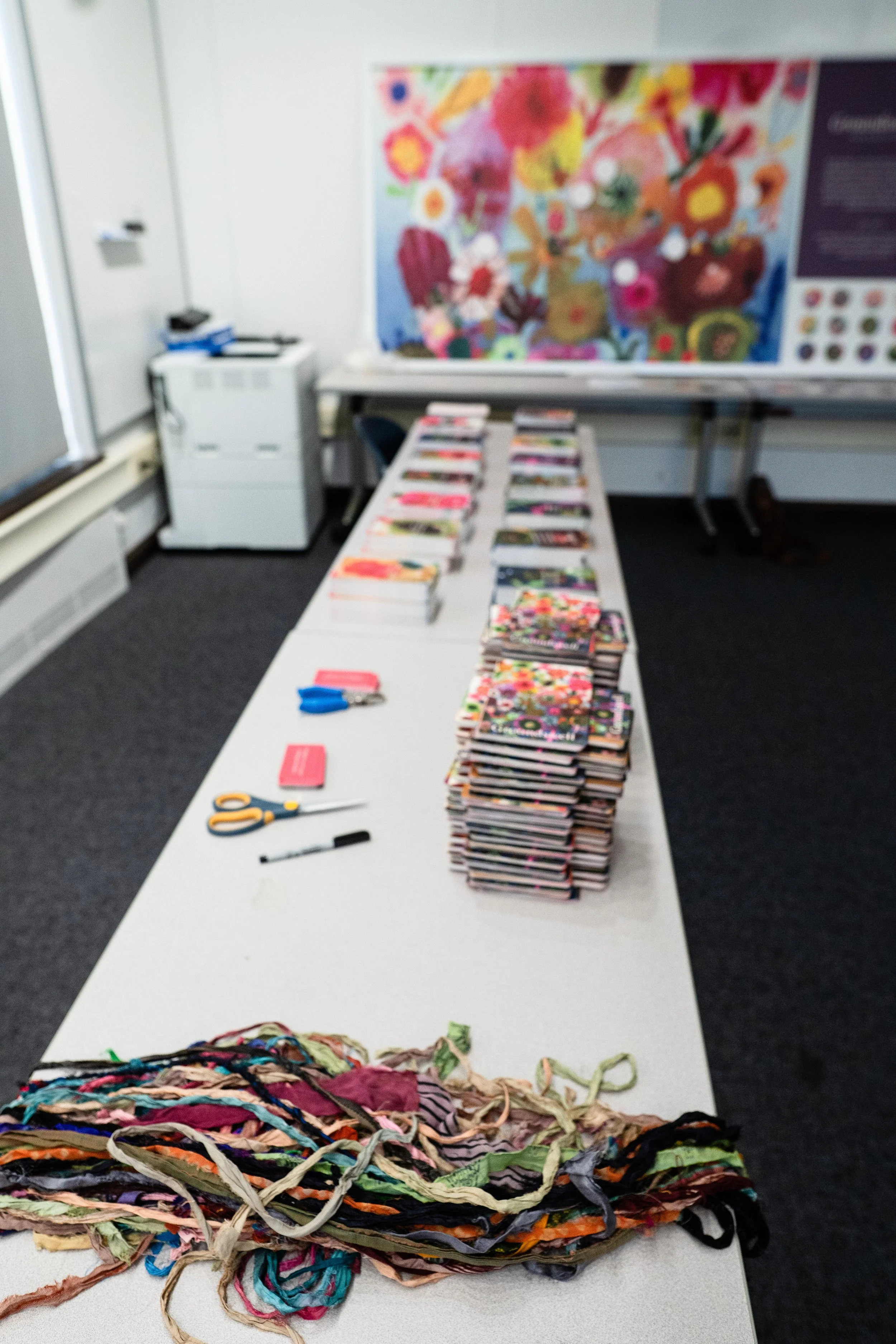
This resource is a significant piece of the equation. Every staff member received their own deck of cards to use as they see fit and one set permanently lives in the restorative pod. By showing healthcare workers that the full spectrum of grief includes complex and contradictory emotions, we help create a more holistic culture of care. The combination of emotional identification, validation, and somatic exercises make this a powerful tool for processing, facilitation, and connection with self and others.
Process
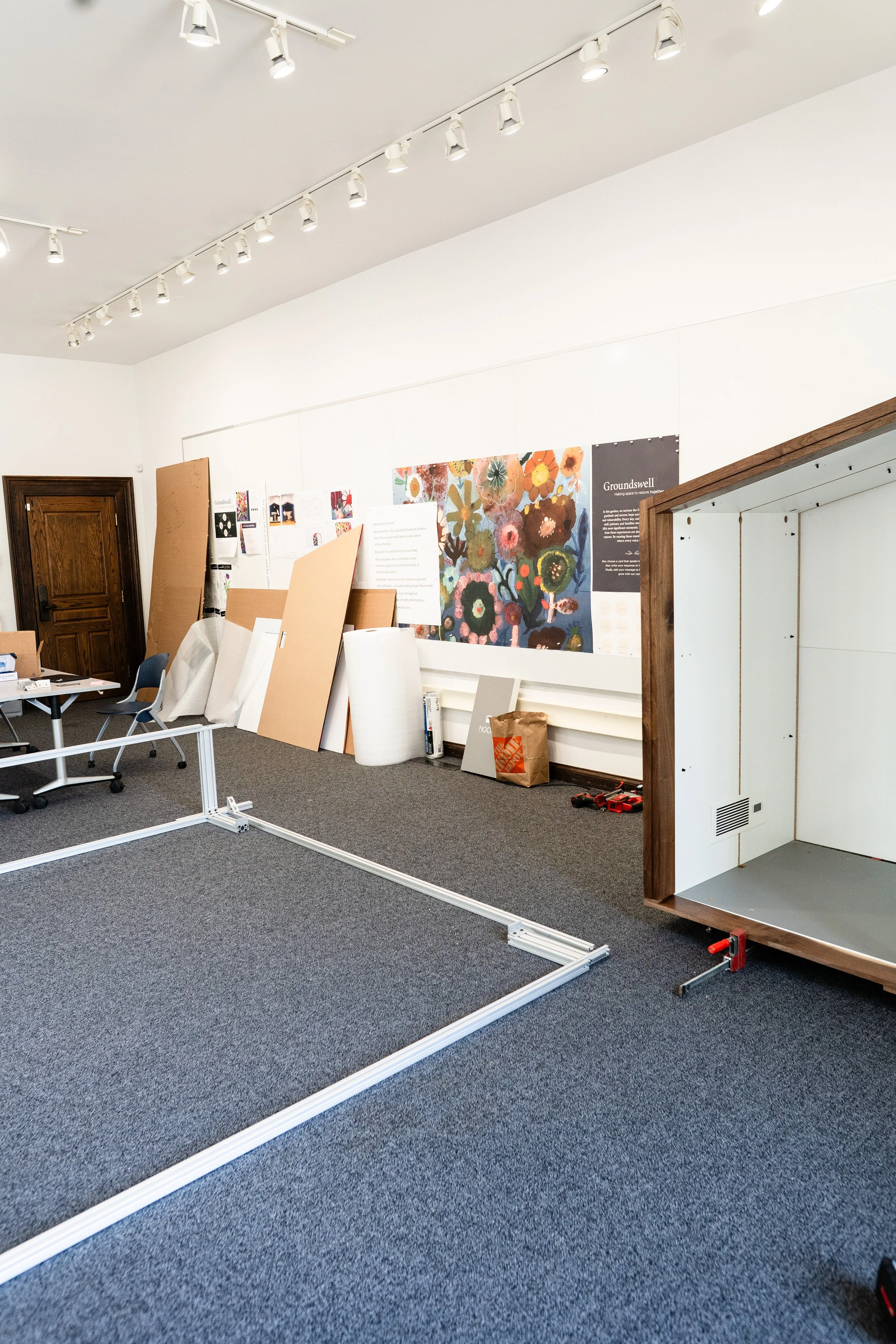
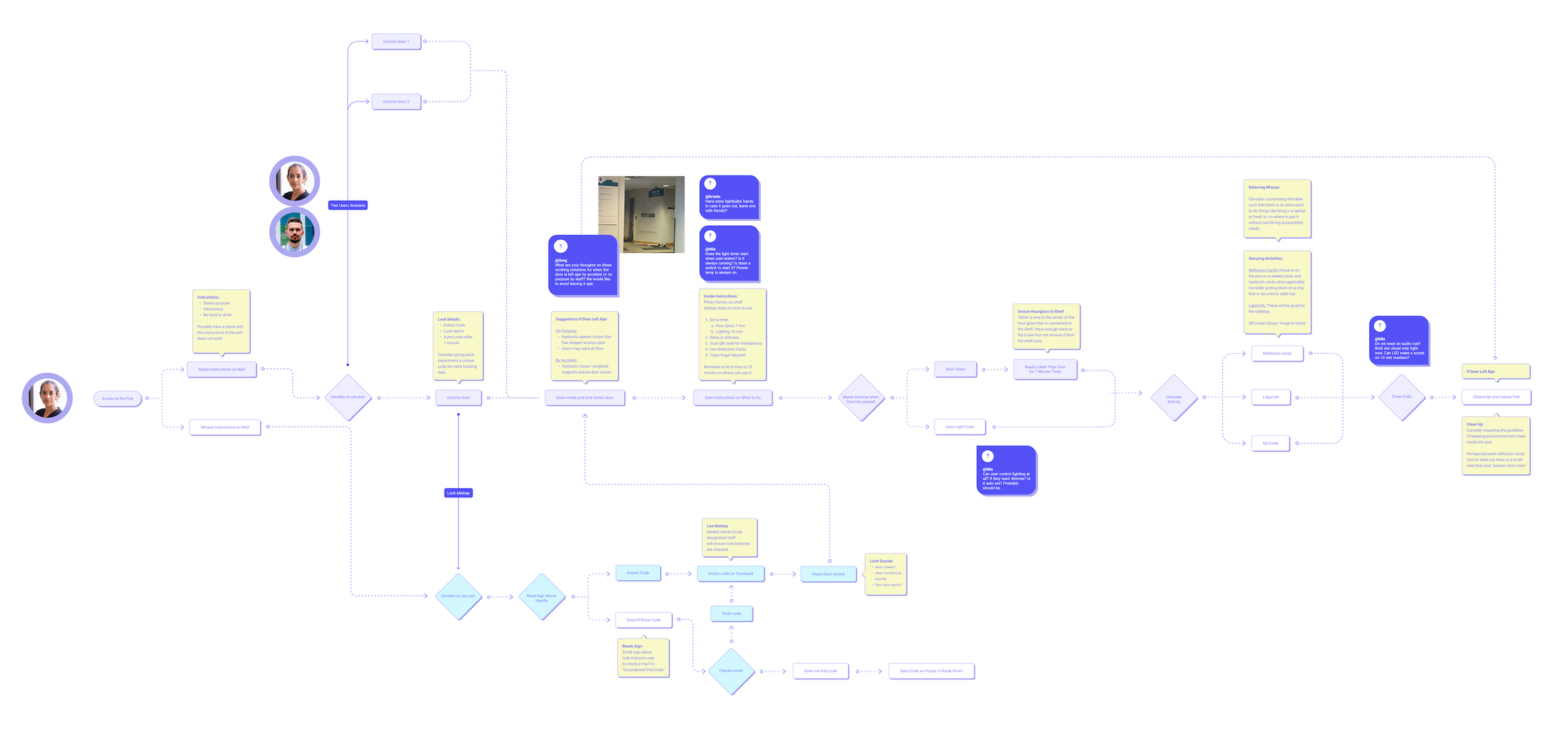
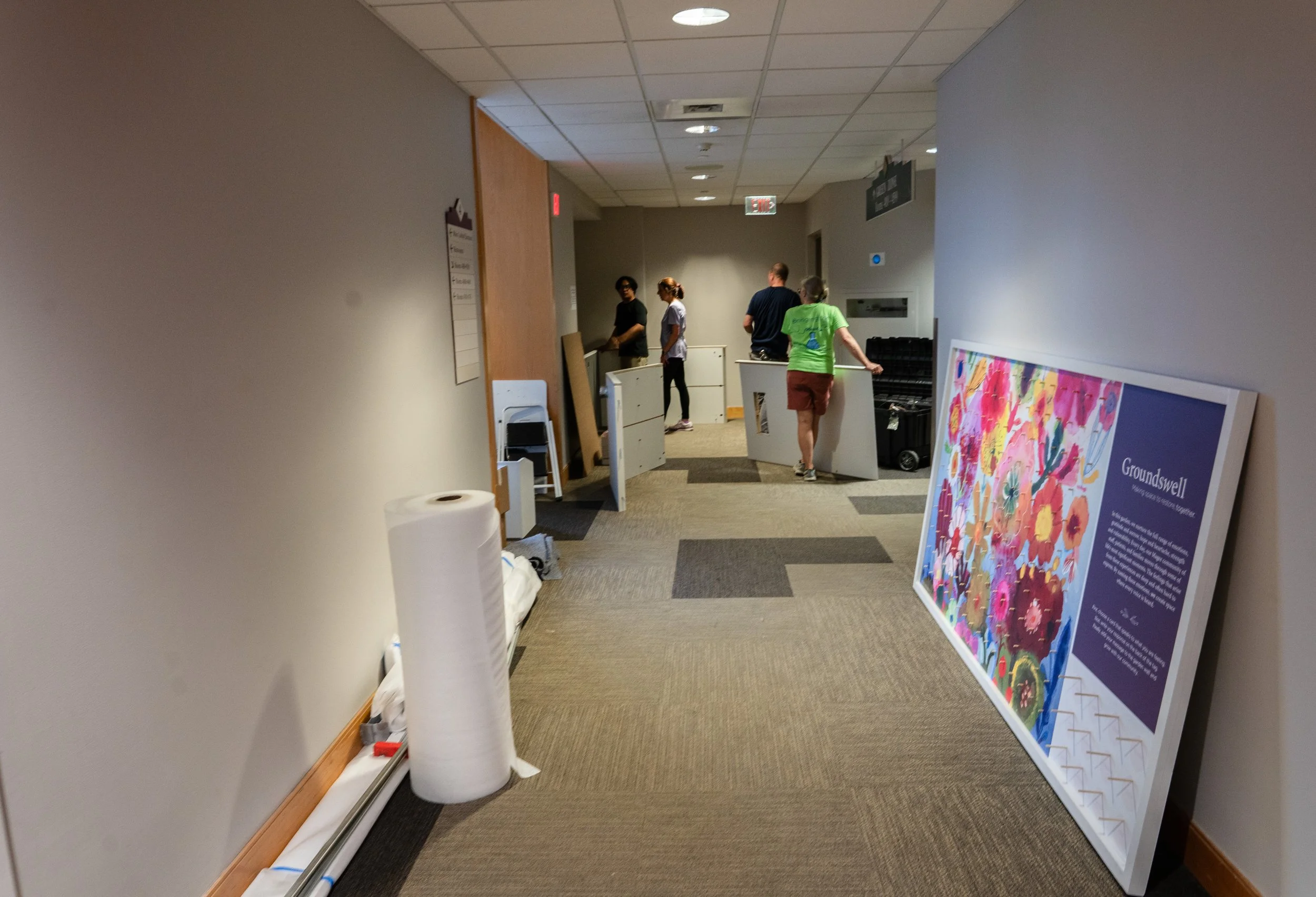
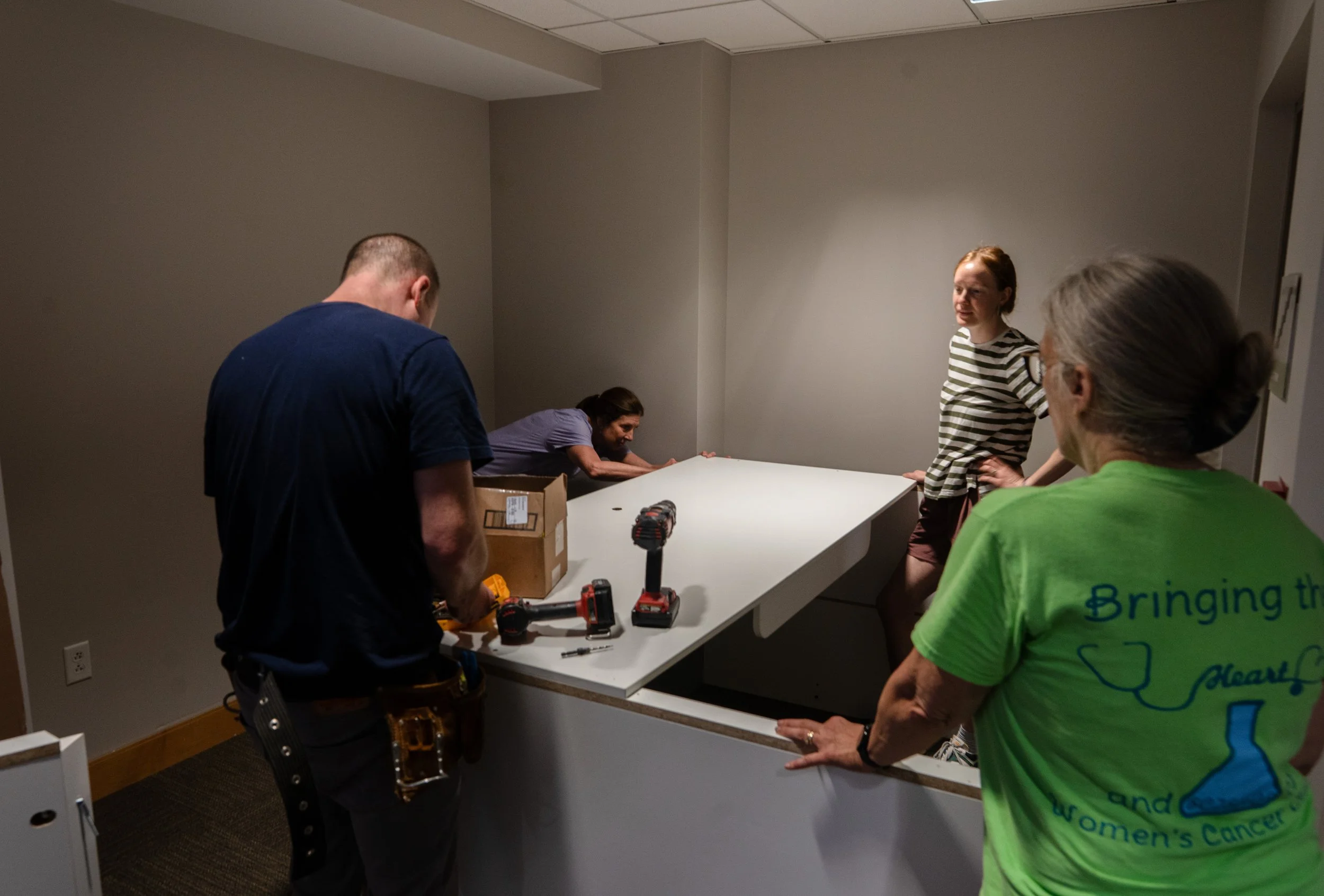
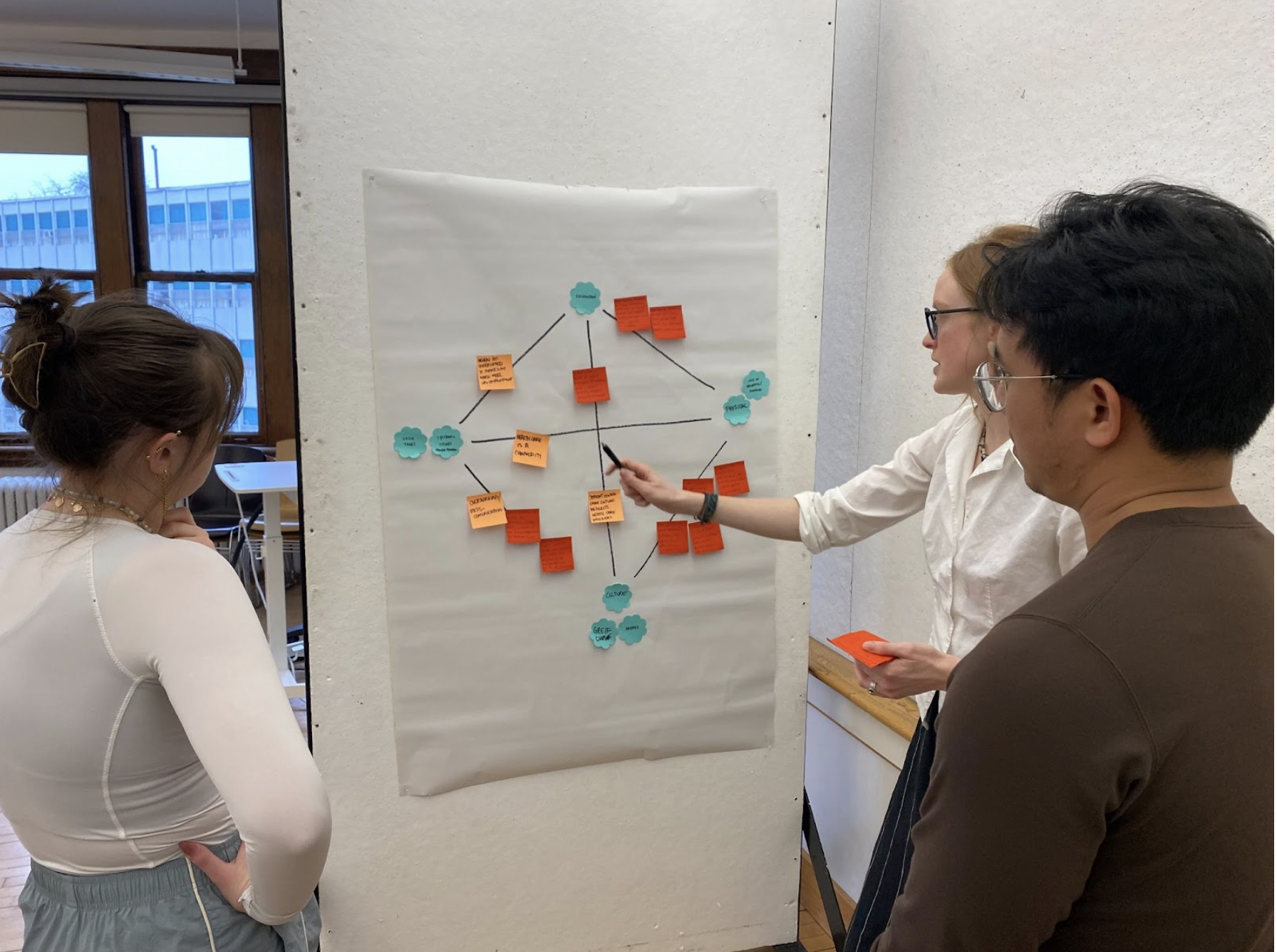
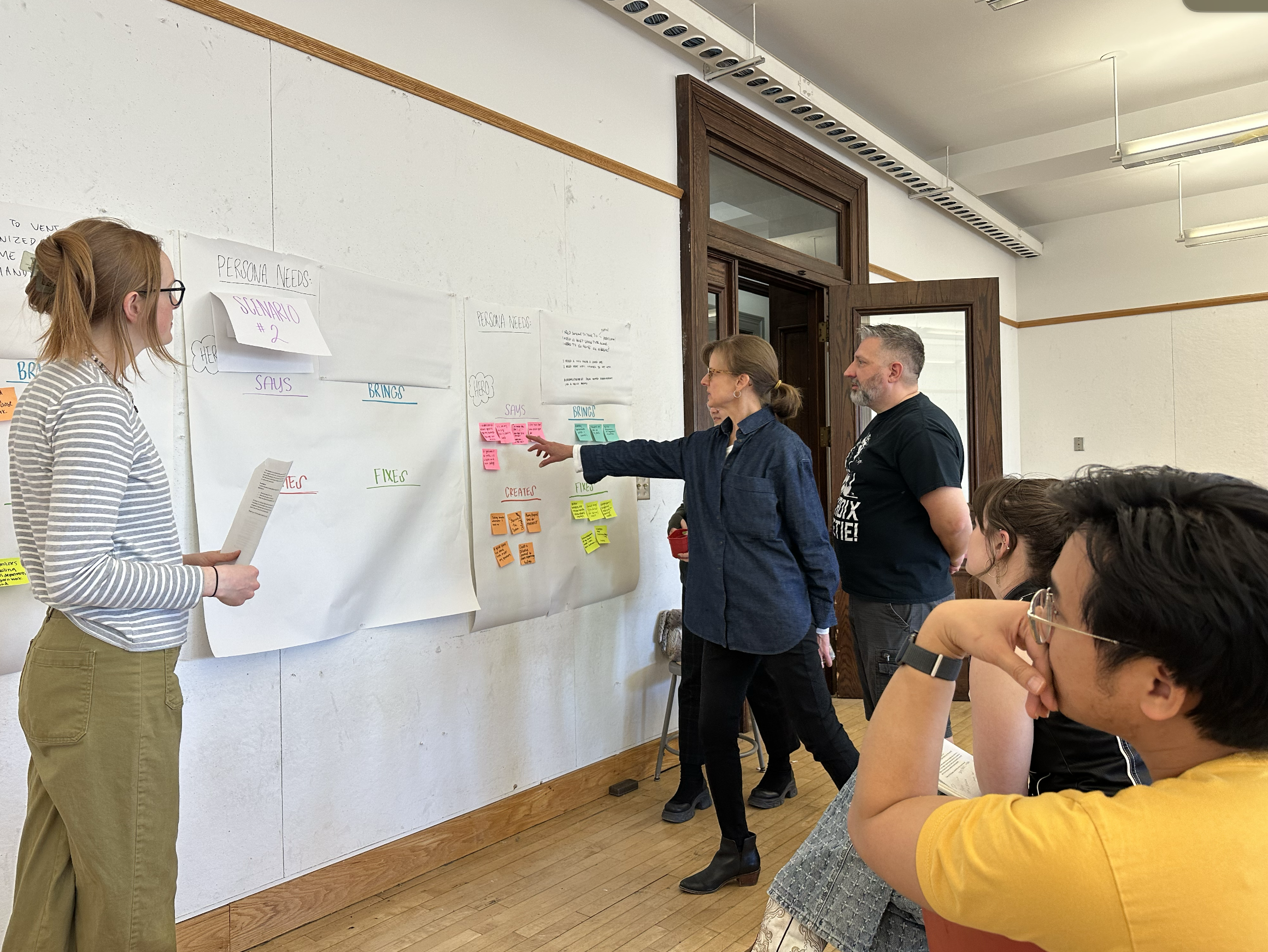
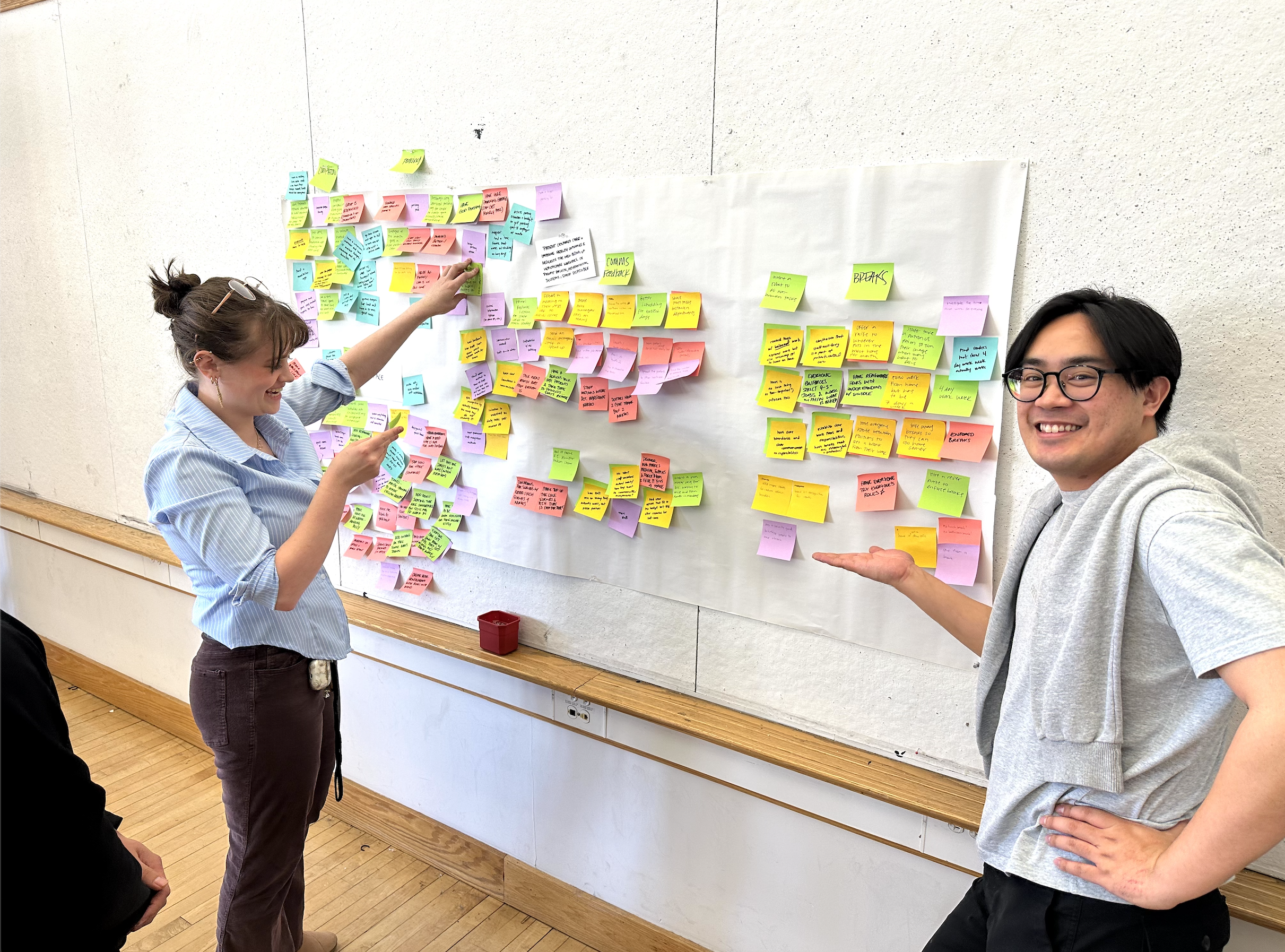
This was my first experience with design production and launch in the real world. The rapid nature of the timeline made this a unique experience for project management. We hit the ground running with a game plan and spent the summer navigating a slow-moving healthcare system that requires multiple rounds of stakeholder interviews. As a small but mighty team of 3 we iterated on the brand, the ecosystem flow, the service design of the program, the interior design of the pod, the mindfulness resources, and prepared an integration plan and wrote emails and communications for hospital admin to announce the program.
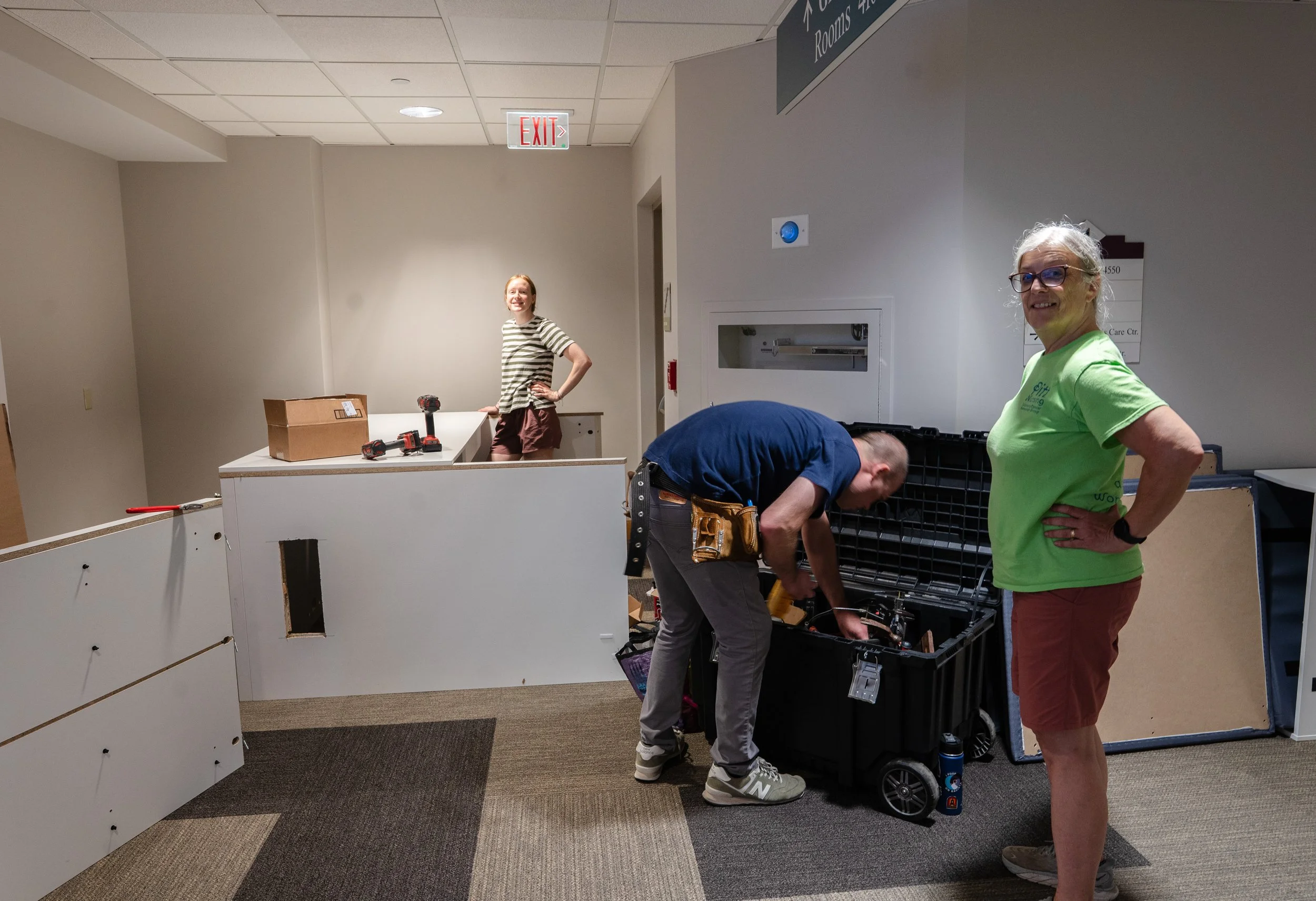
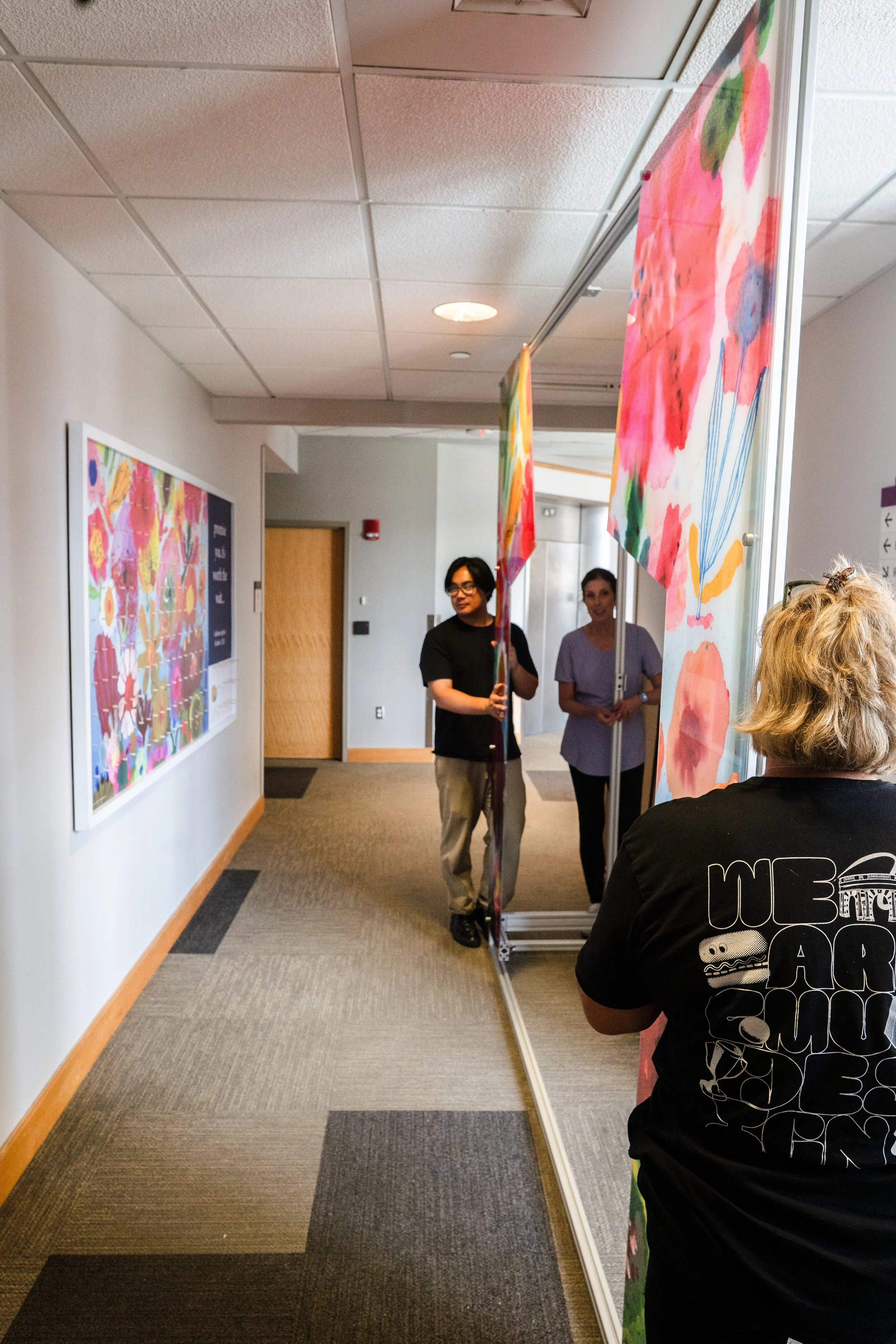
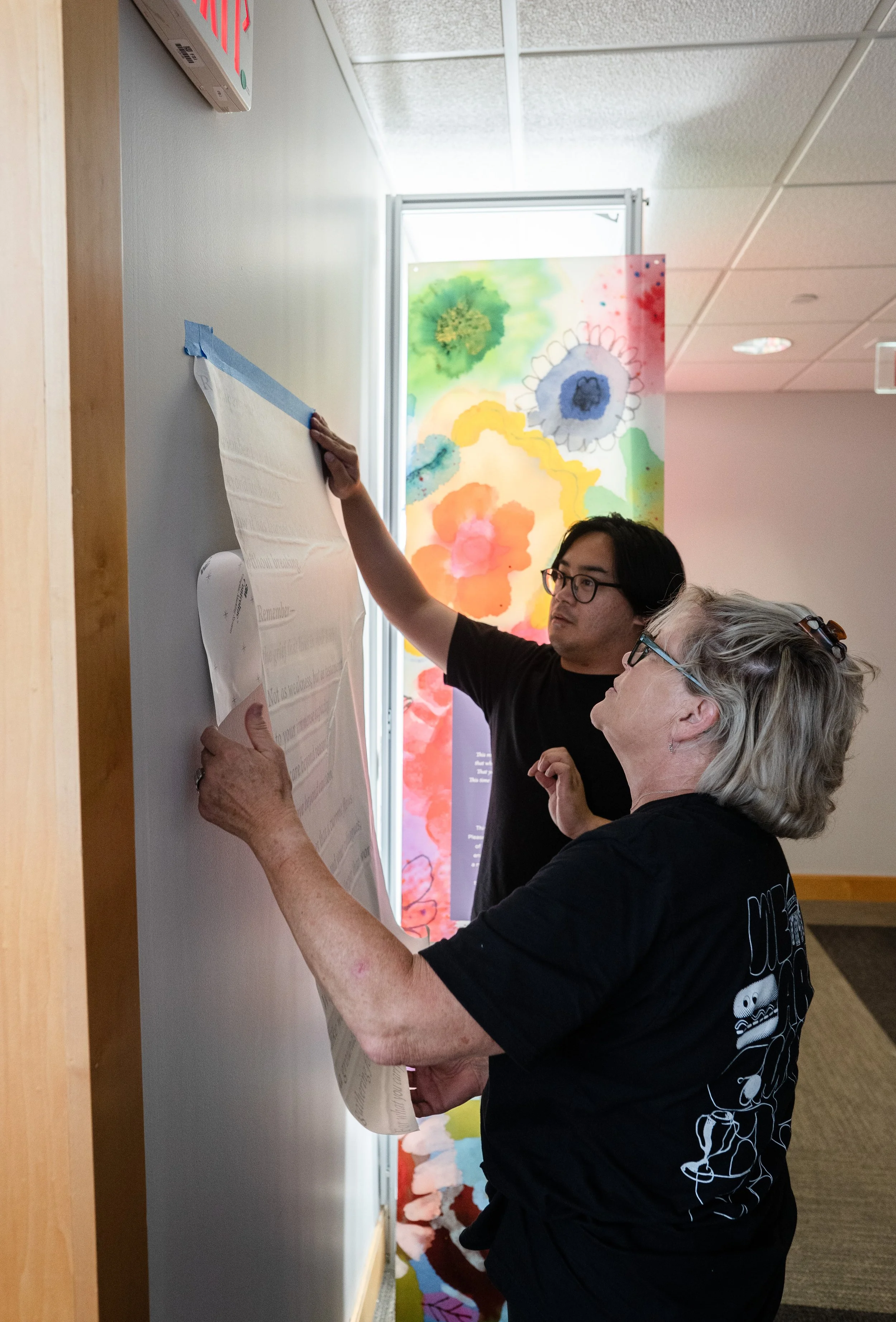
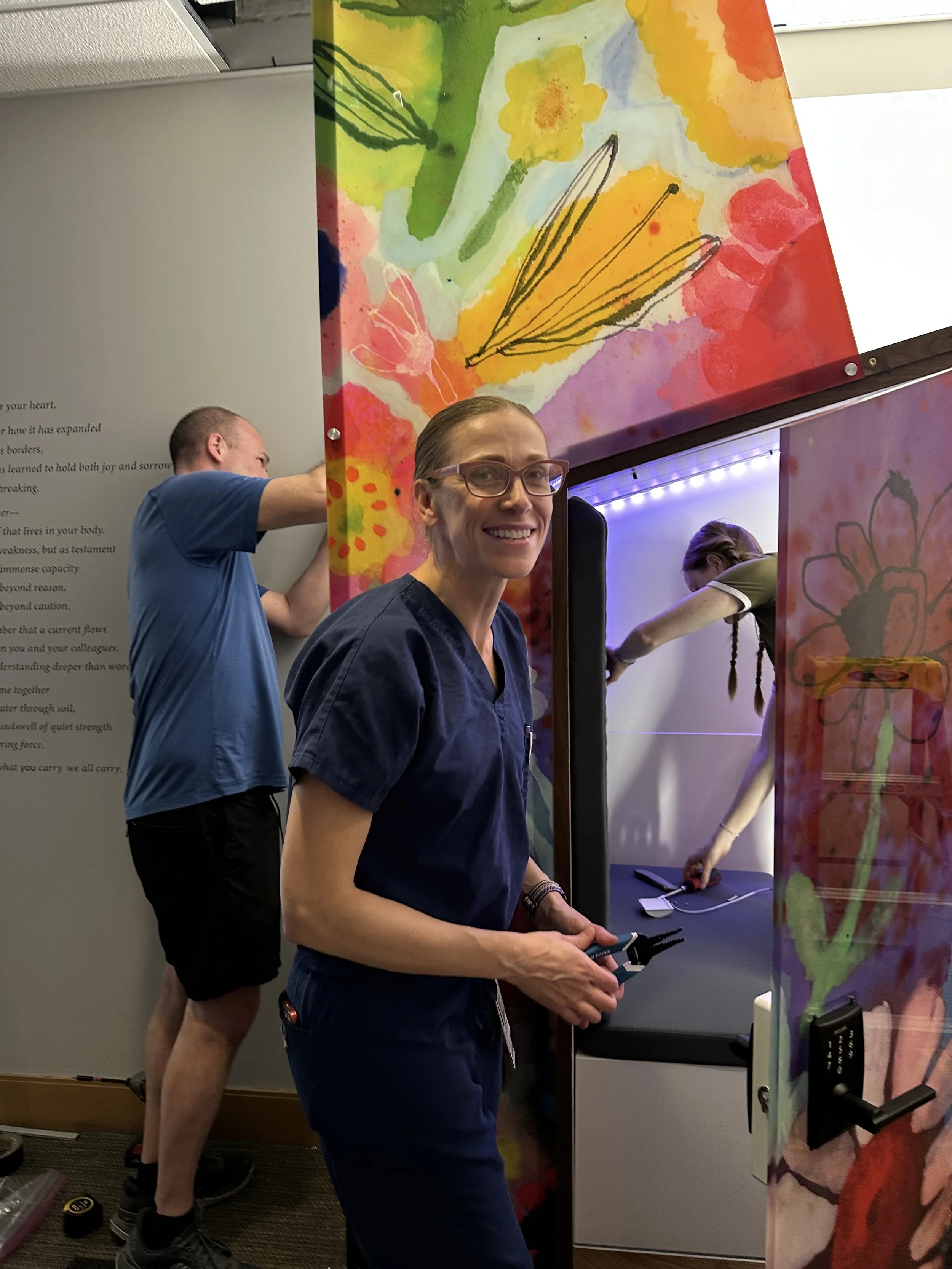
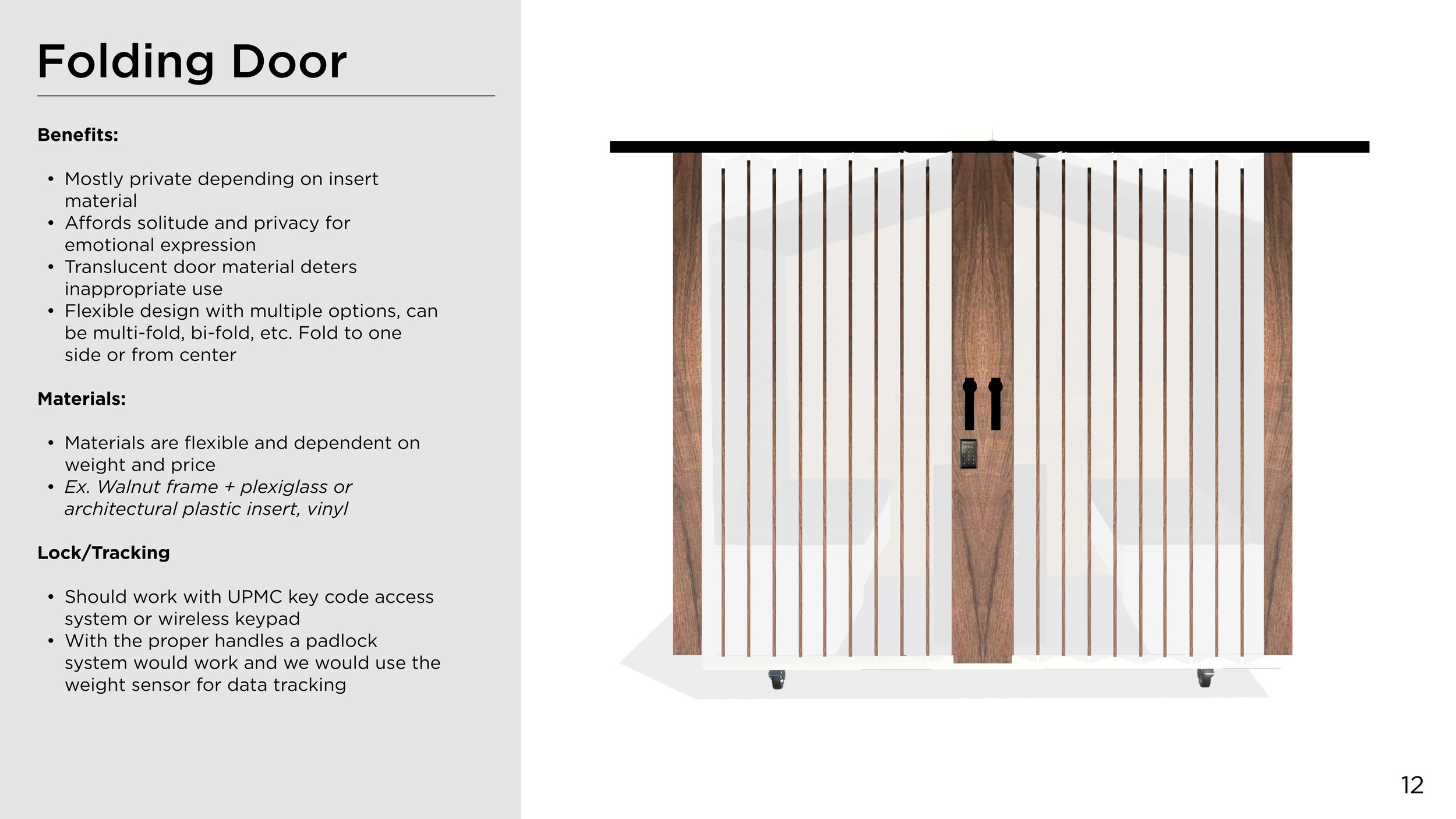
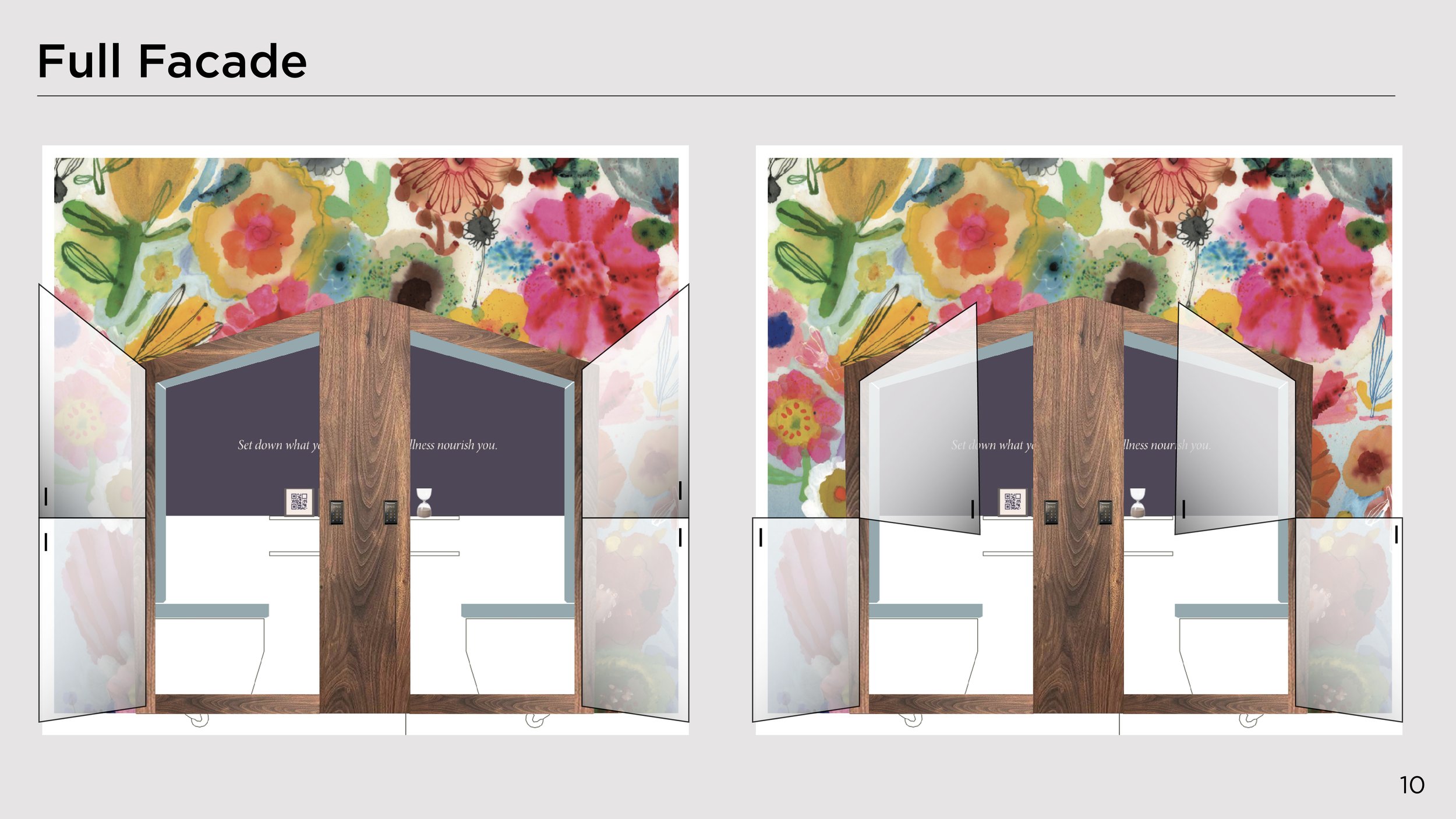
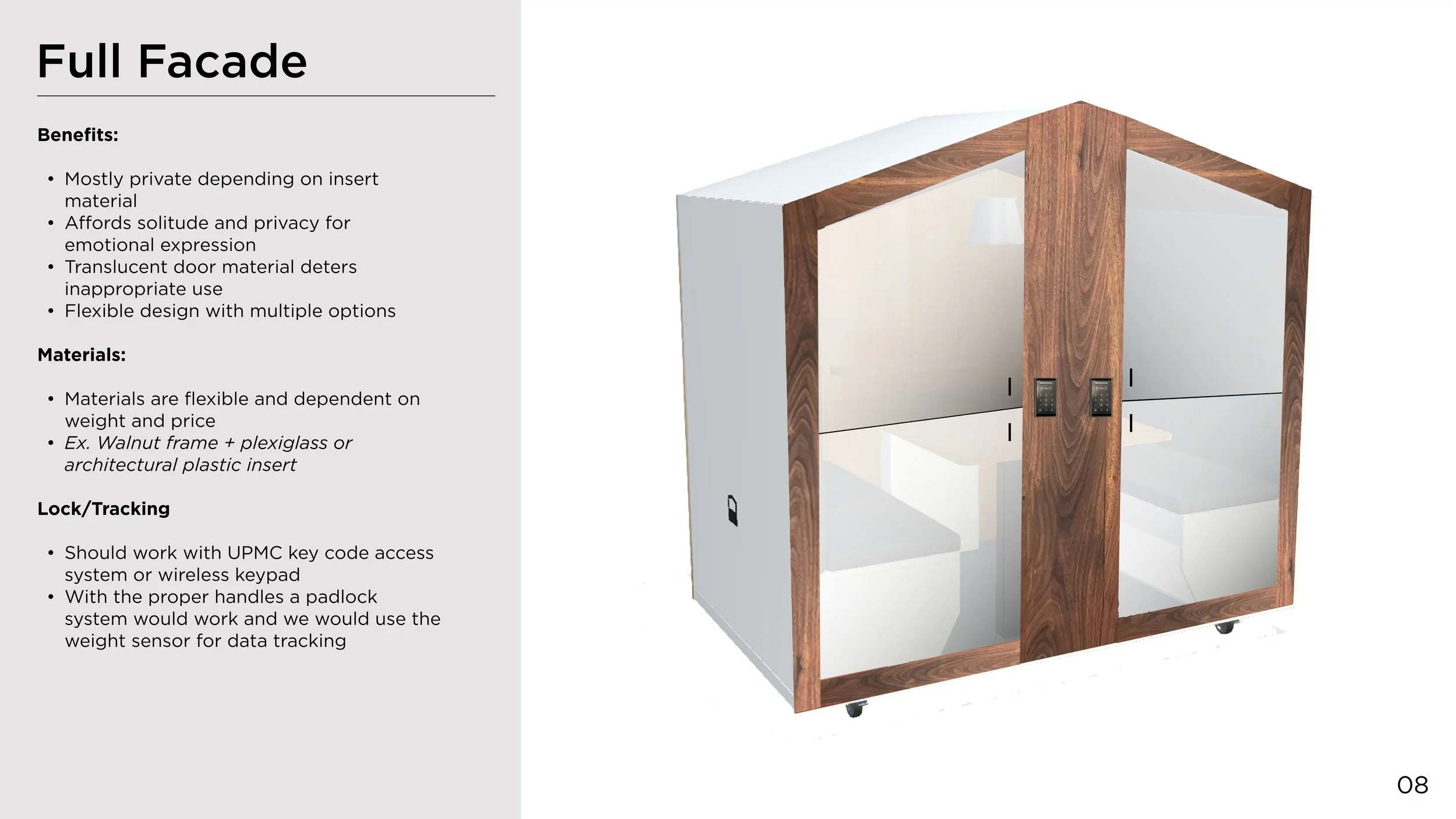
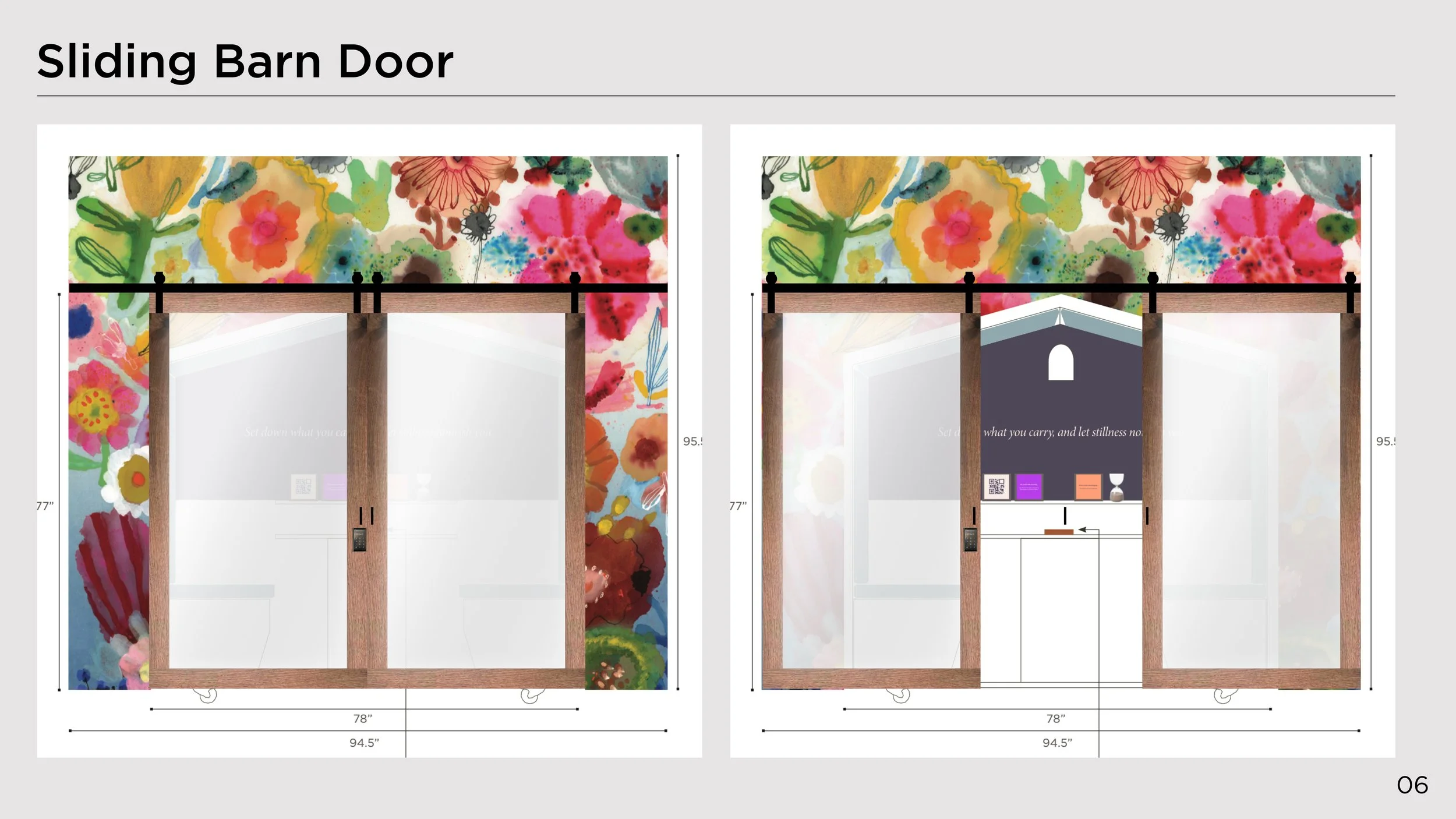
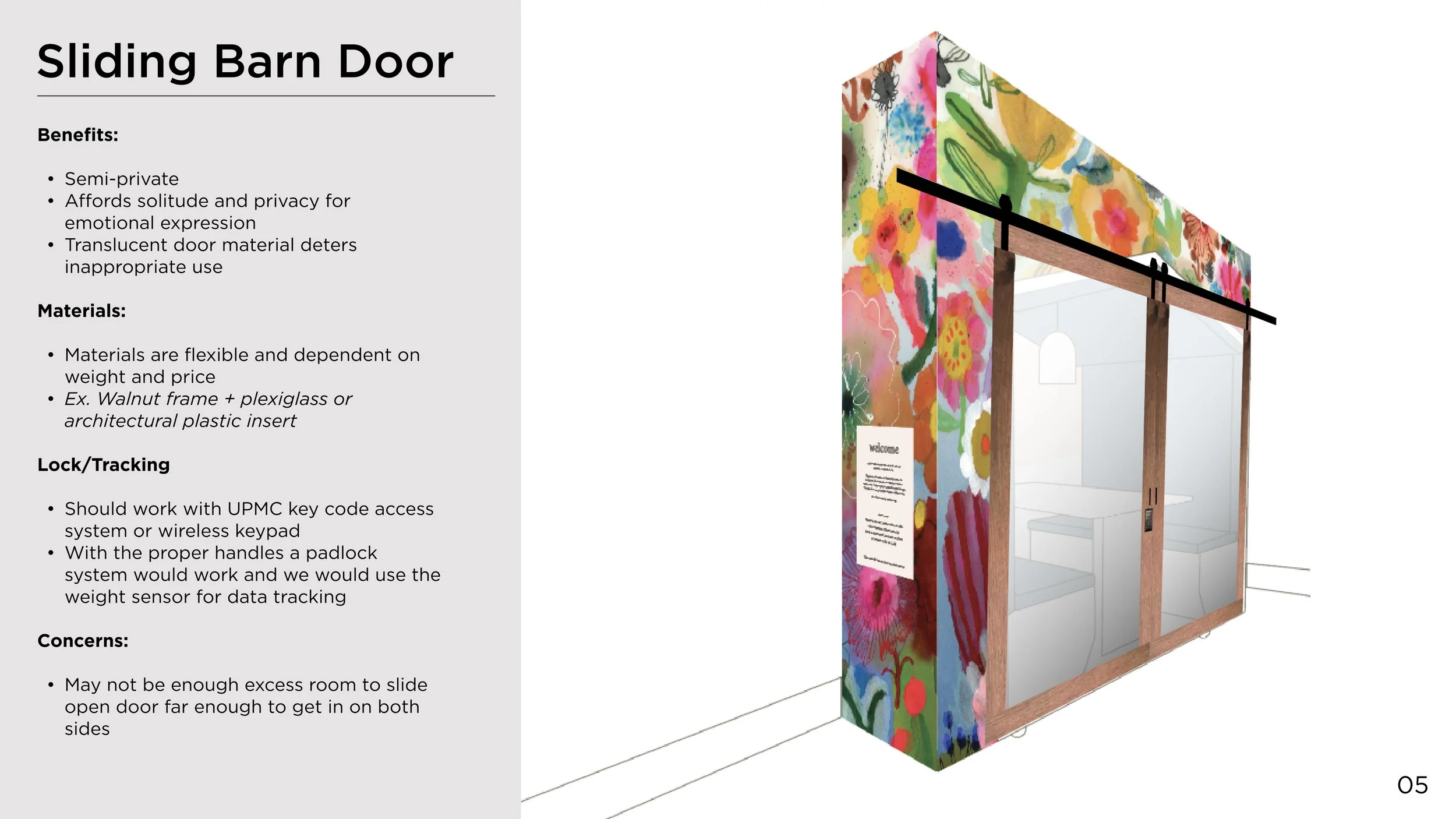
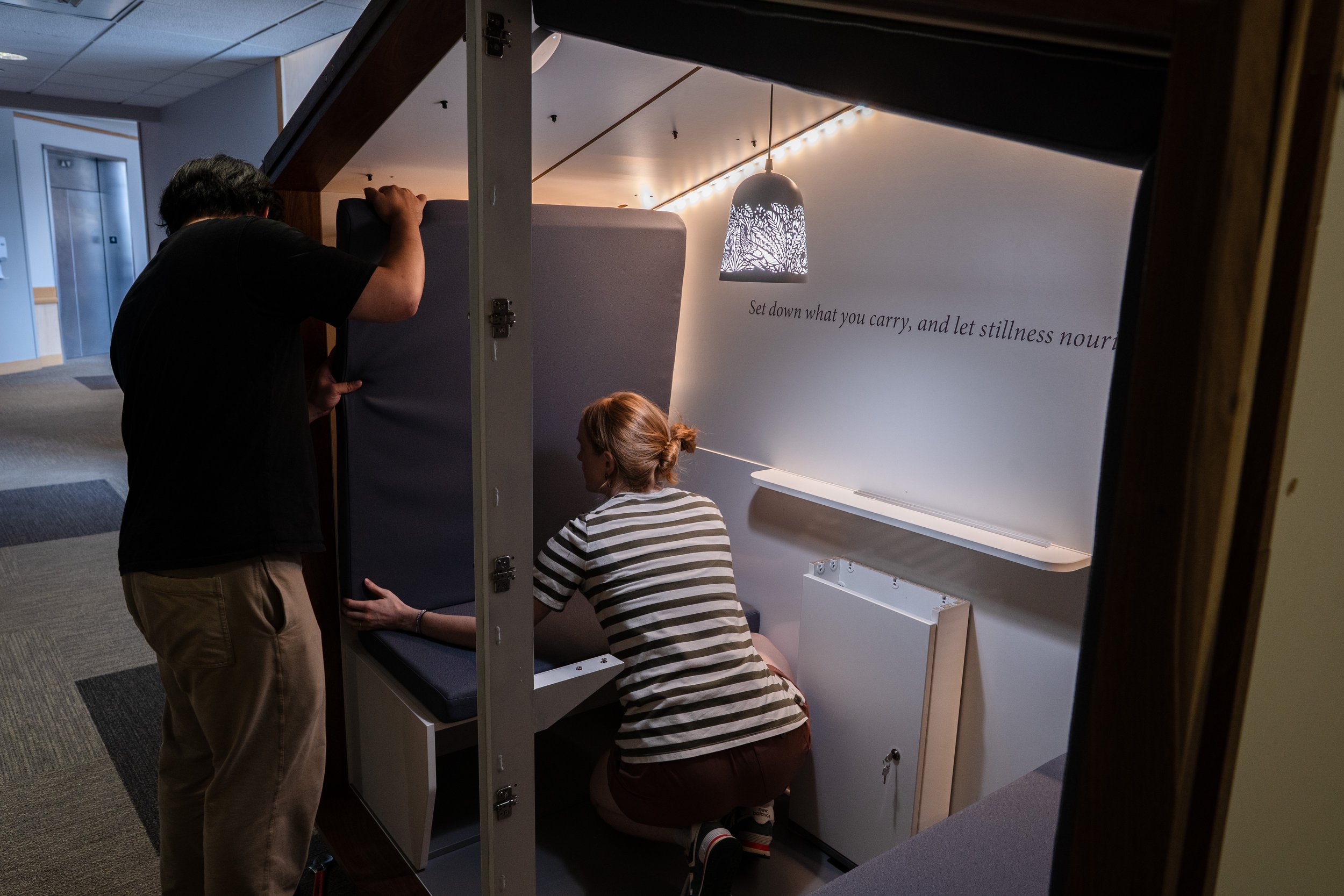
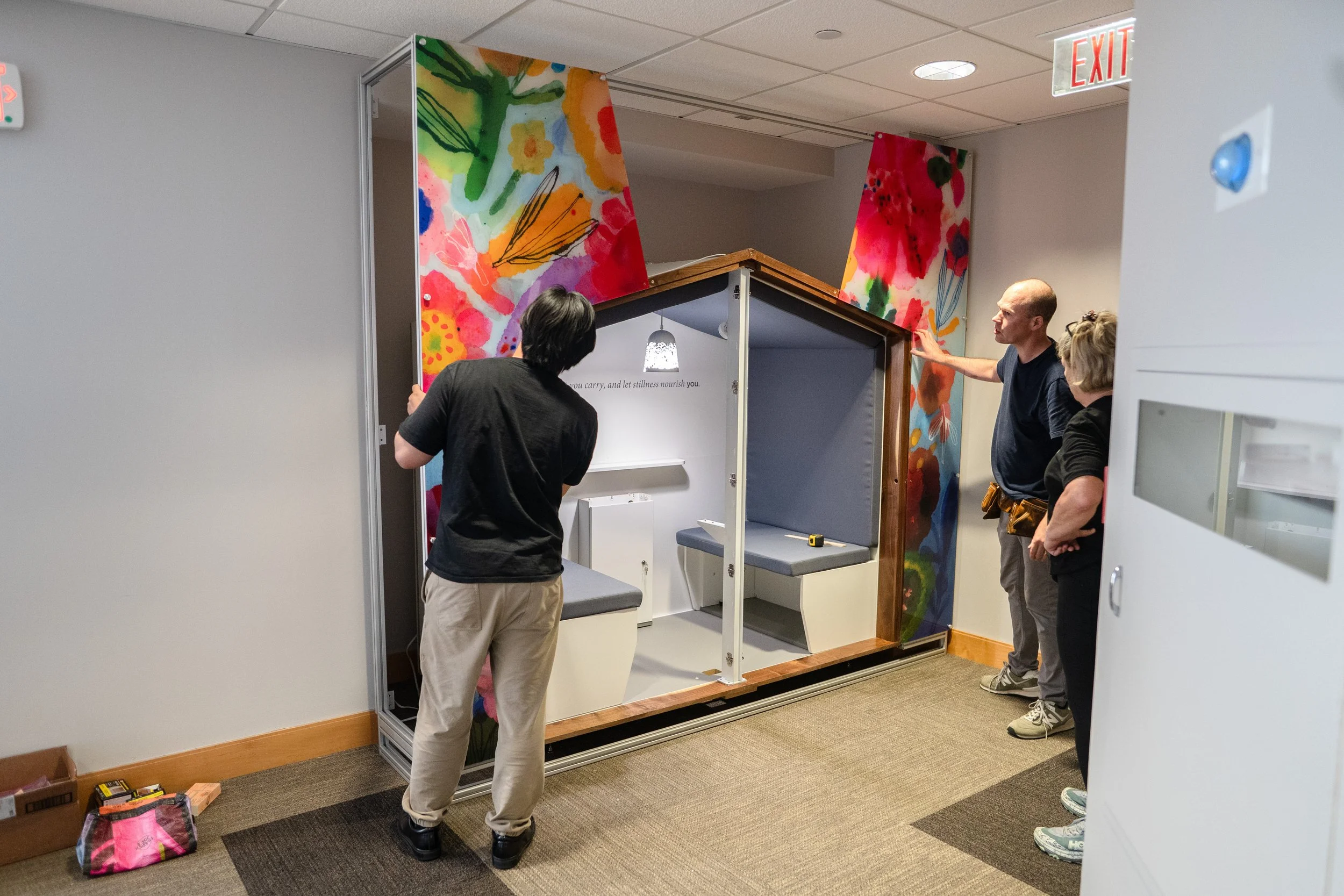
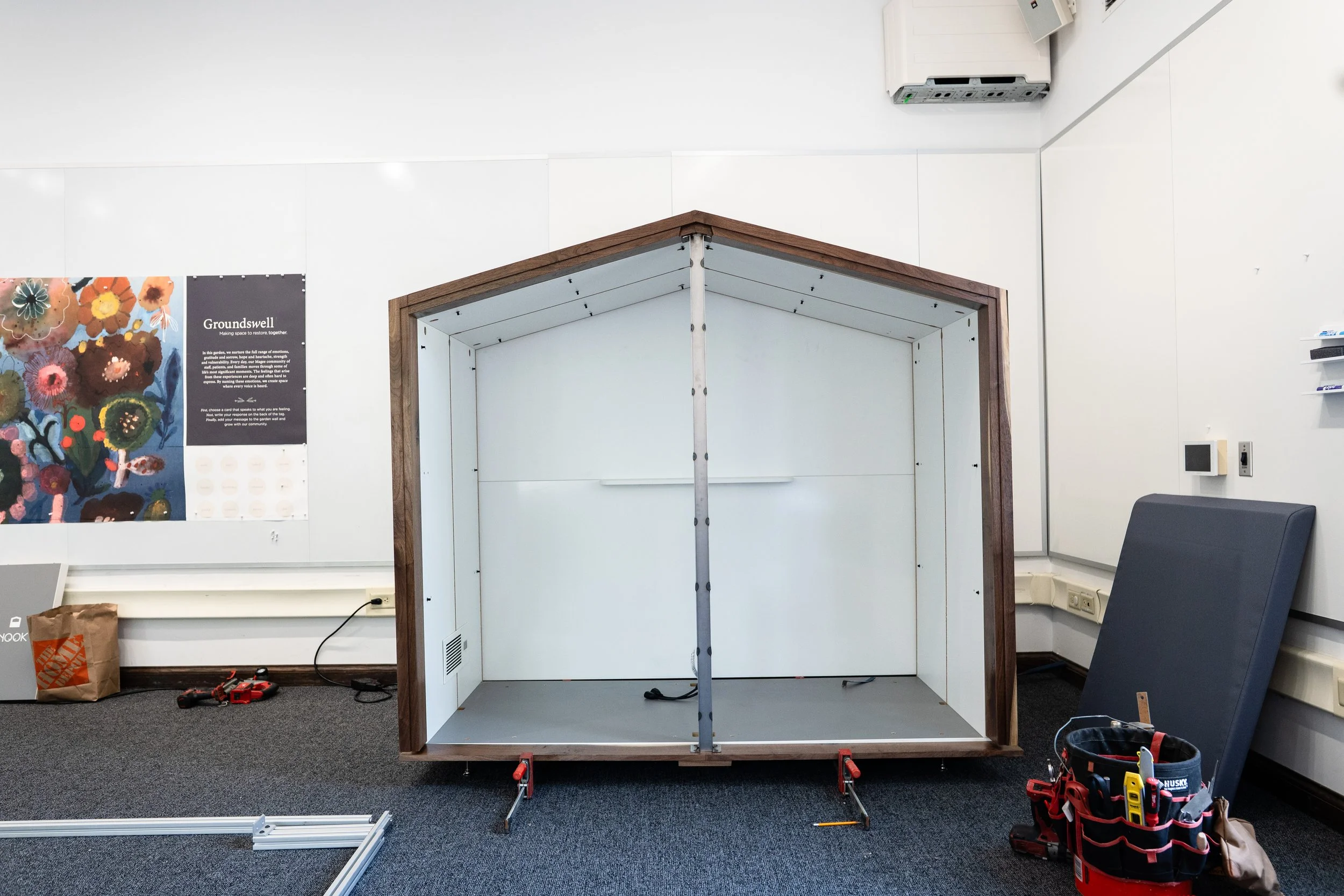
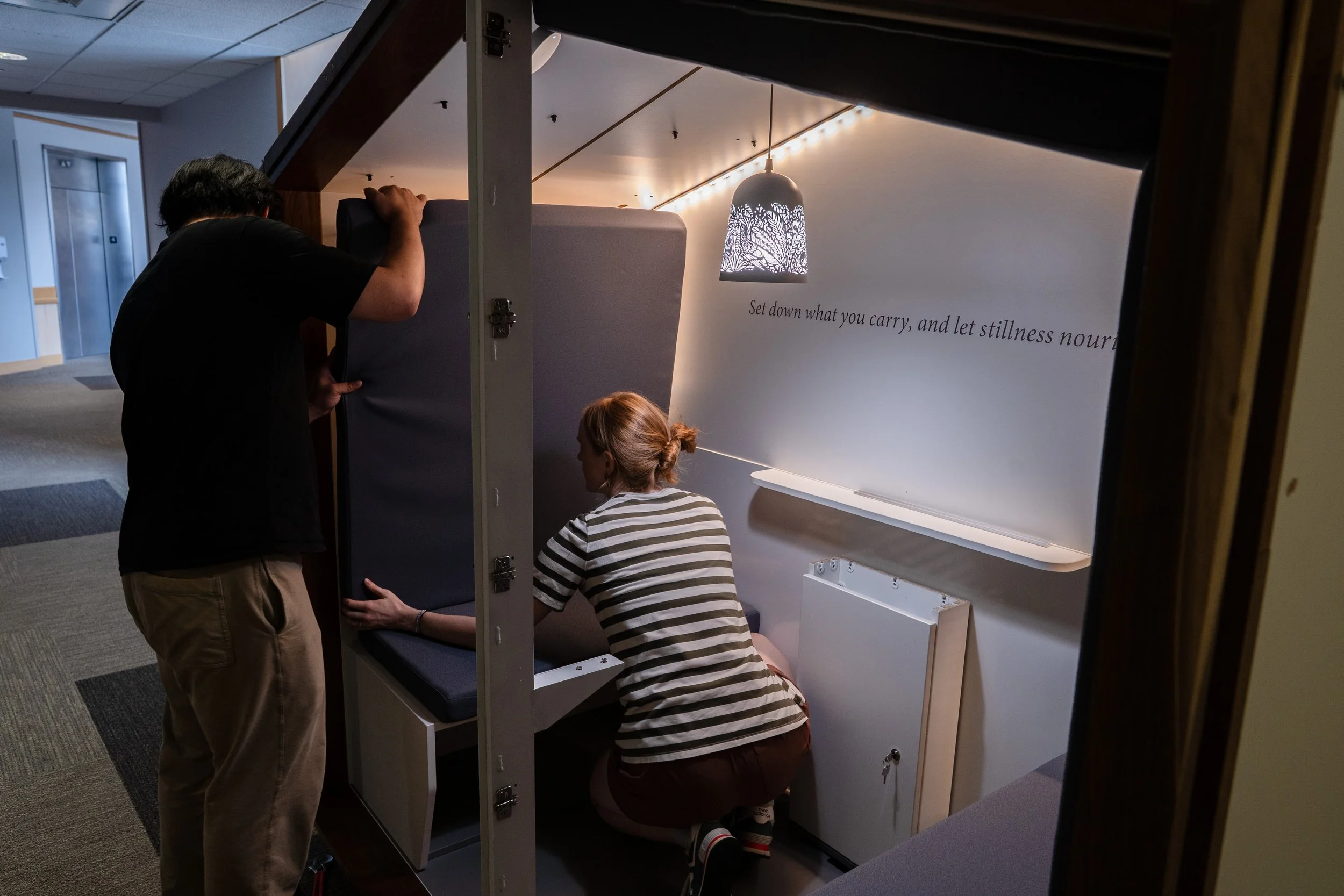
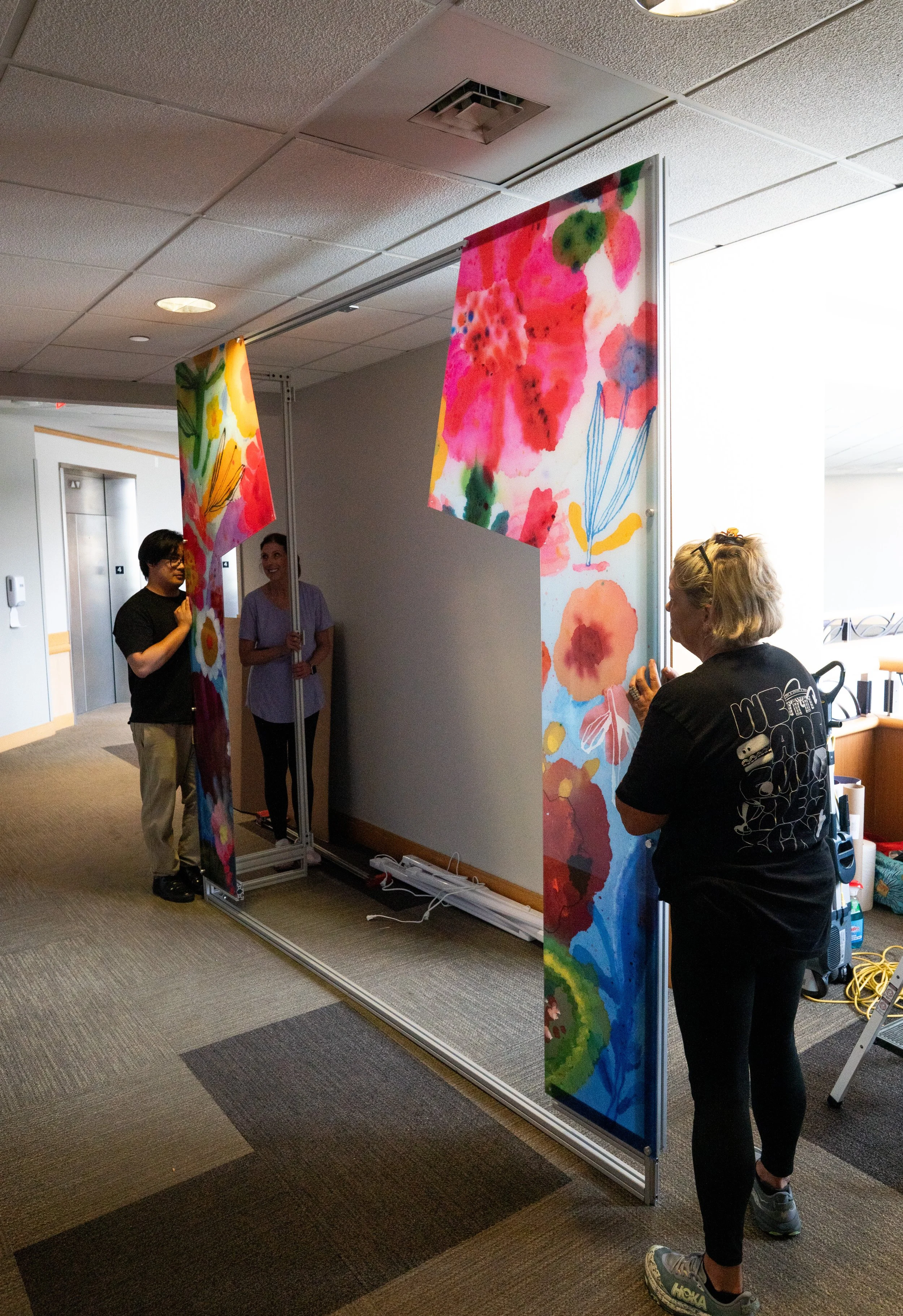
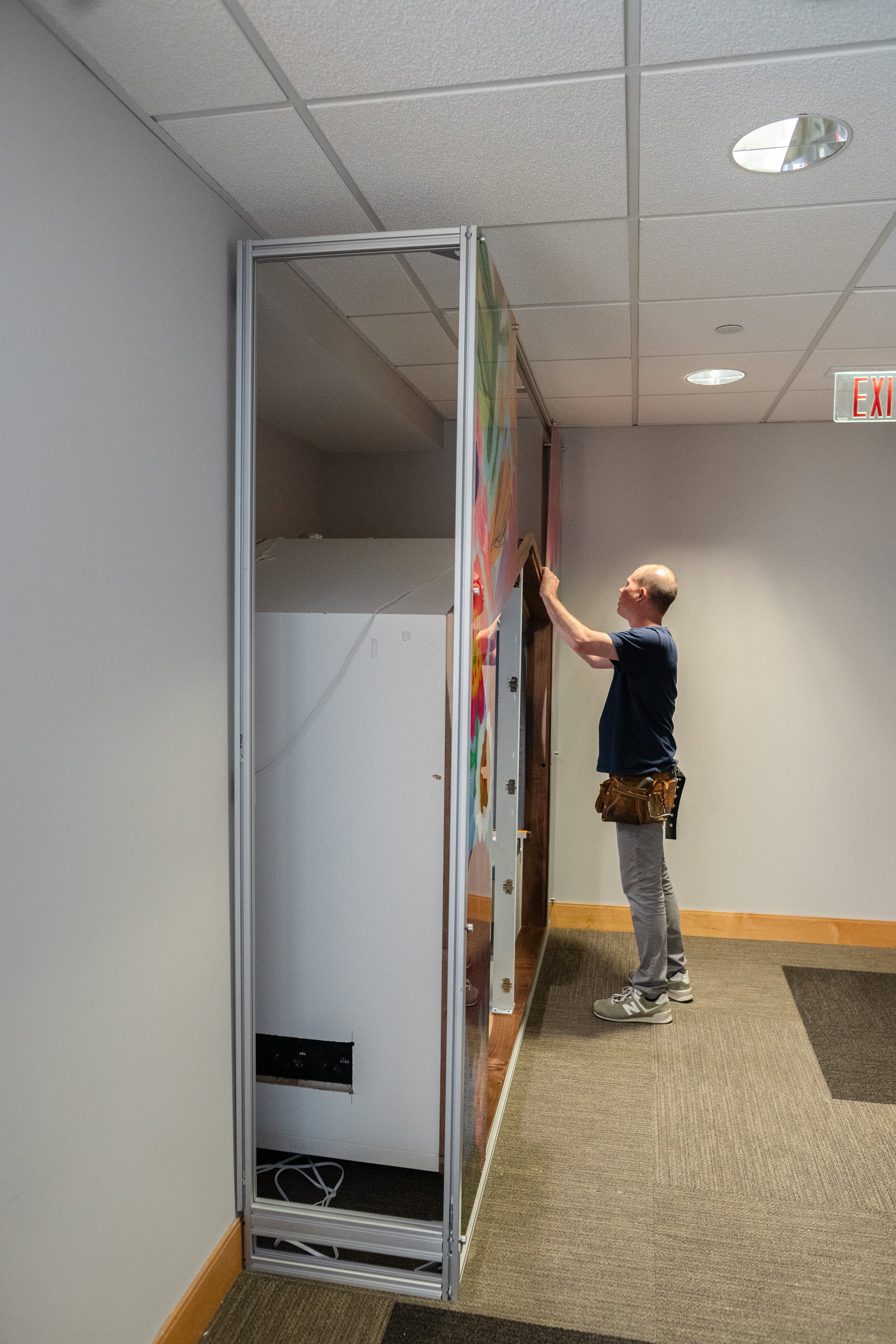
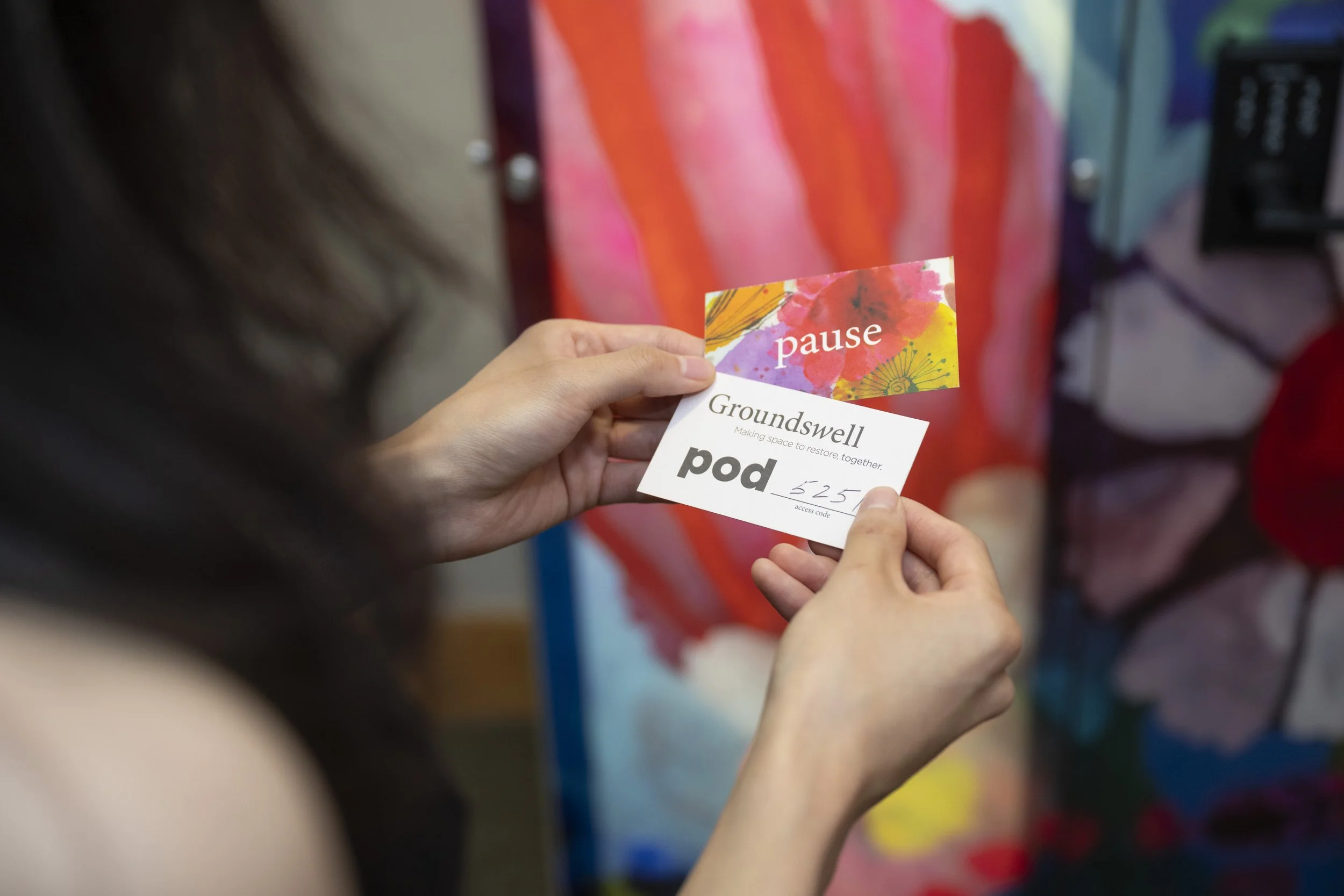
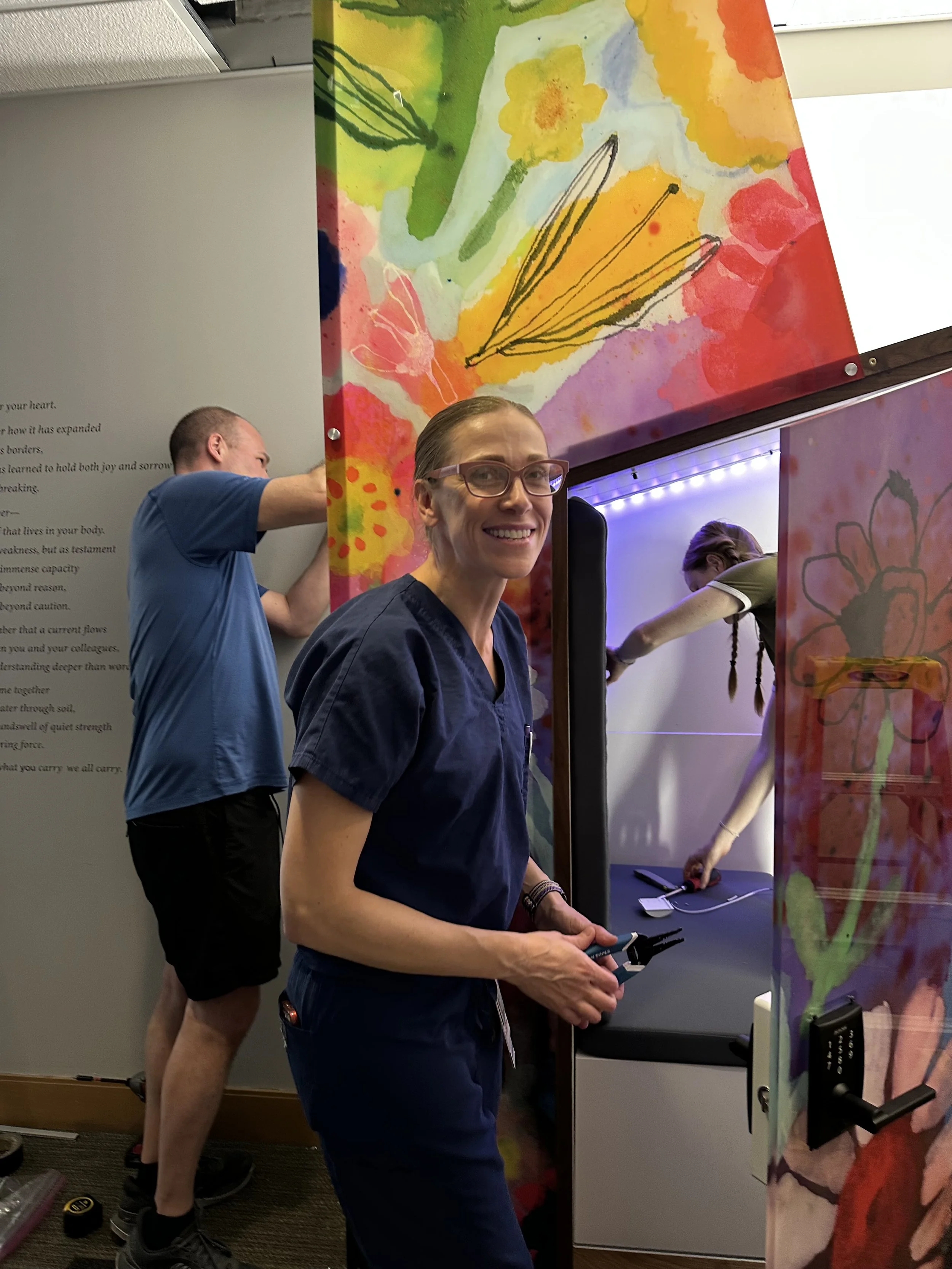
The biggest challenge was to navigate the rules and regulations of the hospital and their last minute request to ensure that the pod space had doors with locks. Our incredible fabricator, Greg Baltus, took on this challenge with stride. Thanks to many donations including Schlage locks, we were able to achieve this ask. We reviewed the copywriting with meditation teachers and medical staff and play tested the pod experience with 30+ participants who shared genuine inspiration and emotional connection to the design.
Timeline
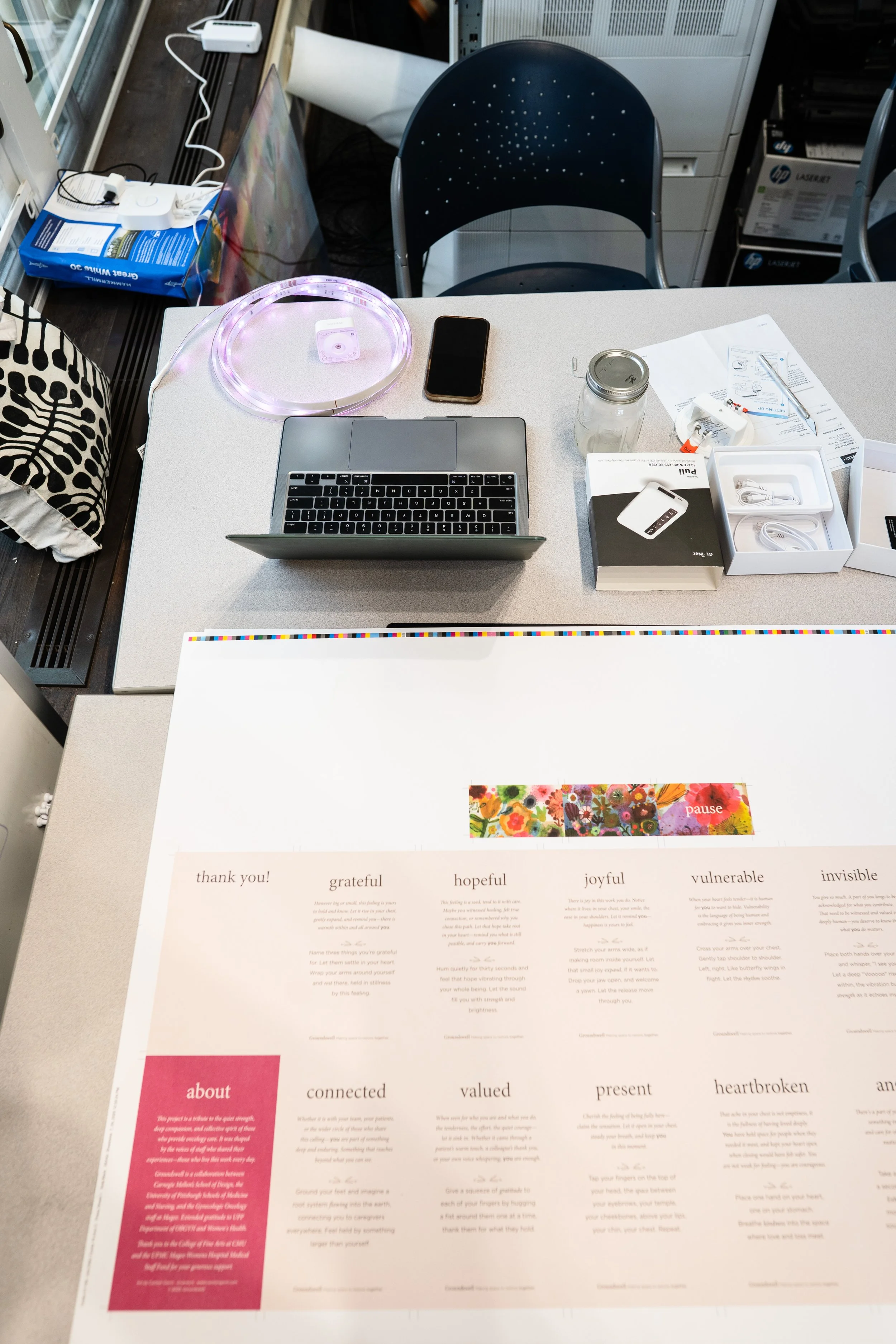
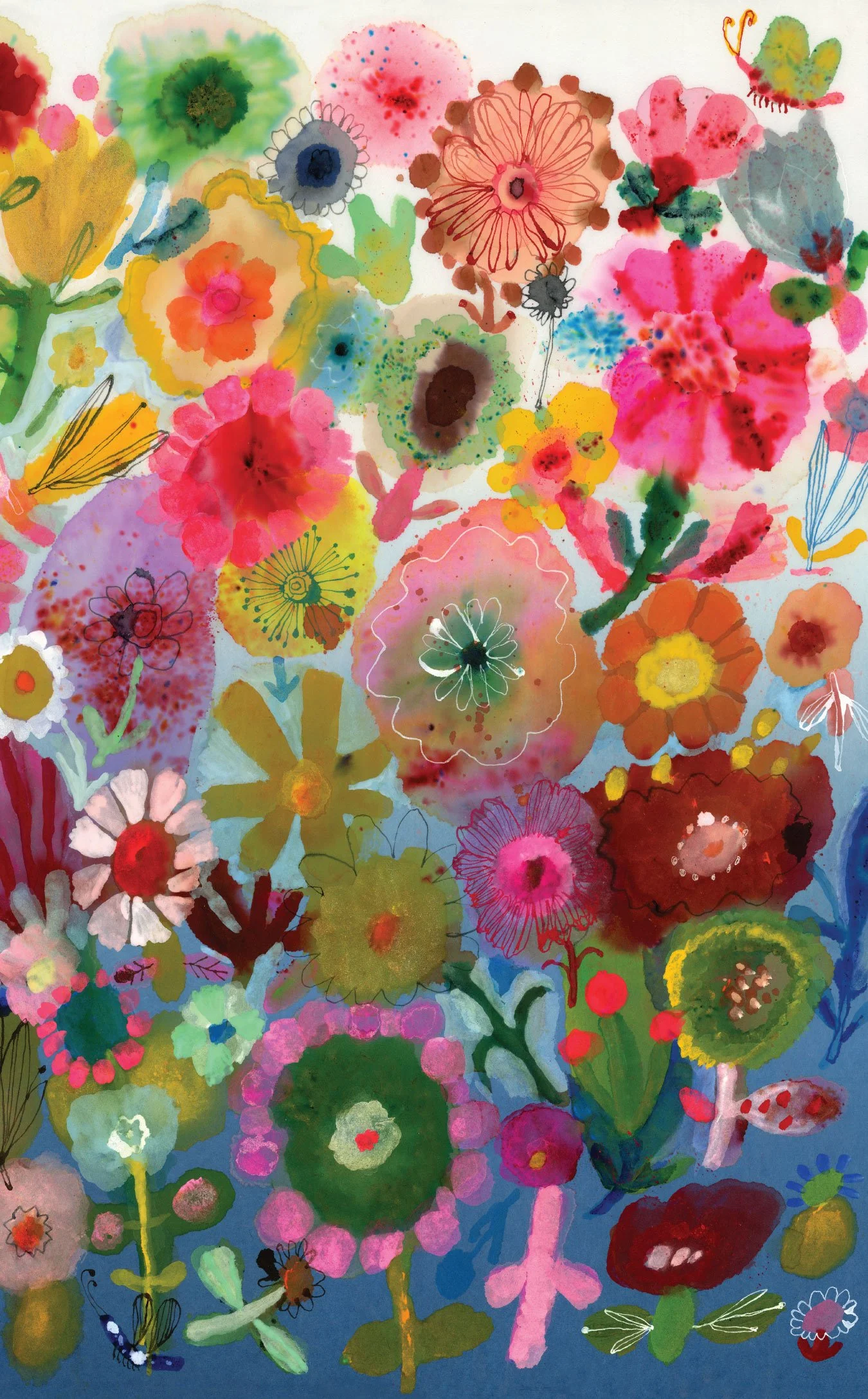
From June to August we hit the ground running on turning Groundswell into a reality. First we needed to get organized as a team and identify projected goals. We knew that getting the language right and approved by hospital administration was the first and most important element. Brand identity and art became our first priority and we were thrilled to work with Carolyn Gavin for the artwork. As a mostly remote teammate, I spent most of my time crafting the copy, coordinating the project, and doing donor outreach for material donations.
I collaborated with meditation teachers for the mindfulness content and we received staff feedback that the project needed to shift away from “grief” and focus on “restoration” because the word grief is complicated and narrows the focus of the project whereas restoration encompasses the movement of healthcare worker well-being.
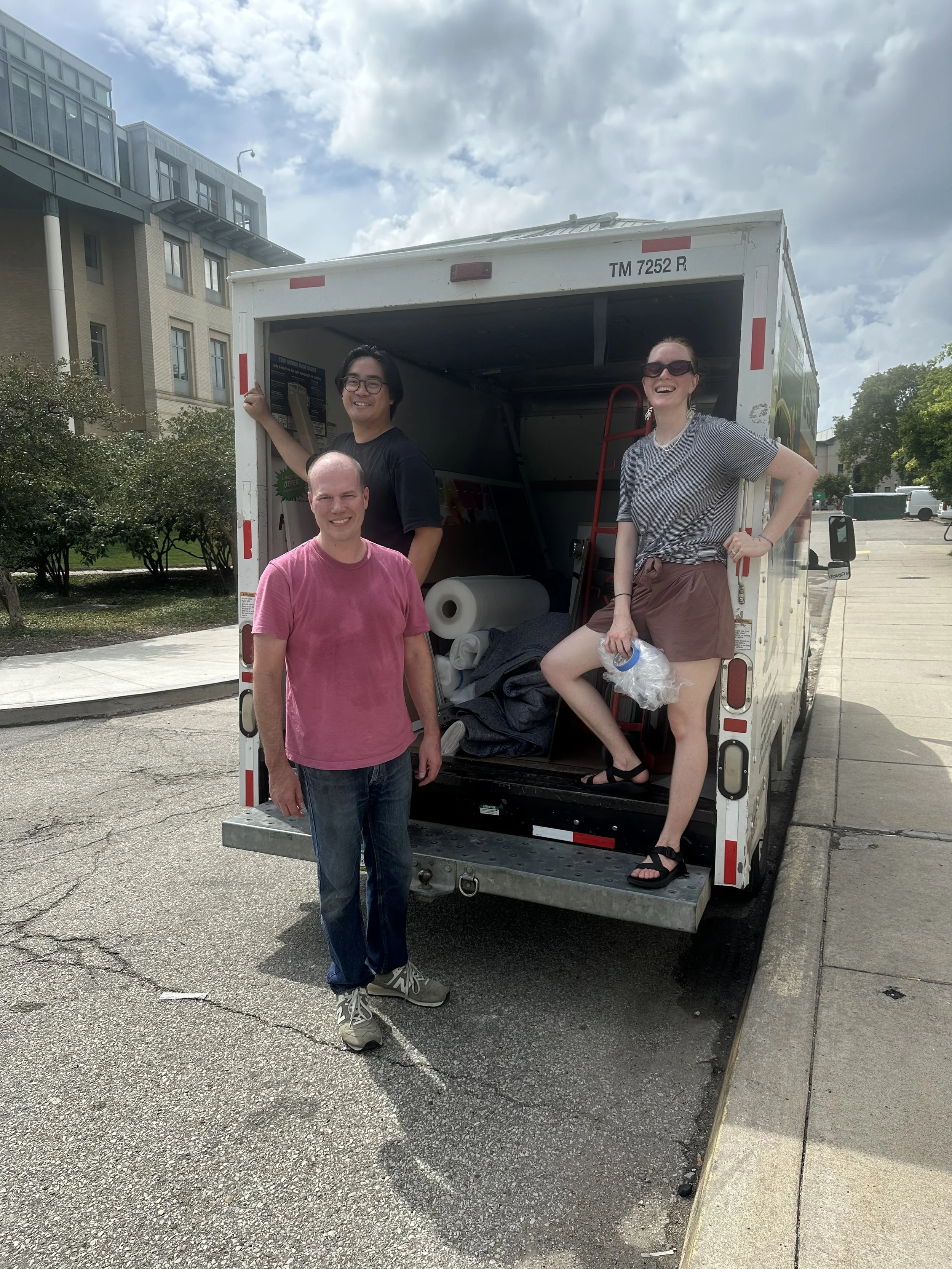
I was able to secure us the donation of the pod itself from NookPod ($13k value) in June and once it arrived we started to test the flow and interior design. We ended up working with the incredibly talented Greg Baltus to build out and customize the pod experience. Through partnerships we received donations of wood, woodworking, finger labyrinths, printing costs, data sensors, high-tech door locks, and more. We went through multiple rounds of feedback with staff and hospital administration while coordinating the preliminary research assessments for the quality improvement study.
This project required communicating and working across industries and timelines, collaborating with artists and fabricators, adjusting to stakeholder expectations and industry constraints. With a small budget and a ton of support we were able to create a strong prototype that we hope will be the first of many iterations with future investment.
Pre-Production
2 Weeks
Project Timeline
Administration Approval
Revise Assets
Concept Revisions
2 Weeks
Participatory Feedback
Copywriting
Admin Approvals
Graphic Design
2 Weeks
Donation Outreach
Graphic Design
Fabrication Coordination
Print Deadlines
2 Weeks
Final Print Files + Approvals
Order Materials
Draft Research Assessment
Fabrication
2 Weeks
Admin Walkthrough
Pod Fabrication
Project Coordination
Launch
Ongoing
Play Testing
Install @ Magee
Prep for Research Study
Early Ideation
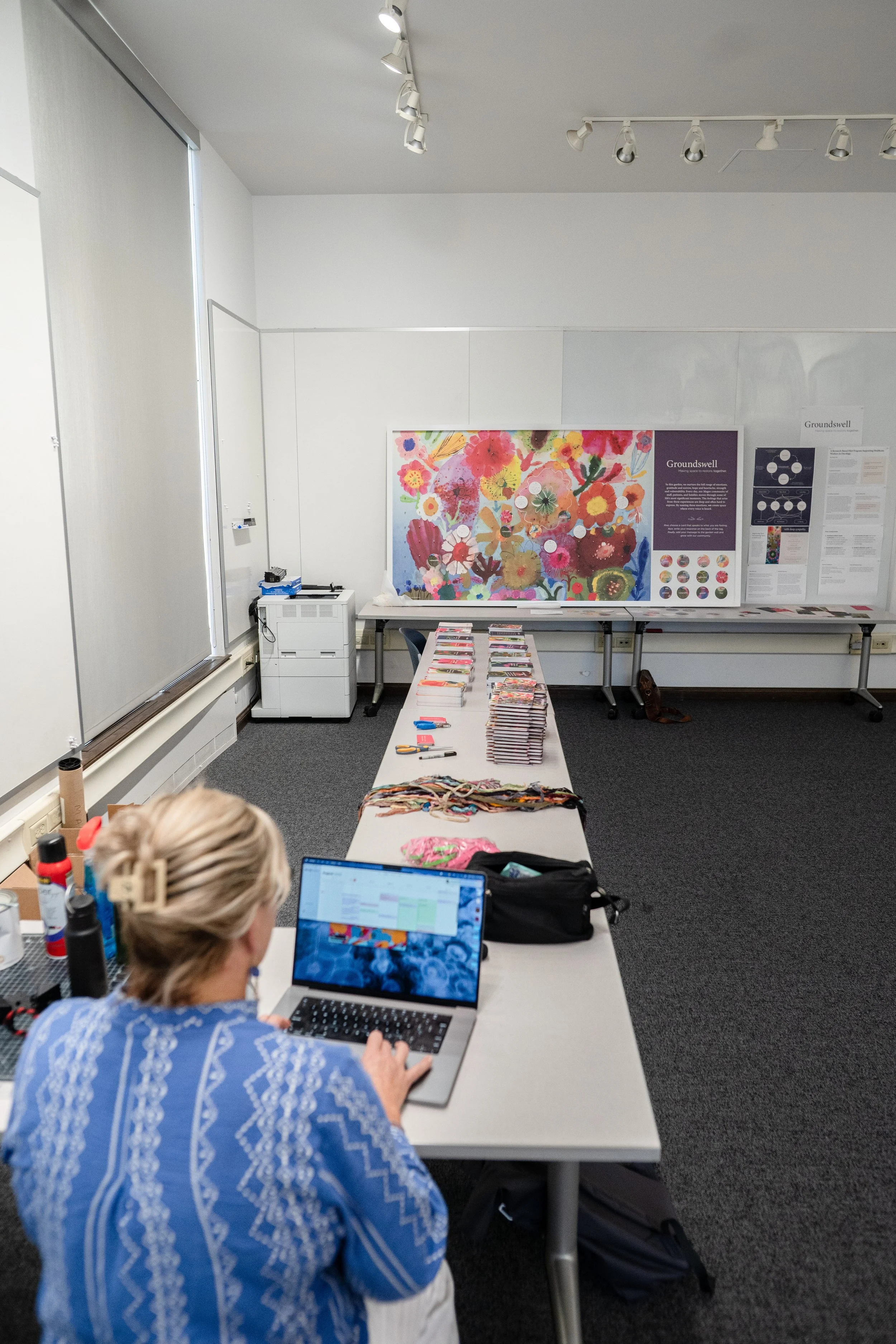
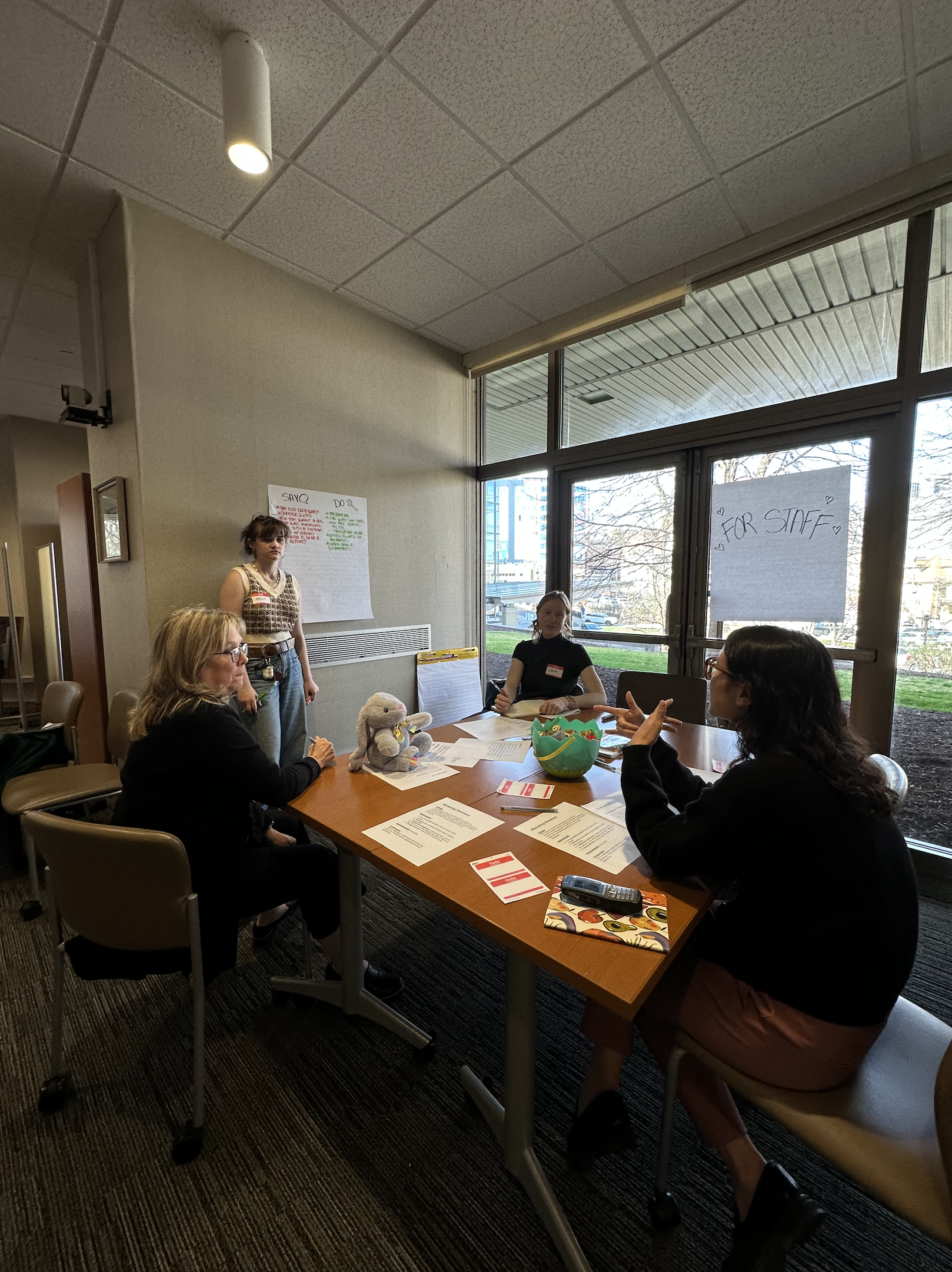
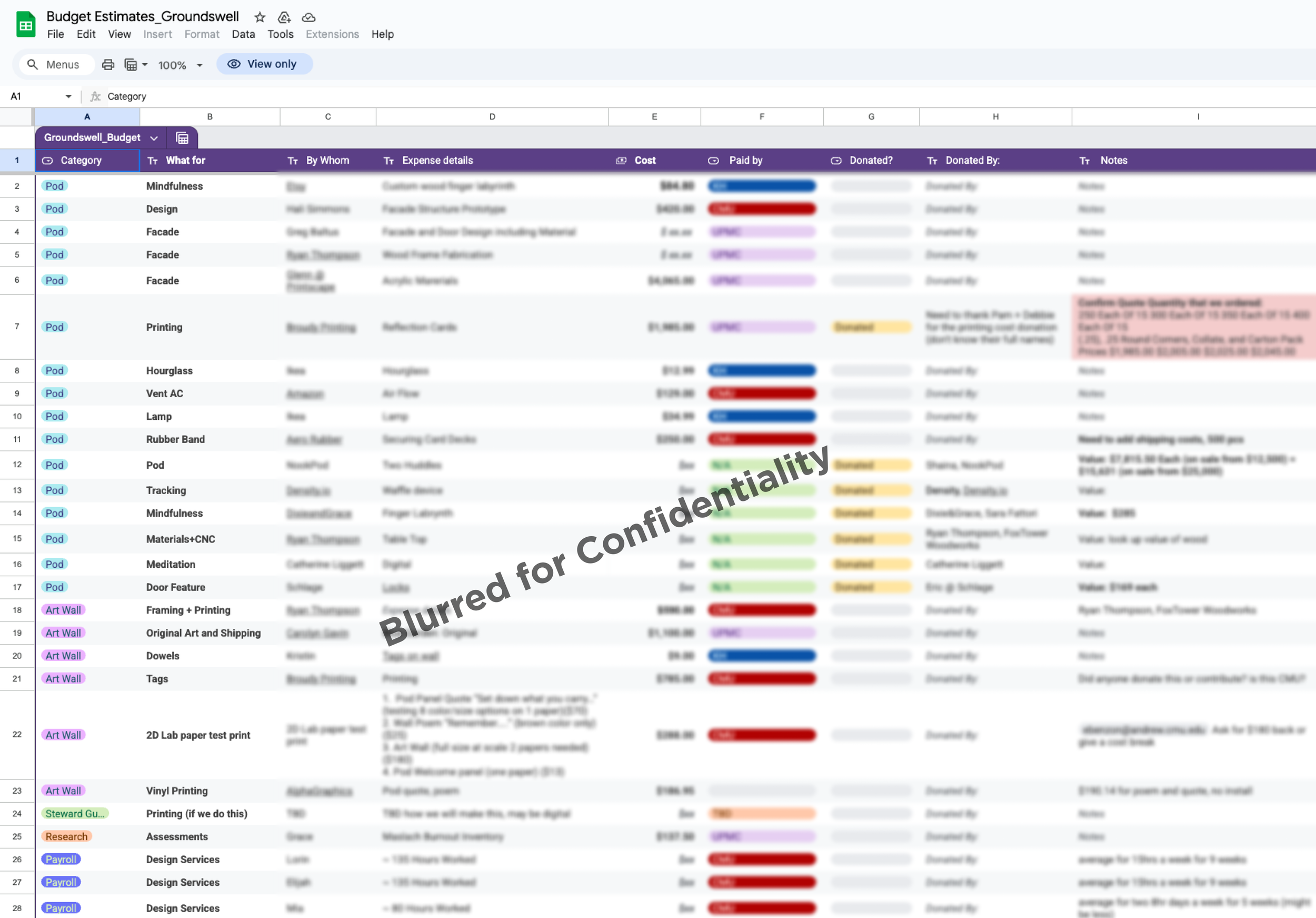
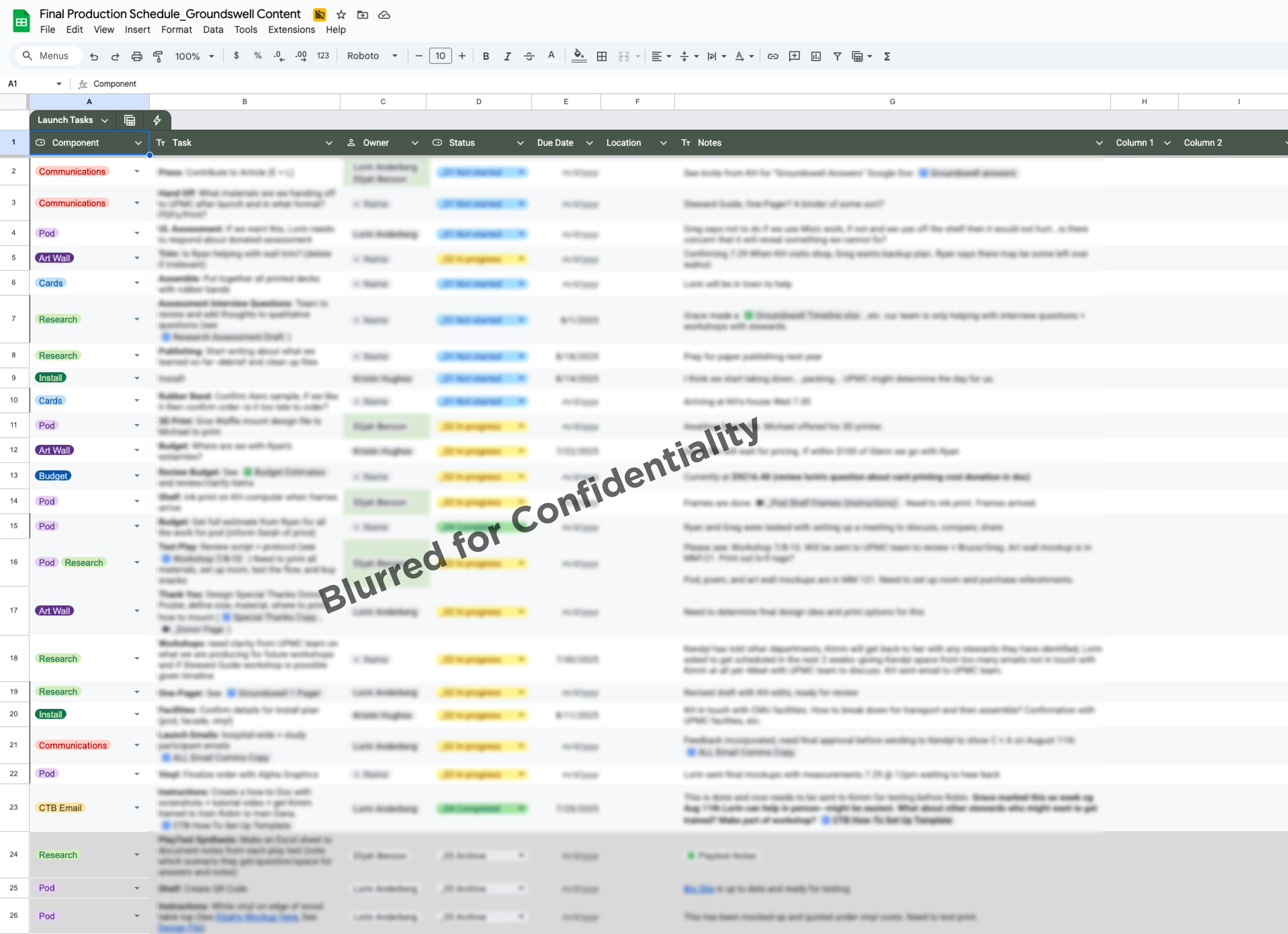
In order to stay organized with all of the moving parts, we used a google sheet to project manage our tasks sorted by component, status, priority, and ownership. We also keep detailed records of our budget to keep track of expenses and donations.
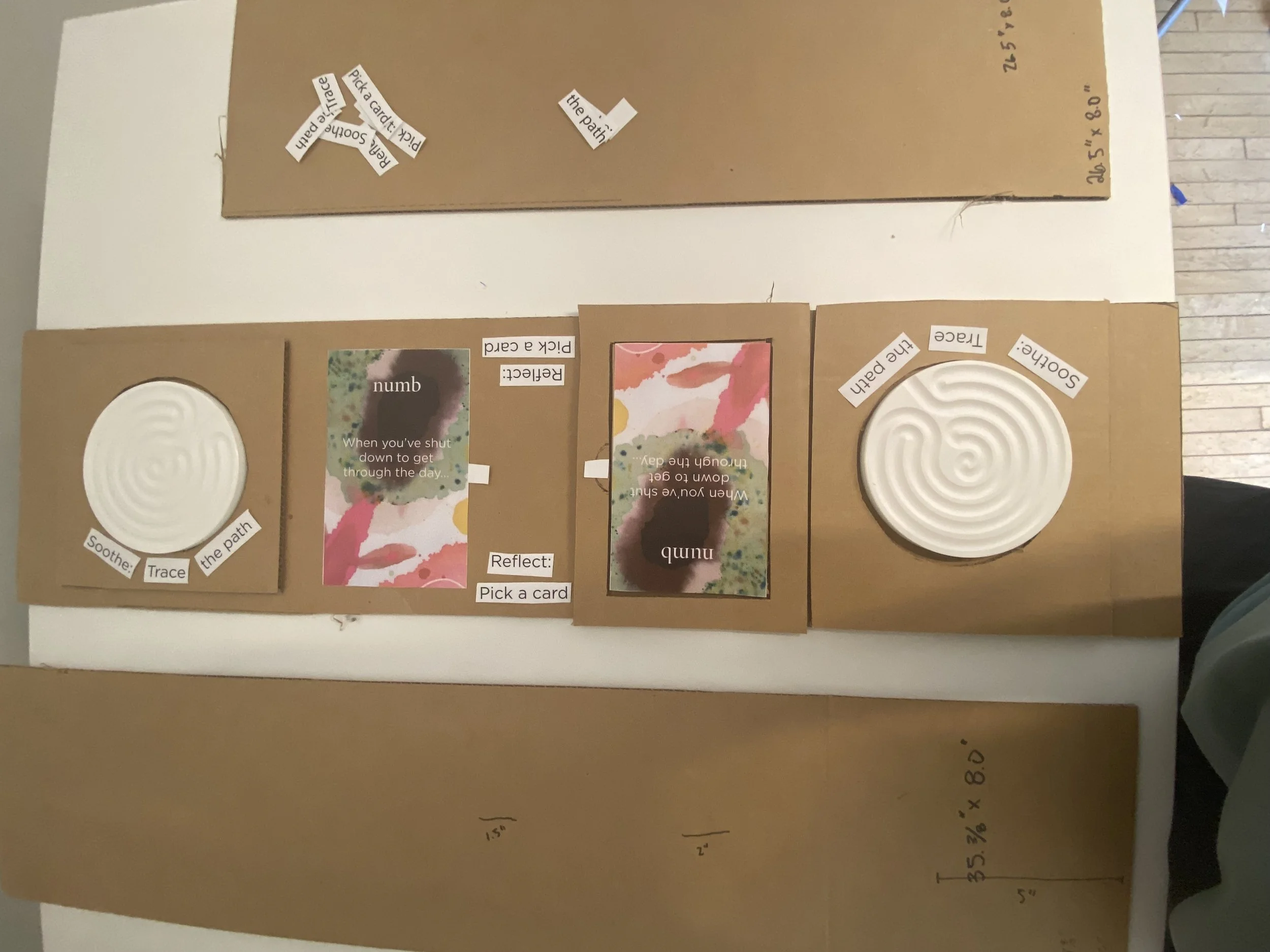
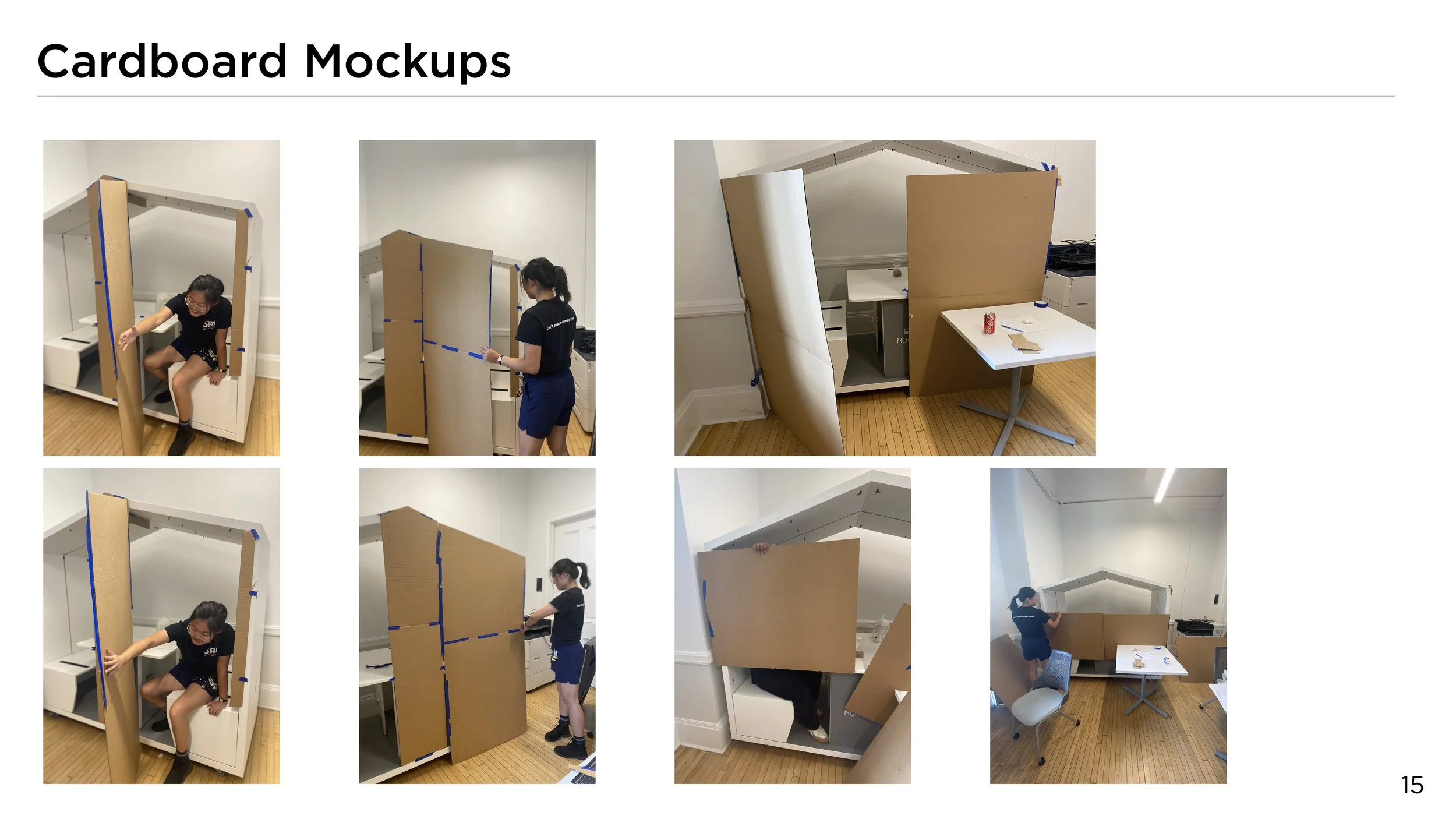
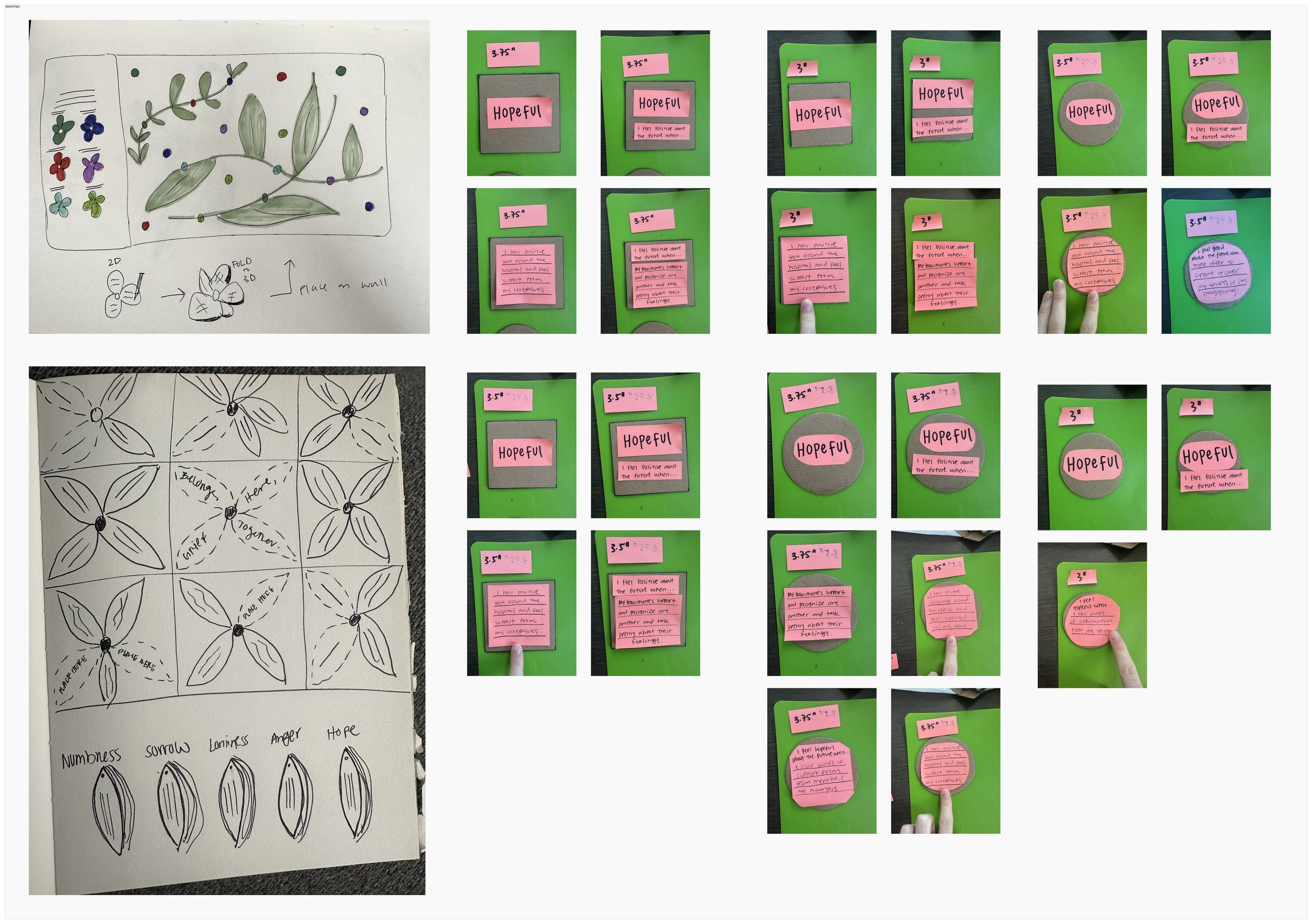
We tested low-fidelity mockups of components, created mood boards and user flows to assess the service design of Groundswell. We developed mockups for potential door designs to help communicate between the hospital and the fabricator.


Play Testing
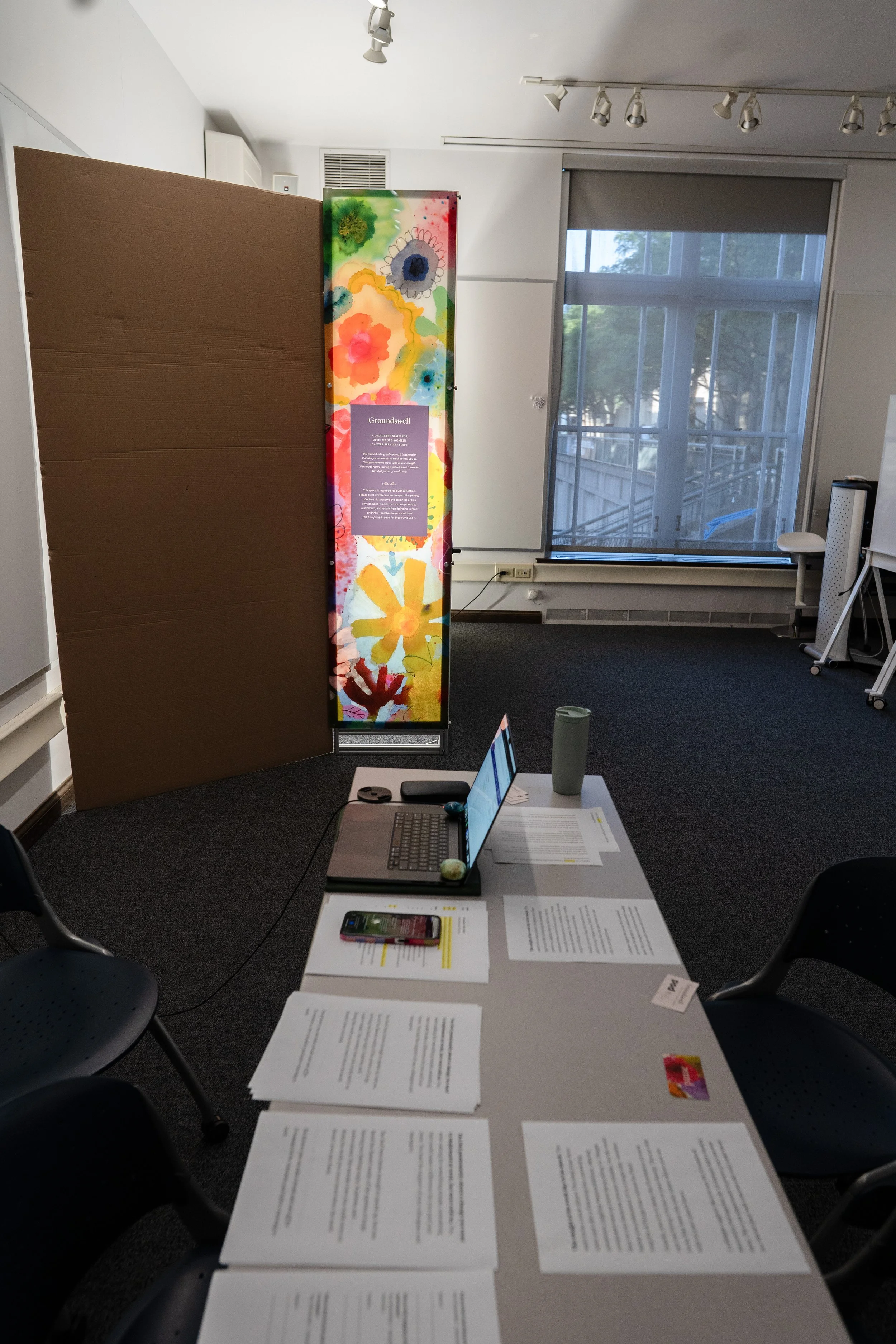
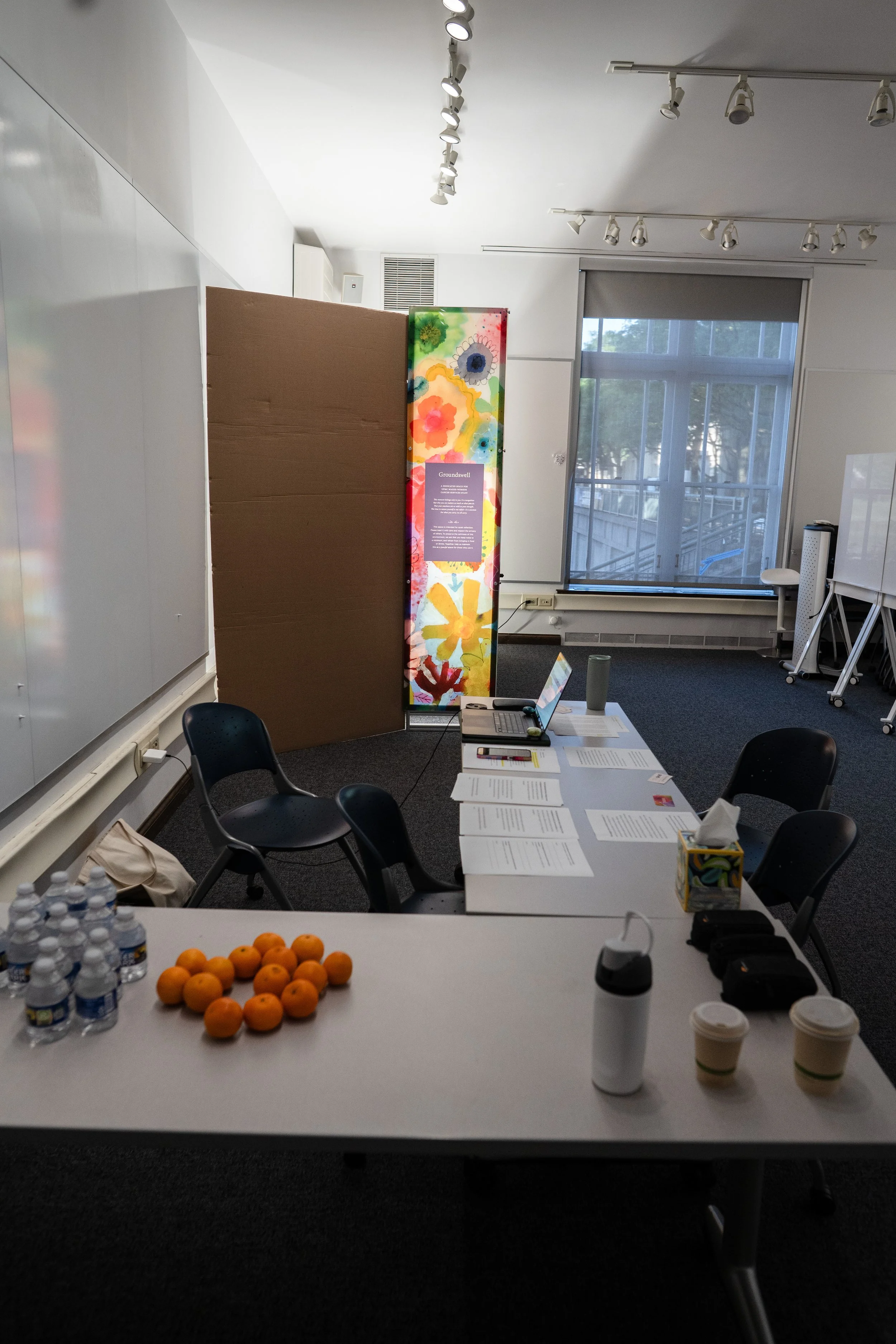
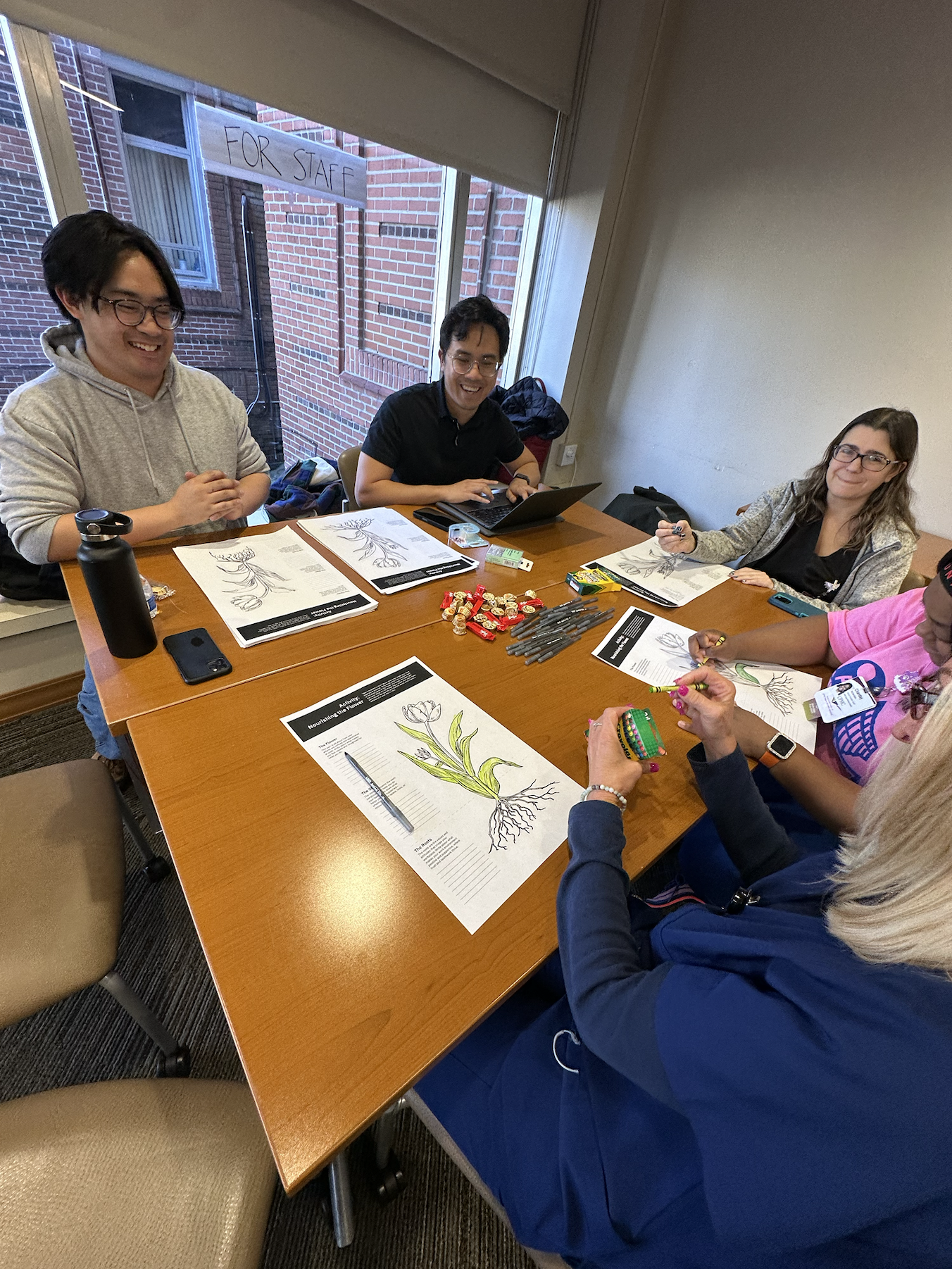
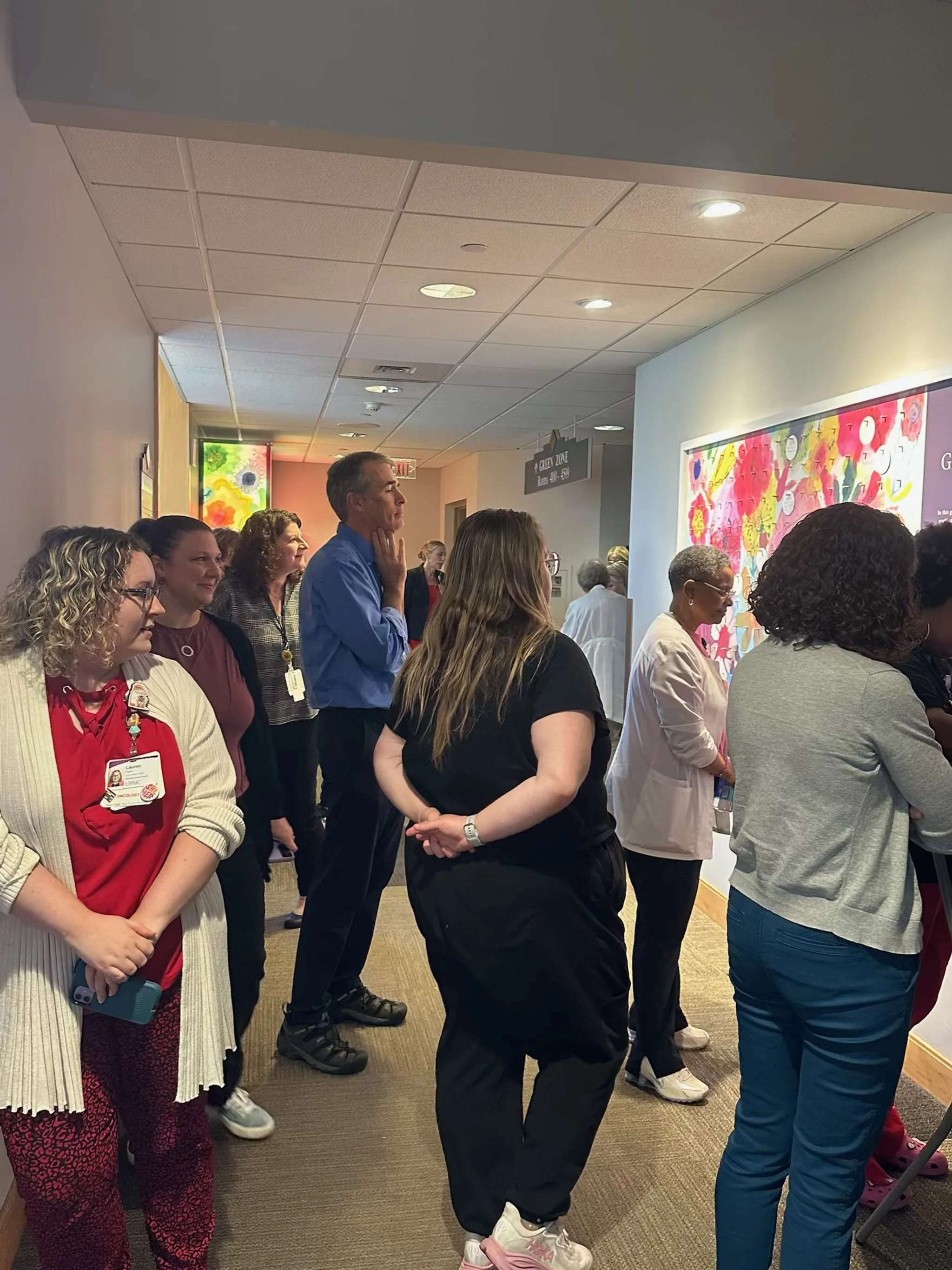
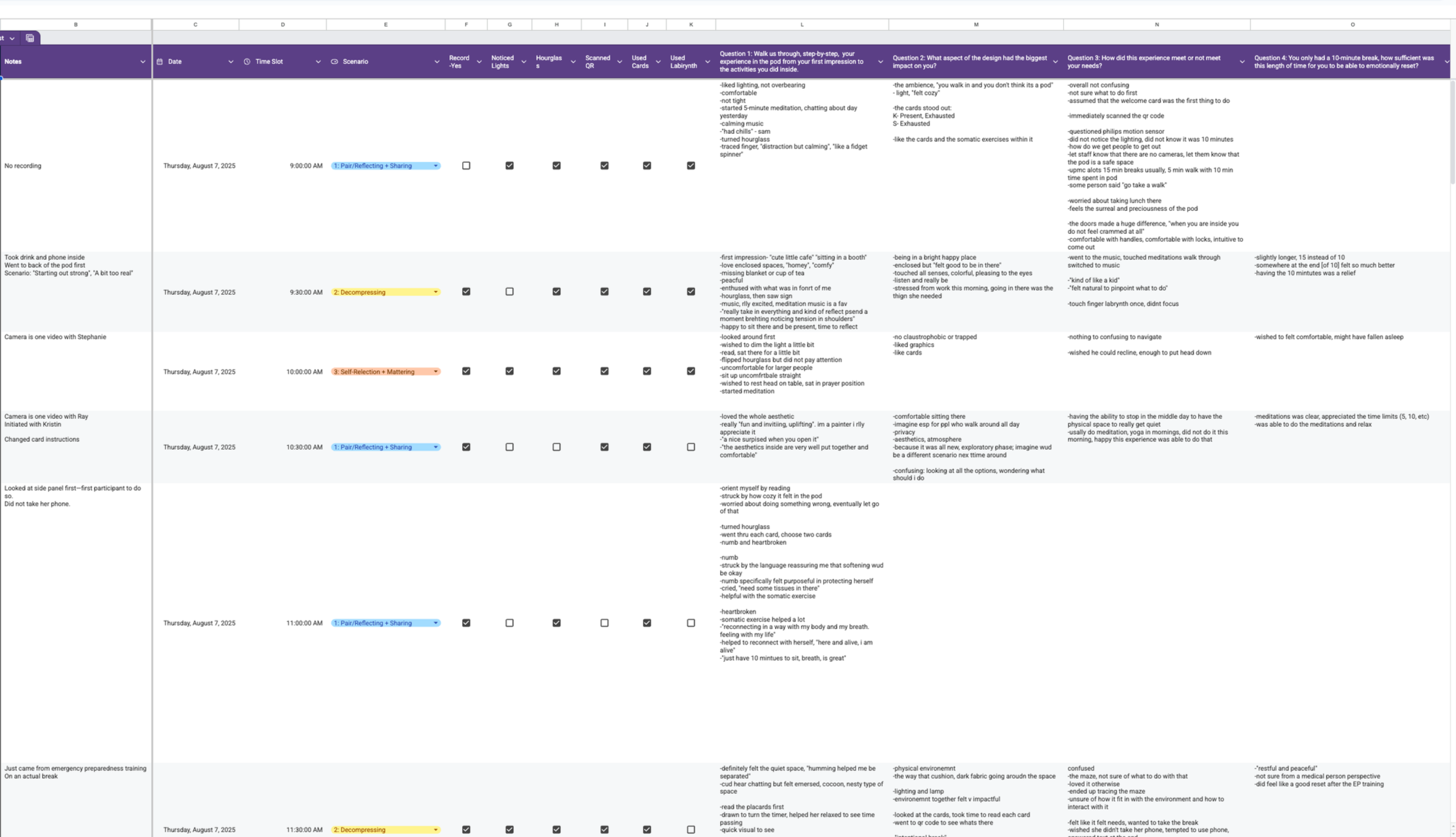
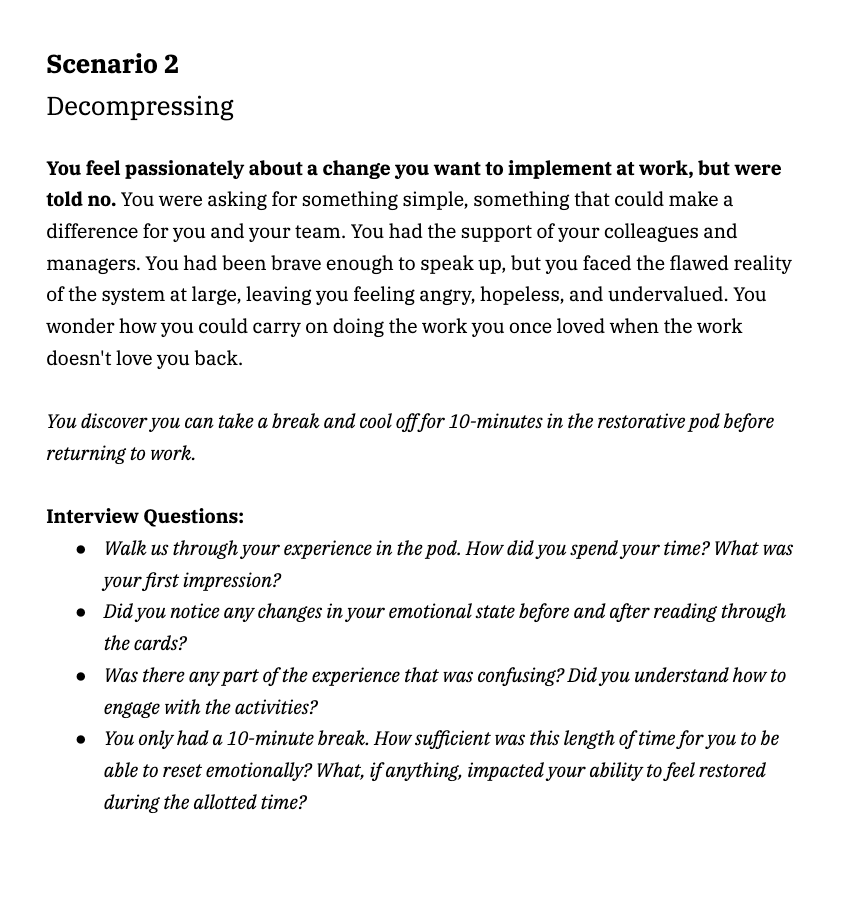
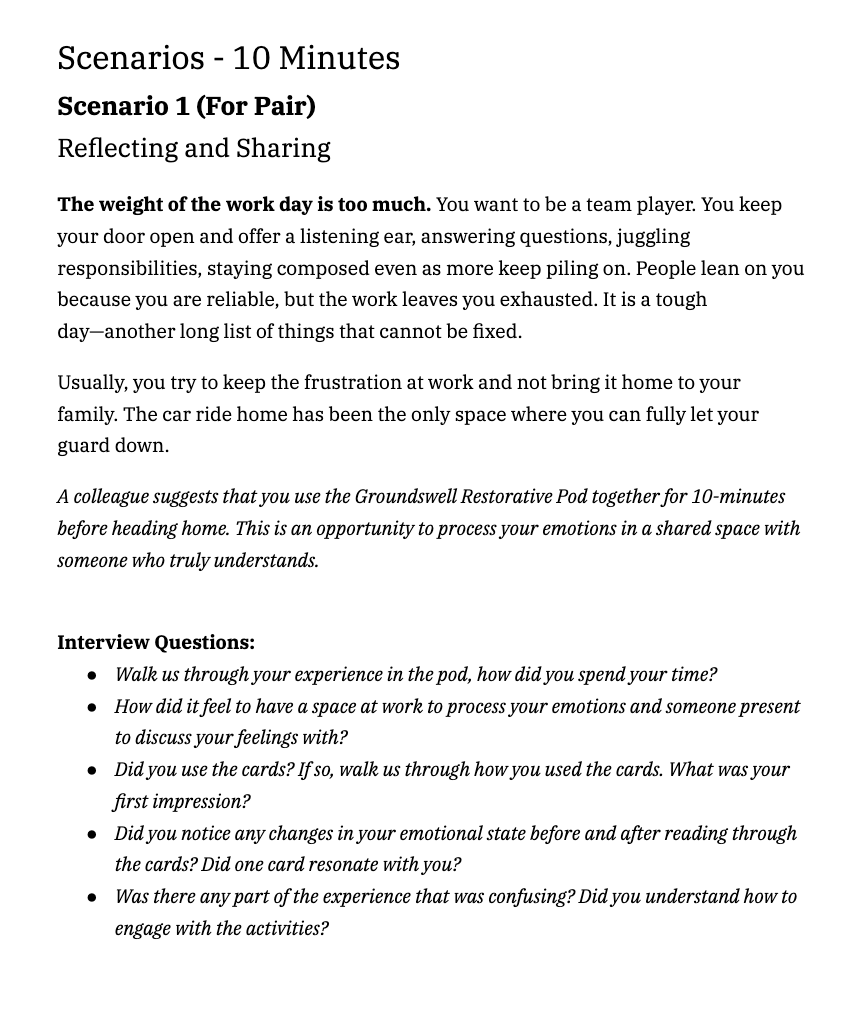
We invited 30 participants to come by and test our pod experience at CMU before installing at the hospital to work out the final details and understand the user experience. We scheduled through Calendly, set up the room with snacks and the elements of our project, provided participants with scenarios, and recorded feedback.
The overwhelming response to the play testing was that people wanted a pod of their own. Many were “in awe” and “taken aback” from the experience to the point of tears and every participant said that they felt a shift in their emotional state after just 10 minutes in the pod. We quickly identified small changes that we adapted as we went along.
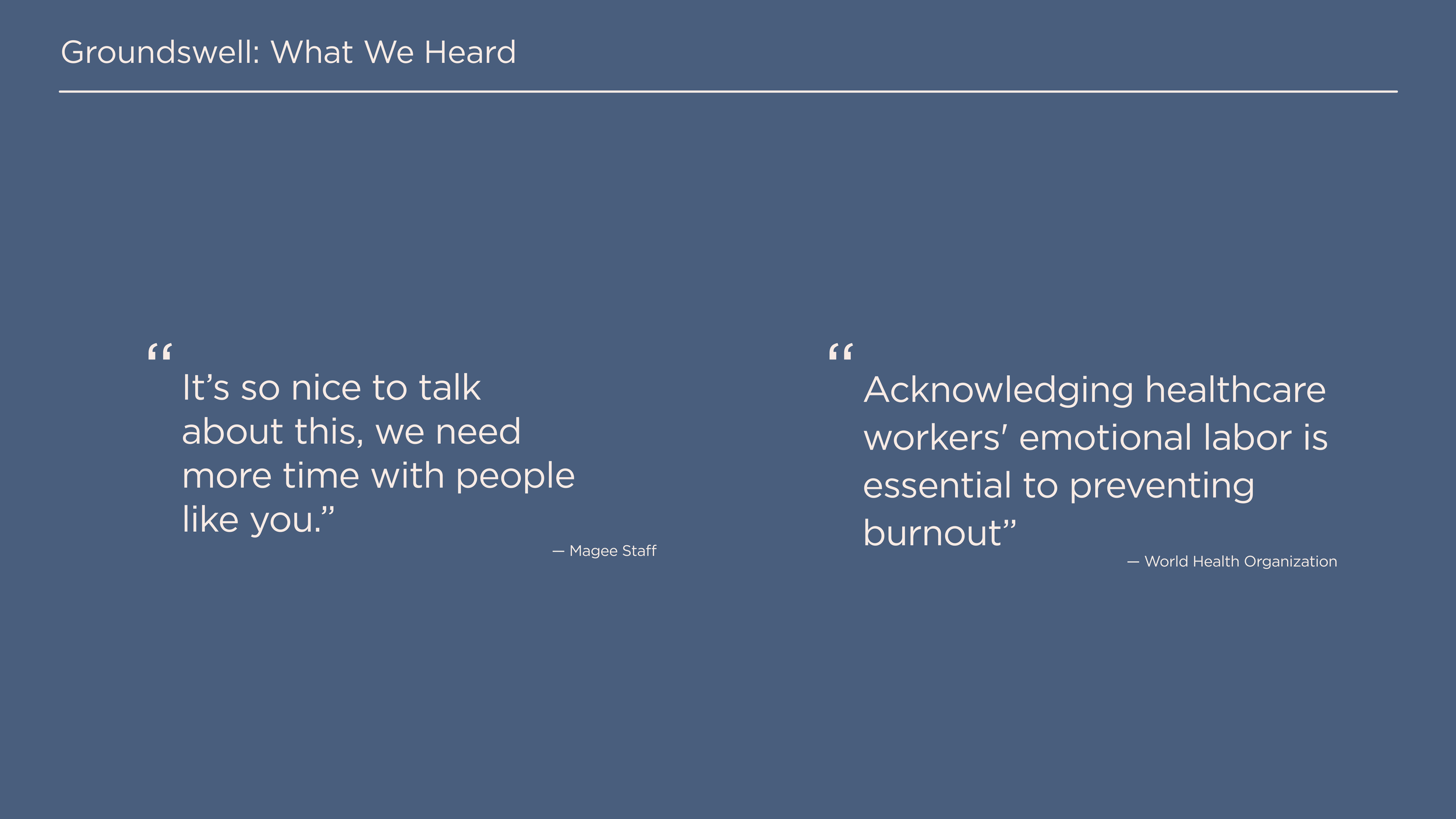
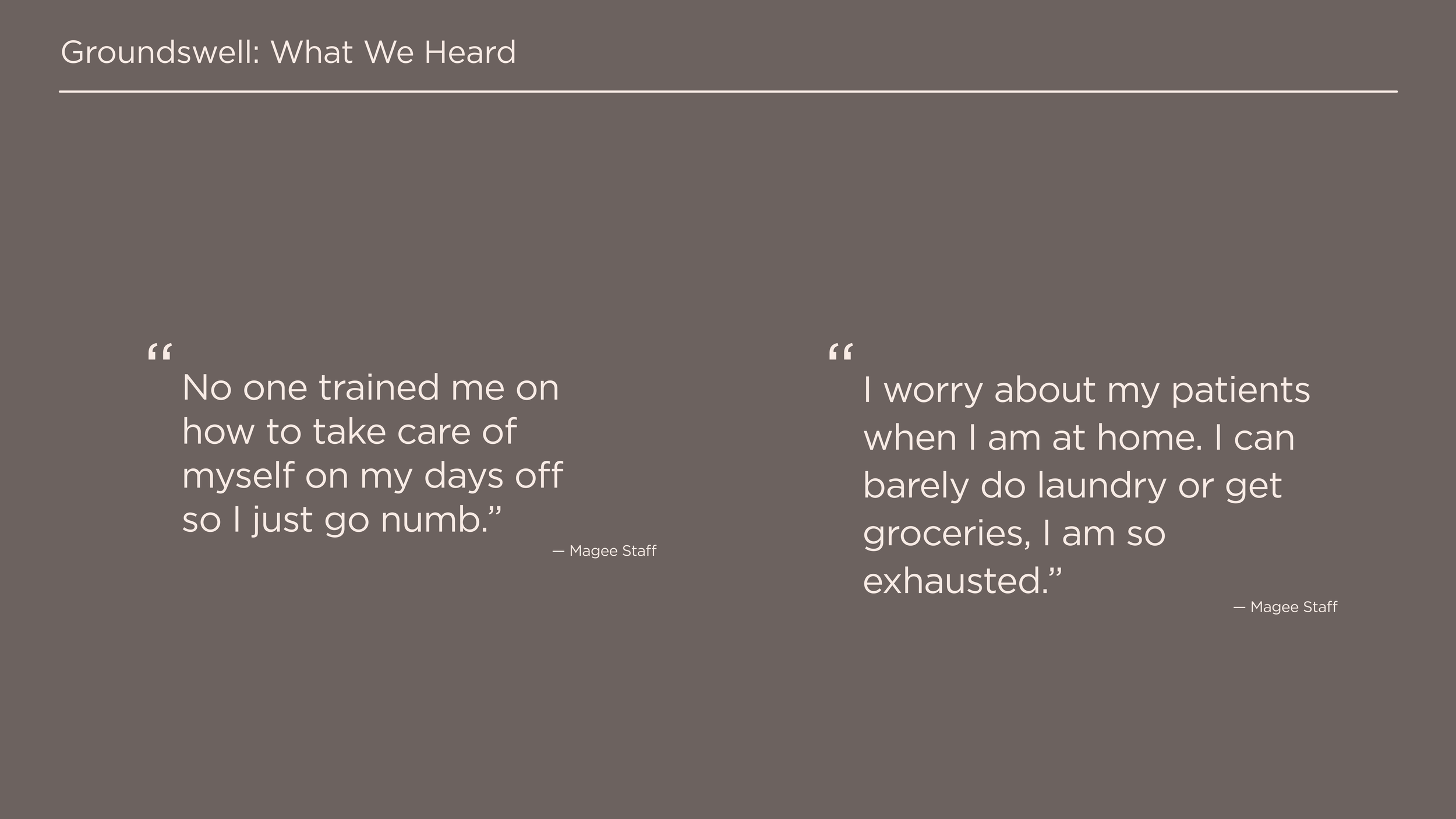
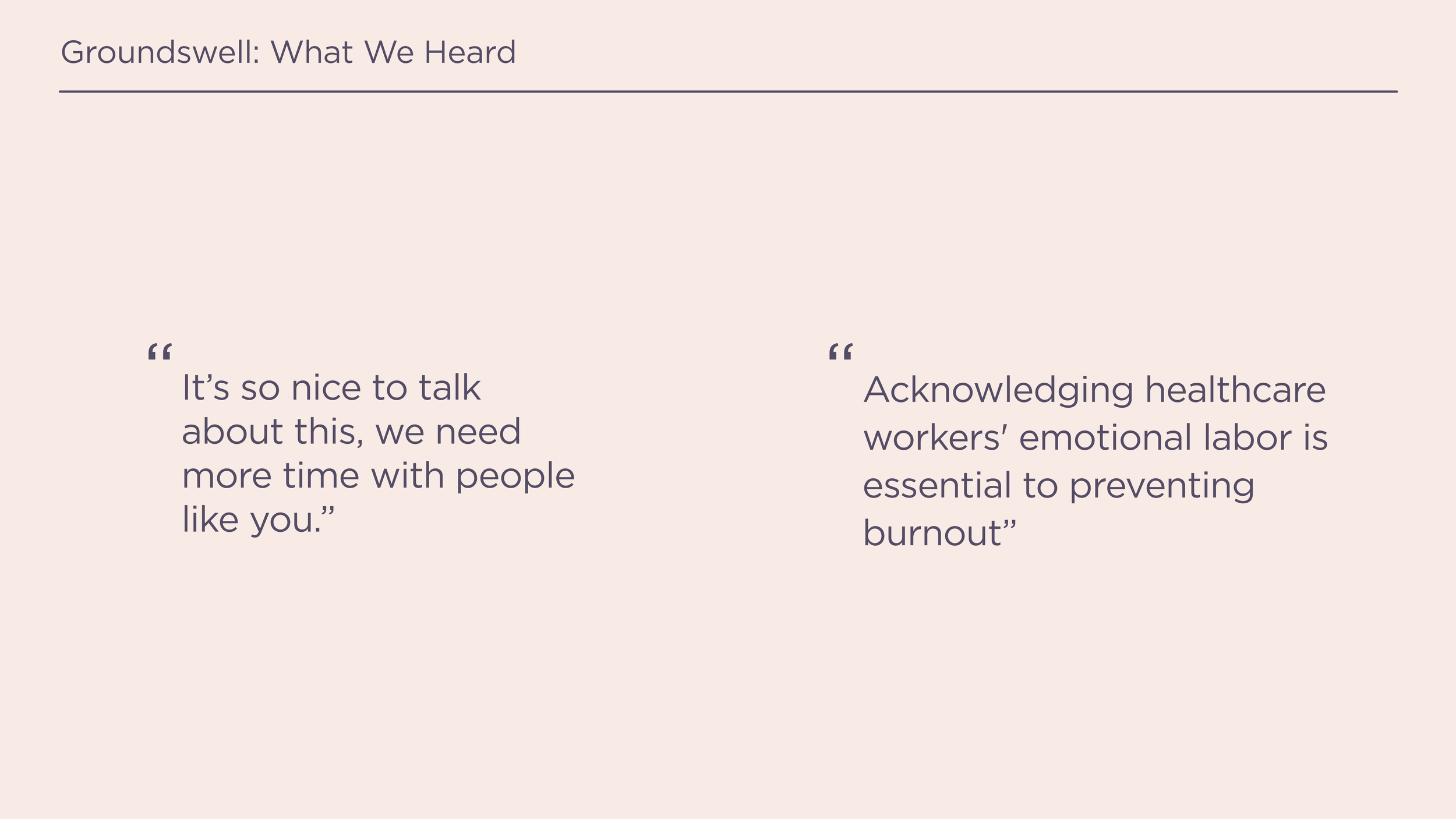
What We Heard
“It's remarkable what 10 minutes can do...”
“The most powerful part of it is having a completely undistracted time and space to go be…”
“You get to experience time differently in there. Be in a flow. Be with yourself. Just be here now. And that was a huge gift.”
“As soon as I stepped inside, I almost teared up. You're not always aware of how frazzled you are until you stop. It was a lovely reminder to stop.”
“For those 10 minutes to reconnect with myself and that I am here and I'm alive. To just have 10 minutes to sit, breathe, it's huge."
“I've worked in the trauma field, and I work with physicians…everyone needs one of these."
“Being able to stop in the middle of the day and have the physical and mental space to get quiet and meditate is really helpful…much better than a bathroom stall.”
“You don't have to wait until the end of the day to refresh, but you can have micro-resets in-between.”
Outcomes + Acknowledgments
Groundswell is now officially installed at Magee-Womens and is launching for the Cancer Services staff in October 2025 which will kickstart the 12-month research study. The UPMC team is managing the quality improvement surveys throughout and our team is conducting qualitative interviews and collecting data tracked by the pod sensor, art wall usage, and digital data on meditation resources. We are starting to write design papers about the impact of sustained partnerships with local organizations as imperative to immersive design education that will equip students with tangible co-design skills in hopes of shifting the future of the design industry toward reciprocal relational practice.
Groundswell would not have been possible without the help of an amazing community of artisans and donors who brought this vision to life. The restorative pod space exists thanks to NookPod's generous donation of the structure, Greg Baltus's extraordinary fabrication skills, and components from Schlage, Density, Dixie&Grace, Z9 Machinings, and EHC Industries, Inc. Ryan Thompson crafted the elegant walnut table top from beautiful wood donated by Eleanor Mackie Pigma. The project's meditations are brought to life by the incredibly talented voices of Mark Staley and Catherine Liggett, who gave their time, voices, and hearts to this work. The generous contribution from Peg and Debbie enabled us to gift a set of cards to every employee participating in this study. To everyone who helped us along the way, thank you! (Especially Michael!)
This project is a tribute to the quiet strength, deep compassion, and collective spirit of those who provide oncology care. It was shaped by the voices of staff who shared their experiences—those who live this work every day. Groundswell is a collaboration between Carnegie Mellon’s School of Design, the University of Pittsburgh Schools of Medicine and Nursing, and the Gynecologic Oncology staff at Magee. Extended gratitude to College of Fine Arts at CMU; the UPMC Magee-Womens Hospital Medical Staff Fund; and the Paul D. Schurgot Foundation for your generous support.
We acknowledge that Groundswell could not have emerged without the deep trust-building between the previous cohorts, Professor Kristin Hughes, and the UPMC staff and participating lecture speakers. This version is not perfect and is intended to be a first iteration. We hope to have the privilege to do this again, make it ADA accessible and improve it based on our study’s findings. We wouldn’t be here without the concept that was developed with Kelly McDowell and Robertus Shuyo. Thanks to every person who played a role in bringing this beautiful project to life. Our poem was inspired by Joy Harjo’s work “Remember”. Thanks to Kelly McDowell and Su Hong for assisting with data collection as research assistants throughout the pilot study.
Disclaimer: We acknowledge the use of some AI-assisted influence of copy-editing for readability and structure.
_____________________________________________________________________________________________________________________________________________________________________________________________________________________
Project Production Team:
Kristin Hughes, MFA, Professor, Carnegie Mellon University
Lorin Anderberg, MA in Design, Carnegie Mellon University
Elijah Benzon, MA in Design, Carnegie Mellon University
Greg Baltus, Fabrication, Building Meaning
Principal Investigators:
Kristin Hughes, MFA, Professor, CMU
Sarah E. Taylor, MD, PhD, UPMC Hillman Cancer Center
Project Development Team:
Lorin Anderberg, MA in Design, Carnegie Mellon University
Elijah Benzon, MA in Design, Carnegie Mellon University
Kelly McDowell, Art and Design, Carnegie Mellon University
Robertus Sucahyo, MBA, Carnegie Mellon University
Supervising Faculty:
Grace Campbell, PhD, RN, Family CARE Center
Heidi Donovan, PhD, RN, University of Pittsburgh School of Nursing