Groundswell (1)
Making Space for Grief, Together: Integrated Emotional Support Systems for Oncology Staff
Client: UPMC Magee-Womens Hospital, Cancer Services Department
Generative Research | Healthcare | Co-Design
Groundswell is a holistic ecosystem of emotional support for healthcare workers created in collaboration with the Gynecologic Oncology staff at UPMC Magee-Womens Hospital. Over the course of this 15-week course our team conducted various levels of generative and participatory research activities with the staff that informed this final presentation of a multi-level integrated system that creates space to acknowledge and process the emotional complexities of oncology care.
Groundswell was awarded a grant for a 12-month pilot program and quality improvement study at UPMC, launching in 2025. This is part 1 of a 2-part series documenting how Groundswell evolved.
Client: UPMC Magee-Womens Hospital
Course: Designing With CARE for Oncology: Co-Creating Solutions to Complex Care Coordination—Carnegie Mellon University
Team: Lorin Anderberg, Elijah Benzon, Kelly McDowell, Robertus Shuyo
Credits: Professor Kristin Hughes, Dr. Sarah Taylor, Dr. Grace Campbell,
We acknowledge the use of some AI-assisted influence of copy-editing for readability and structure, imagery, and refining idea generation.
Duration: 15 weeks—Ongoing
Press: CMU Article
Design Challenge
Create supportive environments where staff can feel nurtured, recognized, and celebrated.
How might we create supportive environments tailored for the well-being of healthcare staff, enabling them to openly and safely discuss and express concerns such as burnout, compassion fatigue, the emotional toll of patient deaths, and the increasing frustration arising from administrative tasks overshadowing patient care?
Through trust-building, observational and generative research, rapid ideation, and feedback sessions our team developed the first iteration of the Groundswell concept and pitched it to the staff at UPMC hospital in May 2025. We were able to get 2 NookPods donated (a $30k value) for the next iteration.
Concept
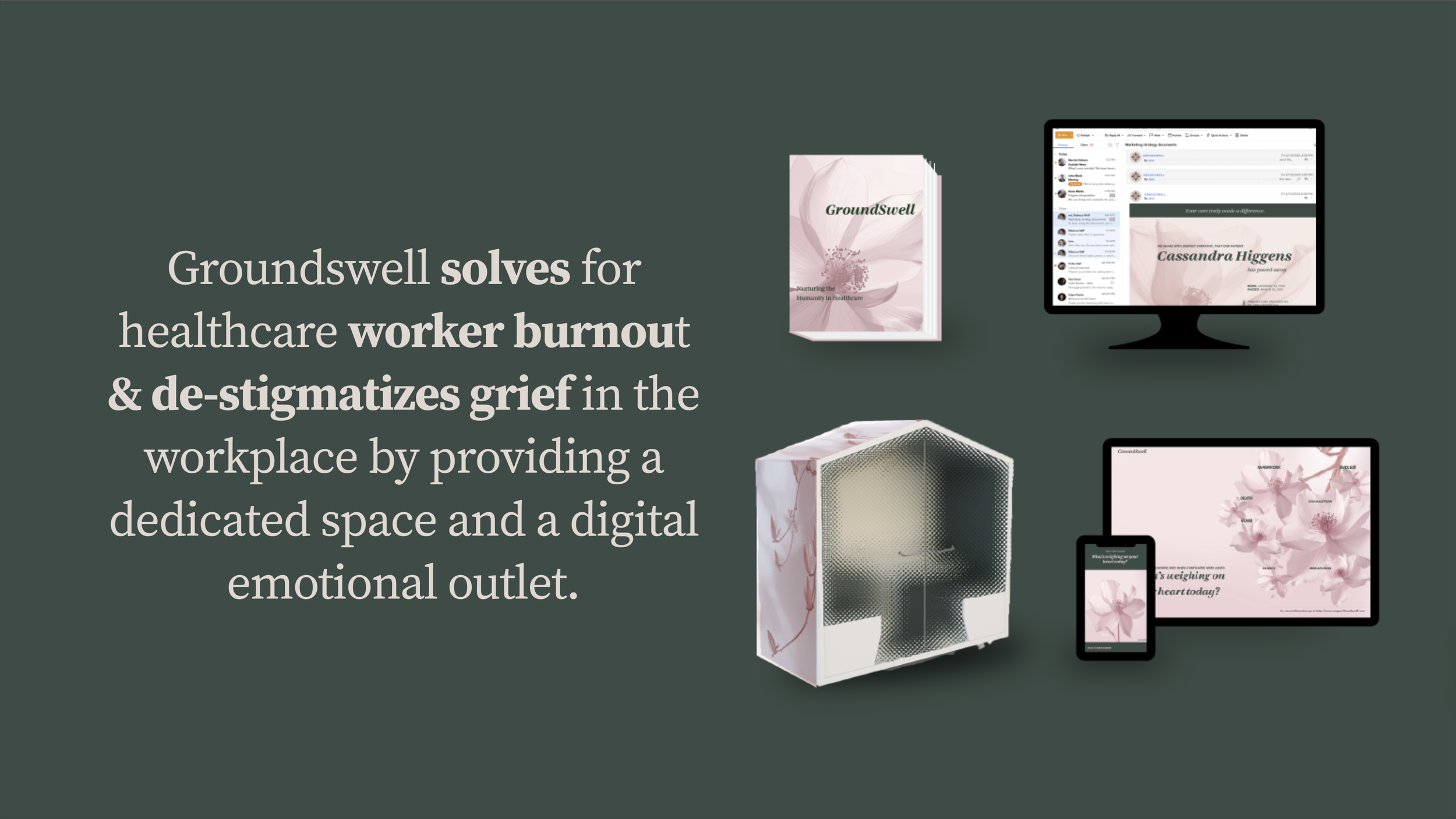
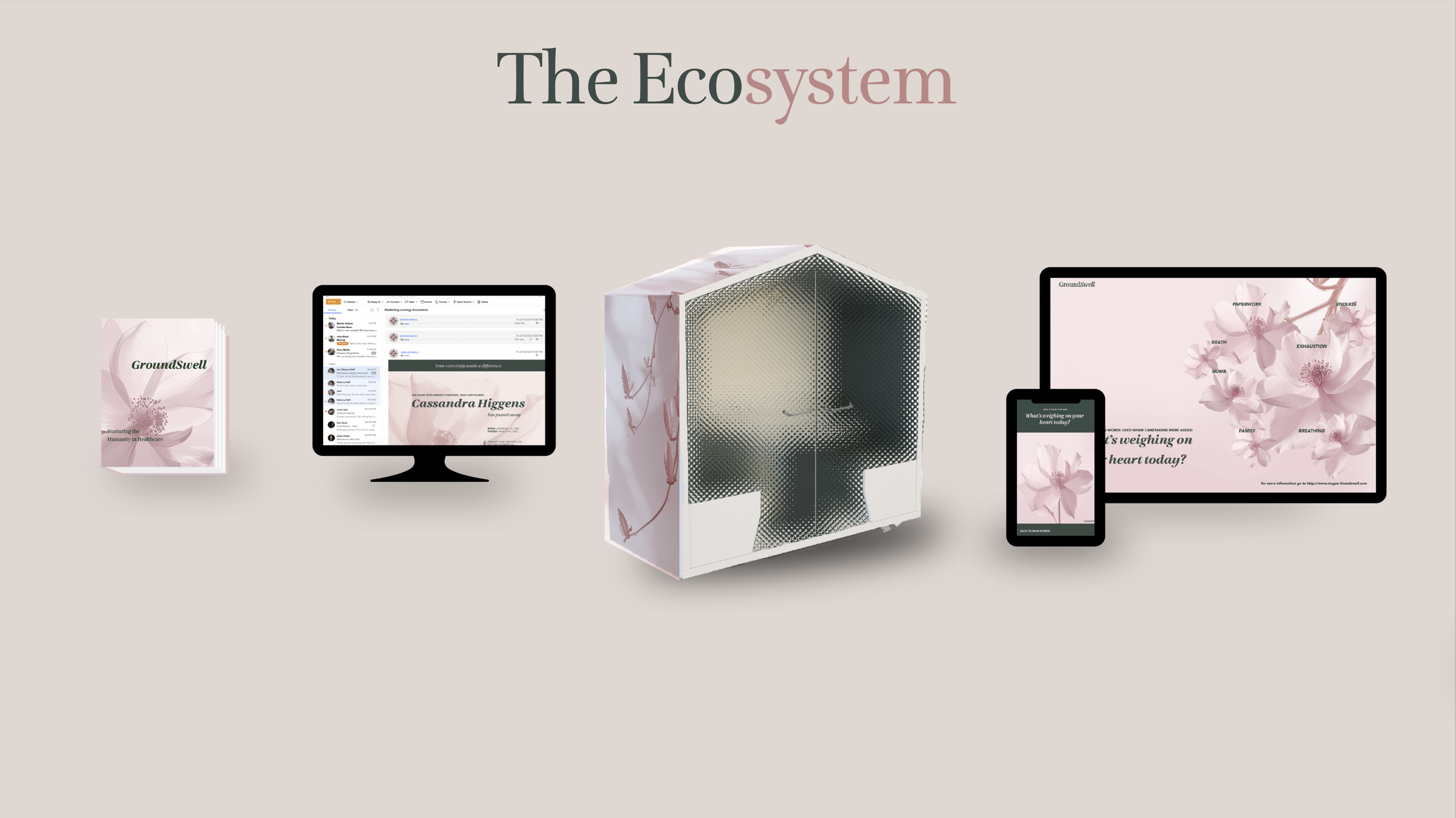
Named for water rising naturally from within the earth, Groundswell is designed to support the emotional well-being of staff at UPMC Magee-Womens Cancer Services. Through communication, creativity, and connection, Groundswell fosters a culture where the emotional complexities of oncology care are acknowledged, isolation transforms into belonging, and self-care is honored as essential to delivering excellent patient care. This system is designed for cultural impact by expanding and humanizing the language and experience of oncology care—starting with improving communication around patient loss. The following components make up the Groundswell program:
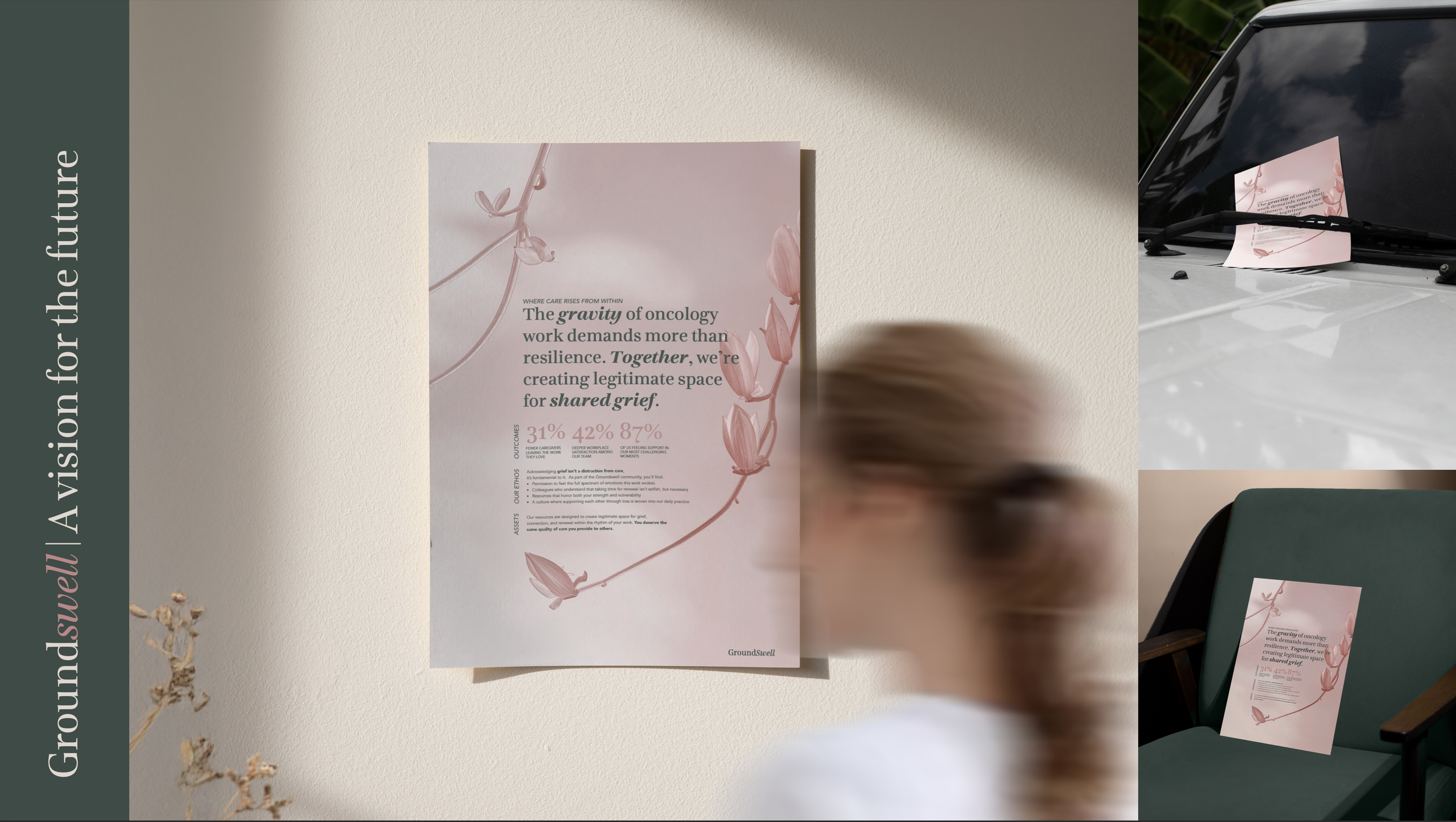
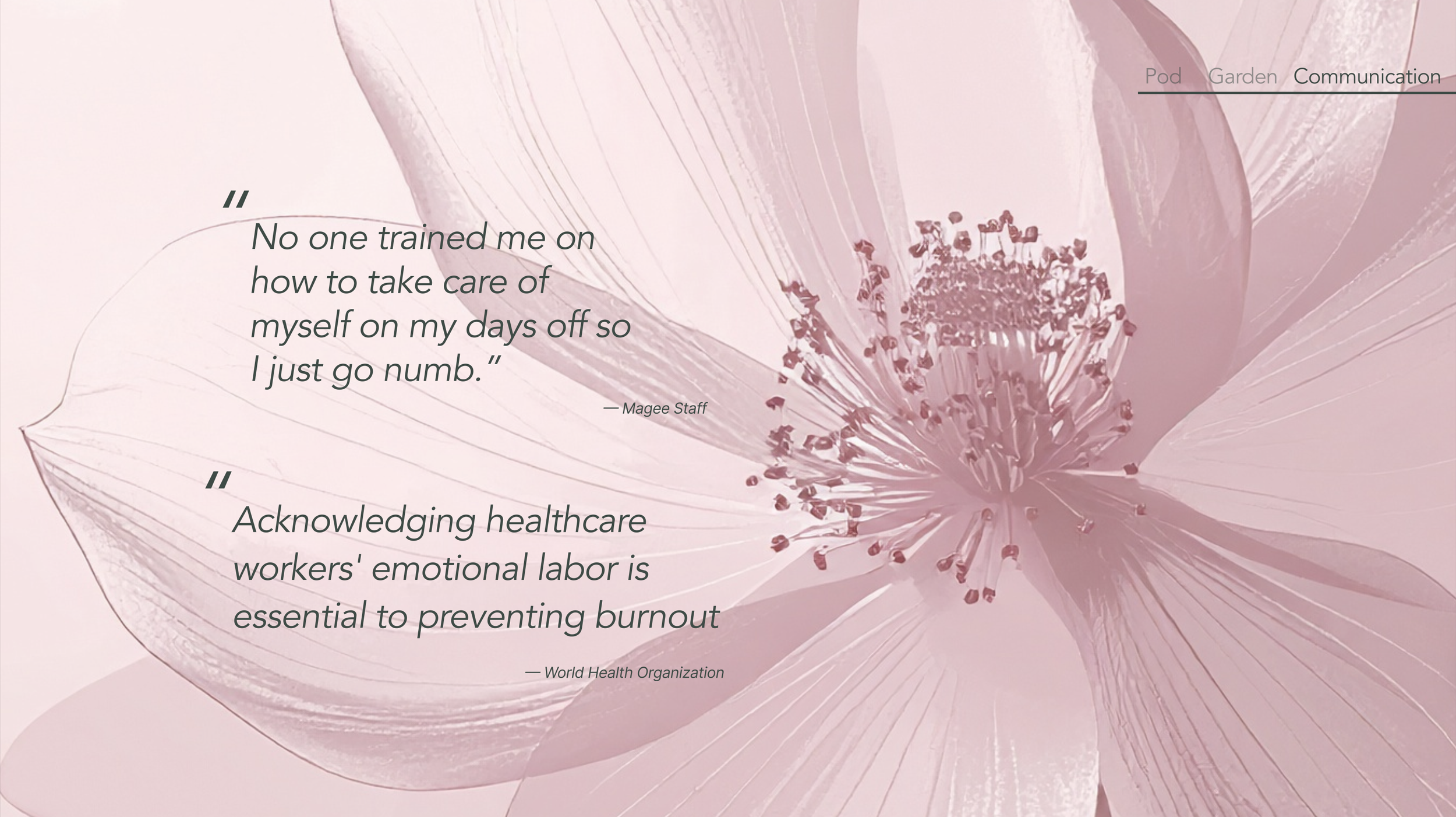
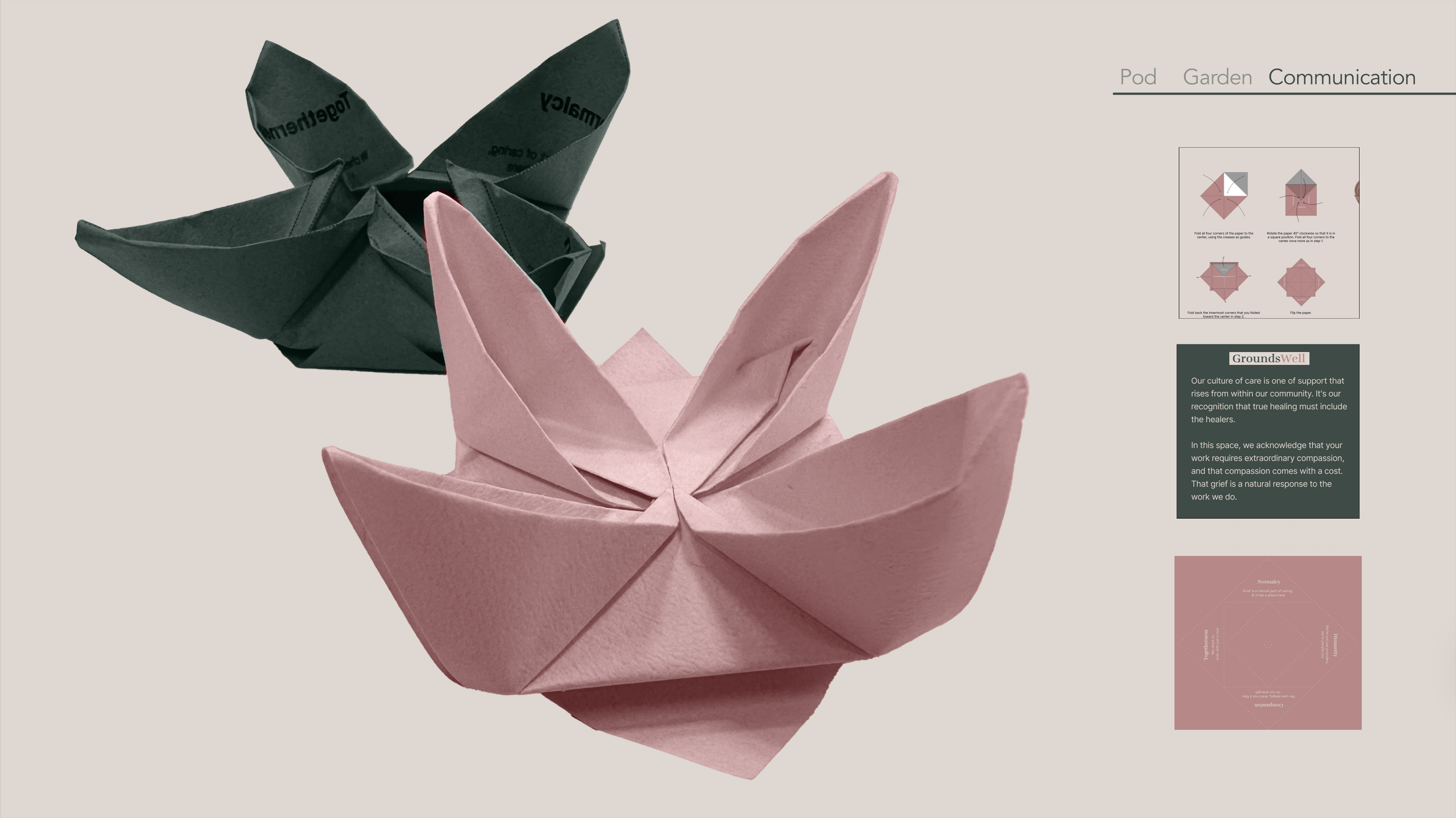
Updated patient death notification email template with compassionate visuals and language that acknowledges the impact of patient loss
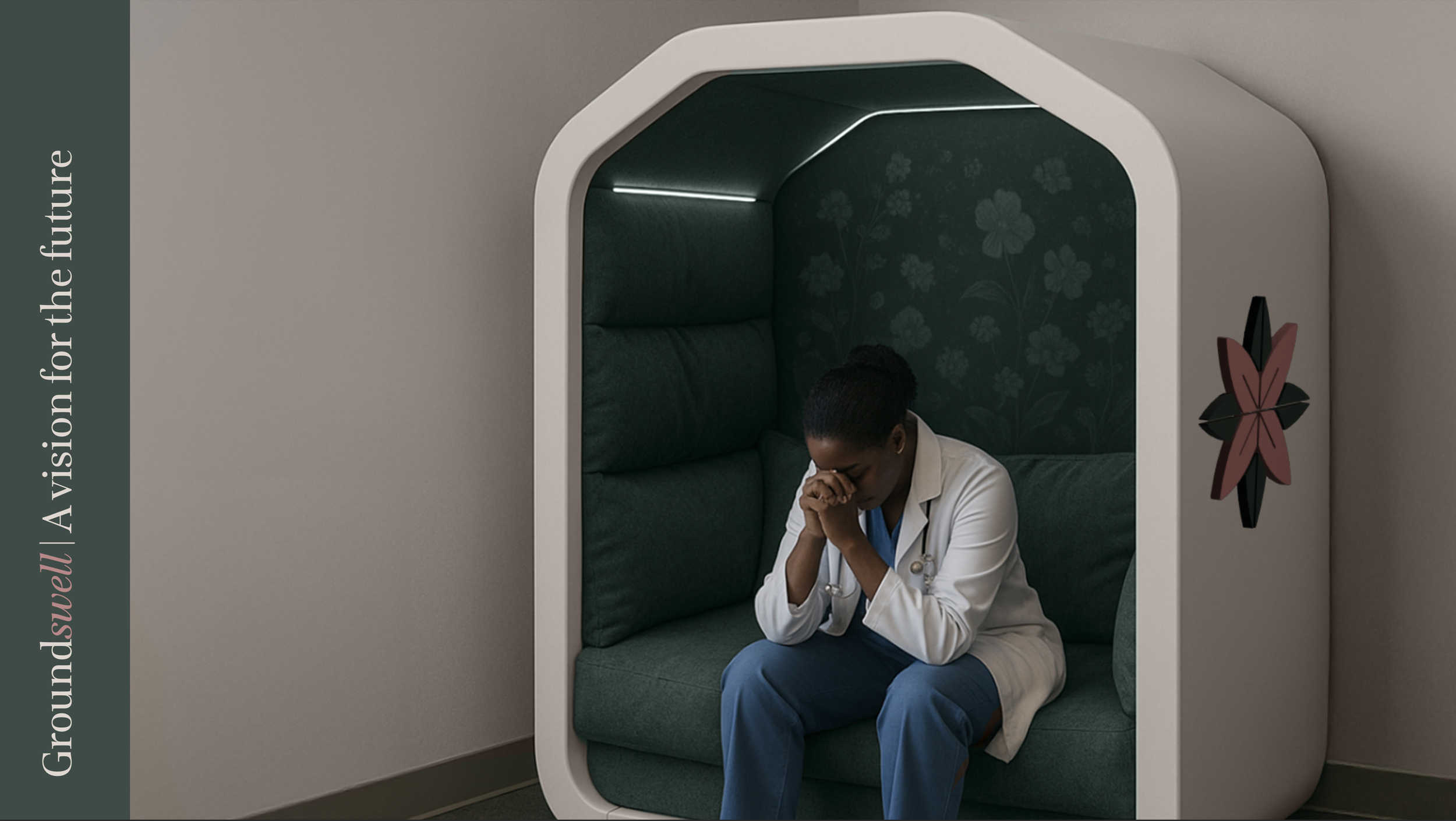
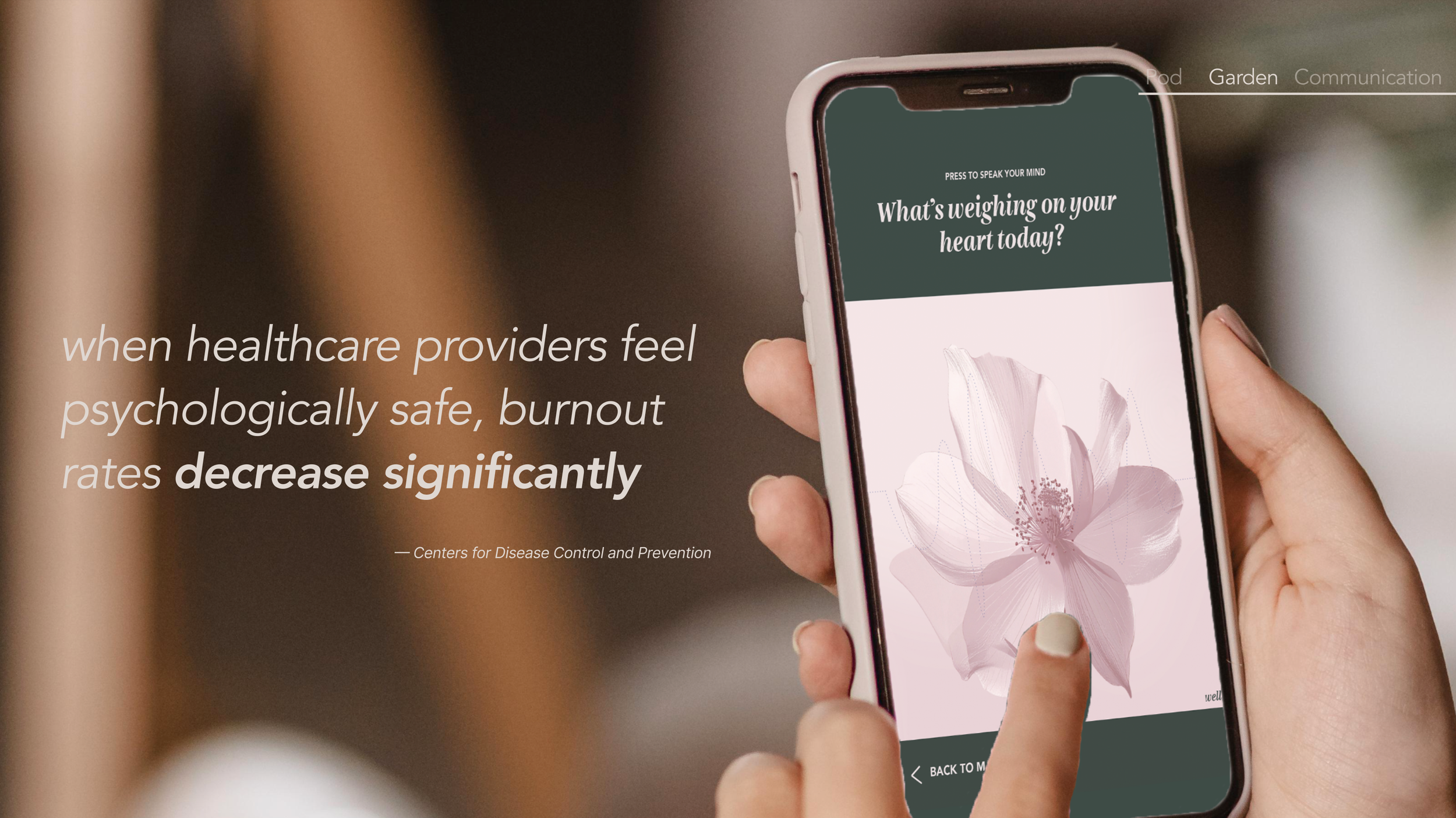
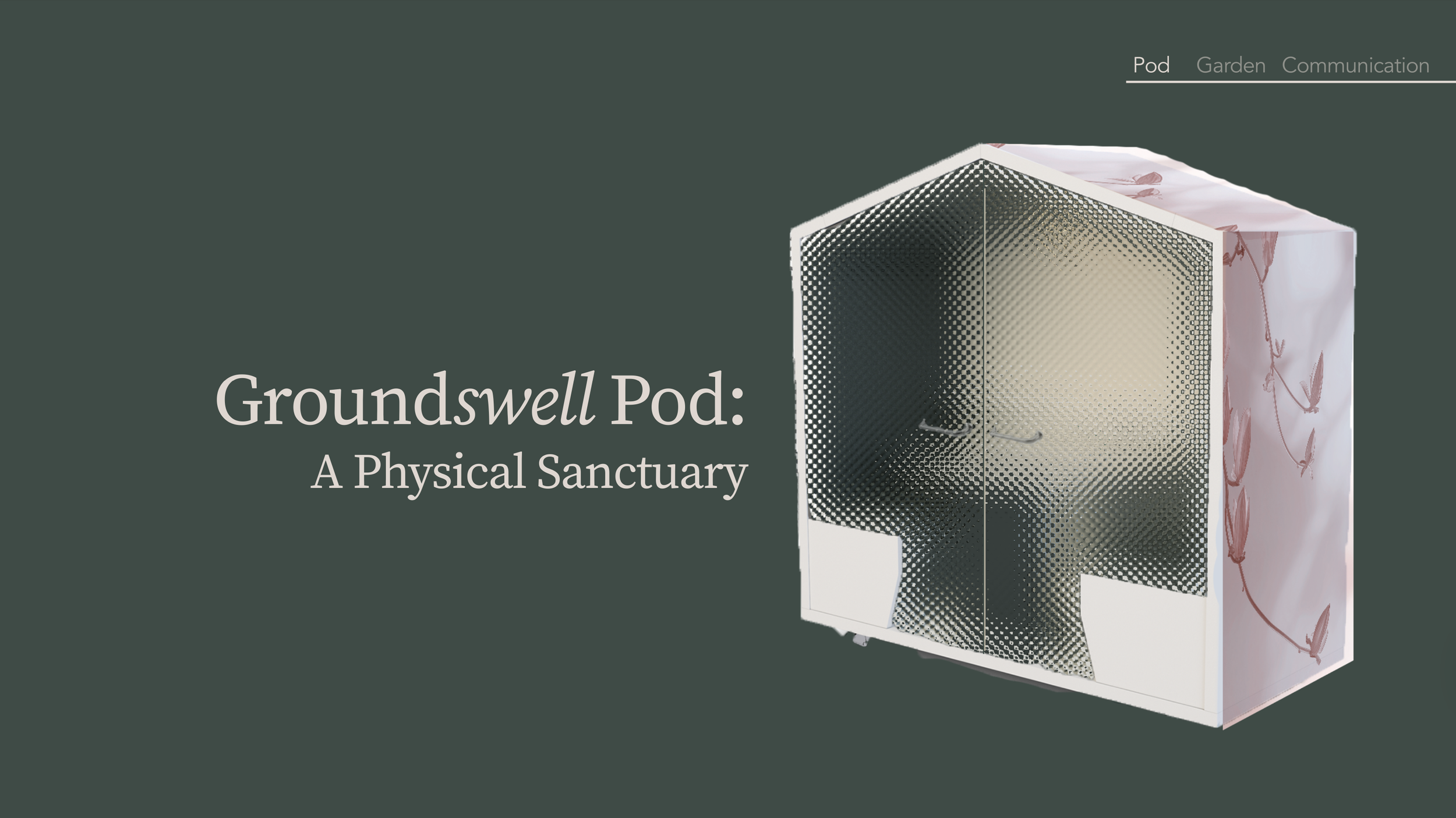
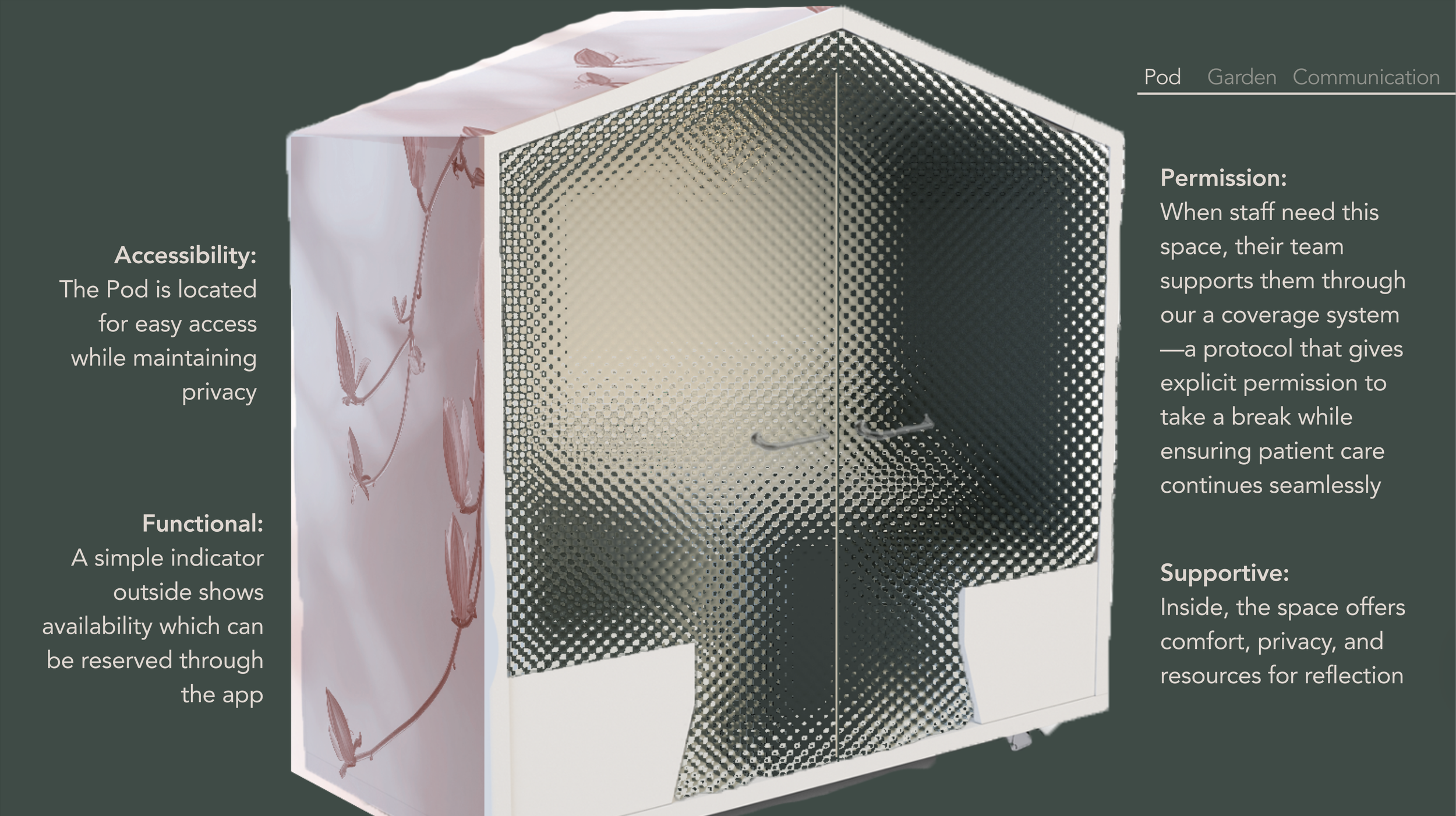
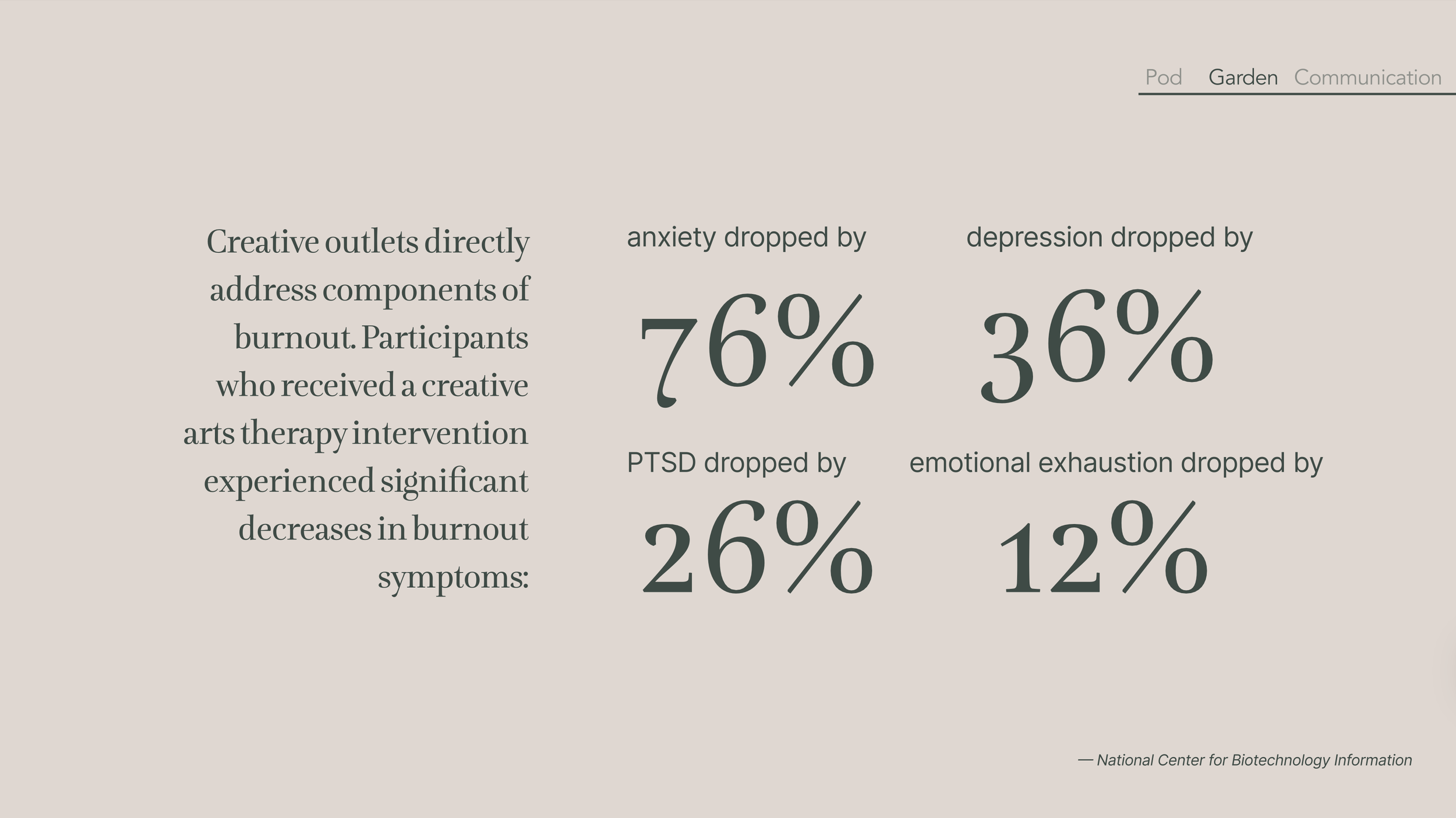
A restorative pod space for emotional decompression and restoration through research-backed mindfulness activities
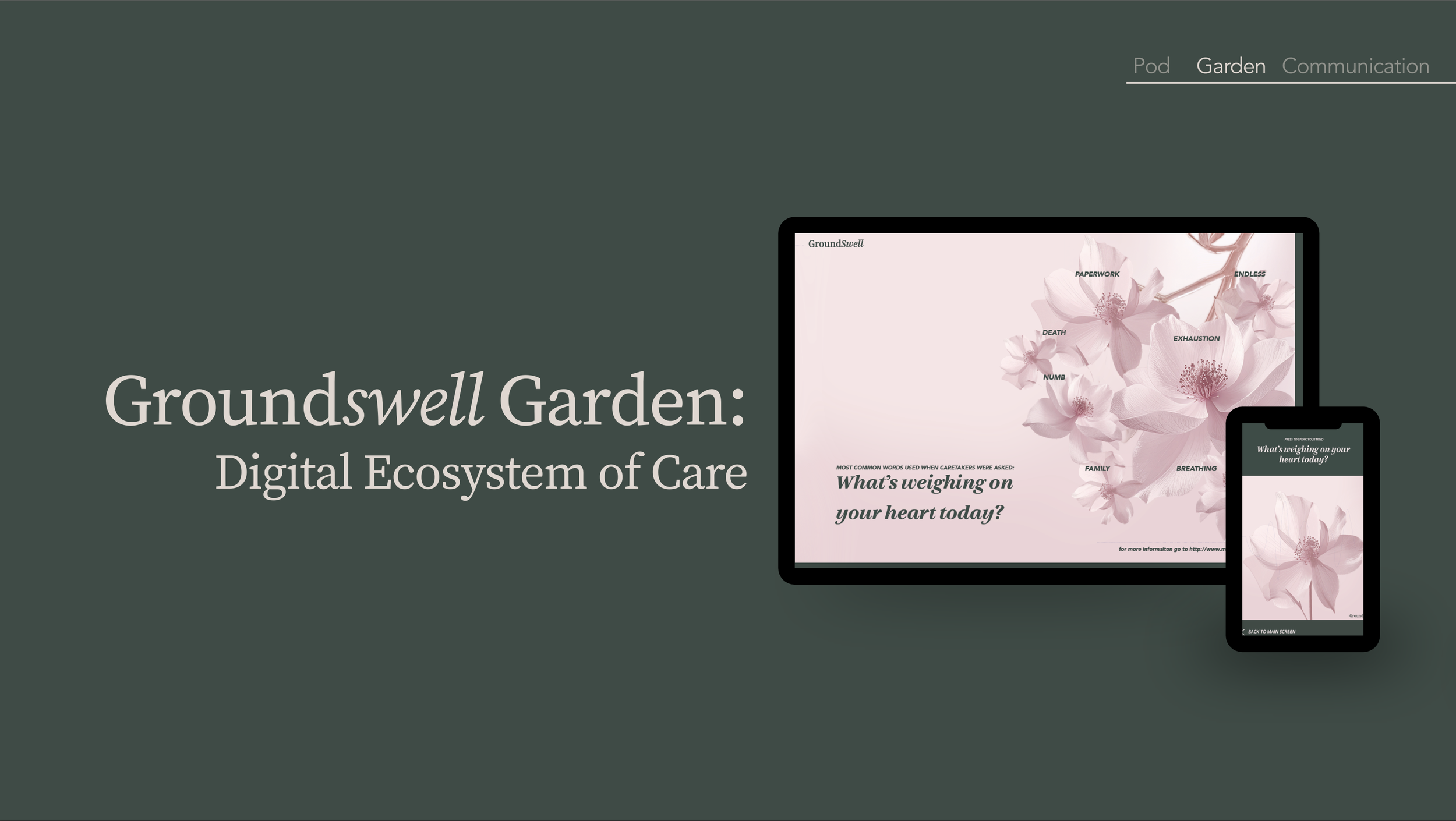
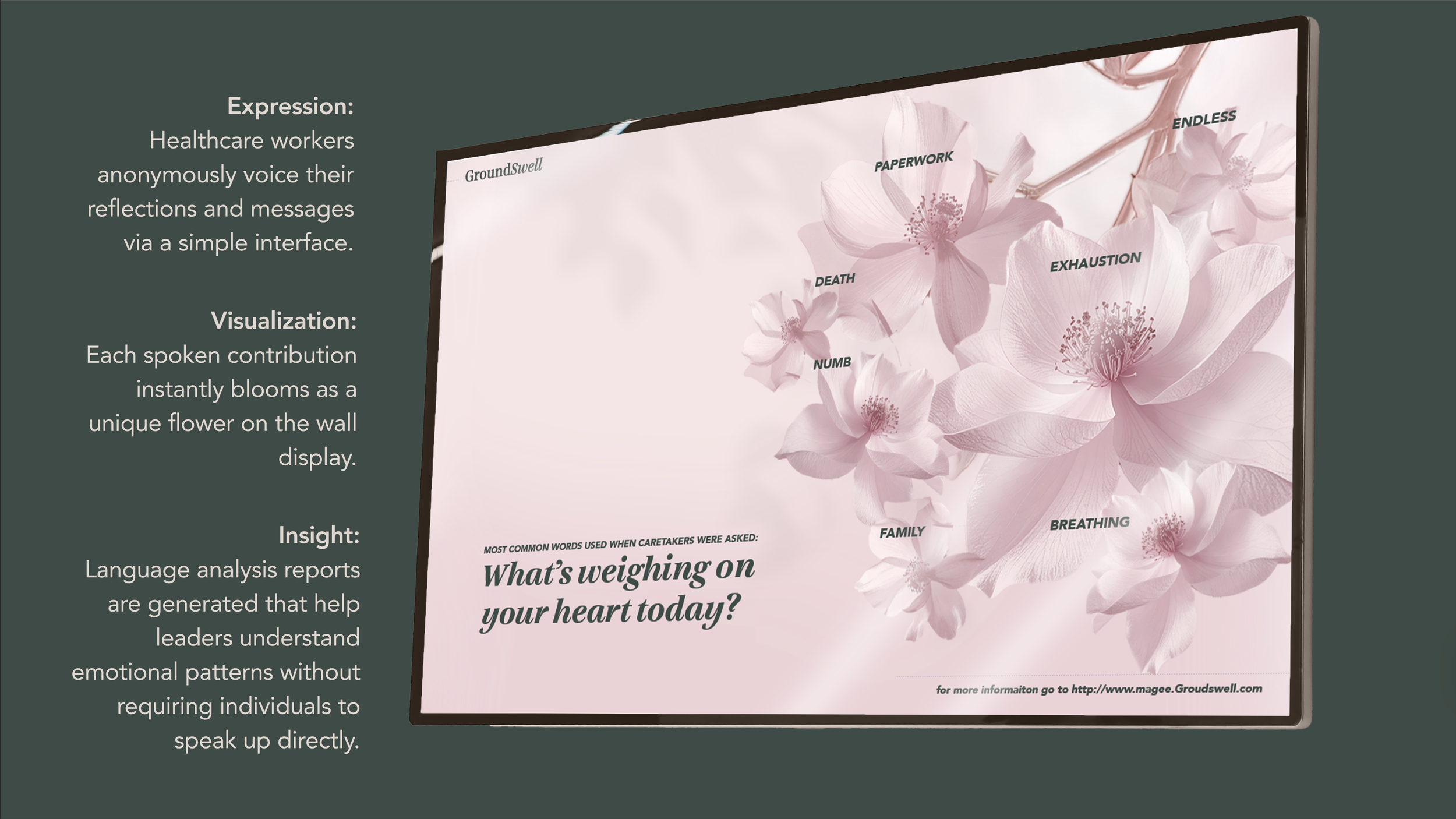
A community art wall that invites participation through shared emotional expression about the emotional complexities of oncology care
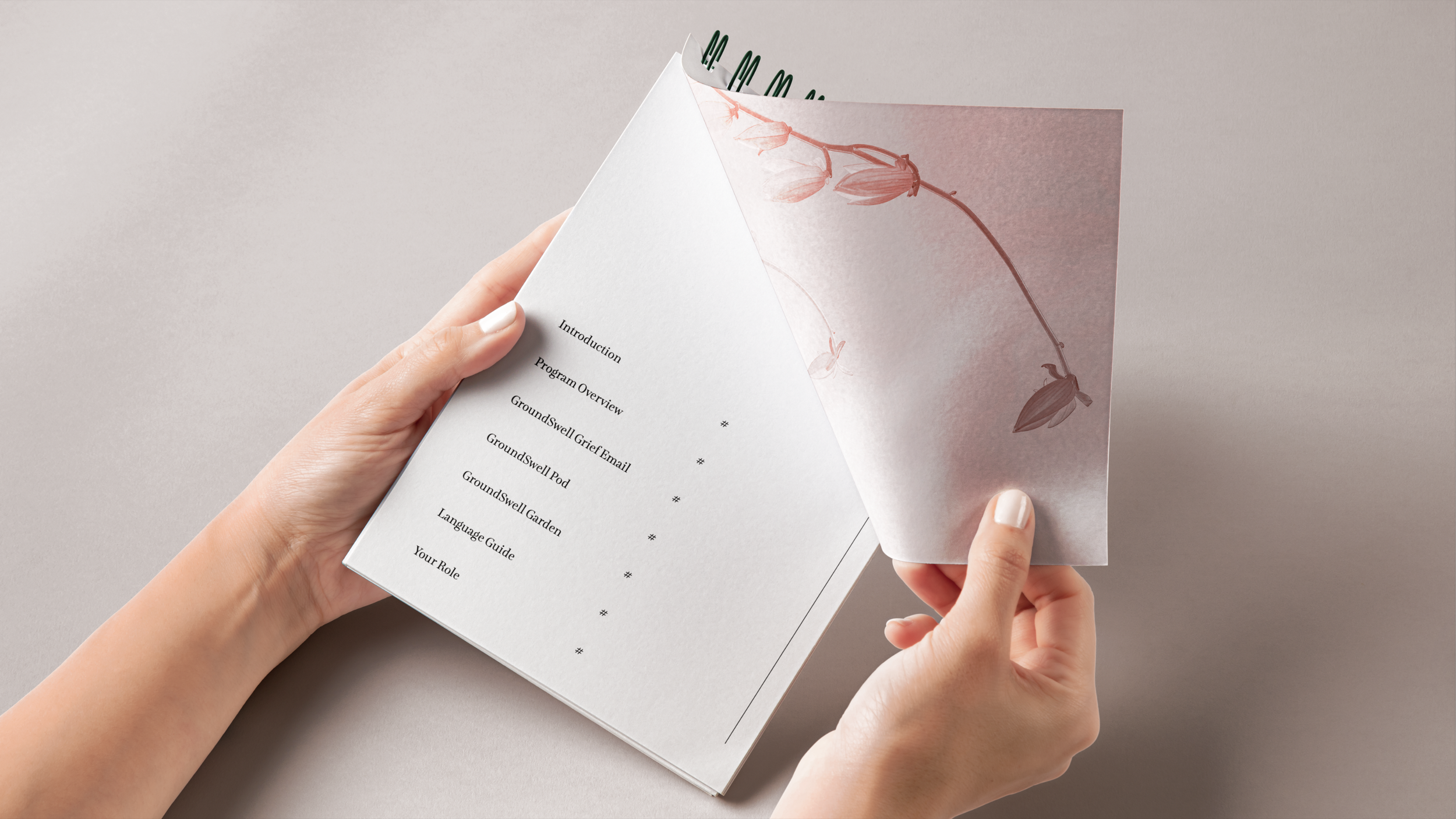
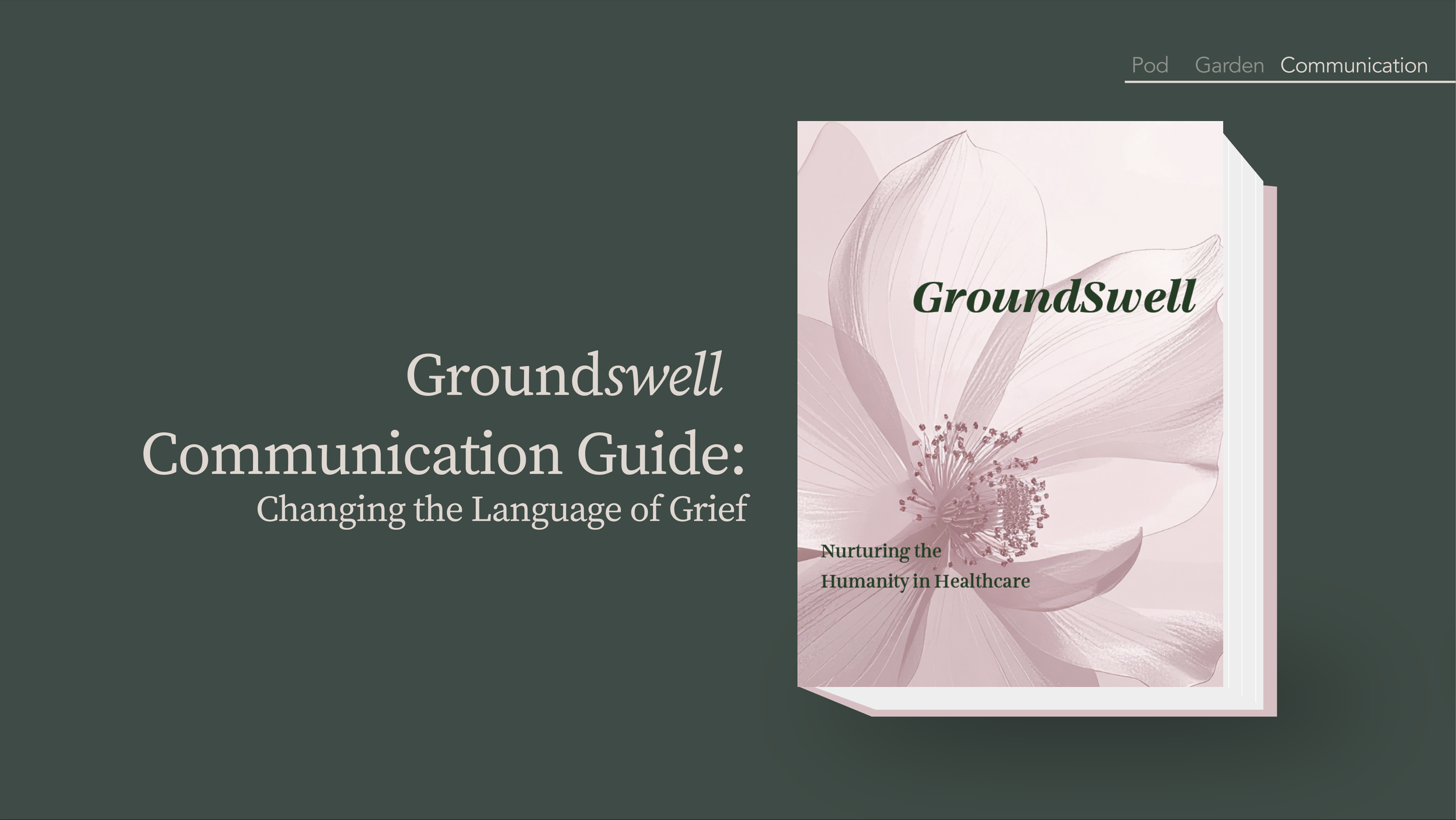
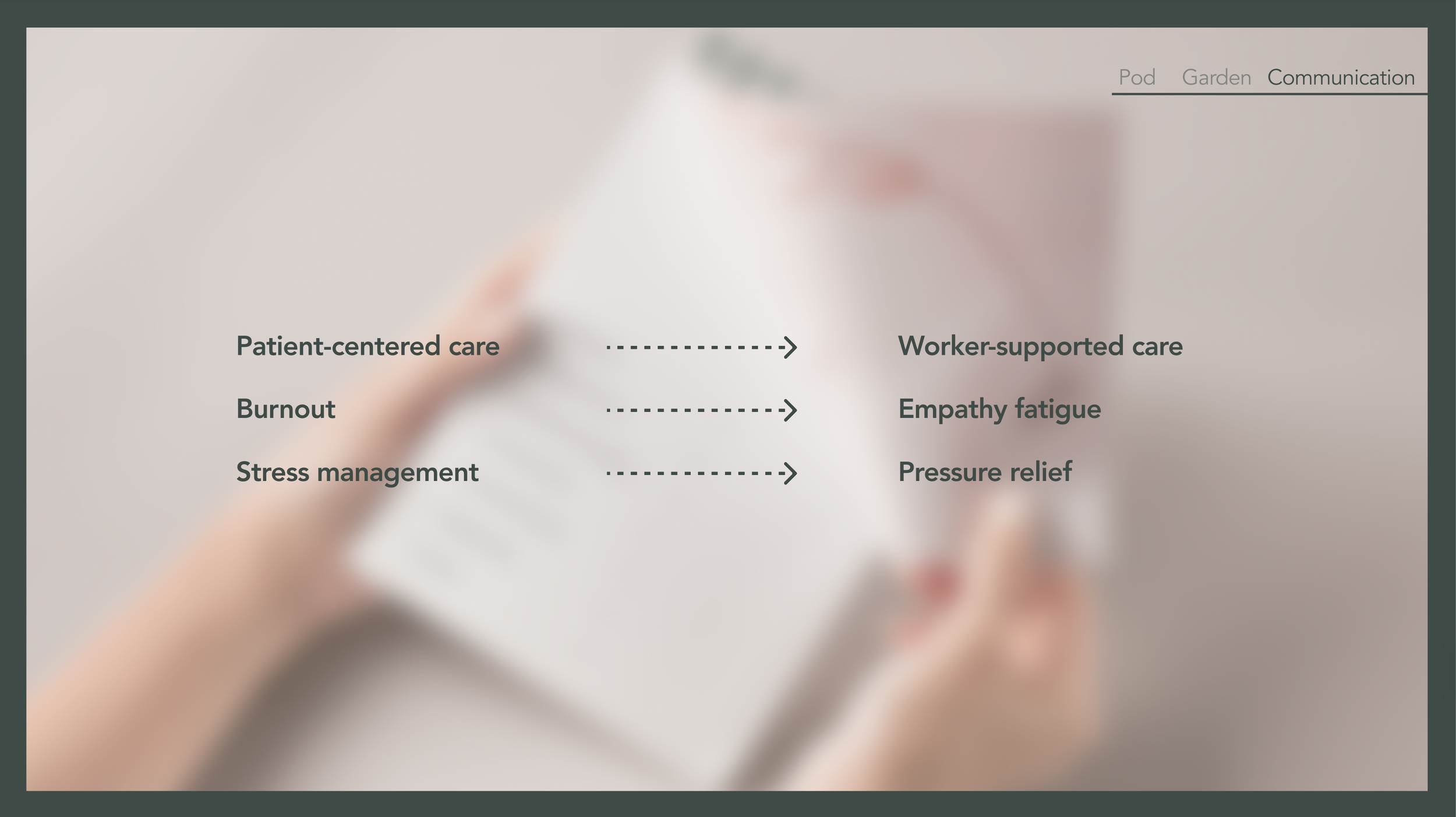
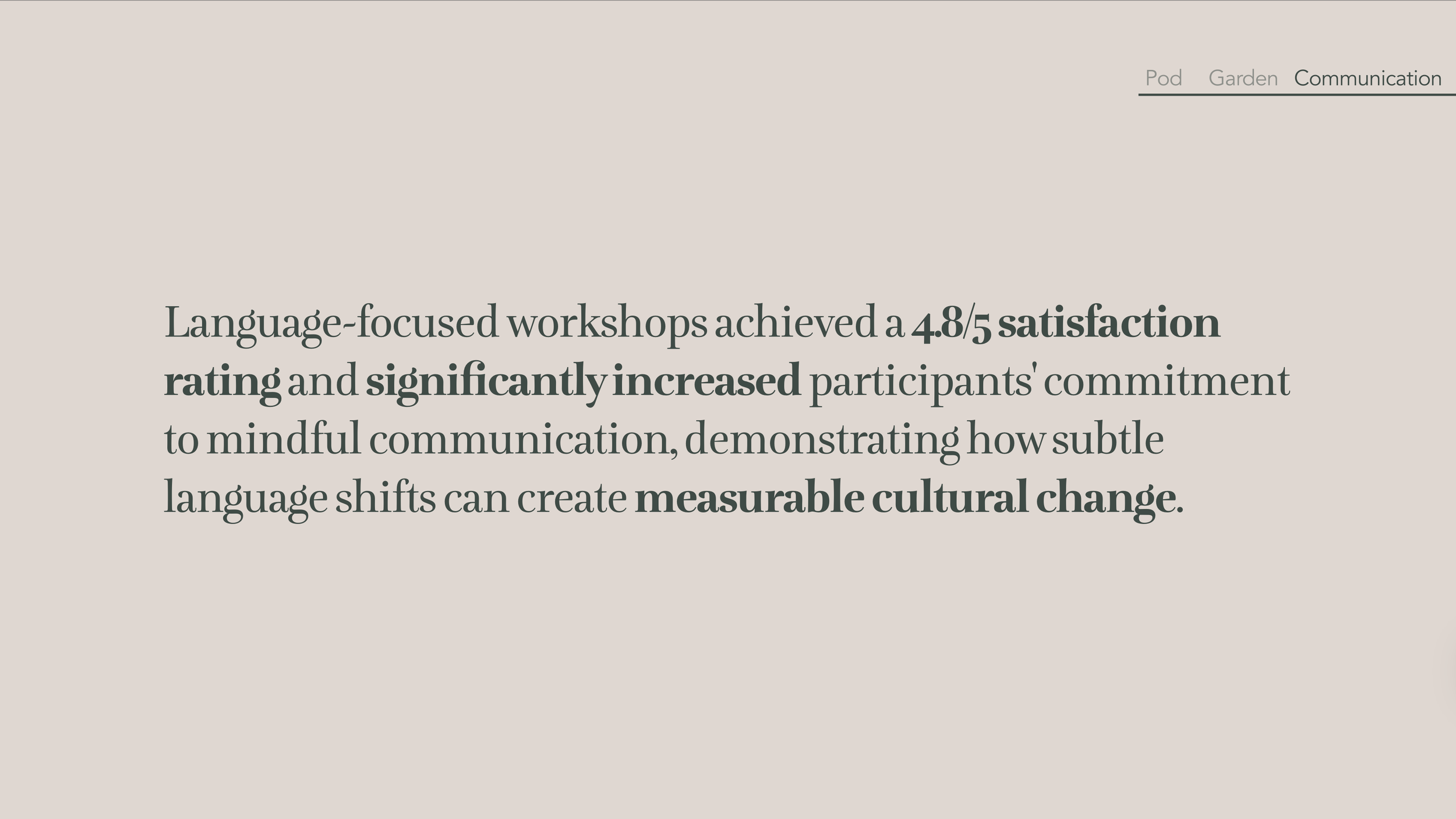
A training guide on how to speak about grief and make space for vulnerable conversations in the workplace
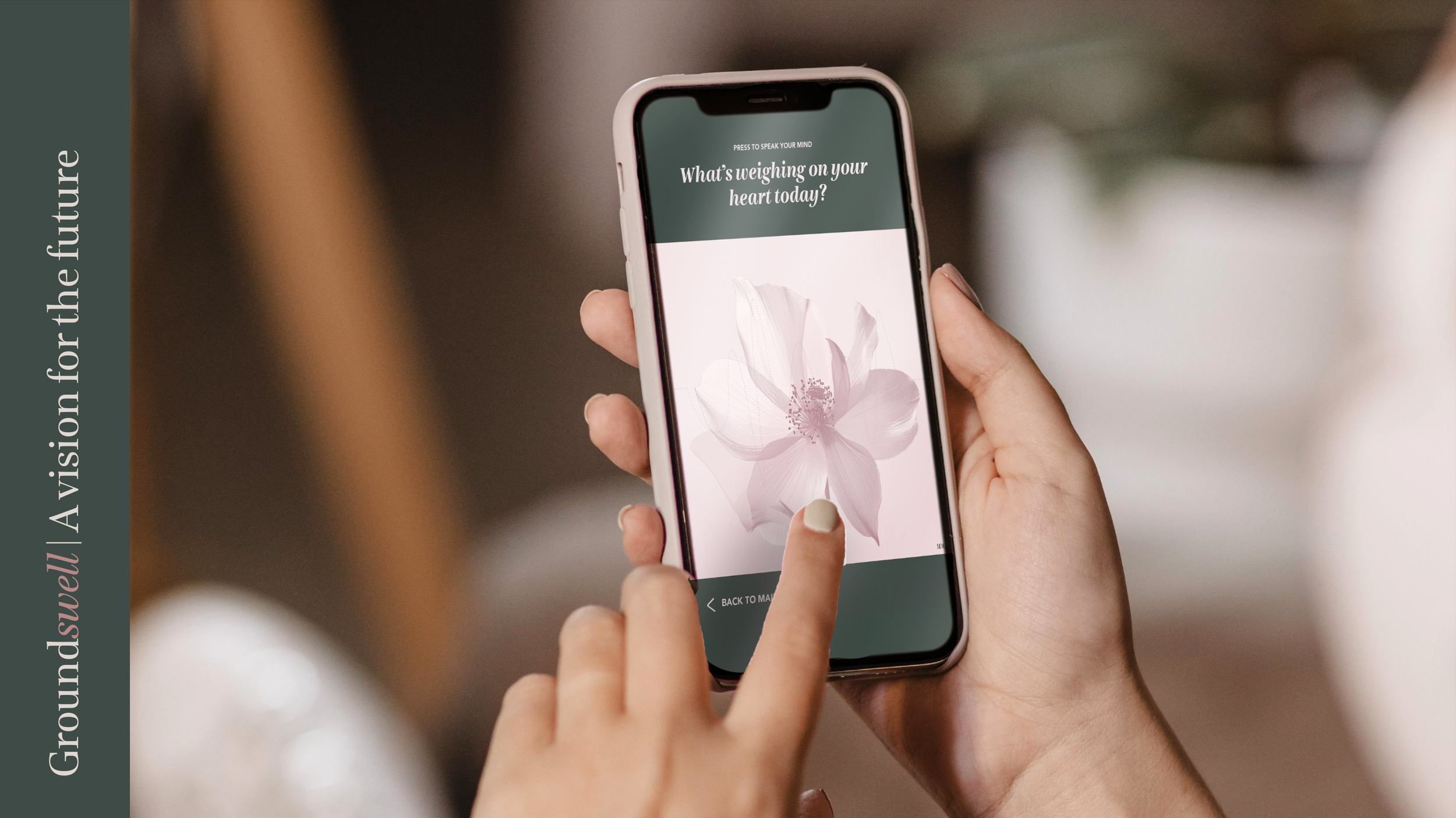
Groundswell Poem “Remember Your Heart” (inspired by Joy Harjo’s poem “Remember”)

Timeline + Process
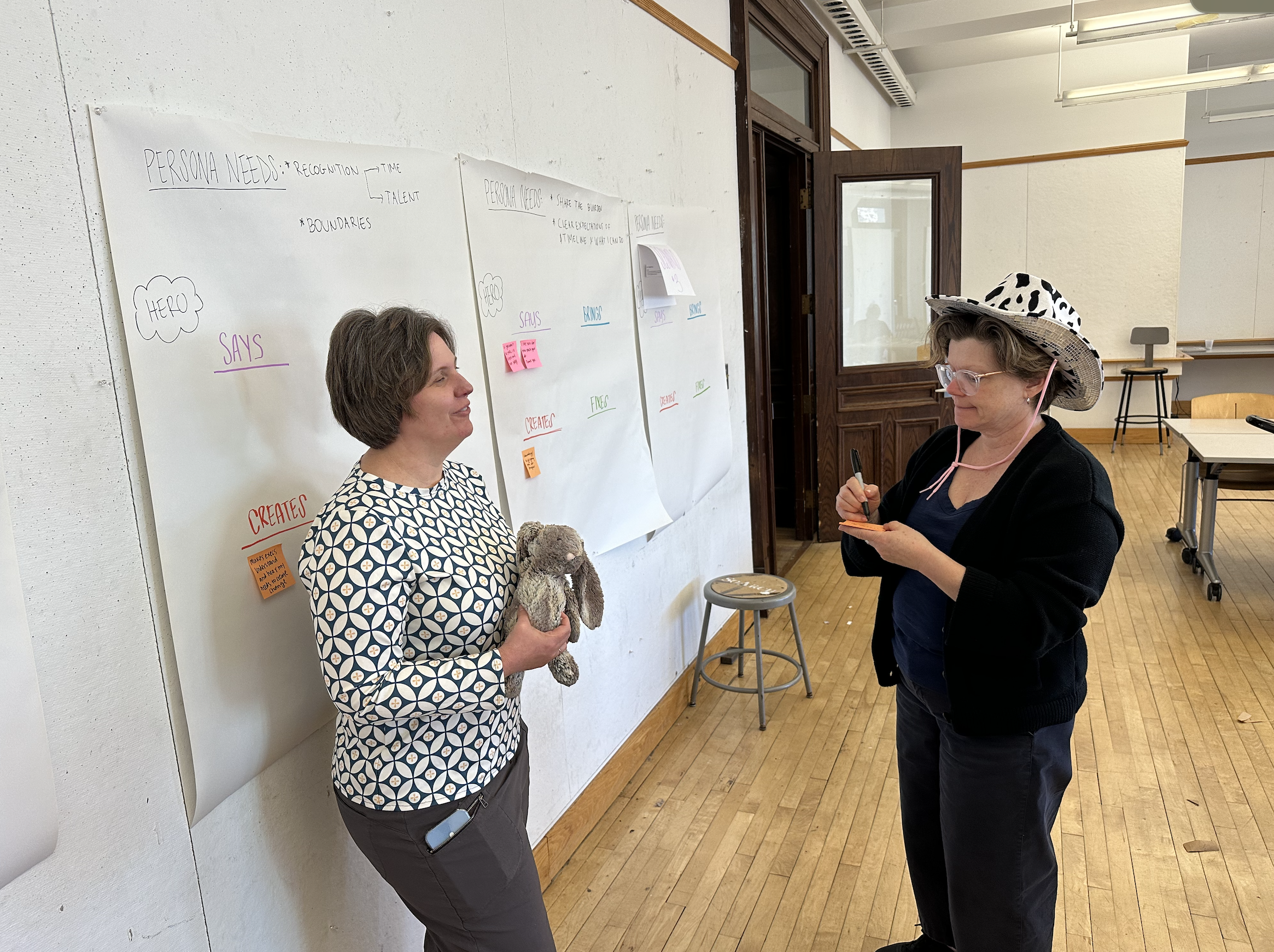
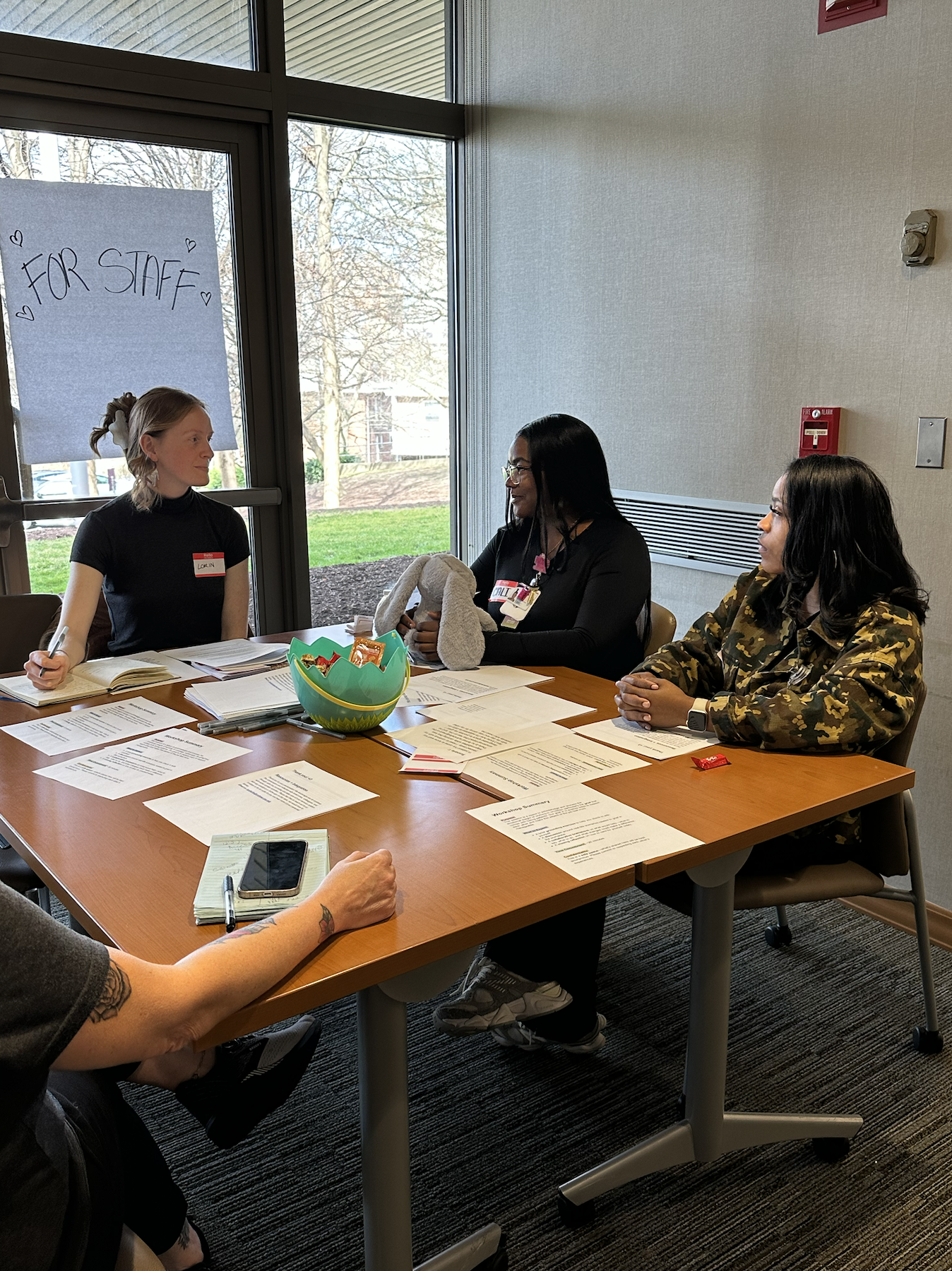
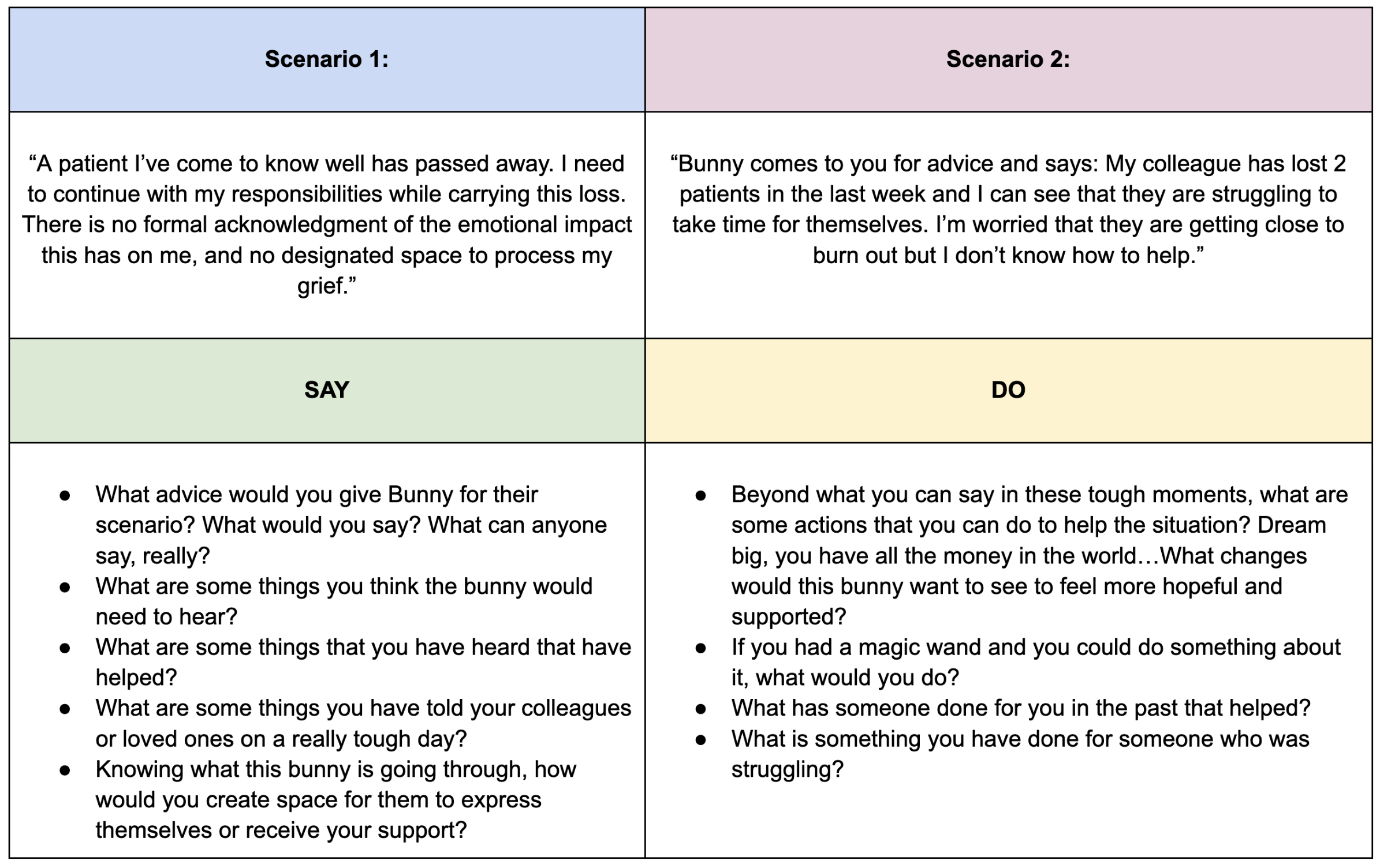
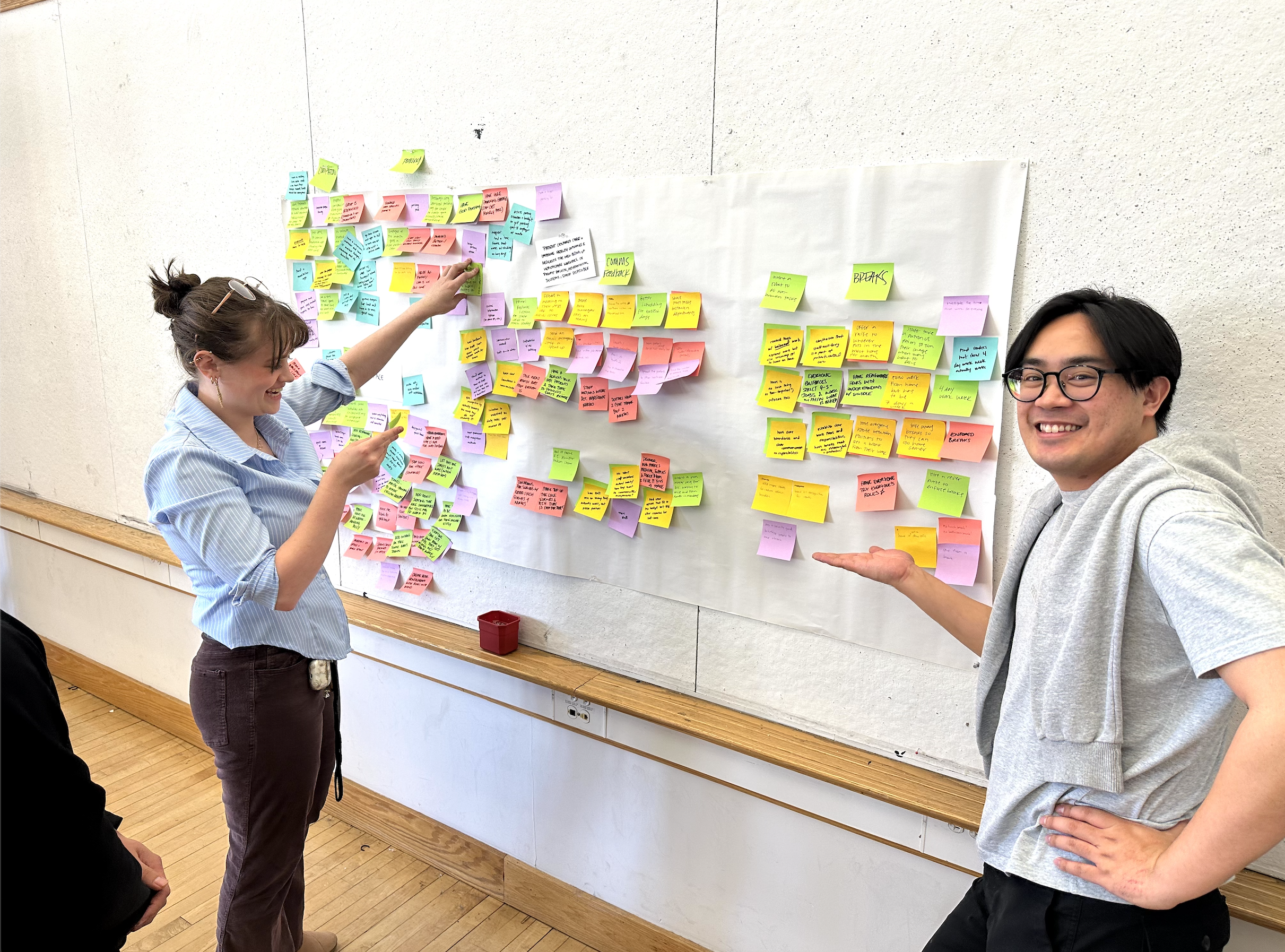
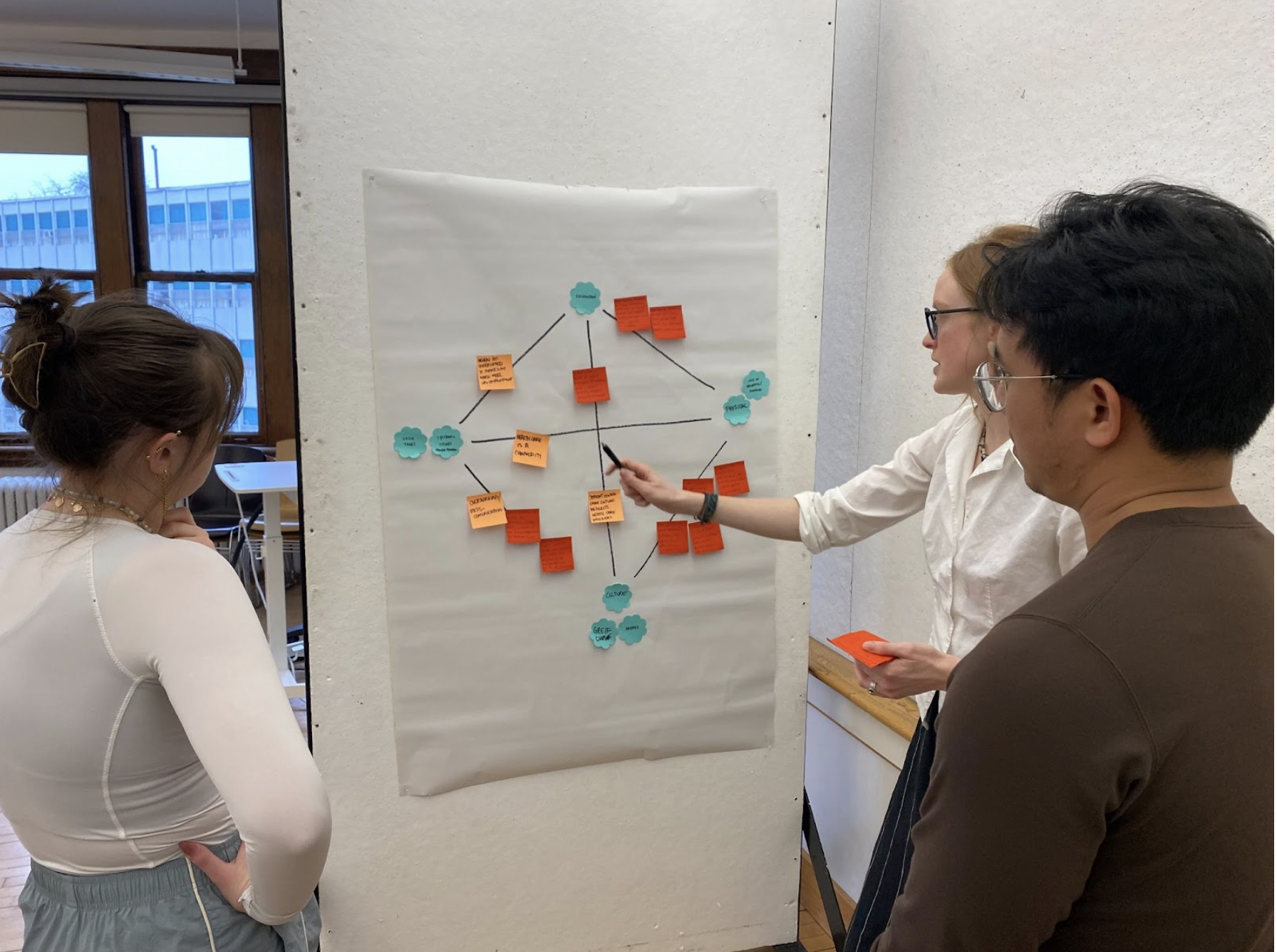
Throughout our research we studied existing papers on the topic of healthcare worker well-being, shadowed and interviewed the staff at Magee both in person and on Zoom. We designed three participatory research activities that we presented to the staff and to doctors attending a Women in White Coats event.
Research I
3 Weeks
Internet Research
Hospital Shadowing
User Interviews
Research II
3 Weeks
Brand + Concept
Mid-Point Presentation
Revisions
Ideation
3 Weeks
Participatory Event
Participatory Workshop
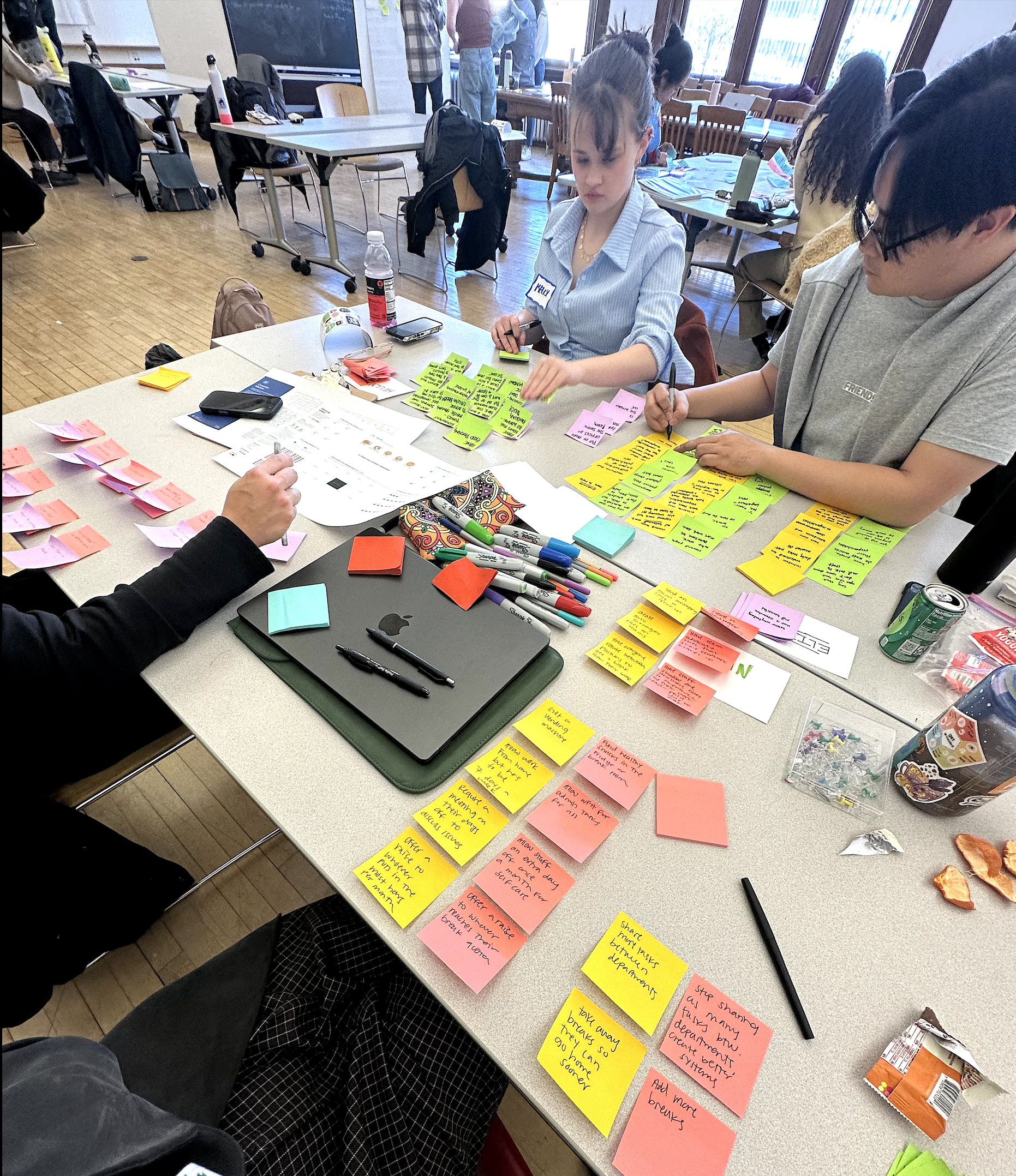
Affinity Mapping
Feedback
3 Weeks
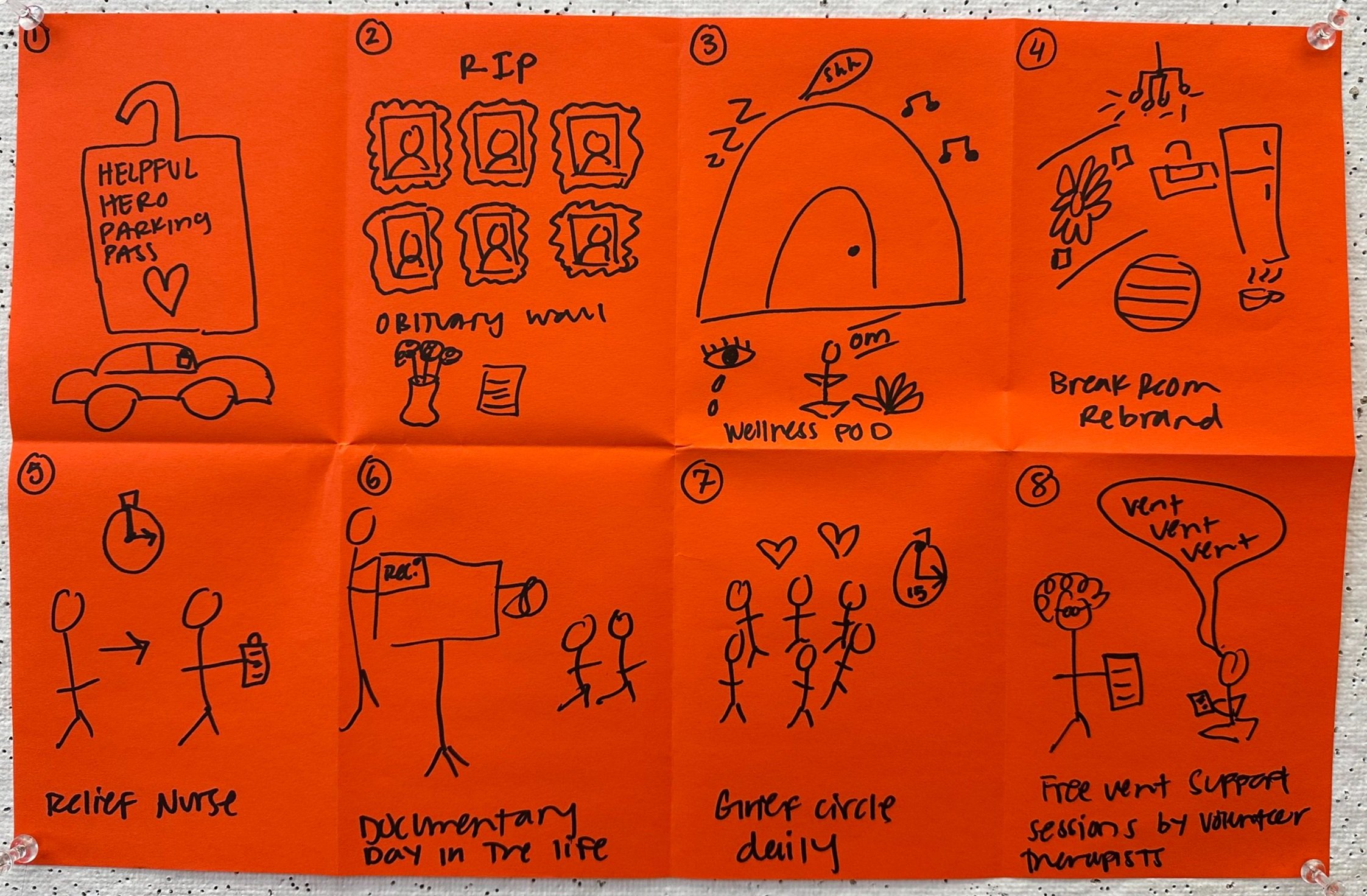
Speed Dating
Revisions
Stakeholder Crit
Presentation
3 Weeks
Client Presentation
Feedback
Grant Approval!
Launch
8 Weeks
Brand Refinement
Production
Training
Research
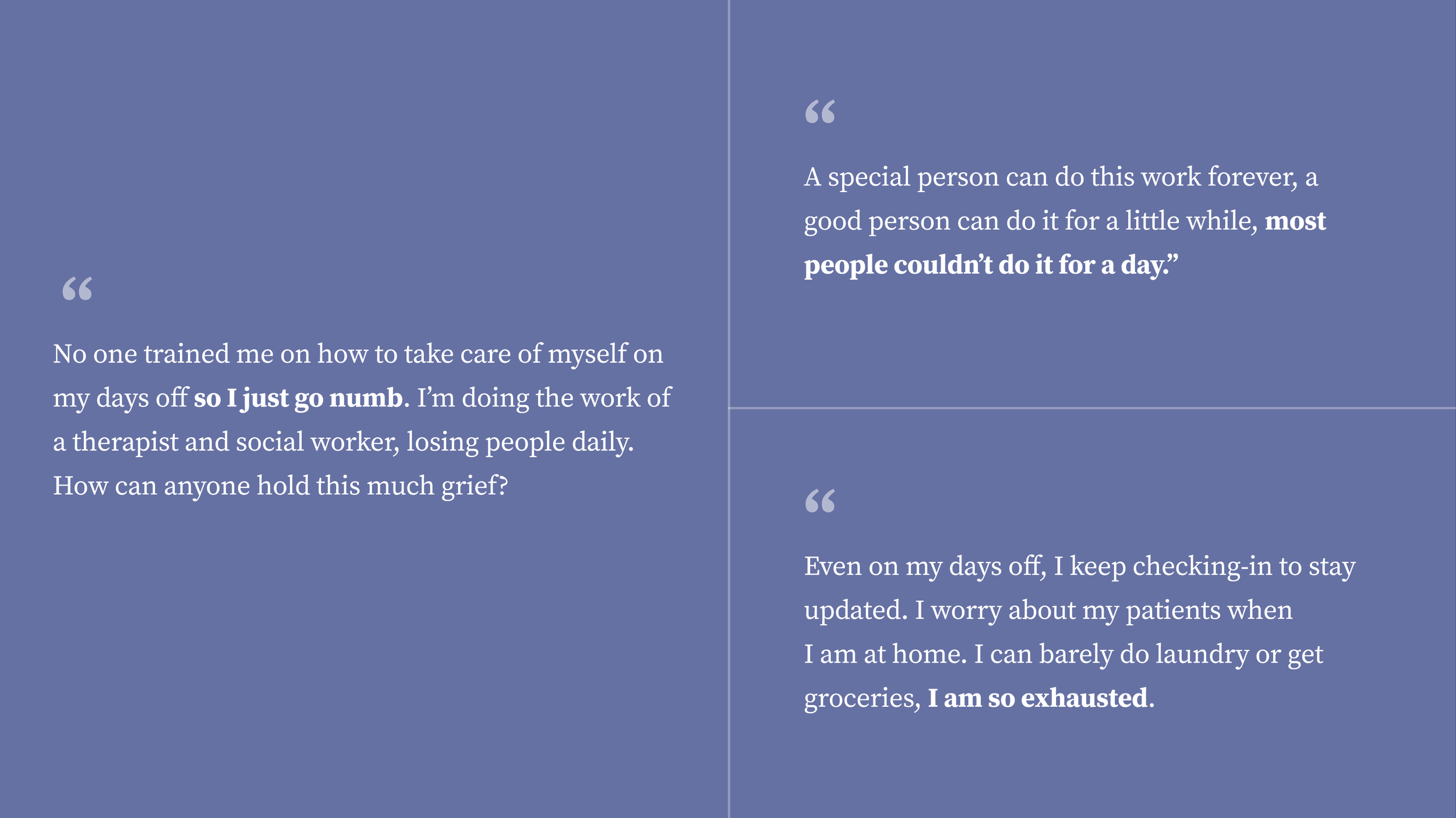
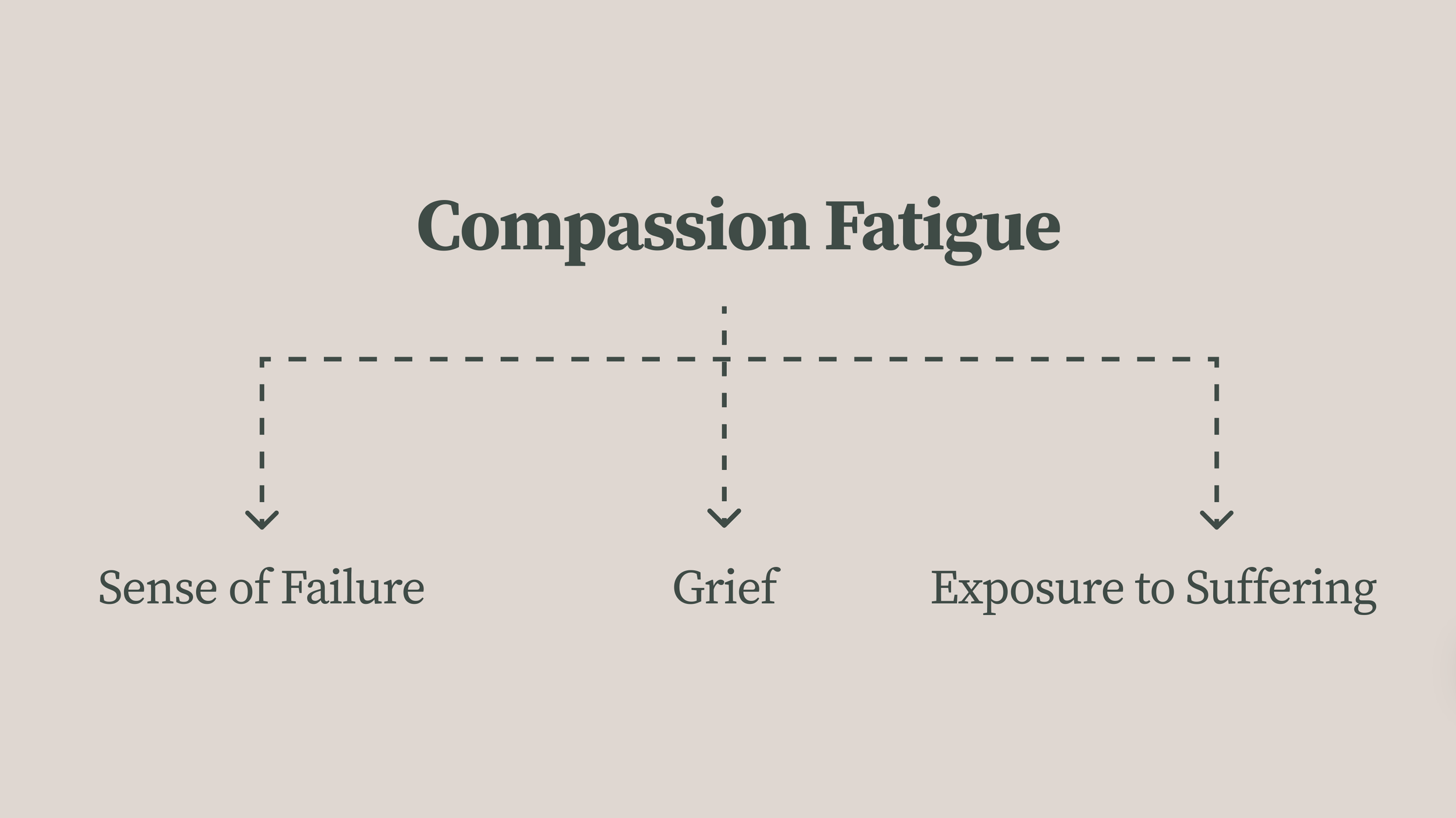
We learned about the phenomenon of “chronic compounded grief” among oncology nurses, and how repeated exposure to loss accumulates over time when not properly processed. Groundswell helps build a future where the well-being of care workers is the centerpiece of the healthcare system.
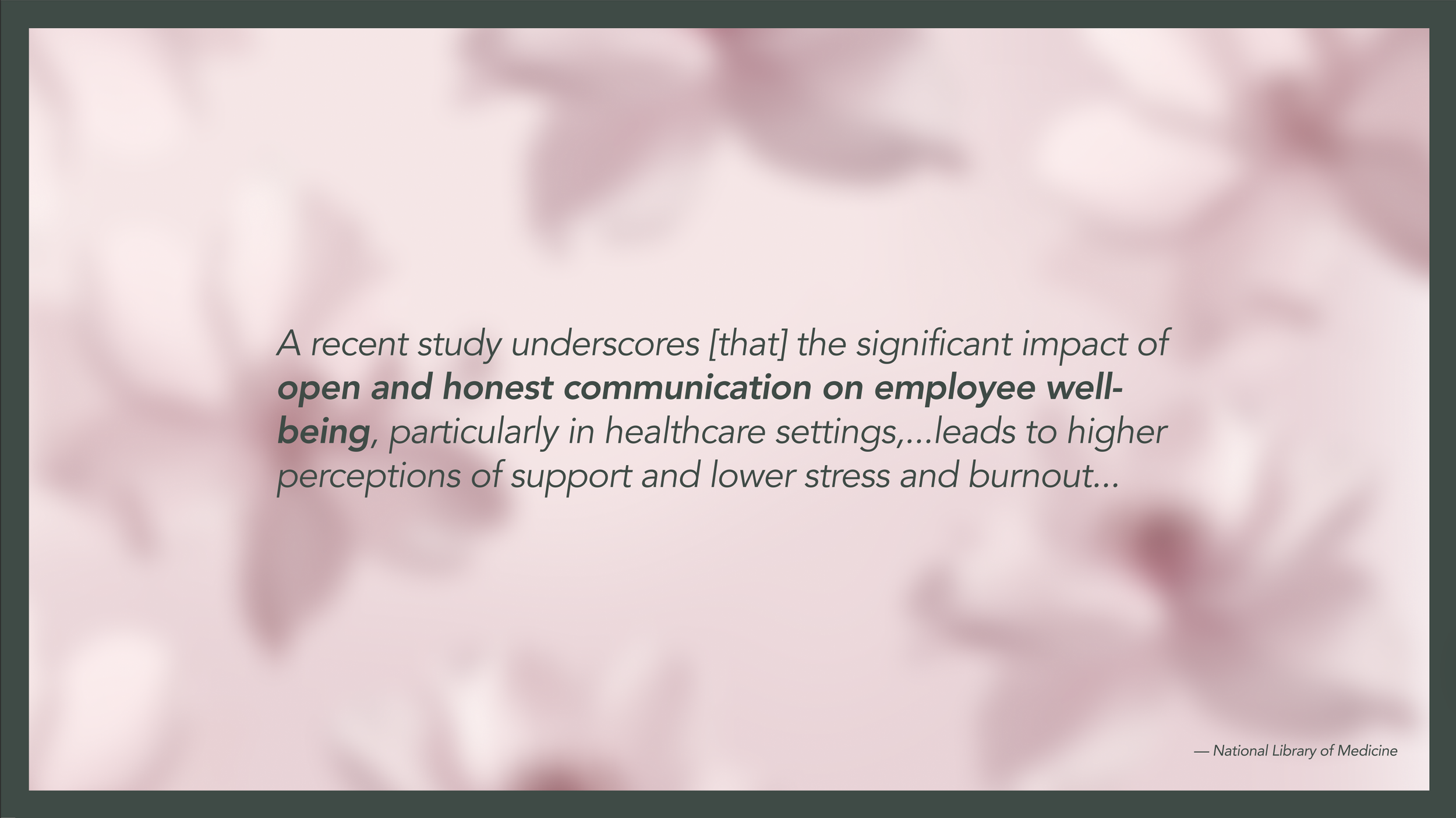
The research findings support the hypothesis that patient-centered healthcare systems neglect worker well-being, revealing systemic issues including disconnects between staff and leadership due to poor feedback systems, power dynamics between roles, generational tensions, and inadequate physical environments that contribute to burnout.
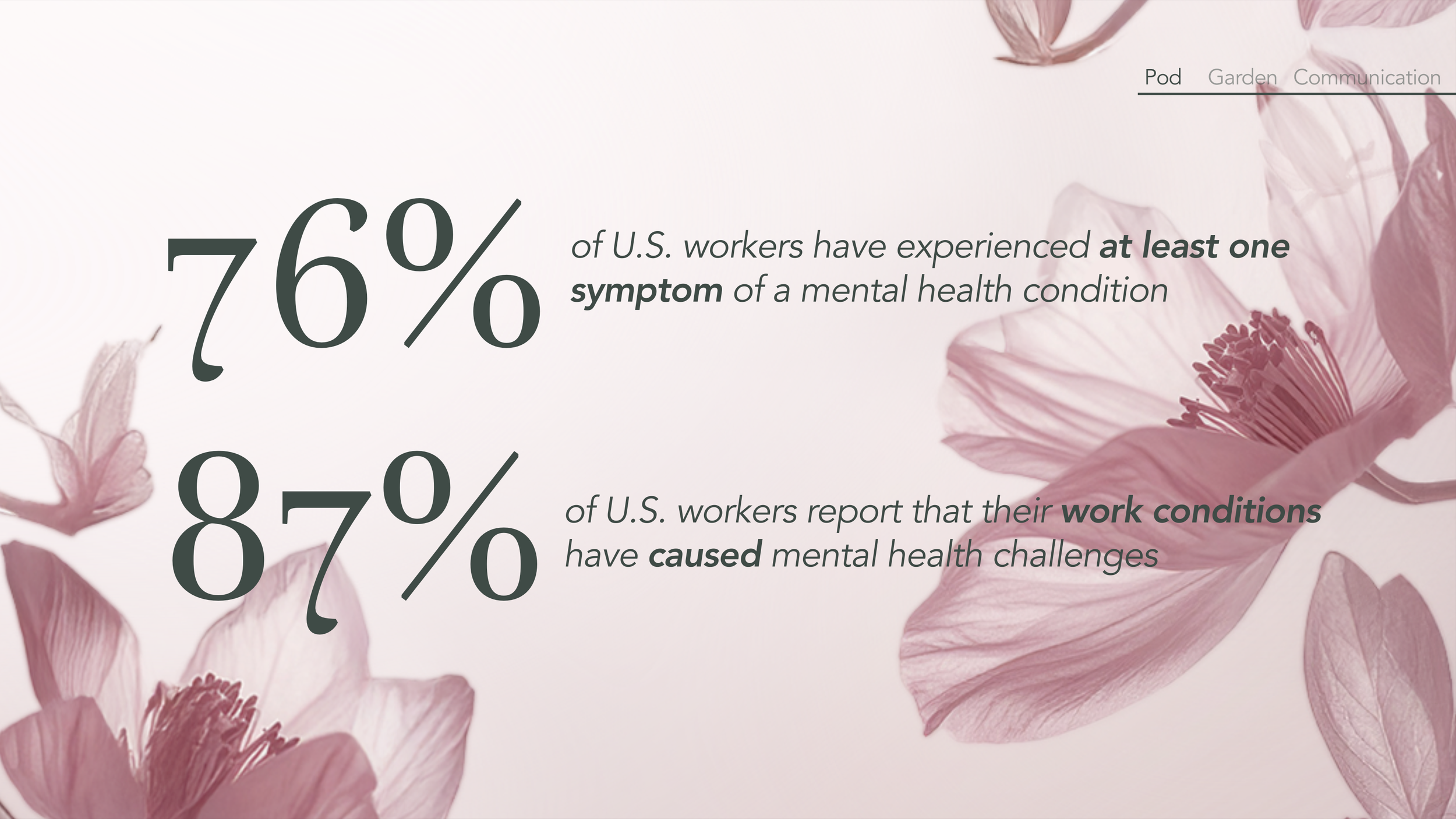
Healthcare workers face daily challenges from insufficient funding, lack of benefits, overwhelming tasks, poor recognition, limited breaks, and particularly unaddressed grief culture in oncology work where emotional toll remains a "silent burden" without proper processing spaces.
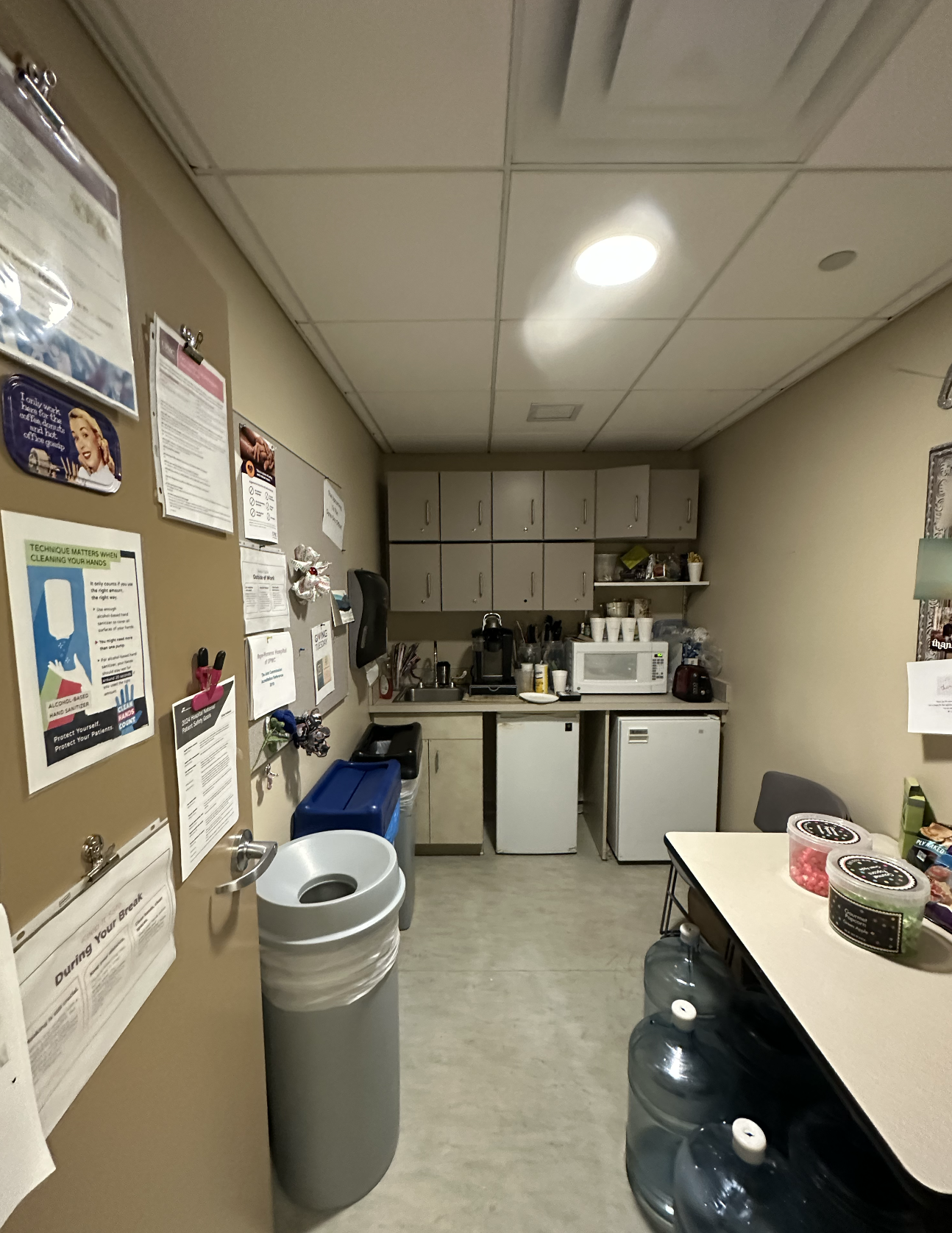
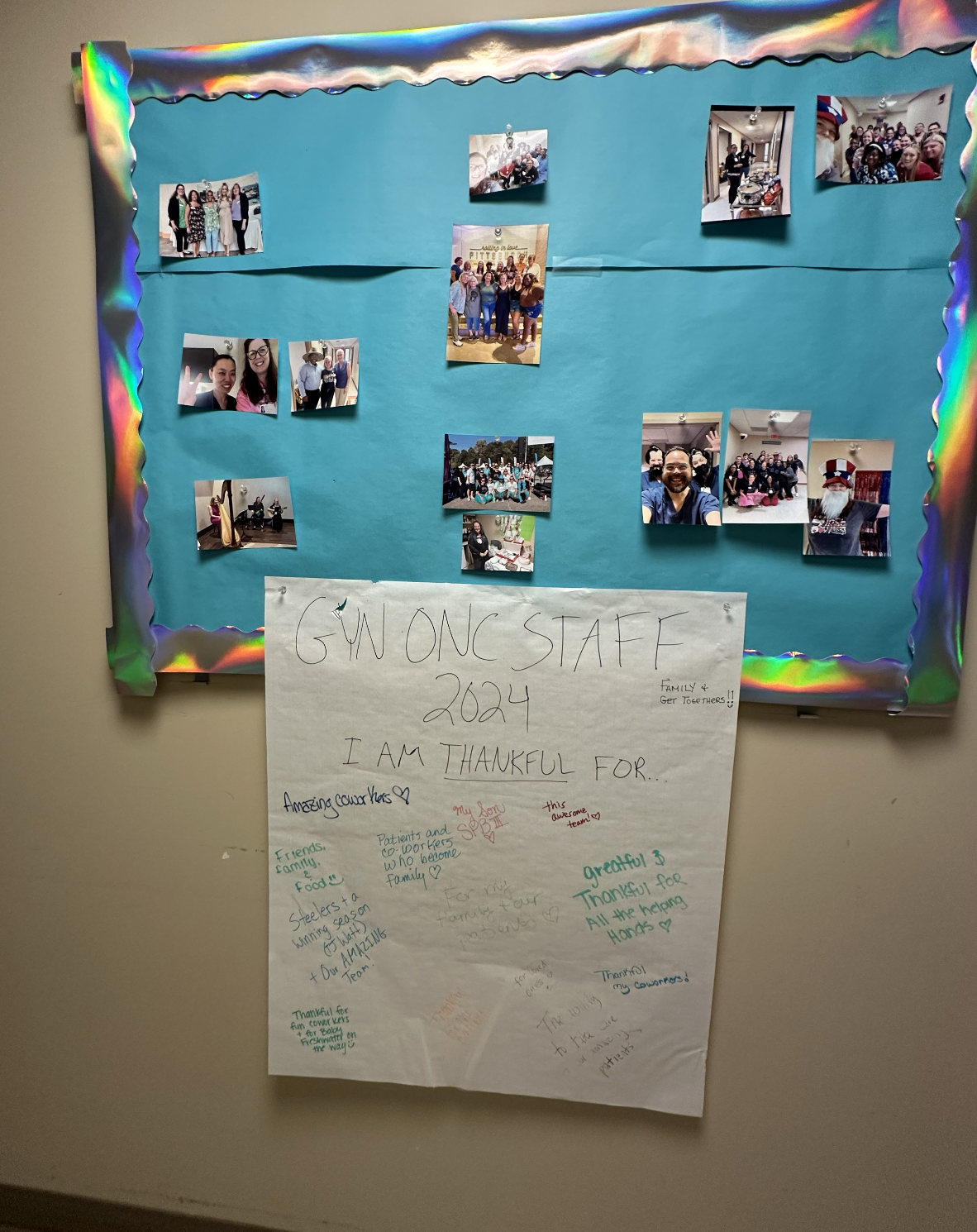
Current solutions like informal recognition efforts (Snap Jar), minimal grief support (obituary walls), and basic wellness amenities (free coffee) are underfunded and treat staff well-being as an afterthought rather than institutional priority, highlighting the urgent need for systematic changes including structured communication channels, funded recognition programs, designated grief processing spaces, improved physical environments, and cultural shifts that genuinely prioritize healthcare worker sustainability alongside patient care.
Findings
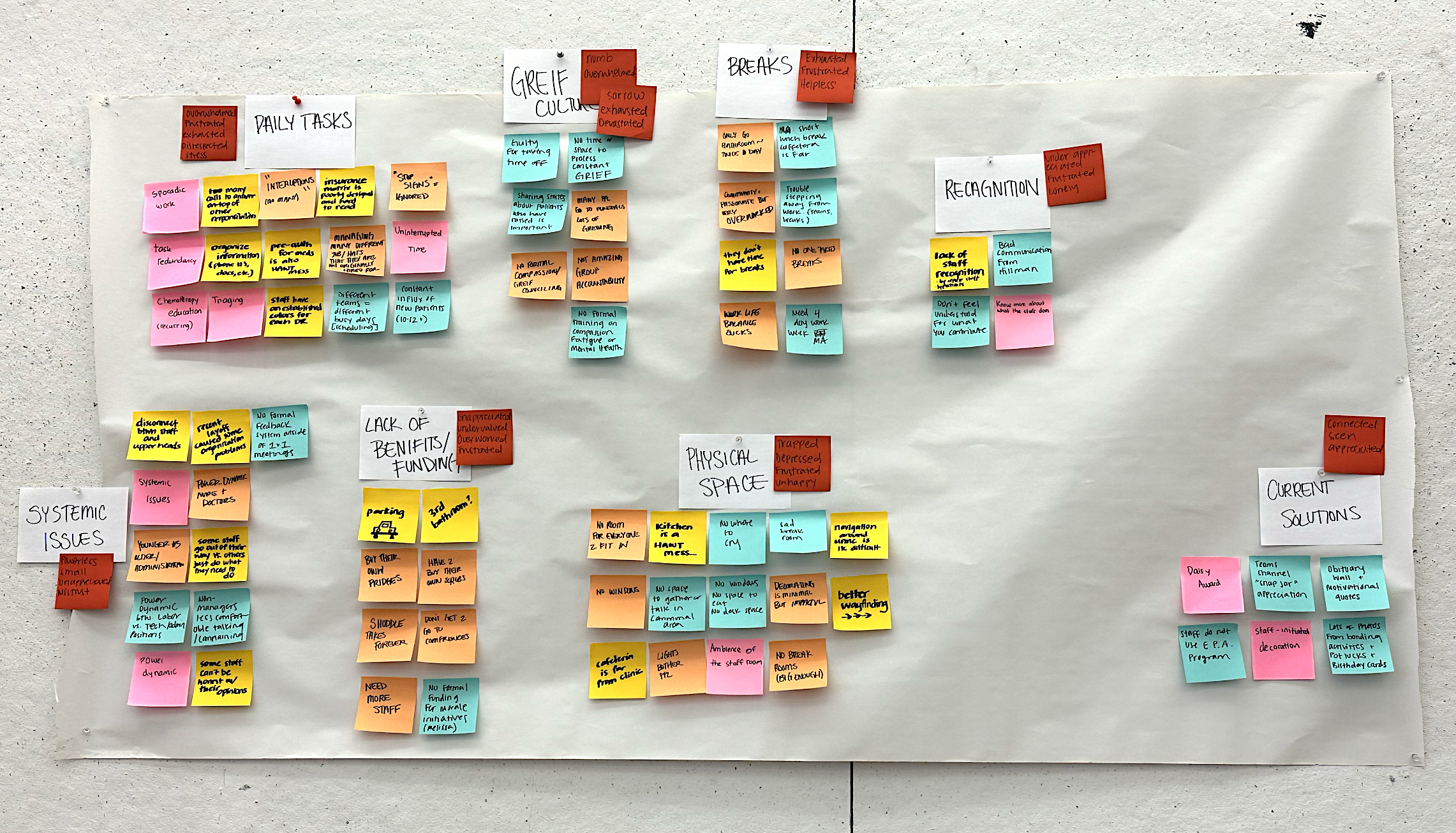
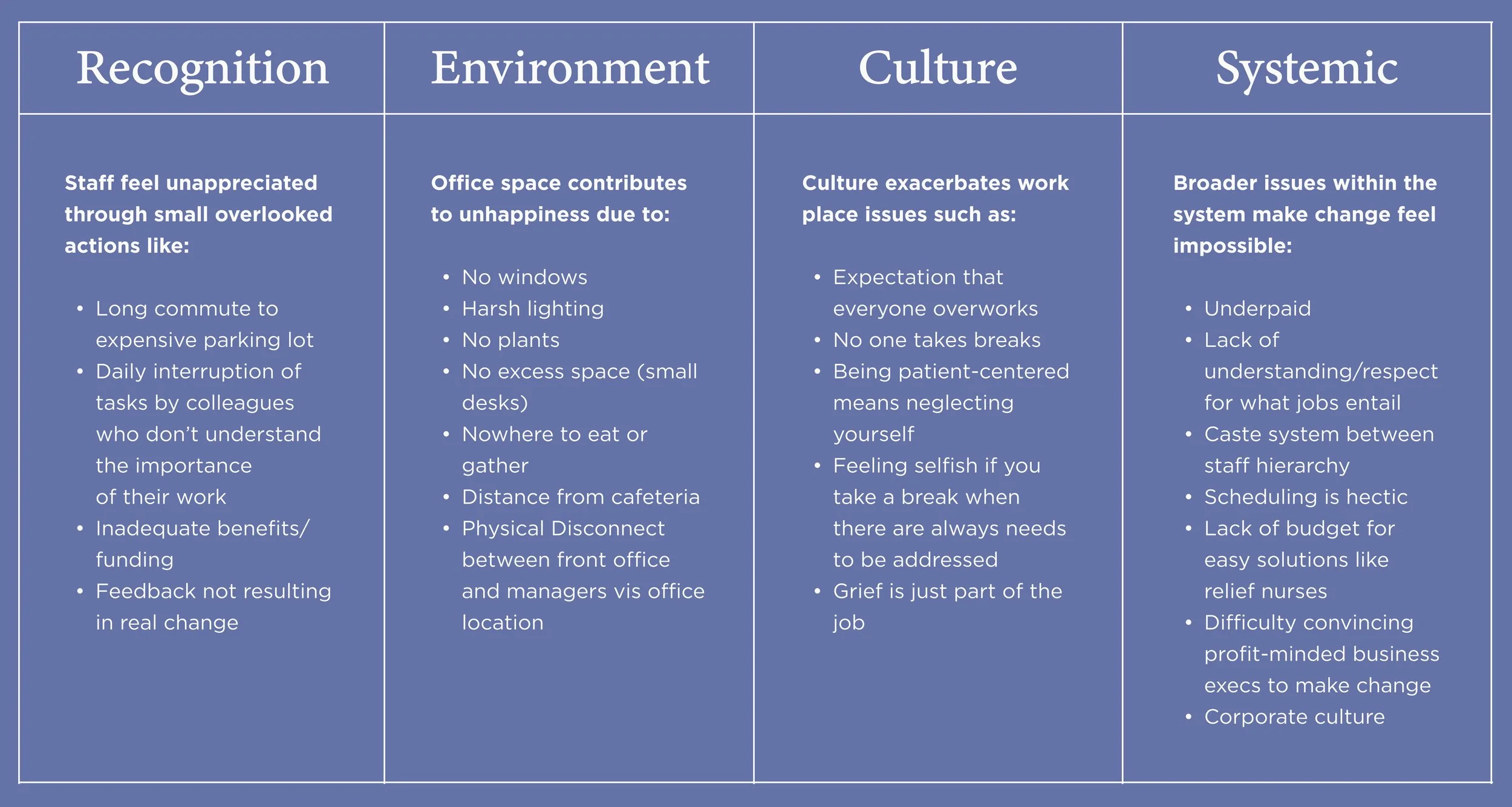
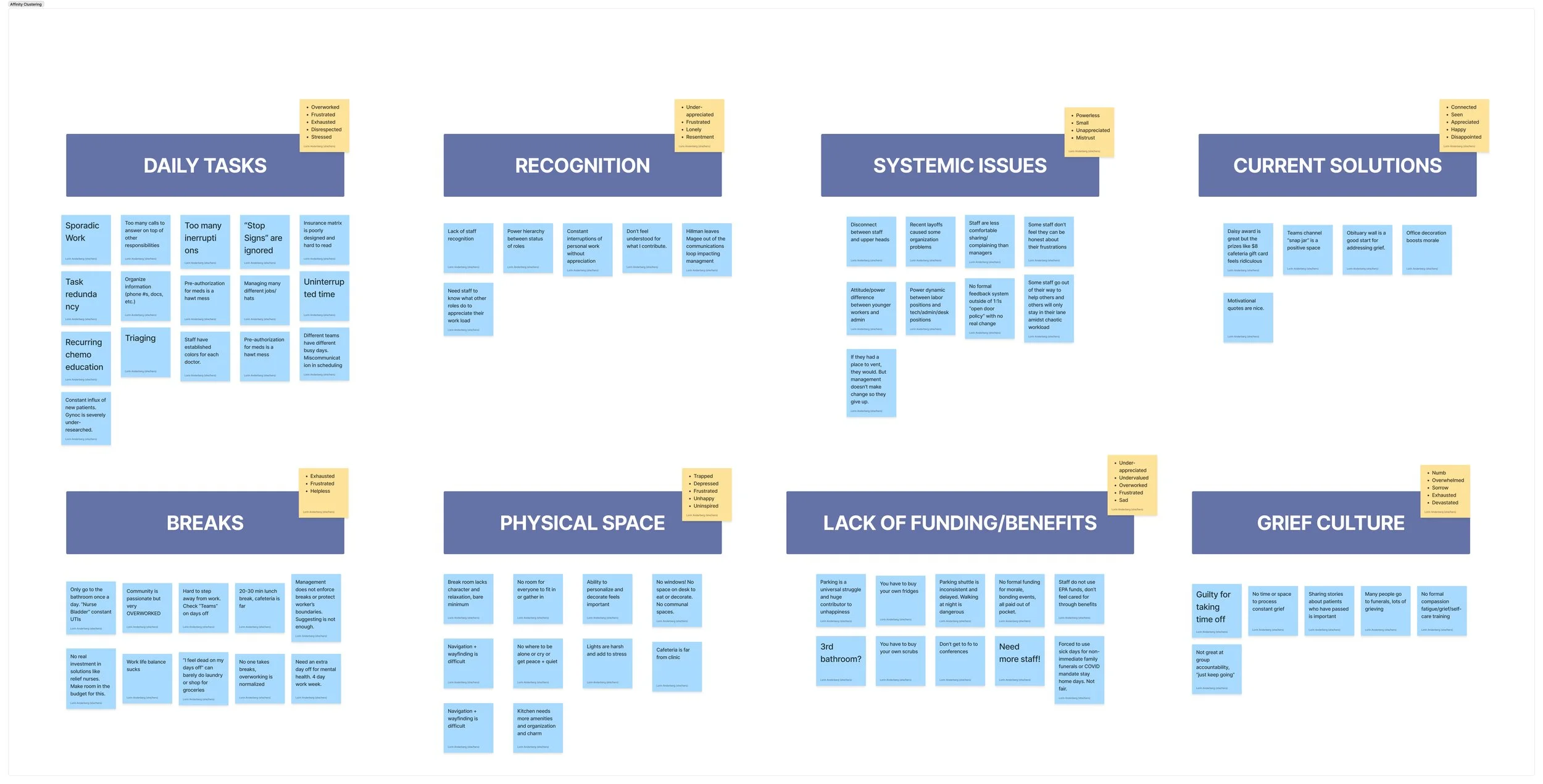
The biggest frustrations centered on lack of recognition despite hard work, inadequate resources including insufficient space for both work and decompression, and toxic workplace dynamics that create burnout and affect patient care. Simple, actionable solutions emerged from the research: more verbal affirmations, designated spaces for grieving or relaxation activities like coloring, access to snacks and comfortable break areas, improved communication around patient deaths, and more peer discussions on grief. All of these could significantly impact morale and well-being without requiring major budget increases or external resources.
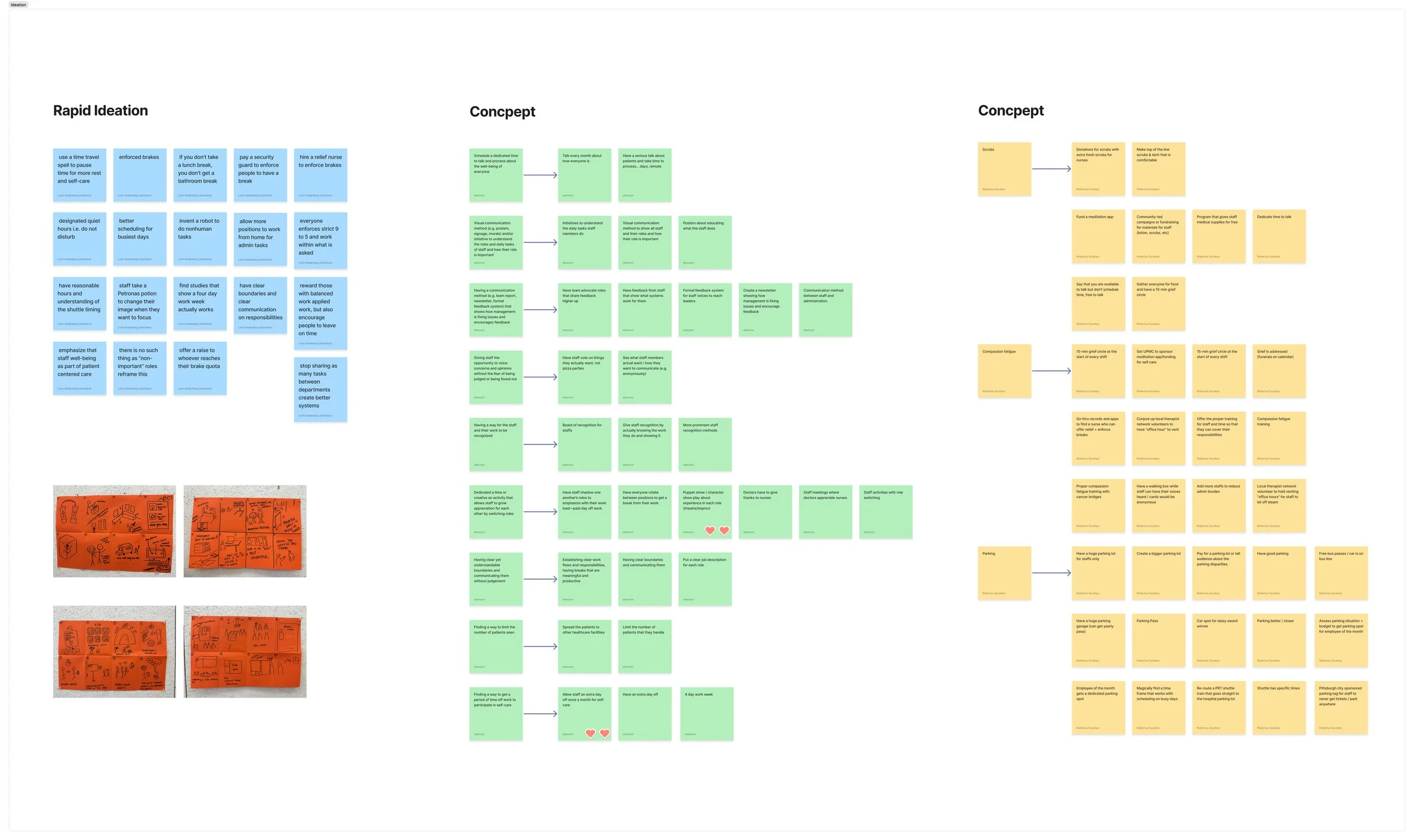
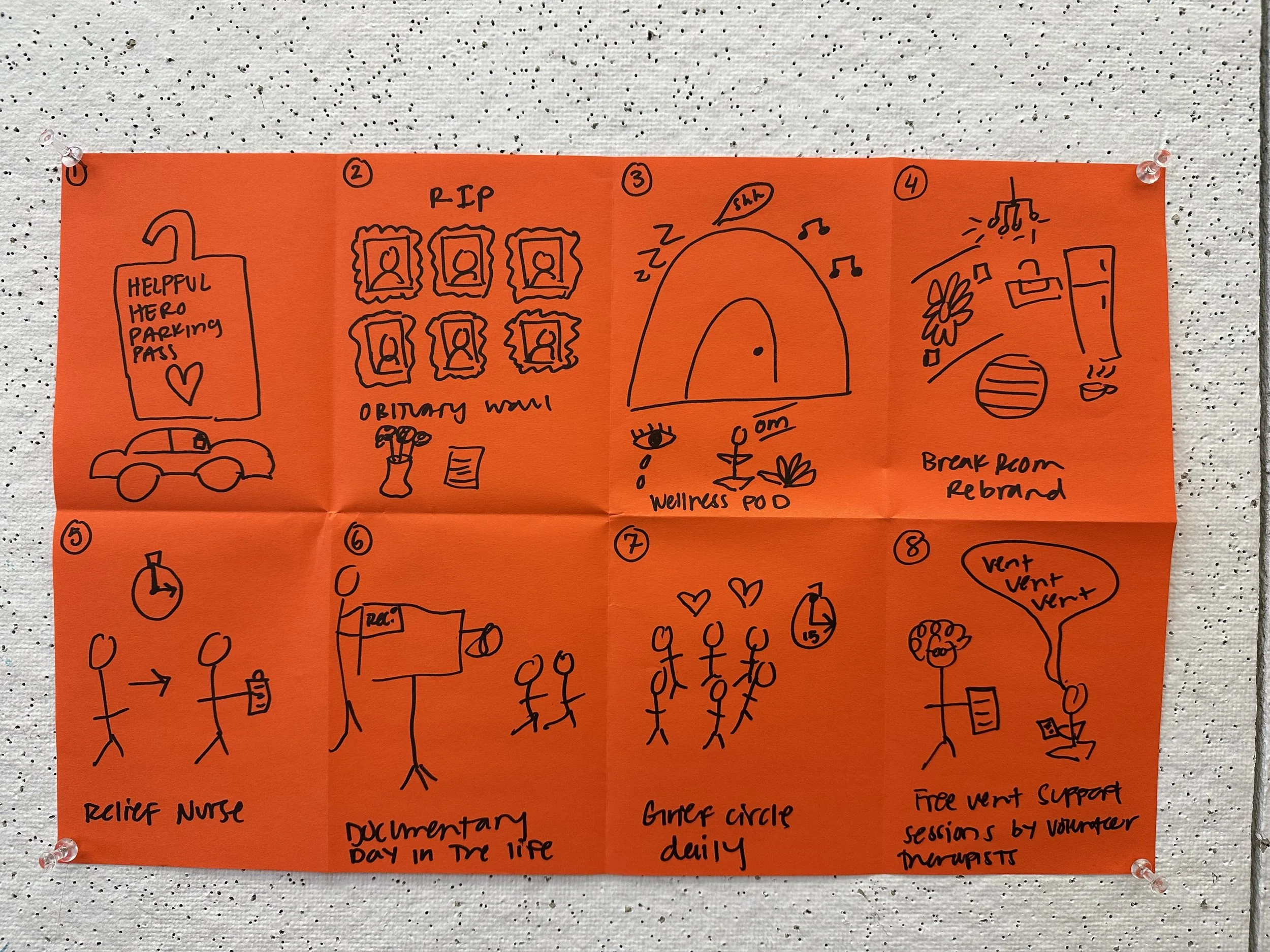
We developed the core concept of Groundswell as a movement for support that emerges from within the care team, and then iterated on the core components required to make a systemic culture change. Through feedback with classmates, industry professionals, and stakeholders, we landed on a holistic ecosystem.
We witnessed and heard about the impact of the cramped and windowless environment, administrative overload, lack of structured support systems, and a strong yet fractured culture of empathetic staff who give their all but are left unsupported by and frustrated at a system that leaves them feeling helpless.
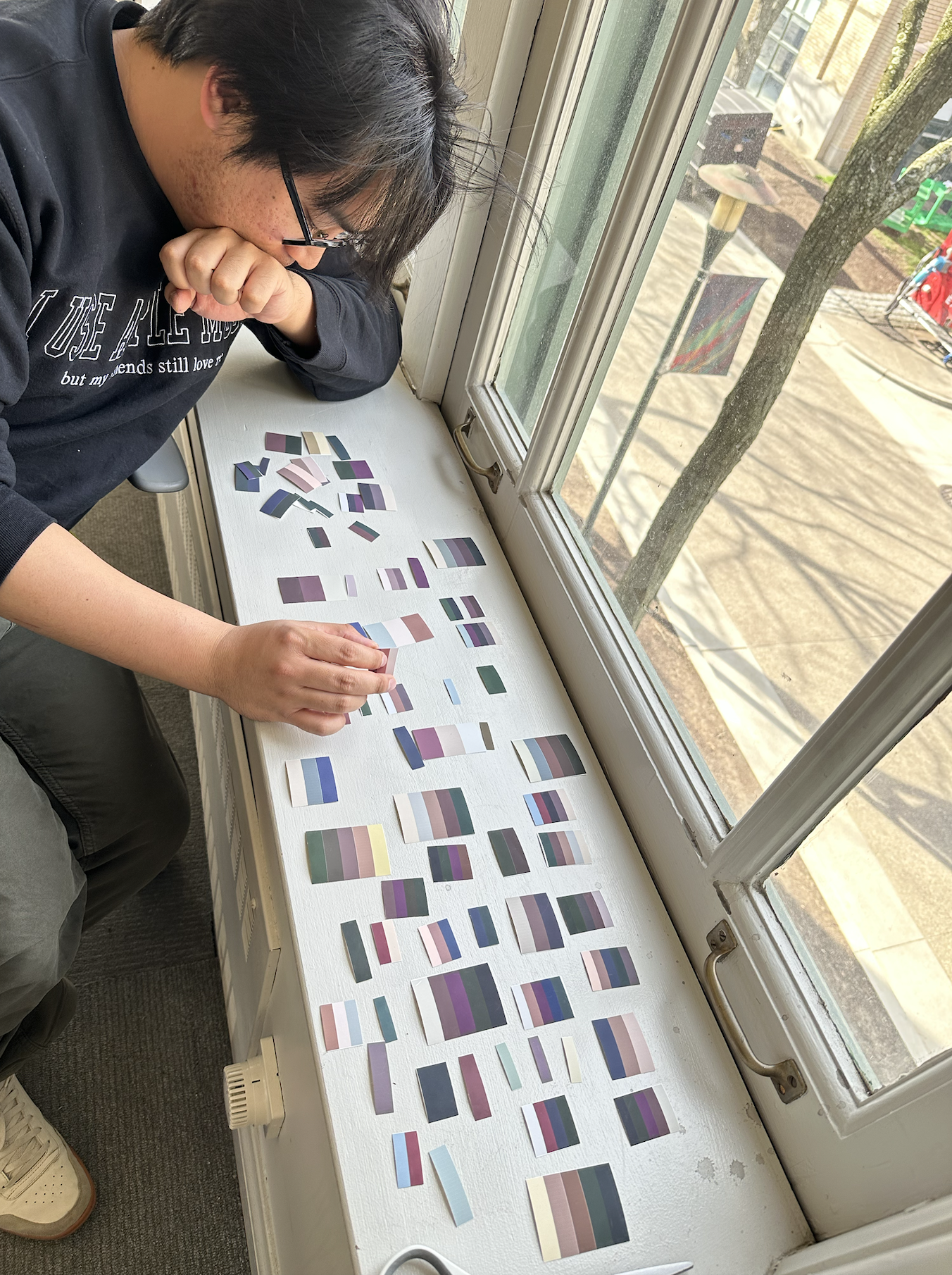
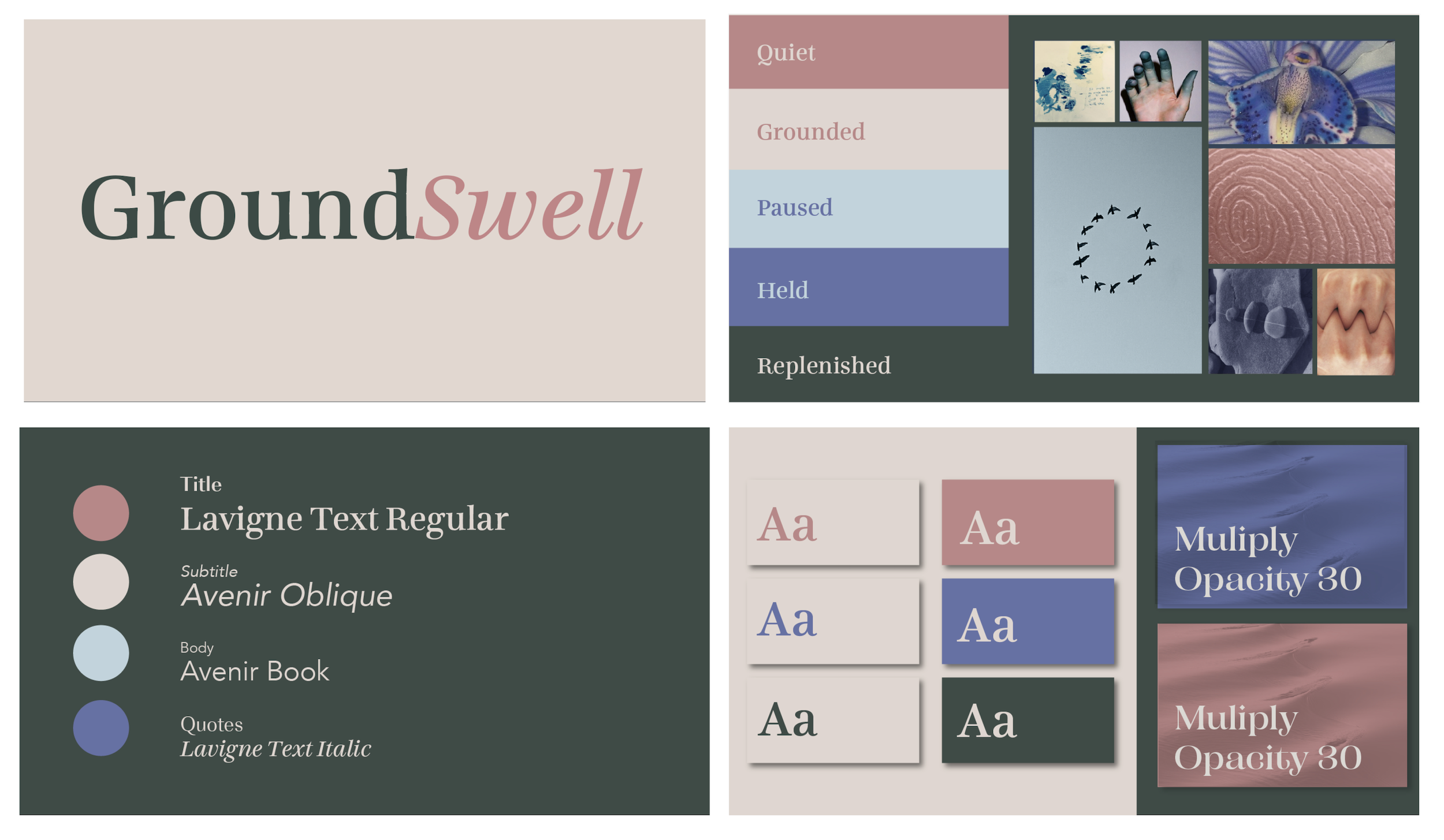
Conclusions
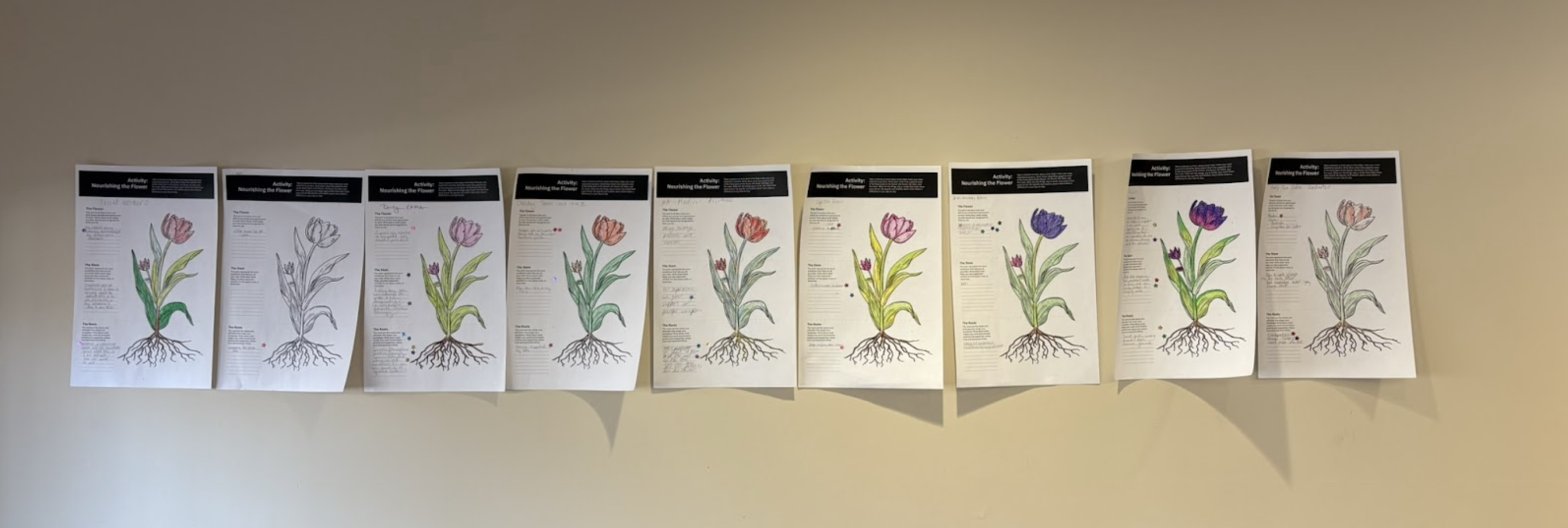
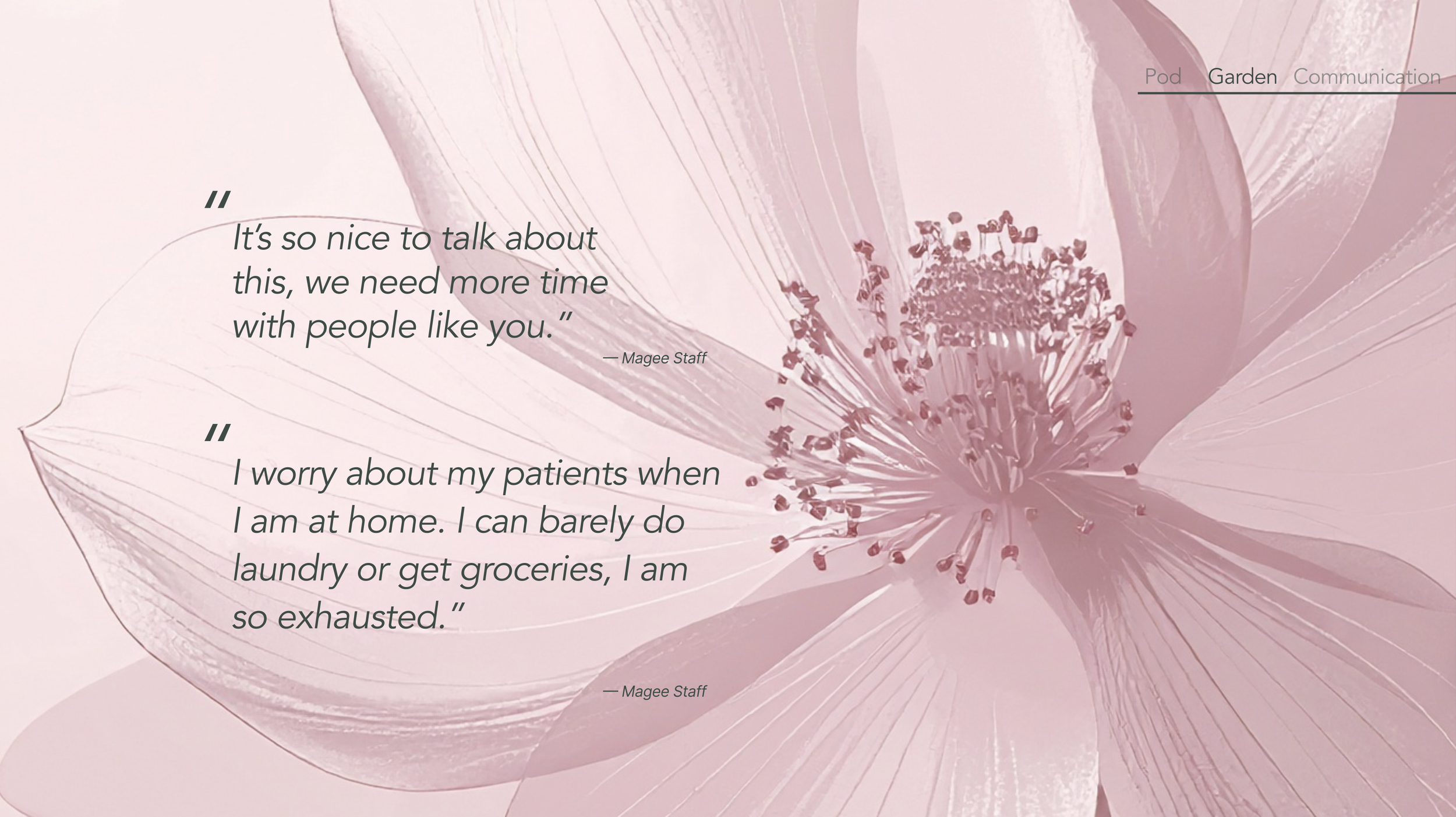
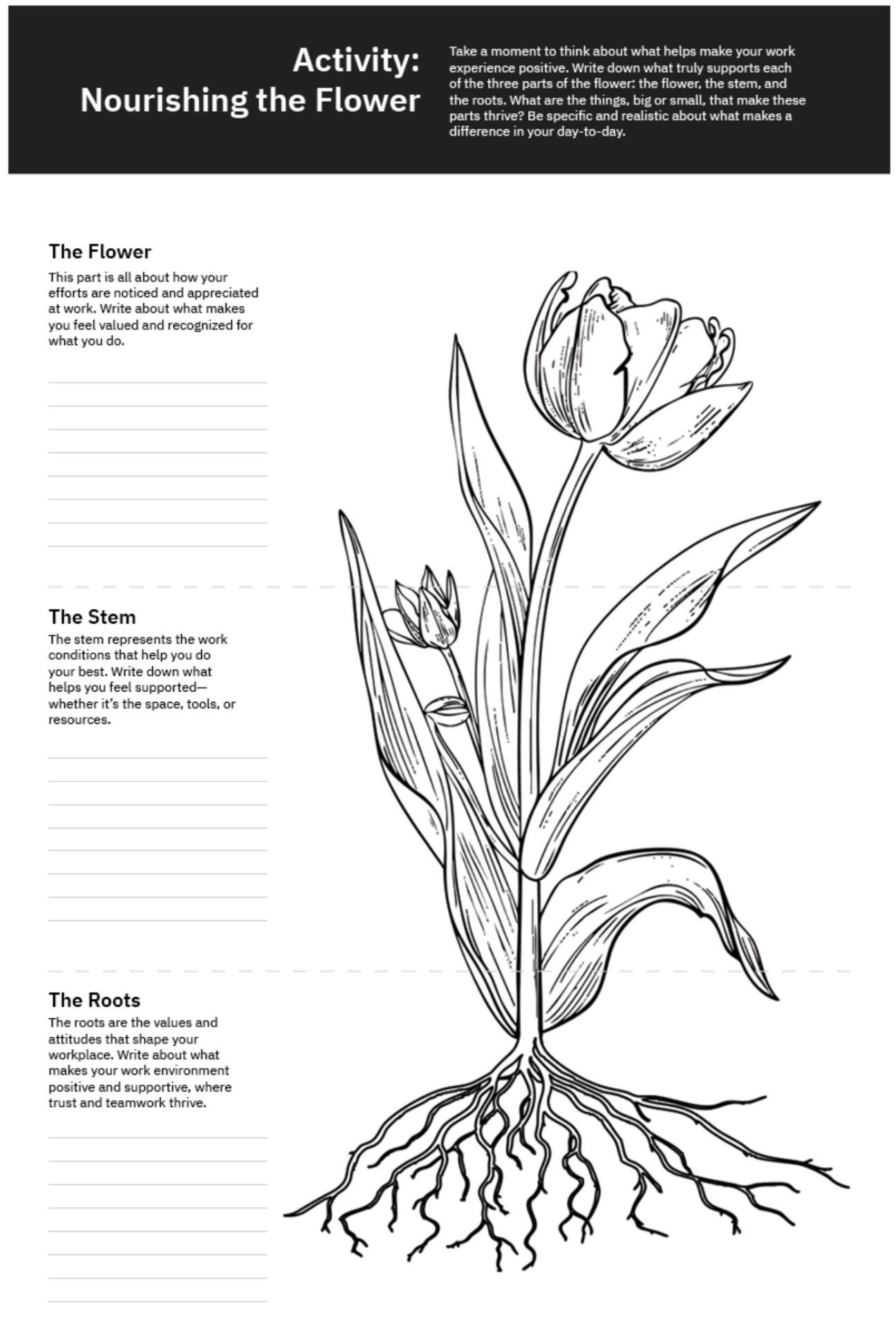
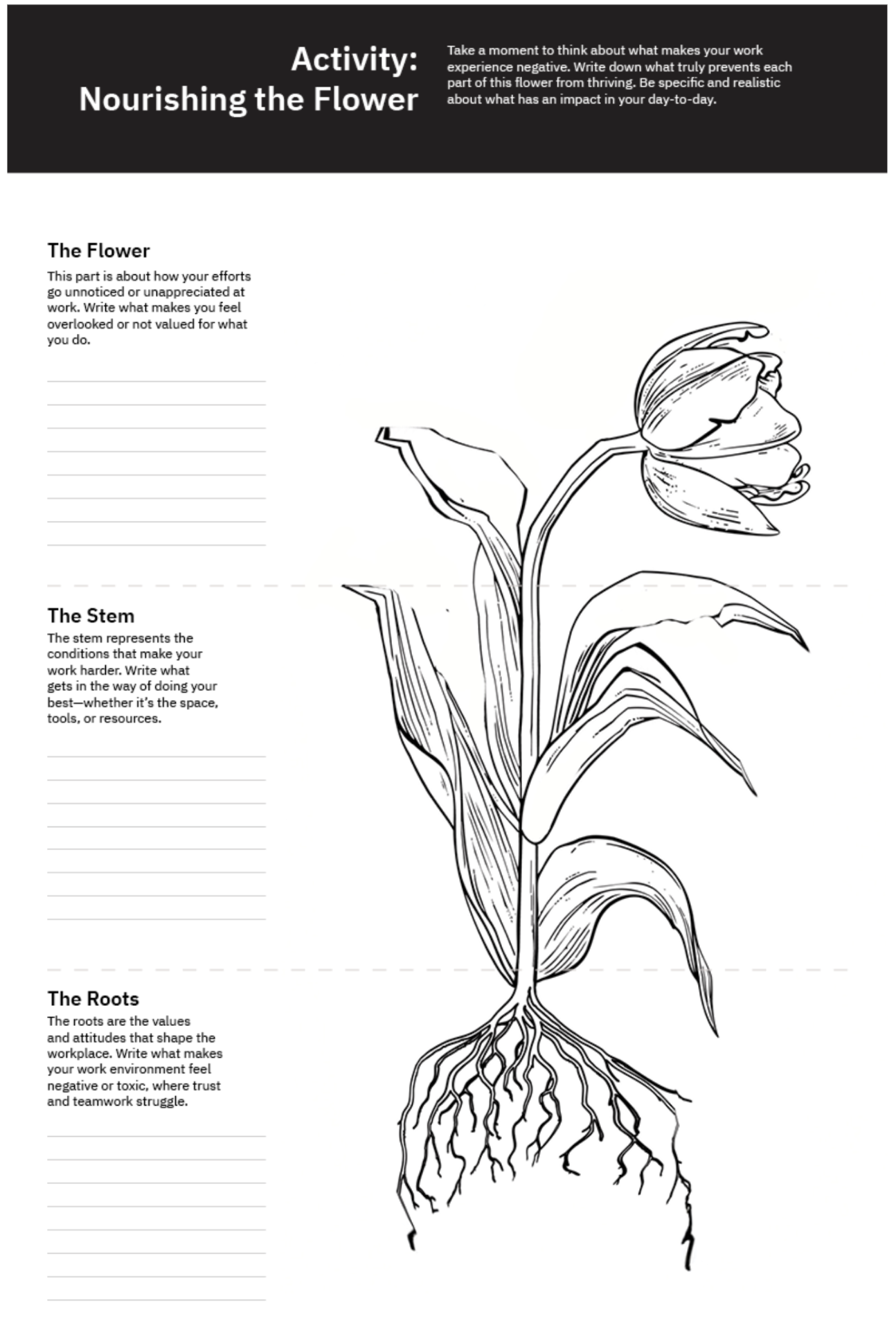
The research revealed that healthcare workers at Magee are eager for dedicated spaces to process grief, with participants requesting more time for such discussions and showing that grief management varies widely. Some compartmentalize during commutes while others prefer talking through emotions with trusted colleagues. Through the "Nourishing the Flower" workshop, staff across departments emphasized the critical importance of recognition (feeling appreciated through verbal affirmations and acknowledgment), supportive environments (flexible workplaces with adequate resources and comfortable spaces), and strong team culture (collaboration, shared purpose, and kindness) for thriving at work.
1. The Dual Burden of Care Healthcare workers face emotional exhaustion from both the inherently compassionate nature of their work (constant exposure to grief, loss, and trauma) and excessive administrative tasks that disconnect them from their original purpose of patient care.
2. Stigma Prevents Help-Seeking 73% of emergency physicians report stigma around mental health treatment in their workplace, with 27% avoiding treatment entirely due to fear of professional consequences—highlighting the urgent need to normalize emotional support in healthcare settings.
3. Support Requires Both Top-Down and Peer-to-Peer Approaches Effective mental health support combines organizational leadership initiatives (psychoeducation, transparent policies) with peer recognition programs, creating a comprehensive culture that prioritizes staff well-being alongside patient care.
Workshops
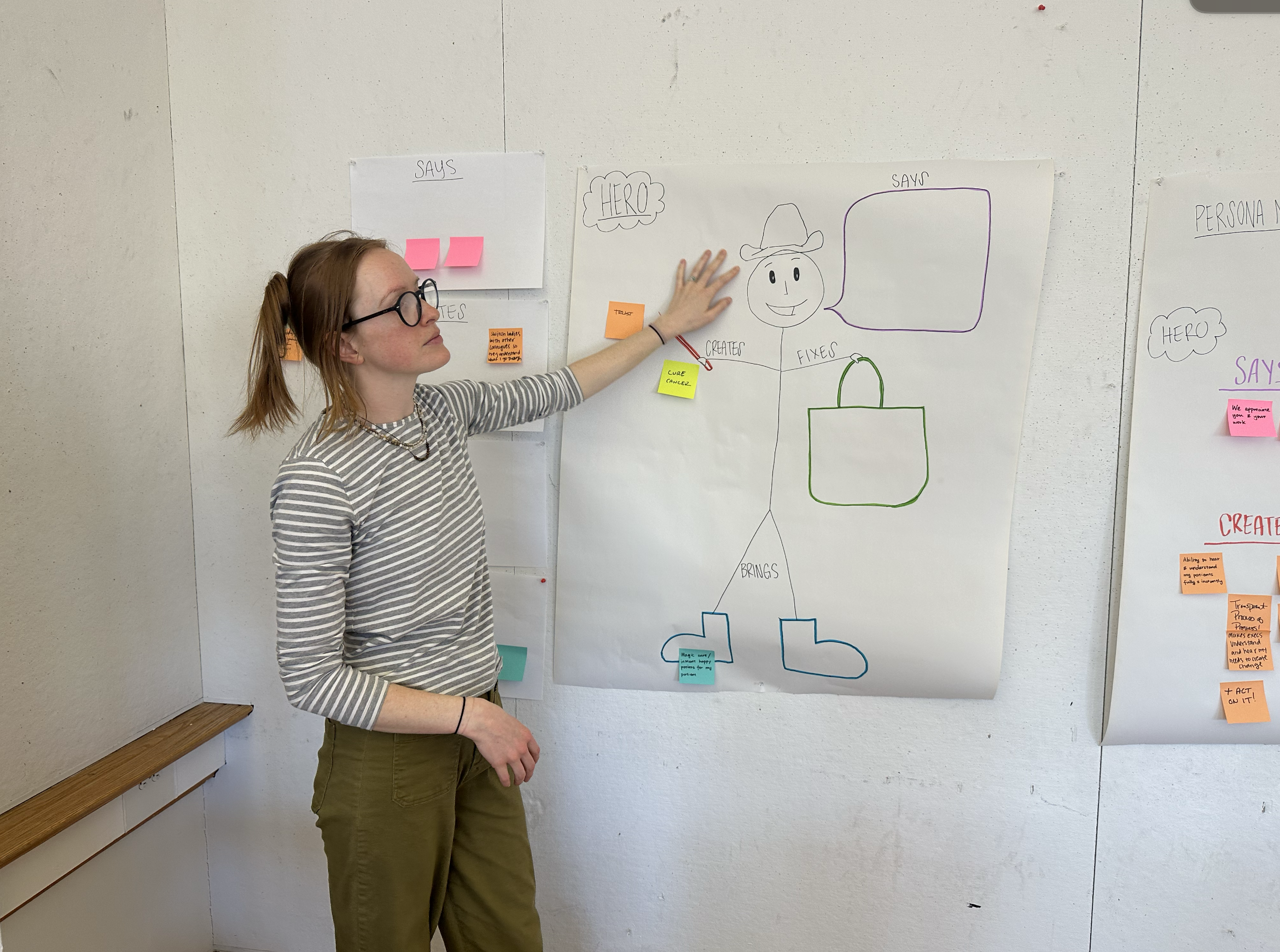
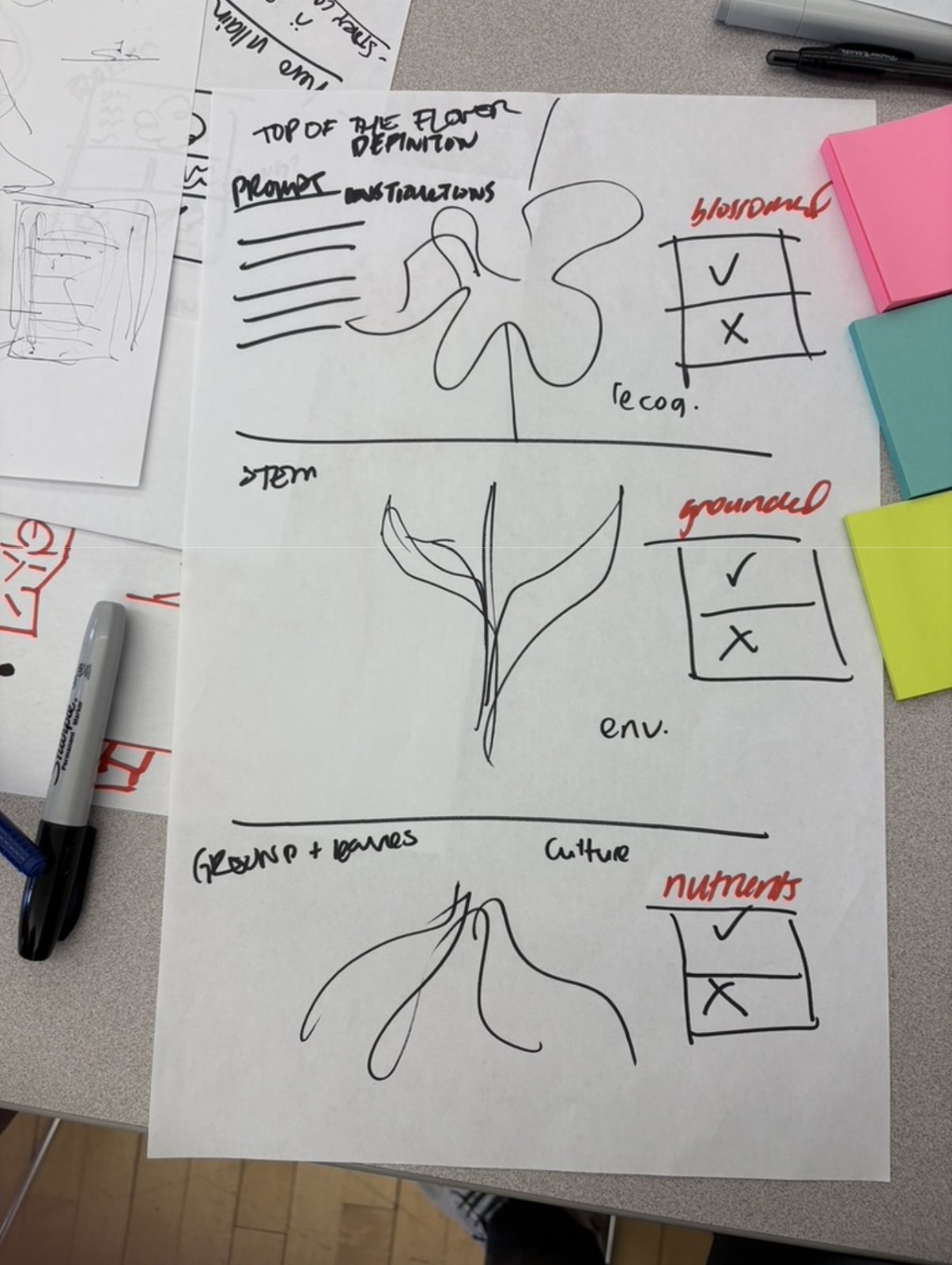
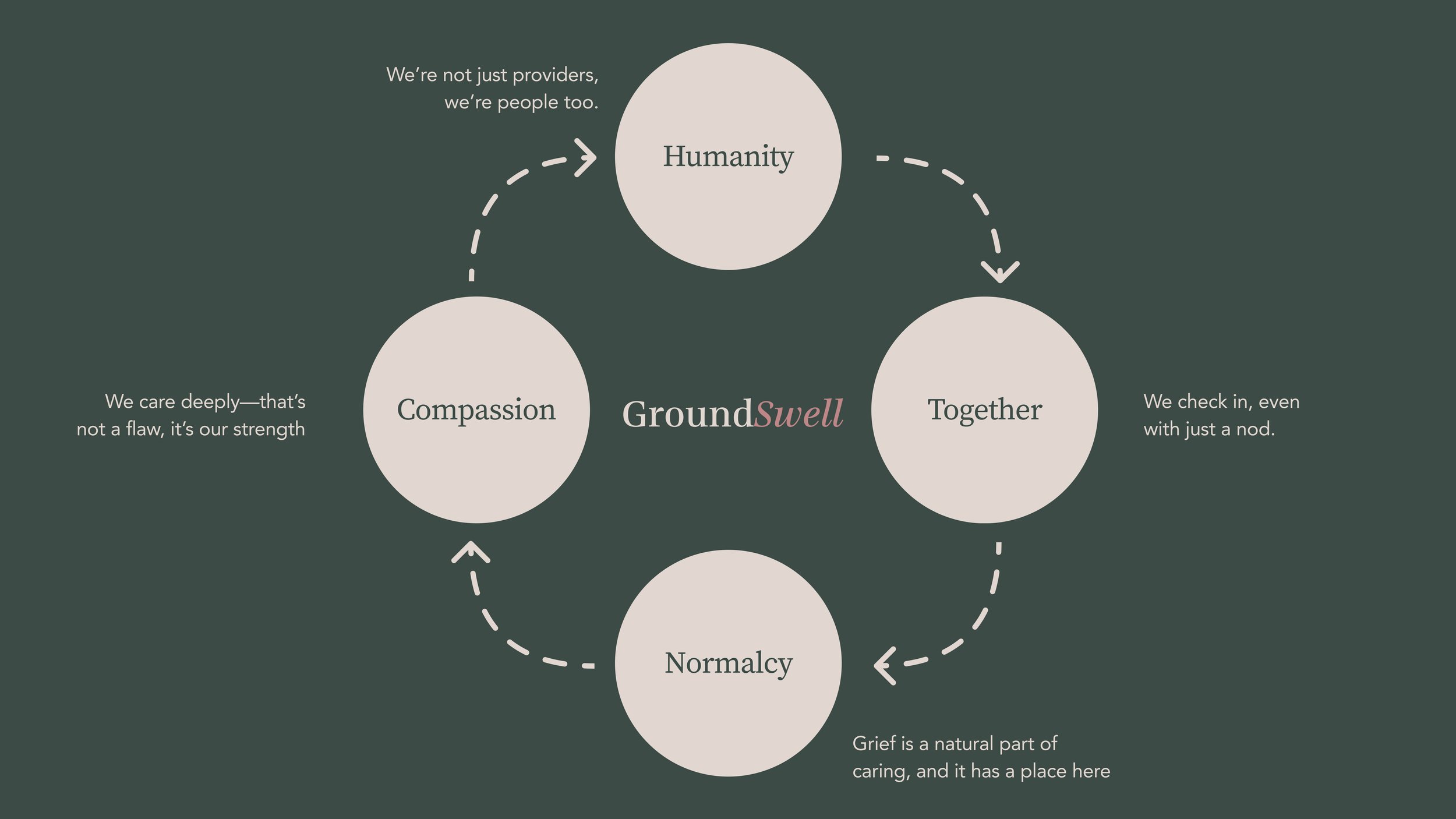
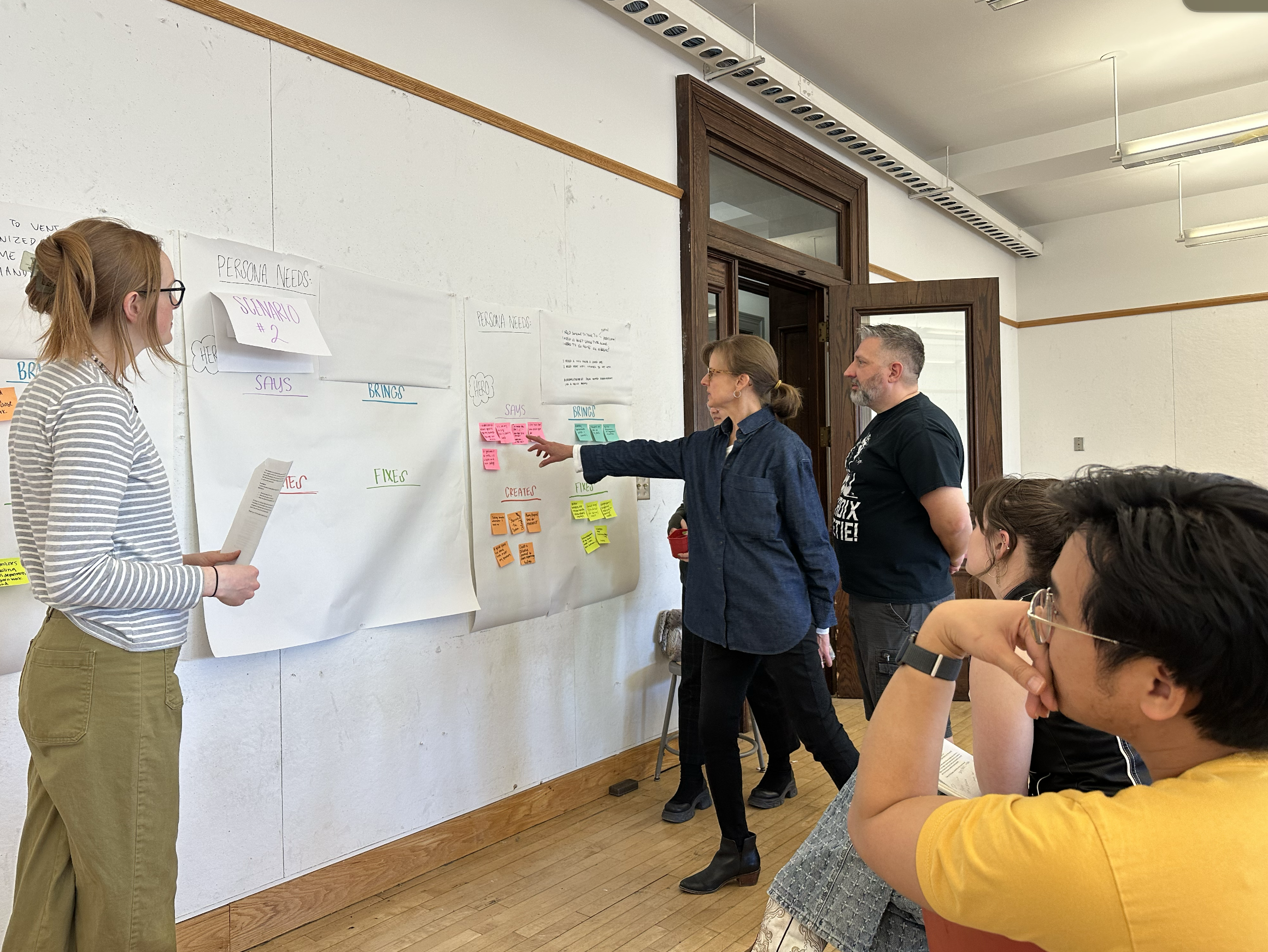
We designed multiple participatory workshops to better understand the needs of healthcare workers. The idea of Groundswell was forming and we set our intentions as a team to create a solution that felt rooted in the research and that would achieve lasting change without extra burden on staff. We integrated our nature-based motif into our various generative workshops.
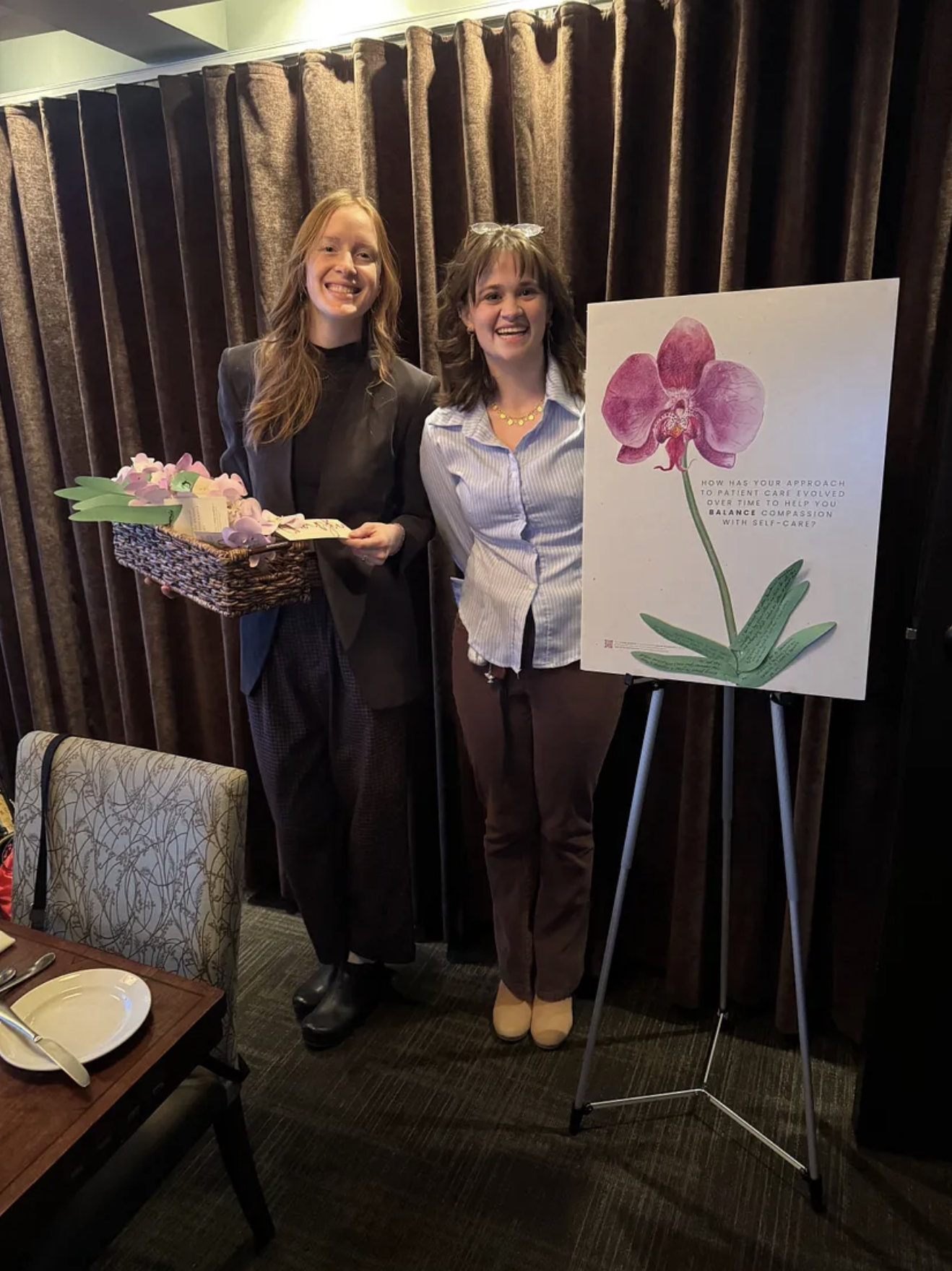
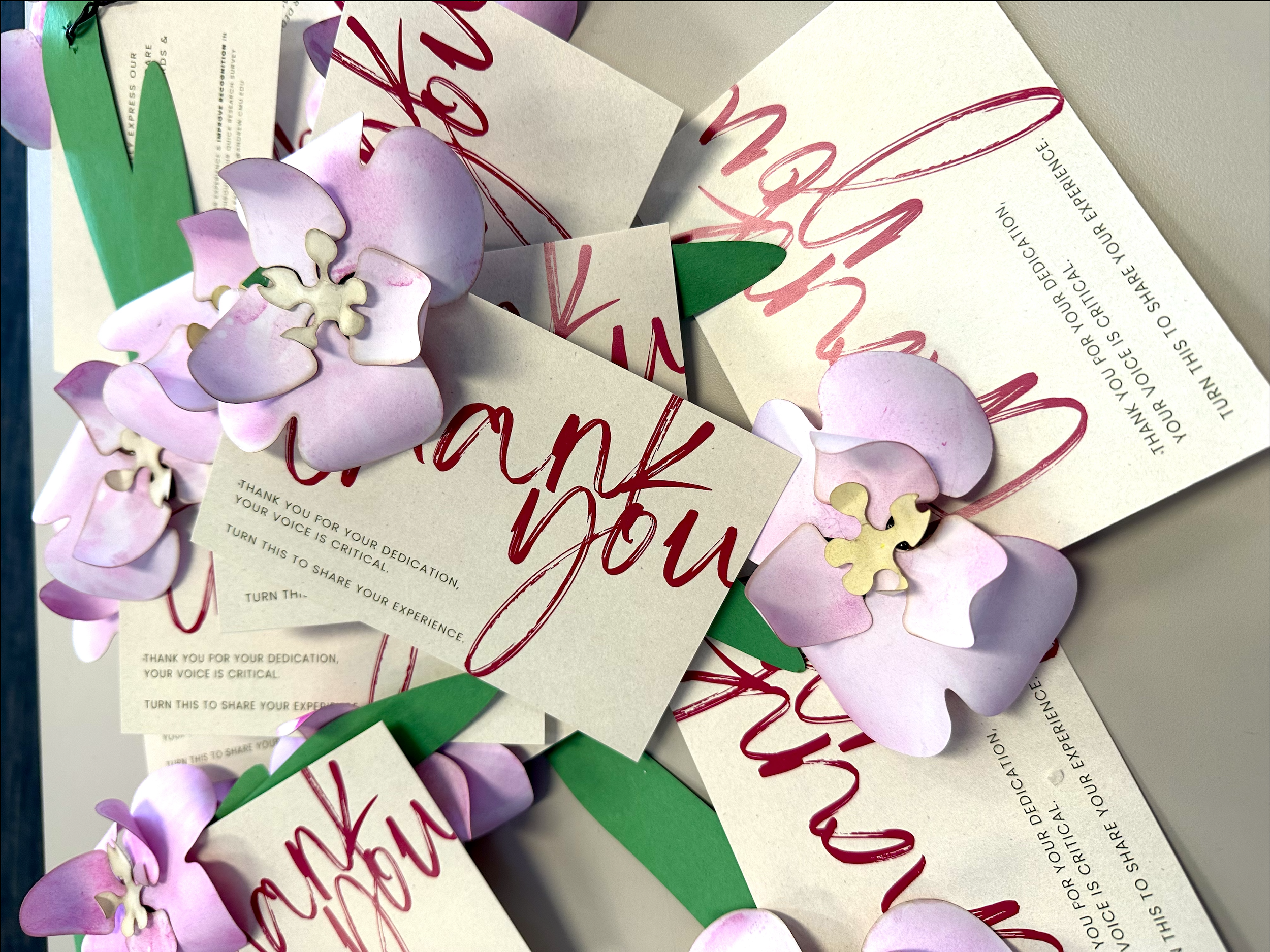
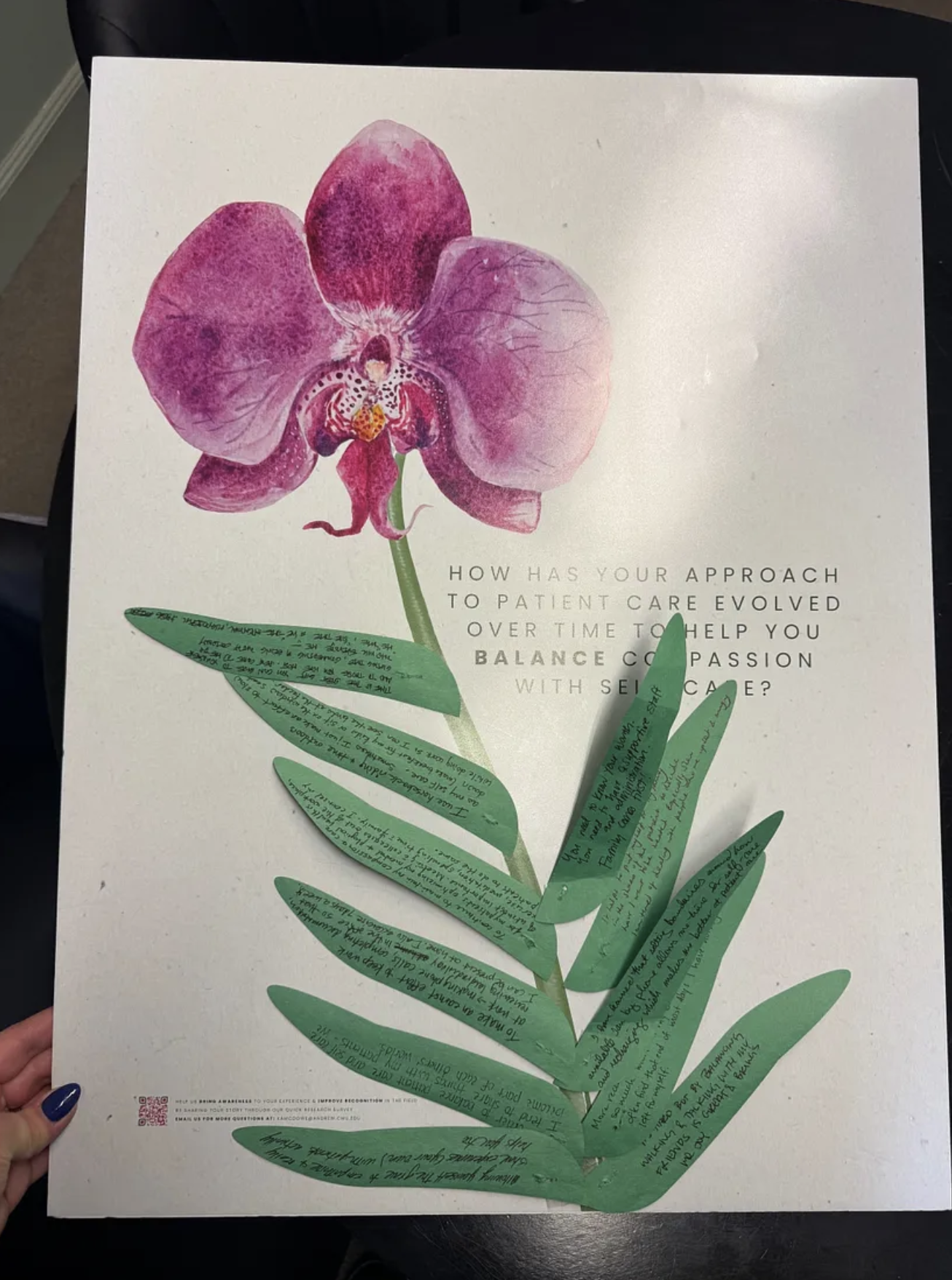
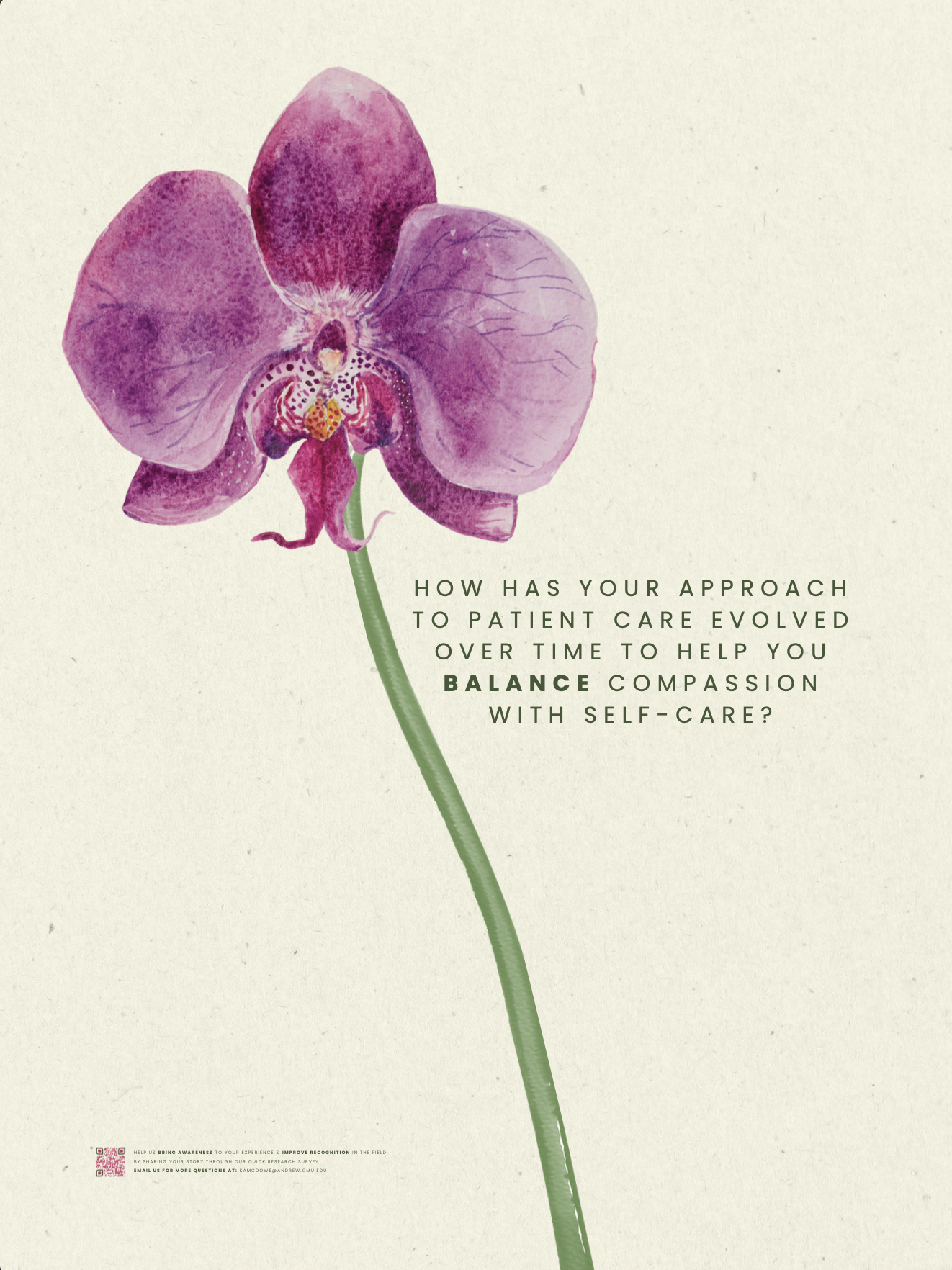
Women in White Coats Event: Leaders in Oncology added their thoughts to the leaves on the stem of our orchid poster, a symbolic flower in cancer care.
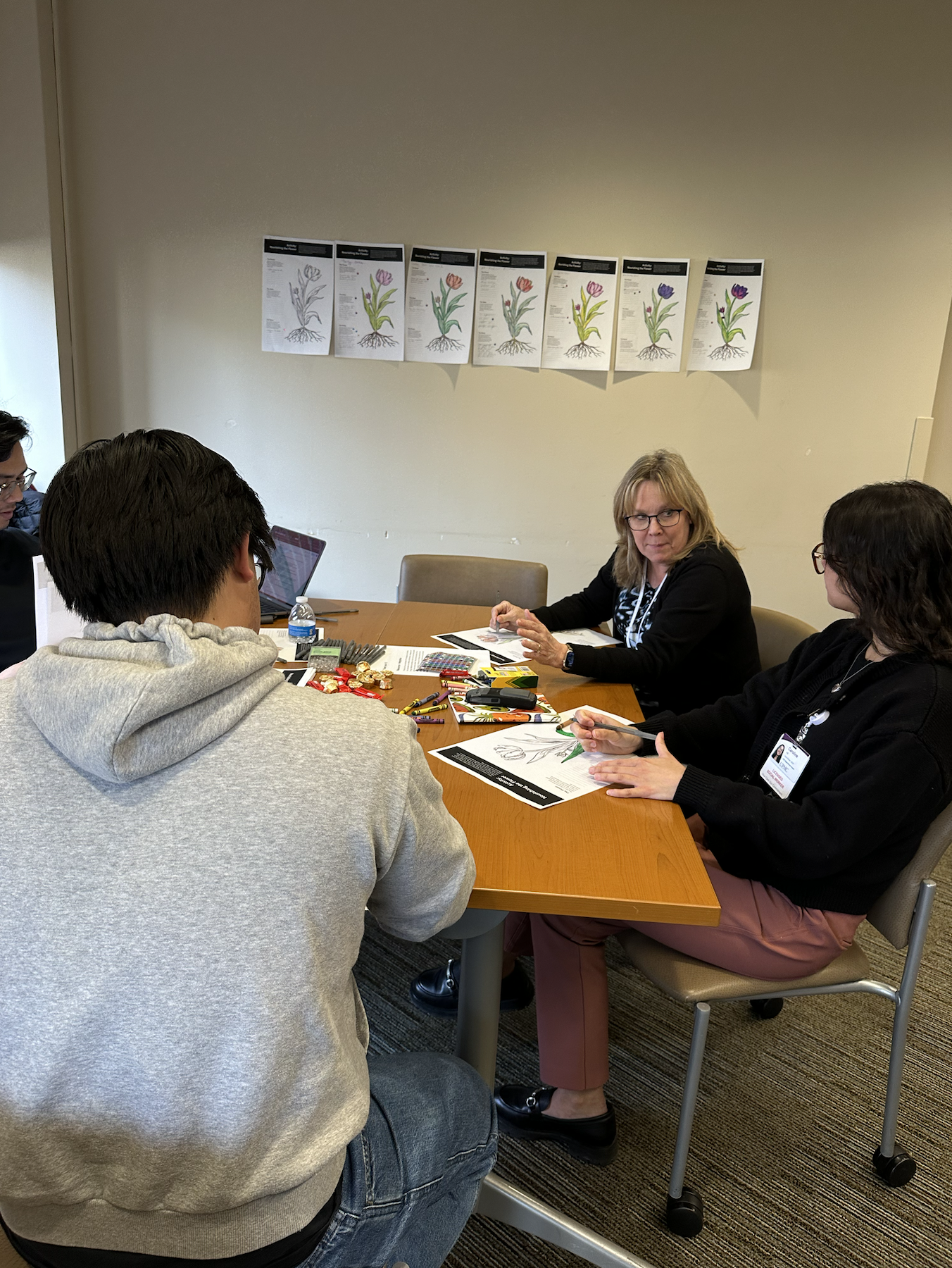
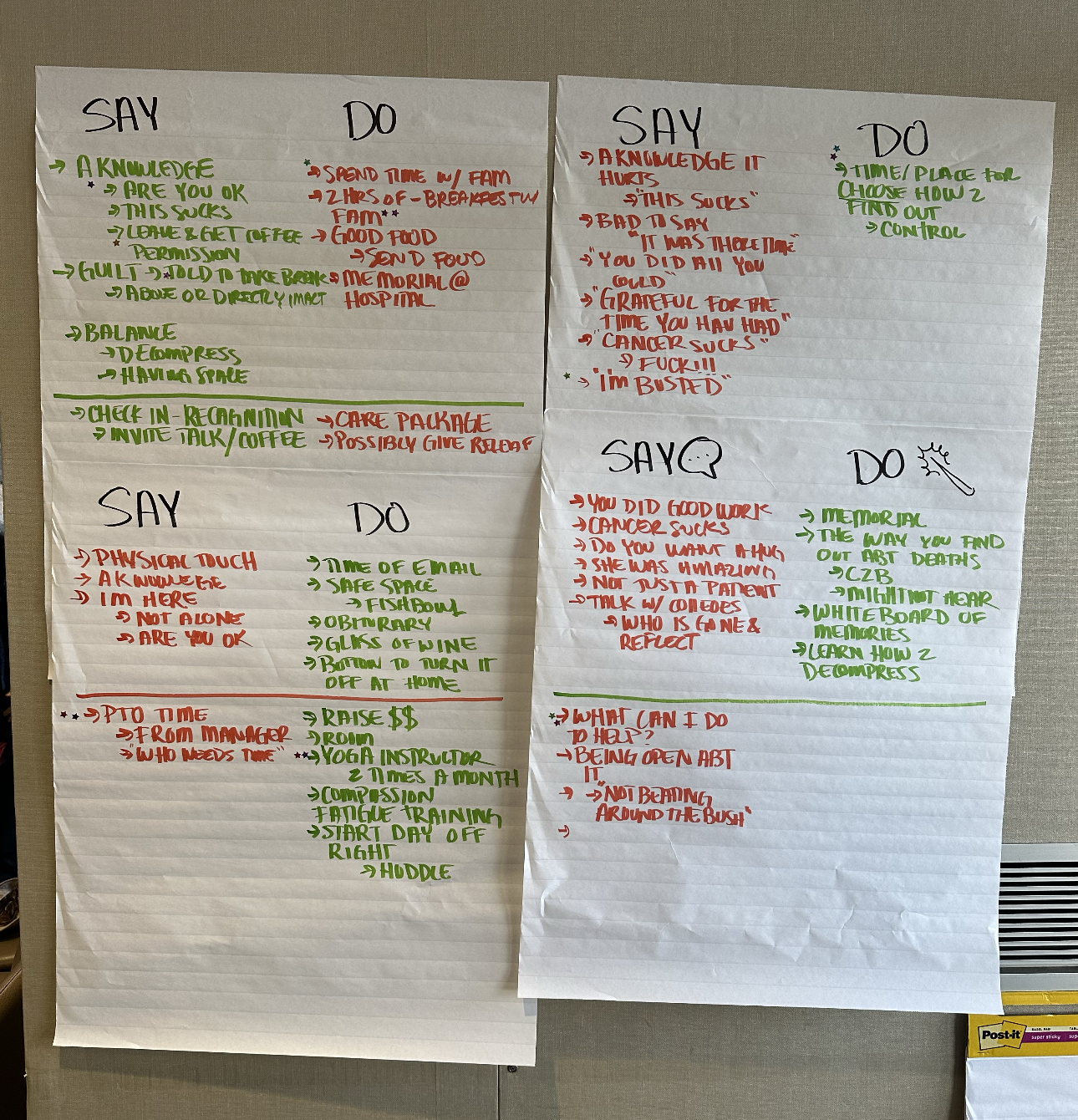
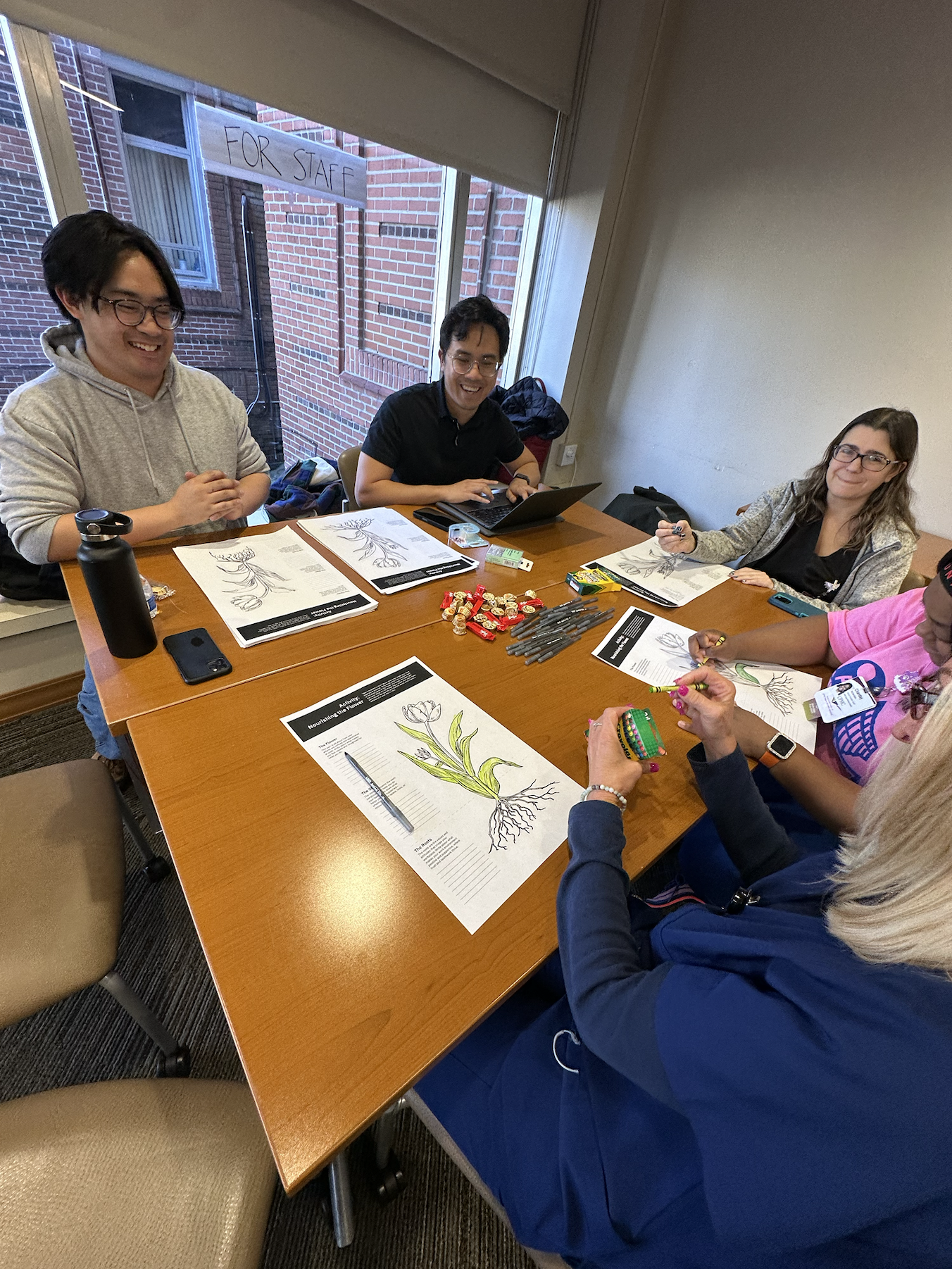
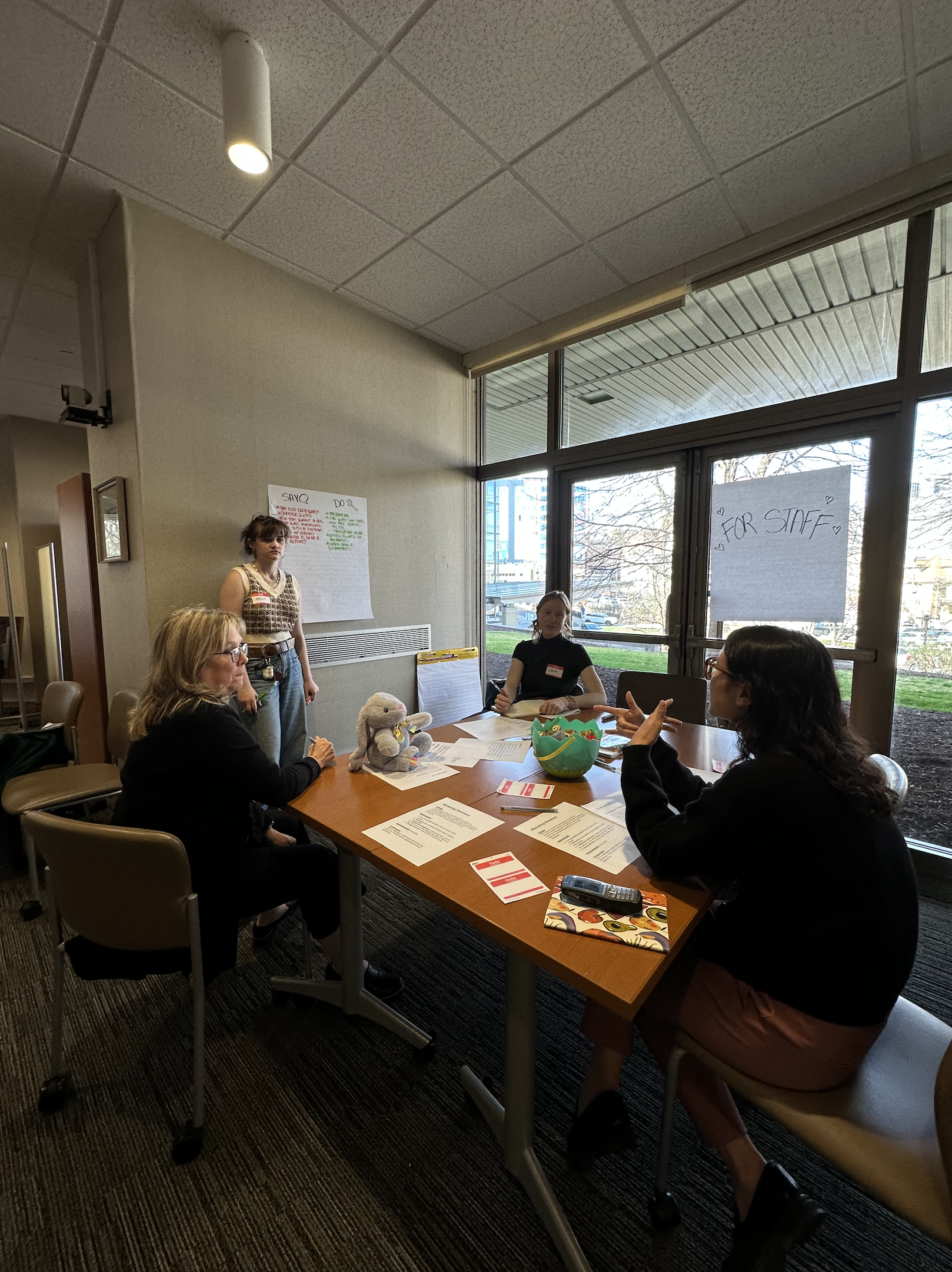
Workshop at Magee: Staff completed color-in worksheets with nature-based metaphors for understanding "nutrients” and “root” causes of a nourished workplace. Small groups discussed the impact of chronic compounded grief.
Design Principles:
Keeping Mental Well-Being at the Center
Any proposed intervention should prioritize emotional and psychological support for healthcare workers, addressing both systemic issues (workload, leadership support) and peer-to-peer connections (recognition, safe spaces).Balancing Administrative and Caregiving Tasks
We should focus on solutions that alleviate unnecessary clerical burdens, allowing staff to reconnect with patient care and their original motivations for entering the field.Addressing Stigma and Accessibility
Mental health resources must be easily accessible and de-stigmatized, ensuring staff feel safe seeking help without fear of professional repercussions.Using a Holistic, Research-Backed Approach
Our methodology should continue to incorporate firsthand insights (shadowing, interviews) and established best practices (leadership training, peer support systems) to create meaningful, evidence-based interventions.
Outcomes
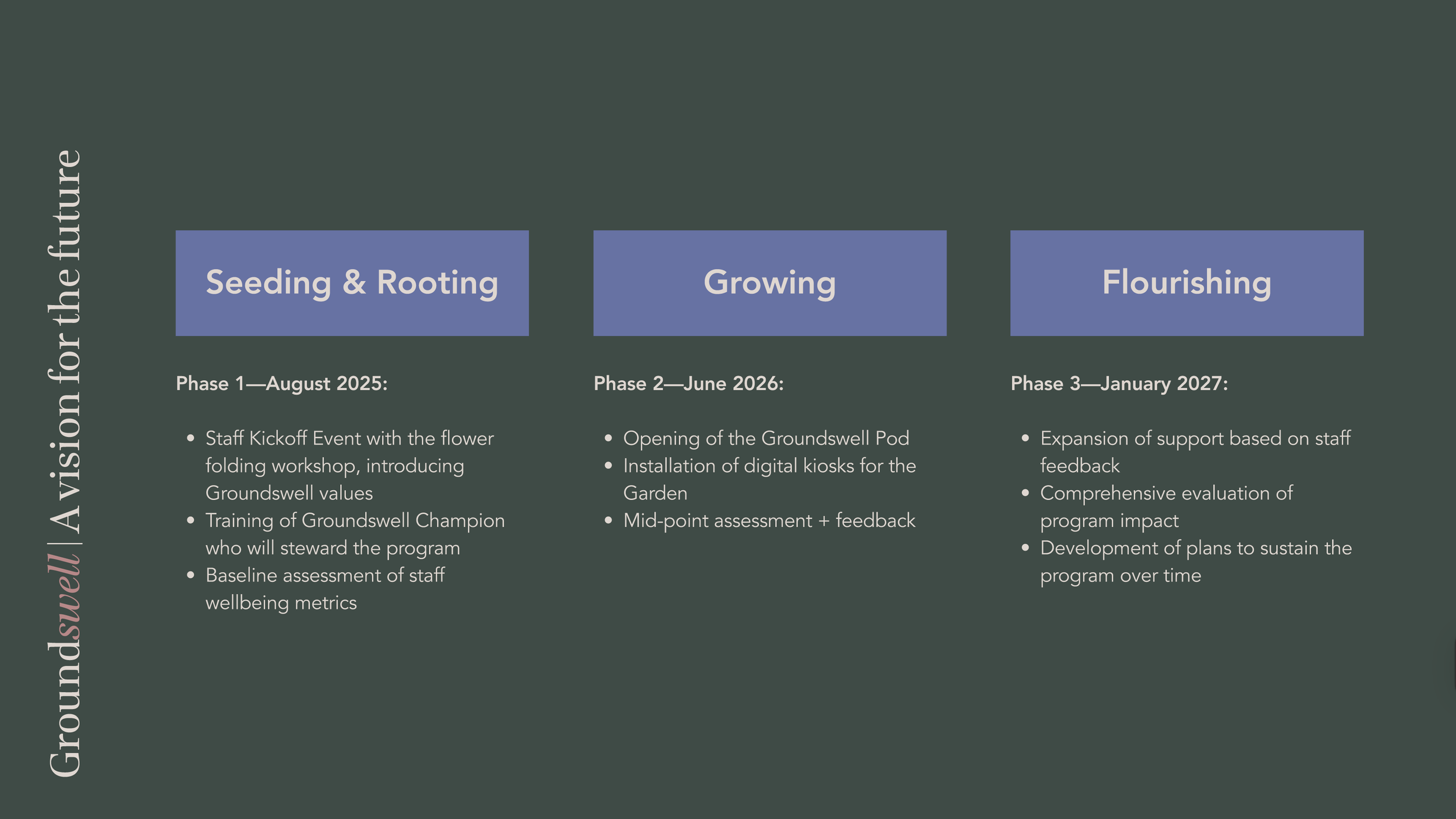
Groundswell was awarded a UPMC grant to pursue the installation of our proposed project for a 12-month quality improvement research study that will measure employee well-being, team cohesion, and intent to leave before, during, and after the installation. The project components have evolved and the brand has shifted through iterative co-design and feedback from stakeholders. We have received over $30k worth of donations for material and production skills to make this project a reality and are hopeful that this study will prepare us for the next iteration in more hospital settings.
Acknowledgments
This project was possible because of the trust building that took place in the year prior during the elective course’s first launch. Without Kristin Hughes' passion and relationships passion and relationships at UPMC, the dedication and enthusiasm of Dr. Sarah Taylor, Dr. Grace Campbell, and Dr. Heidi Donovan, and of course the generous time and vulnerable information shared by the staff members. Many thanks to the CMU faculty and friends who participated in practice rounds of our generative research activities and to the industry professionals who Zoomed in to offer feedback mid-semester. Thank you to the UPMC administrators and GynOc department who coordinated with us.