Homi
A Concept for a Social App Designed to Connect Future Roommates Over Shared Values
UX Research | UX Writing | Brand Identity
This project was developed as a final concept for a graduate level prototyping course. Students were asked to rapid prototype something of personal interest from idea to functional prototype while integrating multiple rounds of feedback, research, and iteration. Homi helps empower housing-seekers to have important conversations before committing to a contract through engaging design with an emphasis on user values.
Course: CMU MA in Design, Intro to Prototyping
Team: Lorin Anderberg, Yaezi Lee, Rui Ying
Role: UX Research, Copywriting, Brand Identity
Tools: Figma, Adobe Illustrator
Credits: SVG Repo Icons, Unsplash Images
Duration: 5 Weeks
Design Challenge
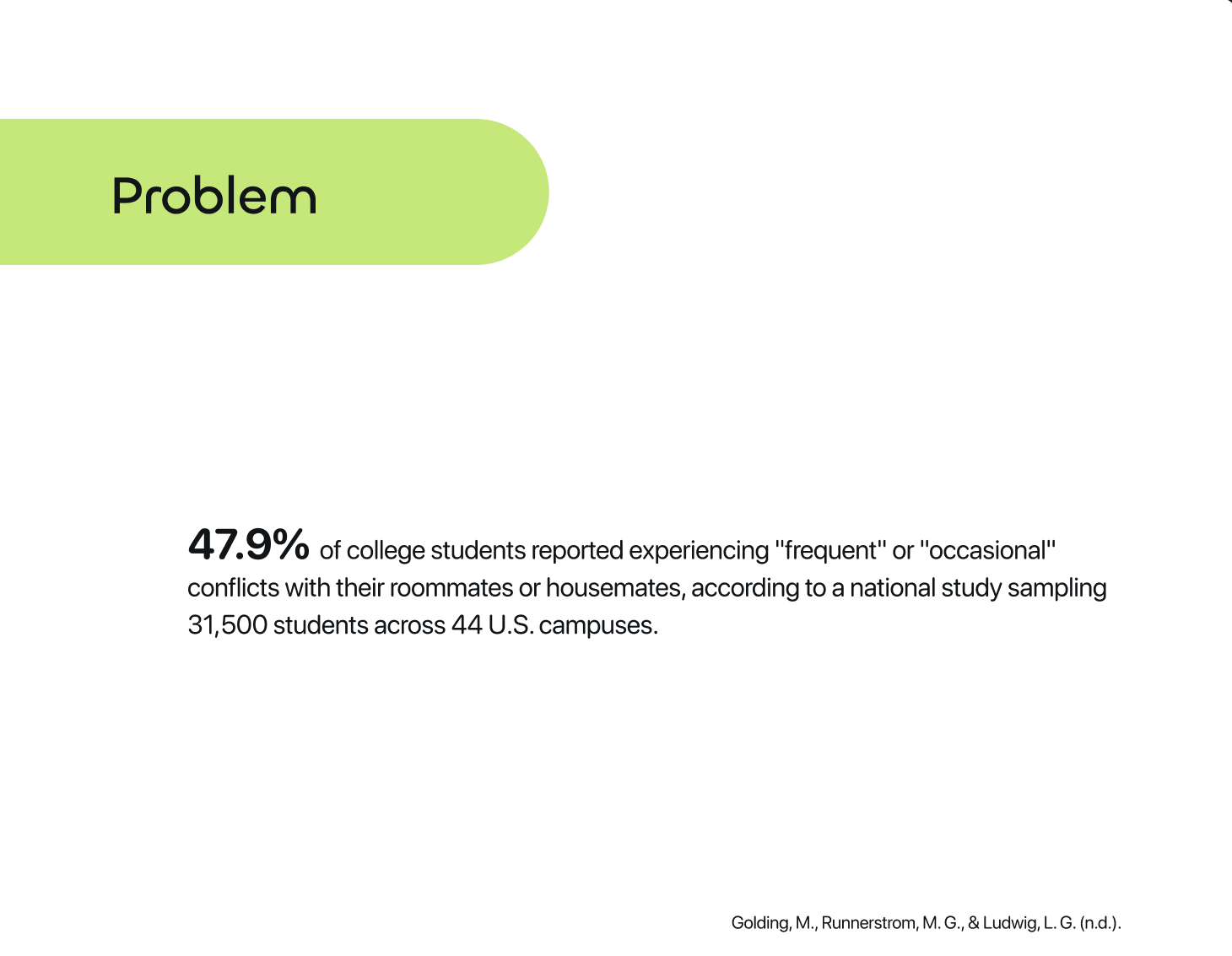
One-third of students report that roommate issues negatively impact their mood, academic performance, and social life. Finding the right roommate is essential to creating a stable and healthy living environment.
How might we make the roommate search the least stressful part of the housing process while increasing the likelihood of supportive, compatible living dynamics?
Concept
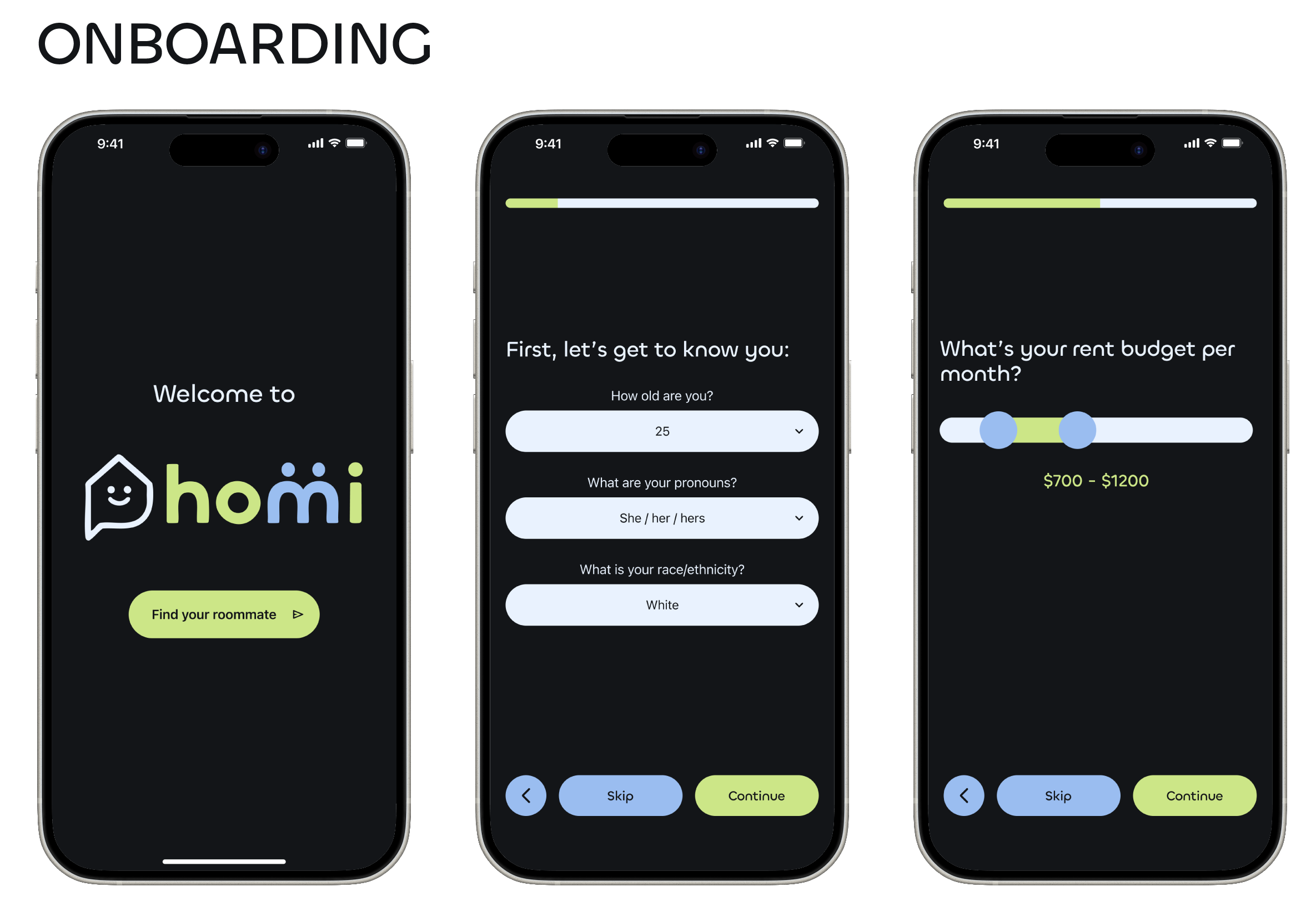
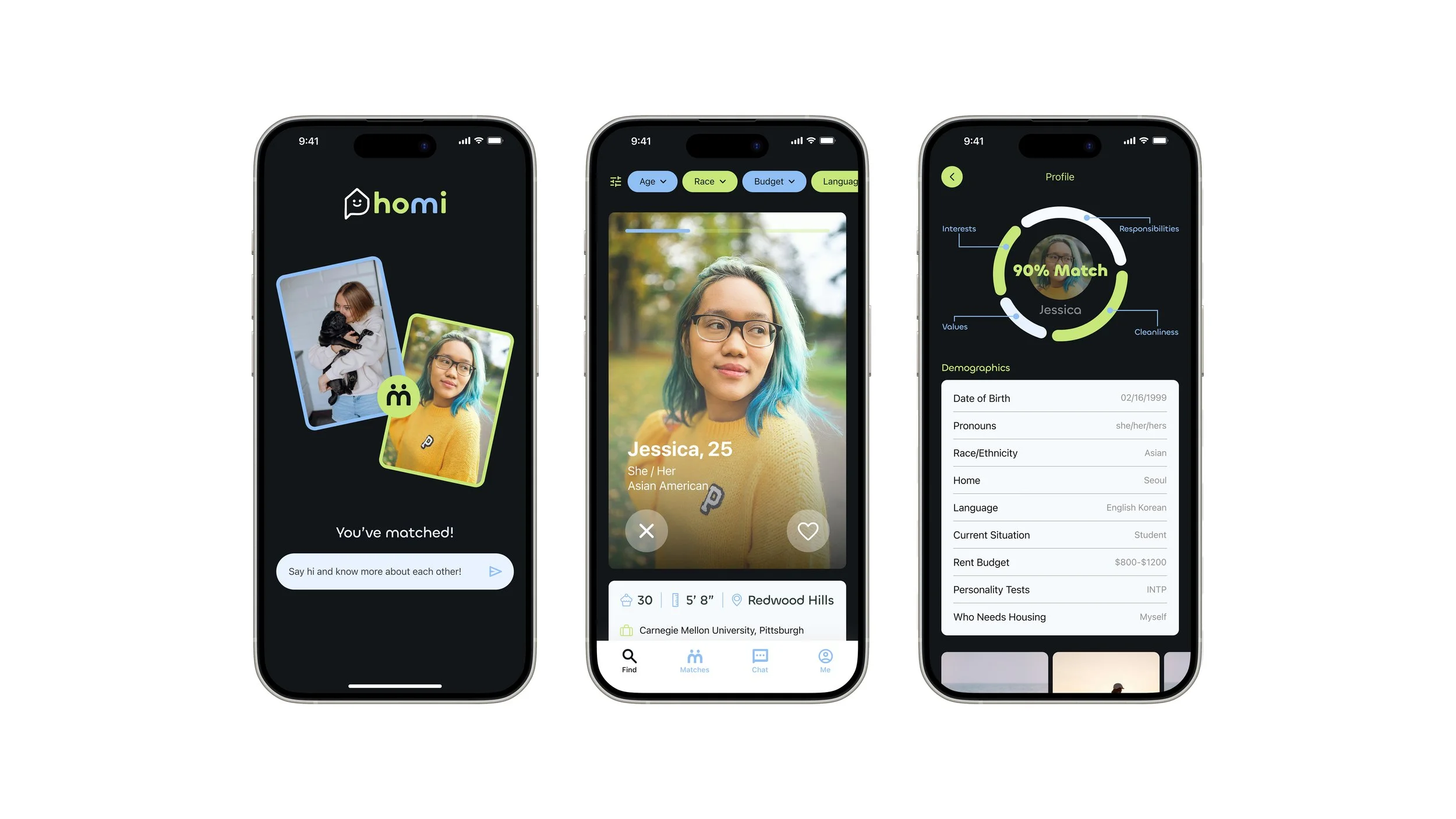
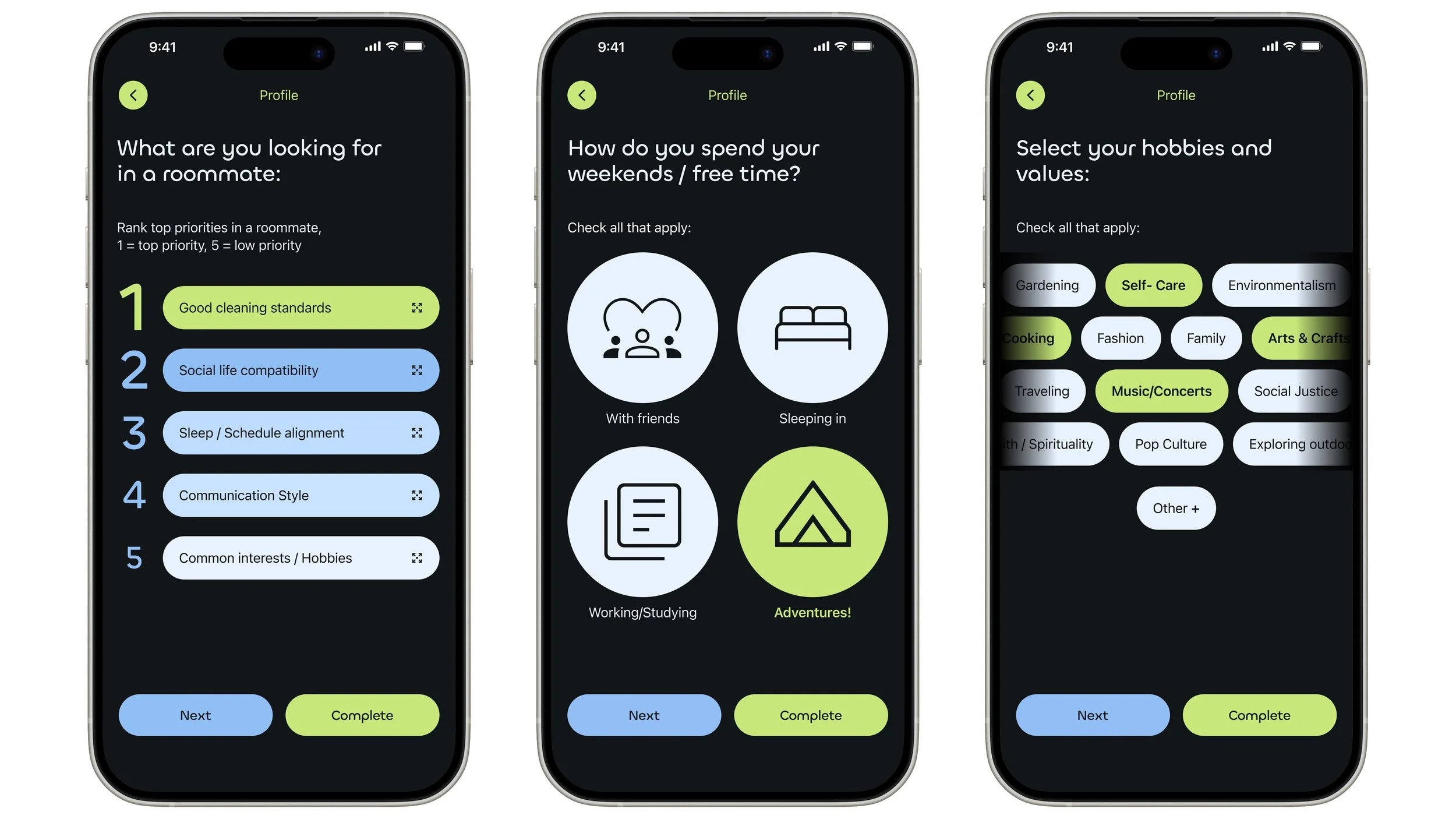
Homi is an app that makes finding a roommate who shares your values easy and engaging. Through playful design and relatable copy, the often dreaded experience of finding the right person to live with becomes something to look forward to.
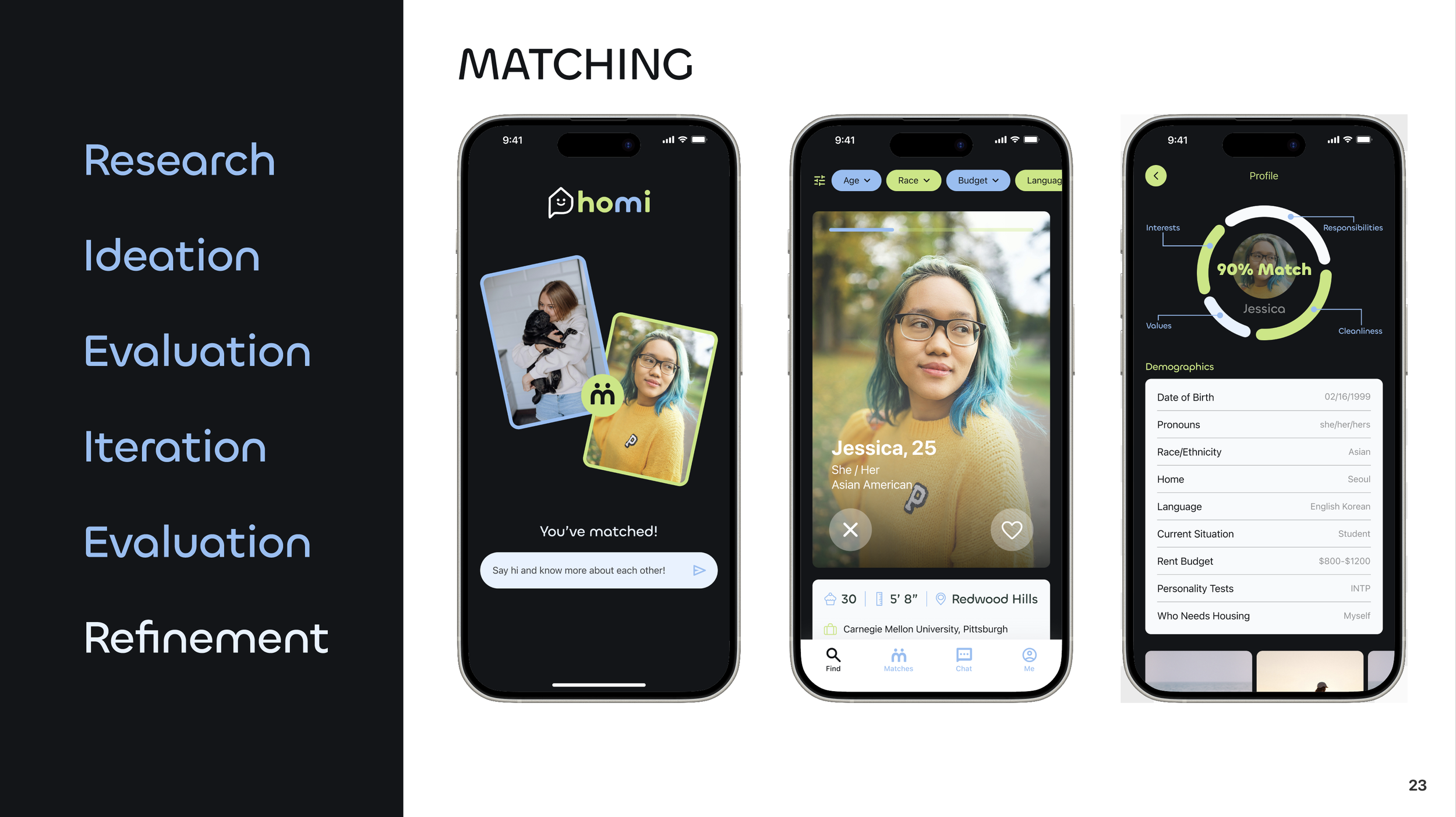
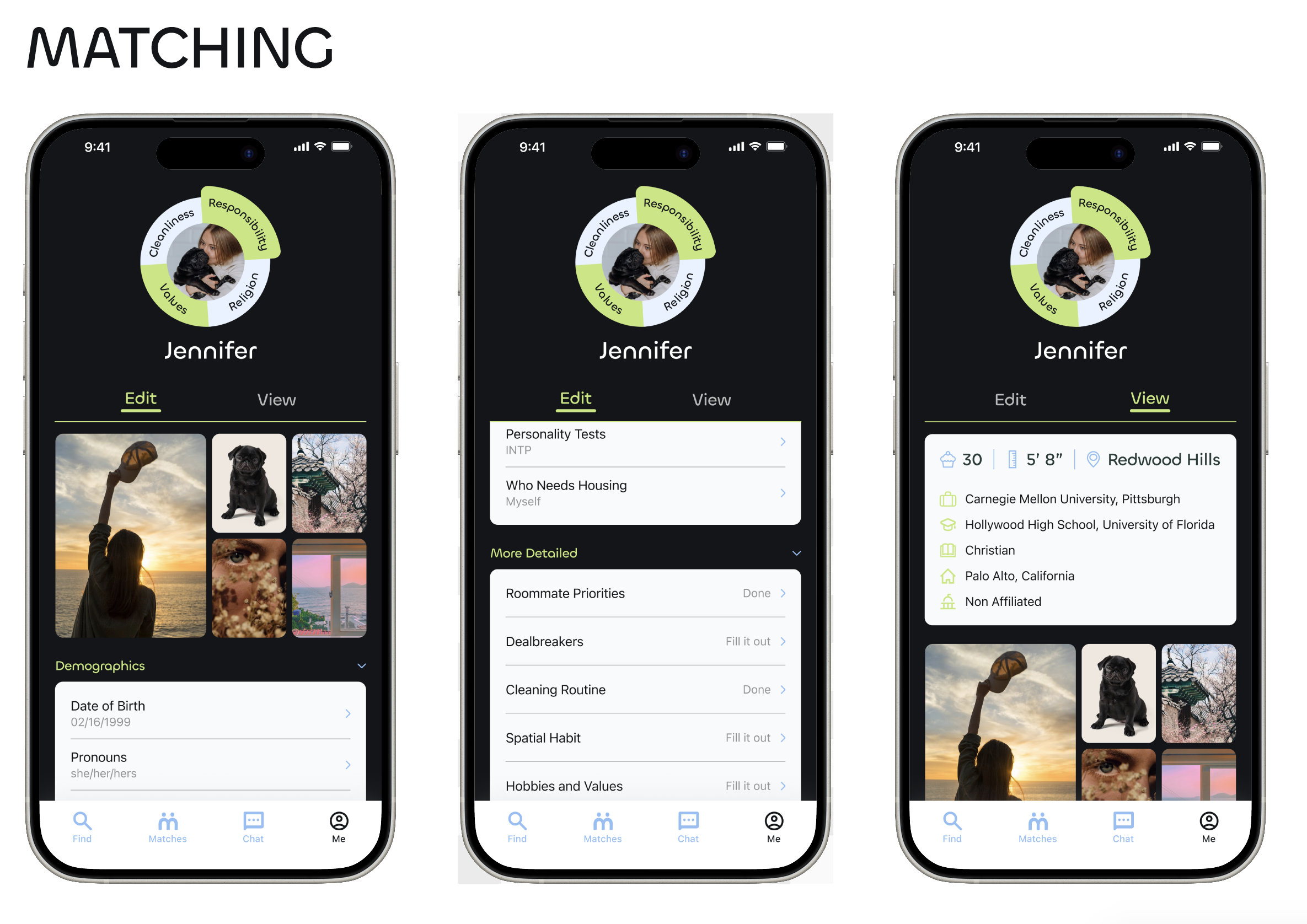
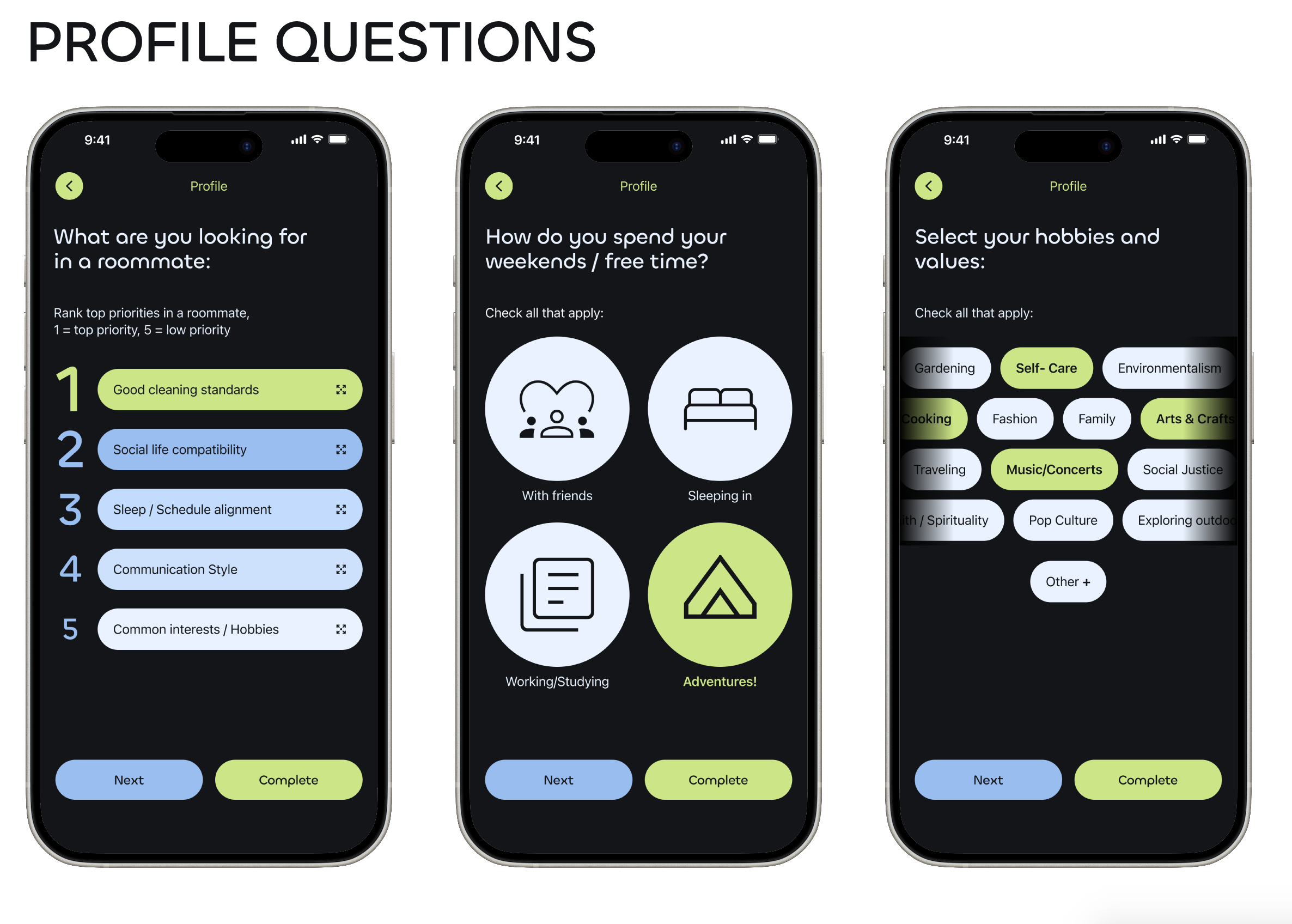
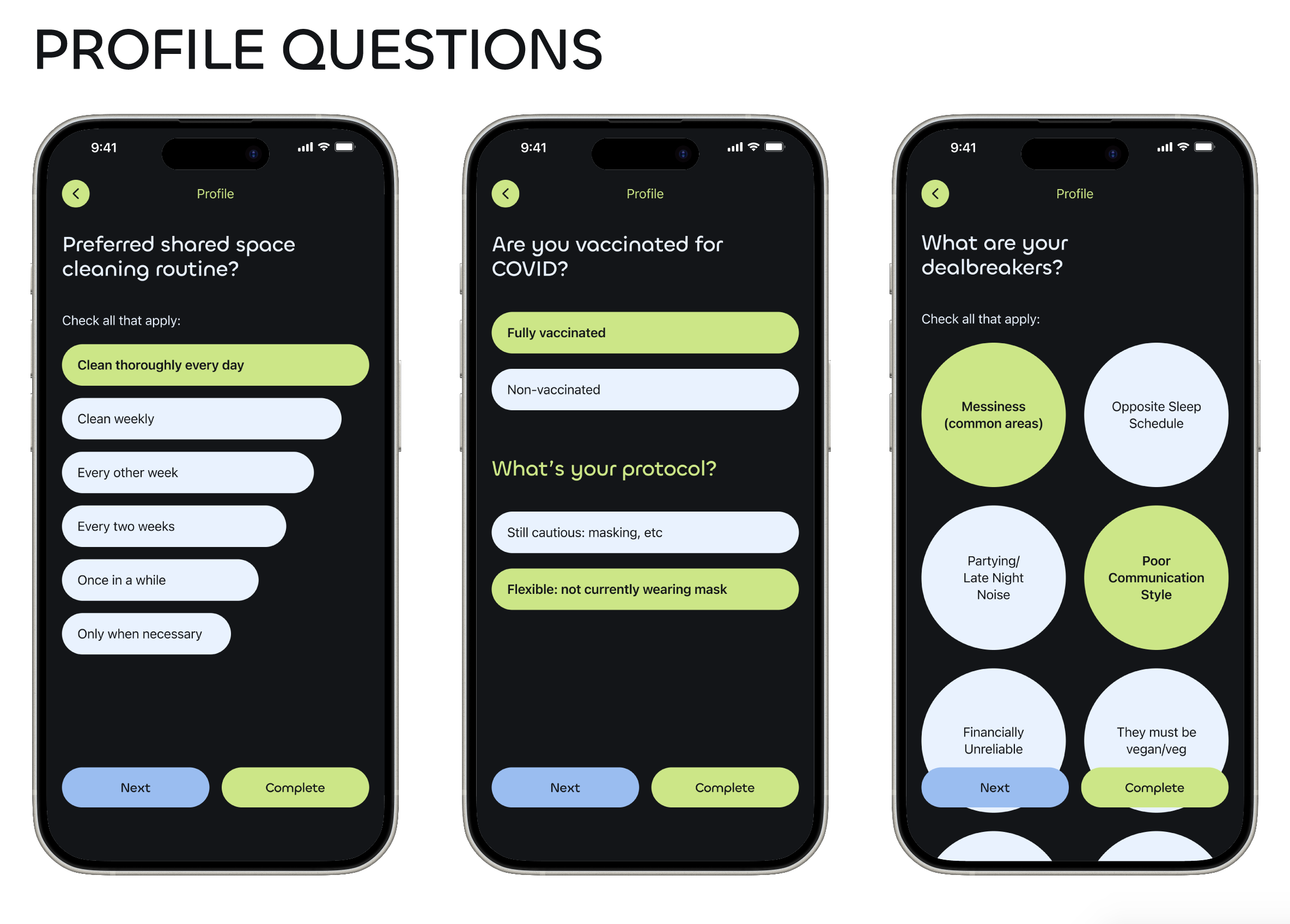
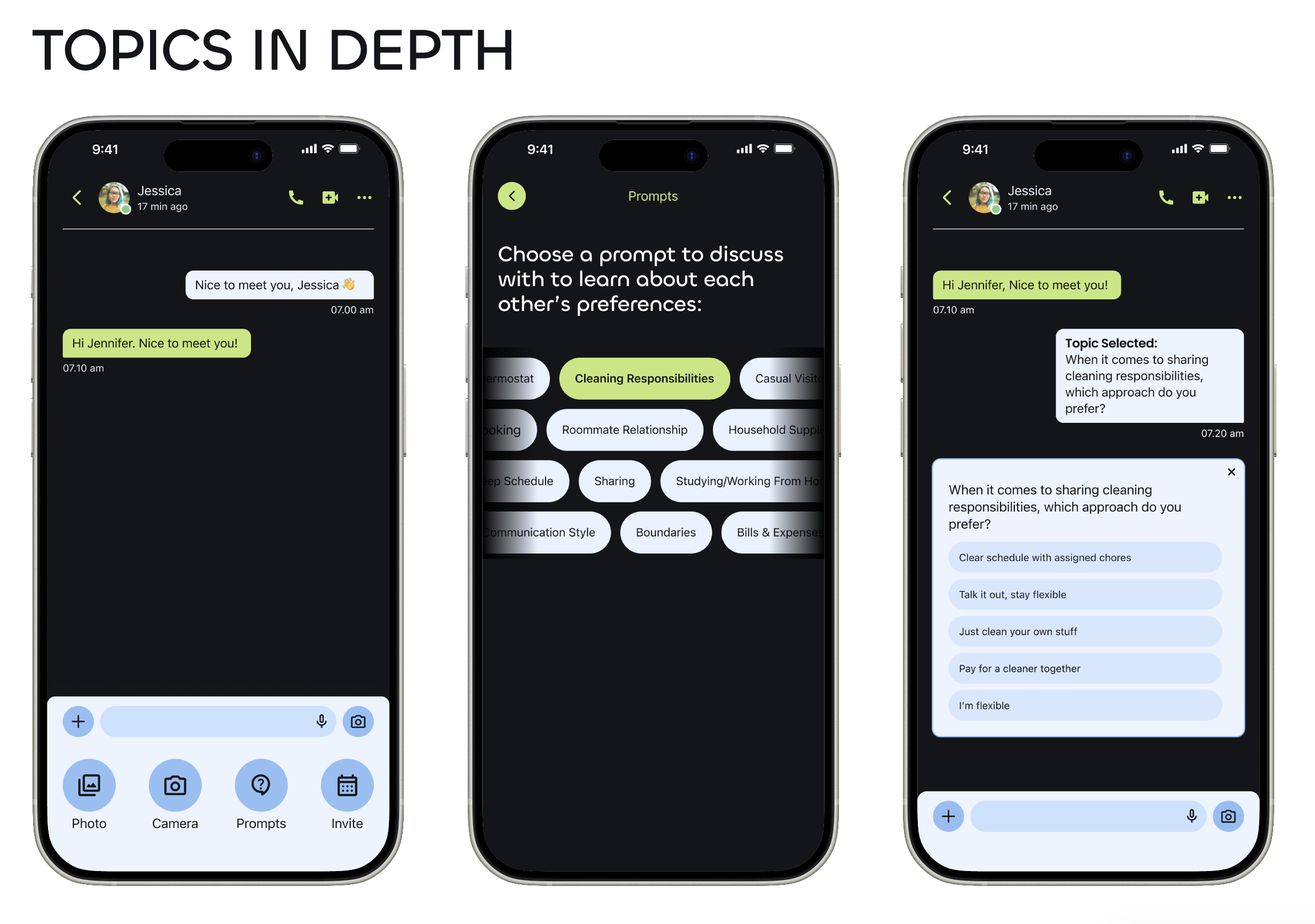
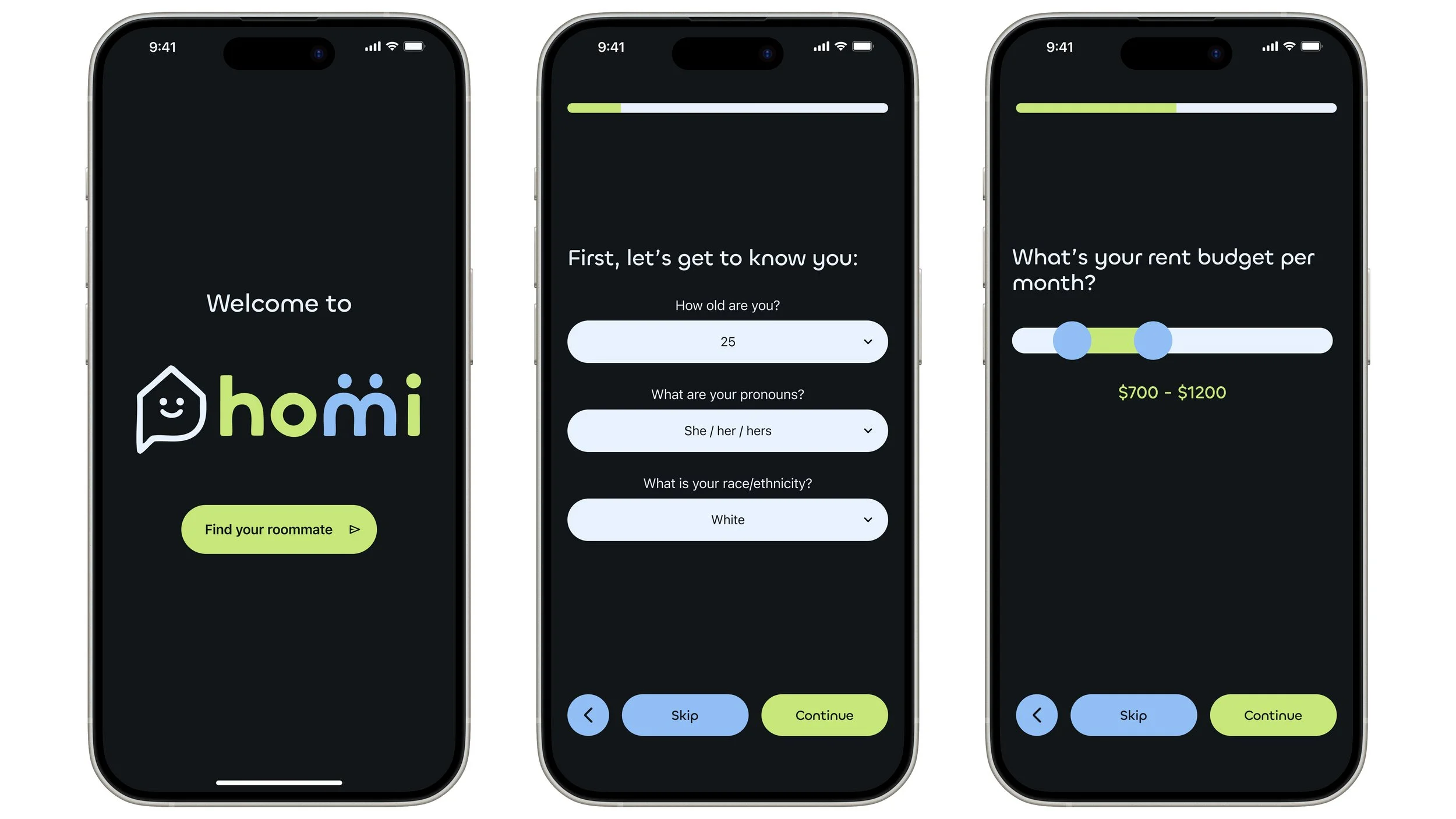
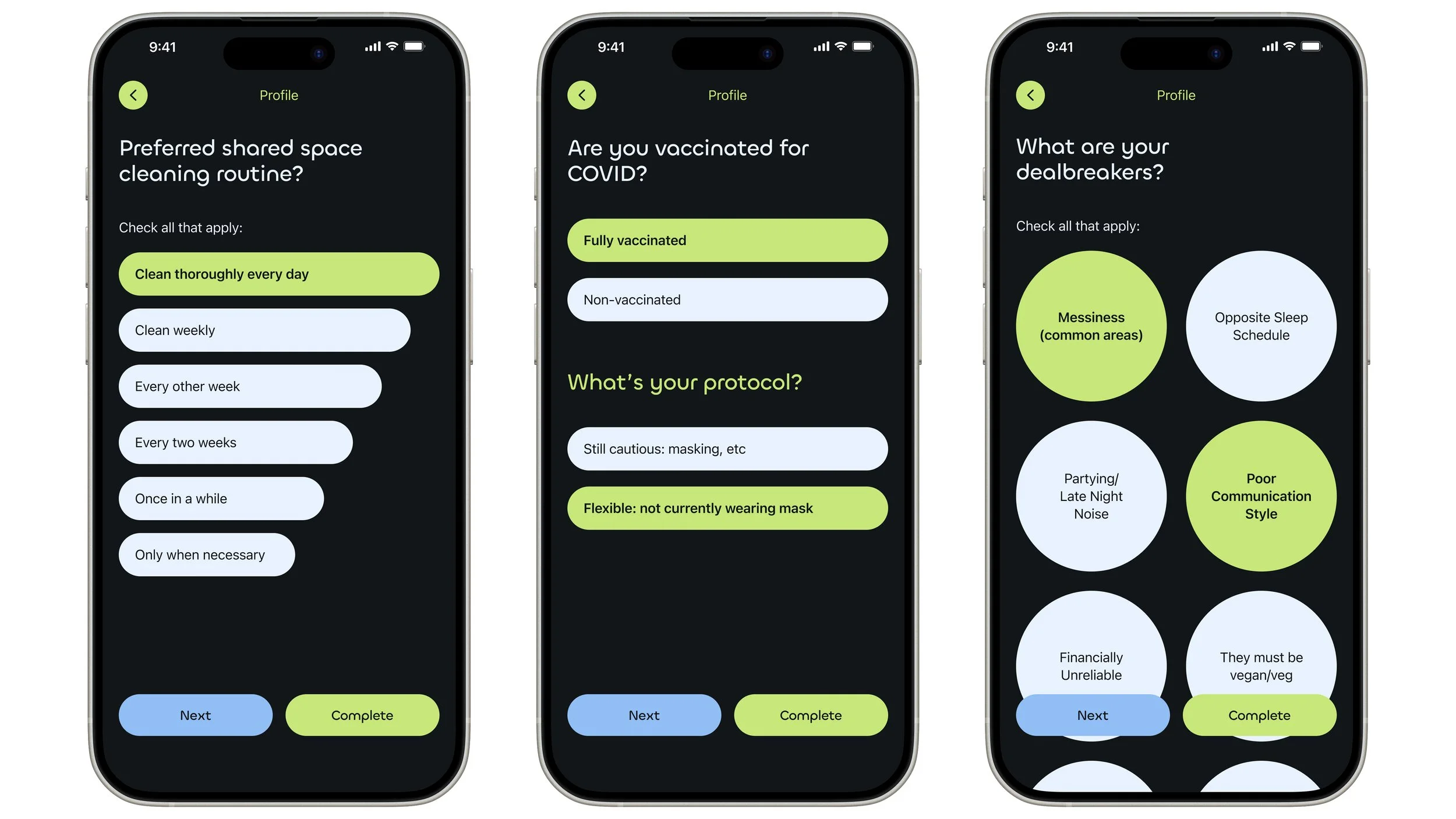
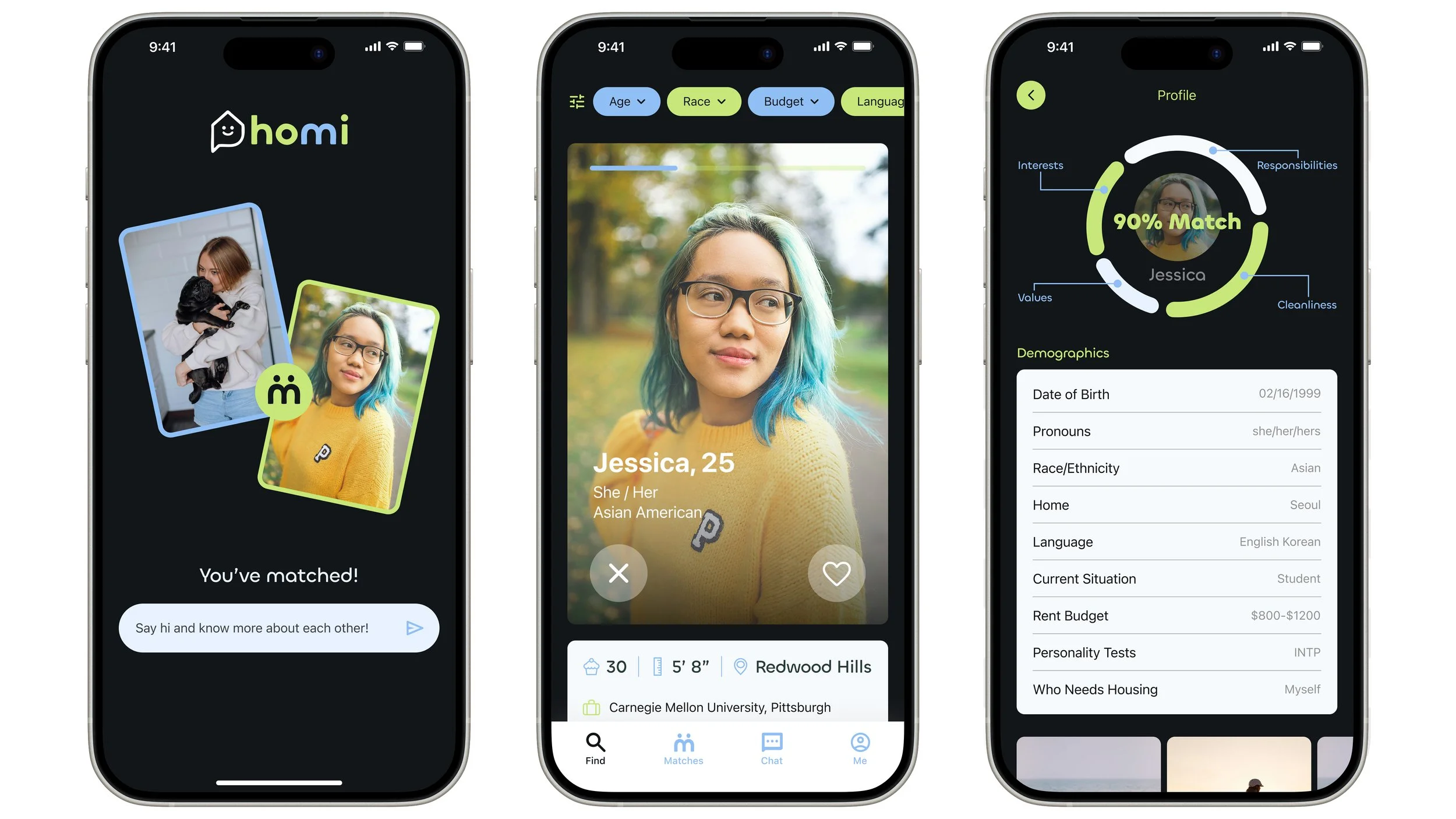
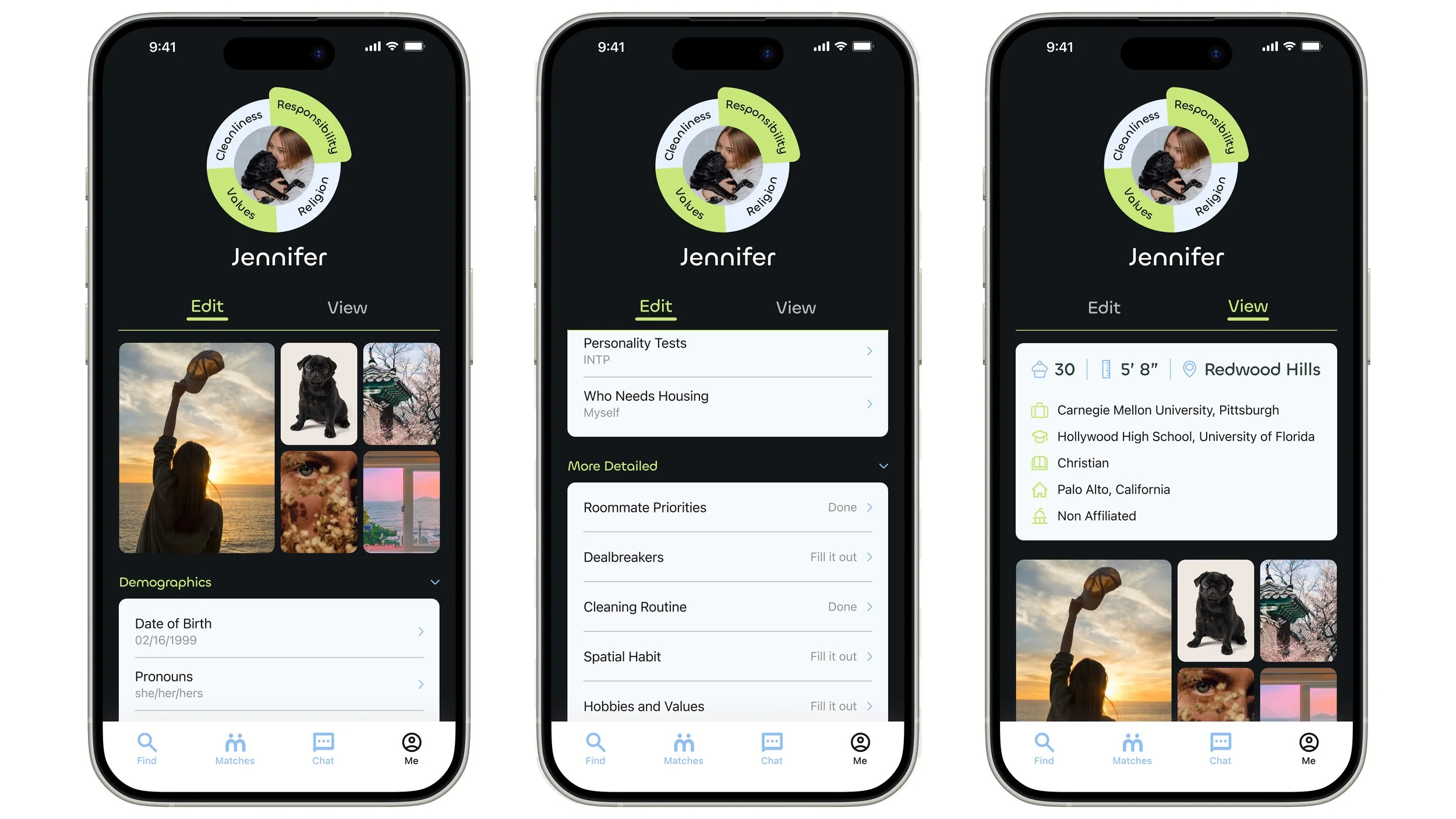
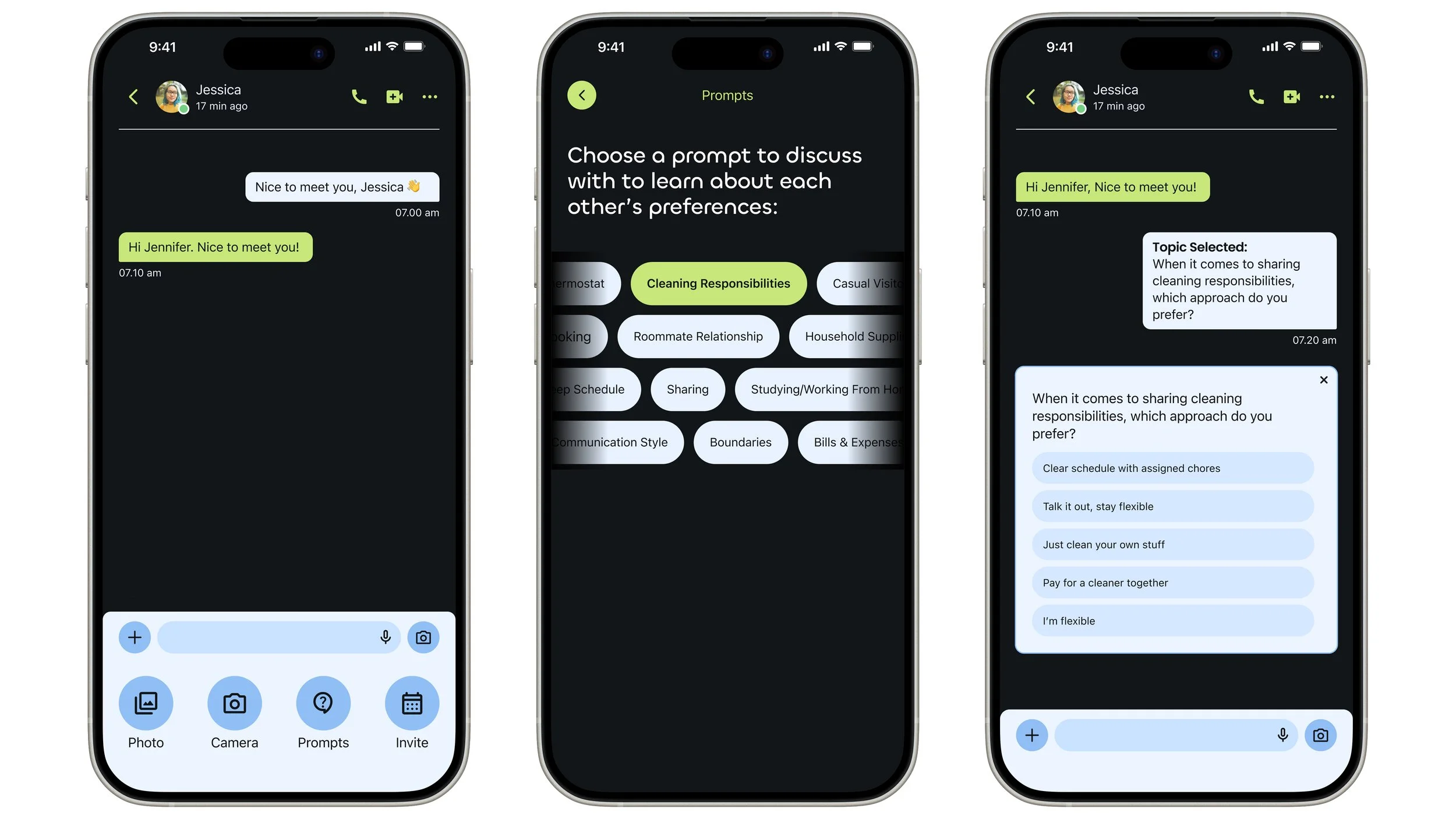
Borrowing from dating app design, users fill out a personal profile and are guided through a questionnaire to help them identify what they value most in a roommate. Matches can be viewed by percentage of values overlap and first conversations are facilitated in the chat.
Timeline + Process
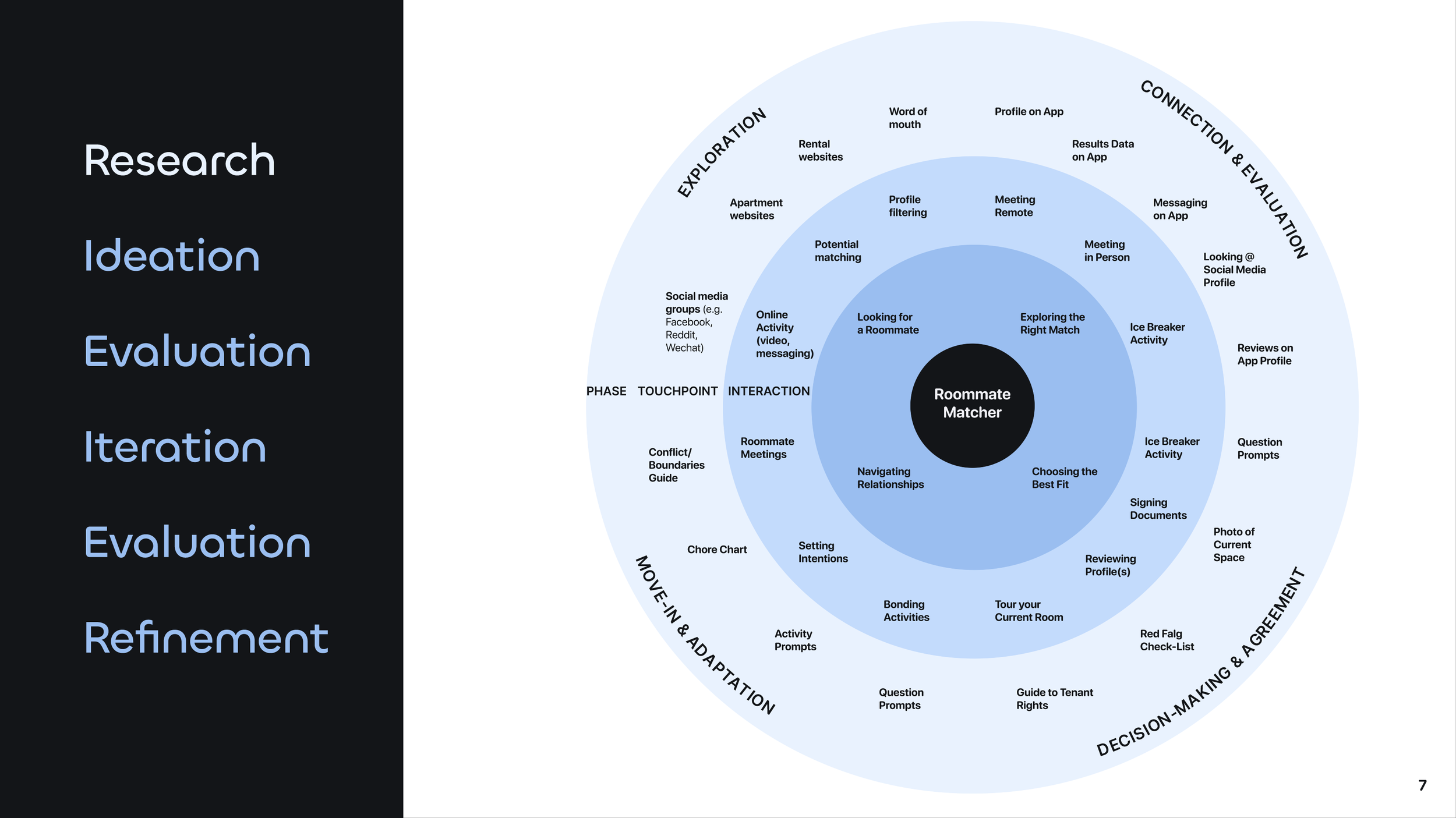
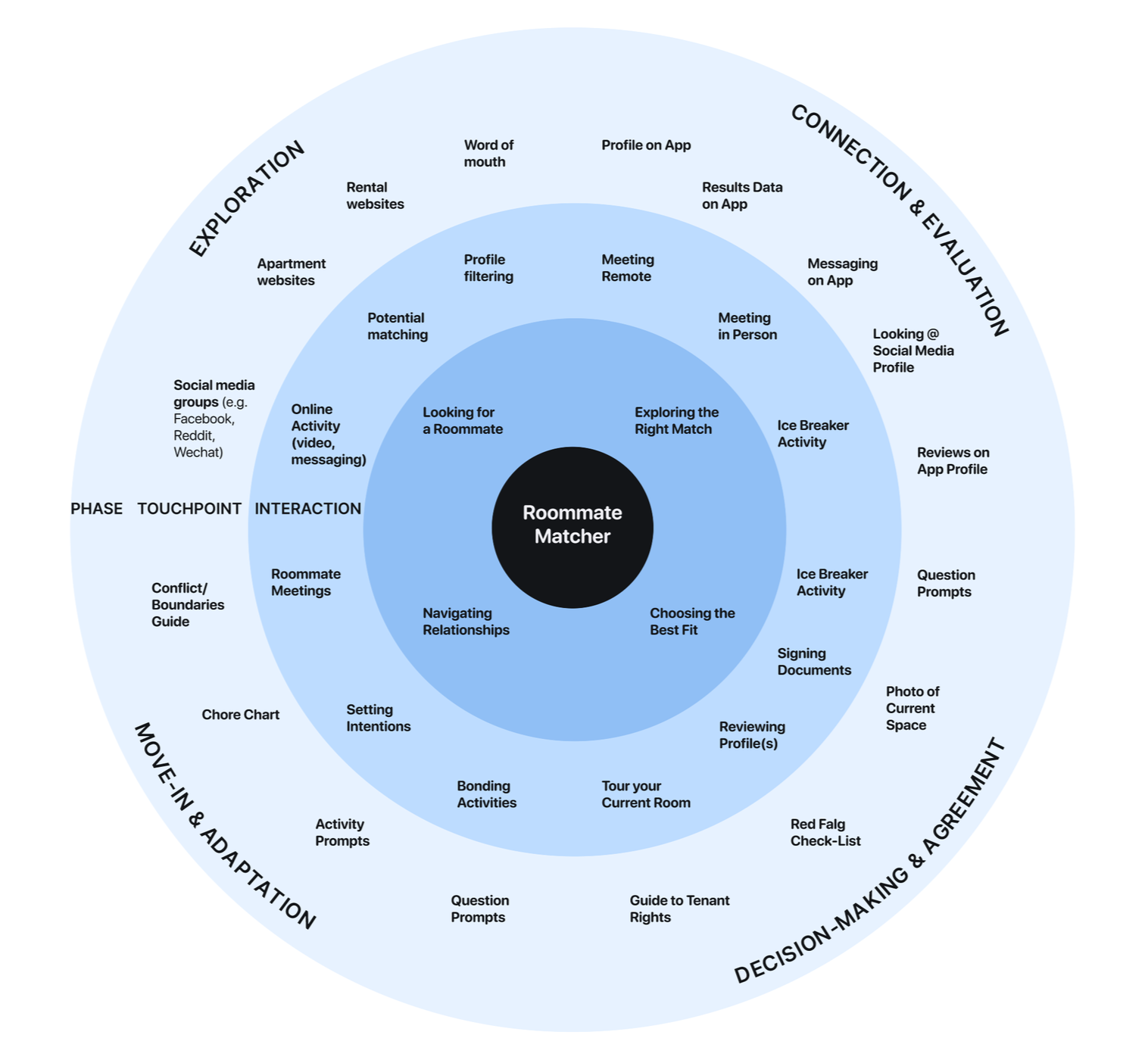
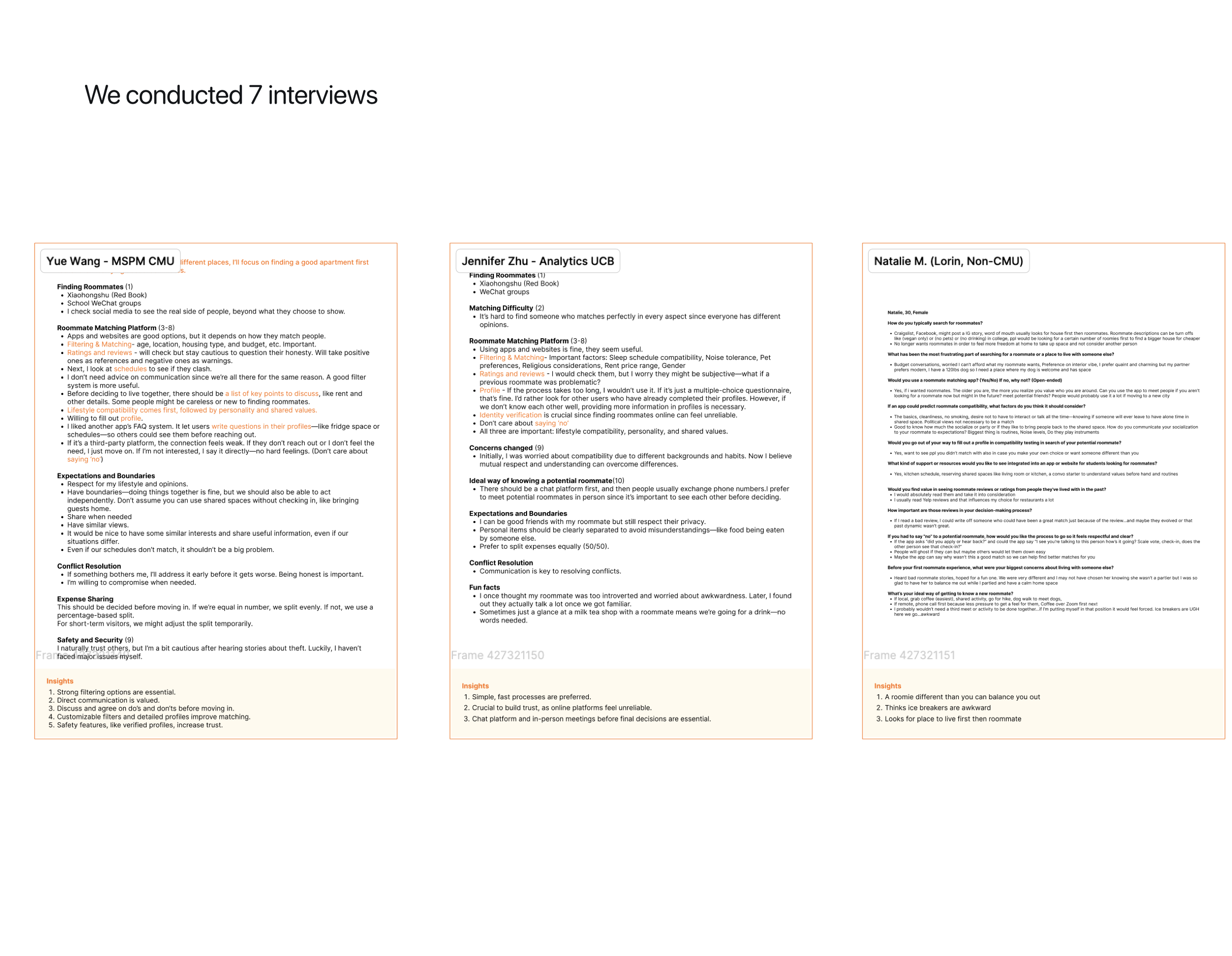
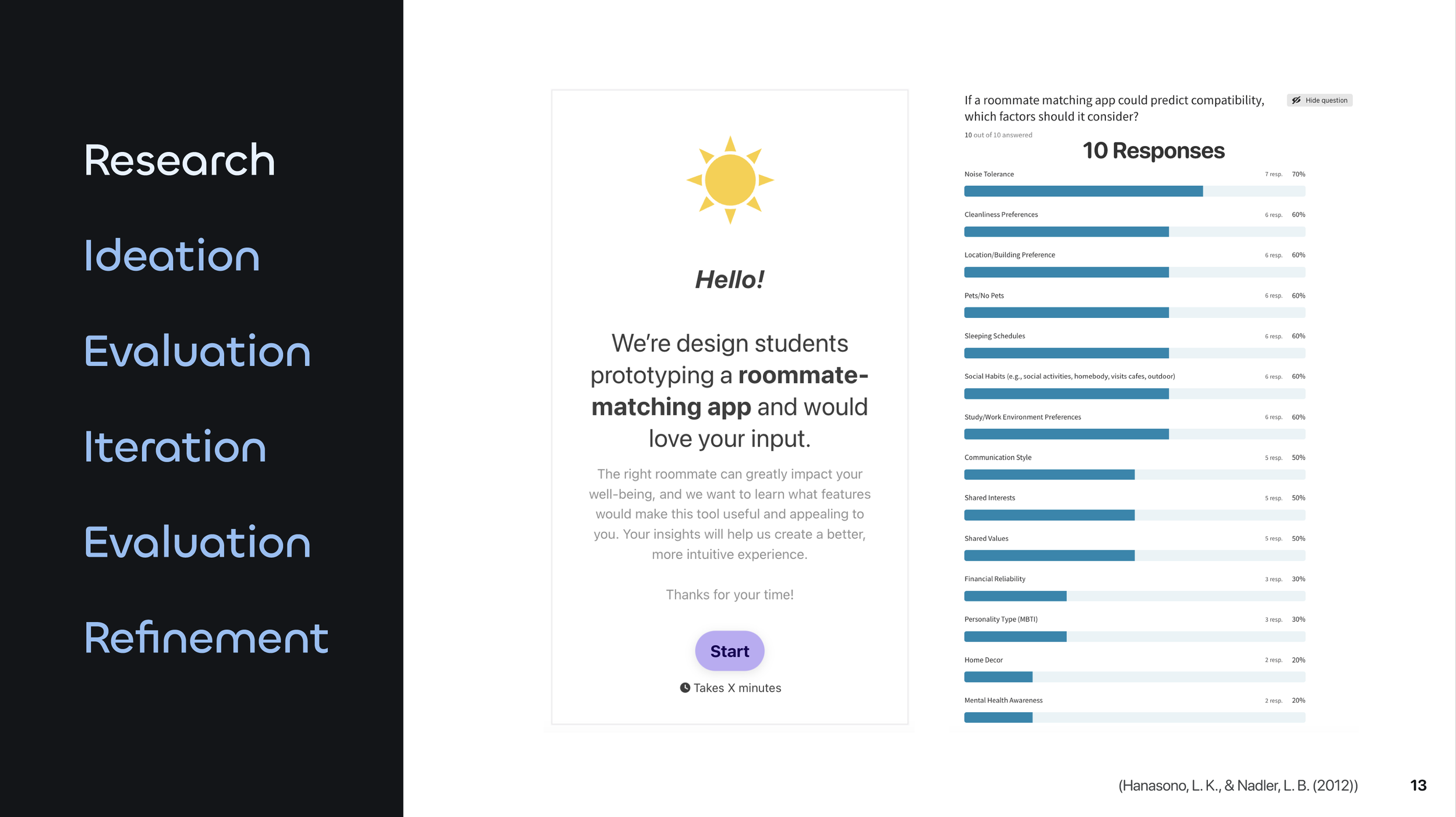
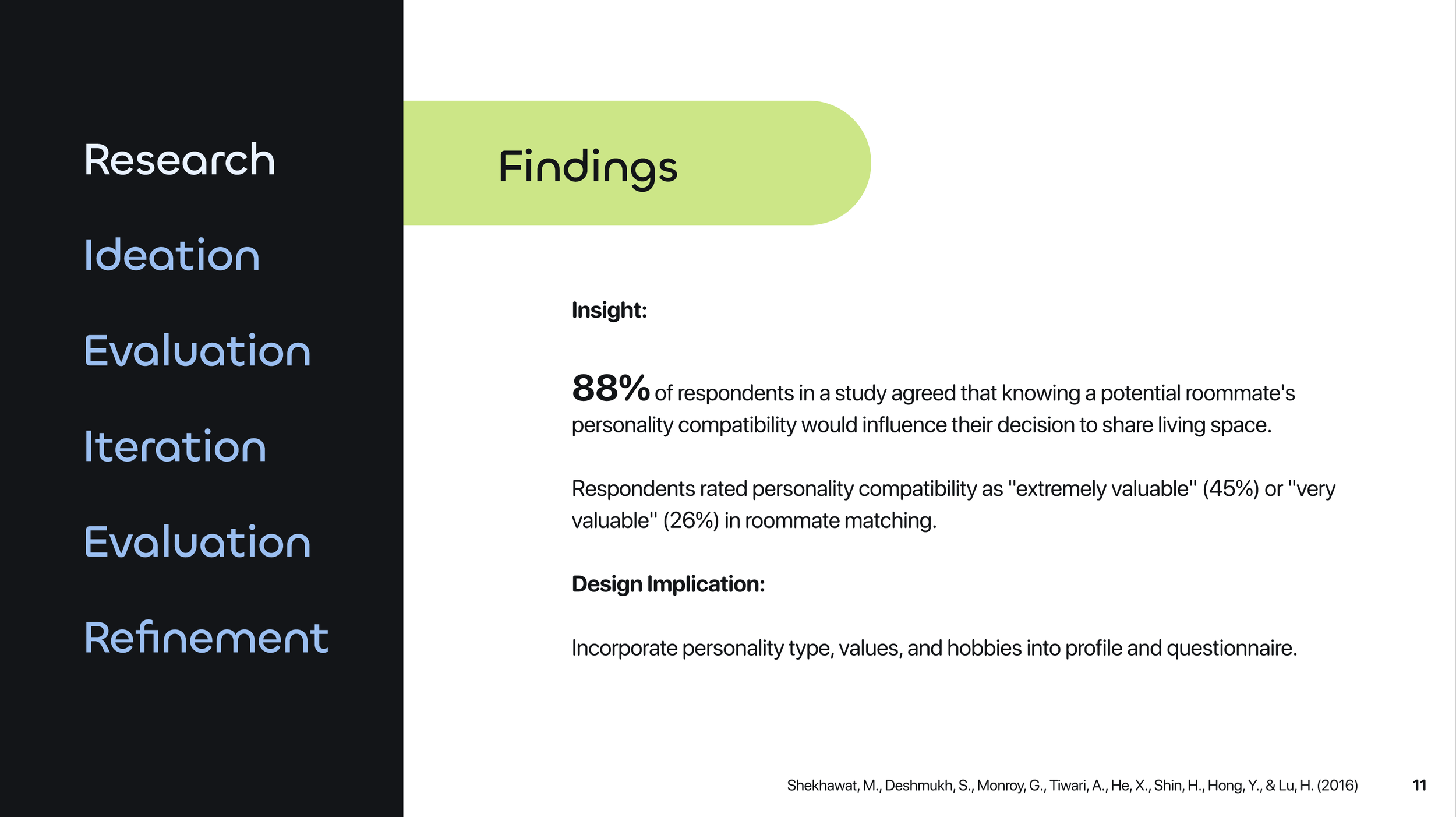
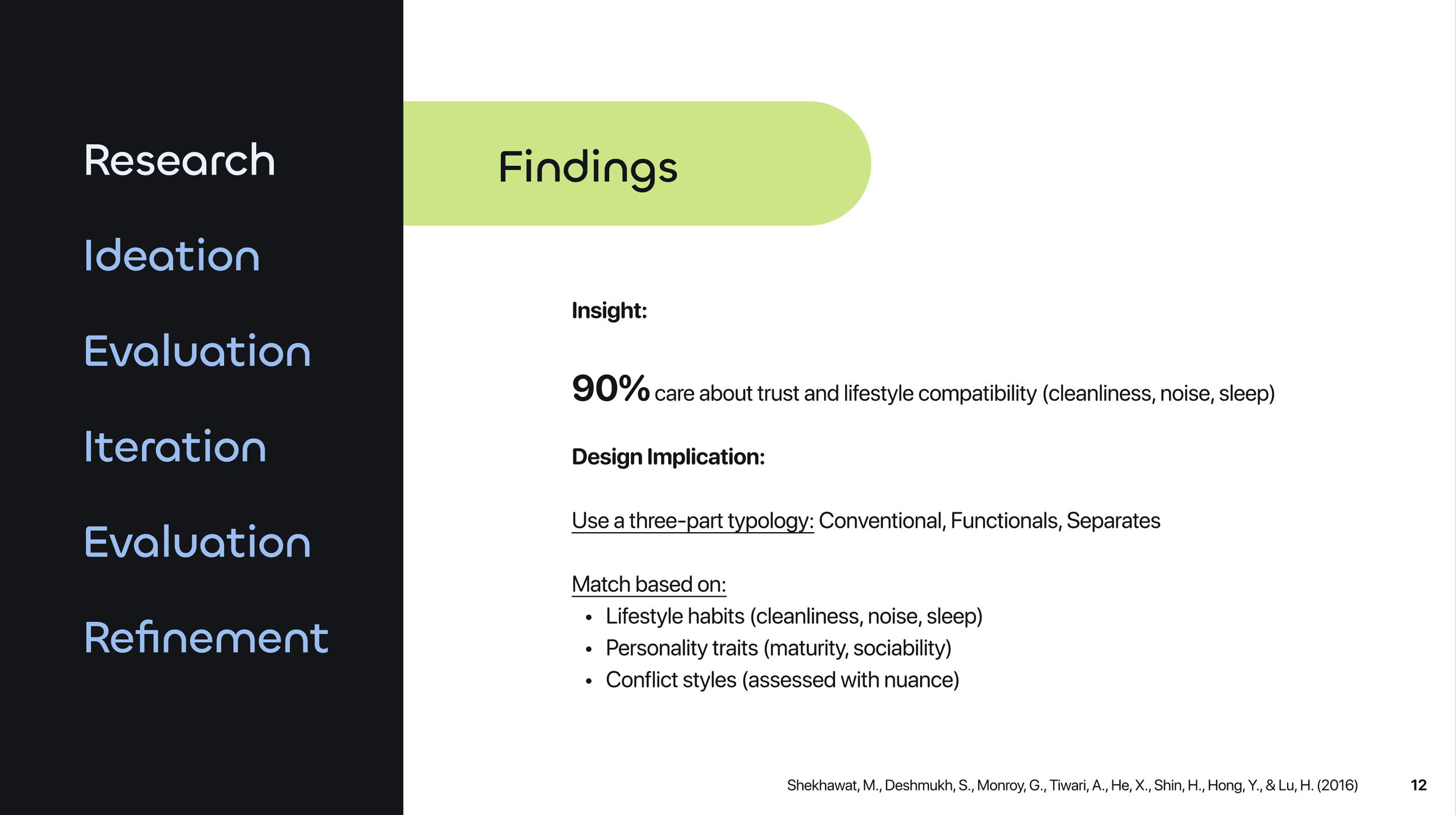
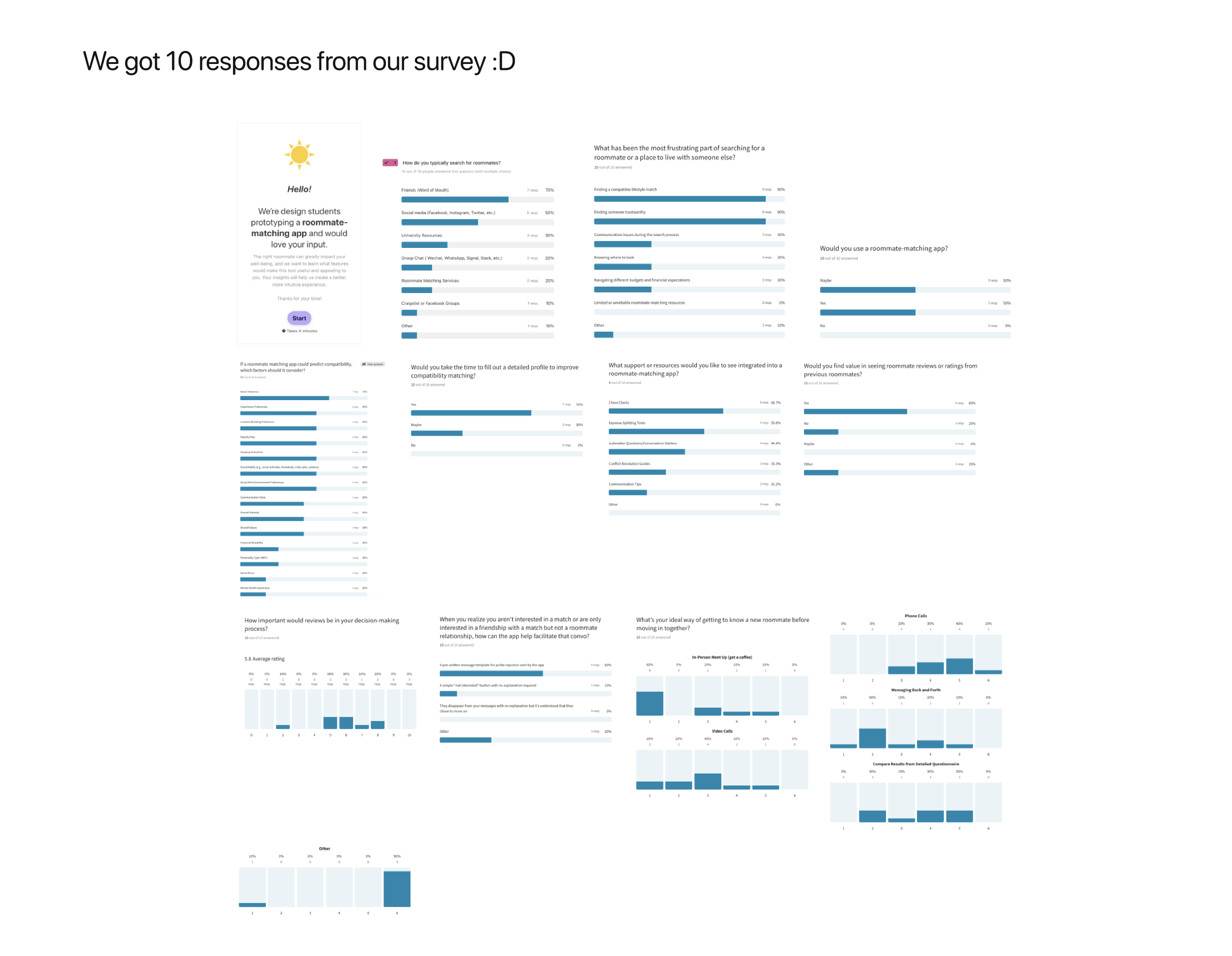
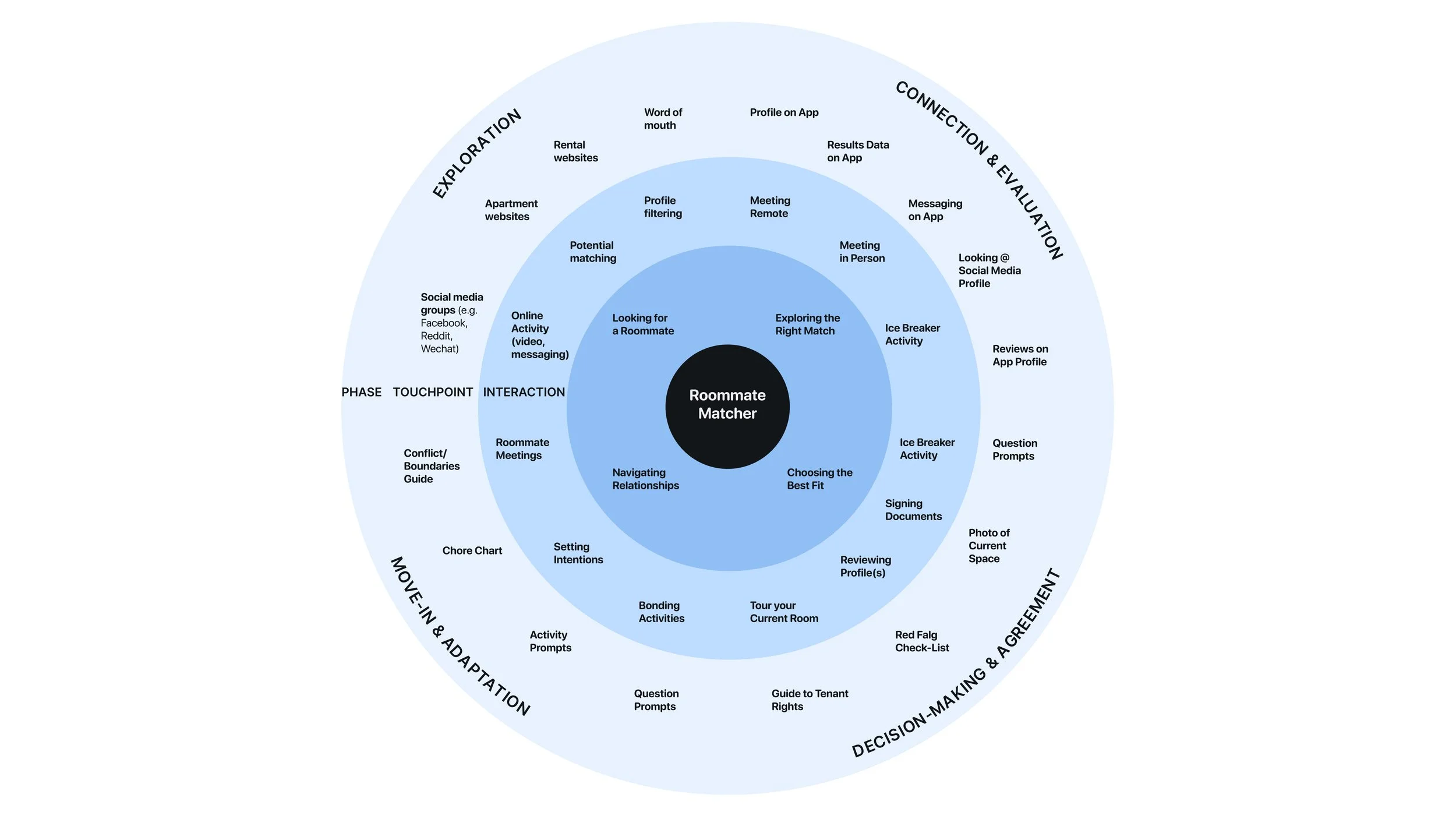
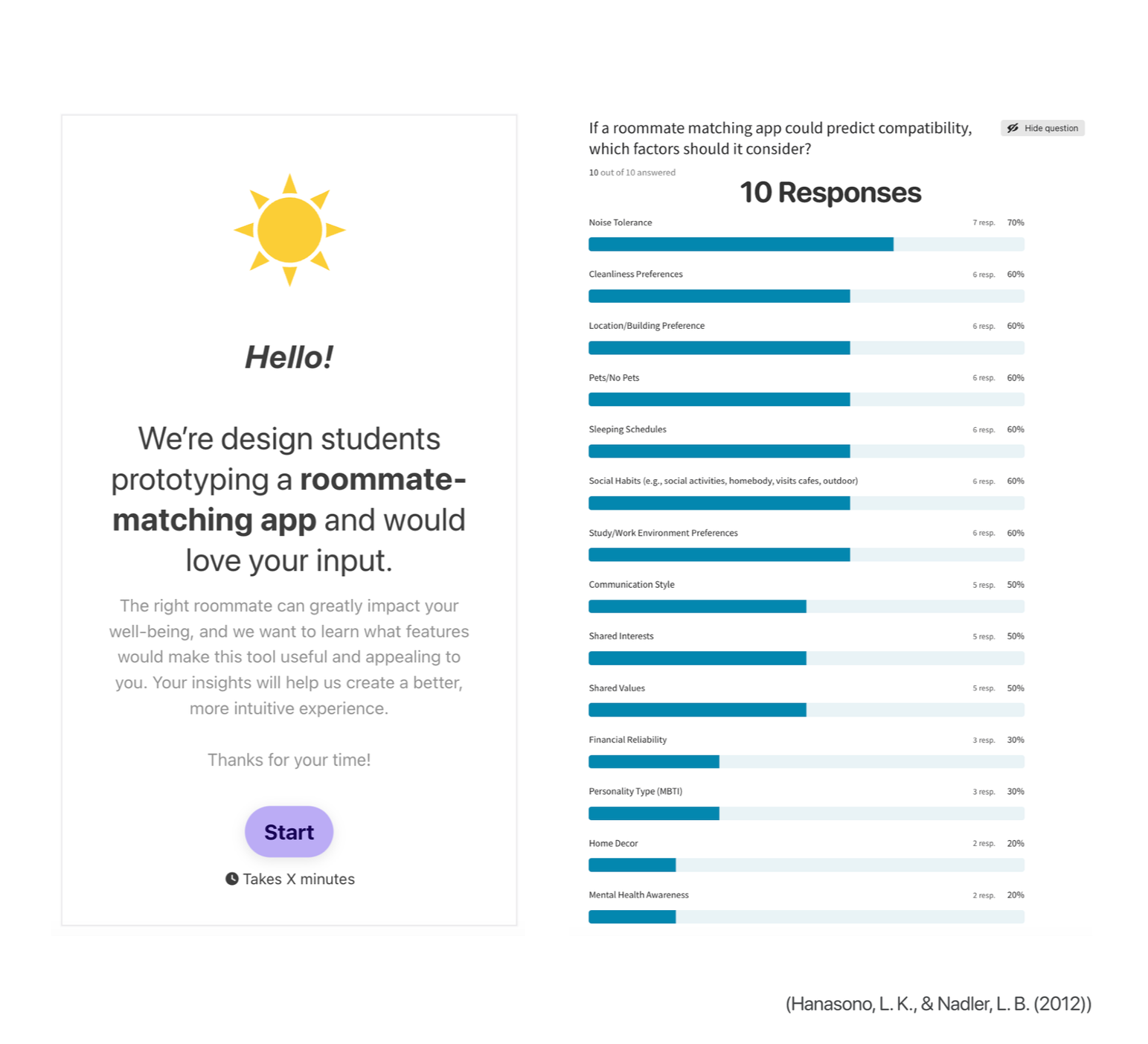
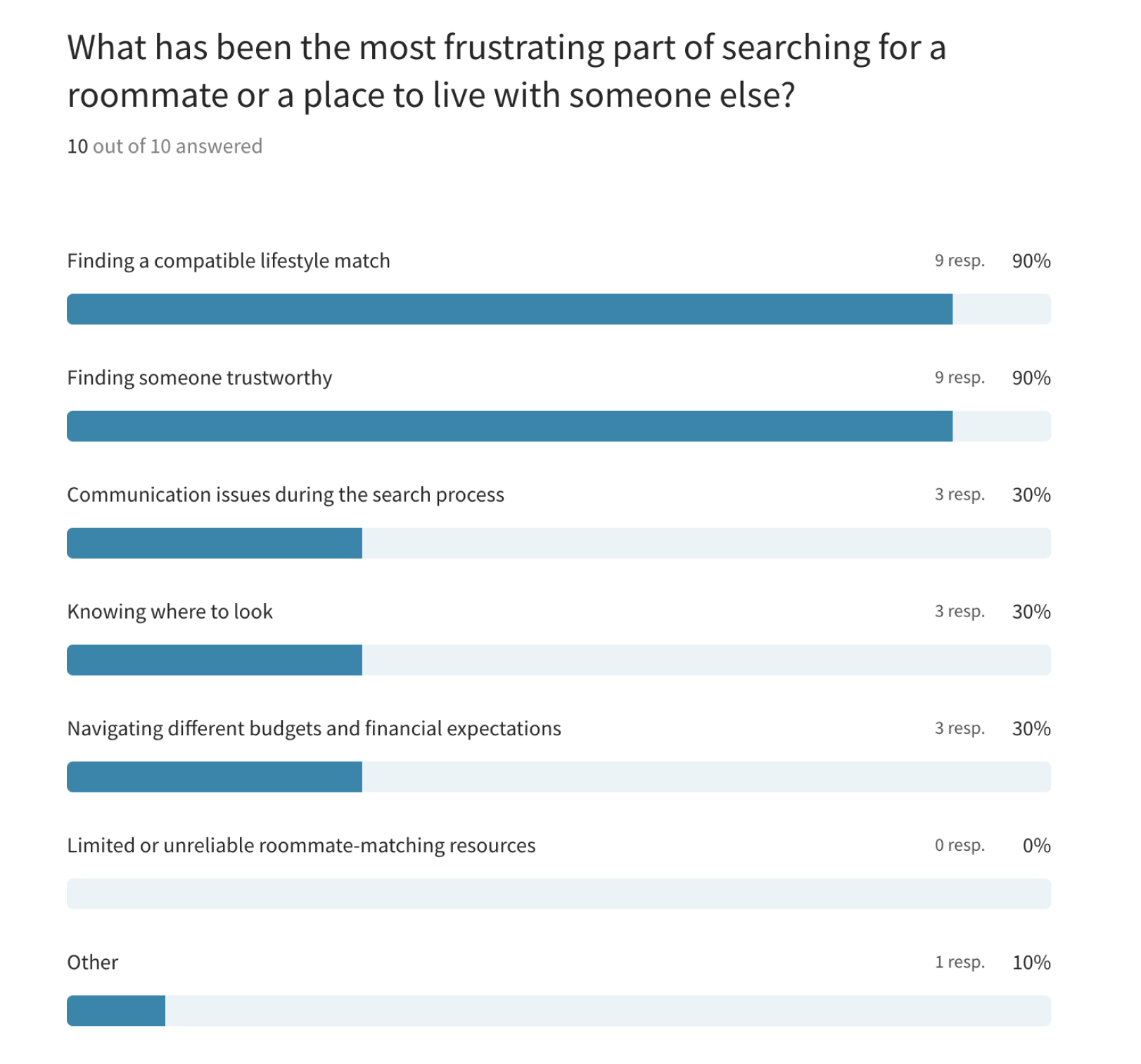
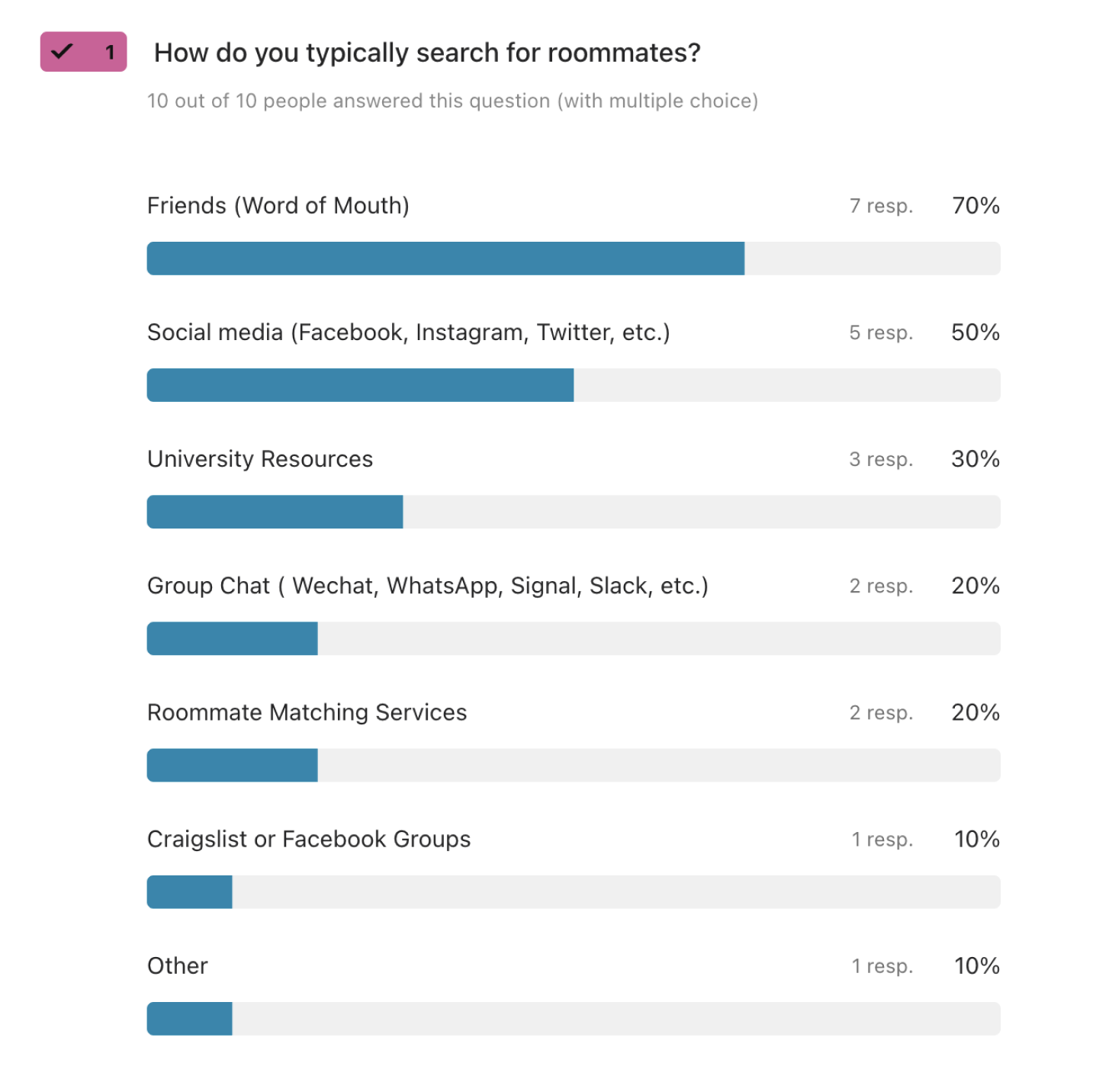
We mapped out a service design ecosystem to better understand user touch points and chose to focus on college/grad-student aged housing seekers. We developed and promoted a Typeform survey that received ten responses, and interviewed 7 participants to understand what they value when looking for a roommate.
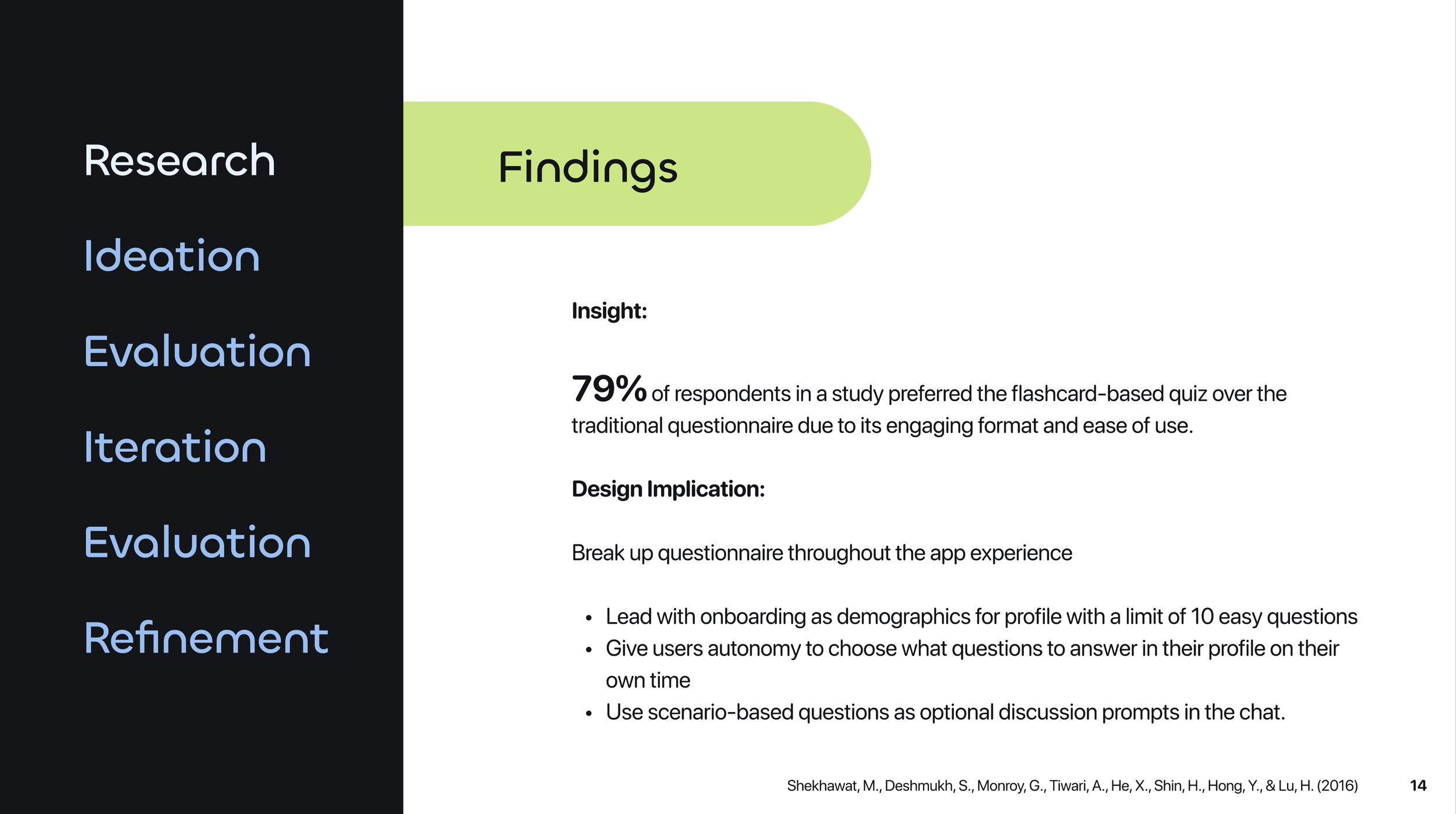
Our research informed the design of the onboarding and questionnaire aspects of the app as well as the brand design. We conducted further feedback workshops to refine the app flow through participatory activities like card sorting. To our surprise, the aspect that took the most time was the choice and phrasing of questions within the app.
Ideation
1 Week
Research Protocol
Idea Generation
Internet Research
Research/Synthesis
1 Week
User Interviews
Surveys
Synthesis
Concept
1 Week
Crit
Branding
Lo-Fi Concept
Refinement
1 Week
Card Sorting Feedback
High-Fi Concept
Copy Refinement
Presentation
1 Week
High-Fi Refinement
Prototyping
Presentation
Research
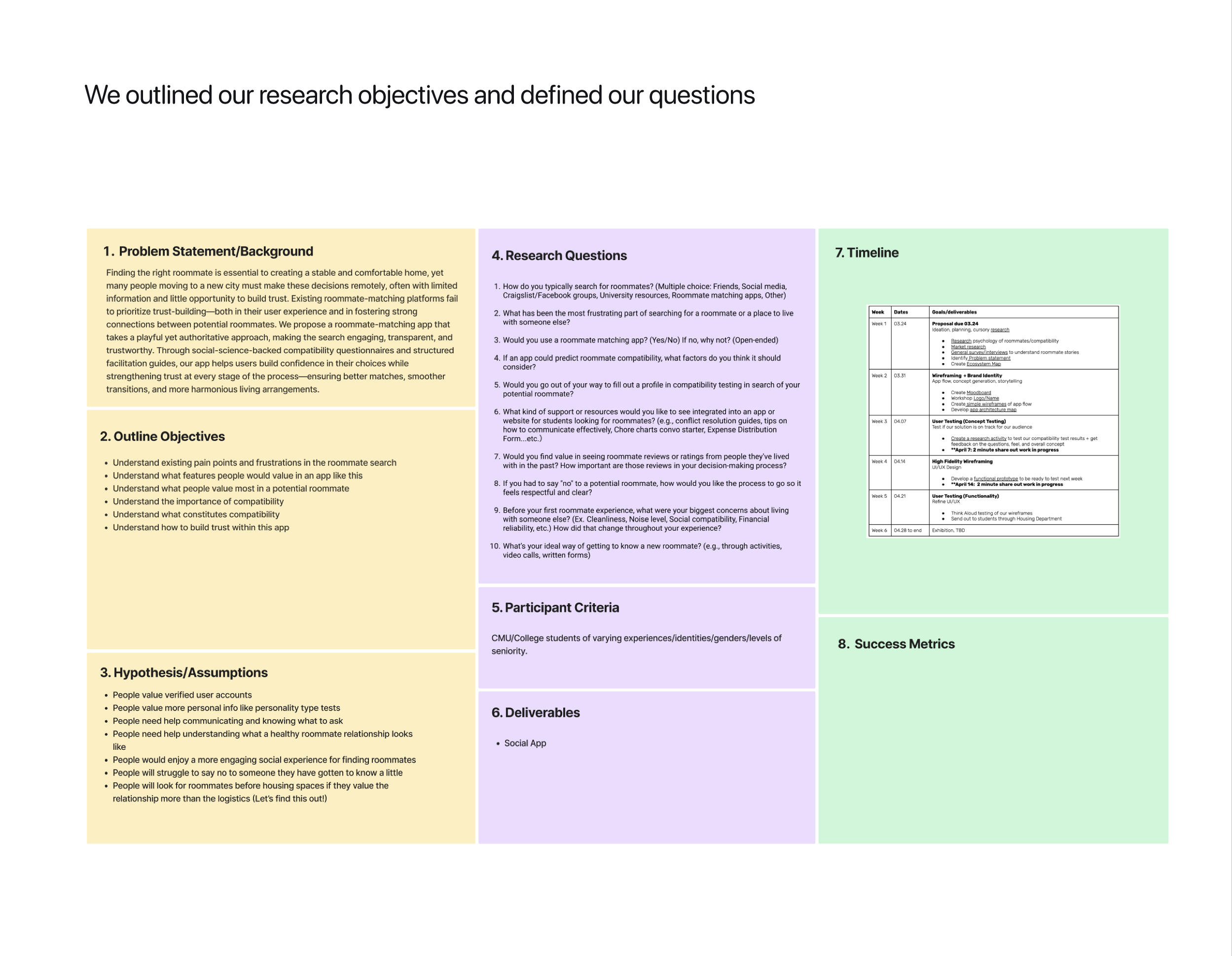
Defining Research Objectives
Understand existing pain points and frustrations in the roommate search
Understand what features people would value in an app like this
Understand what people value most in a potential roommate
Understand the importance of compatibility
Understand what constitutes compatibility
Understand how to build trust within this app
Defining Our Assumptions:
Trust is important
Personality type will play a key role
Users need help communicating and knowing what to ask
Users need help understanding healthy roommate dynamics
A more engaging platform will lead to better results
Saying no might be awkward
Users will seek roommates before housing if they value the relationship > logistics
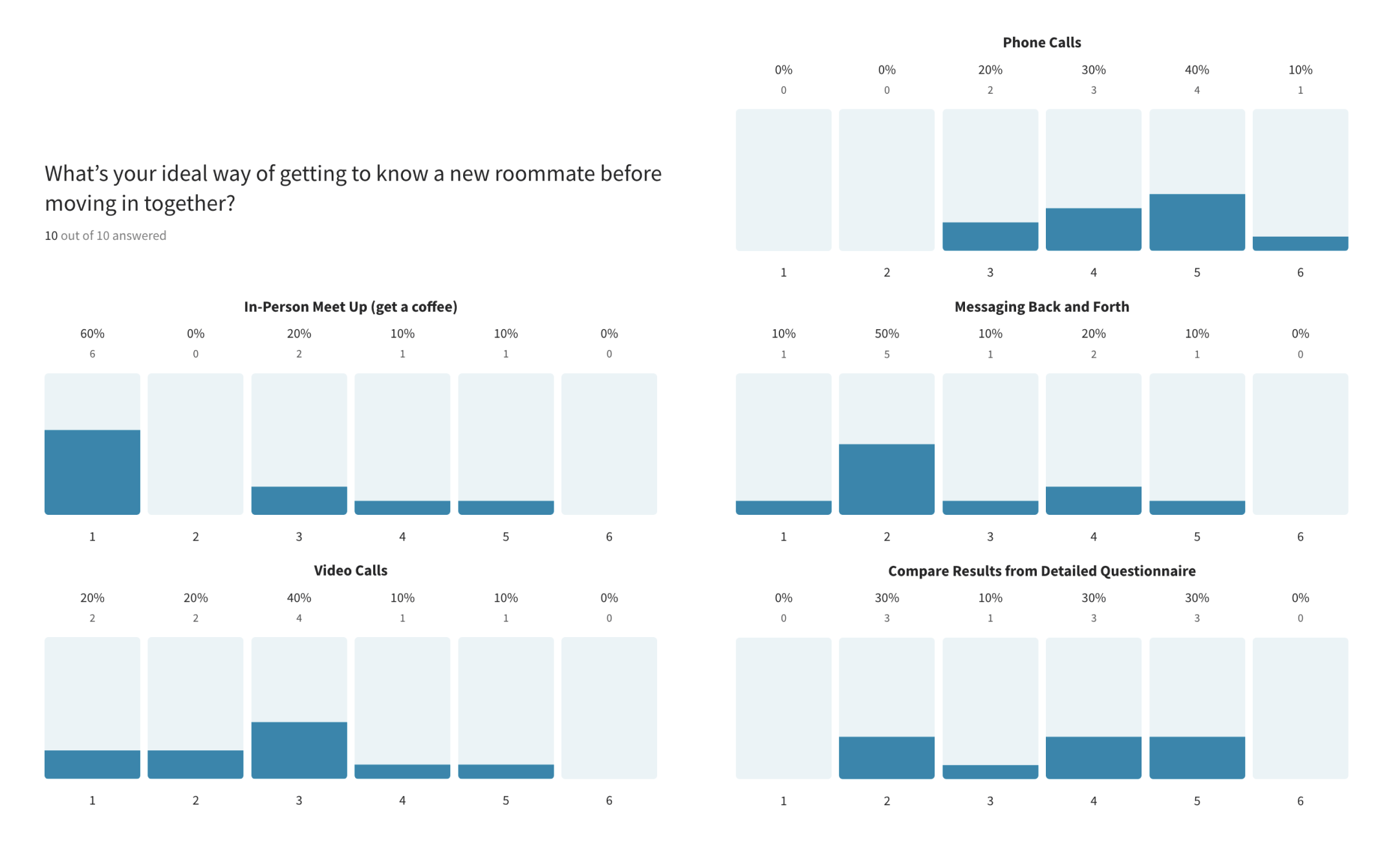
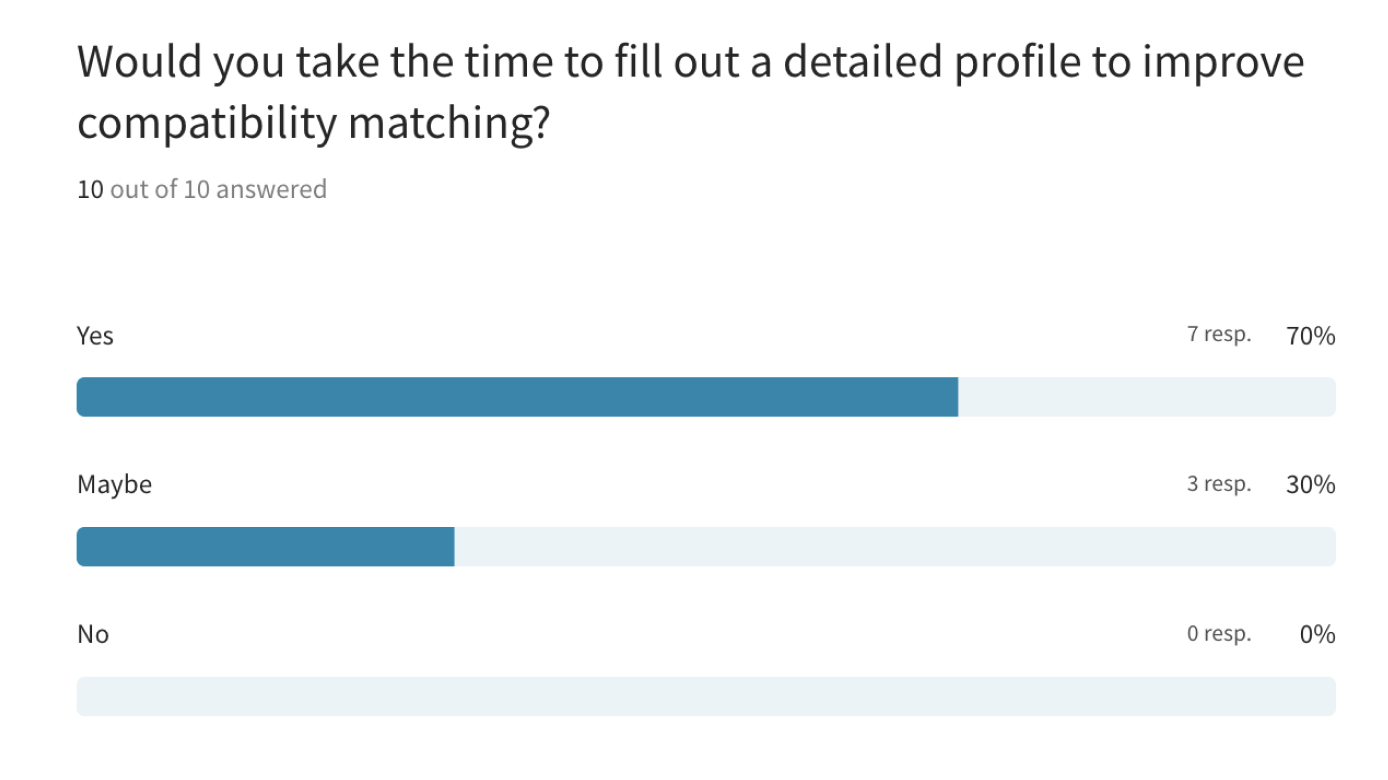
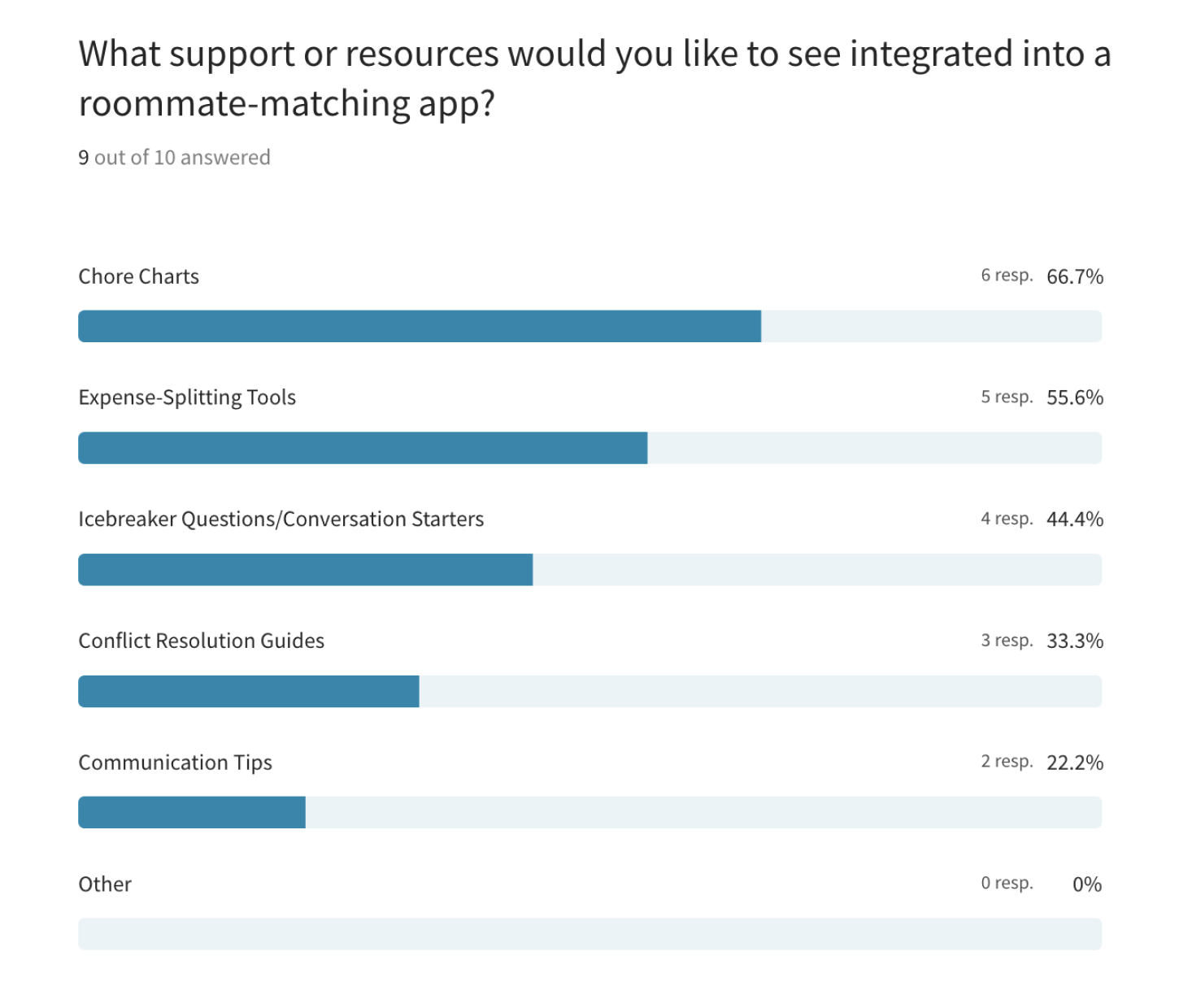
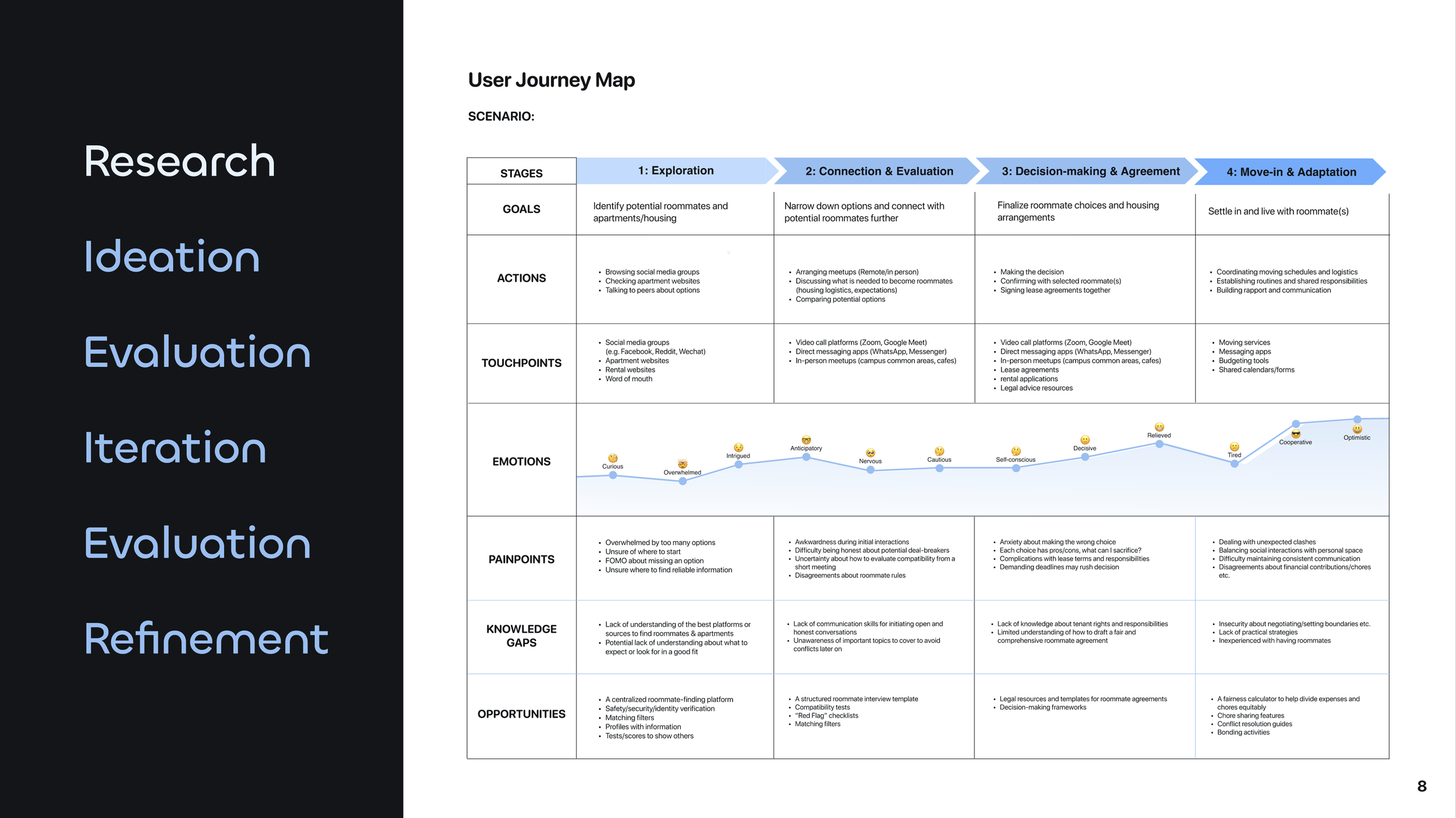
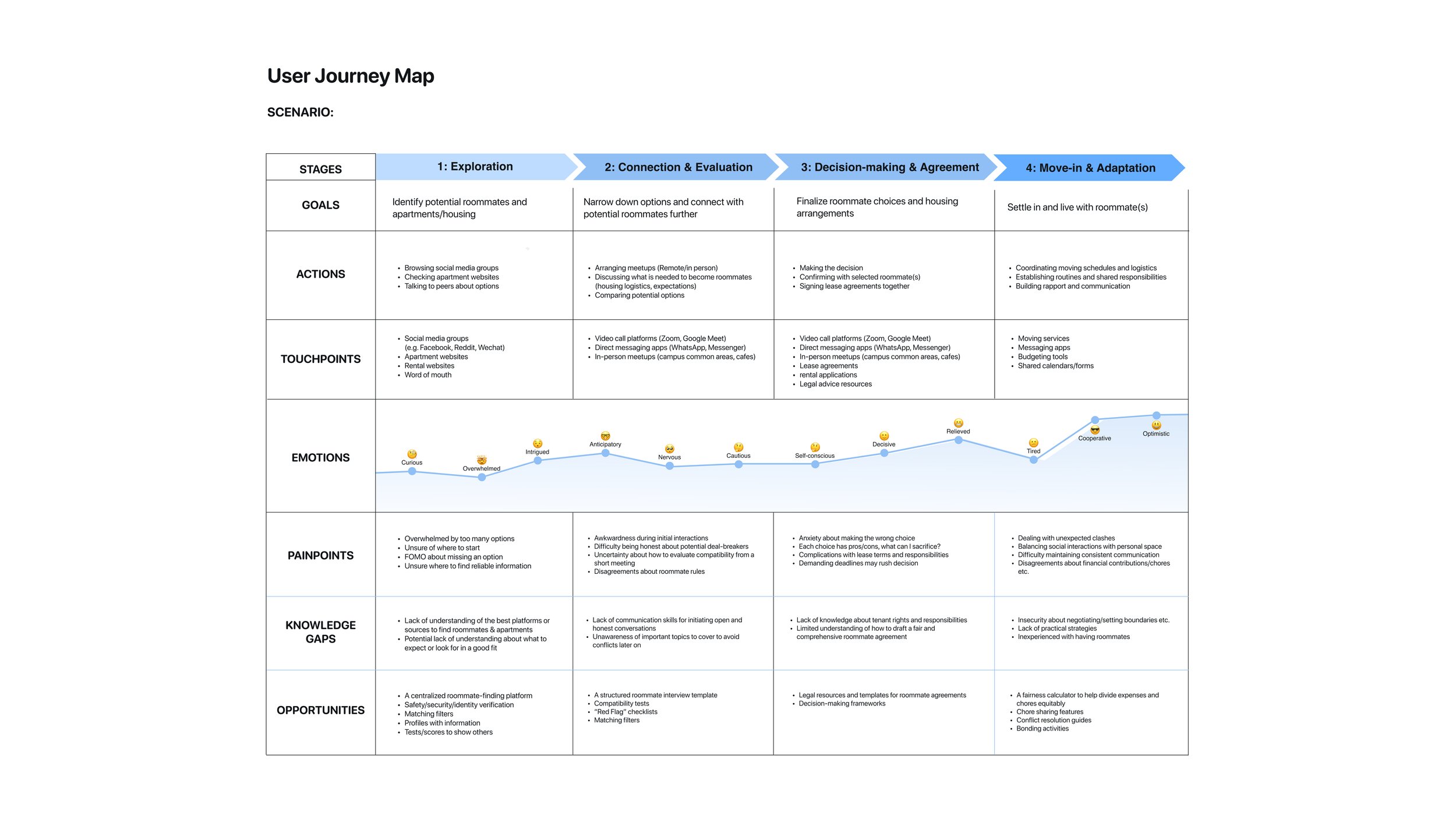
Based on these interviews, we created a user journey map to better understand the needs, emotions, and touch points our user would experience in the process of searching for a roommate.
Brand Identity
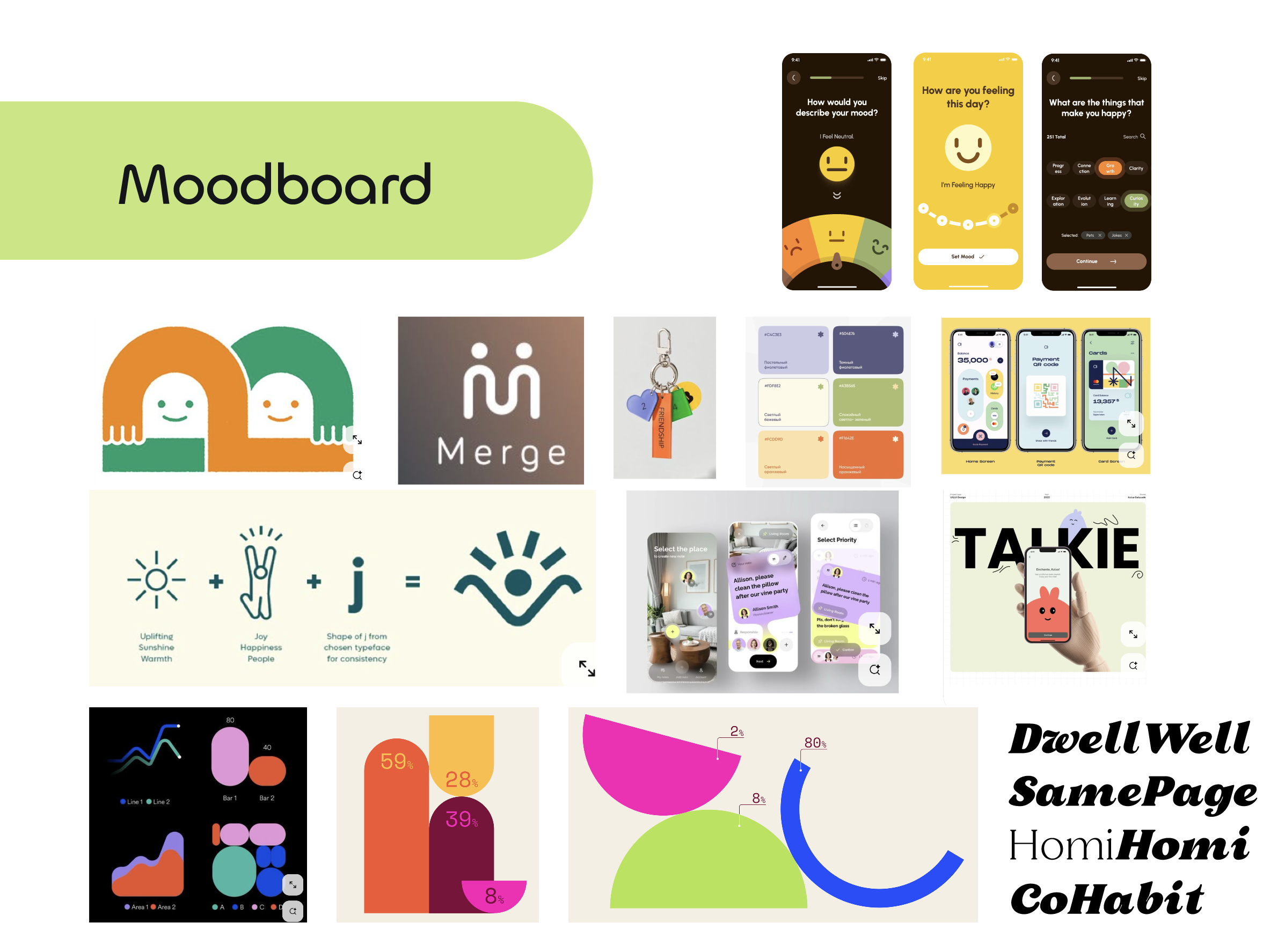
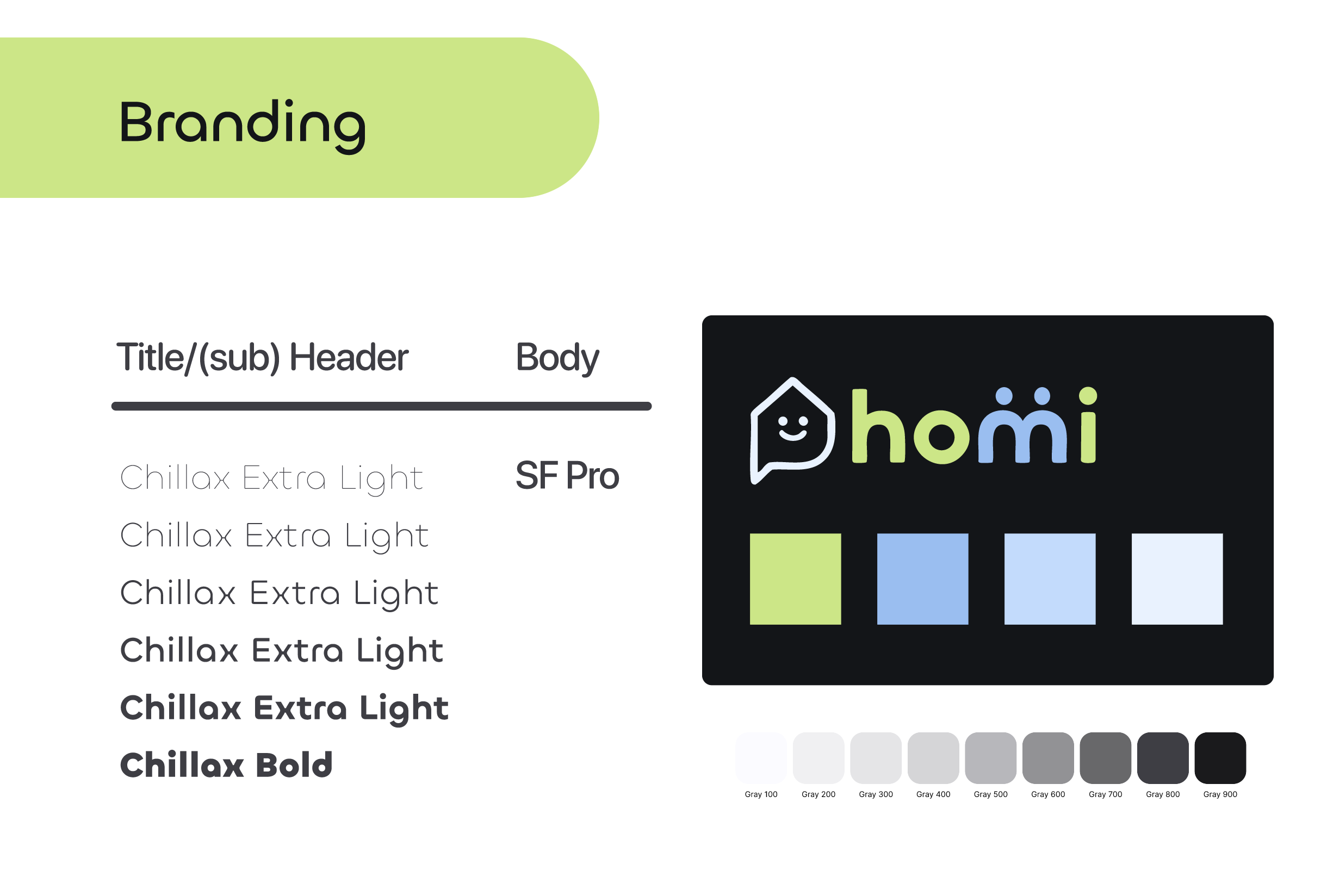
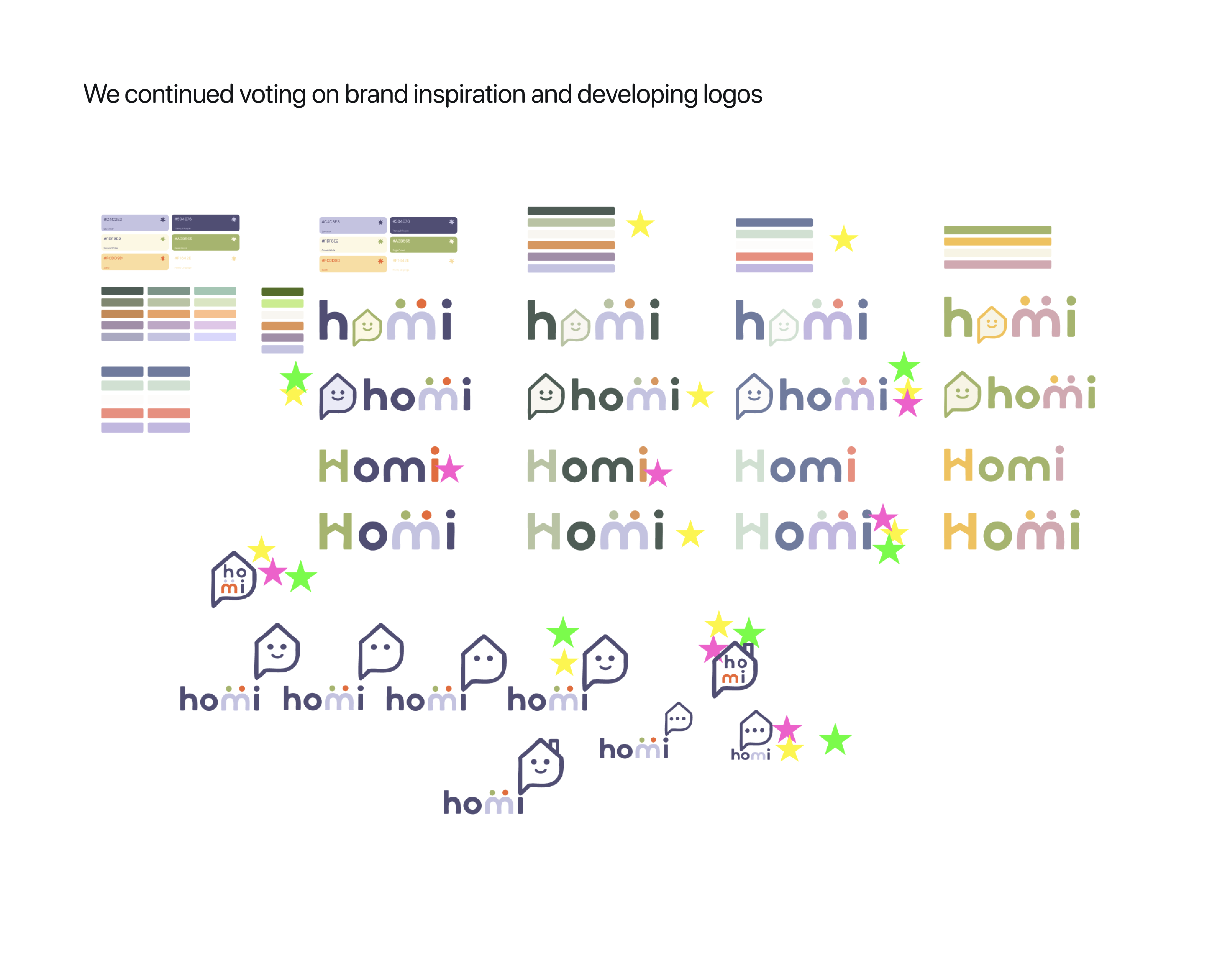
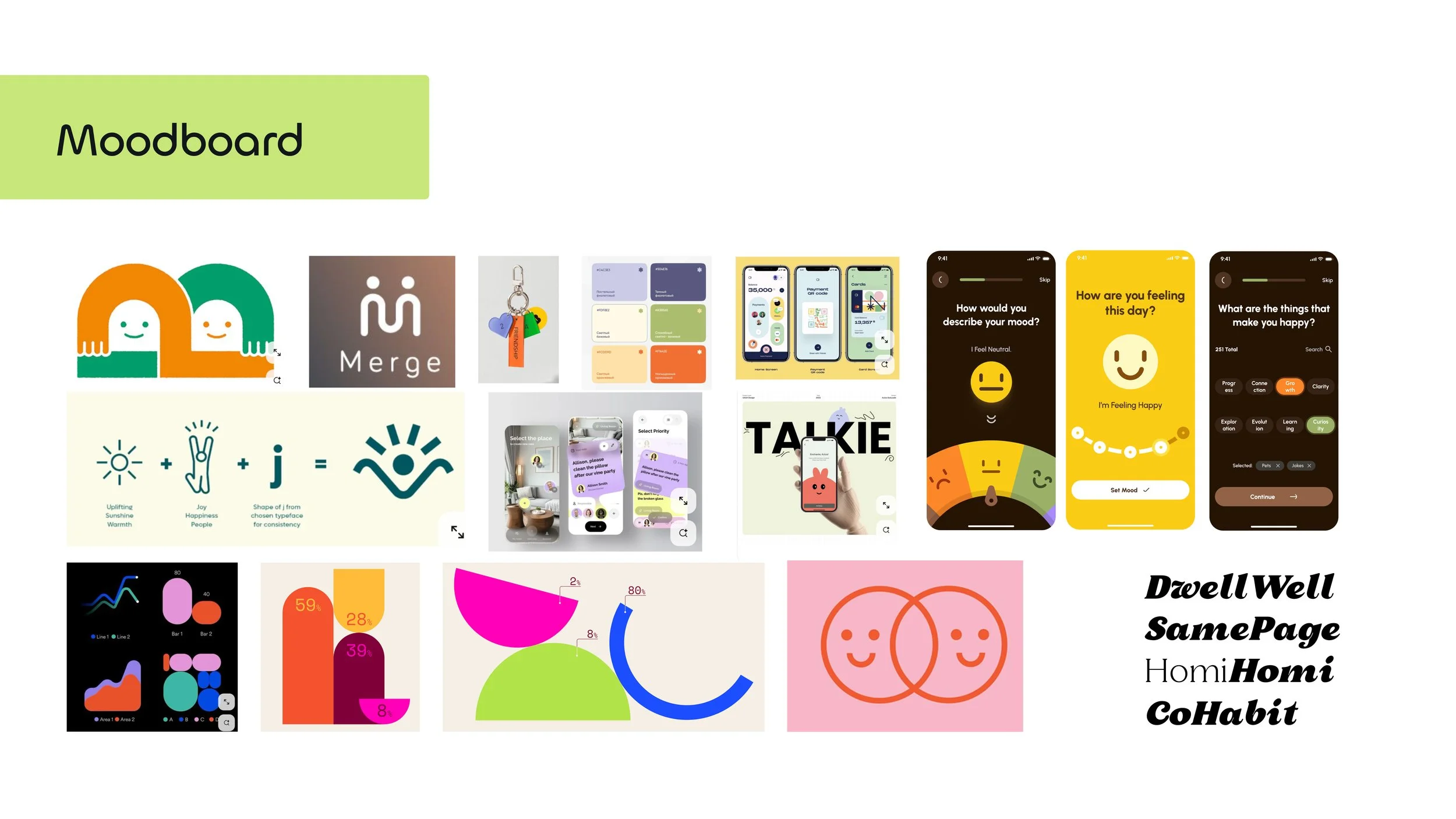
Designing a visual language that feels youthful, trustworthy, and focused on healthy relationships. We chose to create a playful brand that would resonate with Gen Z and younger millennials while appealing to those who value strong roommate relationships.
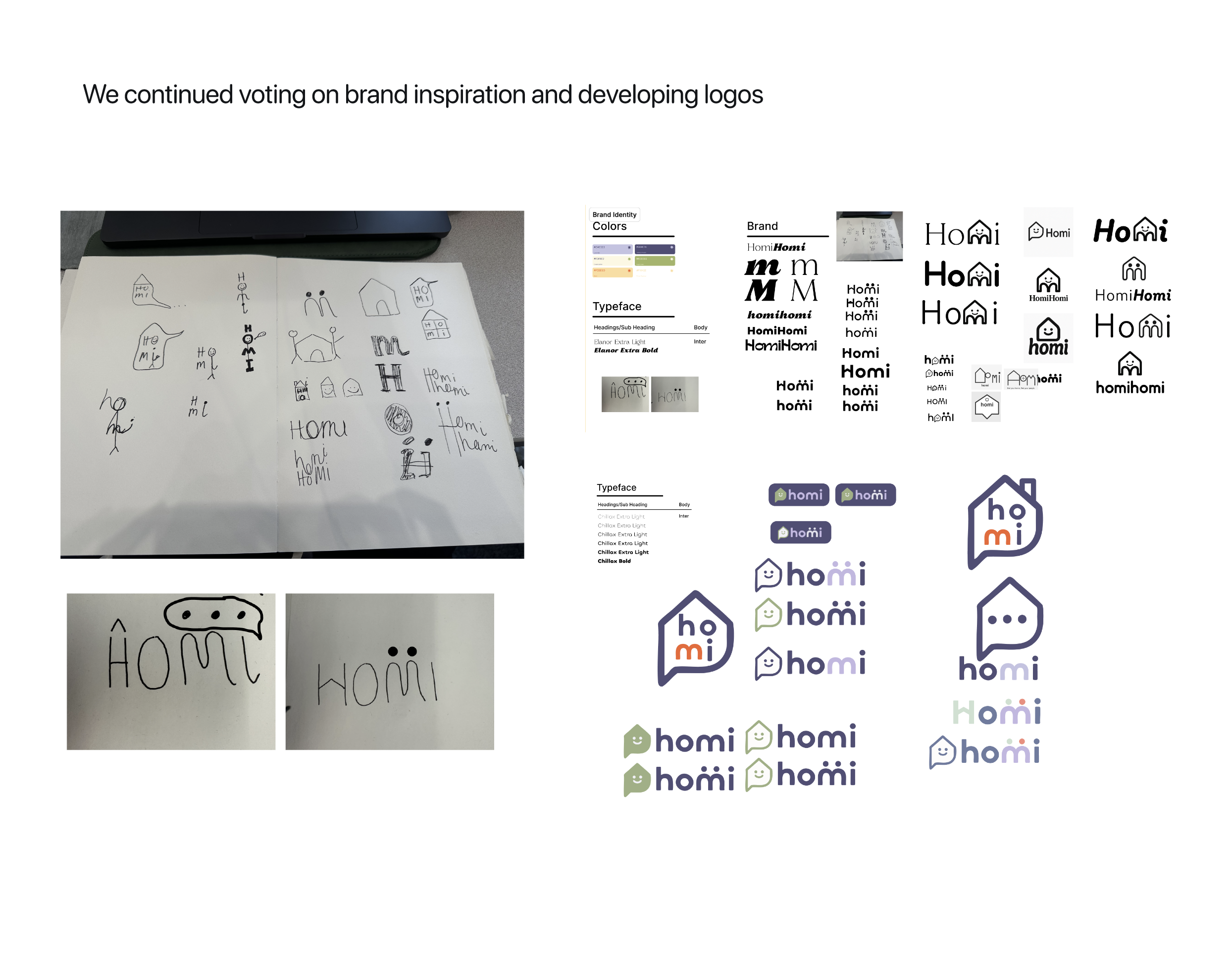
Our goal was a brand that felt intuitive, memorable, and trustworthy. The final palette conveyed authority and warmth, while our logo and illustrations softened the overall tone. We wanted the logo to be metaphorical and memorable.

App Design
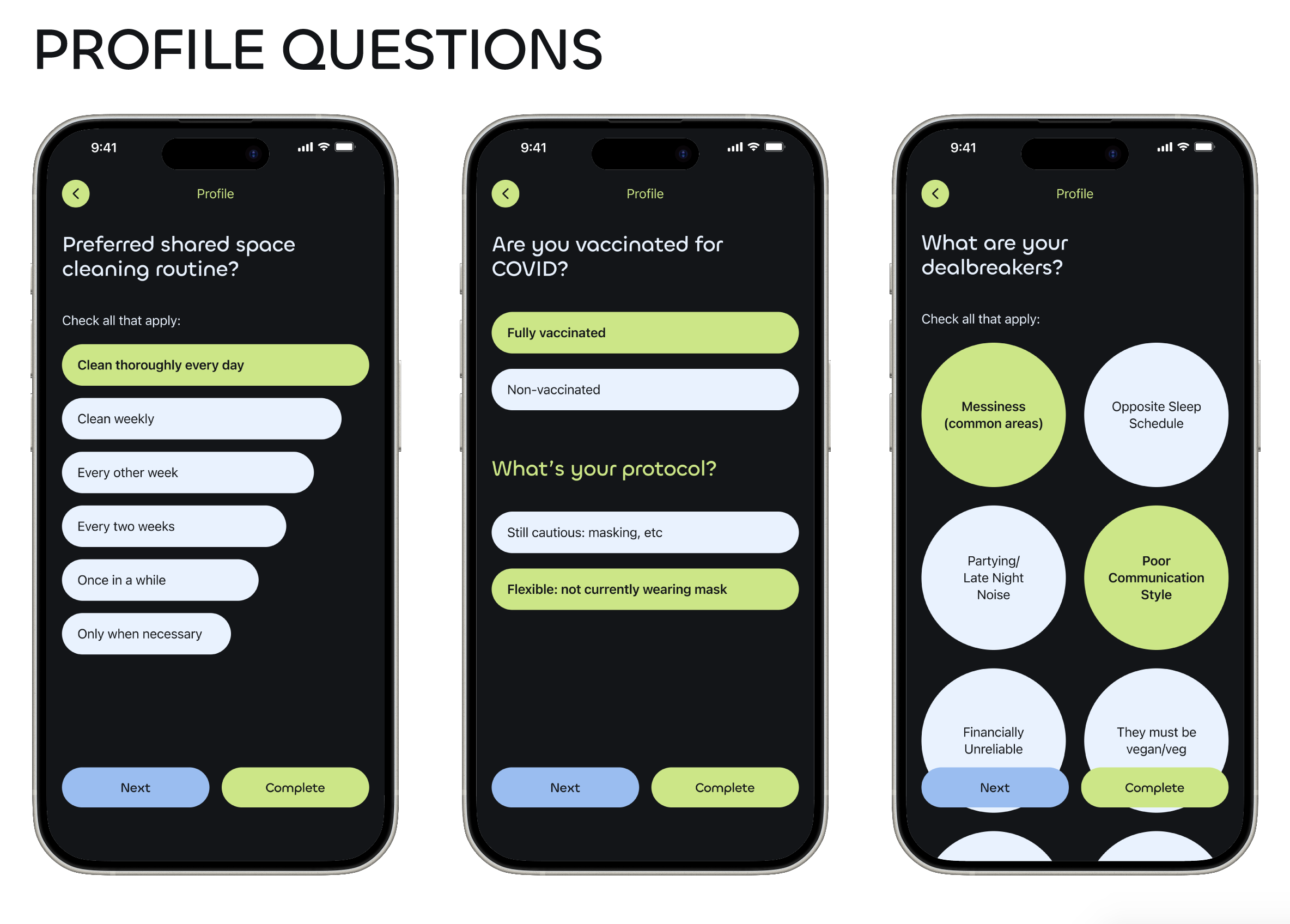
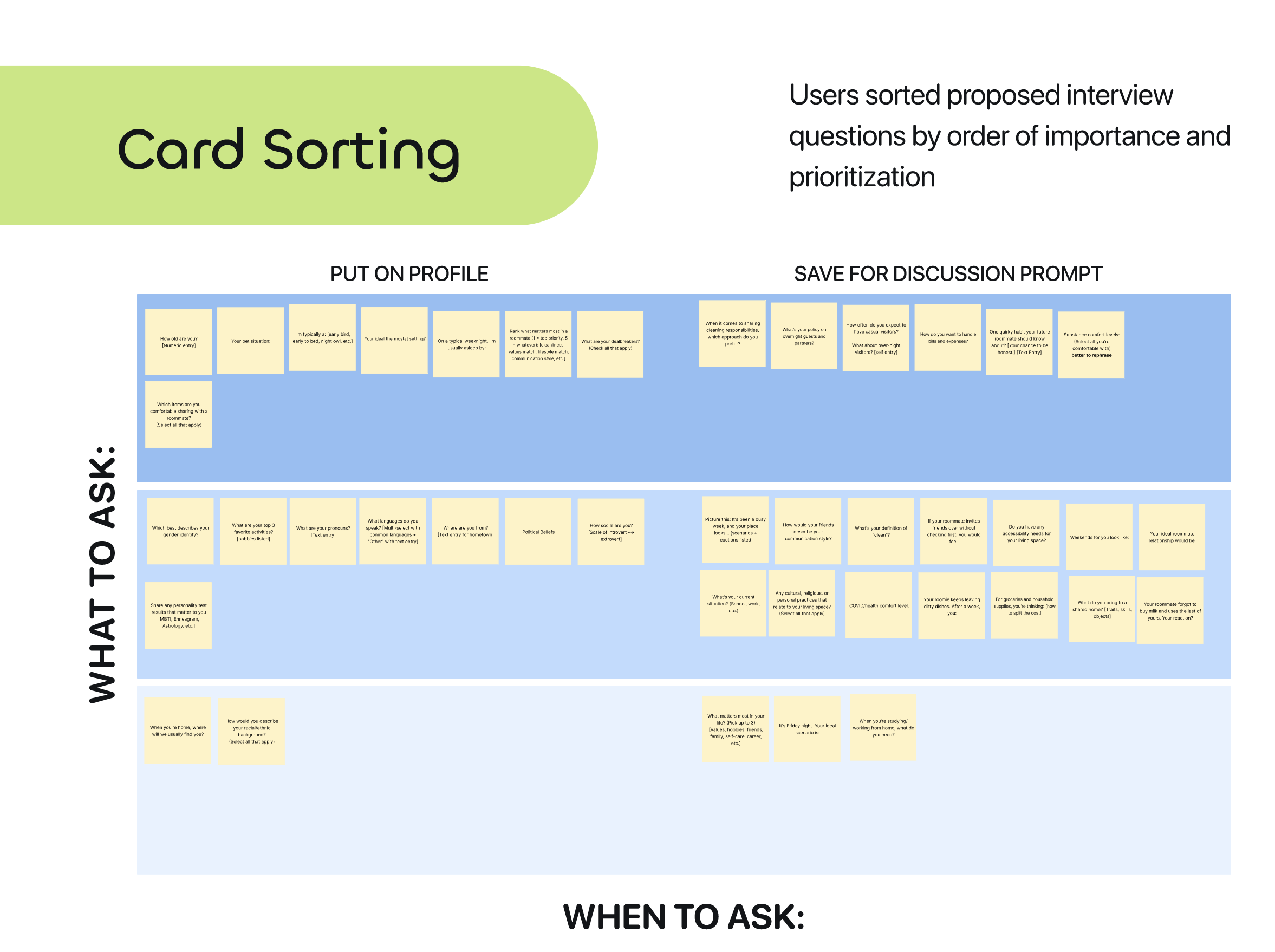
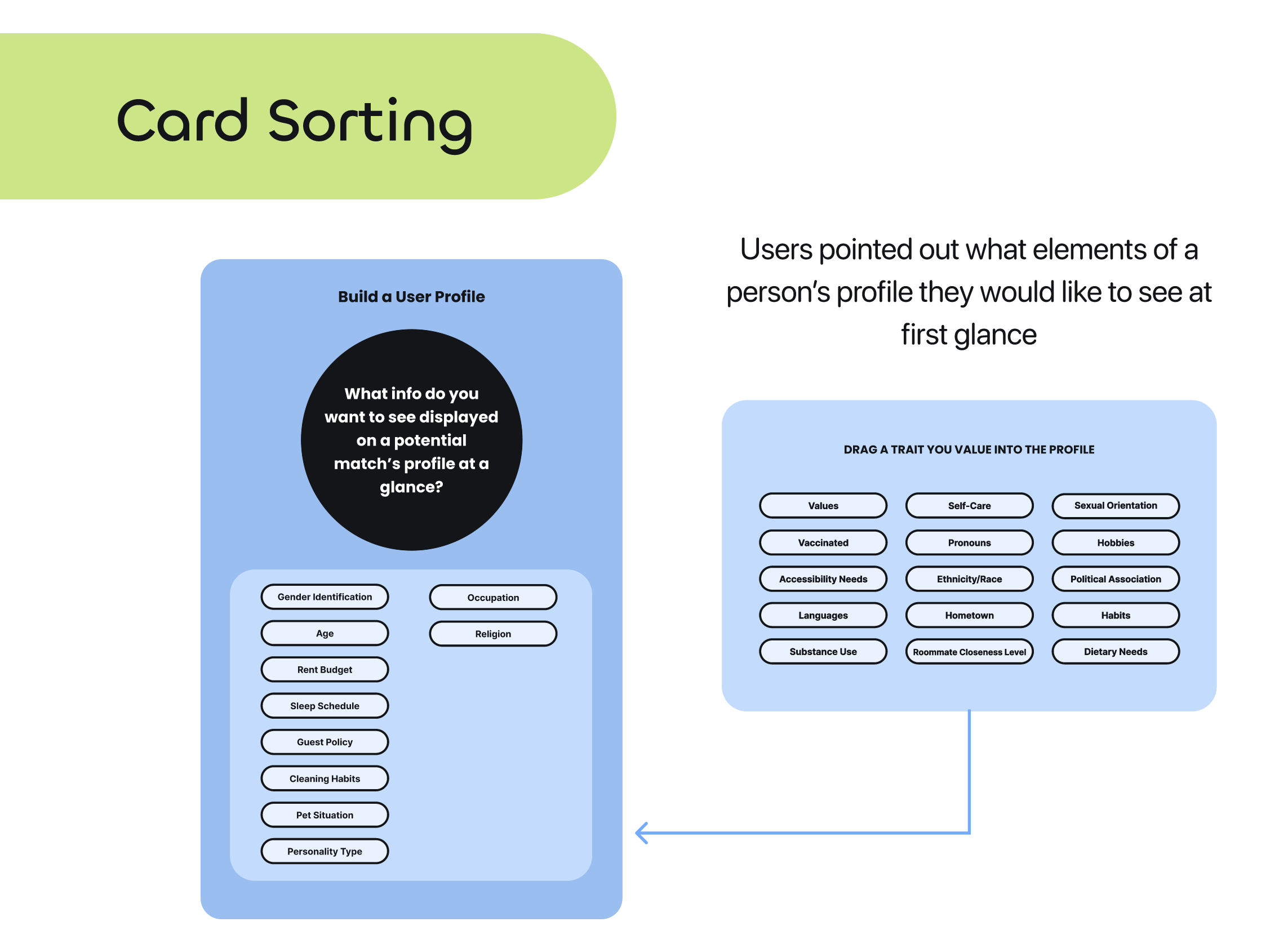
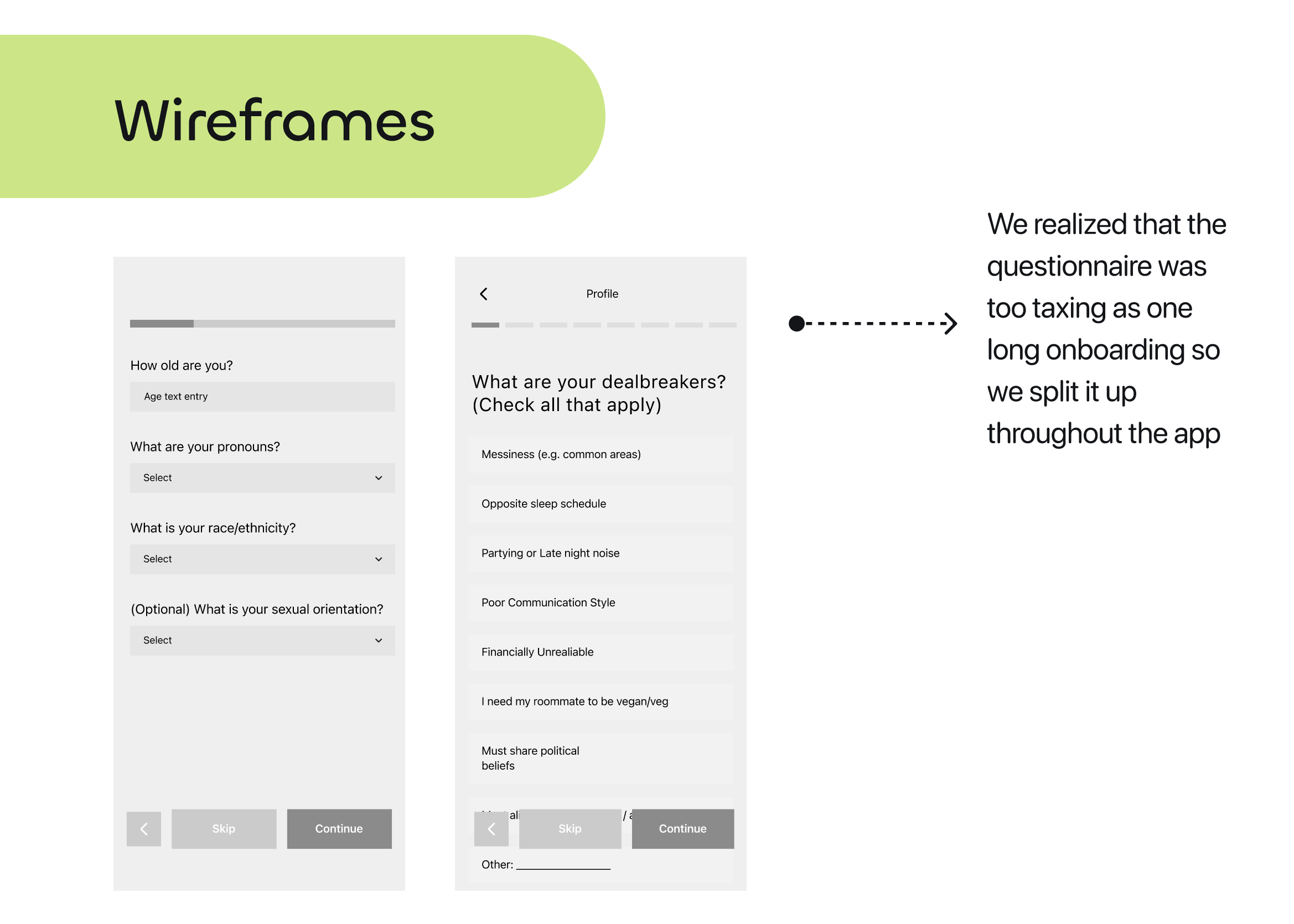
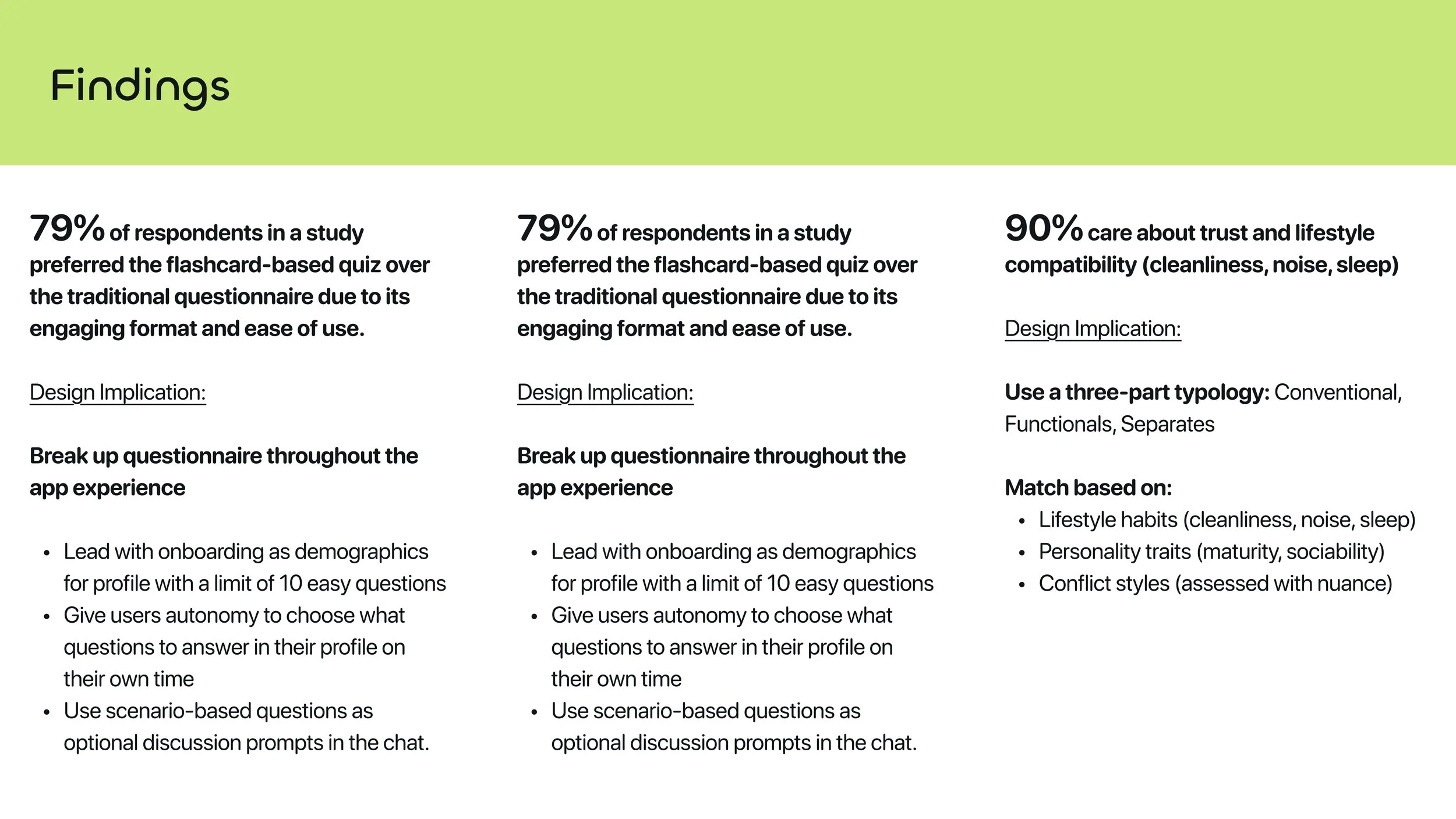
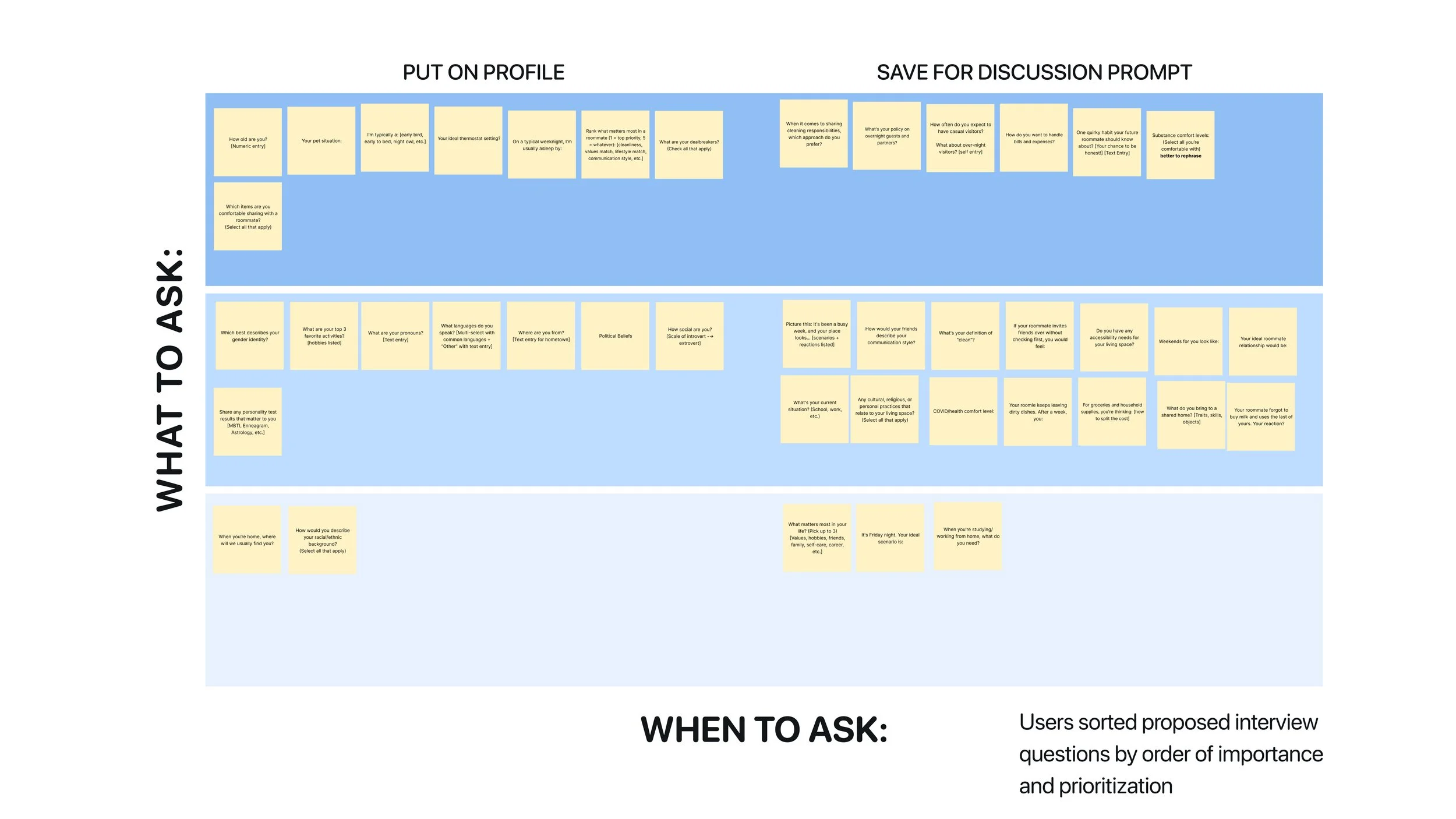
The flow of the app was contingent on our ability to narrow down the most important questions to ask users in their profile and preferences questionnaire. We interviewed 7 participants and conducted a card-sorting activity to understand which questions should appear during onboarding, which should be optional, and how users would interpret profile information.
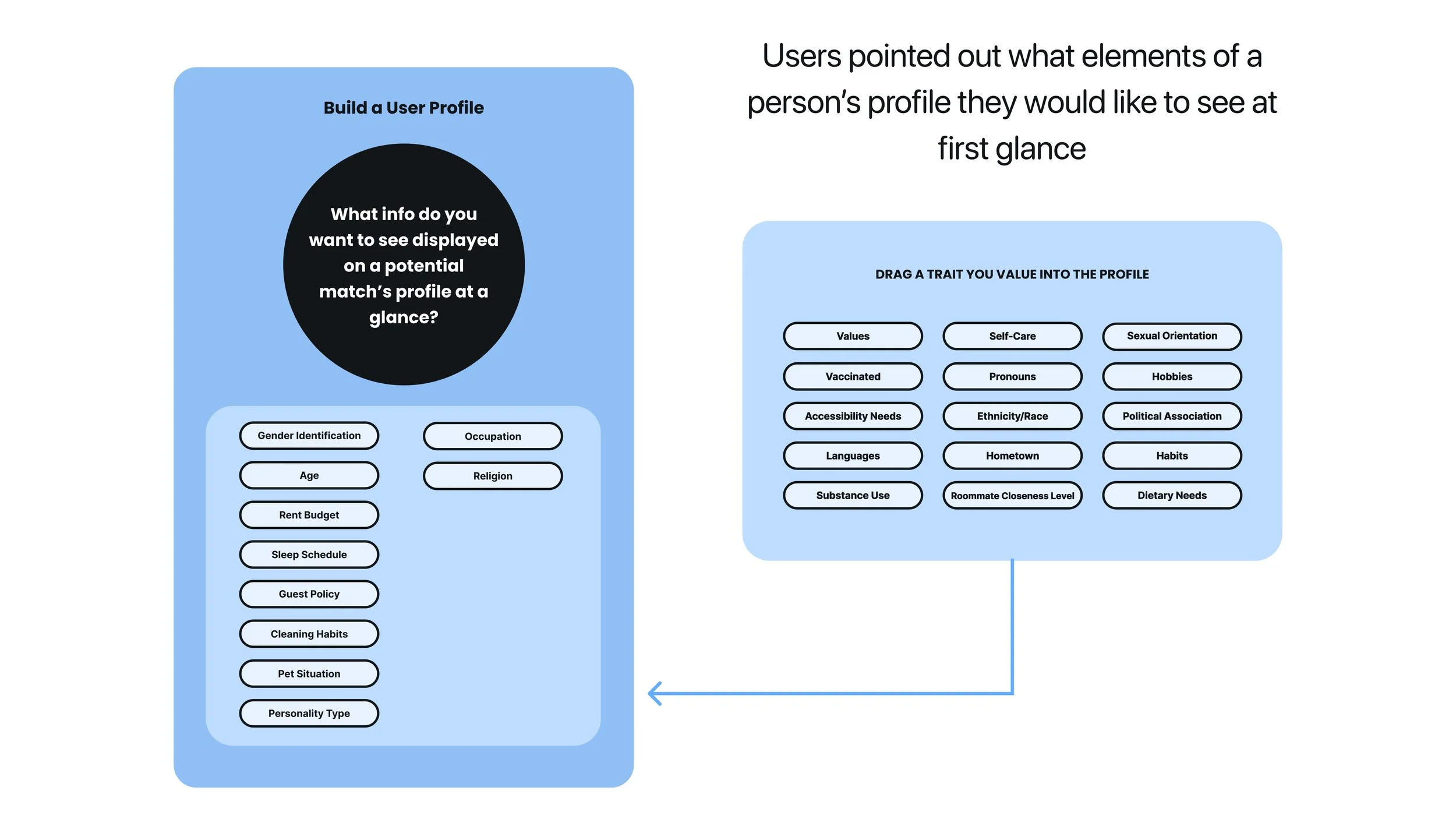
Participants sorted pre-written questions by relevance and placement in the flow. They were also asked to create an ideal roommate profile using demographic data and personality traits. This activity helped us refine our onboarding structure and clarify how much autonomy to give users when customizing their profiles.
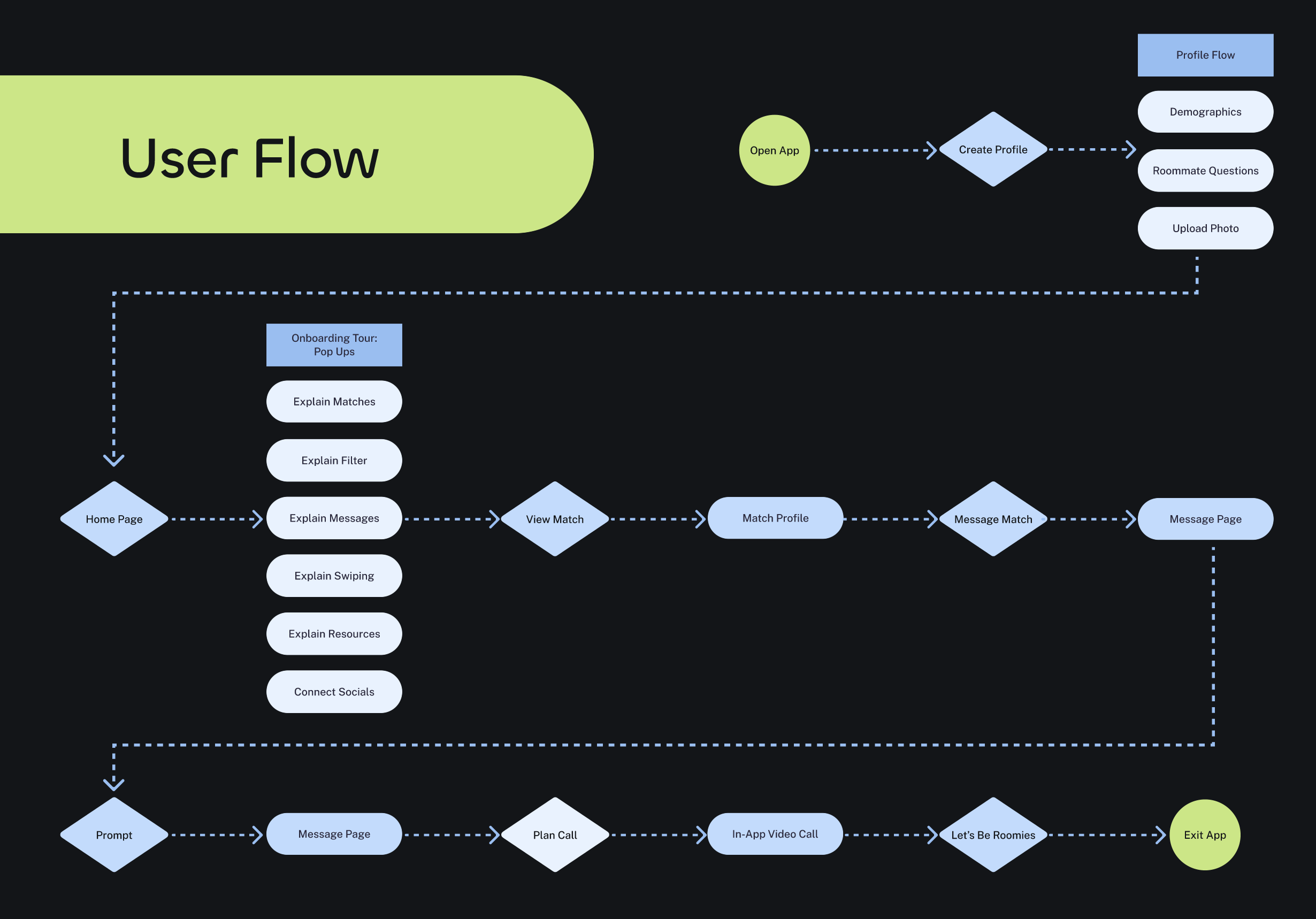
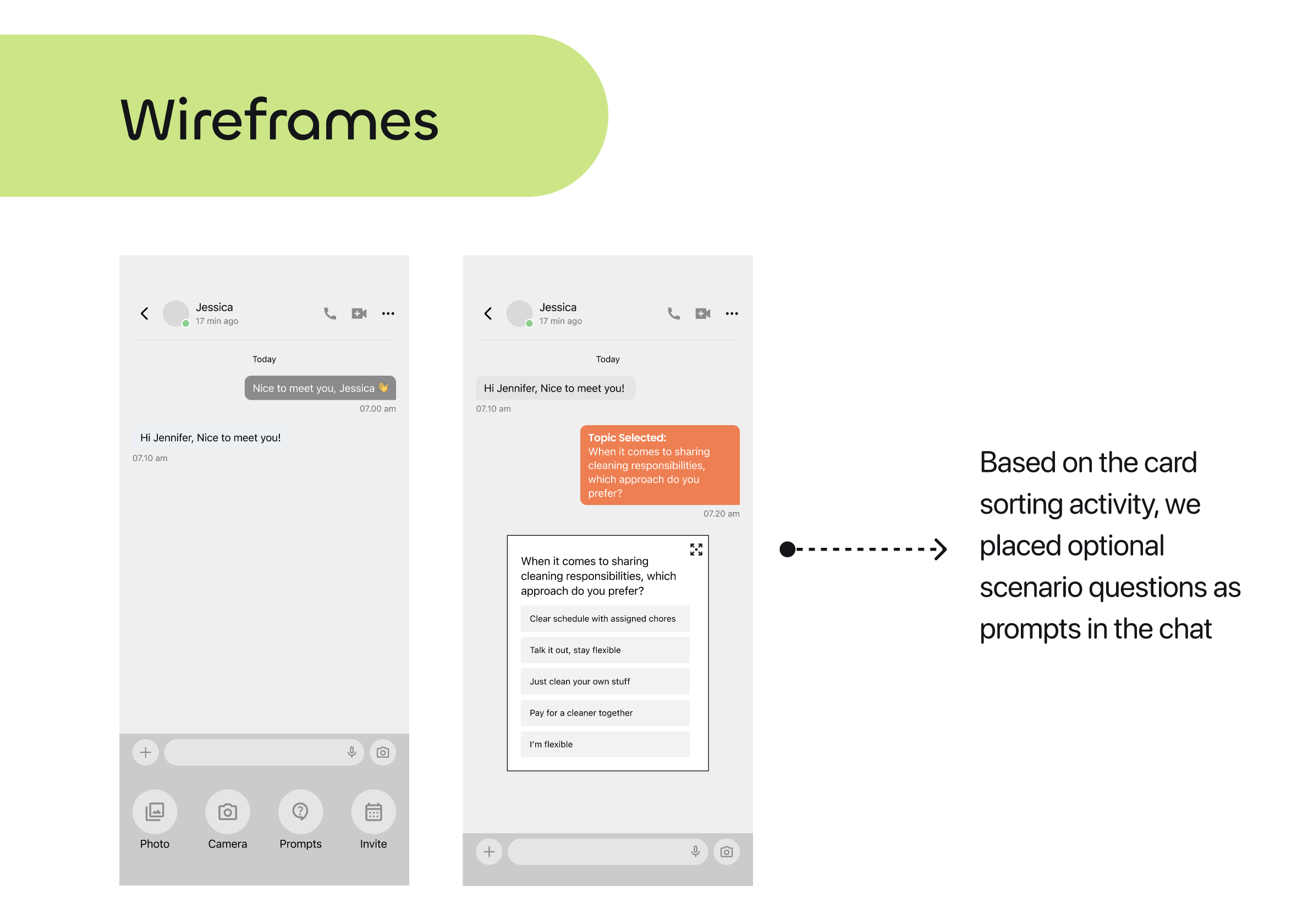
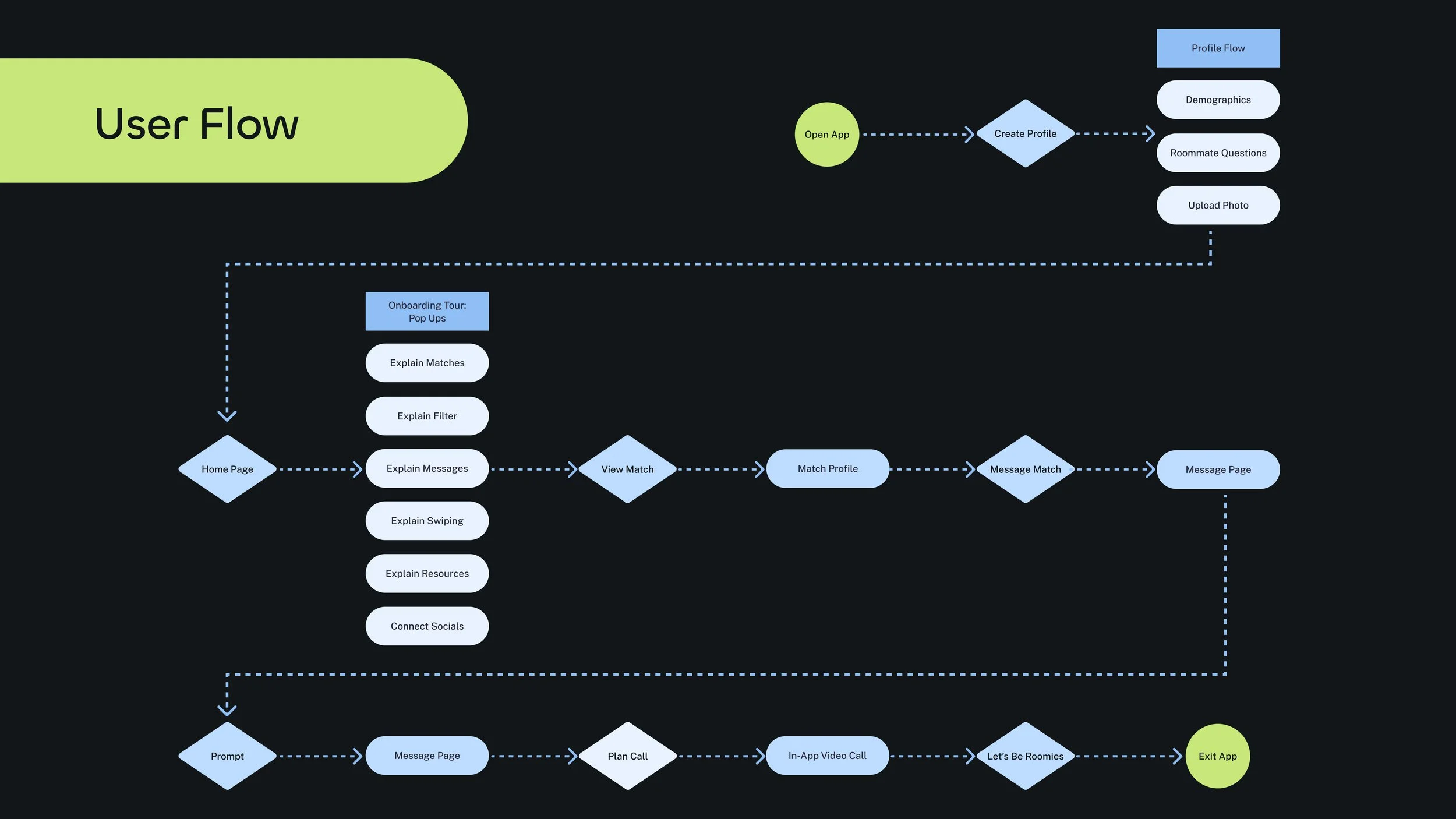
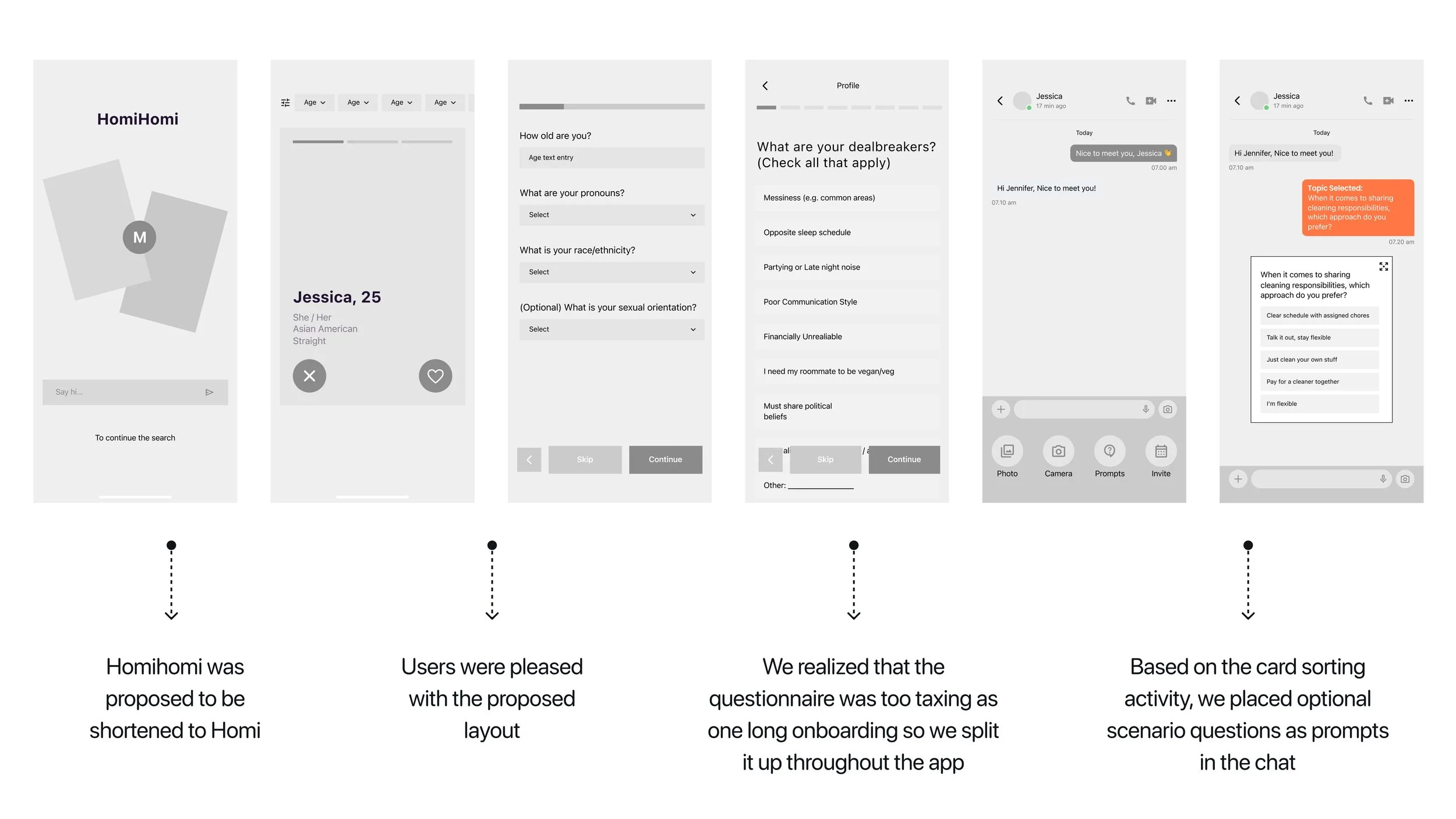
This feedback was extremely valuable in the development of our user flow. We were able to distinguish between which questions belonged in onboarding, optional profile details, and the chat question feature. We then translated research insights into a working prototype with guided conversations and clear match profiles.
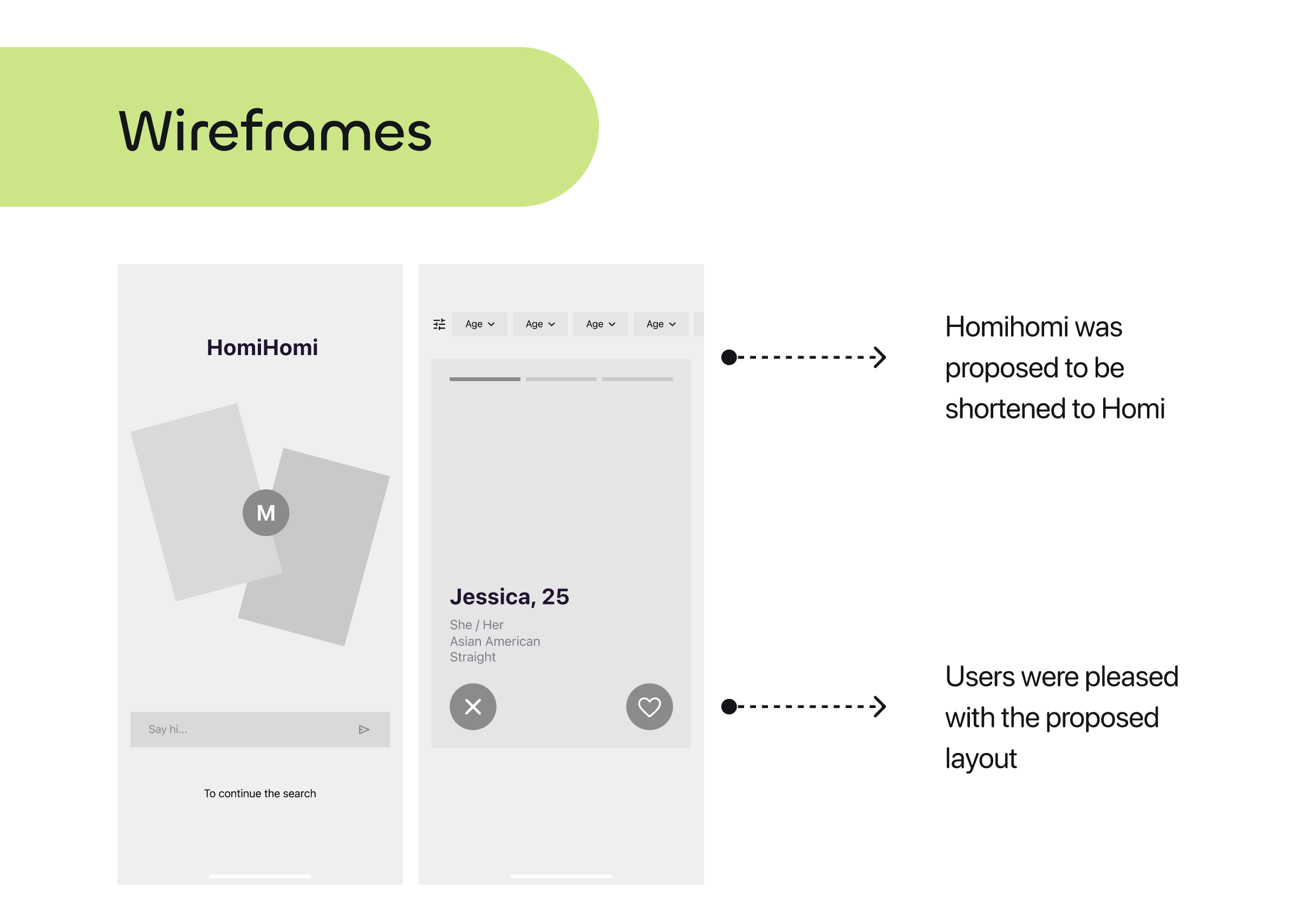
Our wireframes focused on clarity, simplicity, and usability. We emphasized profile transparency, conversation prompts, and trust-building features that guided users toward open communication.
Outcomes
Through 5 weeks of rapid iteration and testing, we developed a concept that resonated strongly with users. With more time, we would further test brand tone and onboarding flow. Some participants said the app felt “too similar to Hinge,” especially in its profile view. Our greatest opportunity lies in enabling users to ask the right questions before living together, giving them more autonomy to shape their shared environment.