SomeBuddy
A Concept for a Social App Designed for Busy Grad Students to Plan Low-Effort and Lightweight Socialization
UX Research | Brand Identity | Animation
This project was developed as a final concept for a graduate level interaction design studio using brand design and user research to propose an ecosystem solution to a relatable issue. The Carnegie Mellon University Department of Student Affairs expressed interest in developing the project further and implementing it at future graduate student orientations.
Course: CMU MA in Design, Studio II—Intro to IXD Design
Team: Lorin Anderberg, Yaezi Lee, Rui Ying
Role: UX/UI Design, UX Research, Copywriting, Brand Identity
Tools: Figma, After Effects, Adobe Illustrator
Credits: SVG Repo Icons, Unsplash Images, CMU Images
Duration: 5 Weeks
Design Challenge
Grad students seek connection but struggle to make plans due to hectic schedules which can lead to feelings of isolation.
How can we create easy, low-pressure ways for grad students to connect through simple activities, especially when it’s something they don’t want to do alone?
Concept
Our original concept was to create more opportunities for meaningful connections that would alleviate loneliness in rigorous and demanding graduate school settings. However, our research revealed that what grad students want varies greatly depending on their schedule, workload, and individual interests.
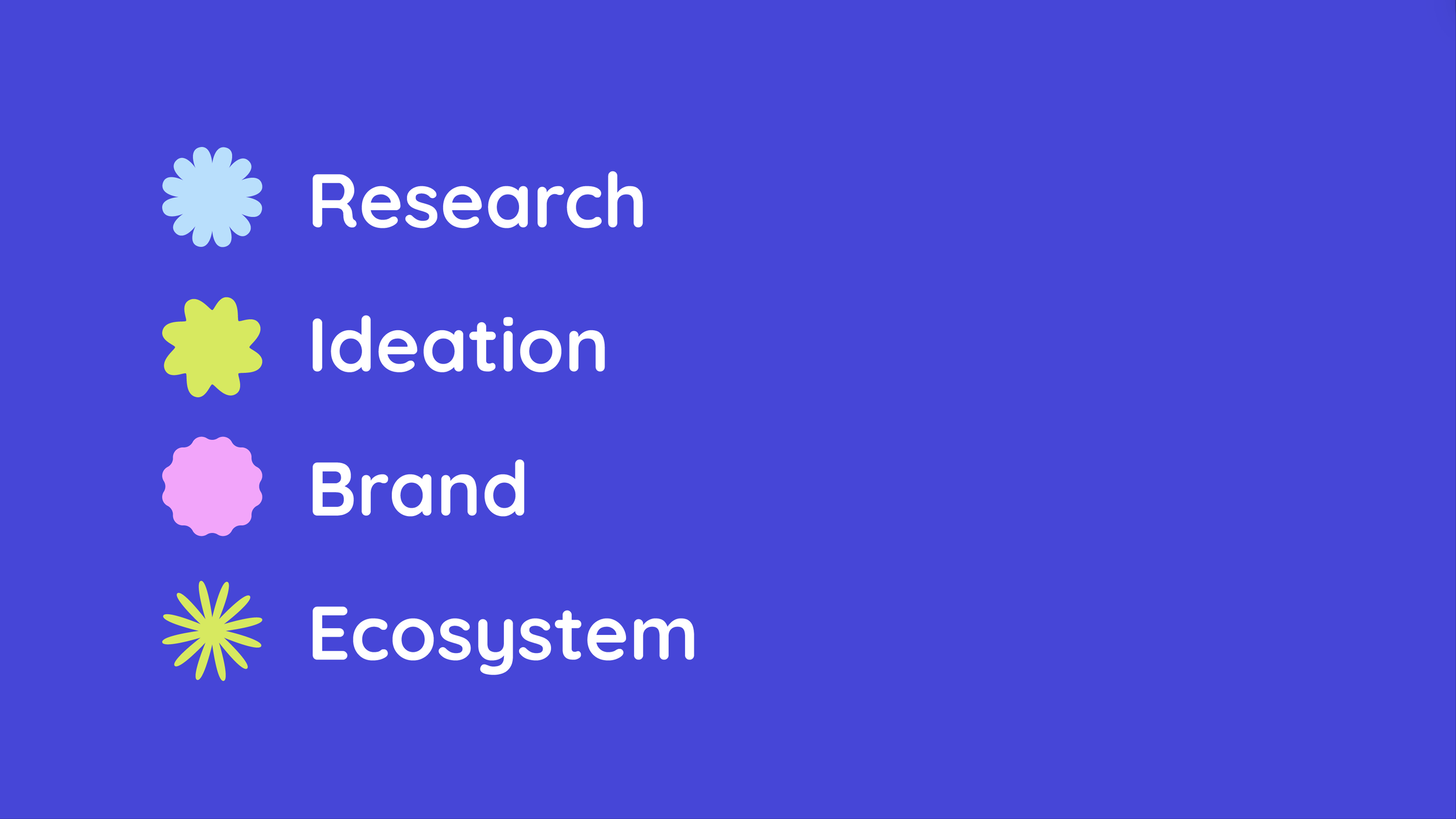
Timeline + Process
We learned about service design and research protocols. Our professors encouraged us to keep our minds open and let the solution come directly from the research. We formalized our research objectives, conducted 8 user interviews, and defined our principles based on what we heard in our interviews.
Ideation
1 Week
Research Protocol
Idea Generation
Crit + Ecosystem Map
Research/Synthesis
1 Week
User Interviews
Synthesis
User Personas
Concept
1 Week
Crit
Branding
Lo-Fi Concept
Refinement
1 Week
Speed Dating Feedback
High-Fi Concept
Video Script/Story Board
Presentation
1 Week
Animation
Video Editing
Presentation
Research
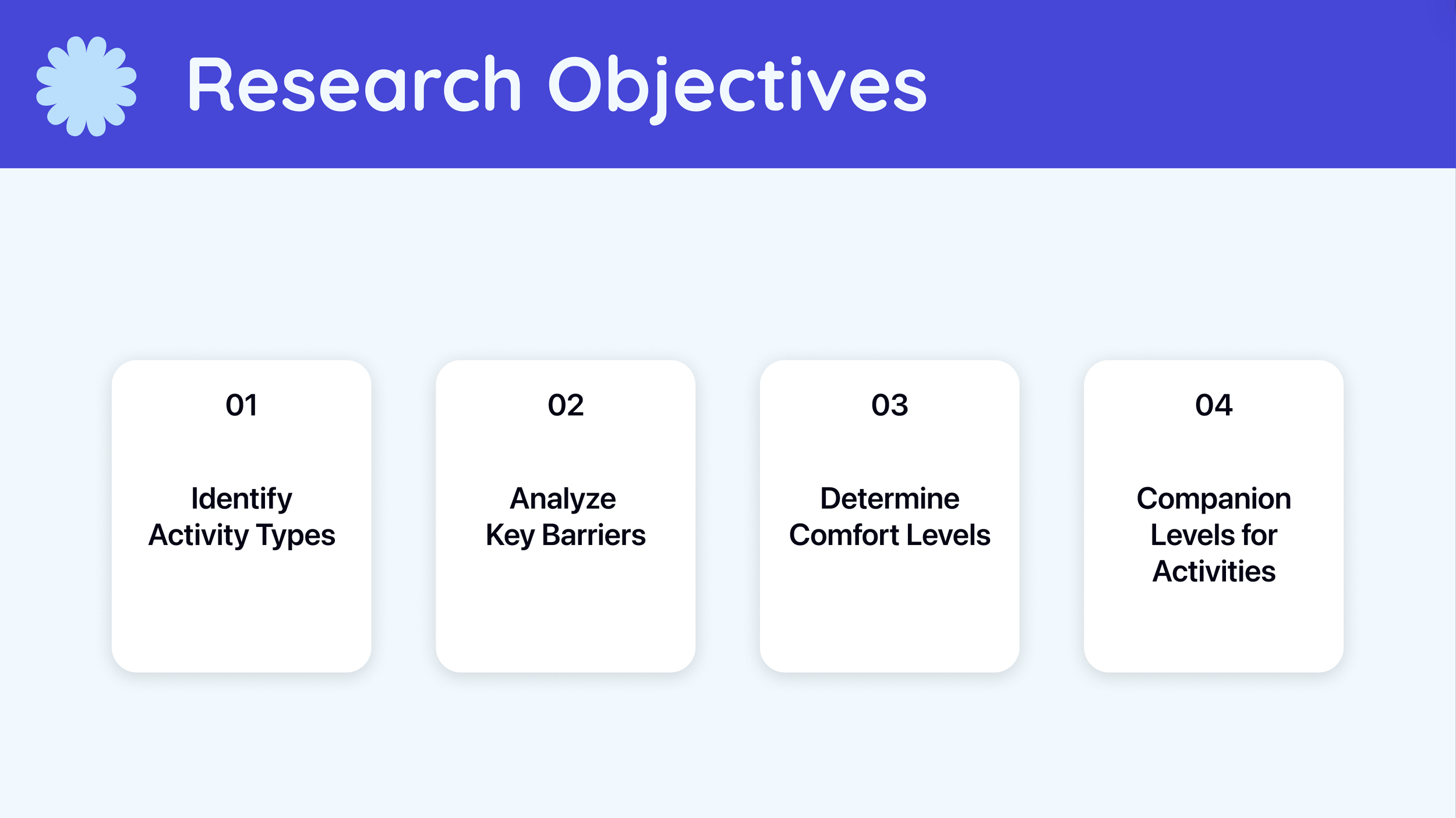
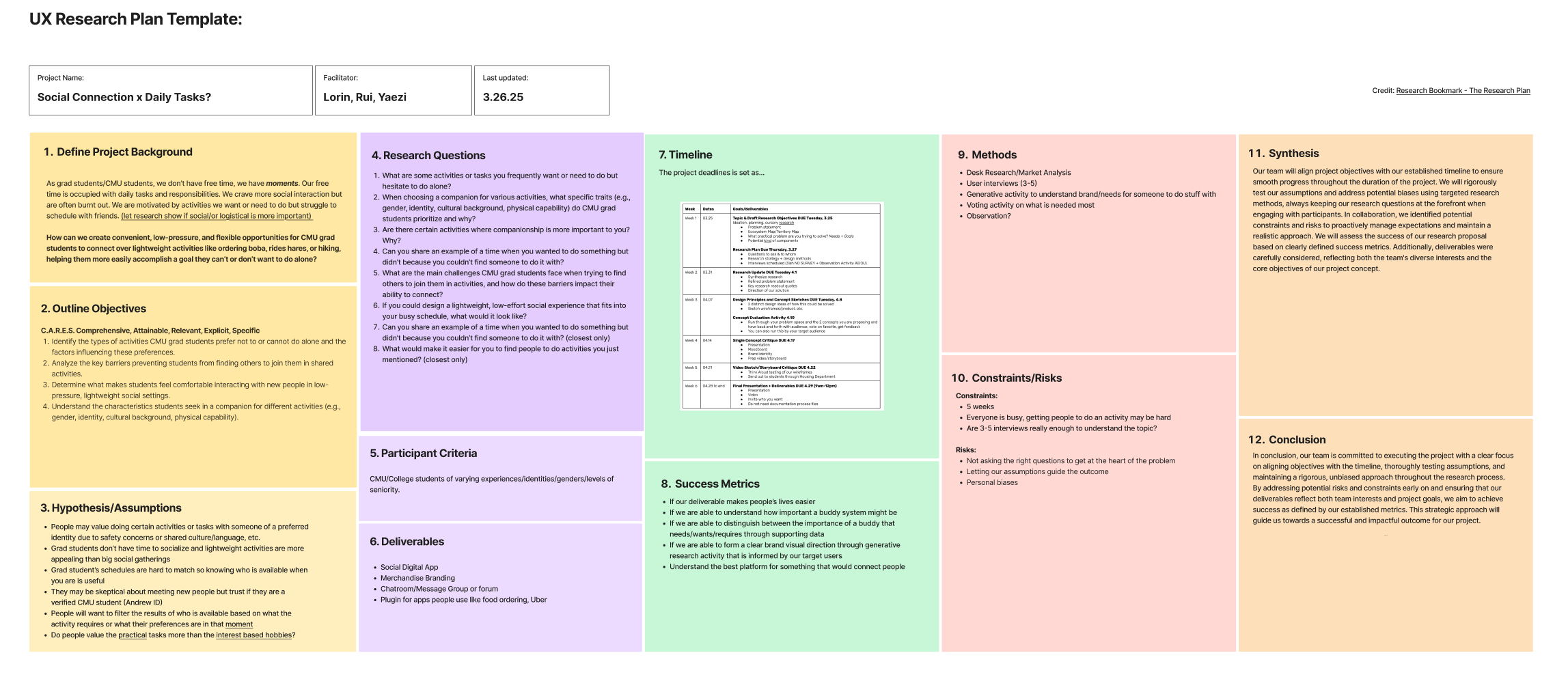
We began with a service design approach to understand various touch points in the grad student experience. We identified our own assumptions and developed a research plan for Identifying barriers to connection and discovering what makes low-pressure socialization actually feel doable. We shaped our research around the following objectives which in turn informed our design principles for the project.
Identify the types of activities students avoid doing alone, to uncover where social support is most needed.
Understand barriers to finding companions, such as time, coordination, or hesitation.
Explore what helps students feel comfortable connecting, especially in casual, low-stakes situations.
Uncover what qualities students seek in a companion, such as shared goals or personality fit.
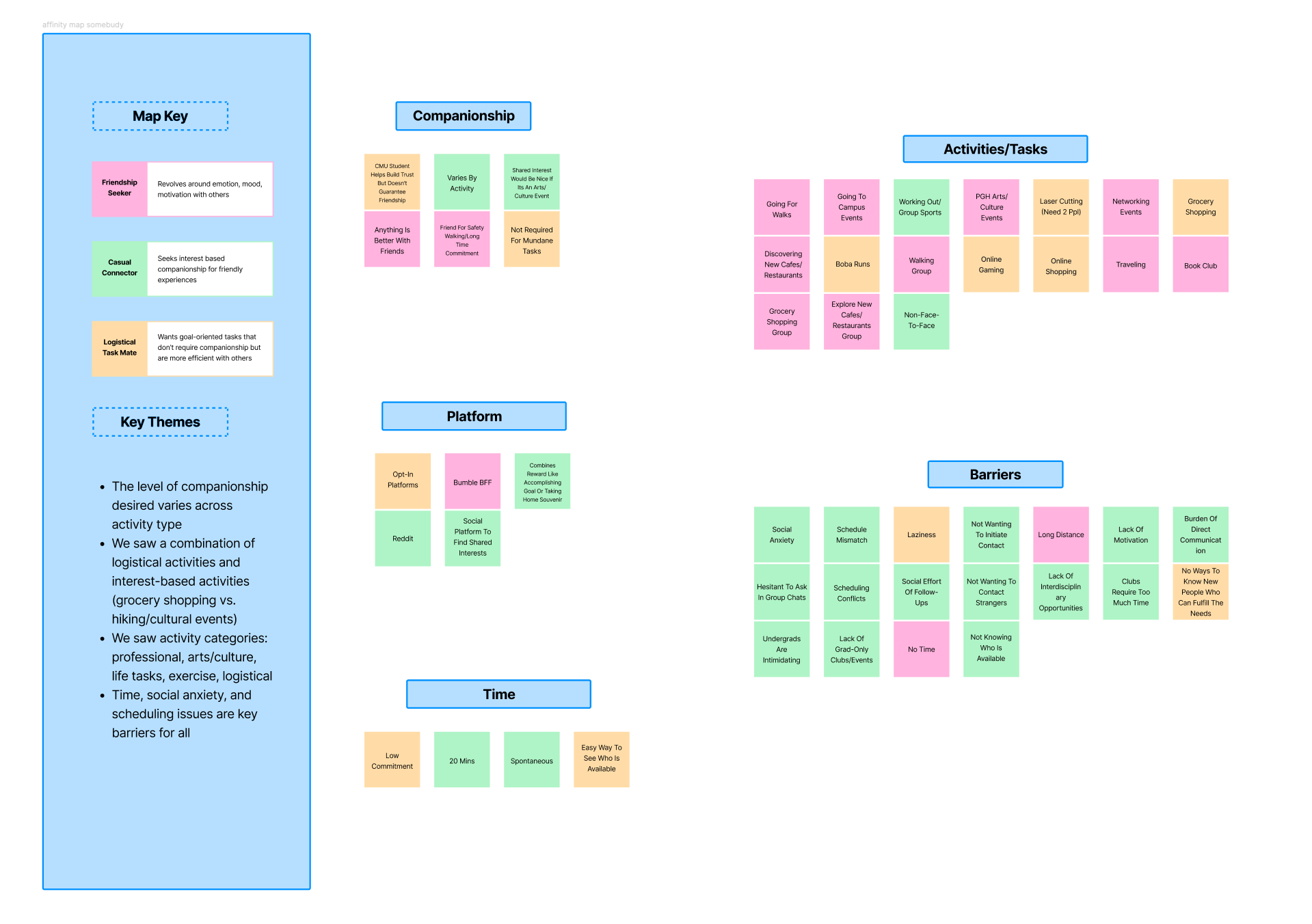
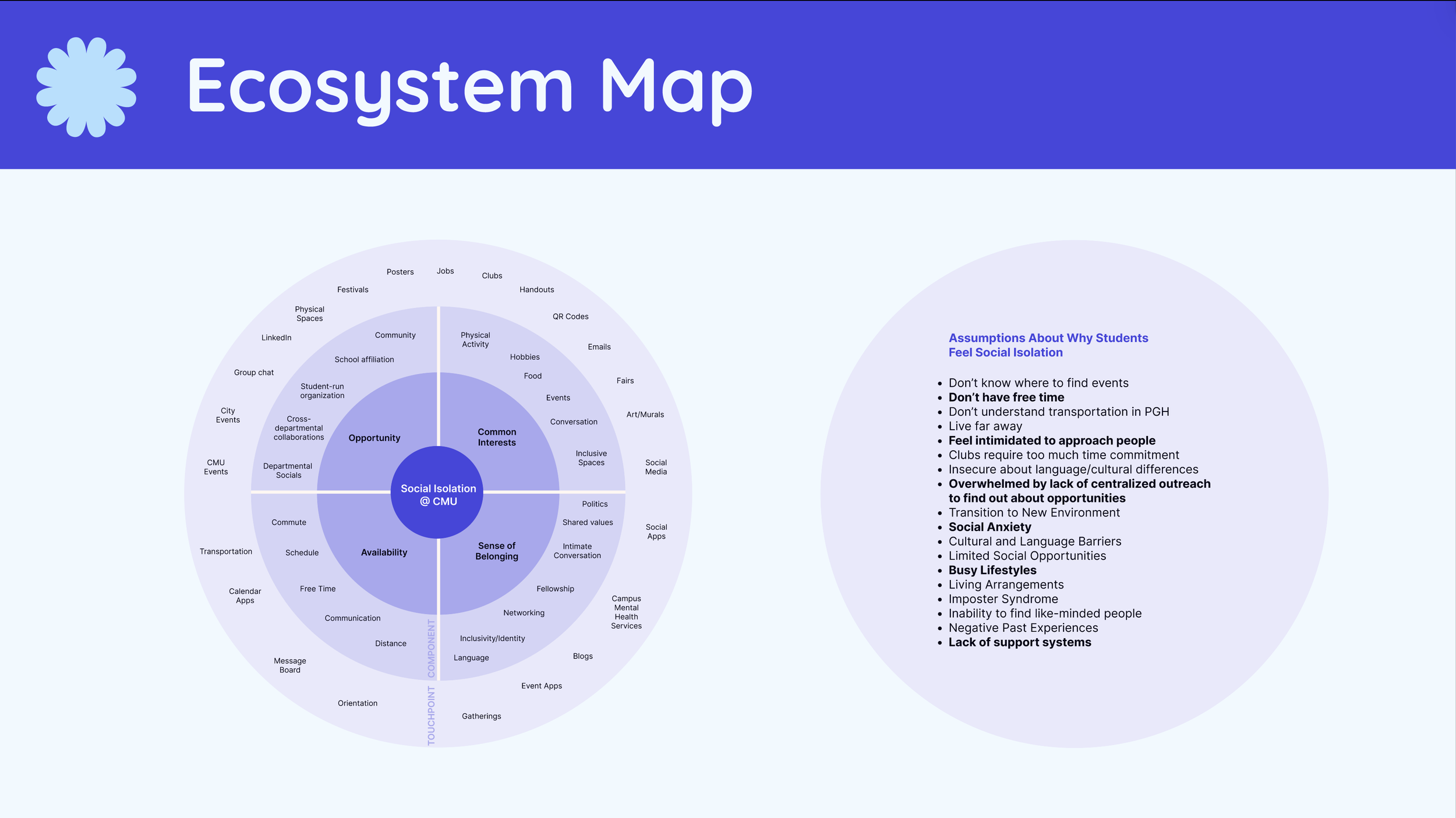
We made an ecosystem map to lay out all of the aspects of social isolation at CMU, touching on touch points and components.
We looked at things like what makes it hard to meet new people, find shared interests, sync schedules, and feel a sense of belonging.
This helped us see the bigger picture—and also made us aware of our own assumptions, so we could test them through user research.
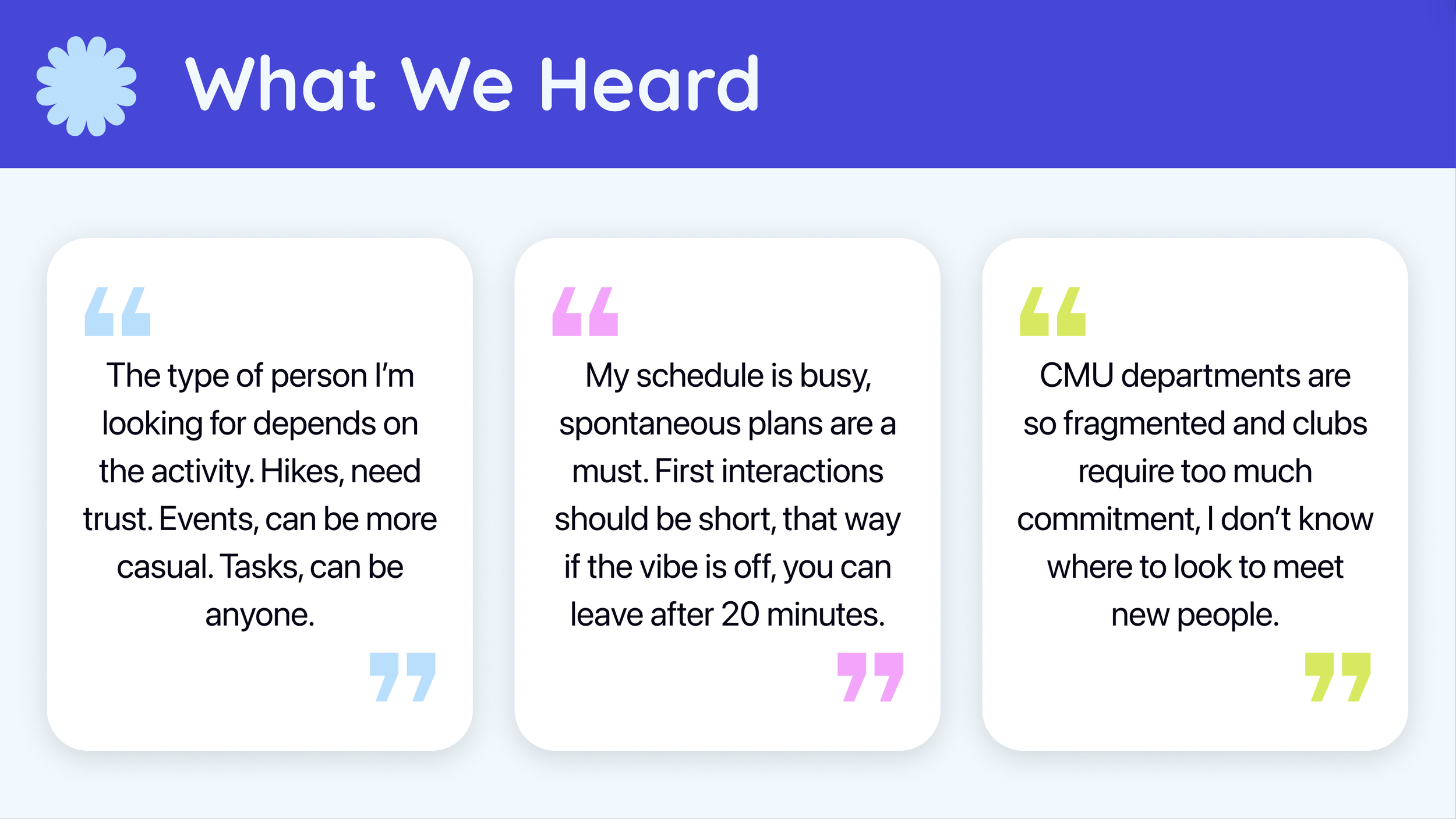
From the eight interviews we did with grad students, we learned a few important things:
The type of connection students want depends on the activity. For simple tasks (e.g., errands or studying), they’re open to pairing with almost anyone. But for more personal or safety-oriented activities (like hiking), they prefer knowing more about the other person.
Students are drawn to short, spontaneous meetups. Their packed schedules make last-minute plans more appealing than long-term commitments.
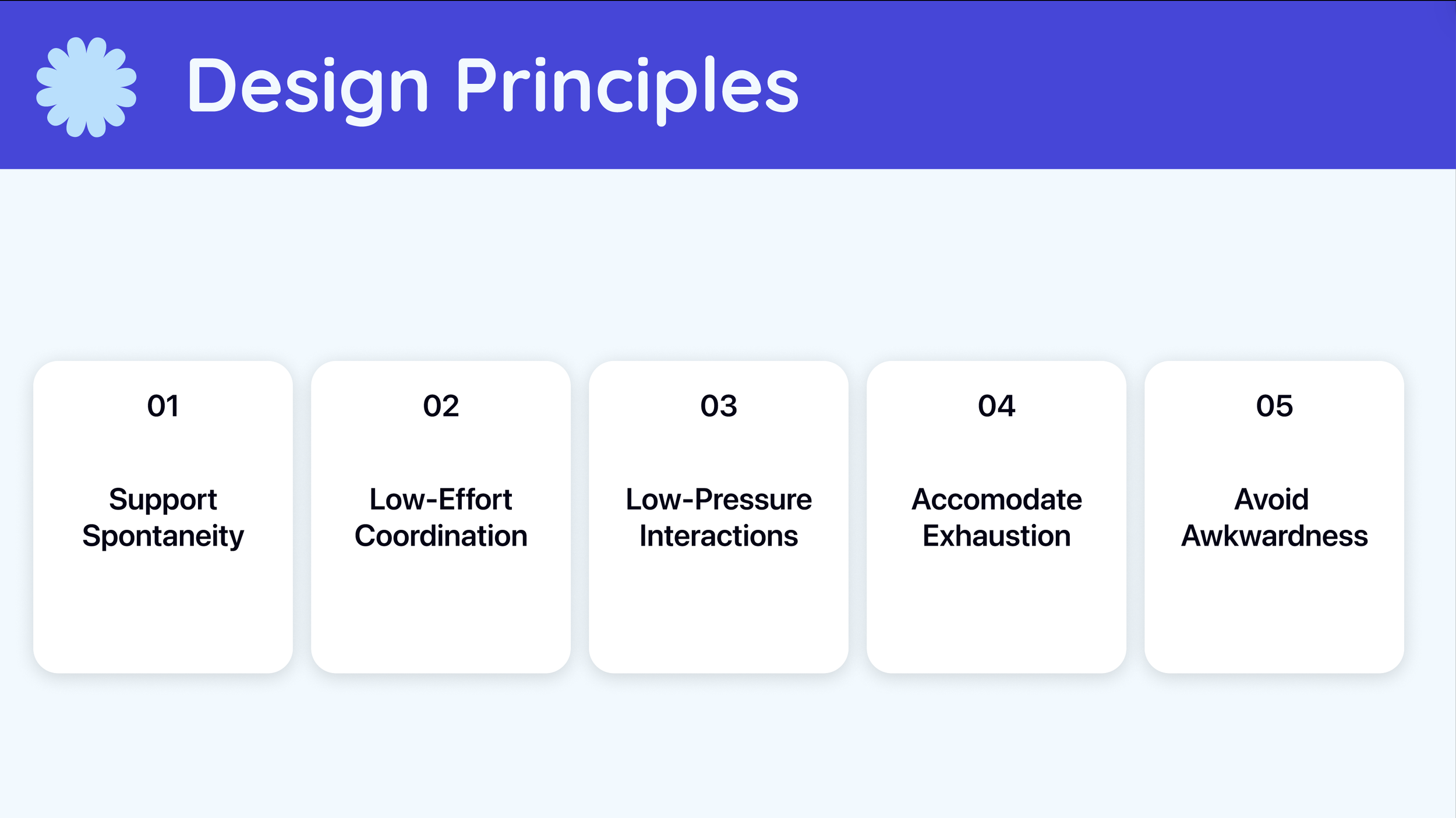
Our interviews gave us direction on our design principles. We understood that our solution should:
Support Spontaneity: Enable last-minute plans with minimal friction.
Simplify Coordination: Make scheduling and connecting feel effortless.
Normalize Low-Stakes Interaction: Encourage casual, drop-in-style meetups.
Accommodate Exhaustion: Make participation time-efficient for busy students.
Avoid Awkwardness: Set clear expectations to reduce social pressure.
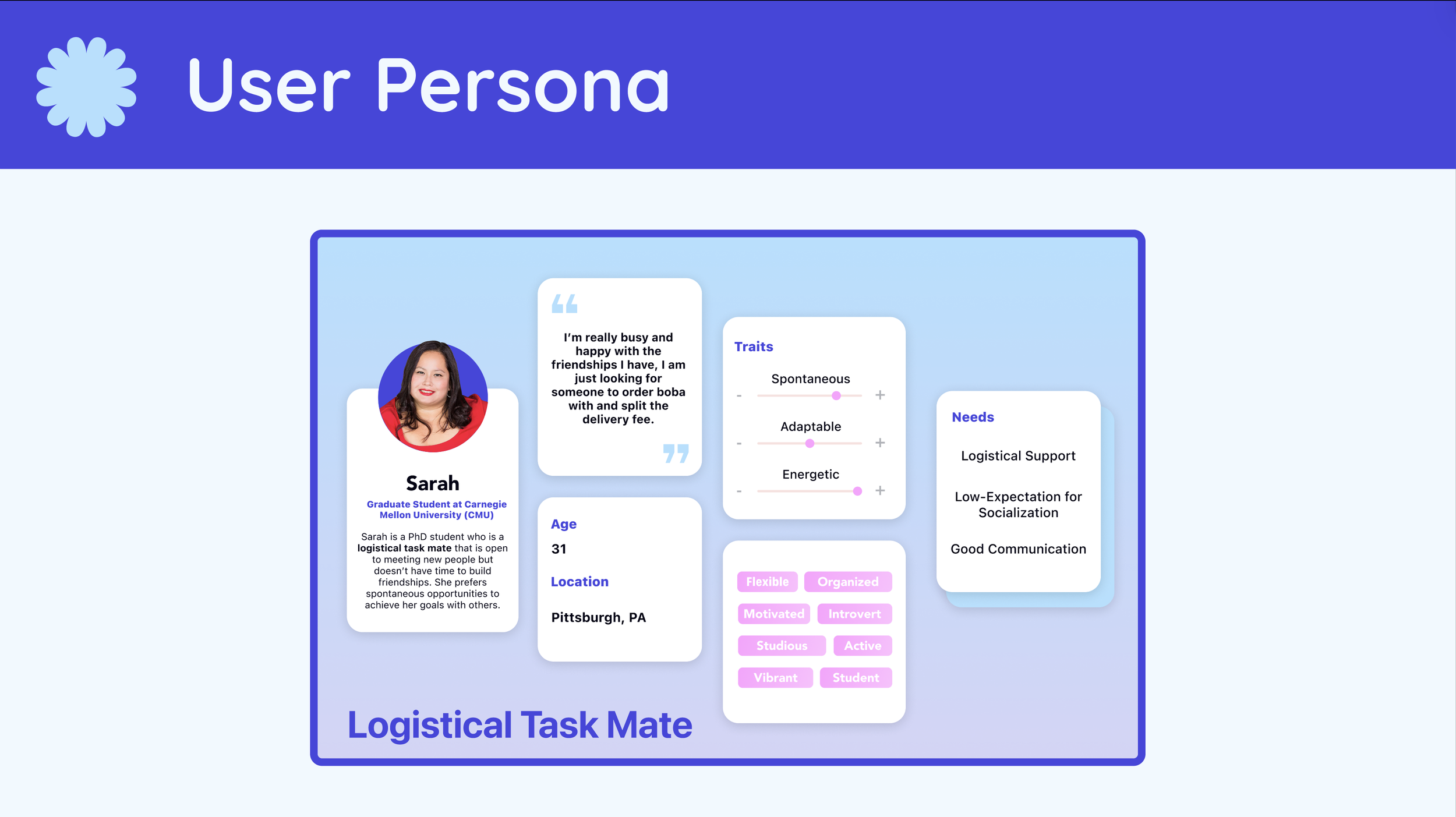
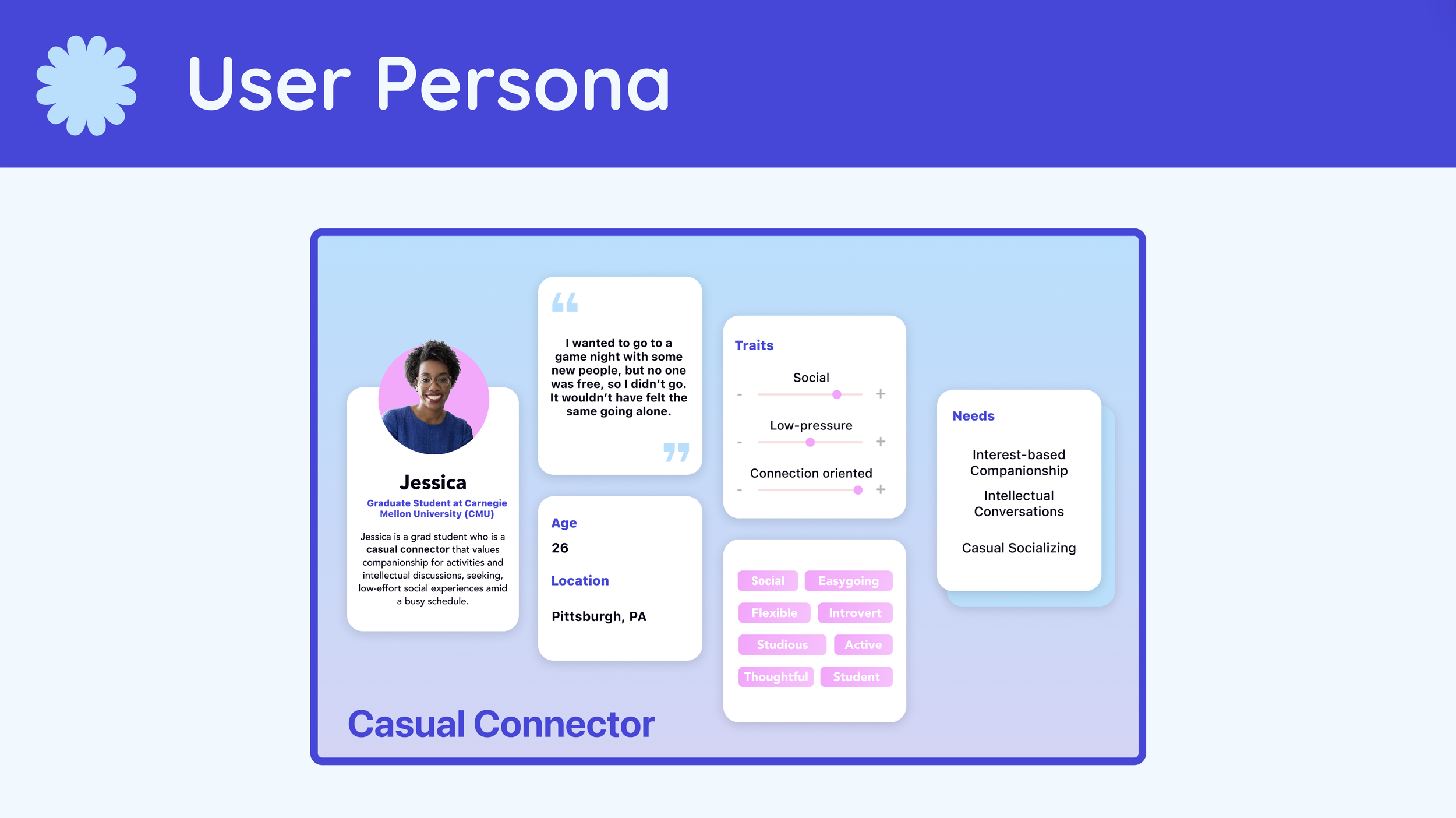
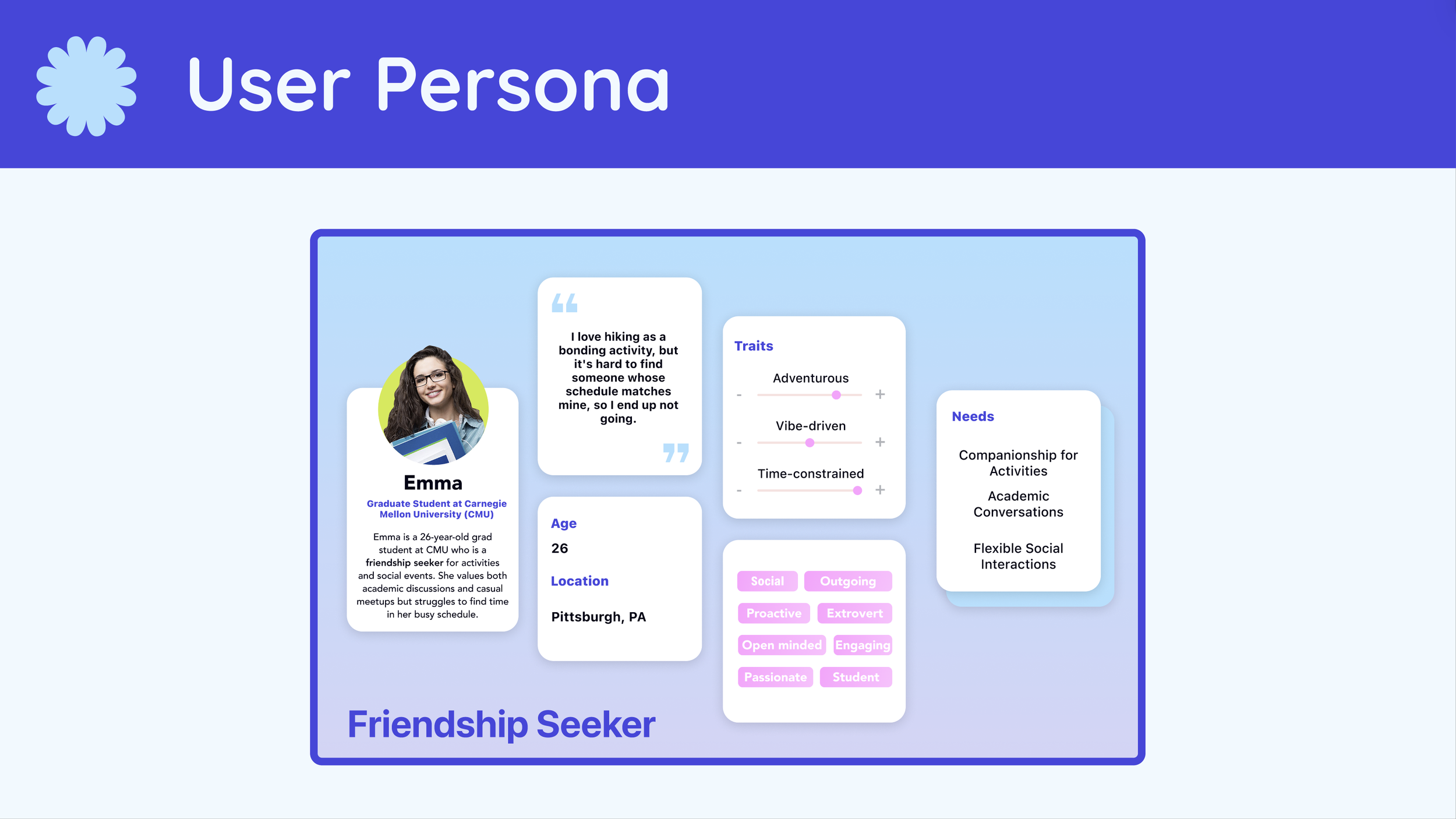
We combined what we heard from our user interviews into three main user categories that we personified with user personas.
The Logistical Taskmate: Prefers spontaneous opportunities to achieve goals alongside others.
The casual connector values companionship for activities and intellectual discussions, seeking, low-effort social experiences amid a busy schedule.
The friendship seeker is looking for more depth, values both academic discussions and activity-based meetups but struggles to find time in her busy schedule.
We created user personas that represented the varying perspectives we captured in speaking to grad students. Our professors encouraged us to take a strong stance rooted in research which presented us with the challenge of simplifying a flexible solution that worked for various users.
This revealed a need for opt-in/opt-out, low-stakes, and lightweight opportunities for connection that give the user autonomy to express their desired level of engagement. Our ecosystem involves a social app, branding, pop-up events, and collectables that create a movement called “social-ish”.
Ideation
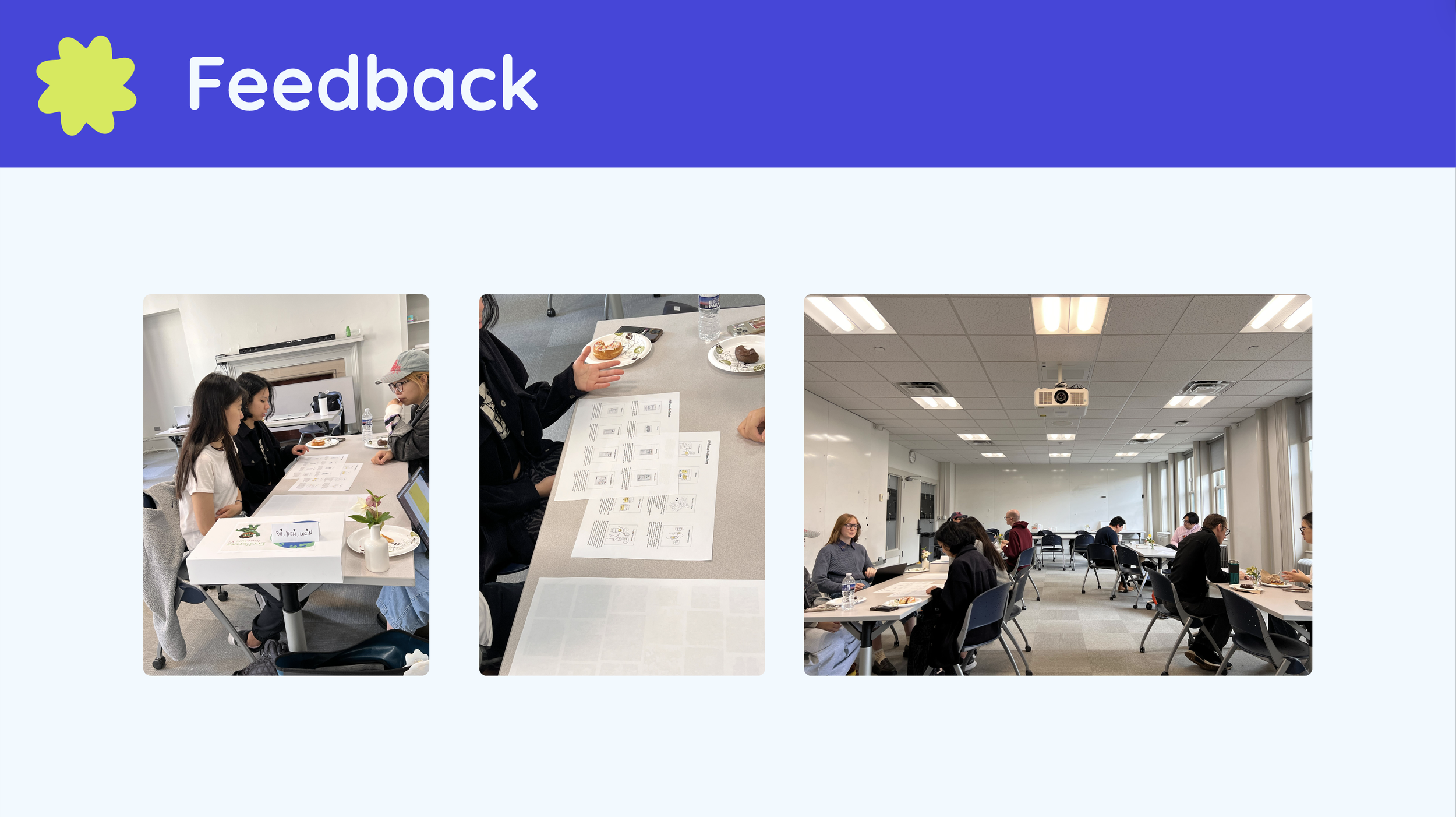
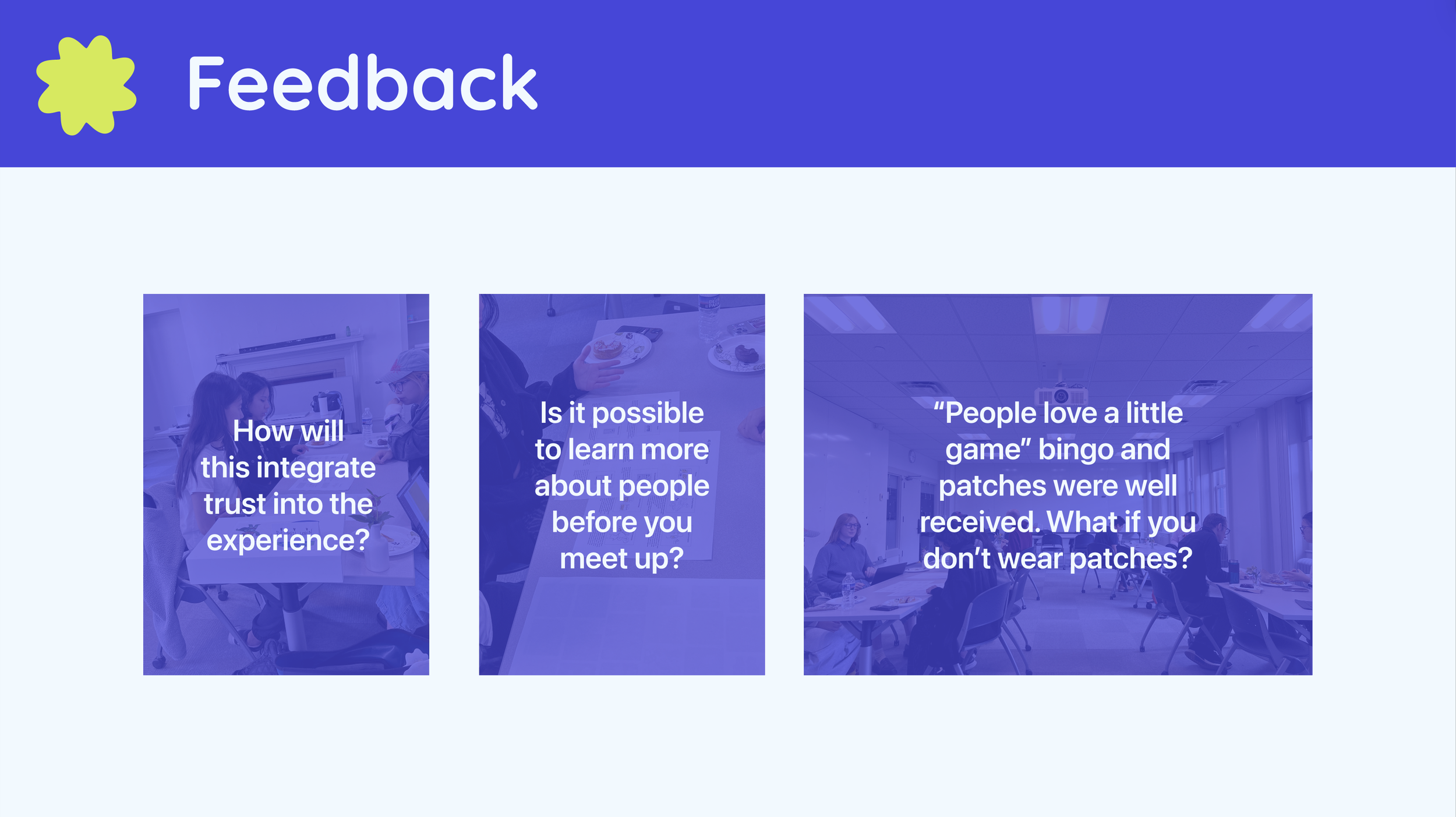
We looked at what sustained app usage would look like over time, and how we could maintain the attention and engagement of our user through recurring features like bingo cards. We tested our ecosystem through storyboards and Speed dating with classmates.
The feedback we received helped us learn what was working and where we needed to expand on important elements like incorporating trust, connection, and adaptability into our design.
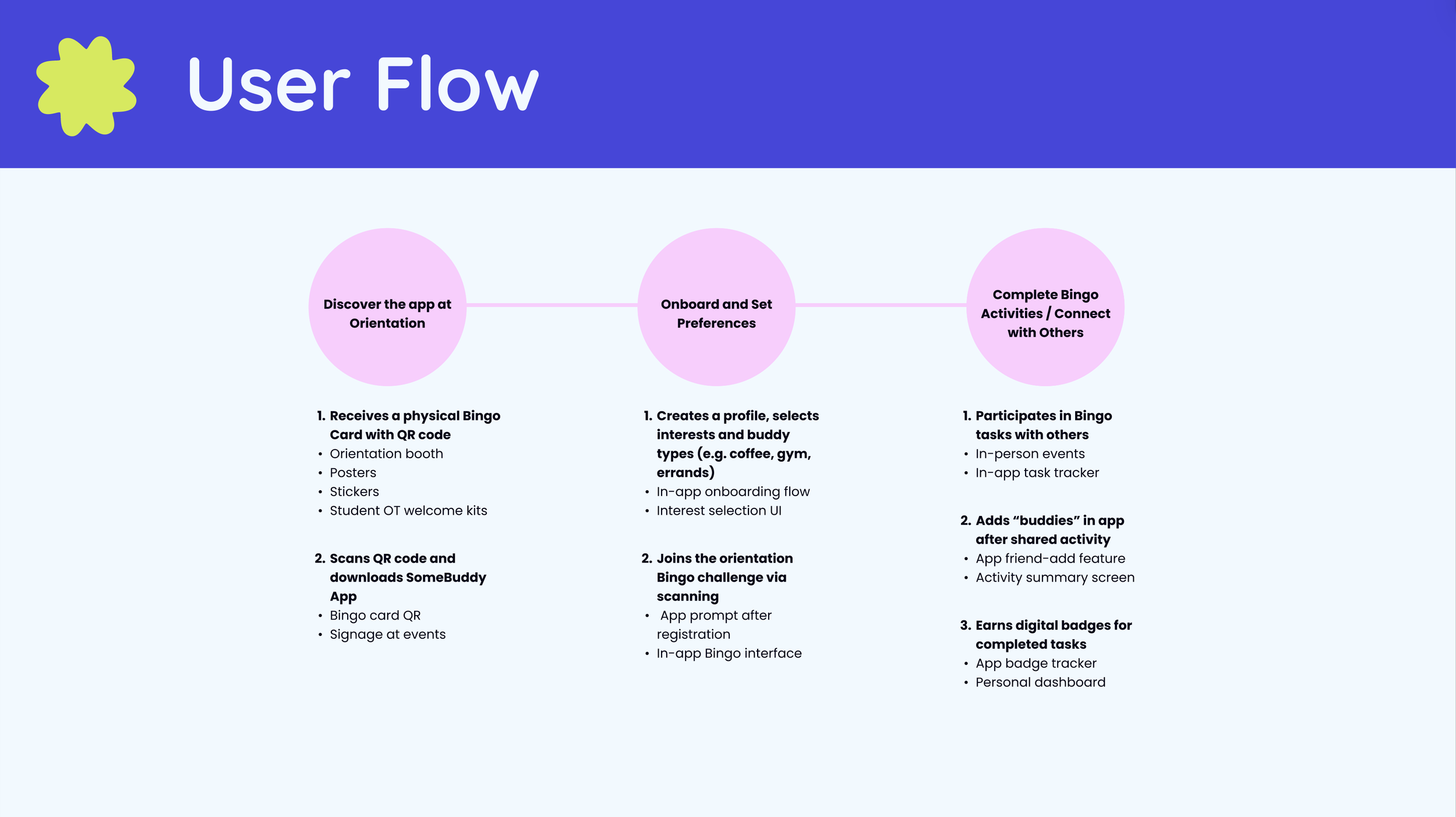
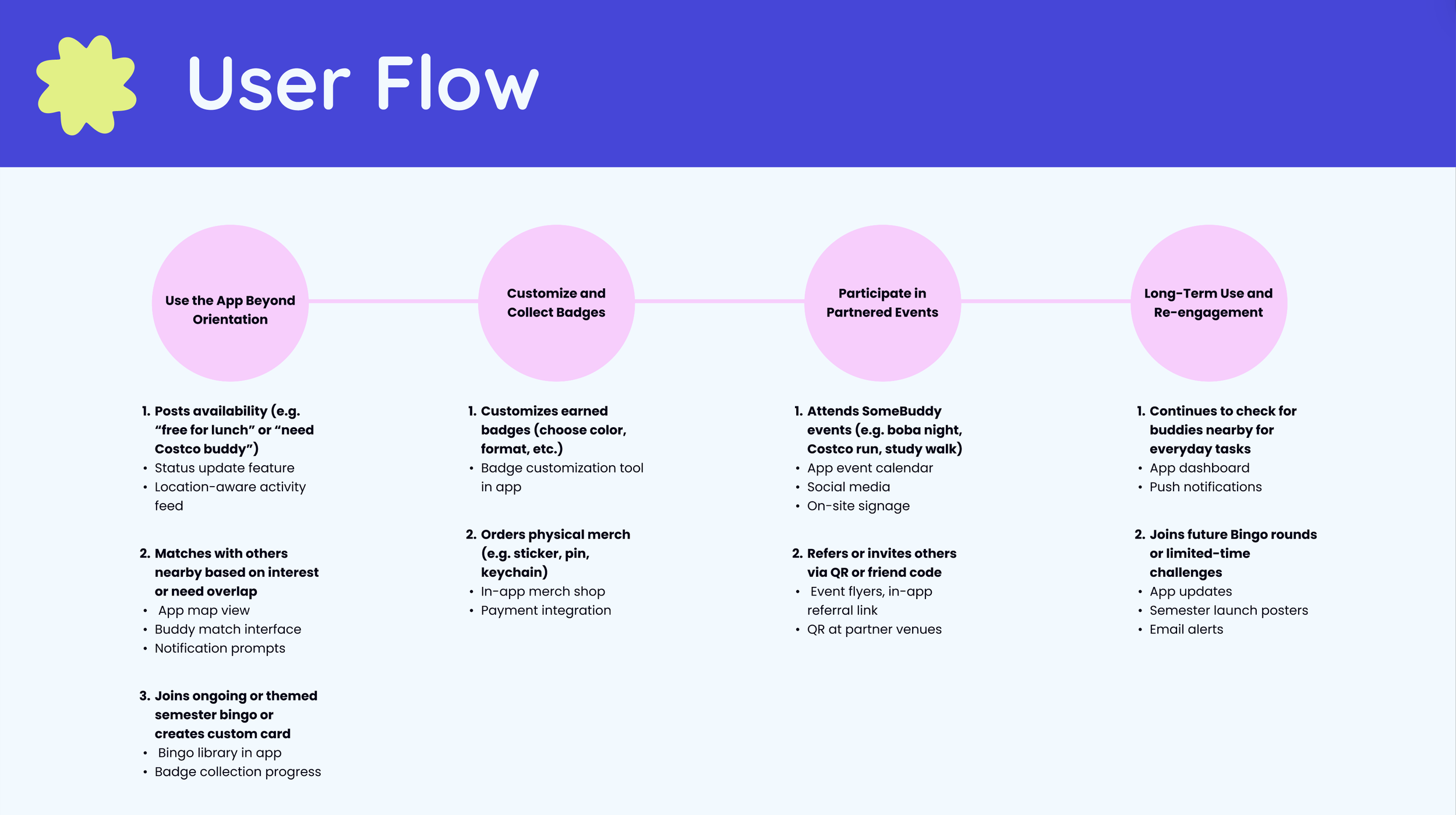
We began by mapping a user flow that outlined the key interactions:
App discovery
Onboarding
Feature engagement
Sustained use
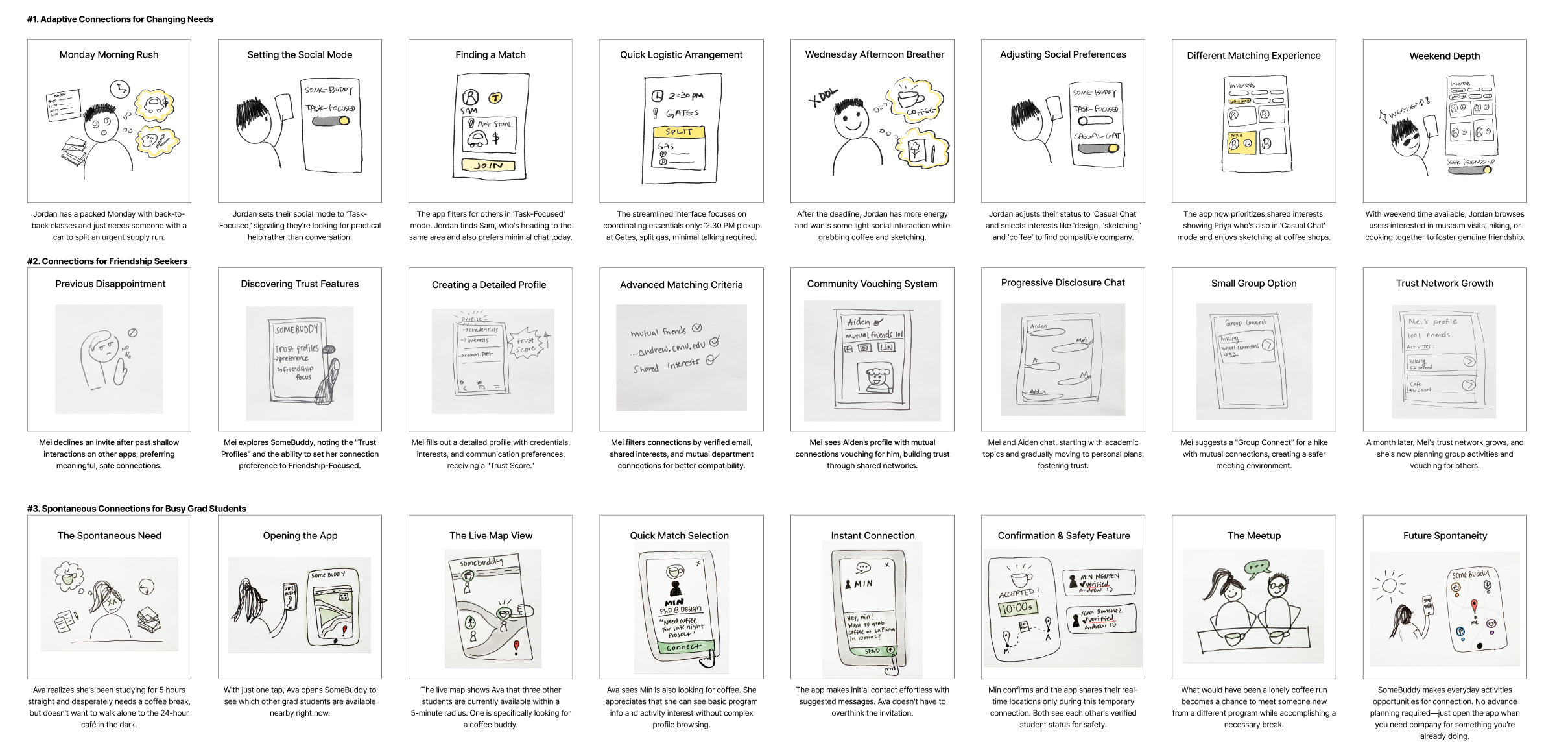
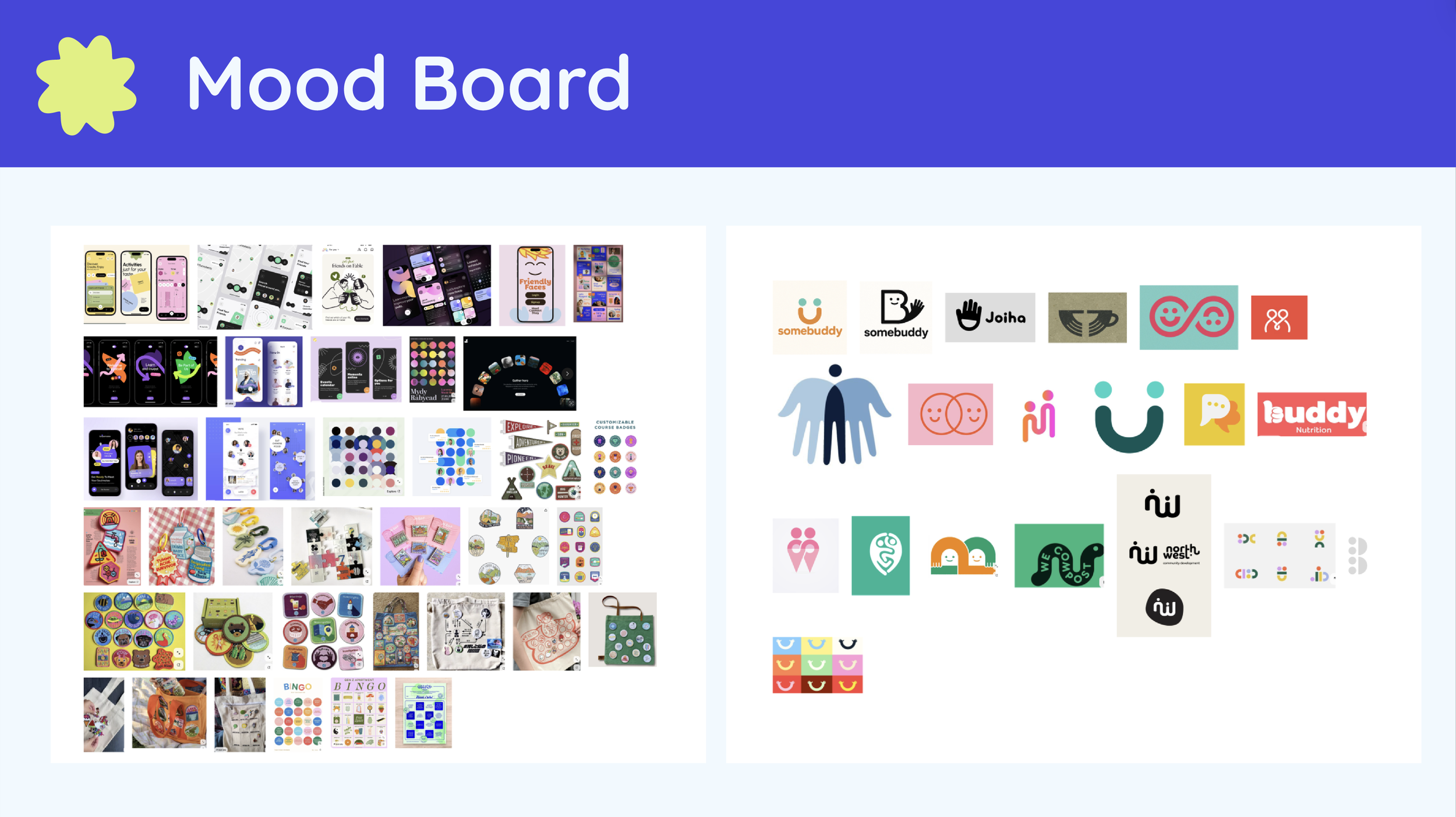
We knew that we wanted our approach to feel playful and inviting and that a social app would be the centerpiece of our ecosystem so we searched for inspiration that felt in line with our values and began exploring our brand identity.
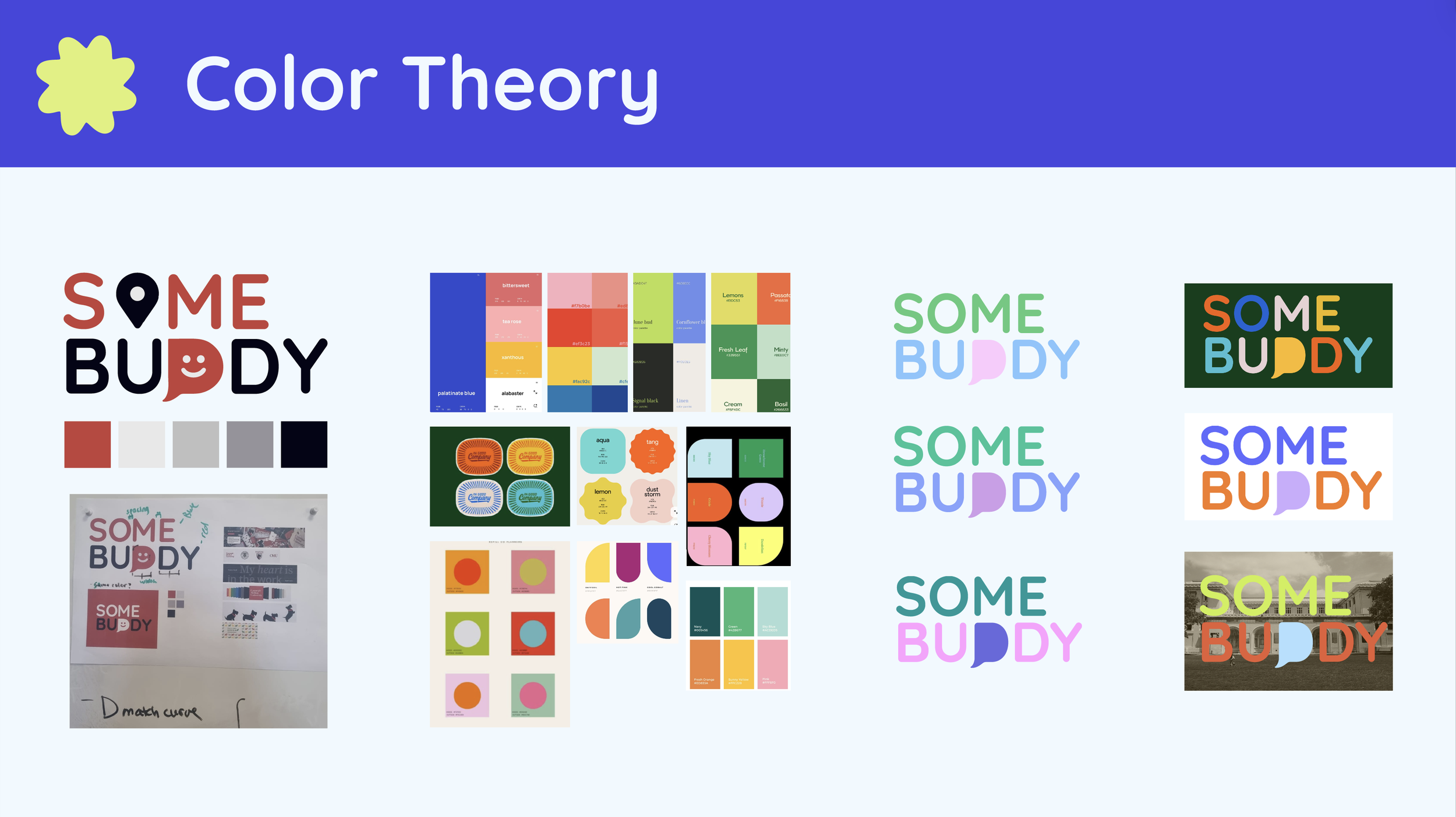
We heard in our interviews that trust and CMU verification were important to users so we considered using colors adjacent to the CMU brand. However, we also continued to explore alternative color palettes that could be considered inviting but also academic.
Brand Identity
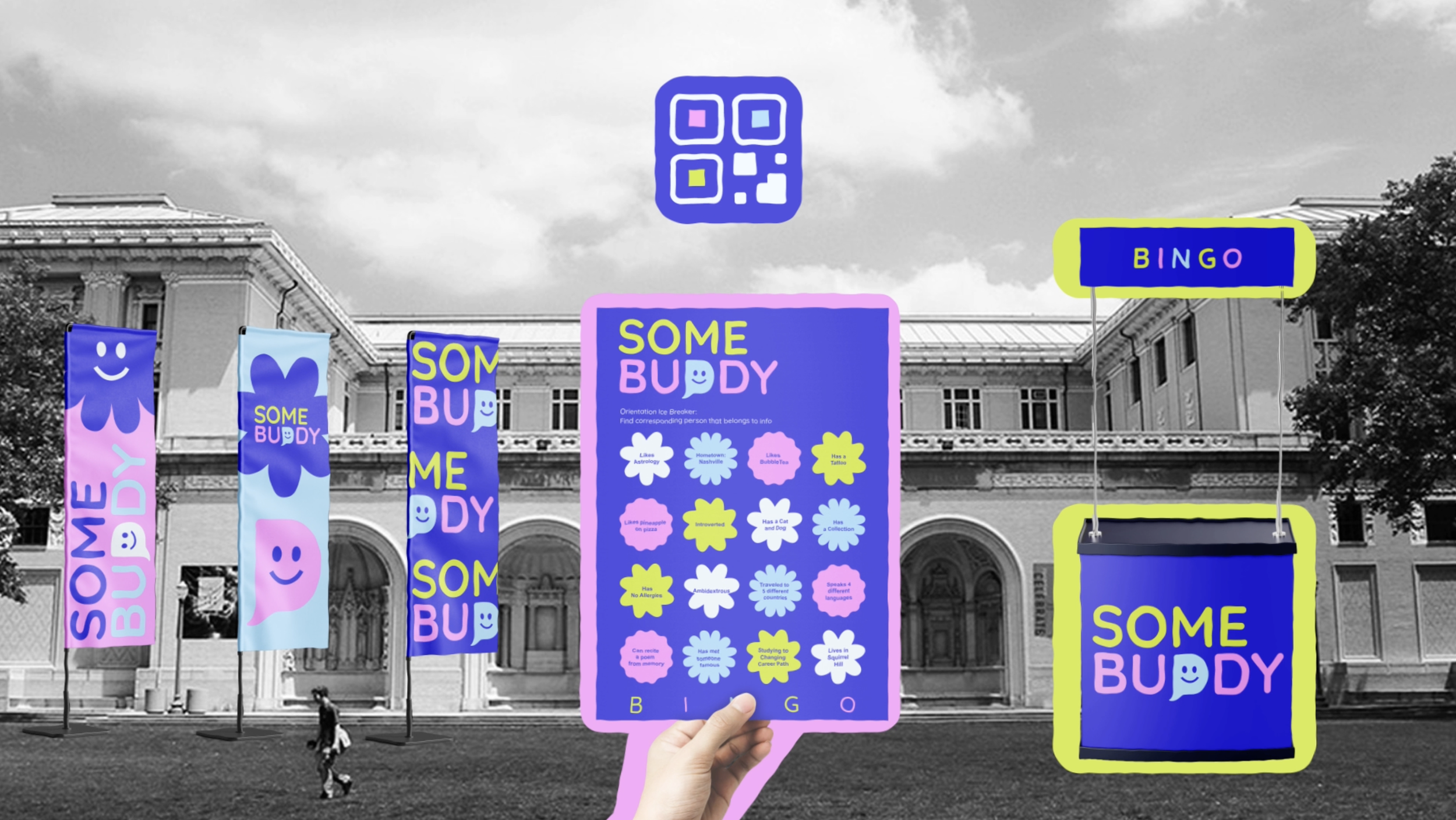
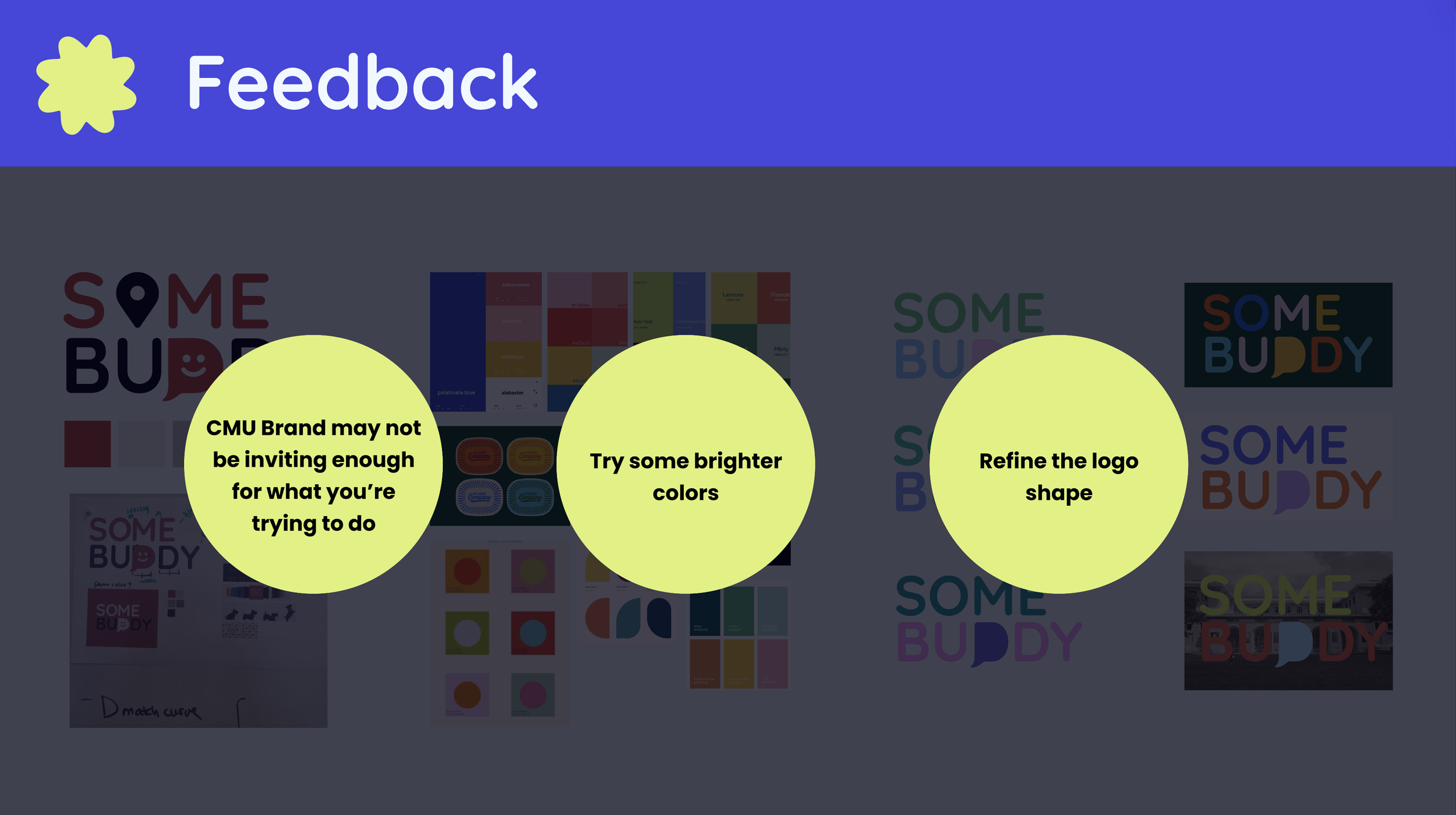
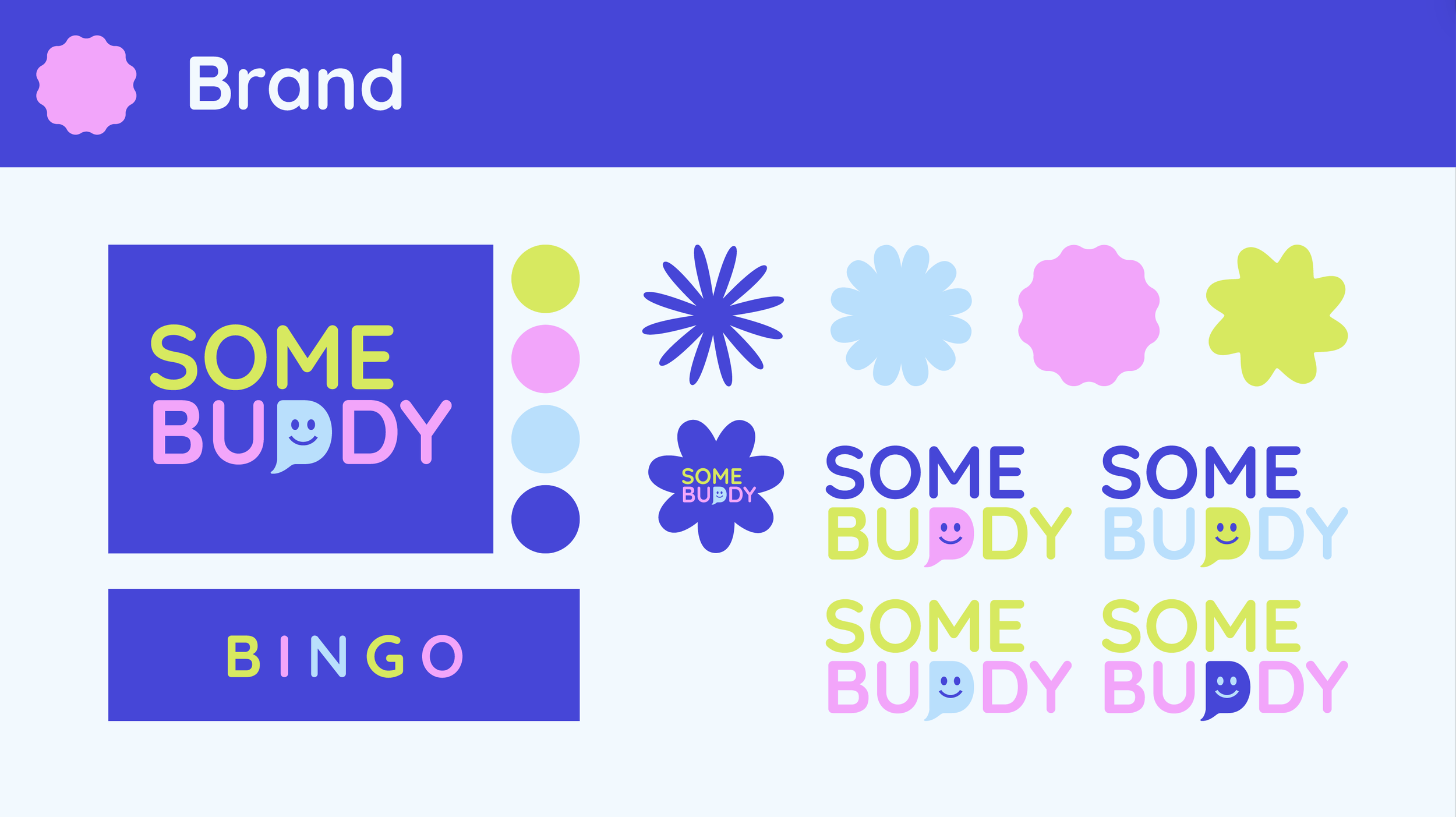
The feedback we received in class about our visual style confirmed our original assumption that a bright, exciting, soft, and welcoming brand would be the best fit for our audience. Our logo uses metaphor and shape to suggest connection and messaging. The smile implies safety and friendliness, while the bold shapes make it recognizable from a distance.
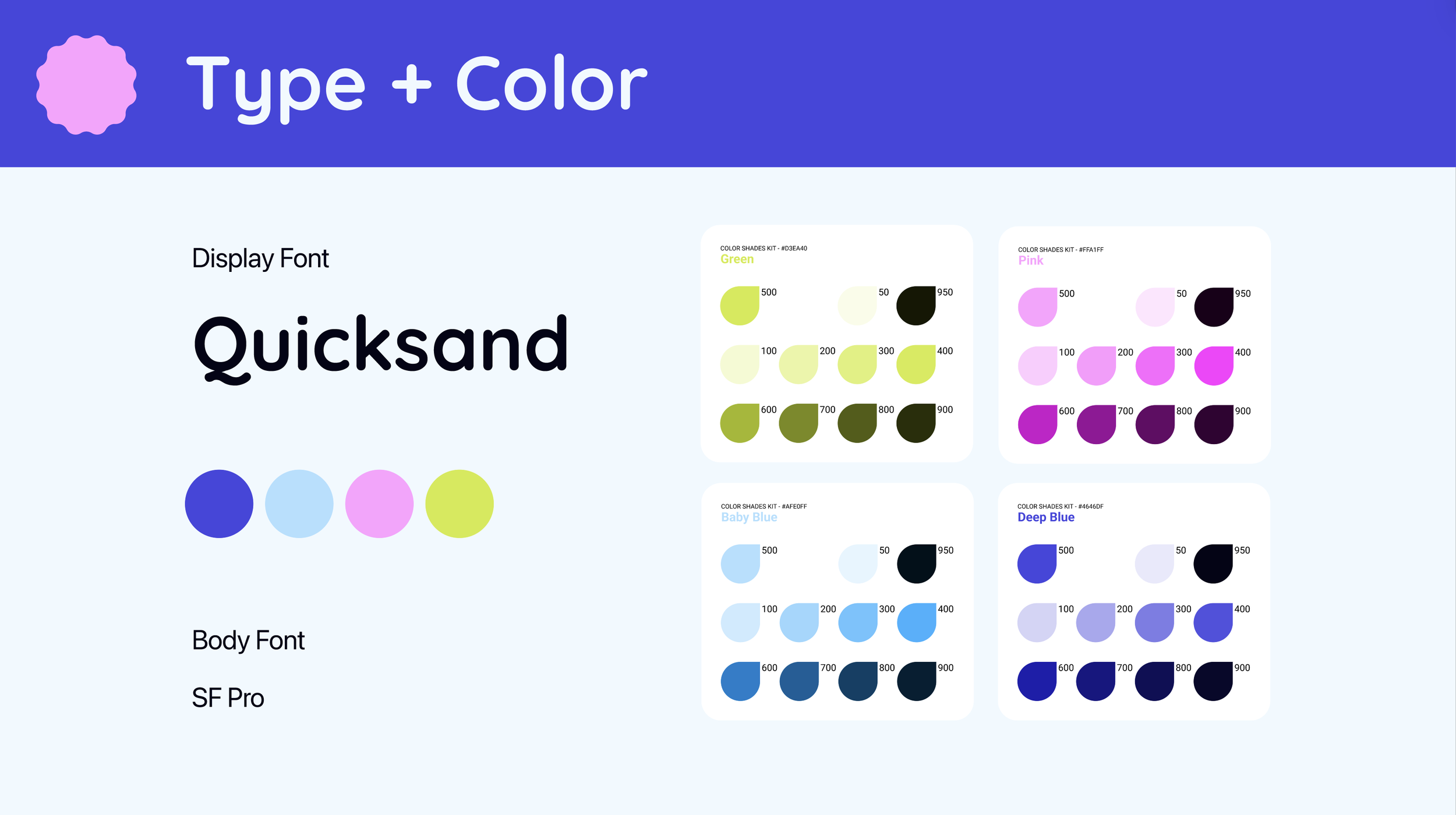
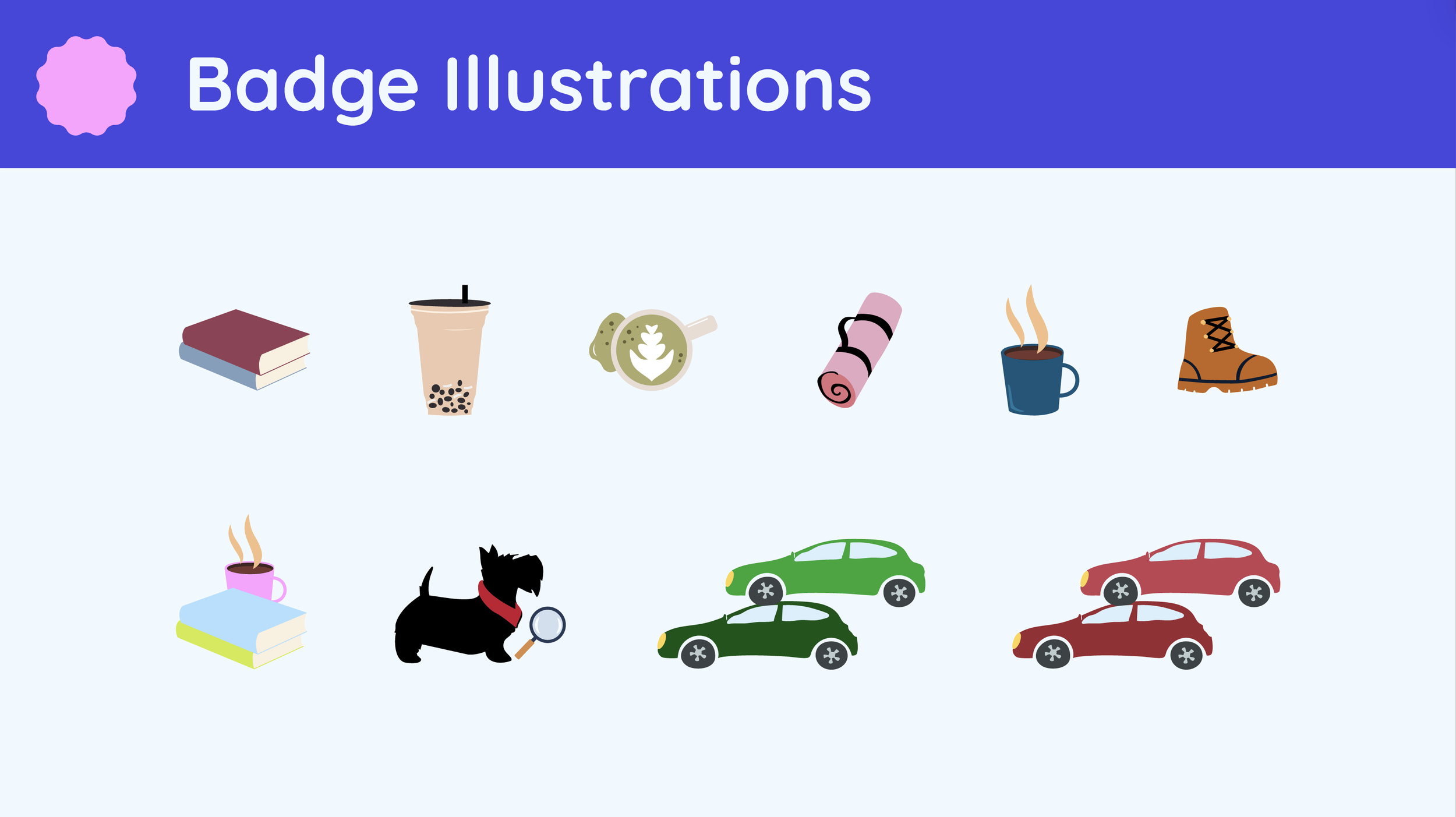
SomeBuddy is bright, inviting, youthful, and exciting. The Quicksand typeface is playful and eye catching but also serves the purpose of softening the intensity of the color palette. Earning badges became a core element of our ecosystem and our illustrations are able to tie in CMU references through a straightforward and approachable illustrative style.
The Ecosystem
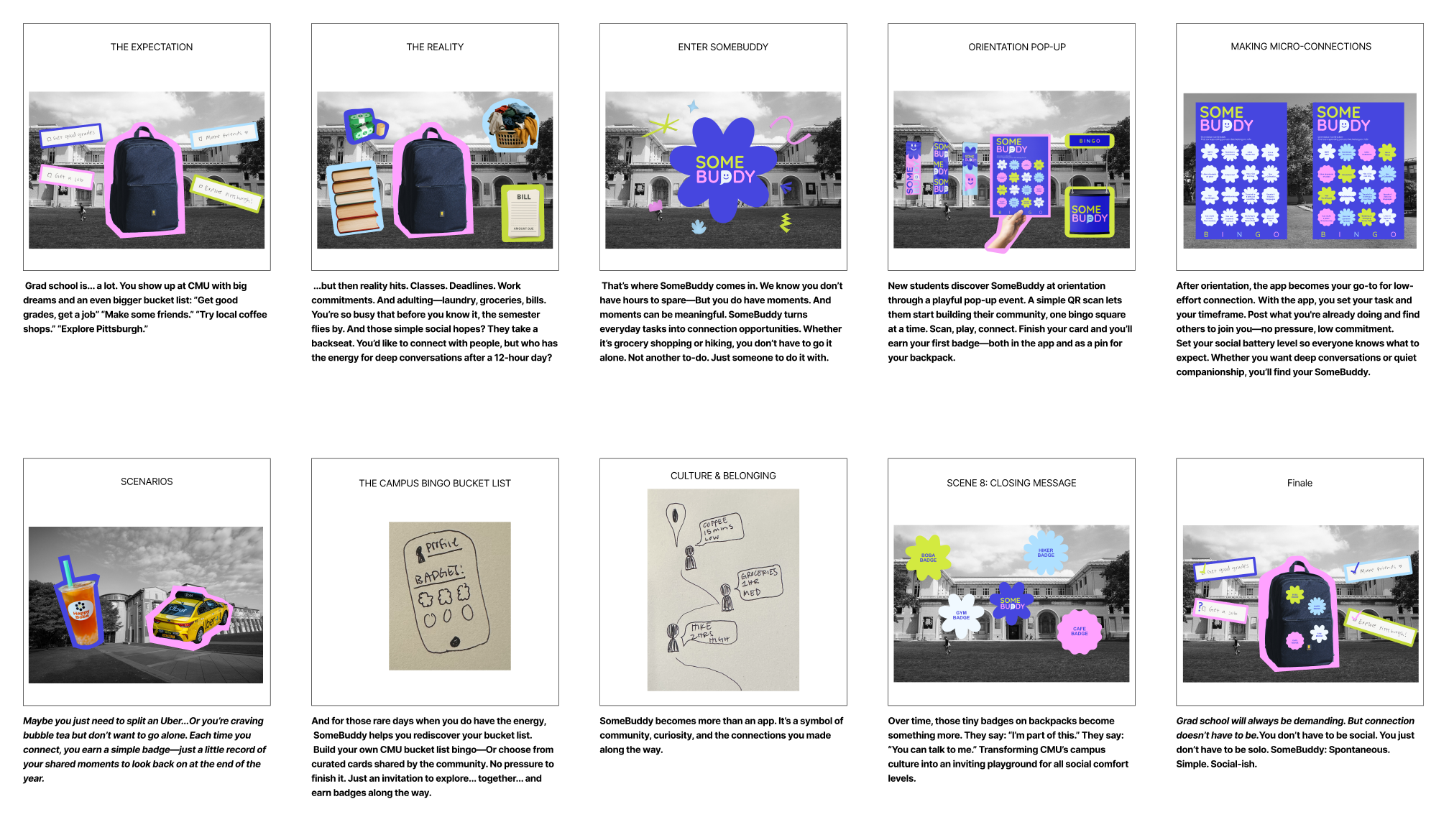
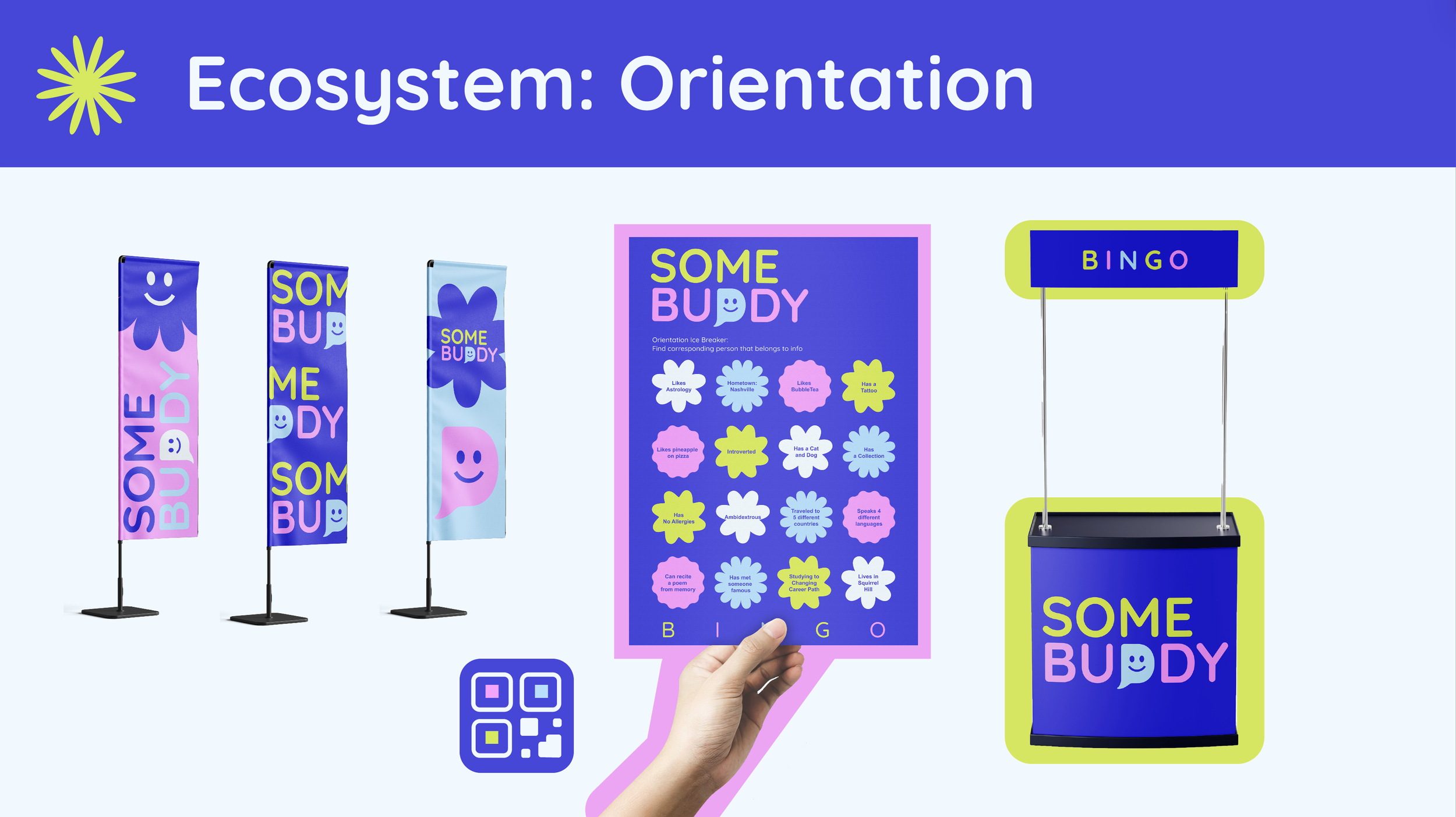
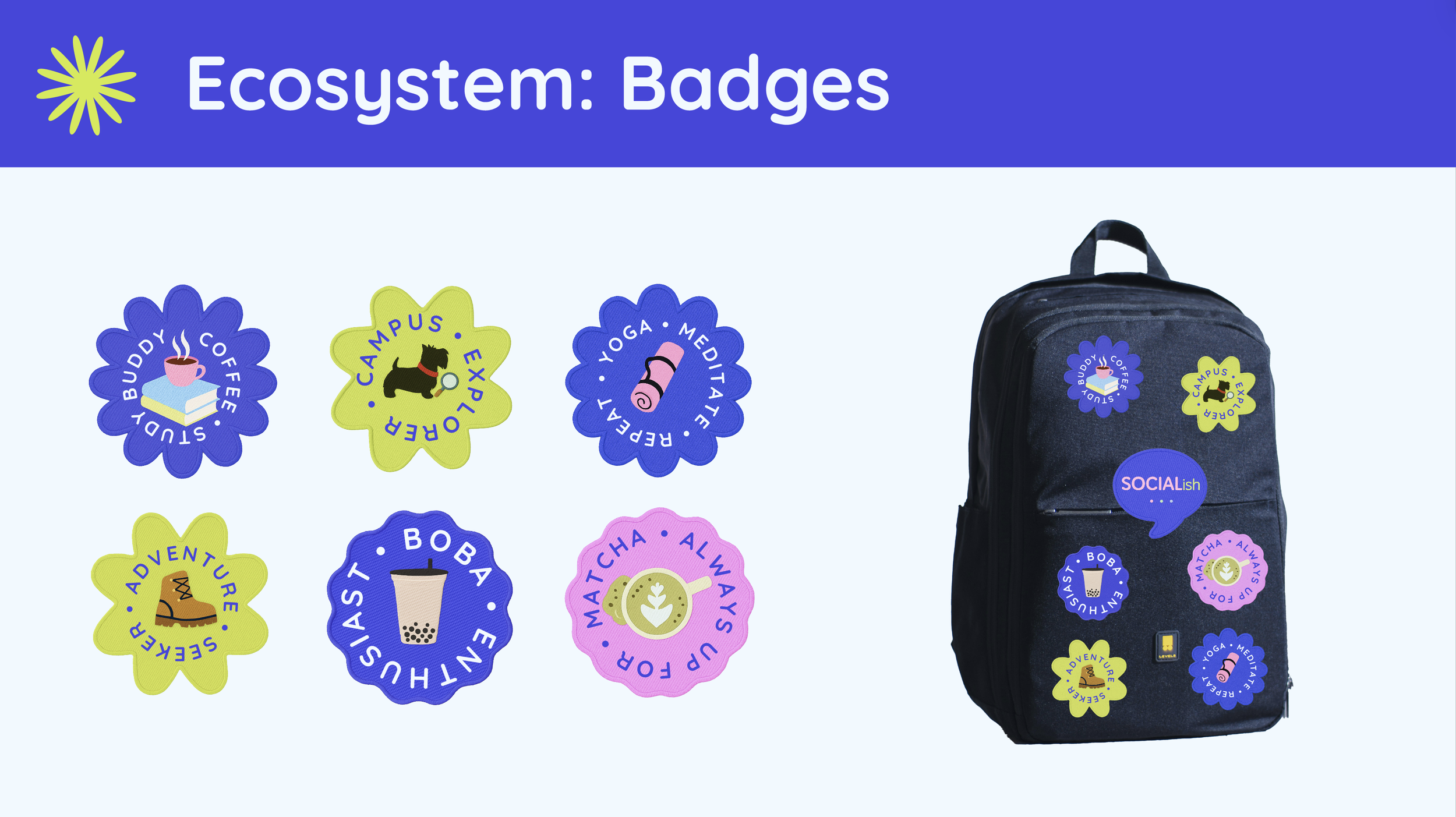
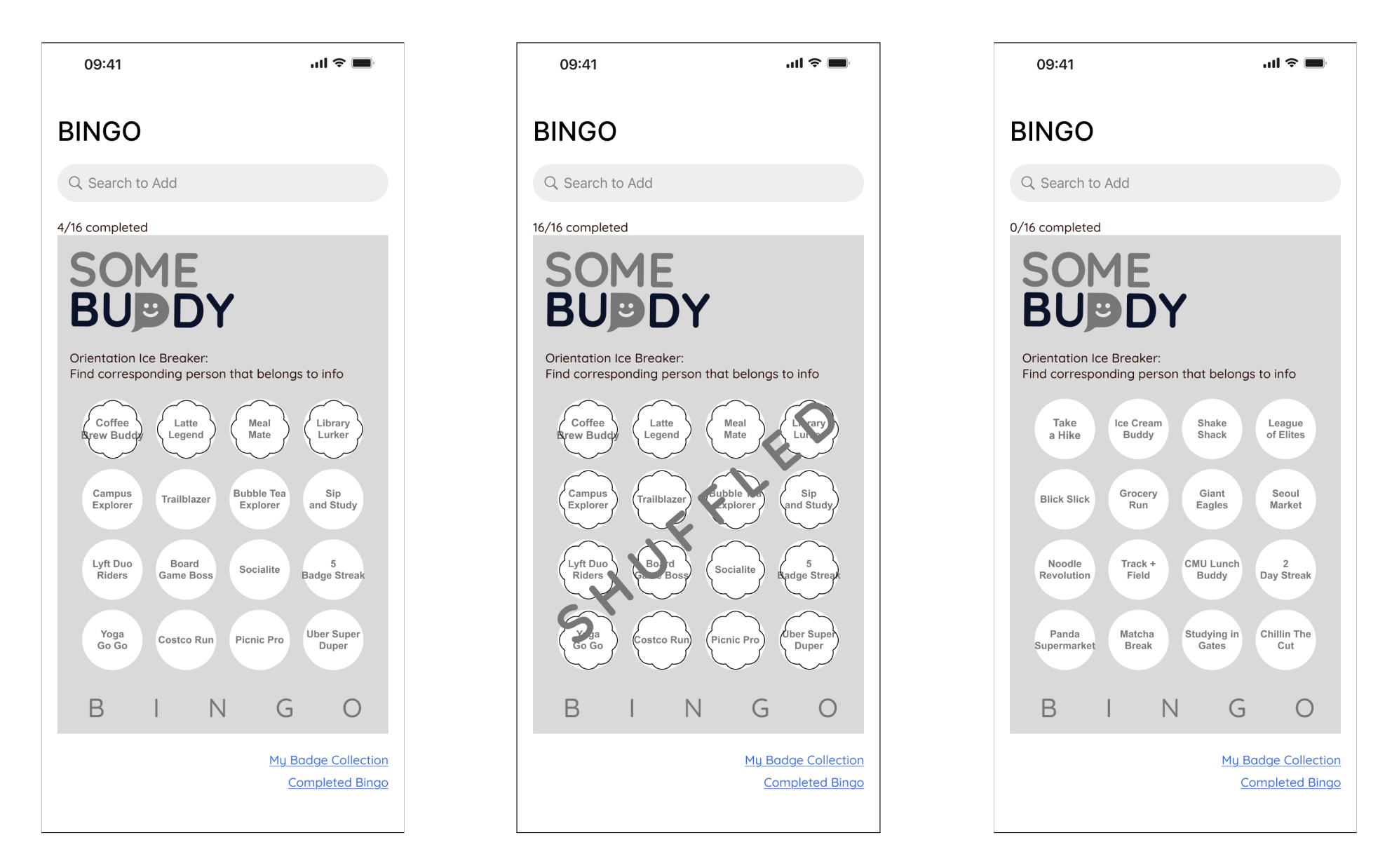
Connecting students from orientation to ongoing campus life through a layered social system of tasks, badges, and bingo. Users discover the SomeBuddy brand and app at CMU’s grad student orientation where they play a game of bingo to get to know their new peers and add them as buddies within the app for future connection. By earning their first badge at orientation bingo, users are introduced to the physical patch element of our ecosystem and inspired to make a collection throughout the year.
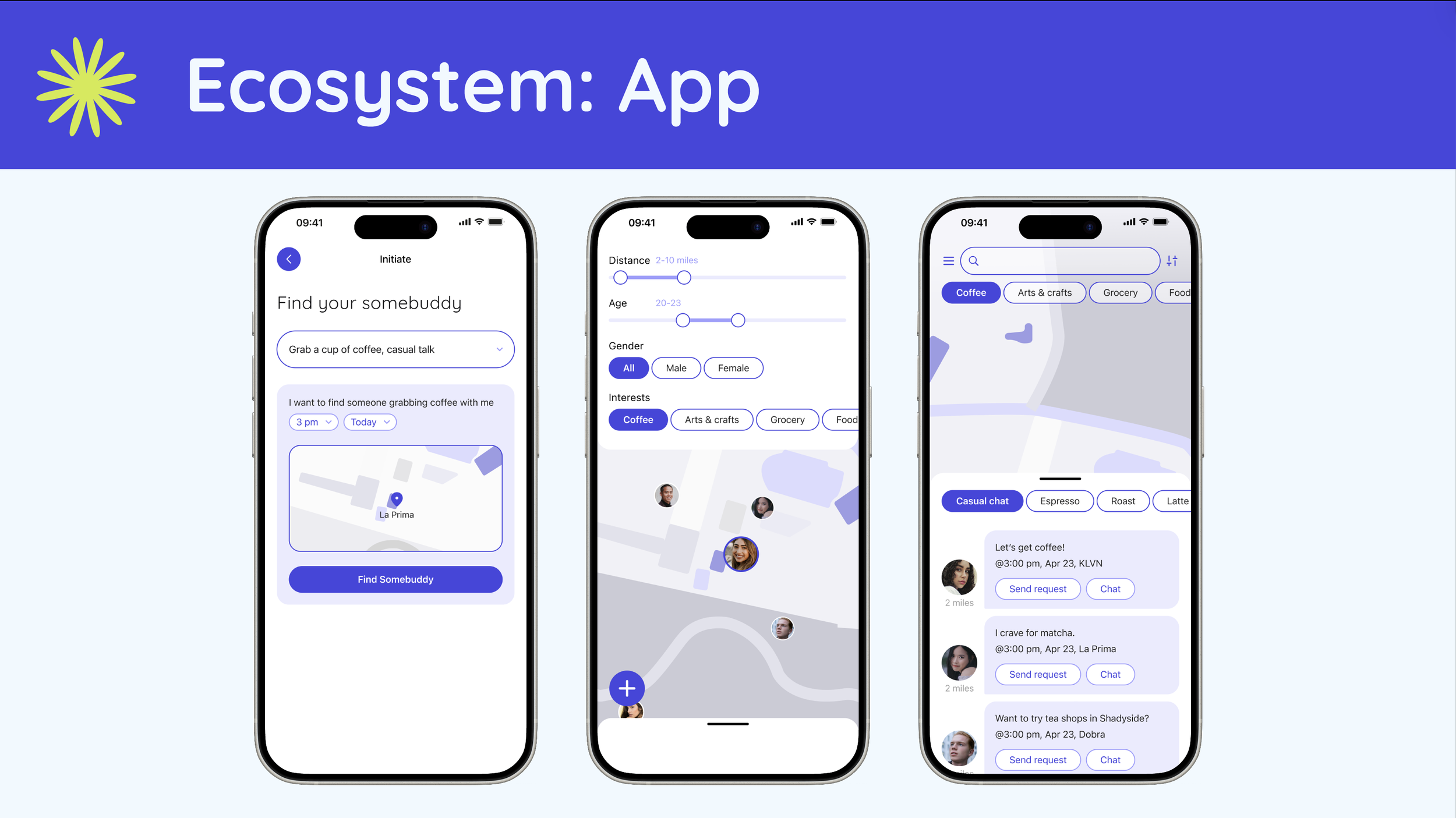
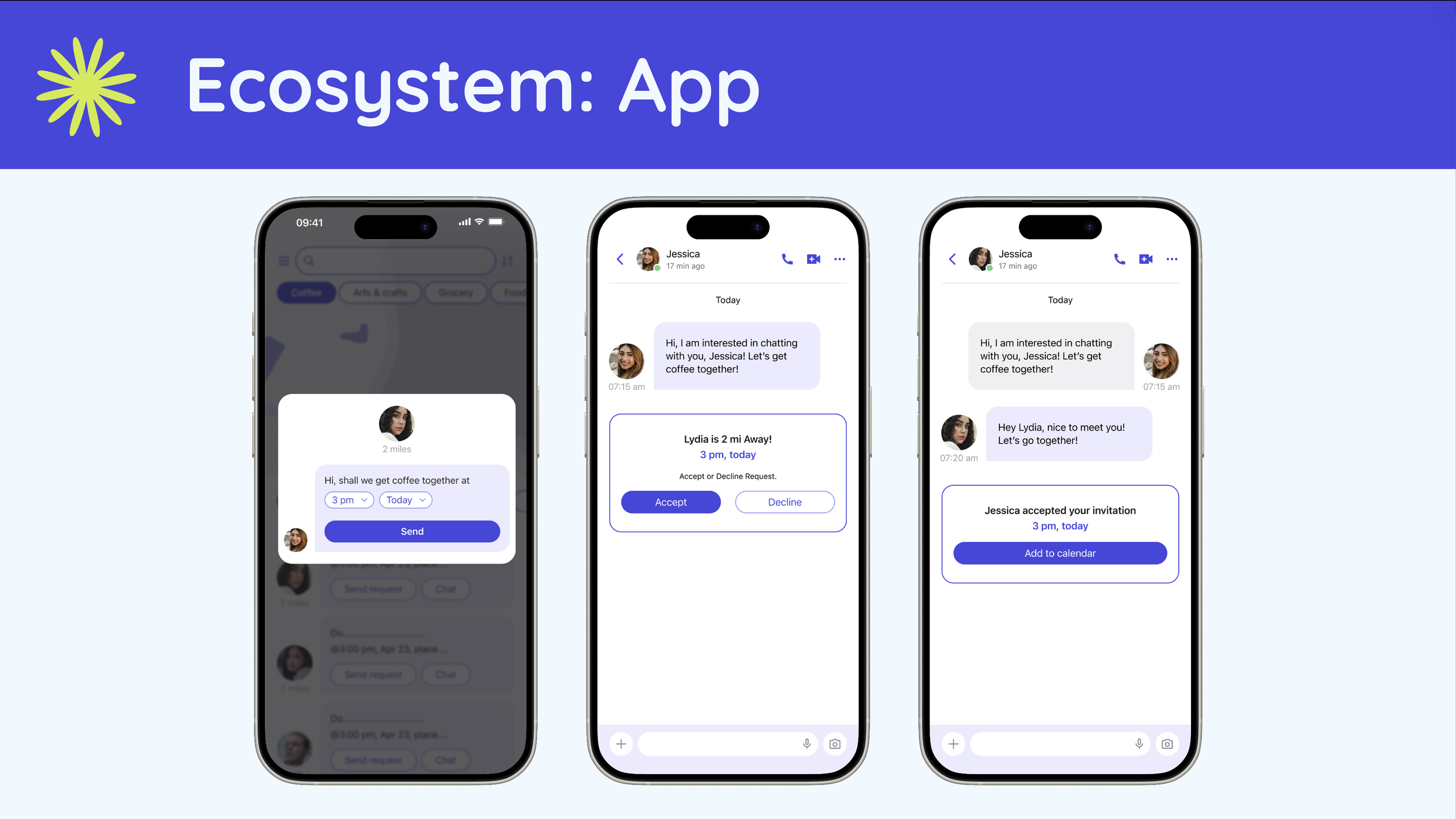
Within the SomeBuddy app, finding someone to do something with is fast and low-pressure. Instead of filling out a bunch of forms, users just go through a simple setup:
Pick an activity or task they want to do
Choose a general time and location
Post to community
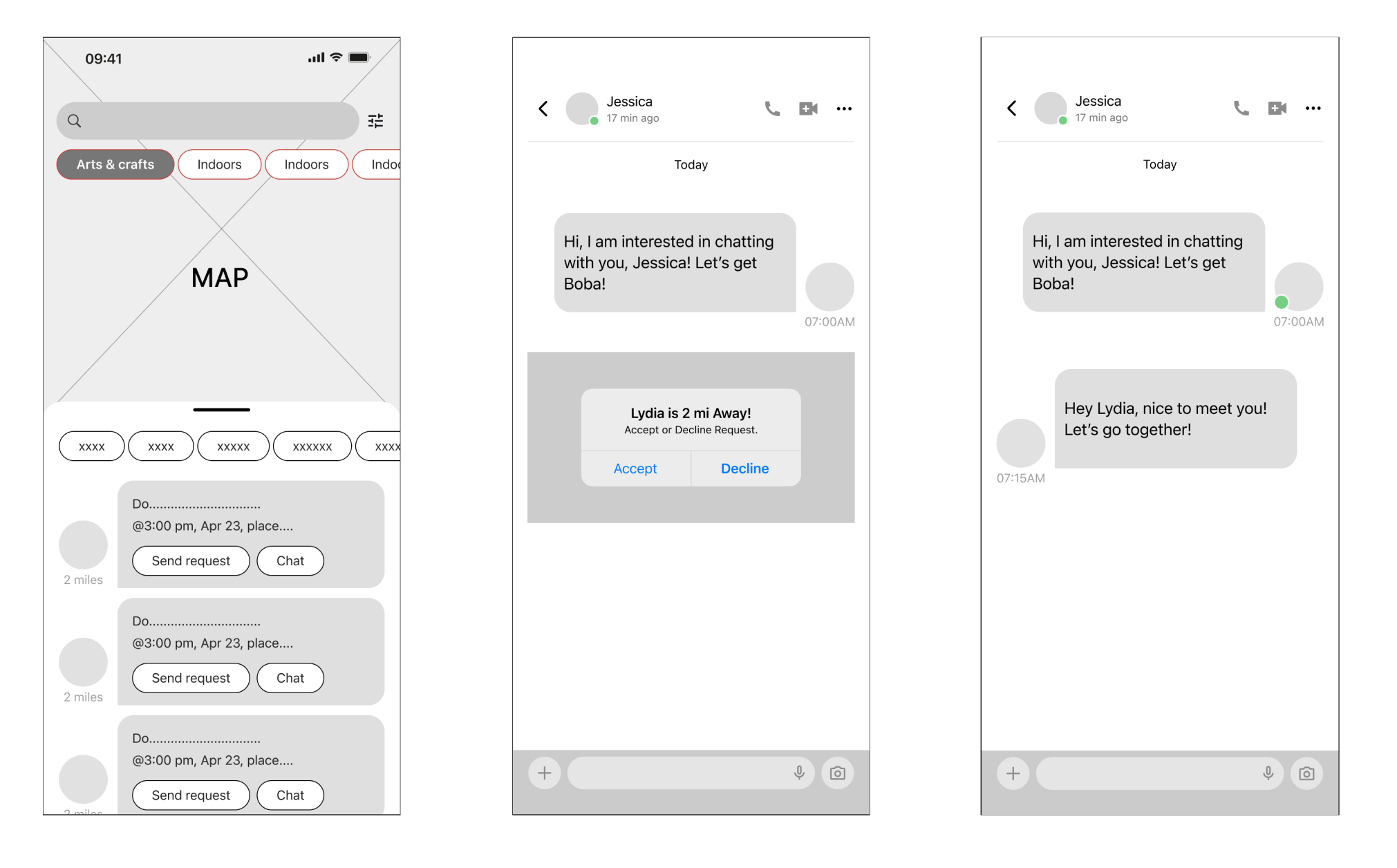
Our goal is to make the experience fast, effortless, and low-pressure. Once it’s posted, the app helps surface nearby matches. Users can filter potential buddies by distance, age, gender, and shared interests using both keyword search and filter tools. Results appear in both map and list views. From there, there’s another layer of filters depending on the activity. So if you’re looking for someone who’s craving for espresso or having a casual chat while grabbing coffee, you can narrow it down even more. When you find someone you want to reach out to, you’ve got two options:
You can either send a request using a pre-filled message template that only requires a quick time adjustment.
Or, if you’d rather chat first, you can open a message with pre-set conversation starters. We’ve built in templates to make sure it doesn’t feel like too much work or pressure. You can easily respond using simple accept or decline buttons, which avoids the need for long replies.
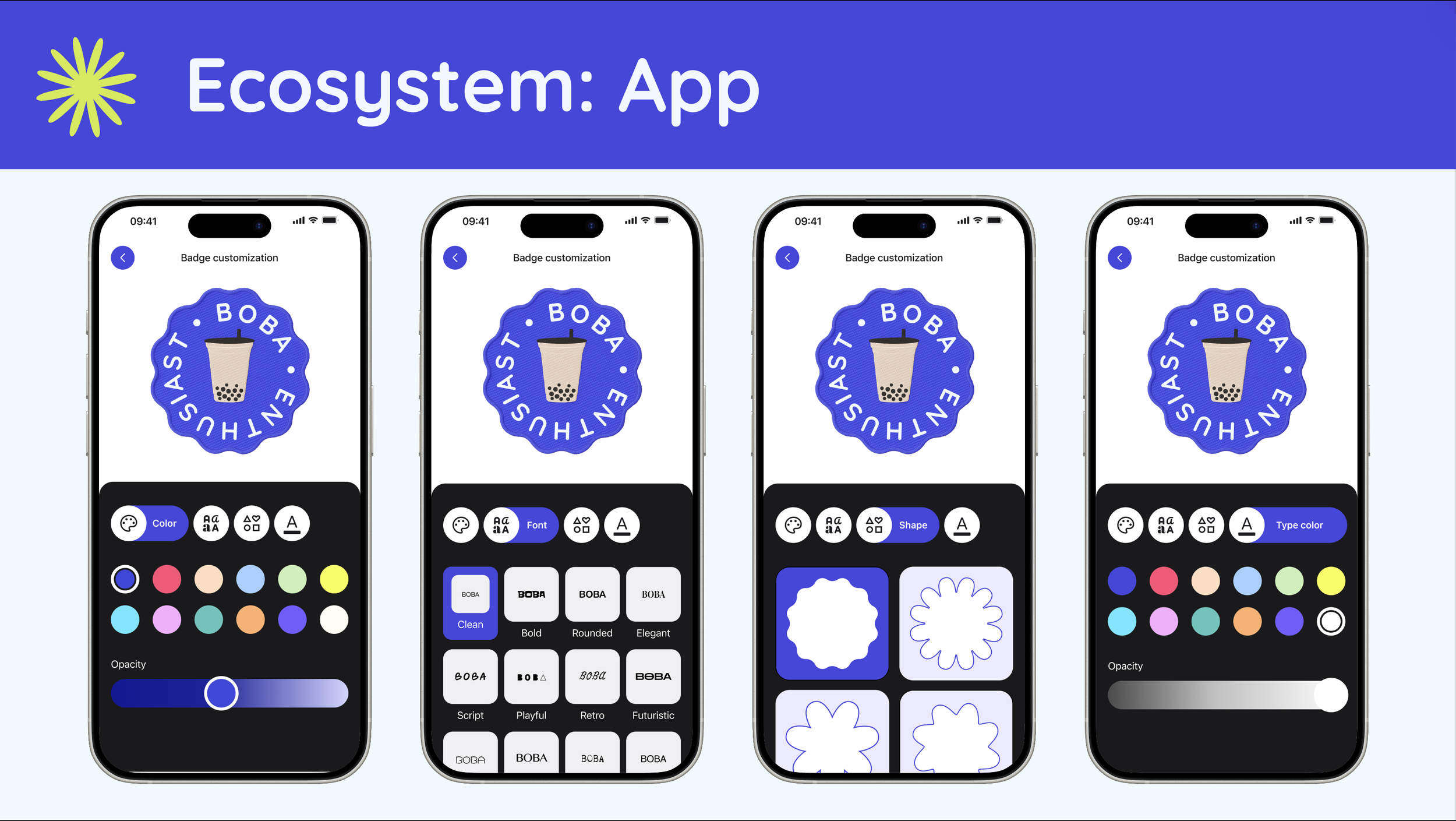
Badge customization allows users to customize unique color, text, shape, and type color according to their preferences for each badge rewarded to them for completing a task together with another SomeBuddy or in app achievements.
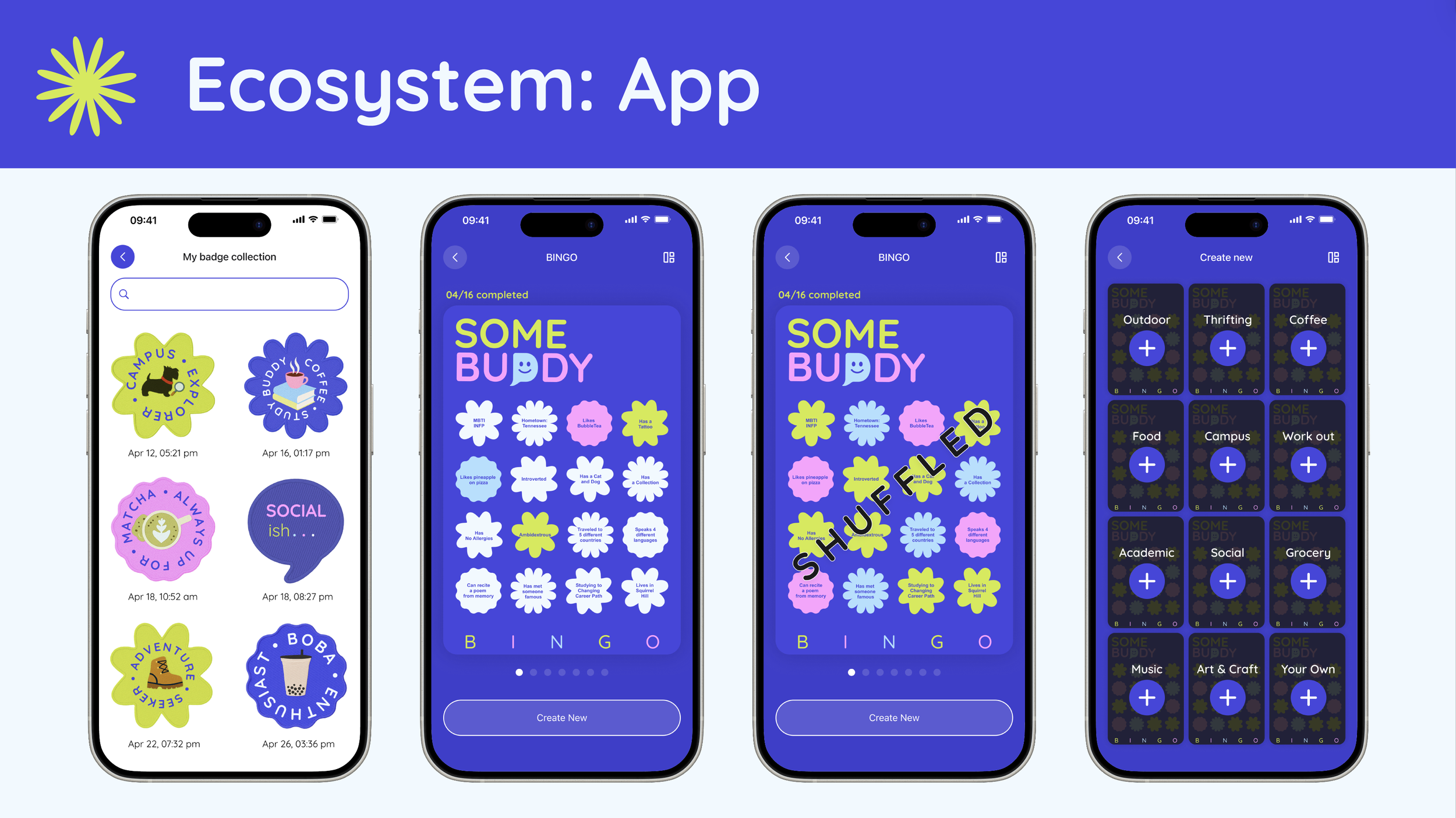
Badge customization allows users to customize unique color, text, shape, and type color according to their preferences for each badge rewarded to them for completing a task together with another SomeBuddy or in app achievements. Users have access to the “My badge collection” page where they can view all their collected or rewarded badges.
Then is the bingo card feature. It started as part of our Orientation Bingo Card, and users can keep the fun going by joining new bingo cards organized by different themes and categories—like outdoor, thrifting, food or and they can create their own custom bingo card, set the own challenges, and share it with others. It’s a light, playful way to turn everyday activities into social moment—and discover more SomeBuddies along the way.

Outcomes
We shared our concept with Carnegie Mellon’s Department of Student Affairs and presented the full vision to their team. It was met with sincere interest, especially around incorporating SomeBuddy into Fall 2025 orientation. While no next steps have been taken yet, this response affirmed the relevance and appeal of our solution.
If we had more time to expand the work, we would host additional co-design workshops, conduct more interviews, test activities, and collaborate with developers to prototype the app.