Heirloom
A Supportive Tool for End-of-Life Planning
design thinking
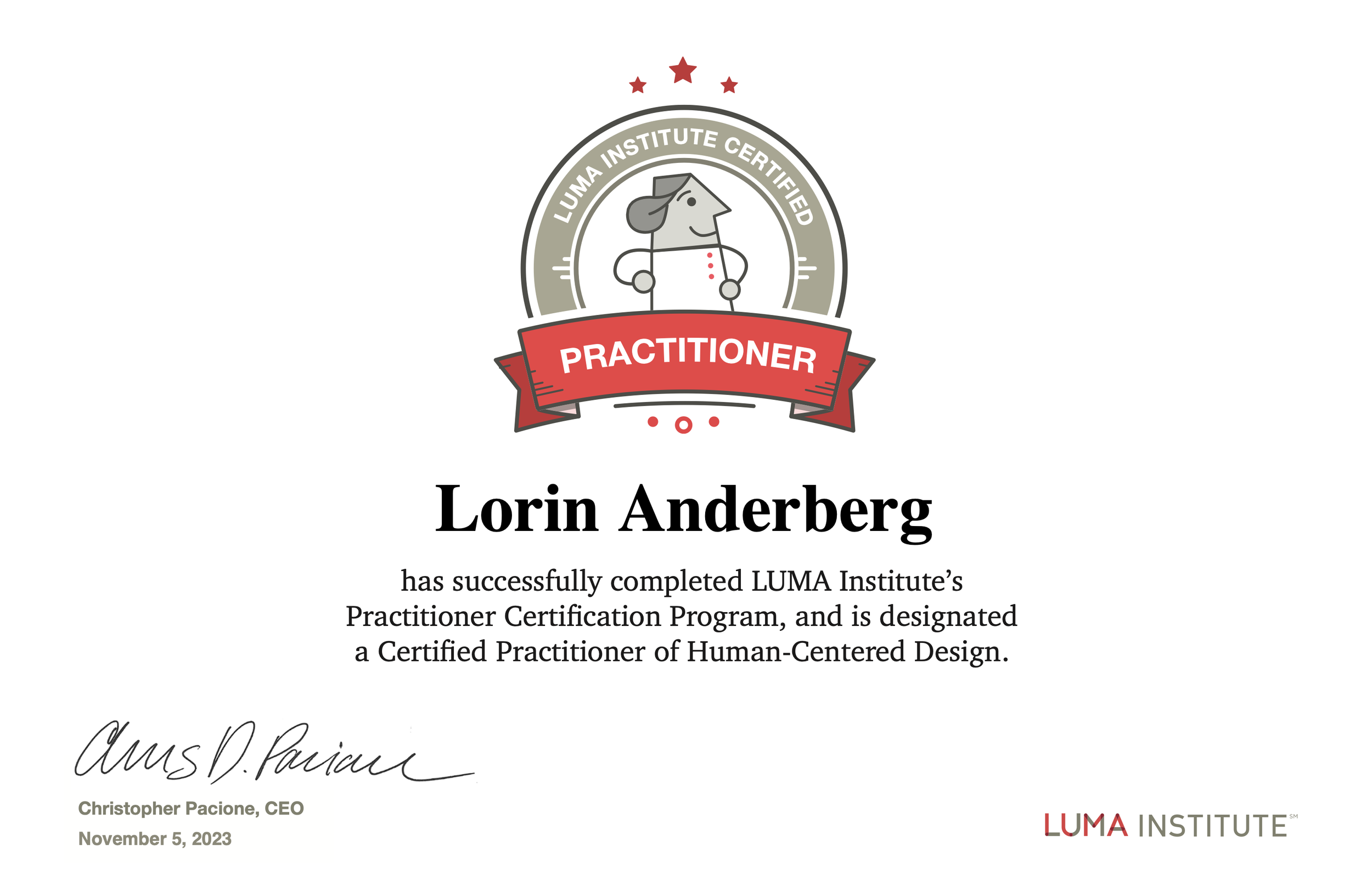
Certification: LUMA Institute, Human-Centered Design Practitioner Certification Course
Role: Solo Designer (Capstone Project)
Team: Lorin Anderberg
Tools: Mural, Figma
Duration: 2 weeks
rapid ideation
Problem Statement:
End-of-life planning is rarely discussed. It’s often messy, disorganized, and a source of tension within families. Many are suddenly thrust into the role of managing logistics with no training or preparation.
How might we make end-of-life logistics more human-centered, and the least of someone’s worries while they are grieving?
Research:
This project began during my first formal training in design: the LUMA Human-Centered Design Practitioner Certification program. Over three weekly sessions, I learned the fundamentals of human-centered design, design thinking, and iteration.
At the time, I was supporting my mother in her role as executor of my grandmother’s estate. Watching her navigate grief while managing complex logistics inspired me to explore end-of-life planning for my final presentation.
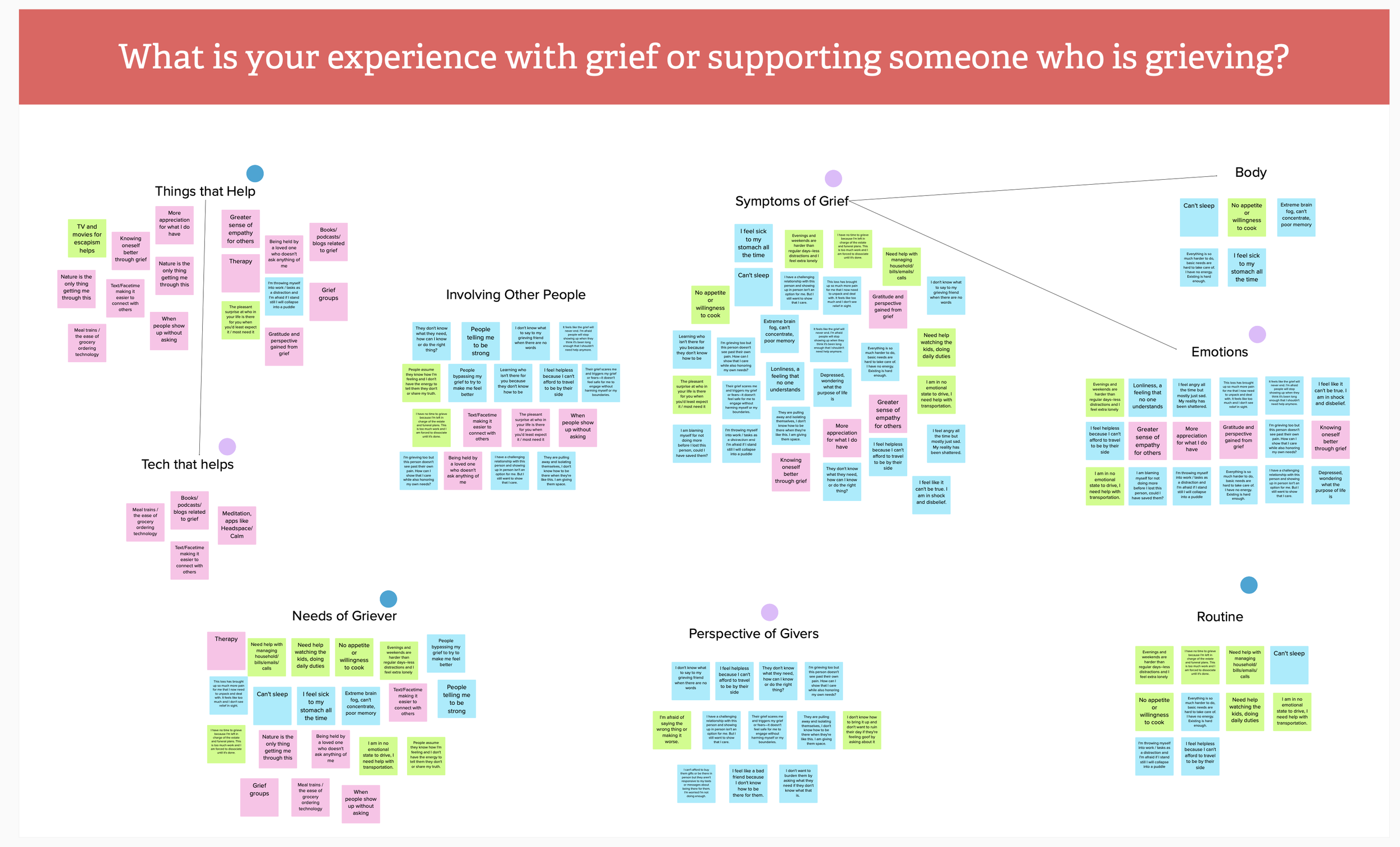
I began by researching grief and how to support loved ones experiencing loss. I wasn’t sure how best to support my mom through the emotional and logistical intensity. I was also curious about how relationships, especially friendships, navigate grief.
LUMA Methods:
Problem Tree Analysis
Round Robin
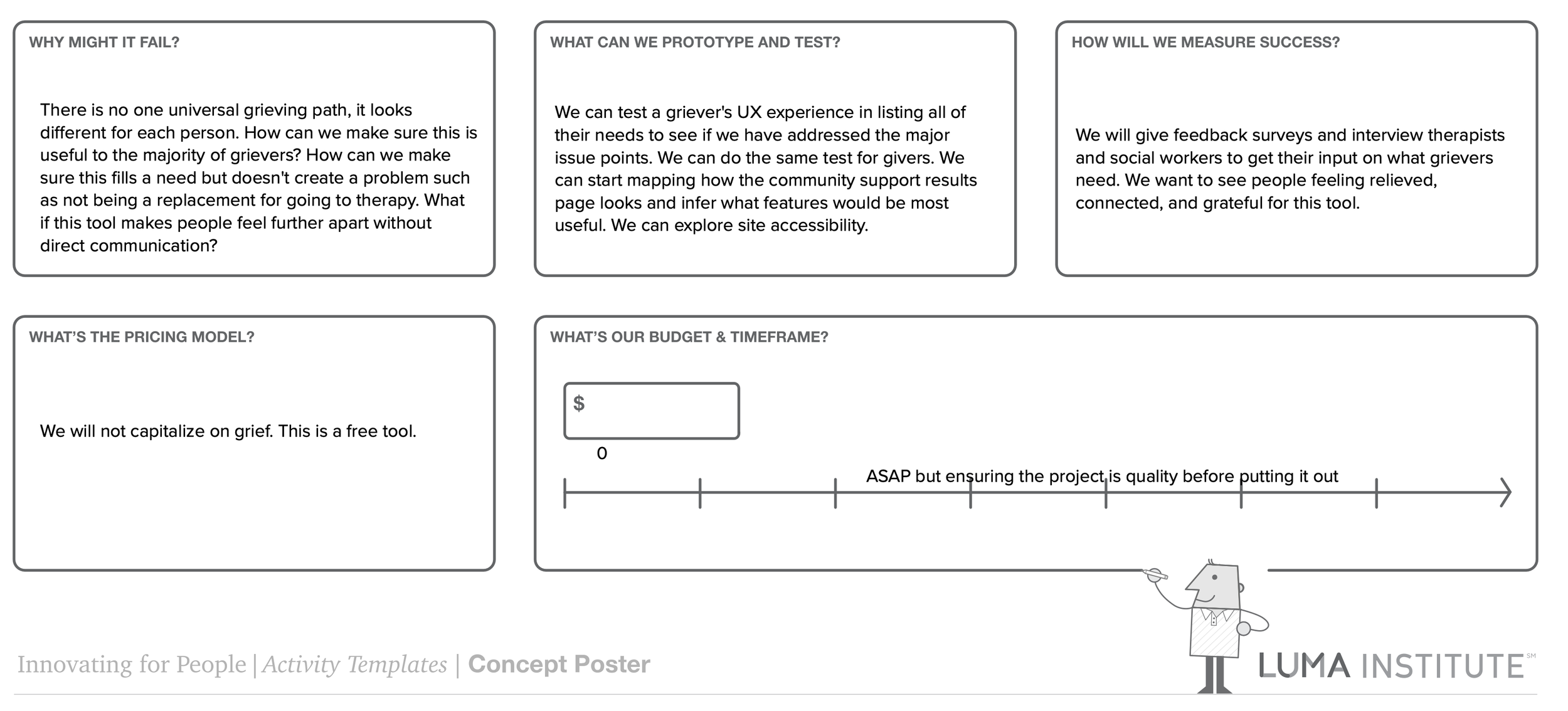
Concept Poster
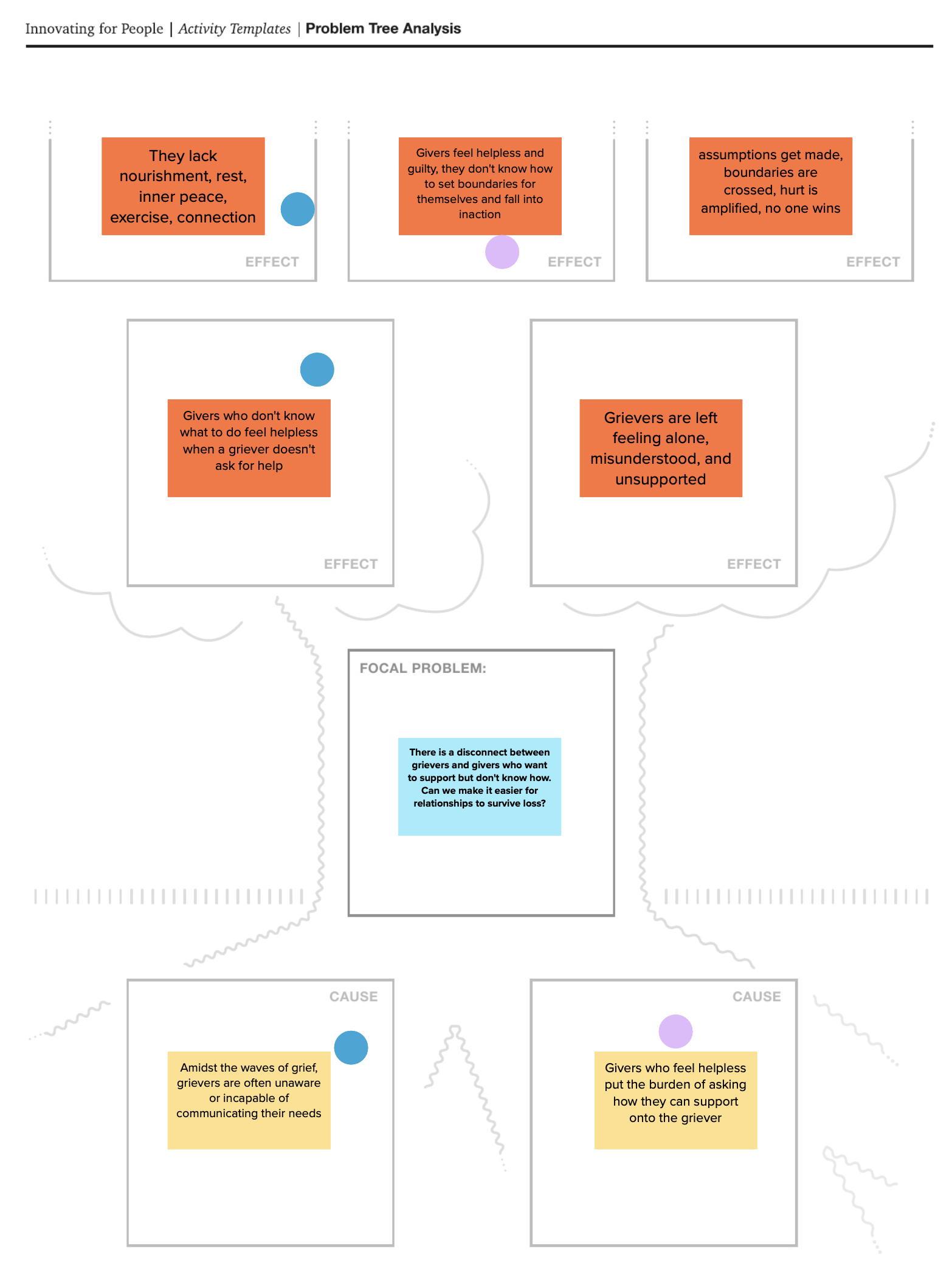
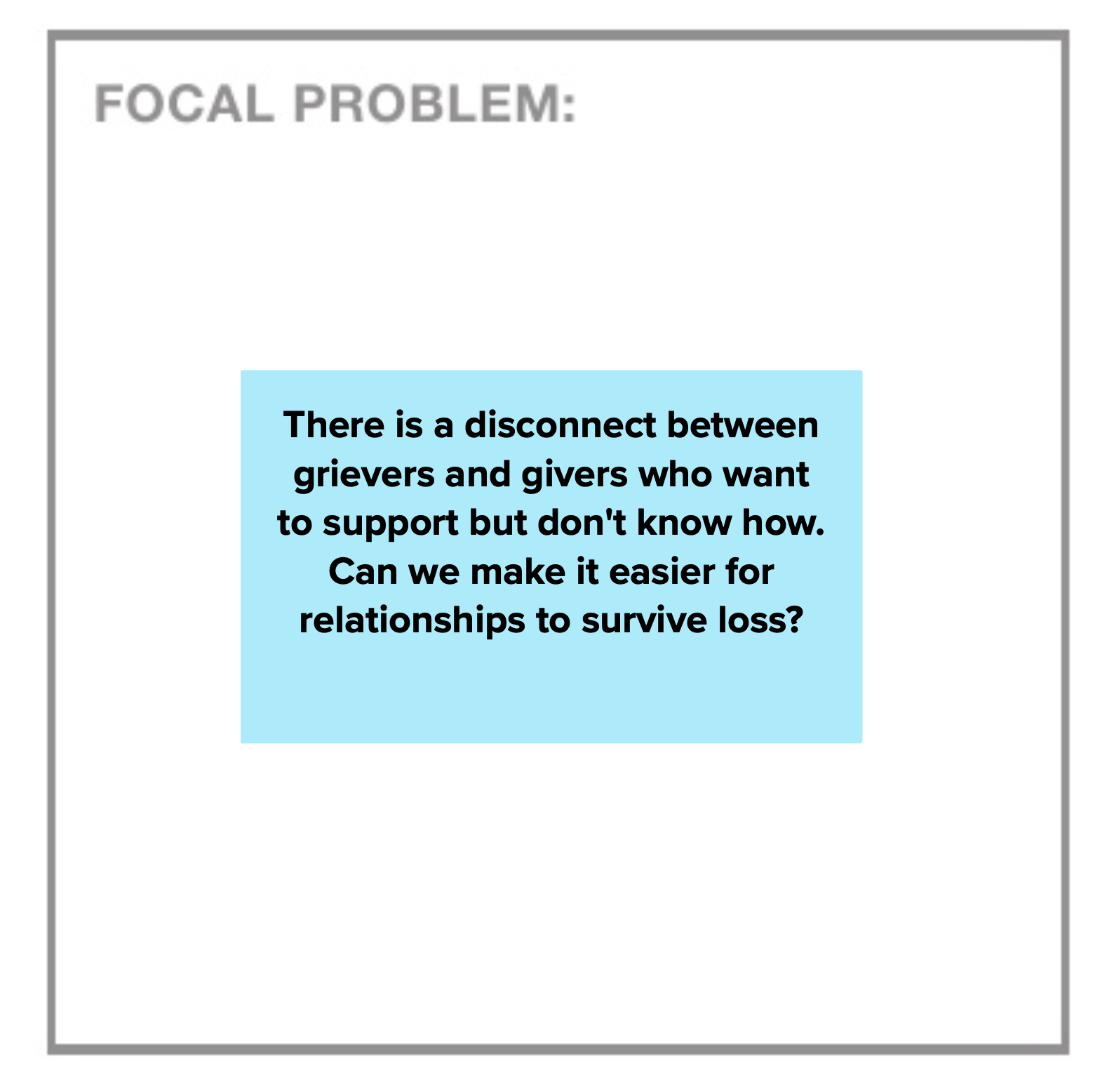
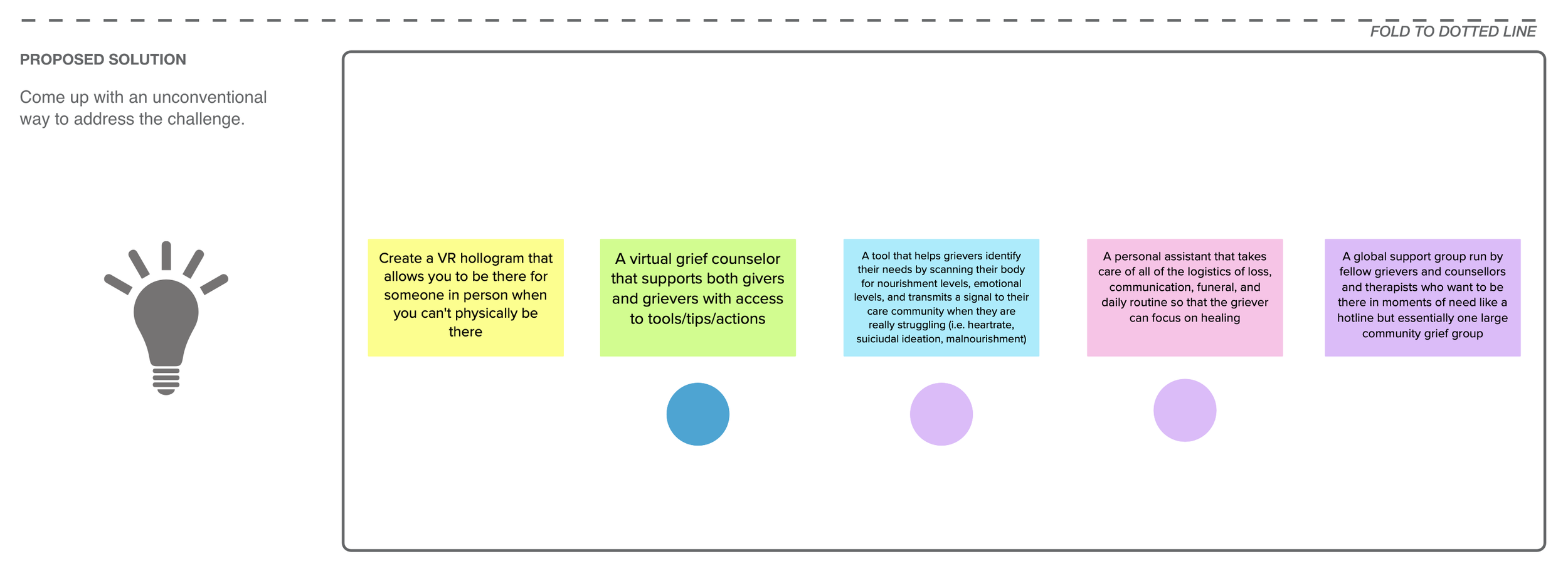
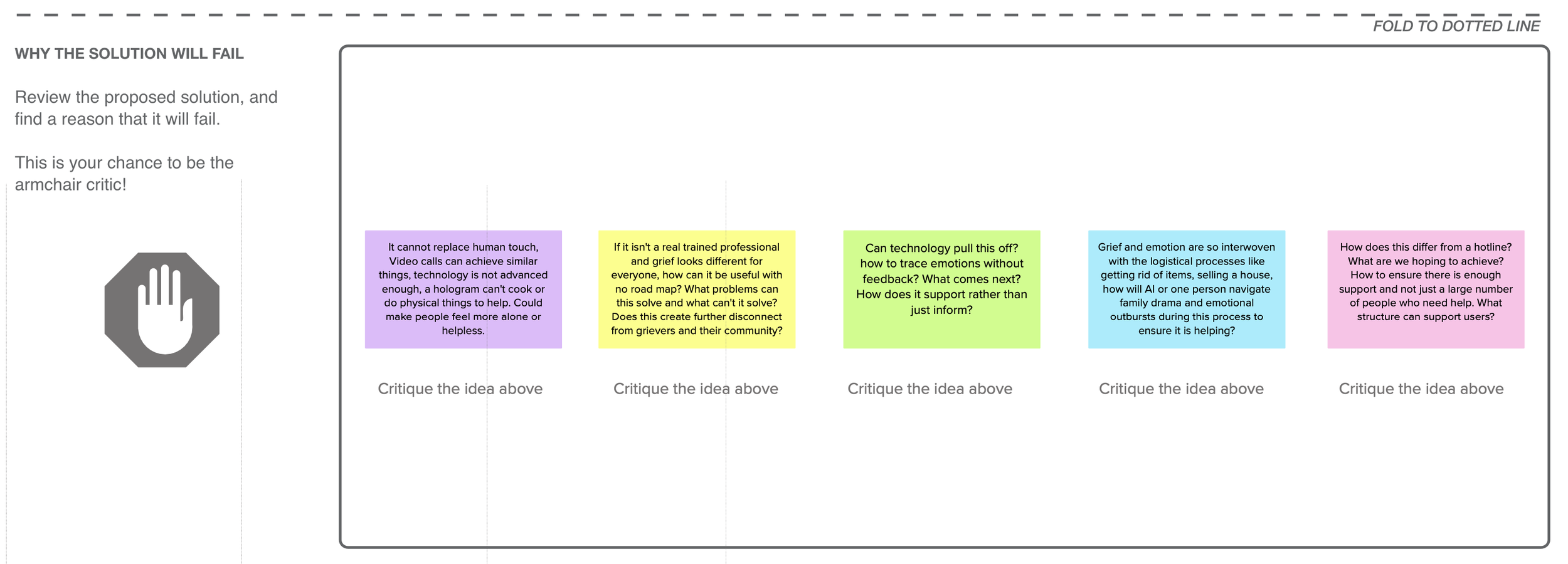

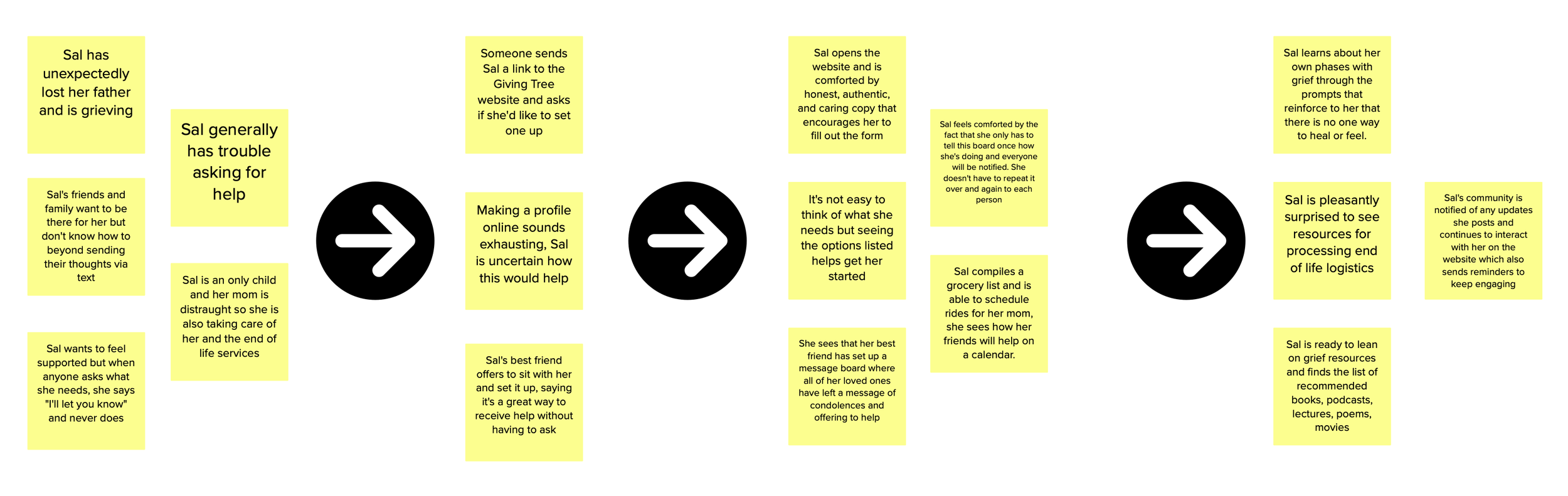
I initially explored a communication network that would relieve grieving individuals of the burden of updating others or asking for help. The tool would streamline messages and support requests across a trusted community.
However, after mapping this idea out, it no longer felt like the right problem to solve.
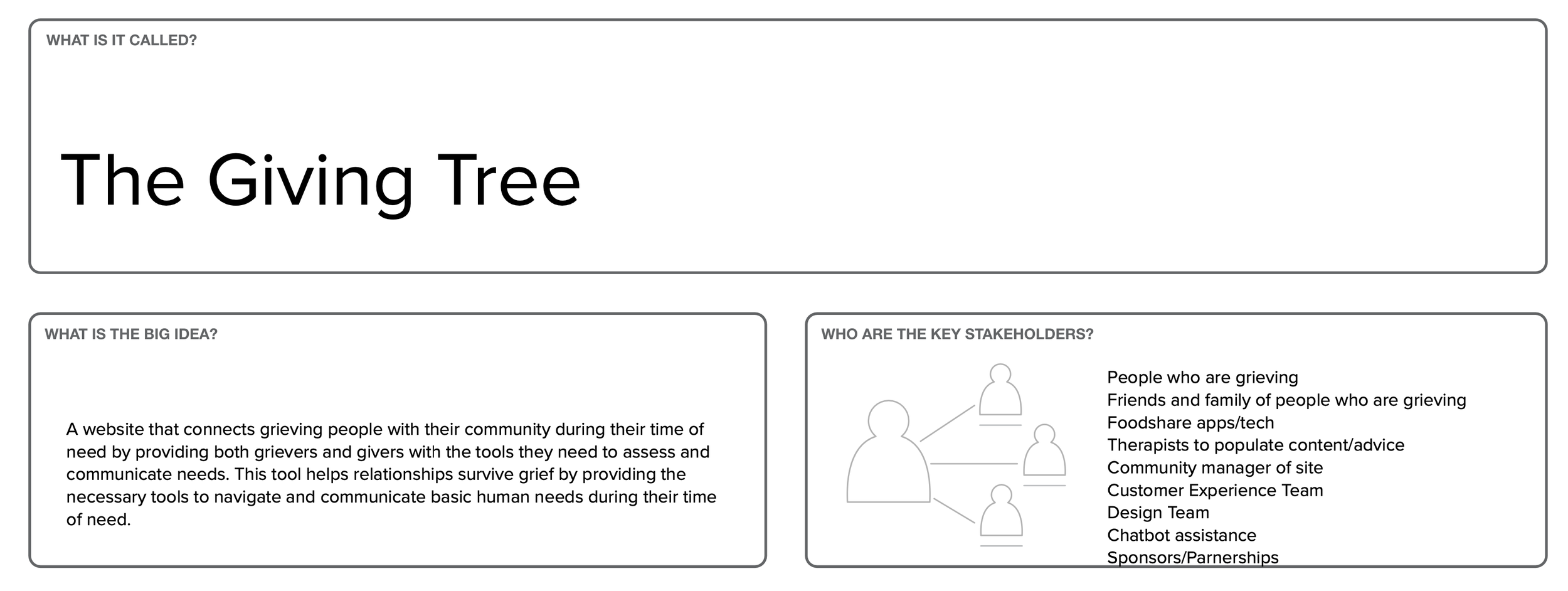
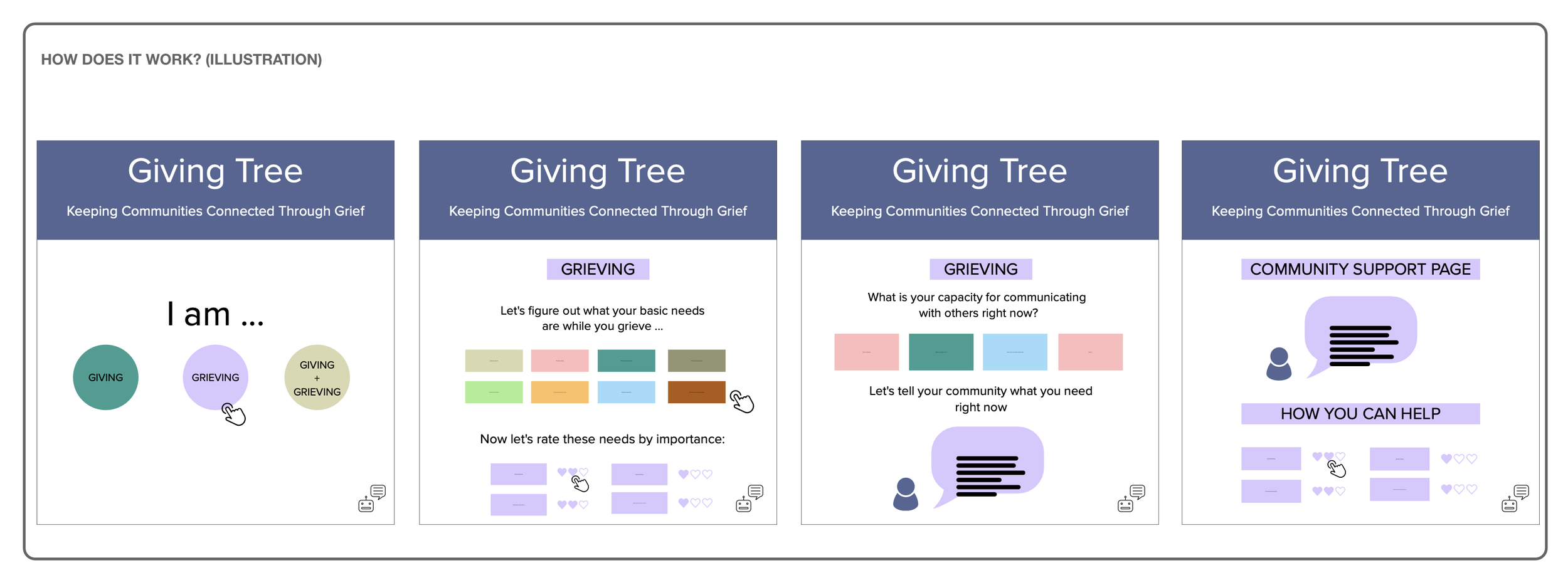
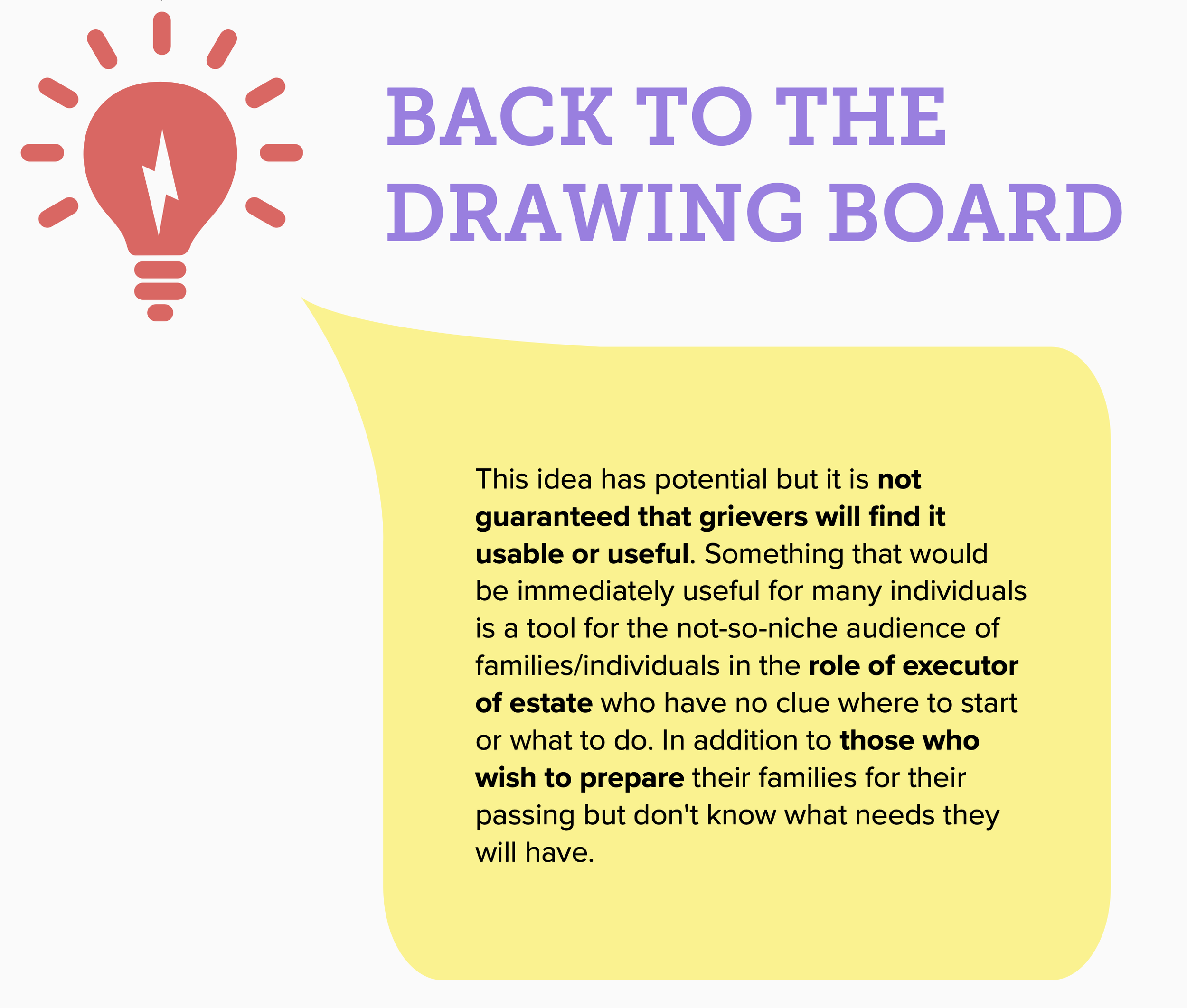
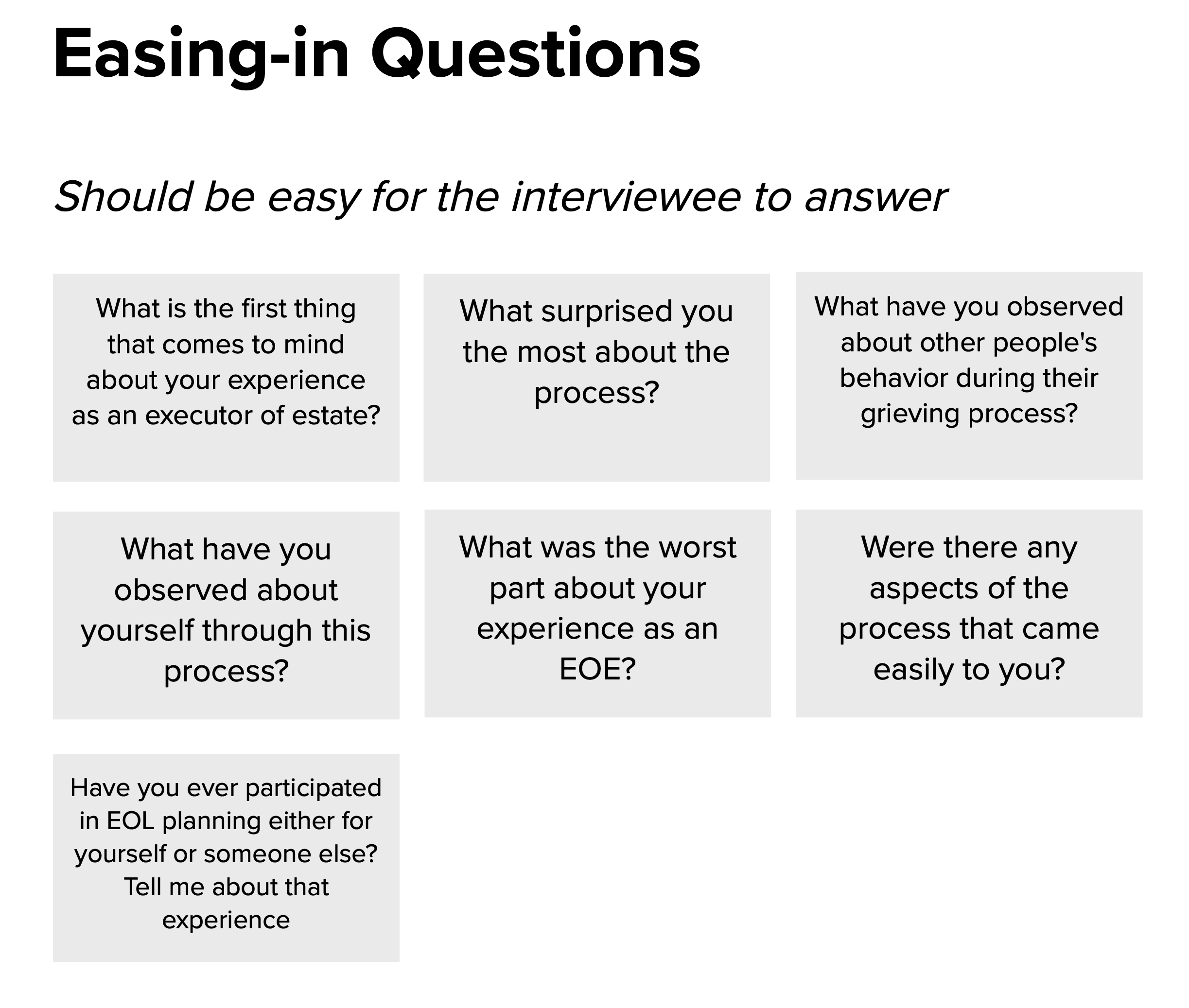
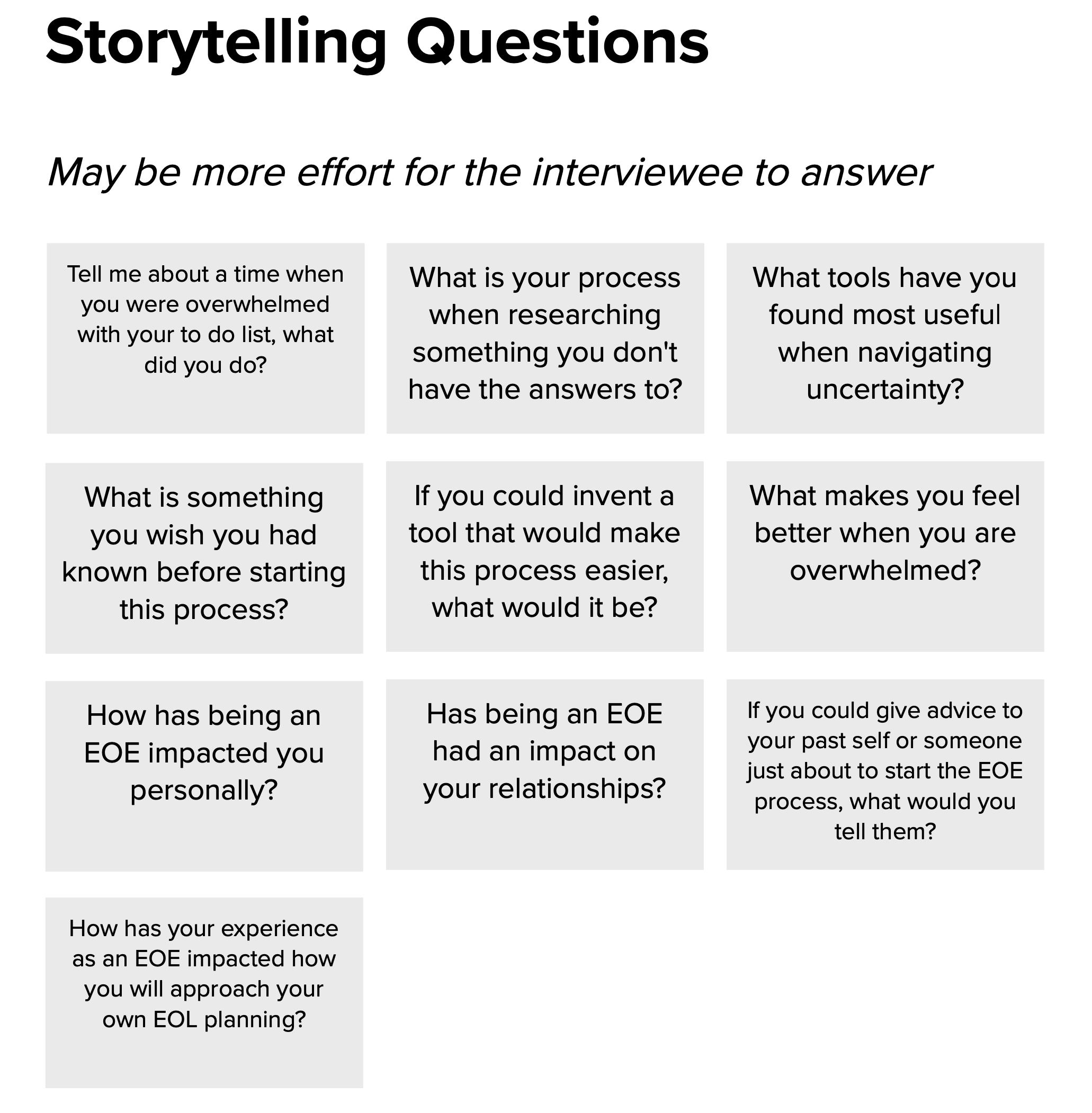
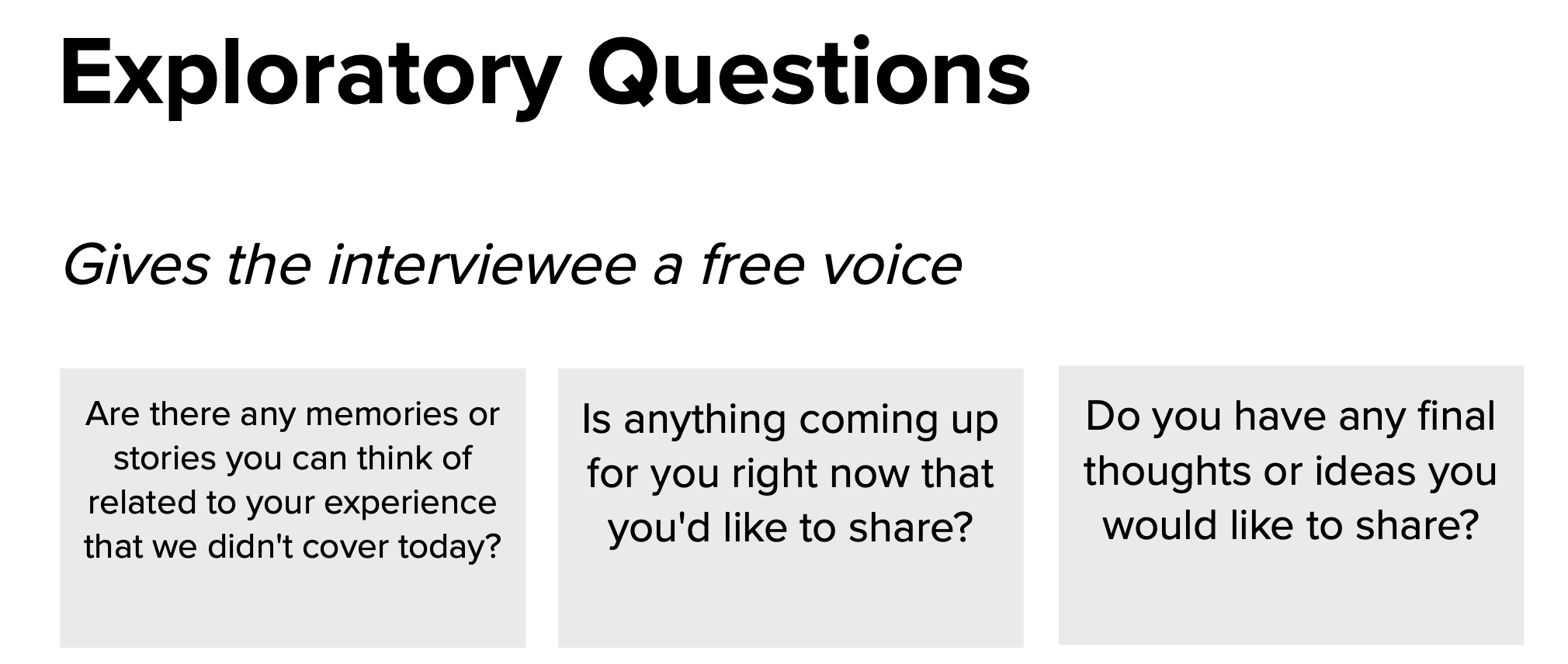
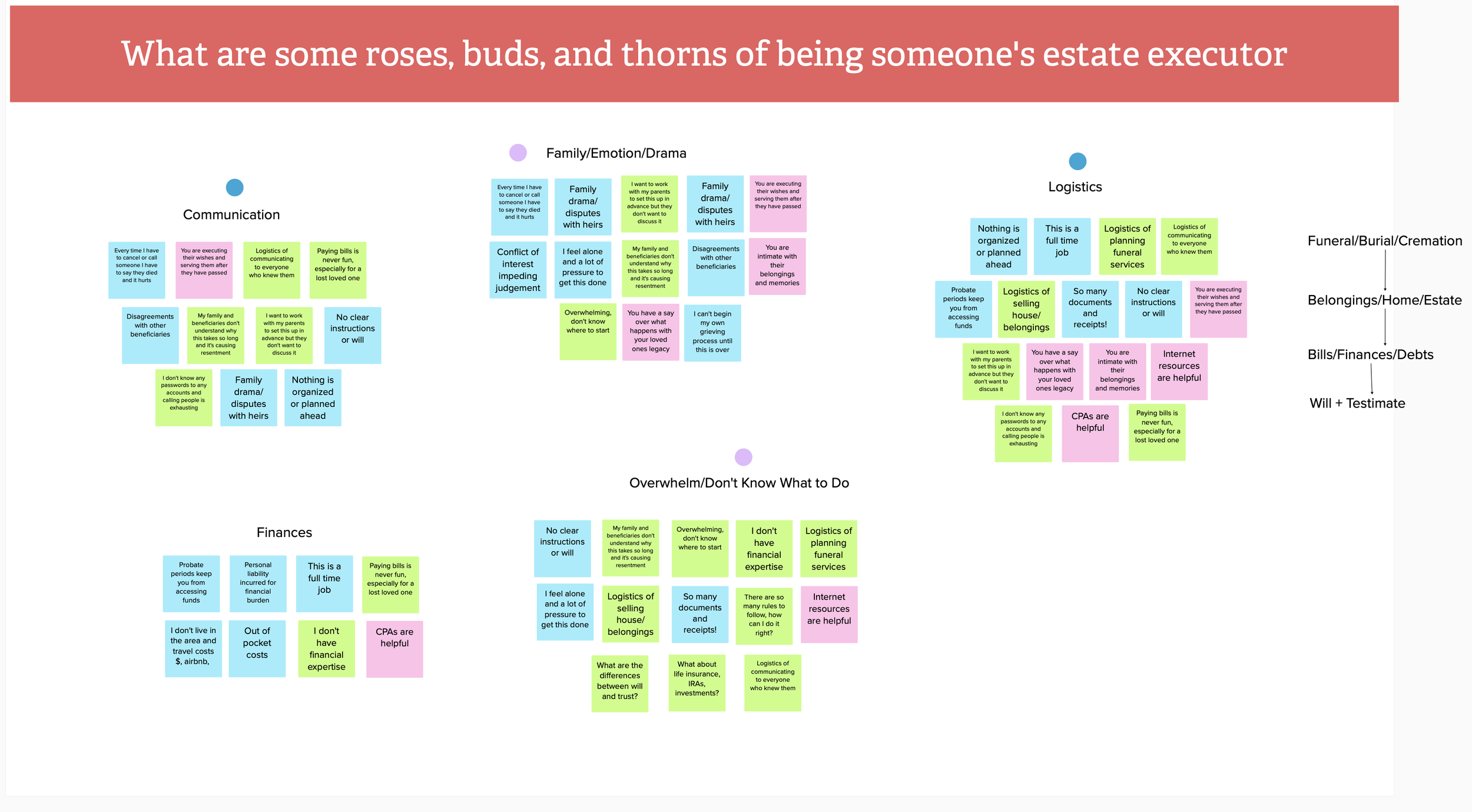
I returned to the drawing board and, due to time constraints, conducted an informal interview with my mom to deepen my understanding of her experience. This helped shape a new direction for the final concept.
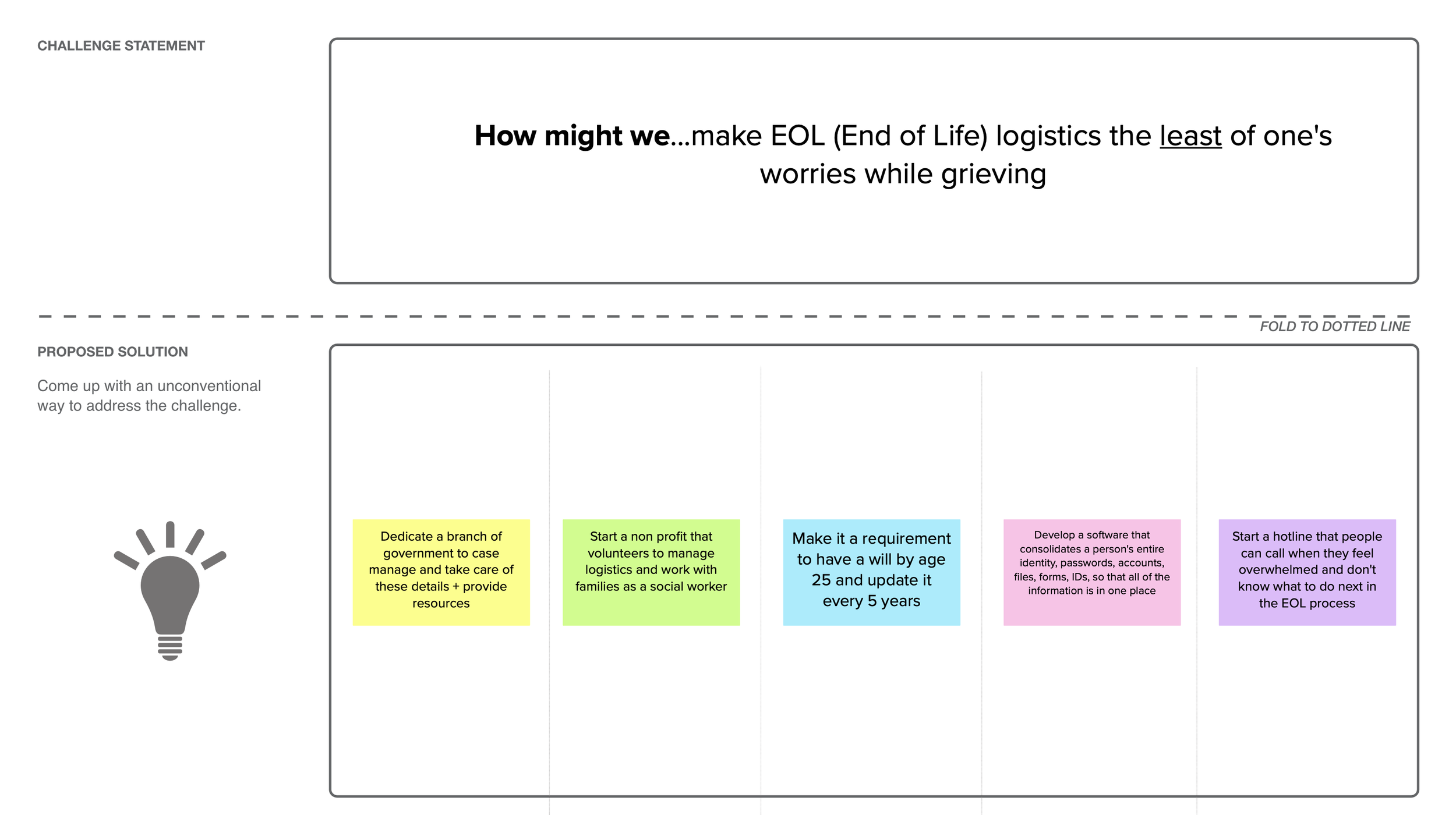
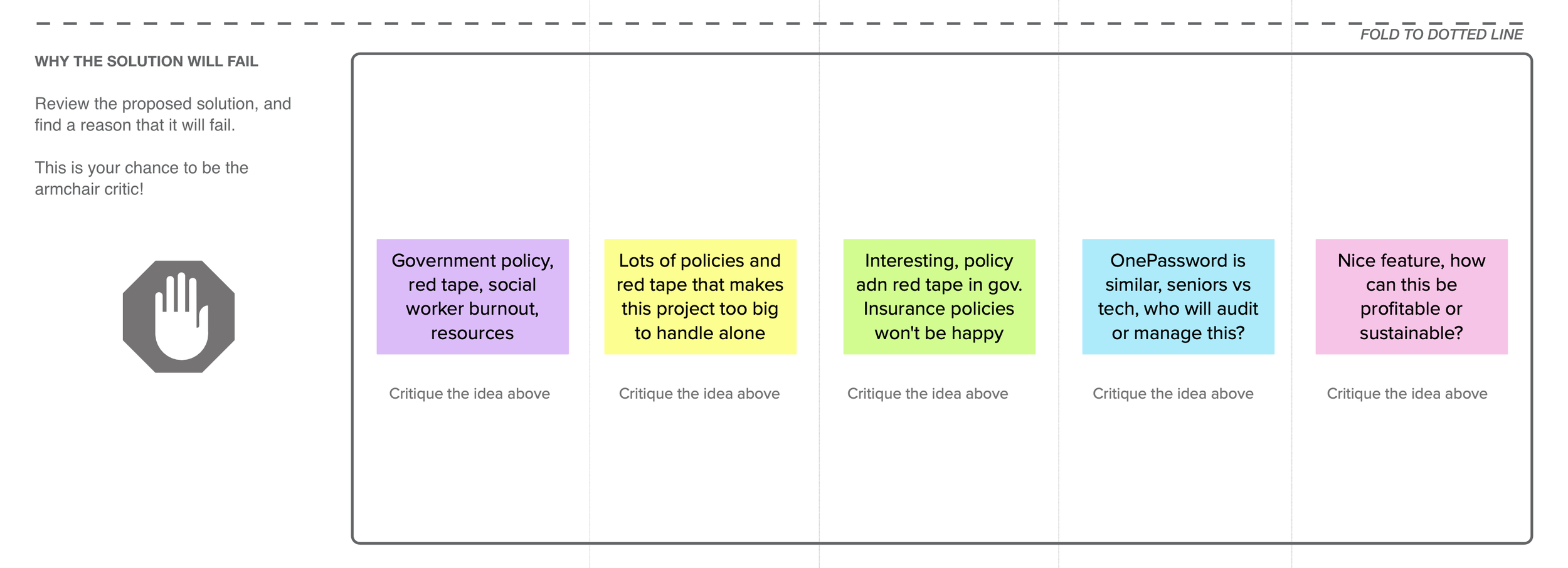
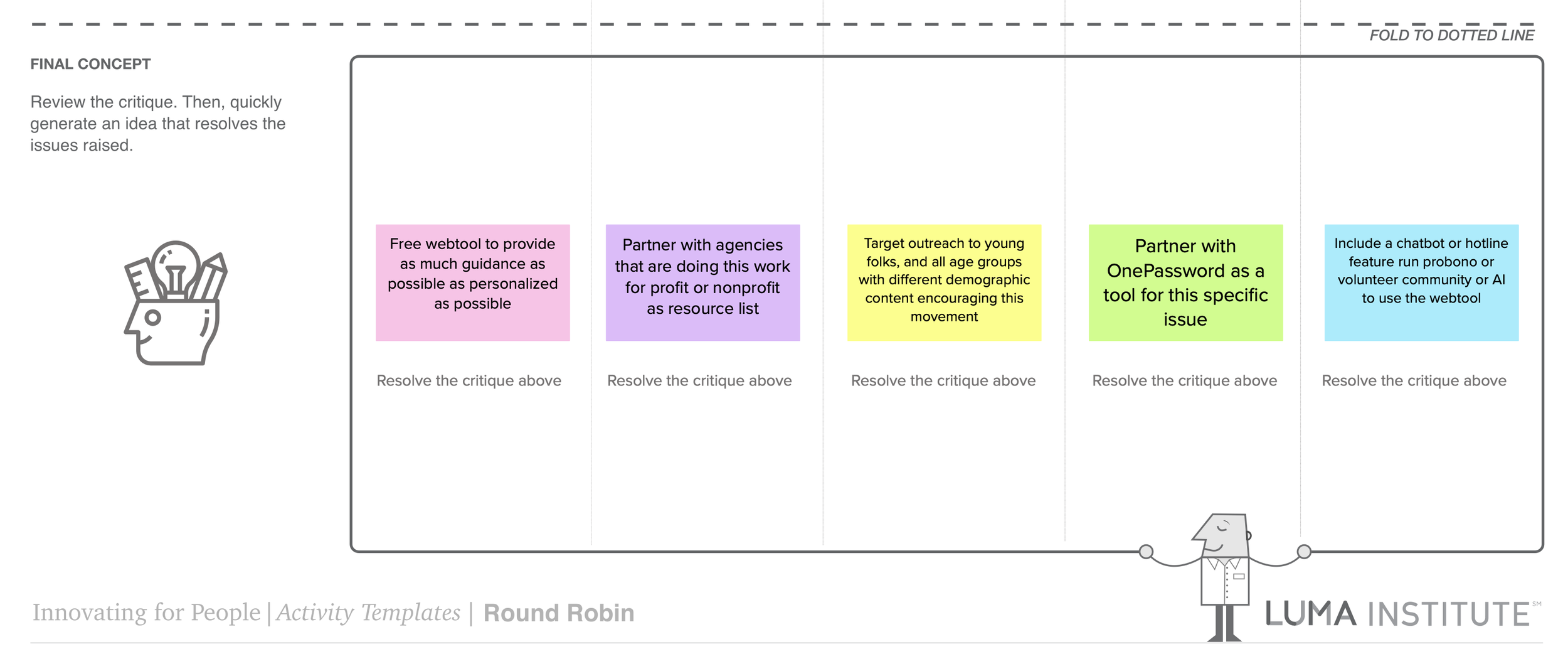
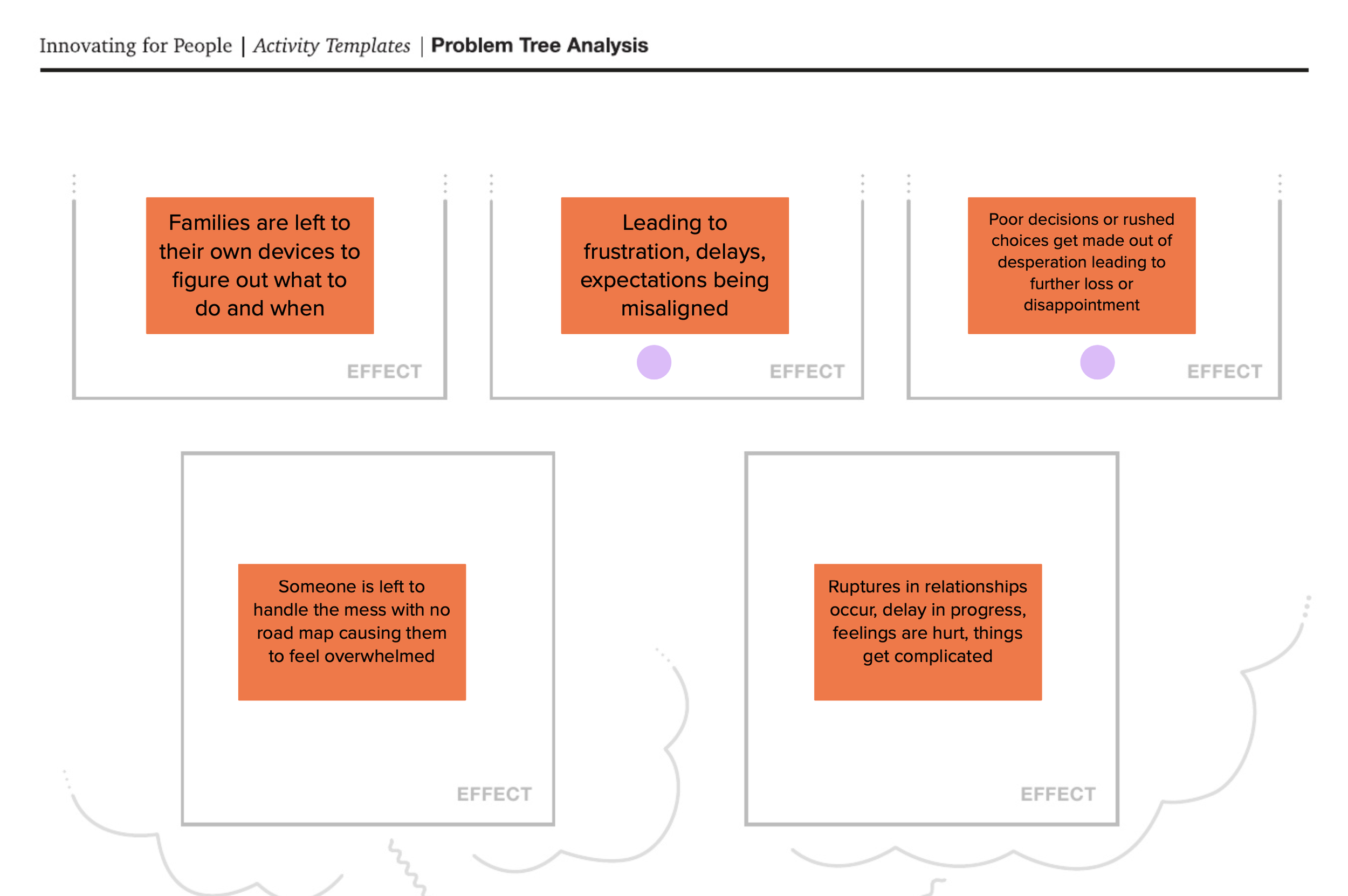

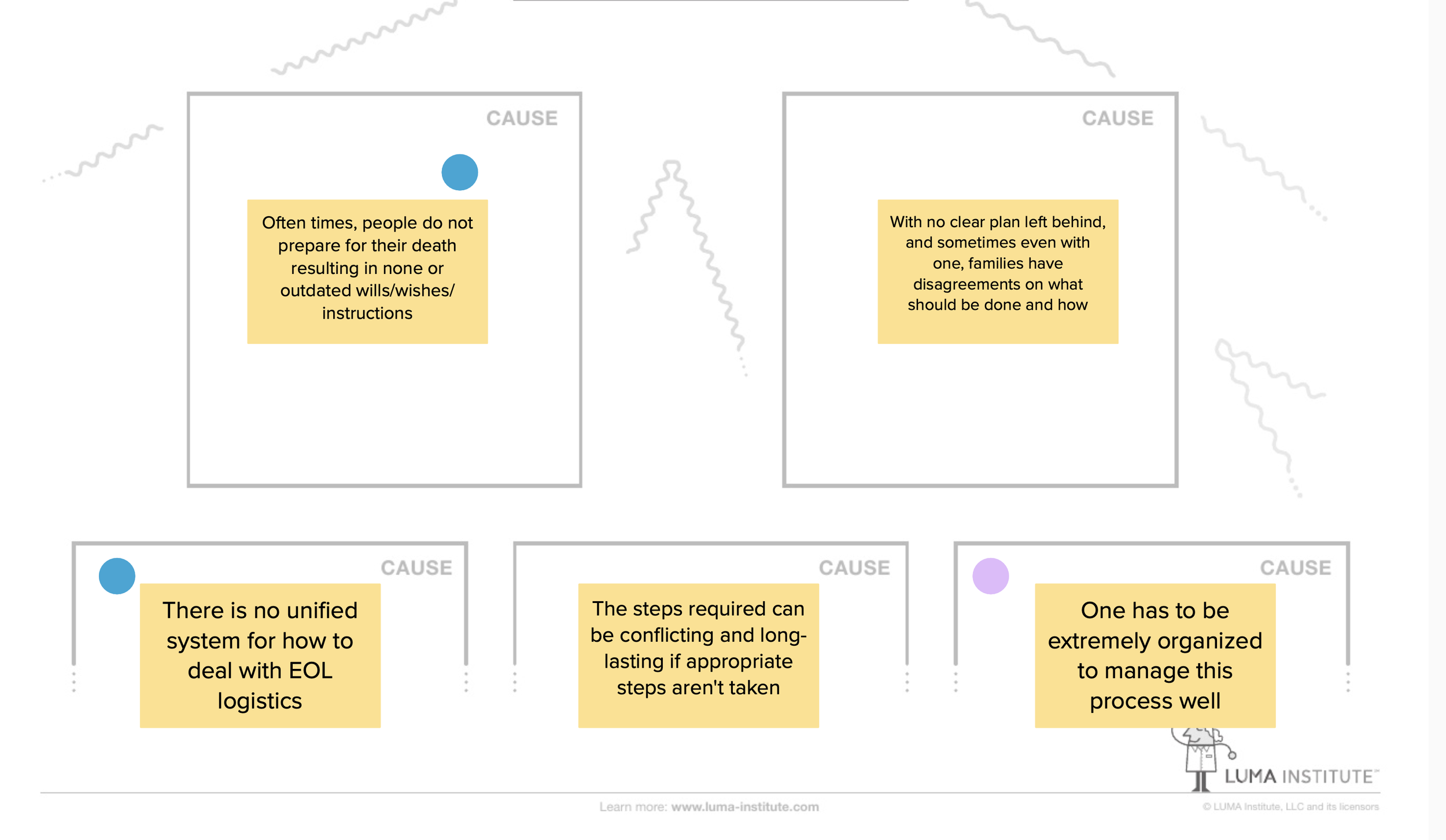
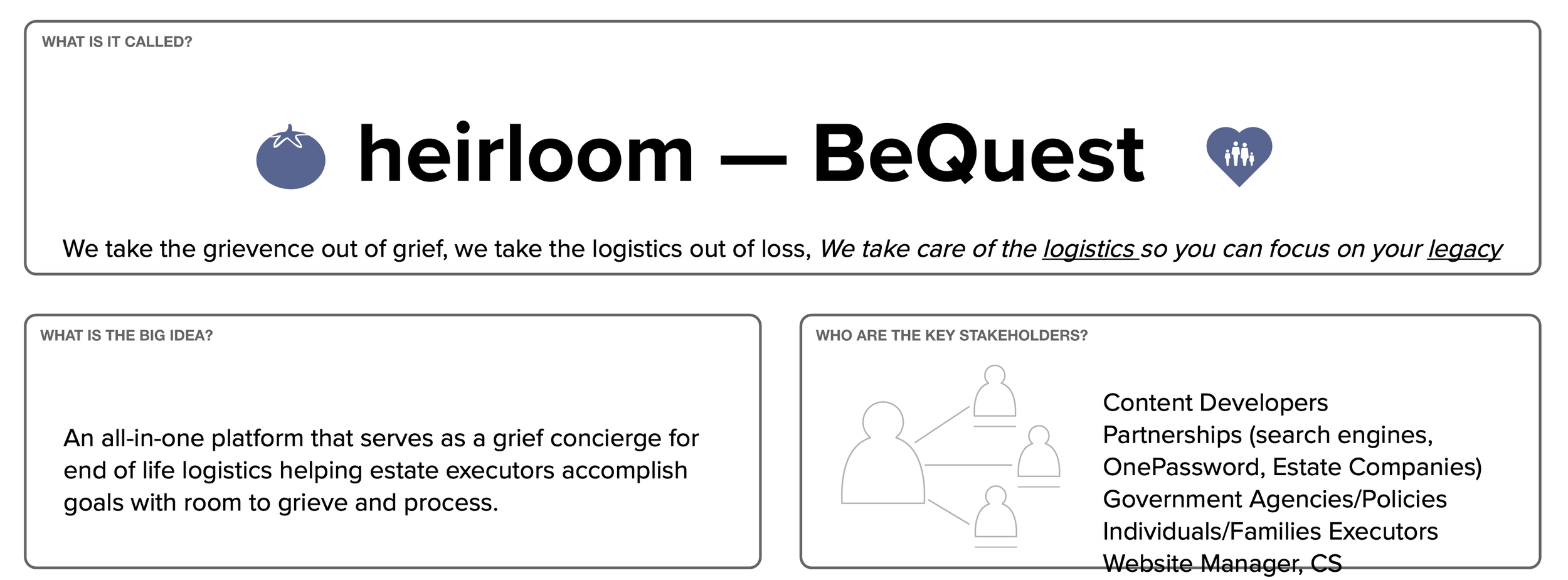
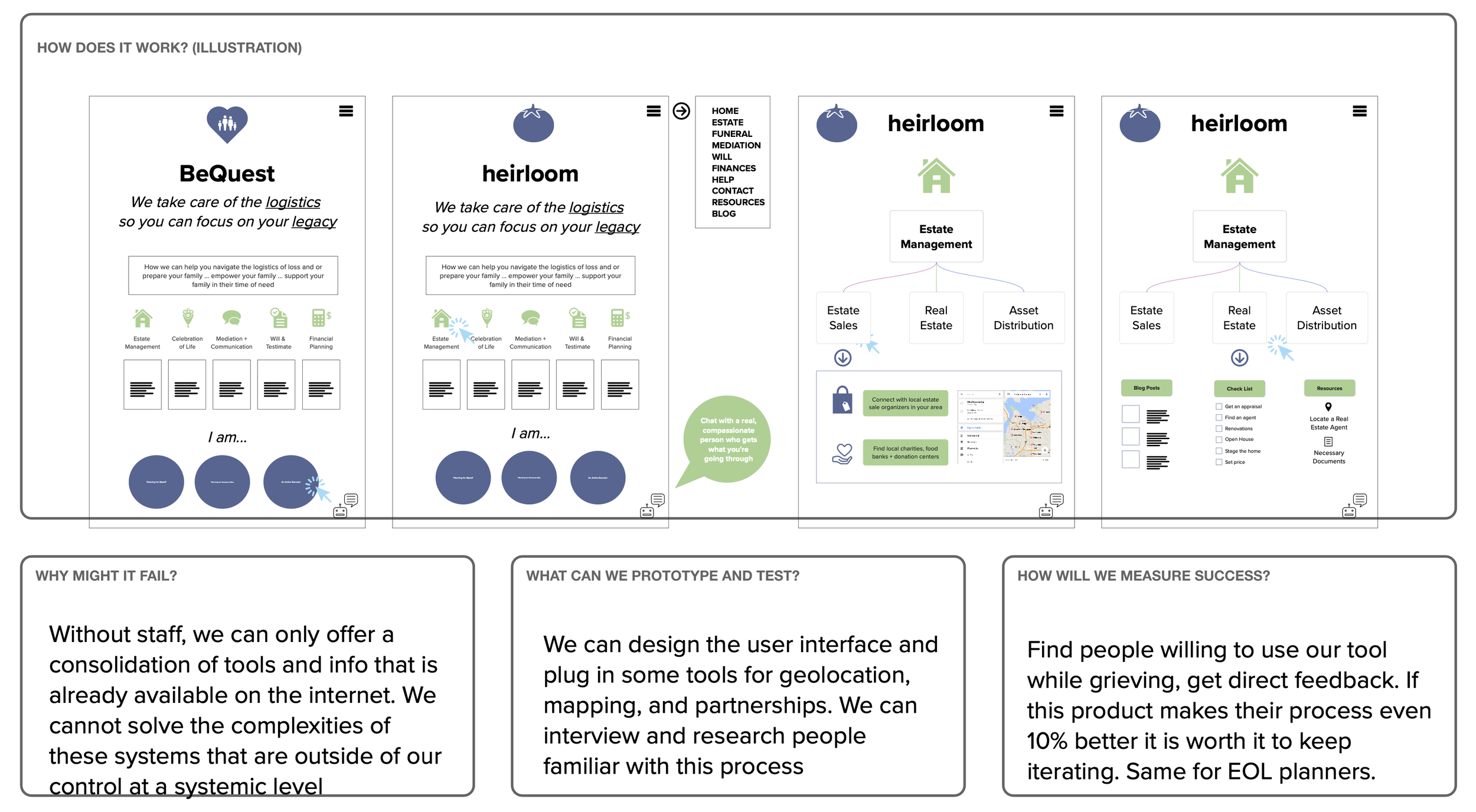
Once I felt confident in the revised concept, I created low-fidelity wireframes and mapped out key stakeholders. This helped me clarify relationships and roles before developing a medium-fidelity mockup for the final presentation.
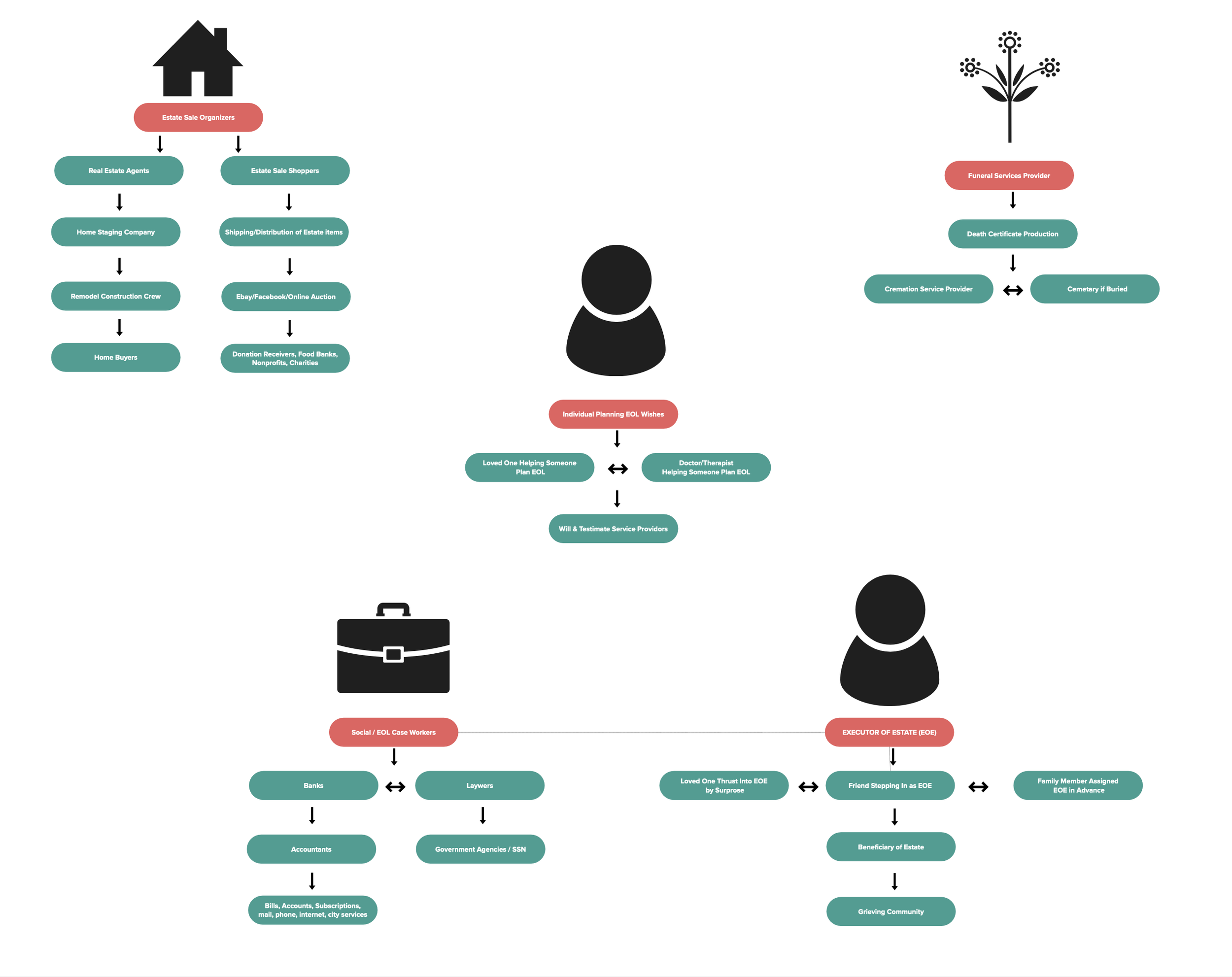
Mockup + Next Steps:
Due to the fast pace of the course and emphasis on rapid ideation, I delivered a medium-fidelity mockup of the final concept. I also outlined a plan for future user interviews and concept validation.
While researching next steps, I discovered Empathy.com, a robust platform that already supports end-of-life logistics. This affirmed the value of the space I was designing for and inspired me to explore how more human-centered experiences can support grieving families.